
Africa
Nigeria condemns Guinea-Bissau military coup, urges restoration of democratic governance

Nigeria condemns Guinea-Bissau military coup, urges restoration of democratic governance
The Federal Government of Nigeria has condemned the recent military coup in Guinea-Bissau, calling it a serious threat to democracy and regional stability in West Africa. In a statement on Thursday, Ministry of Foreign Affairs spokesperson Kimiebi Ebienfa said the government received news of the takeover “with profound dismay and deep concern,” describing it as an “unconstitutional change of government.”
Nigeria criticized the coup as an act of insurrection that undermines constitutional rule, democratic progress, and regional peace. The statement highlighted that the takeover violates the ECOWAS Protocol on Democracy and Good Governance, which strictly rejects any seizure of power through unconstitutional means.
“The Nigerian Government wishes to unequivocally call on the authorities in Guinea-Bissau to ensure the safety of all election observers in the country,” the statement read. It further demanded the immediate and unconditional restoration of constitutional order and protection for detained officials and democratic institutions.
The government also reiterated its commitment to work with ECOWAS, the African Union (AU), and international partners to restore normalcy and preserve democracy in the country.
READ ALSO:
- Pregnant woman, husband beg for help in viral kidnap video as abductors demand N50m ransom
- Guinea-Bissau Reopens Borders After Military Takeover Halts Election Process
- Bandits abduct 24, mutilate blind man in fresh attacks on Niger communities
The statement came a day after Guinea-Bissau descended into uncertainty when military officers announced they had taken “total control” of the country, shut borders, and halted the announcement of electoral results, just three days after general elections. Heavy gunfire was reported near the presidential palace, and soldiers blocked major access routes. A curfew and media blackout were imposed, and electoral activities were suspended.
Incumbent president Umaro Sissoco Embaló confirmed he had been deposed, while both Embaló and opposition candidate Fernando Dias had earlier claimed victory ahead of provisional results scheduled for Thursday.
The AU, ECOWAS, and the West African Elders Forum (WAEF) condemned the military takeover in a joint statement, urging the armed forces to release detained electoral officials and allow the electoral commission to complete its work. The missions emphasized the need for calm among citizens and the prioritization of peace and public welfare.
This coup adds to Guinea-Bissau’s long history of political instability, which has seen four successful coups and multiple attempted ones since independence. The recent elections were already contentious, following the exclusion of the PAIGC party and its leader, Domingos Simões Pereira, a move criticized by opposition figures as manipulative.
Nigeria’s condemnation aligns with international calls to protect democracy, restore constitutional governance, and safeguard West African regional security, underscoring the urgent need for restraint, dialogue, and respect for the electoral process in Guinea-Bissau.
Nigeria condemns Guinea-Bissau military coup, urges restoration of democratic governance








Africa
African Nations Threaten Retaliatory Action Over Xenophobic Attacks in South Africa
African Nations Threaten Retaliatory Action Over Xenophobic Attacks in South Africa
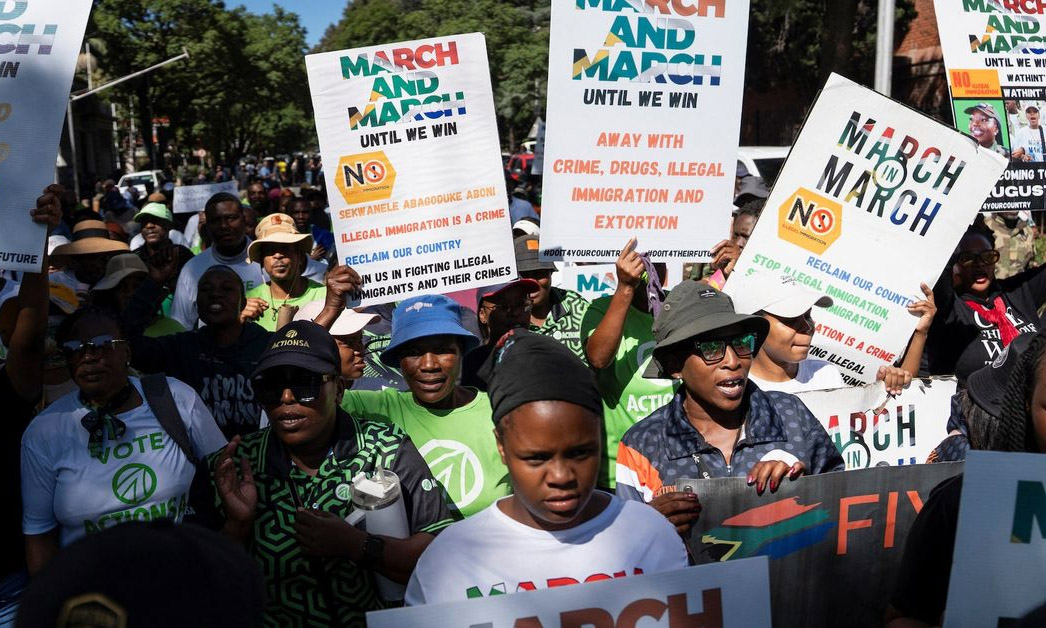
Diplomatic pressure on South Africa is intensifying as several African nations threaten retaliatory measures over renewed xenophobic attacks targeting foreign nationals, particularly Nigerians and other African migrants.
While no country has formally announced a full border closure, regional threats involving possible trade restrictions, tighter immigration controls, and coordinated diplomatic action are gaining momentum, marking what analysts describe as one of the most serious regional tensions in recent years.
The latest unrest, reported between April 27 and 29, 2026, saw protests and violent incidents in cities including Pretoria and Johannesburg, where groups accused foreign nationals of taking jobs and engaging in criminal activity. However, law enforcement data and independent studies have repeatedly shown no nationwide evidence supporting claims that migrants are responsible for significant crime levels or widespread job displacement.
In response to the growing crisis, several African countries have intensified diplomatic engagement with Pretoria. Governments including Nigeria, Ghana, Lesotho, Zimbabwe, and Mozambique have issued travel advisories and increased efforts to protect their citizens living in South Africa.
READ ALSO:
- Melaye: Obi Can’t Handle Nigeria If He Can’t Face Party Crises
- Shekarau’s Possible Return Sparks Tension in Kano APC Senatorial Race
- Senate Tightens Rules, Restricts Ex-Governors, New Entrants From Leadership Positions
The Nigeria government has begun voluntary evacuation arrangements, with officials confirming that over 130 Nigerians have registered for repatriation through its mission in South Africa. Nigerian authorities have also summoned South Africa’s diplomatic representative to formally protest the attacks and demand stronger protection for citizens and businesses.
Foreign Affairs Ministry spokesperson Kimiebi Ebienfa said the government’s immediate priority is the safety of Nigerians, adding that all diplomatic options remain on the table if the situation does not improve.
Ghana has also taken diplomatic steps, summoning South African officials after reports of harassment of its nationals, including viral footage showing intimidation of migrants in KwaZulu-Natal.
Similarly, Tanzania has reportedly adopted a tougher stance, with authorities warning of possible deportation measures against South African nationals and reviewing bilateral cooperation following continued incidents targeting African migrants.
Botswana is also considering economic countermeasures, including potential disruptions to electricity supply and border movement, in what officials describe as a response to sustained hostility toward its citizens. Leaders there have framed the issue as one of regional respect and historical solidarity.
Mozambique is likewise reviewing possible restrictions at the Ressano Garcia border, a major trade corridor whose disruption could significantly affect regional commerce between both countries.
South African authorities have condemned the violence, describing it as criminal conduct rather than government policy. President Cyril Ramaphosa has called for calm and urged communities to avoid unlawful attacks on foreign nationals.
Despite these assurances, African governments continue to press for stronger enforcement and long-term solutions, citing repeated xenophobic incidents over the past decade that have left many migrants dead or displaced.
As tensions rise, analysts say the crisis is testing regional unity and putting renewed pressure on continental mechanisms designed to ensure the free movement and protection of African citizens.
African Nations Threaten Retaliatory Action Over Xenophobic Attacks in South Africa
Africa
Boko Haram Attack in Lake Chad Kills 23 Chadian Soldiers

Boko Haram Attack in Lake Chad Kills 23 Chadian Soldiers
At least 23 soldiers of the Chadian Armed Forces have been killed and 26 others injured following a deadly Boko Haram attack in Lake Chad, targeting a military base on Barka Tolorom Island in western Chad. The incident occurred late Monday night in one of the most volatile parts of the Lake Chad Basin, a region that borders Nigeria, Niger, Cameroon, and Chad, and has remained a long-standing hotspot for insurgent activity.
According to the Chadian military, suspected Boko Haram fighters launched the assault under the cover of darkness, storming the military position and triggering a fierce gun battle with troops stationed at the base. The exchange of fire reportedly lasted several hours before the attackers were eventually repelled. The army confirmed that the insurgents also suffered “significant losses,” although no official figures were released.
READ ALSO:
- North May Not Back Obi–Kwankwaso Ticket, Says Datti Baba-Ahmed
- Akpabio Mocks ADC Collapse as Lawmakers Defect in Droves
- US Jury Convicts Man for Strangling Wife in Argument Over Laundry Detergent
Chadian President Mahamat Idriss Déby Itno condemned the attack, describing it as a “cowardly assault” on the country’s armed forces. He extended condolences to the families of the slain soldiers and praised the troops for their resistance during the confrontation. “We will continue the fight with renewed determination until these terrorist threats are fully neutralised,” he said, reaffirming the government’s commitment to intensifying counter-terrorism operations in the Lake Chad region.
The Chadian army said additional troops have been deployed to Barka Tolorom Island and surrounding waterways as part of ongoing military clearance operations in Lake Chad aimed at preventing further insurgent incursions. Authorities noted that the area remains strategically difficult due to its swampy terrain and network of islands, which militants often use as hideouts.
The Lake Chad Basin insurgency has remained active for years despite multinational military efforts by the Multinational Joint Task Force (MNJTF), which includes forces from Nigeria, Chad, Niger, and Cameroon. Boko Haram and its splinter faction, ISWAP, continue to carry out coordinated attacks, ambushes, and raids on both military formations and civilian communities across the region.
Security analysts say the latest attack underscores the persistent threat of terrorism in Lake Chad, where insurgents exploit difficult terrain and weak border control to sustain operations. The incident also highlights recurring security challenges in the region, which has experienced repeated deadly attacks on military bases in recent years.
Boko Haram Attack in Lake Chad Kills 23 Chadian Soldiers
Africa
Uganda Arrests 231 Foreign Nationals Including Nigerians In Cybercrime Crackdown
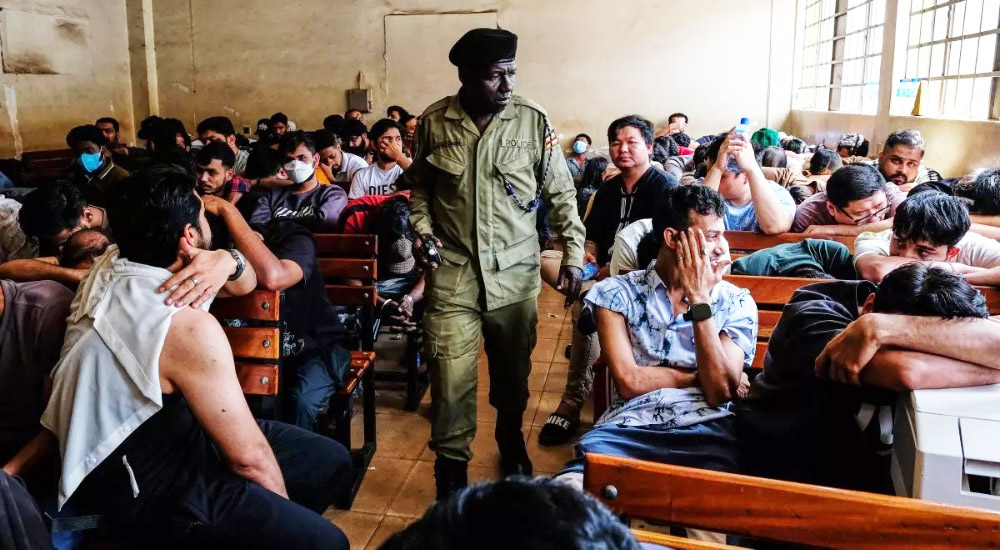
Uganda Arrests 231 Foreign Nationals Including Nigerians In Cybercrime Crackdown
Ugandan authorities have arrested 231 foreign nationals, including dozens of Nigerians, in two coordinated intelligence-led operations targeting irregular migration, undocumented residency, suspected cybercrime activities and possible human trafficking networks across the country.
The large-scale crackdown was carried out by the Directorate of Citizenship and Immigration Control under Uganda’s Ministry of Internal Affairs between April 27 and 28, 2026, as part of ongoing efforts to combat transnational organised crime and tighten immigration enforcement.
According to officials, the first operation took place on April 27 in Adjumani District, northern Uganda, where immigration enforcement teams arrested 62 Nigerian nationals allegedly residing and operating in the country without valid work permits or immigration documentation.
Authorities disclosed that some members of the group were allegedly running an unlicensed church and engaging in other unauthorised business activities despite lacking legal residency status. The operation was reportedly launched following intelligence reports and complaints from local residents.
A second operation was later conducted overnight in the upscale Bukoto-Ntinda area of Kampala, where security operatives raided a heavily guarded apartment complex and detained 169 additional foreign nationals, including 36 women.
Officials said the suspects came from several countries, including Pakistan, India, Bangladesh, Ghana, Myanmar, Ethiopia, Sri Lanka, Cambodia, Thailand, Nepal, Indonesia and Malaysia.
READ ALSO:
- Why I Attacked Female Police Officers With Baton — Suspect
- House of Reps Push for 18-Month Extension on Reassignment of Inactive Phone Numbers
- OAU Shuts Campus for Three Weeks After Students’ Protest Over Transport
Uganda’s Ministry of Internal Affairs spokesperson, Simon Peter Mundeyi, said the apartment complex had features that raised security concerns, including controlled entry systems and restricted internal movement.
According to him, the facility appeared structured to support organised illegal operations while limiting access to outsiders.
During searches carried out at the premises, immigration and security officials reportedly recovered computers, mobile devices and other information technology equipment suspected to have been used for cyber scamming, online fraud, illegal betting and other internet-related crimes.
Preliminary investigations also suggested that some of the detained individuals may have been victims of human trafficking schemes after allegedly being lured into Uganda with false job promises, while others are suspected to be directly involved in organised cybercrime networks operating within East Africa.
Authorities revealed that many of those arrested were unable to provide valid passports, visas or work permits during the screening process.
All 231 suspects are currently being held at the Ministry of Internal Affairs facility in Namanve, where they are undergoing profiling, immigration verification and further investigations ahead of prosecution.
Officials stated that individuals found guilty of violating Uganda’s immigration laws could face deportation, financial penalties and possible blacklisting from re-entering the country.
The Ugandan government described the operations as part of a broader national strategy aimed at preventing the country from becoming a hub for transnational cybercrime syndicates, human trafficking rings and illegal migration networks.
Authorities also warned landlords and property owners to verify the immigration status of foreign tenants before renting out apartments or business spaces to them.
Members of the public were further encouraged to continue sharing intelligence with security agencies regarding suspicious activities involving undocumented foreigners or organised criminal networks.
As of the time of filing this report, Ugandan authorities had not publicly released the identities of the arrested individuals.
Uganda Arrests 231 Foreign Nationals Including Nigerians In Cybercrime Crackdown
-
 metro1 day ago
Oyo Abduction: IGP Deploys More Detectives as Panic Spreads Across Ogbomoso
-

 News6 hours ago
BREAKING: Tinubu appoints Prof Segun Aina as new JAMB registrar
-
 Education6 hours ago
7 Key Facts About Professor Segun Aina, Tinubu’s New JAMB Registrar
-

 International2 days ago
Three Killed In California Mosque Shooting As Teen Suspects Die By Suicide
-

 metro2 days ago
Igboho Calls for Approval of “Iru Ekun Security Network” After Oyo School Attack
-

 Education2 days ago
UTME 2026: JAMB Gives Fresh Update on Original Result Slip Delay
-
 Opinion2 days ago
Understanding Ahmad Gumi Controversy and Nigeria’s Security Power Structure
-
 News8 hours ago
Hajj 2026: Arafat Sermon to be Translated into Yoruba, Hausa, 33 Other Languages