

Politics
Updated: Rivers Senator Mpigi Barinada dies at 64
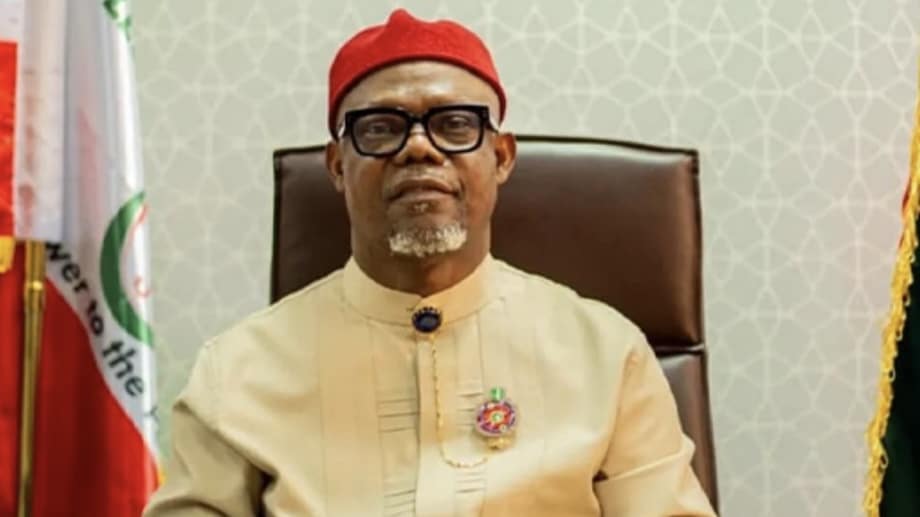
Updated: Rivers Senator Mpigi Barinada dies at 64
Lawmaker representing the South East Senatorial district of Rivers State, Senator Mpigi Barinada is dead.
He was aged 64.
The Chairman of the House of Representatives Committee on Works, Akin Alabi, confirmed the sad development in a tribute post on his official X handle on Thursday.
He wrote, “Good night my dear friend. Rest in Peace, Senator Mpigi Barinada. Sen Mpigi represented Rivers South East in the Senate”.
The Rivers Senator was the Chairman, Senate Committee on Works.
READ ALSO:
- Osun Awards 55.6km Iwo–Osogbo–Ibadan Road Project to Three Contractors
- Mexico‑Based Nigerian fraudster Gets 8 Years for $1.3M U.S. Tax Fraud
- Ademola Lookman Scores Historic Goal as Atletico Madrid Draw 3–3 With Club Brugge
Senator representing Nasarawa South, Mohammed Onawo, also paid glowing tribute to the late Rivers senator and urged his colleagues to honour his memory.
He spoke during the session of the Senate Committee on Culture and Tourism on Thursday.
First elected in 2011 to the lower house, he was re-elected for a second term in December 2016.
In 2019, he was elected as the Senator representing Rivers South East Senatorial District under the platform of the Peoples Democratic Party (PDP).
Updated: Rivers Senator Mpigi Barinada dies at 64










Politics
2027: Amaechi Vows to Resign If Nigeria Fails to Change Within One Year
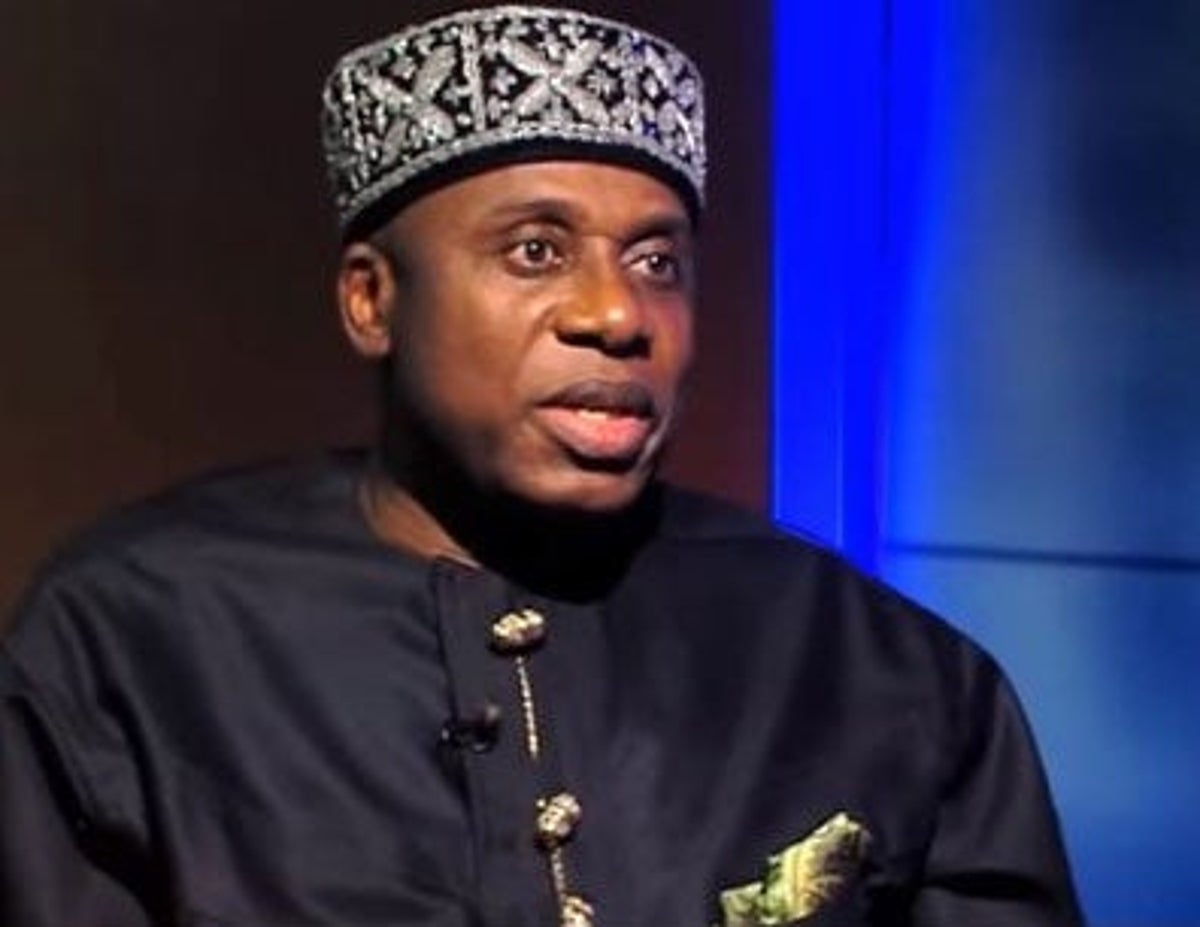
2027: Amaechi Vows to Resign If Nigeria Fails to Change Within One Year
African Democratic Congress (ADC) vice-presidential candidate Rotimi Amaechi has pledged to resign if Nigeria fails to begin changing within one year of an ADC administration taking office after the 2027 presidential election.
Amaechi, who is the running mate to ADC presidential candidate Atiku Abubakar, made the statement during an interview with Africa Independent Television (AIT) on Wednesday.
He said an ADC government would focus on tackling insecurity, economic hardship and corruption, which he identified as major obstacles to national development.
“You must deal with insecurity, economy, and corruption before this country can progress,” Amaechi said, arguing that reducing corruption would free resources for addressing the country’s development challenges.
The former Rivers State governor and former Minister of Transportation also criticised the impact of the fuel subsidy removal, questioning whether Nigerians were receiving sufficient benefits from the policy.
Amaechi attributed some of the country’s difficulties to what he described as the diversion of public resources into private hands.
He also raised concerns about poverty and hunger in Nigeria, contrasting the hardship experienced by many citizens with what he described as lavish private spending in some quarters.
READ ALSO:
- Nigeria at 66: Tinubu Unveils Fresh Push for Lower Costs, Jobs, Prosperity (Full Text)
- Independence Day: Tinubu Unveils Plan to Cut Living Costs, Expand Jobs
- Independence Day: No Going Back on Fuel Subsidy Removal – FG
According to Amaechi, Nigeria’s dependence on imported finished products is another indication of the country’s economic challenges. He claimed that the country imports more than 46 per cent of finished goods.
“Nigeria is in trouble,” he said.
Amaechi further criticised the level of dissatisfaction with the government, referring to reports of people booing President Bola Ahmed Tinubu during a recent movement from Lagos airport to his residence.
He said an ADC government would instead seek to deliver changes that would improve public confidence.
“If Nigeria does not change one year after we get into office, come to me and I will resign,” Amaechi said.
The pledge comes as political parties intensify preparations for the 2027 general election, with the ADC positioning the Atiku-Amaechi ticket as part of the opposition coalition challenging the governing All Progressives Congress (APC).
Amaechi has in recent days also called for stronger grassroots mobilisation by ADC members ahead of the election. At the party’s National Women’s League Conference in Abuja, he urged supporters to work at ward and state levels, stressing the importance of grassroots votes to the party’s electoral plans.
The former governor had previously made a separate resignation pledge while seeking the ADC presidential ticket, saying he would quit if he failed to eliminate corruption within his first month in office. That earlier commitment was made when he was still pursuing the party’s presidential nomination, before he became Atiku’s running mate.
His latest statement, however, is specifically tied to the performance of a potential ADC government during its first year in office.
For now, the one-year resignation pledge remains a political commitment made by Amaechi; any future resignation would depend on the circumstances and constitutional processes applicable to a serving vice-president.
2027: Amaechi Vows to Resign If Nigeria Fails to Change Within One Year
Politics
2027: Amaechi Recalls How APC Defeated PDP, Orders ADC Mobilisation

2027: Amaechi Recalls How APC Defeated PDP, Orders ADC Mobilisation
Vice-presidential candidate of the African Democratic Congress (ADC), Rotimi Amaechi, has announced plans to return to Rivers State as he urged party leaders and supporters to intensify grassroots mobilisation ahead of the 2027 general election.
Amaechi, a former Rivers State governor and former Minister of Transportation, made the remarks on Wednesday, September 30, 2026, at the ADC National Women League Conference in Abuja.
He called on ADC members outside the Federal Capital Territory to return to their respective states, local government areas and wards and build support for the party ahead of the election.
“Me, I am going on Wednesday,” Amaechi told the gathering, adding that he would also campaign in Kebbi, Yola, Rivers and Delta as part of efforts to support the party’s candidates at both the presidential and governorship levels.
Amaechi said the ADC would need sustained grassroots engagement to compete effectively in the 2027 election, arguing that presidential campaigns should not be concentrated in Abuja.
He also recalled the 2015 presidential election, when the APC defeated the then-ruling Peoples Democratic Party (PDP), and attributed part of that victory to extensive mobilisation of women across communities.
READ ALSO:
- Israeli Actor, Flight Instructor Among Two Killed In California Plane Crash
- Flood Cuts Off Part of Agbarho-Ughelli Road, Strands Commuters in Delta
- Dangote Draws Battle Lines as Fuel Import Fight Heads Back to Court
According to Amaechi, the APC campaign at the time involved taking its message directly to women in different states and encouraging them to turn out and vote. He urged ADC women to adopt a similar grassroots approach ahead of 2027.
His comments came as the ADC steps up mobilisation ahead of the presidential contest, with opposition politicians and groups also holding consultations on possible cooperation.
Amaechi further told ADC leaders that a victory for President Bola Ahmed Tinubu and the All Progressives Congress (APC) in 2027 could push some opposition leaders out of active politics. He described the possibility as a reason for party members to intensify their efforts at ward level.
The former Rivers governor also linked his mobilisation campaign to economic concerns, citing the cost of living, poverty and access to education. He made claims about the number of out-of-school children and Nigerians falling into poverty, though those figures were presented as part of his political argument and were not independently established in the reports reviewed.
At the conference, Hajiya Titi Atiku Abubakar, wife of ADC presidential candidate Atiku Abubakar, also called on women to participate actively in the party’s grassroots campaign.
She highlighted rising household expenses, including the cost of medicines and education, and urged women to take the ADC’s campaign message to communities across the country.
The mobilisation drive comes amid broader opposition coalition discussions ahead of the 2027 election, with political parties and groups exploring possible strategies for cooperation and coordination.
Amaechi’s planned return to Rivers is particularly significant because of his political history in the state, where he served as governor from 2007 to 2015 before becoming Minister of Transportation under the APC administration.
2027: Amaechi Recalls How APC Defeated PDP, Orders ADC Mobilisation
Politics
2027: Wike Vows to Resign If Tinubu Loses FCT, Rivers
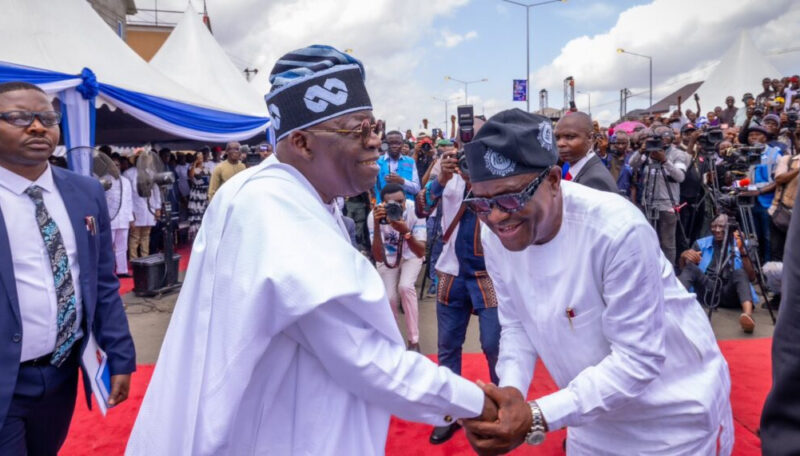
2027: Wike Vows to Resign If Tinubu Loses FCT, Rivers
Federal Capital Territory (FCT) Minister Nyesom Wike has vowed to resign from office if President Bola Ahmed Tinubu loses both the FCT and Rivers State in the 2027 presidential election.
Wike made the declaration on Wednesday, September 30, 2026, while addressing members of the Apo Mechanics and Traders Association in Abuja.
He said the 2027 presidential election would provide a clear test of his political influence in the FCT, where he currently serves as minister, and Rivers State, where he was governor from 2015 to 2023.
Wike said he would announce his resignation on January 17, 2027, a day after the presidential election, if Tinubu fails to win the two territories.
“If I cannot deliver where I work, then I’m not worthy to be here. If I lose FCT, I’m not supposed to be FCT Minister. By January 17, 2027, I will announce my resignation as FCT Minister should the President lose in Rivers State and the FCT,” he said.
The minister challenged political appointees to accept responsibility for electoral outcomes in their respective areas, arguing that he should not remain in office if he fails to secure support for the president where he has pledged to deliver.
READ ALSO:
- Flood Cuts Off Part of Agbarho-Ughelli Road, Strands Commuters in Delta
- Dangote Draws Battle Lines as Fuel Import Fight Heads Back to Court
- Tinubu Returns After 30 Days in Europe, Says ‘I’m Healthy and Ready to Work’
Wike has become one of the prominent figures campaigning for Tinubu’s 2027 re-election, despite remaining a member of the opposition Peoples Democratic Party (PDP).
He has been promoting a cross-party mobilisation platform known as the Rainbow Coalition, which he says is focused on securing support for Tinubu rather than creating another political party.
At the Apo meeting, Wike declared his support for Tinubu for president and endorsed former FCT Senator Philip Aduda for the Senate.
He also said the coalition would support candidates for other elective positions in the FCT.
The former Rivers governor has announced plans to lead Tinubu’s 2027 campaign structures in both the FCT and Rivers State, making the two territories central to his political activities ahead of the election.
Wike has also linked his political mobilisation in Abuja to the infrastructure projects being undertaken by the FCT Administration.
He has repeatedly cited major road projects, including the Apo-Karshi Road and Bwari-Kubwa Road, as evidence of the administration’s efforts to improve infrastructure in the capital.
The FCT Administration has also approved projects in the health, education, security and power sectors.
Among them are plans to renovate and upgrade 14 general hospitals, resume work on the abandoned Utako General Hospital, digitalise the FCT High Court and provide electricity infrastructure to communities in parts of the FCT.
Wike’s meeting with the Apo mechanics and traders also centred on the planned relocation of mechanics and artisans from Apo to the Wasa informal sector.
The FCT Administration has said the Wasa site is being provided with infrastructure and facilities ahead of the relocation.
The political calculations surrounding Wike’s support for Tinubu have attracted attention because of his continued membership of the PDP. The former governor was one of the senior PDP figures who opposed the party’s presidential campaign structure in 2023 and has since maintained his support for Tinubu.
Wike’s latest declaration places his continued tenure as FCT Minister alongside Tinubu’s performance in the FCT and Rivers State, while he intensifies efforts to mobilise support for the president ahead of the January 16, 2027 presidential election.
For Wike, the outcome in the two territories will now carry a personal political consequence: resignation from the FCT Ministry if Tinubu loses both states.
2027: Wike Vows to Resign If Tinubu Loses FCT, Rivers
-

 metro2 days ago
Osogbo Food Bonanza Turns Nightmare as Discount Vendor Vanishes With Customers’ Millions
-

 metro3 days ago
24 Hours in Darkness: Iju Ishaga Residents, Businesses Count Losses as Ikeja Electric Fails to Restore Power
-
 Education2 days ago
FG Releases 2026–2028 Approved Textbooks, Introduces QR Codes for Tracking
-
 News2 days ago
Breaking: Tinubu Ends Extended European Vacation, Departs Paris for Nigeria
-

 metro2 days ago
Hamzat Clarifies Lagos Traffic ‘Lifestyle’ Remark After Backlash
-

 Sports2 days ago
Nigeria XI vs Guinea-Bissau: Awoniyi, Lookman, Adams Lead Super Eagles Attack
-

 Auto3 days ago
Carloha Opens Wider Access to Chery Q as Smart EV Enters Nigeria’s Mainstream
-

 metro1 day ago
Osogbo Food Bonanza: Angry Customers Loot Warehouse After Operators Vanish