

metro
Court of Appeal Dismisses Aiyedatiwa’s Appeal in Case Challenging 2028 Re-Election Bid
Court of Appeal Dismisses Aiyedatiwa’s Appeal in Case Challenging 2028 Re-Election Bid
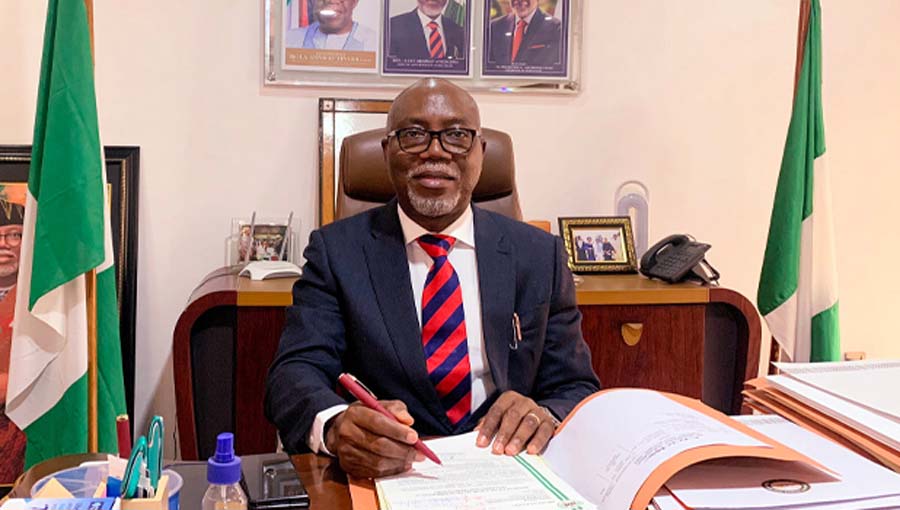
Court of Appeal sitting in Abuja on Monday dismissed an appeal filed by the Governor of Ondo State, Lucky Aiyedatiwa, challenging an amendment to a suit seeking to bar him from contesting the 2028 governorship election.
In its ruling, the appellate court held that the amendment sought by the plaintiffs in the substantive suit was valid and should be allowed to stand.
Governor Aiyedatiwa had approached the appellate court to challenge the decision of the lower court which permitted the claimants to amend their originating processes in the case. The suit is aimed at determining whether the governor would be eligible to contest the 2028 governorship election in the state.
However, the Court of Appeal ruled that the amendment did not prejudice the governor’s defence and that the lower court acted within the law in granting the request.
The appellate court consequently dismissed Aiyedatiwa’s appeal for lacking merit and affirmed the earlier ruling that allowed the amendment of the suit.
The development means the substantive case seeking to restrain the governor from seeking re-election in 2028 will proceed at the lower court.
Governor Aiyedatiwa assumed office as governor following the death of former governor Rotimi Akeredolu in December 2023. The legal dispute revolves around interpretations of tenure and eligibility under Nigeria’s constitutional provisions governing gubernatorial terms.
Legal observers say the dismissal of the appeal clears the way for the court to determine the core issue of whether Aiyedatiwa would be qualified to contest the 2028 governorship election.
Court of Appeal Dismisses Aiyedatiwa’s Appeal in Case Challenging 2028 Re-Election Bid









metro
Kaduna Troops Rescue Two-Year-Old Boy From Kidnappers, Search for Mother Continues

Kaduna Troops Rescue Two-Year-Old Boy From Kidnappers, Search for Mother Continues
A two-year-old boy is back with his family after troops rescued him from suspected kidnappers in Kaduna State.
Jafaru Baba was abducted with his mother from Ungwan Nungu village in Sanga Local Government Area. Troops later recovered the child after tracking the kidnappers to an area around Tayu Village.
The rescue followed intelligence received by security forces about the movement of the abductors and their victims.
According to security sources cited by security analyst Zagazola Makama, troops launched the operation at about 4pm on Wednesday, September 16.
READ ALSO:
- Gaza Building Collapse Kills 21, Including Eight Children
- Niger Mosque Abductions: Terrorists Execute 30 of 500 Captive Muslim Worshippers
- OAU Investigates Death of Final-Year Student as Police Begin Probe
They searched Tayu High Grounds, Tayu Village and surrounding parts of Sanga LGA. The operation later brought the troops into contact with the suspected kidnappers.
A gunfight followed, forcing the abductors to retreat into the bush. In the process, they left the toddler behind.
The troops quickly secured Jafaru and later handed him over to his father.
Security sources said the troops fired 17 rounds of 7.62mm ammunition during the confrontation.
Meanwhile, the search has not ended. Security personnel are still combing the area for the child’s mother, who remains in the kidnappers’ custody.
They are also pursuing the suspects who fled after the encounter, as efforts continue to rescue the woman and bring those responsible for the abduction into custody.
Kaduna Troops Rescue Two-Year-Old Boy From Kidnappers, Search for Mother Continues
metro
Niger Mosque Abductions: Terrorists Execute 30 of 500 Captive Muslim Worshippers
Niger Mosque Abductions: Terrorists Execute 30 of 500 Captive Muslim Worshippers
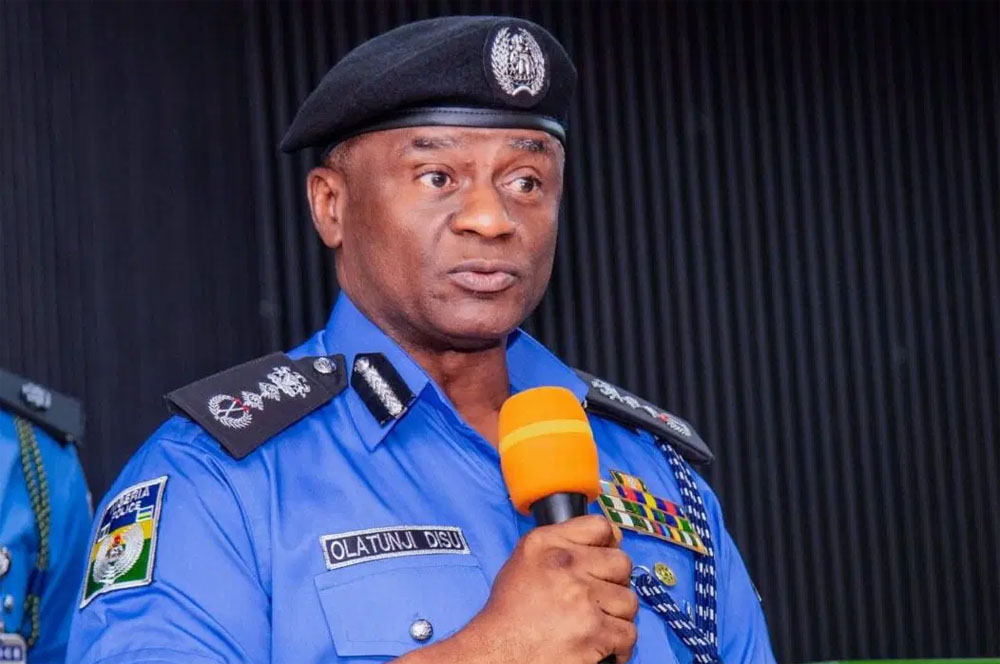
MINNA, NIGERIA – The mass abduction of worshippers from mosques in Niger State has escalated dramatically, with armed terrorists reportedly executing some of the hundreds of captives seized during Friday prayers. The Inspector-General of Police, Olatunji Disu, travelled to Niger State on Saturday to assess the security situation and ordered reinforced rescue operations.
The attacks occurred on Friday, 21 August 2026, at approximately 2pm. Police spokesperson Wasiu Abiodun confirmed that armed men simultaneously attacked mosques in four communities – Dekara, Kpenya, Sabon-Gida and Gidan-Zana – in the Borgu Local Government Area, while Muslims were observing Friday prayers. Witnesses described scenes of chaos. A Dekara resident, speaking on condition of anonymity, said the terrorists surrounded the mosque shortly after prayers began. “As soon as the imam said ‘Assalamualaikum’, the bandits surrounded the mosque and took people away.” Local residents estimate that more than 60 people were abducted from Dekara Central Mosque alone. In Gbezhin community, no fewer than 100 people remained unaccounted for as of Sunday evening. The terrorists later released a video claiming to hold approximately 500 captives, including women and children, with the sound of children crying audible in the footage.
On Saturday, the terrorists issued a warning to surrounding communities, ordering residents to vacate their homes within 30 minutes and threatening: “We will kill anyone we meet when we return.” Those threats appear to have been carried out. A Dekara resident told Daily Trust: “We received information that some of the abducted worshippers have been killed, but we do not know the exact number. Soldiers and vigilantes have moved to recover the bodies, but all routes accessible to security personnel have been planted with improvised explosive devices.” The Niger State chapter of the Christian Association of Nigeria (CAN), through its chairman, Bishop Bulus Dauwa Yohanna, confirmed that approximately 30 worshippers who attempted to flee were shot dead by the gunmen. This figure corresponds with reporting by NPO Reports.
READ ALSO:
- OAU Investigates Death of Final-Year Student as Police Begin Probe
- 57-Year-Old Man Arrested Over Sexual Abuse of Stepdaughter in Edo
- US-Based Nigerian Lawyers Disbarred: Full List of Fraud, Theft and Misconduct Cases
The continuing violence and execution threats have triggered mass displacement. Resident Usman Musa told journalists that more than 200 residents from Gbezin had fled to neighbouring Benin Republic for safety. Another resident added that approximately 230 residents from Gidan-Zana and Sabon-Gida were taking refuge in Gawungi, inside Benin, while others had fled to Kwara State to stay with relatives.
Among those abducted are several prominent community figures. According to Ismaila Yahaya, the 90-year-old village head of Ka’ada was among those taken. He is the biological father of the District Head of Dekara and had only recently been released from a previous kidnapping. The violence in Borgu Emirate has not been confined to the mosque attacks. The Niger State Government confirmed that Alhaji Ahmed Yusuf, the village head of Galla, was killed by armed men at his residence. Governor Mohammed Umaru Bago expressed condolences, describing the killing as evidence of the bandits’ “extreme arrogance”.
Amid the escalating crisis, Inspector-General of Police Olatunji Disu visited Niger State on Saturday, 29 August, meeting with Deputy Governor Yakubu Garba at the Government House in Minna. He conveyed his condolences to the families of the victims and pledged that “the safe rescue of the kidnapped victims and bringing the perpetrators to justice remains the focus of current operations”. Disu has ordered the deployment of elite reinforcements to Niger State, including counter-terrorism units, tactical squads and the police air wing. Assistant Inspector-General of Police Victor Olaiya of Zone 7 has been dispatched to coordinate rescue efforts. Addressing officers at the Niger State Police Command, the Inspector-General said: “Nigerians are watching to see the police do what is right. I am not here for ceremony, but to bring a strong message of support to officers and soldiers working under difficult conditions.”
The Nigerian Supreme Council for Islamic Affairs (NSCIA) described the attacks as “heinous and barbaric”, calling on the Federal Government to “move beyond sporadic rescue operations” and establish a permanent, intelligence-driven and community-centred security architecture. The Christian Association of Nigeria’s Niger State chapter urged the government to provide adequate security at places of worship nationwide, stressing that “an attack on any place of worship is an attack on the sanctity of worship and a threat to the wider community”. Amnesty International also urged Nigerian authorities to secure the safe release of the abducted worshippers, noting that at least 1,100 people were abducted in the country between January and April 2026, with the actual figure likely to be far higher.
As of press time, the Niger State Government said it had not received any contact or demands from the kidnappers. Information Commissioner Obed Nuhu, speaking in a television interview, said the attacks were suspected to have been carried out by Lakurawa and Boko Haram elements, though the exact number of victims remained unverified.
Niger Mosque Abductions: Terrorists Execute 30 of 500 Captive Muslim Worshippers
metro
Kano Police Trace 12 Stolen Vehicles, Arrest 10 Suspects
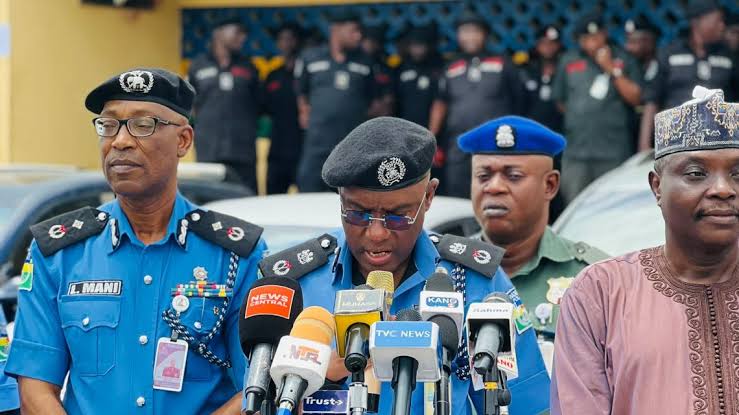
Kano Police Trace 12 Stolen Vehicles, Arrest 10 Suspects
The Kano State Police Command has arrested 10 suspected members of an alleged interstate car theft syndicate and recovered 12 vehicles linked to the group.
Commissioner of Police Ibrahim Adamu Bakori disclosed this on Wednesday during a briefing at the Tarauni Area Command.
According to him, five suspects were first arrested in Adamawa on September 7, leading to the recovery of a Mercedes-Benz GLK 350. Further investigation resulted in the recovery of 10 additional vehicles from Kano and neighbouring states.

Five more suspects were arrested on September 12 at Kwankwasiyya City Quarters, Tarauni, where police allegedly recovered a stolen Toyota Hilux.
Bakori said preliminary findings showed that the suspects allegedly operated across Kano, Katsina, Bauchi, Gombe and other states. He said the group allegedly stole vehicles, hid them at different locations and moved them across state borders for resale.
The commissioner noted that 11 of the 12 recovered vehicles were unregistered, making it difficult to trace their owners.
He urged vehicle owners to register their vehicles and display valid number plates, while warning that unregistered vehicles could make criminal investigations more difficult.
Bakori said investigations were ongoing and efforts were underway to arrest other suspected members of the syndicate.
Kano Police Trace 12 Stolen Vehicles, Arrest 10 Suspects
-

 Politics3 days ago
2027: Northern Lecturers Back Tinubu, ASUU Disowns Endorsement
-

 metro3 days ago
Police Arrest Mother Over Alleged Brutal Abuse of 7-Year-Old Girl in Anambra
-

 Sports2 days ago
‘I Was Never the Chosen One’ — Dembele Responds to Mbappe
-

 International1 day ago
Islamic Council Condemns Attempted Attack on Holy City of Mecca
-

 Education2 days ago
JAMB Moves 2027 UTME Time — Here’s What Candidates Need To Know
-

 metro2 days ago
Lagos Power Outage: Ikeja Electric Blames TCN as Businesses, Homes Groan
-
 News1 day ago
Keep Politics Out of My Office — Ogbomoso Grand Chief Imam Warns Politicians, Bloggers
-
 Politics2 days ago
2027: APC Governors Reject Wike’s Rainbow Coalition, Insist on Party Loyalty