

metro
Human Traffickers Remove Teenager’s Womb to Punish Her for Rejecting Sex Work
Human Traffickers Remove Teenager’s Womb to Punish Her for Rejecting Sex Work
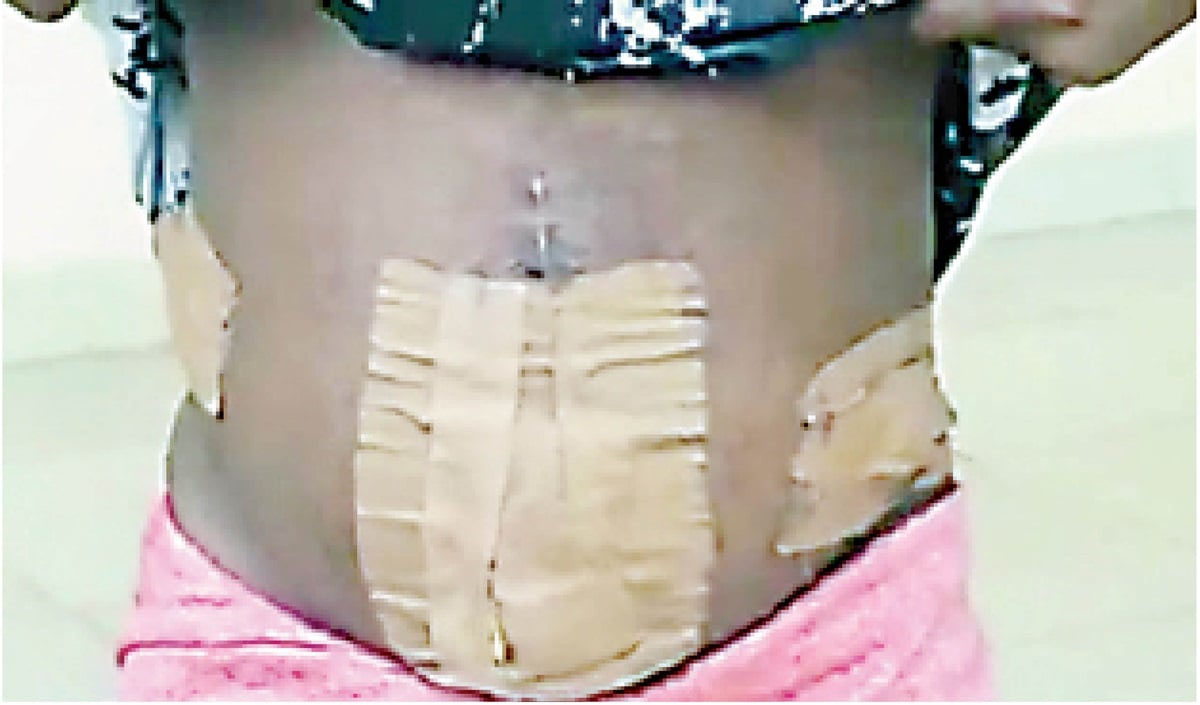
UDU, Delta State – Residents of Udu Local Government Area are asking a haunting question: “How can a woman with female children allow this kind of thing to be done to another person’s child?” That question has echoed across Delta State after the arrest of two women accused of trafficking 19-year-old Ejiro to Côte d’Ivoire, where human traffickers allegedly removed her womb and fallopian tubes when she refused to become a prostitute. The Delta State Police Command has taken two suspects into custody: Blessing Mongo, 47, and Esther Meeting, 32. According to police, the case was officially reported on April 3, 2026, after the victim’s mother noticed her daughter was seriously ill following a visit from her father’s house. What the mother discovered would shatter any parent’s heart: her teenage daughter had been surgically altered without her consent in a foreign country. Police Commissioner Yemi Oyeniyi confirmed the case during his first-quarter briefing in Asaba, stating that medical examinations revealed the traffickers removed the teenager’s womb before returning her to Nigeria. “During the course of investigation, a medical examination was carried out and it was discovered that the traffickers removed her womb without her consent,” CP Oyeniyi said.
The bizarre and pathetic story begins like many trafficking tales—with trust. According to SP Bright Edafe, the Delta State Police Public Relations Officer, Ejiro was approached by a female friend of her father who offered to help her travel abroad for a job. Though the exact nature of the job was never disclosed, Ejiro believed that Blessing, being a mother and a family friend, would not wish her evil. Ejiro accepted the offer with an open, innocent mind. She looked forward to becoming financially independent and proud of traveling to another country. But that dream quickly turned into a nightmare. Upon arrival in Côte d’Ivoire (Ivory Coast) , Ejiro discovered she had been brought to engage in forced commercial sex work. She immediately refused and demanded to be returned to Nigeria. The traffickers told her they had no money for her return fare. When she called Blessing, the woman who facilitated the journey, she also claimed to have no funds.
Further investigation revealed a sophisticated all-female criminal network. According to the victim’s statement to police, in September 2025, Ejiro and two of her friends met Blessing Mongo, who introduced them to Esther Meeting. Esther then introduced them to another lady named Onome, aged 36, all for the purpose of trafficking to Ivory Coast for prostitution. Blessing reportedly handed Ejiro over to a Warri-based lady who is currently at large. That suspect then transferred her to another accomplice in Lagos State, who took Ejiro to Côte d’Ivoire. On arrival, Ejiro was received by a woman known only as “Iron Man,” who police believe still holds many other young girls in forced prostitution.
READ ALSO:
- From Police Cadet to Industrial Icon: The Story of Olatunde Badmus
- ADC Reacts to Defections, Says Tinubu Benefiting from Opposition Disunity
- Inside APC Power Struggle as Akpabio, Oshiomhole Eye Senate Control
When Ejiro refused to cooperate, the traffickers escalated their brutality. According to police, after she complained of feeling unwell, they took her to a place that claimed to be a hospital. “Along the line, she was given something and fell unconscious. When she told them she was sick, they took her to a place that claimed to be a hospital and injected her until she lost consciousness,” Edafe narrated. “On waking up, she saw her stomach plastered. She didn’t know what had happened to her.” Ejiro later told investigators that days after her arrival in Ivory Coast, she was injected with an unknown substance and rushed to a hospital. The location of that hospital remains unknown to her. All she remembers is waking up with her abdomen bandaged and no explanation from her captors.
Ejiro reportedly stayed in Côte d’Ivoire for over a year before the forced surgery was performed. After the procedure, the traffickers noticed she was not recovering well—her wound refused to heal. She was then put in a vehicle and sent back to Lagos State, Nigeria, where she was abandoned. Roaming the streets of Lagos, she was noticed by a Good Samaritan who asked questions about her condition. Initially afraid because he had heard of cases where people died while trying to help trafficking victims, the man eventually summoned courage. He took her to Warri, from where she located her family and explained everything. Upon arrival in Delta State, Ejiro was taken to a government hospital in Ughelli. Her hospital bill was paid by the Ministry of Women Affairs. It was there that doctors made the shocking discovery: her fallopian tubes had been surgically removed. The organ harvesting was apparently done to punish her for refusing prostitution, to render her childless for life, or to make it impossible for her to get pregnant while being forced into sex work.
Ejiro narrated her painful experience in simple, devastating terms: “I knew the woman who proposed a job abroad to me through my father. But when I got to Côte d’Ivoire, I saw that I was brought to practise commercial sex work. I told them I wanted to return home, but they said they had no transport fare to give me. I called my father’s friend, who handed me over to the other person, but she replied that I should remain there as she had no money to give me. I didn’t know when I fell unconscious. I just woke up and found my stomach plastered.”
During interrogation, Blessing Mongo admitted her role. “She’s my girl. I knew her through my friend. My friend, Esther, told me that I should help her travel. So I asked Ejiro if she would like to travel, and she said ‘yes,'” Blessing stated. She confessed to receiving N400,000 for facilitating the girl’s travel, claiming it was her first time engaging in human trafficking. But when asked why she did not take her own 18-year-old daughter abroad for prostitution, Blessing gave no answer. She only said she was unhappy with what had been done to Ejiro—a statement that has been met with public scorn. The second suspect, Esther Meeting, told police she received N150,000 as part of the syndicate. She denied knowing the situation would turn out this way, adding that she has two boys and one girl, aged five. Like Blessing, she offered no explanation for why she would help traffic another woman’s daughter while raising her own female child.
Police said two other suspects remain at large: the Warri-based woman who first received Ejiro from Blessing, and the woman known as “Iron Man” in Côte d’Ivoire. The case has been transferred to the State Criminal Investigation Department (SCID) for further investigation. The Delta State Police Command has urged residents to remain vigilant and report suspicious activities, particularly those involving human trafficking and exploitation. The command also disclosed that it charged about 455 criminal cases to court between January 2026 and April 2026, with 205 cases already prosecuted and 250 pending across the state’s 25 local councils.
The case has sparked widespread outrage on social media. A video accompanying the police statement bore this inscription: “You want to know how heartless human trafficking syndicates can be, then you need to listen to how they trafficked a 19-year-old girl from Delta State to the Ivory Coast for prostitution, and when she refused to engage in prostitution, they injected her, removed her womb, and returned her to Nigeria.” For the people of Udu Local Government Area, one question remains unanswered: How could any mother do this to another mother’s child?
Human Traffickers Remove Teenager’s Womb to Punish Her for Rejecting Sex Work


metro
18 Suspected Bandits Killed as Security Forces Foil Mass Kidnap in Katsina
18 Suspected Bandits Killed as Security Forces Foil Mass Kidnap in Katsina
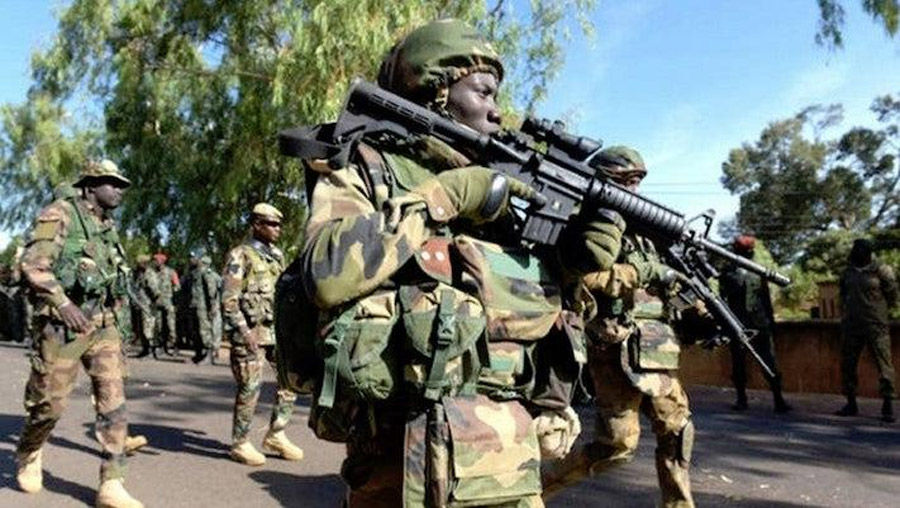
Eighteen suspected bandits have been killed in an intelligence-led ambush that reportedly foiled a planned mass kidnapping in Bakori Local Government Area of Katsina State.
The operation took place at about 1am on Monday, September 21, 2026, at Gidan Iyado, Kakumi Ward, after security personnel received intelligence that an armed group was planning to abduct residents for ransom.
According to the Katsina State Ministry of Internal Security and Home Affairs, the operation involved hunters, members of the Community Watch Corps and local vigilante groups, who laid an ambush and engaged the suspected bandits.
The ministry said 18 members of the group were killed, while no casualty was recorded among the security personnel involved in the operation.
Recovered items included one G3 rifle, two AK-47 rifles, 14 rounds of 7.62mm live ammunition and three motorcycles.
READ ALSO:
- Petrol Depot Prices Fall as Dangote, Marketers Cut Rates, Pump Price Reduction Looms
- 2027: Tompolo-Backed Group Deploys 44 Vehicles for Tinubu-Shettima Campaign in Borno
- MTN, Gates Foundation Launch $25m AI Maternal Health Initiative for 500,000 Nigerian Women
Security personnel also recovered two cows and 94 sheep, which the authorities believe were among livestock allegedly rustled by the group.
The Katsina government identified the alleged leader of the group as Alhaji Musa Duki, whom it described as a former school headmaster who allegedly became a bandit leader operating from Mununu Forest in Faskari Local Government Area.
Authorities said the operation was part of continuing efforts to disrupt bandit networks, kidnapping operations and rural insecurity across Bakori, Faskari and neighbouring communities.
The government said a sustained covert operation was ongoing to locate Duki and other members of the network, identify their hideouts and prevent further attacks.
Katsina State Governor Dikko Umar Radda commended the security personnel and community-based security groups involved in the operation, while urging residents to continue providing timely and credible information to security agencies.
The latest operation comes amid continuing security challenges in parts of Katsina State, where authorities have increasingly relied on intelligence gathering and collaboration between conventional security agencies and community-based security groups to disrupt criminal activity.
The recovered weapons and ammunition have been taken into custody as security agencies continue efforts to dismantle the alleged network and prevent further kidnapping and banditry in the affected areas.
18 Suspected Bandits Killed as Security Forces Foil Mass Kidnap in Katsina
metro
Police Arrest Two Arms Dealers, Recover 300 Rounds of Ammunition in Kaduna
Police Arrest Two Arms Dealers, Recover 300 Rounds of Ammunition in Kaduna
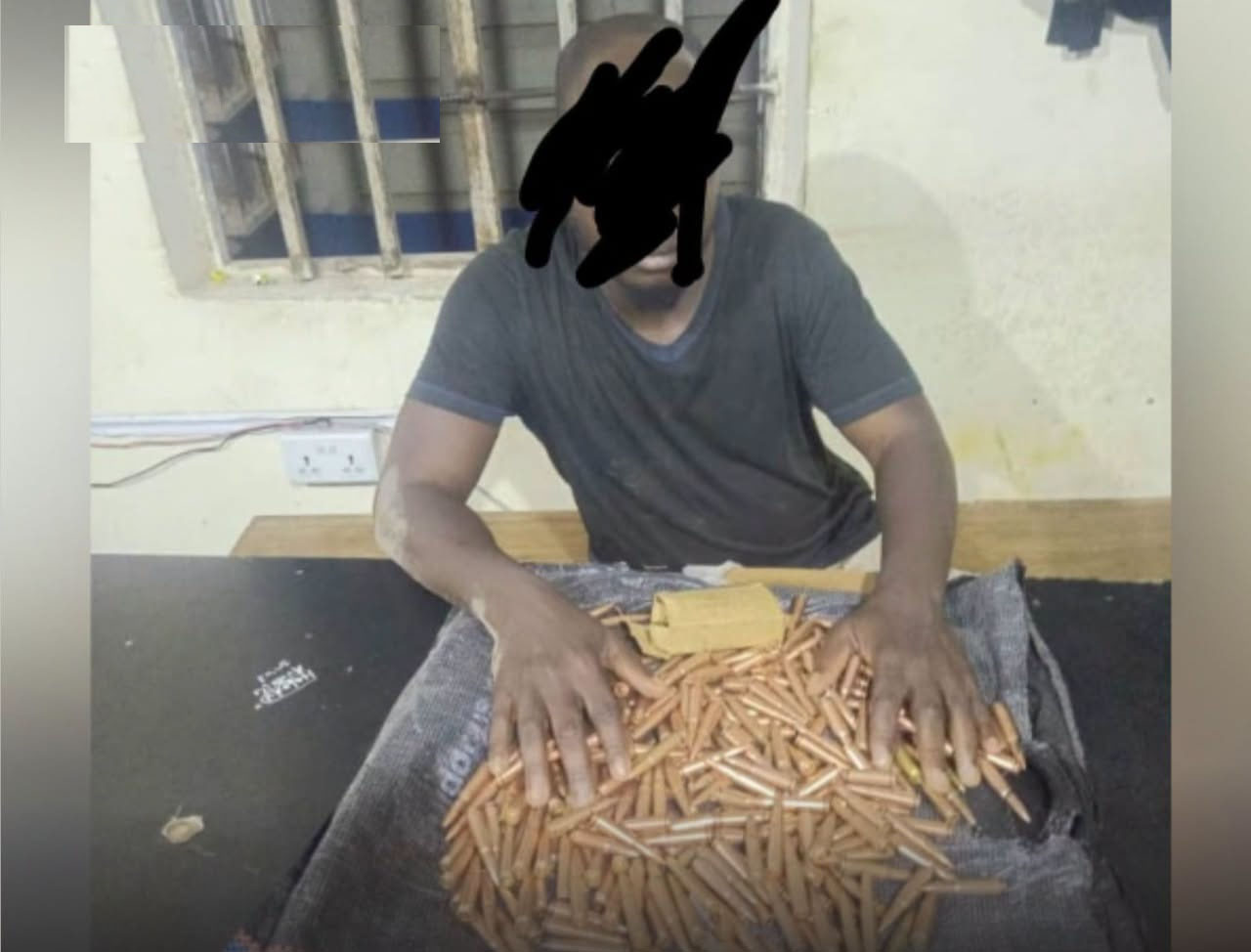
The Kaduna State Police Command has arrested two suspected arms traffickers and recovered 300 rounds of live ammunition in an intelligence-led operation in the state.
The suspects, identified as Rayyanu Adamu and Nasiru Abubakar, were arrested by operatives of the Police Anti-Kidnapping Unit following surveillance around the Giwa and railway station axis.
Police said the operation resulted in the recovery of 270 rounds of AK-47 ammunition and 30 rounds of Type 06 ammunition.
The suspects are being interrogated as investigators work to determine where the ammunition was sourced, its intended destination and whether other people are involved in the alleged trafficking operation.
The arrests come amid increased security operations across Kaduna State against kidnapping, banditry, arms trafficking and terrorist logistics.
READ ALSO:
- Petrol Depot Prices Fall as Dangote, Marketers Cut Rates, Pump Price Reduction Looms
- 2027: Tompolo-Backed Group Deploys 44 Vehicles for Tinubu-Shettima Campaign in Borno
- MTN, Gates Foundation Launch $25m AI Maternal Health Initiative for 500,000 Nigerian Women
In a separate operation, troops of Operation FANSAN YAMMA arrested a suspected terrorist kingpin and two alleged members of his network in Kubau Local Government Area.
Troops also arrested a 50-year-old woman in Igabi Local Government Area who was allegedly transporting 300 rounds of ammunition. The military said preliminary investigations indicated that she had travelled from Zamfara to Lafia before allegedly receiving the ammunition for onward delivery to suspected terrorist elements in Birnin Gwari.
A suspected terrorist logistics supplier was also arrested in Birnin Gwari, with four communication devices recovered during the operation.
The separate operations point to continuing efforts by security agencies to disrupt the movement of arms and ammunition to criminal and terrorist groups operating in Kaduna and neighbouring areas.
The Kaduna Police Command has also recorded other ammunition seizures in recent operations, as security personnel intensify efforts to identify suspected arms suppliers, couriers and their associates.
The two suspects remain in police custody while investigations continue.
Police Arrest Two Arms Dealers, Recover 300 Rounds of Ammunition in Kaduna
metro
Niger Mosque Attack: Bago Says 63 Abducted, 14 Freed, Three Killed
Niger Mosque Attack: Bago Says 63 Abducted, 14 Freed, Three Killed
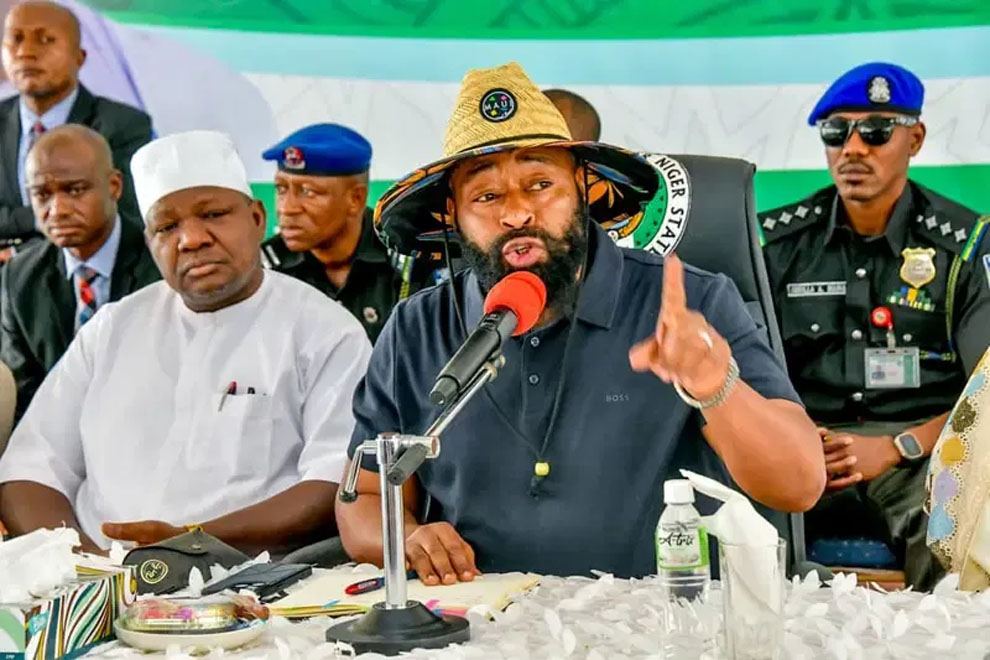
Niger State Governor, Mohammed Umaru Bago, has said 63 people were abducted during the August 21 attack on worshippers in the Dakera area of Borgu Local Government Area, with three victims killed and 14 others recovered.
Bago’s disclosure provides the first specific official breakdown of the victims following weeks of conflicting reports about the scale of the Niger State abduction.
The governor said 33 worshippers were abducted from a mosque, while the attackers seized another 30 people from a nearby market as they fled, bringing the total number to 63.
He made the disclosure when former Niger State governor and Senator representing Niger North, Abubakar Sani Bello, visited the Government House in Minna to sympathise with the state over recent deaths and security incidents.
Bago also rejected reports circulating on social media that about 500 people had been abducted, describing the figure as exaggerated.
“It was a social media hype. Thirty-three were kidnapped at the mosque, and on their way, they kidnapped an additional 30 in a market, making a total of 63,” the governor said.
He added that three of those abducted had been killed, while 14 had been recovered.
The governor’s account means that, of the 63 people he said were abducted, 17 have been accounted for through deaths or recovery, leaving 46 whose current status was not specified in his latest disclosure.
However, the official figure has not ended concerns over the scale of the wider Borgu mass abduction.
Residents of Dekara and neighbouring communities staged a protest in New Bussa on Monday, September 21, demanding the release of hundreds of people they said remained in captivity more than a month after the attacks.
According to Reuters, residents initially estimated that about 600 people had been abducted during coordinated attacks on several communities. The president of the Borgu Youths Development Association, Abdullahi Yahaya Sadauki, subsequently said community estimates had risen to nearly 700 people allegedly still in captivity.
Reuters said it could not independently verify the higher figure.
READ ALSO:
- UNGA 81: Trump Threatens to ‘Annihilate’ Iran if No Deal Is Reached
- Mambilla: Malami Defends $200m Settlement, Rejects ICC Corruption Findings
- Obasanjo Family, Orji Kalu Among Nigerians Linked to $271m US Property Investigation
The residents are calling for a formal headcount across the affected villages to establish the actual number of people missing, those who escaped and those who were taken into captivity.
The protest also reflected the wider impact of the security crisis in Borgu, with residents saying insecurity has restricted access to markets and healthcare. Shops were reportedly closed in the area as residents observed a shutdown to draw attention to the continued captivity of the victims.
The attack occurred on August 21 when armed men invaded communities in the Dekara district of Borgu, including Gidan-Zana and Kpenya.
Police had initially said armed men stormed Kpenya Mosque during Friday prayers after attacking Gidan-Zana and Kpenya communities. Police spokesperson Wasiu Abiodun said at the time that authorities could not confirm the number of people abducted.
The initial police assessment indicated that no death had been confirmed at that stage, while a joint security team was deployed to the area for assessment and rescue operations.
Residents subsequently told Reuters that more than 60 worshippers had been abducted during what appeared to be coordinated attacks on several communities in Borgu. Reuters noted at the time that it could not independently verify the residents’ account.
The latest developments therefore present two different sets of figures that should not be treated as interchangeable.
Governor Bago’s official account puts the number abducted from the mosque and a nearby market at 63, comprising 33 worshippers and 30 other people. He says three were killed and 14 recovered.
The much higher figure of about 600, later described by community representatives as close to 700 people still in captivity, relates to the broader series of attacks across Dekara and neighbouring communities, rather than necessarily the specific mosque-and-market incident identified by Bago. The higher community estimate remains unverified.
The discrepancy has increased pressure on authorities to establish a comprehensive record of those affected by the attacks.
President Bola Ahmed Tinubu had previously ordered an immediate rescue operation following the August 21 attacks. More than a month later, however, residents say they are still waiting for the safe return of their relatives.
Niger State Commissioner for Information, Obed Nuhu Nana, told Reuters that security agencies had been mobilised and that the government was making efforts to rescue the victims.
Borgu’s location along Nigeria’s western border with the Republic of Benin has also heightened security concerns, particularly because the area covers remote communities where armed groups can operate across difficult terrain.
The continuing uncertainty over the number of victims has left families seeking answers about relatives who have not returned home. Community leaders say a physical headcount remains necessary to determine the true scale of the Borgu kidnapping.
For now, the latest official position is that 63 people were abducted in the mosque and market incidents, three were killed and 14 were recovered. The separate community claim that hundreds more remain in captivity has not been independently verified and requires further official investigation.
The conflicting figures underscore the need for authorities to reconcile community records with security agencies’ information and provide a verified account of the people abducted during the August attacks.
Niger Mosque Attack: Bago Says 63 Abducted, 14 Freed, Three Killed
-
 International2 days ago
18 Suspects Transferred to US Over 2021 Killing of Haitian President Moïse
-

 News2 days ago
NiMet Predicts Thunderstorms, Rain Across Nigeria Till Wednesday
-

 Politics2 days ago
‘Join the Hunt’ — Soludo Urges Igbos to Strategically Align Ahead of 2027
-

 Sports2 days ago
Messi Fires Stunning 75th Career Free-Kick to Reach 930 Goals in Inter Miami Draw
-

 metro2 days ago
My Heart Has Always Been Home With You — Tinubu’s Powerful Message to Oluremi at 66
-
 News2 days ago
Working People United Celebrates Oluremi Tinubu at 66, Commends Her Humanitarian Efforts
-

 News1 day ago
NLC Backs ₦500 Petrol Demand, Workers Propose ₦500,000 Salary
-

 Auto2 days ago
Jetour T1 Storms Abuja as Automaker Accelerates Nigeria Expansion