

Politics
2027: Atiku Camp Warns Opposition Against Zoning Presidency to South
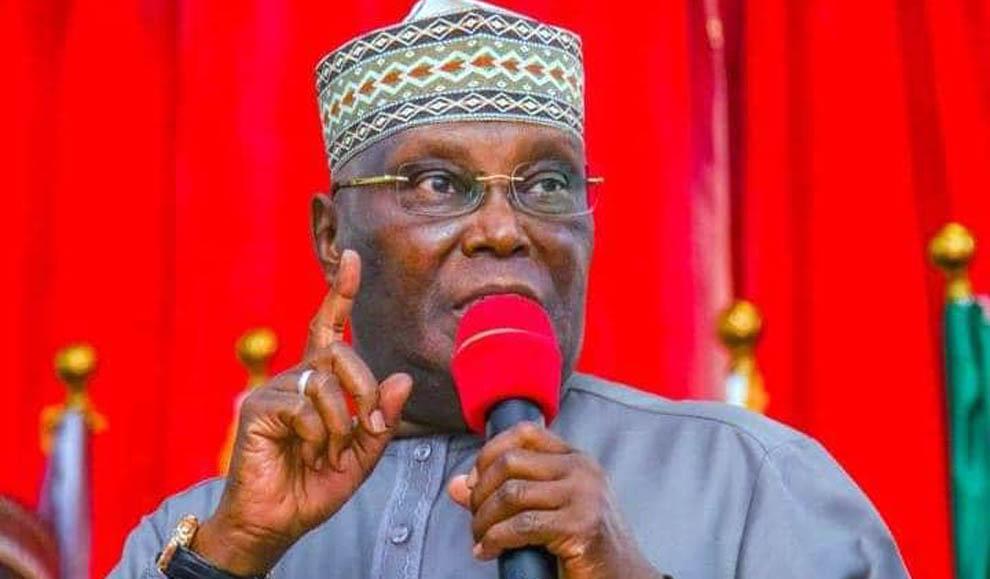
2027: Atiku Camp Warns Opposition Against Zoning Presidency to South
The camp of former Vice President Atiku Abubakar has strongly opposed calls for the opposition to zone the 2027 presidential ticket to Southern Nigeria, warning that such a strategy could hand President Bola Ahmed Tinubu an easy path to re-election.
In a strongly worded statement issued on Monday by Atiku’s media aide, Olusola Sanni, the former vice president’s camp described the growing demand for a southern opposition candidate as politically unrealistic, strategically weak and historically unsupported.
According to the statement, there is no precedent in Nigeria’s democratic history where an opposition candidate from the same geopolitical region as a sitting president successfully defeated an incumbent.
“The first and most obvious question is this: how does a Southern opposition candidate realistically unseat a sitting Southern president? Nigerian political history offers no precedent for such an outcome,” the statement said.
“No incumbent president has ever been defeated by an opposition challenger from the same geopolitical bloc. To insist otherwise is to enter the contest already defeated.”
The statement comes amid increasing political realignments and coalition discussions ahead of the 2027 general election, particularly among opposition figures seeking to challenge the ruling All Progressives Congress.
Political stakeholders across the country have been divided over whether power should remain in Southern Nigeria after Tinubu’s first term or rotate back to the North under Nigeria’s informal zoning arrangement.
While the Atiku camp acknowledged that the APC could reasonably retain a southern presidential candidate because Tinubu is the incumbent, it argued that the opposition should not blindly adopt the same approach without carefully evaluating electoral realities.
“Defeating an incumbent president requires realism, not romanticism; strategy, not sentiment; honesty, not selective memory,” the statement noted.
READ ALSO:
- FG in Advanced Talks With World Bank for Fresh $1.25bn Loan Facility
- Oshiomhole Wants Nigeria to Take Over MTN Over Xenophobia
- Trump Expands Efforts to Revoke Citizenship of Some Foreign-Born Americans
“The opposition must decide whether its goal is to make an emotional statement or to actually win power.”
The former vice president’s camp also challenged the “equity and fairness” argument frequently advanced by proponents of southern zoning.
According to the statement, by 2027, Southern Nigeria would have held presidential power for nearly 18 years in the Fourth Republic, while the North would have governed for roughly 10 years.
The Atiku camp argued that extending southern leadership beyond Tinubu’s tenure would further deepen political imbalance rather than correct it.
“It therefore becomes difficult to understand the justice in an argument that seeks to deepen an already existing imbalance under the guise of equity,” the statement added.
The camp also accused some political actors of hypocrisy and selective interpretation of zoning principles, especially regarding events surrounding the 2011 presidential election.
It recalled that after the death of former President Umaru Musa Yar’Adua in 2010, many politicians who now advocate strict zoning supported the candidacy of former President Goodluck Jonathan from the South-South region, despite expectations that power should remain in the North under the informal rotational arrangement.
“It is intellectually dishonest for those who enthusiastically supported a Southern presidency under Goodluck Jonathan in 2011, despite the North’s legitimate expectation under the informal zoning arrangement, to now suddenly posture as custodians of rotational justice,” the statement argued.
“Principles do not become sacred only when they align with personal ambition.”
The Atiku camp also addressed ongoing conversations about the Southeast producing Nigeria’s next president.
While recognising the legitimate aspirations of the Southeast region, the statement warned against what it described as “symbolic tokenism” and “transactional political bargaining” designed merely to advance individual ambitions rather than genuine national inclusion.
“The Southeast deserves a sustainable and credible pathway to national leadership — not symbolic tokenism or bespoke arrangements tailored to satisfy one individual’s ambition,” the statement said.
Although no names were mentioned directly, political observers believe the comments may be linked to ongoing agitation by supporters of Peter Obi and other southeastern political interests advocating a southern or southeastern presidency in 2027.
The statement ultimately urged opposition parties and coalition leaders to prioritise building a broad national alliance capable of defeating Tinubu and the APC rather than engaging in emotional zoning disputes.
Analysts believe the latest position by Atiku’s camp could intensify political tension within opposition circles, particularly within the Peoples Democratic Party and emerging coalition movements ahead of 2027.
Atiku, a northern Muslim politician from Adamawa State, remains one of Nigeria’s most influential opposition figures and has contested for the presidency multiple times since 1993.
Although he has not formally declared his intention to run in 2027, his continued political engagements, coalition talks and public interventions have fueled speculation about another presidential bid.
The debate over zoning, regional balance and electoral strategy is expected to remain one of the defining issues shaping Nigeria’s political landscape in the lead-up to the 2027 elections.
2027: Atiku Camp Warns Opposition Against Zoning Presidency to South







Politics
ADC Raises Alarm as Court Delays Release of Lifu’s Judgment Despite Payment
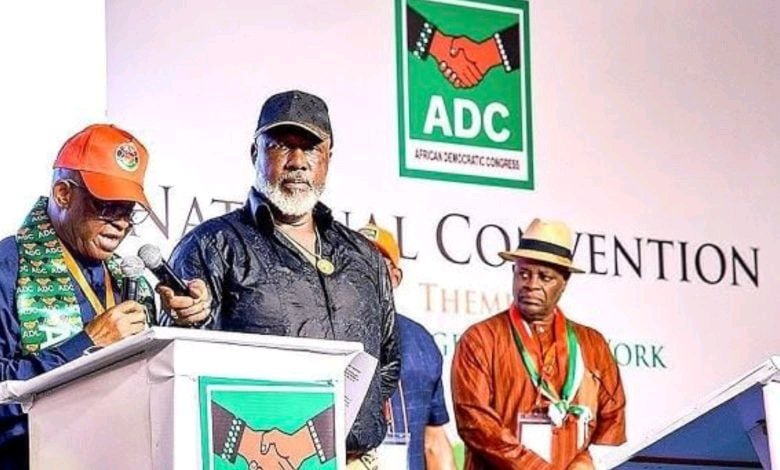
ADC Raises Alarm as Court Delays Release of Lifu’s Judgment Despite Payment
The African Democratic Congress (ADC) has raised fresh concerns over the handling of its leadership crisis, accusing the Federal High Court in Abuja of delaying the release of the Certified True Copy (CTC) of a judgment that nullified the Senator David Mark-led leadership of the party.
The party’s Presidential Campaign Council said the continued delay had denied affected parties access to the full details of the judgment, despite the payment of the prescribed fees for obtaining certified copies.
In a statement issued on Monday, November 9, 2026, the Director of Strategic Communication of the ADC Presidential Campaign Council, Phrank Shaibu, said lawyers representing some of the defendants had formally applied for the certified judgment but were yet to receive the document.
According to the council, counsel to the third defendant submitted an application on November 5, the day Justice Peter Lifu delivered the judgment, while counsel to the first defendant filed another application on November 6.
The council maintained that both applications carried the Federal High Court’s official ‘PAID’ stamp, indicating that the required fees had been settled.
Shaibu questioned why the certified judgment had remained inaccessible despite the judge’s reported declaration in open court that copies were ready.
He argued that the delay was particularly troubling because the judgment directly affected the leadership and future of the opposition party, as well as the political interests of its members.
The ADC campaign council maintained that without the certified copy, affected parties could not properly establish the precise orders made by the court or fully determine the appropriate legal steps to challenge them.
It described the situation as a denial of access to justice, insisting that litigants should not be subjected to unnecessary difficulties in obtaining official copies of judicial decisions affecting their rights.
The council also recalled its earlier objection to Justice Lifu presiding over the case, saying its National Secretary, Ogbeni Rauf Aregbesola, had previously raised concerns about the judge’s impartiality.
It further questioned the timing of the judgment, which was delivered days after the ADC’s campaign activities in Sokoto, alleging that the circumstances surrounding the ruling and the subsequent delay in releasing the certified copy had heightened suspicions among party members.
The ADC had earlier rejected the November 5 judgment and announced plans to challenge it through the appropriate judicial channels.
In the controversial ruling, Justice Lifu nullified the Senator David Mark-led leadership structure and invalidated actions taken by the disputed executive, including decisions connected to the party’s 2027 presidential nomination.
The ruling also recognised the position of Nafiu Bala Gombe in the leadership dispute.
The ADC has vowed to pursue every lawful avenue to challenge the judgment, while demanding an immediate explanation for the delay in releasing its certified copy.
As of Monday, November 9, there was no reported official response from the Federal High Court addressing the campaign council’s latest allegation.
ADC Raises Alarm as Court Delays Release of Lifu’s Judgment Despite Payment
Politics
Tension in Delta as Task Force Members Protest Over Colleague’s Killing at NDC Rally
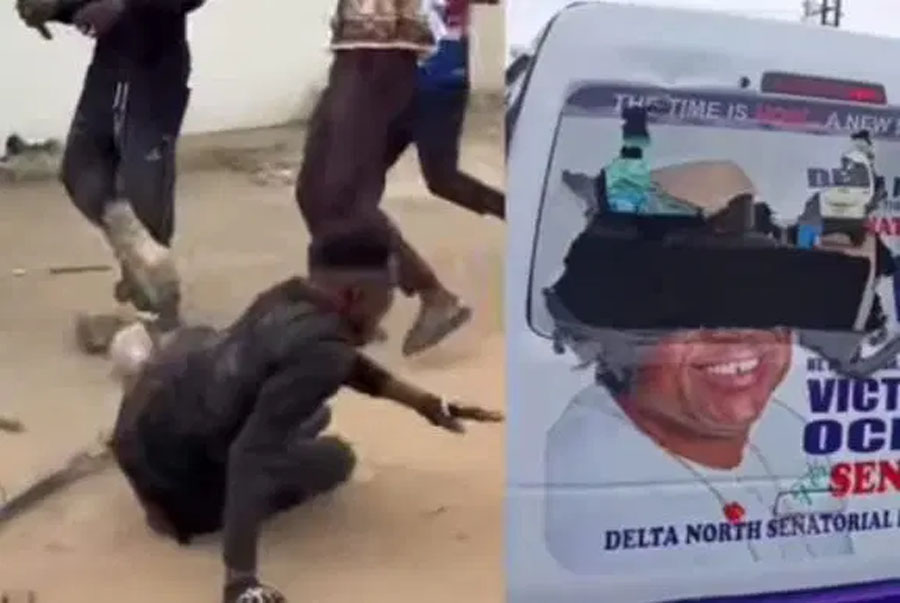
Tension in Delta as Task Force Members Protest Over Colleague’s Killing at NDC Rally
ASABA, DELTA STATE – Tension has heightened in Asaba, Delta State, following a protest by members of a task force over the killing of their colleague during Saturday’s violent political clash involving supporters of the Nigeria Democratic Congress (NDC).
The protest reportedly took place on Monday, November 9, 2026, two days after violence erupted during a political procession organised by the Obedient/OK Movement in support of the party’s presidential candidate, Peter Obi.
According to reports, the task force members took to the streets to express their anger over the death of their colleague, who was reportedly among those affected by Saturday’s violence.
The protest came amid growing tension over the circumstances surrounding the deadly confrontation, which left one person dead and several others injured.
The incident occurred along Nnebisi Road, Asaba, at about 12:15 p.m. on Saturday, November 7, during the political procession.
The Delta State Police Command confirmed the death and disclosed that five other people sustained varying degrees of injuries.
The police said they had received intelligence suggesting a possibility of violence before the procession and subsequently invited the organisers to a security meeting.
According to the command, the organisers were advised against holding an open-road procession and encouraged to conduct their political activities at a designated venue where adequate security could be provided.
However, the police alleged that the organisers ignored the advice and proceeded with the procession.
Following the violence, the command announced that it had commenced a full-scale investigation to establish the circumstances surrounding the clash and identify those responsible.
The Delta State Government also condemned the incident, describing the loss of life as unacceptable and calling on the police to ensure that anyone found culpable was brought to justice.
The development has further heightened concerns over political violence and public safety in Delta State as political activities gather momentum ahead of the 2027 general elections.
The circumstances surrounding Monday’s protest, including the full identity of the deceased task force member and the extent of the protesters’ demands, were not immediately clear.
Tension in Delta as Task Force Members Protest Over Colleague’s Killing at NDC Rally
Politics
Hamzat, GRV Clash Over Housing, Transport, Governance at Lagos Debate
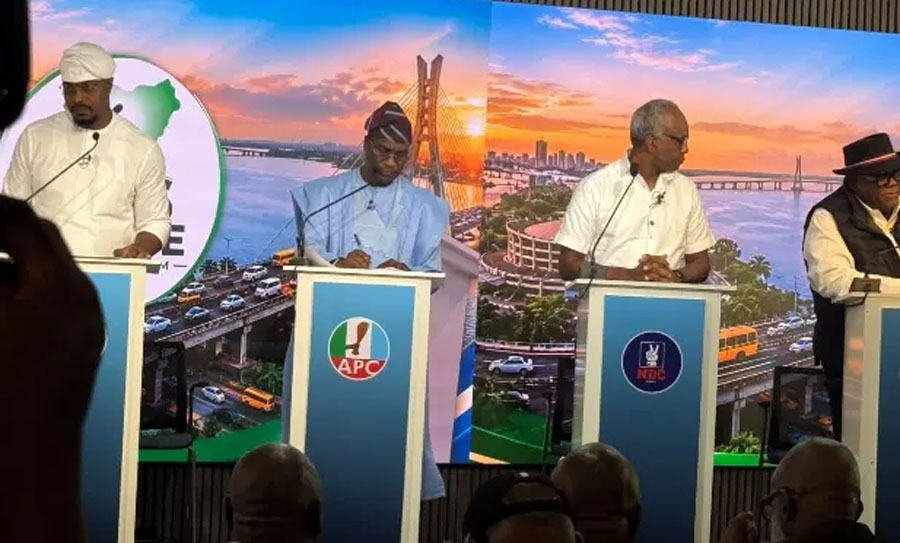
The Lagos State Deputy Governor and All Progressives Congress (APC) governorship candidate, Obafemi Hamzat, and his African Democratic Congress (ADC) counterpart, Gbadebo Rhodes-Vivour, have presented contrasting development plans for Lagos State ahead of the 2027 governorship election.
The two candidates outlined their policy priorities during the 2026 Lagos State Governorship Debate held in Lekki on Sunday, November 8, with particular attention to housing, transportation, infrastructure, security, healthcare, waste management and accountable governance.
Hamzat, who described the debate as a job interview, relied heavily on his experience in public service, arguing that his professional background and previous appointments had prepared him for the responsibility of governing Lagos.
He said his experience as a teacher, case manager in New York and systems manager, alongside his years in the Lagos State Government, had equipped him with the knowledge required to manage the state’s affairs.
The APC candidate recalled his time as Commissioner for Science and Technology, during which he said he led the development of the state’s residents and structural database.
He also highlighted his tenure as Commissioner for Works and Infrastructure, citing his involvement in the delivery of major infrastructure projects, including a cable bridge described as the first of its kind in West Africa and the second in Africa.
Hamzat said effective governance required a leader who understood the people, the state and the responsibilities attached to public office.
Presenting his development blueprint, tagged Jacob’s Promise, he said it was structured around seven pillars, seven broad areas of action and 100 pledges.
He identified respect for citizens, hard work and truthfulness as the principles that would guide his administration, adding that government should prioritise actual delivery over public announcements.
READ ALSO:
- ‘My History Is Traceable’: Atiku Fires Back at Tinubu Over University Funding
- Job Seeker Steals Bugatti CEO’s £2m Car After Finding Keys Inside
- Netanyahu Faces Political Setback as Israeli President Picks Rival to Form Government
According to him, residents should evaluate candidates based on their experience, the substance of their programmes and their ability to translate promises into tangible results.
In contrast, Rhodes-Vivour argued that Lagos needed a different approach to governance, accusing successive administrations of prioritising the interests of wealthy residents and privileged communities over those of ordinary people.
The ADC candidate said his political activities and manifesto had consistently focused on improving the living conditions of ordinary Lagos residents.
He maintained that the state needed an integrated development strategy capable of addressing interconnected challenges in housing, transportation, healthcare, education, waste management and urban planning.
On housing, Rhodes-Vivour promised to deliver 100,000 housing units within his first four years if elected.
He proposed funding social housing through luxury taxation, developing the eastern foreshore and intergenerational areas, and decentralising housing development across the state.
He also promised to expand Lagos’ railway network, saying his administration would connect the state’s rail lines within two and a half years through a private-sector-driven arrangement.
He said the proposed approach would be transparent, equitable and cost-effective, with the objective of improving connectivity and opening up more communities for development.
Rhodes-Vivour further argued that the state’s high internally generated revenue should translate into improved living conditions and better public services for residents.
He cited communities such as Makoko while criticising what he described as development policies that displaced ordinary residents in favour of elite interests.
The ADC candidate also pledged to address traffic congestion, flooding, waste management and the activities of street touts, popularly known as agberos.
OTHER CANDIDATES PRESENT THEIR VISIONS
The debate also featured governorship candidates of other political parties, including Funso Doherty of the Nigeria Democratic Congress (NDC) and Deji Doherty of the Peoples Democratic Party (PDP).
Funso Doherty criticised the state’s revenue and taxation system, arguing that Lagos residents continued to face multiple levies without receiving public services commensurate with the revenue generated by the government.
READ ALSO:
- 2027: Tinubu Challenges Atiku to Explain How He Financed University
- Afenifere Crisis: ‘There Is Only One Afenifere’, Secretary Insists Amid Breakup Allegations
- Illicit Donations: Adeboye Orders RCCG to Refund Billions Traced to Church Projects
He maintained that Lagos was operating below its potential despite its substantial internally generated revenue.
The NDC candidate, who said he had spent about 30 years in the private sector, promised a new direction for the state, particularly in healthcare and essential public services.
He urged residents to hold his party accountable if elected.
Deji Doherty, on his part, highlighted the need to improve electricity supply and create more economic opportunities for residents.
He said his experience as a technocrat and industrialist had informed his decision to seek the governorship position.
On housing, the PDP candidate cautioned against making unrealistic promises, arguing that the cost of land and building materials must be considered before setting ambitious construction targets.
He also raised concerns about gaps in primary healthcare delivery, particularly in some island communities.
DEBATE AHEAD OF 2027 ELECTION
The Lagos governorship debate was organised by the Nigeria Debate Consortium, a coalition of media organisations comprising Channels Television, TVC News, The PUNCH, TheCable and Vanguard.
The exercise is part of a series of debates scheduled ahead of the 2027 general elections, aimed at giving candidates a platform to explain their programmes and respond to questions on issues affecting Nigerians.
The organisers said the debate was designed to promote issue-based political engagement, democratic accountability and informed electoral choices.
The participating candidates were expected to address major concerns affecting Lagos residents, including the economy and cost of living, transportation and infrastructure, flooding and the environment, healthcare and social welfare, security and accountability.
The February 6, 2027 governorship election will determine who succeeds Governor Babajide Sanwo-Olu as the next governor of Lagos State.
Hamzat, GRV Clash Over Housing, Transport, Governance at Lagos Debate
-

 metro3 days ago
[ICYMI] Lagos Summons DisCos, Regulators Over Persistent Power Outages, Seeks 24-Hour Electricity
-

 metro1 day ago
Fayose Petitions IGP, Threatens Lawsuit Over Rape, Torture Allegations
-

 metro2 days ago
‘Miracle’ Turns Sour as Visiting Pastor Vanishes with Congregants’ Phones During Crusade in Edo
-
 Politics3 days ago
‘My History Is Traceable’: Atiku Fires Back at Tinubu Over University Funding
-

 Auto2 days ago
Four-day Abuja International Motor Fair begins tomorrow Nov 10
-

 Politics2 days ago
Tension in Delta as Task Force Members Protest Over Colleague’s Killing at NDC Rally
-
 Politics2 days ago
ADC Raises Alarm as Court Delays Release of Lifu’s Judgment Despite Payment
-

 Railway2 days ago
Tinubu Targets December 3 Inauguration for Kaduna-Kano Rail Project as Construction Hits 90%