

International
BREAKING: Trump Cancels US Strikes on Iran at Last Minute

BREAKING: Trump Cancels US Strikes on Iran at Last Minute
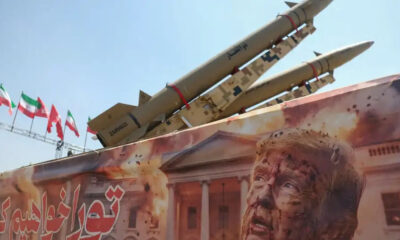
DUBAI/WASHINGTON – President Donald Trump called off plans for renewed US military strikes on Iran at the last minute on Thursday, saying negotiations with Tehran had advanced to the highest levels of Iran’s leadership and had been approved by a broad coalition of regional powers. The dramatic reversal came hours before the strikes were expected to be carried out. But details of the diplomatic breakthrough after more than three months of war — including how Iran’s leadership had signaled its approval — were not immediately clear in Trump’s post on Truth Social. In his announcement, Trump stated: “Based on the fact that discussions with the Islamic Republic of Iran have been brought to the highest level of Iranian leadership and approved, I have, as President of the United States of America, cancelled the scheduled strikes and bombings against Iran this evening.” Trump added that “discussions and final points have been, in both concept and great detail, approved by all parties involved, including the United States, Israel, Saudi Arabia, UAE, Qatar, Turkey, Pakistan, Bahrain, Kuwait, Jordan, Egypt, and others.” He also stated: “The Naval Blockade will remain in full force and effect until this Transaction is finalized — Time and place of the signing to be announced shortly.” There was no immediate official comment from Iran. Trump has repeatedly claimed that a deal with Tehran was imminent in recent weeks, only to have Iranian officials deny such suggestions.
Earlier in the day, Trump had said the United States would hit Iran “VERY HARD TONIGHT” and even added that he wanted at some point to take Iran’s oil infrastructure hub Kharg Island, after a second day of strikes by both sides in the Gulf appeared to threaten a return to all-out war. Trump claimed on Truth Social that “Iran’s Navy, Air Force, Radar, Anti Aircraft, and all other forms of Defense, together with most of its offensive capability, are GONE!” Kharg Island processes approximately 90 percent of Iran’s crude exports and serves as a major revenue source for the Iranian economy. However, it remains heavily fortified by missile batteries, naval mines, and Revolutionary Guard units — meaning any ground invasion would require thousands of American troops.
A fragile ceasefire has been in place since early April 2026, brokered by Pakistan, following the outbreak of hostilities on February 28, 2026, when the US and Israel launched airstrikes on Iran. The war has since killed thousands of people. According to Al Jazeera statistics, at least 7,129 people have died, including 3,593 in Lebanon, 3,468 in Iran, 29 in Gulf states, 26 Israelis, and 13 American soldiers killed in Iranian retaliatory attacks. The war has also pushed up global oil prices and disrupted the Strait of Hormuz, through which approximately 20 percent of the world’s oil passed before the conflict. Oil prices fell sharply after Trump announced the cancellation of US plans to strike Iran, while stocks extended their gains as fears of immediate supply disruptions in the Gulf receded.
READ ALSO:
- June 12: Falana, Falz, CSOs Declare Nationwide Protest Over Insecurity, Hardship
- Shocking Revelation: Ex-DSS Director Recounts How Sani Abacha Died
- Aisha Yesufu Slams Dickson Over Comments on Peter Obi, NDC Leadership
Iranian sources and Western officials earlier said indirect US-Iranian talks on a preliminary peace deal had intensified in recent days, while the renewed hostilities this week undermined prospects for a swift end to the conflict. One Iranian source told Reuters: “This war, from a military standpoint, is a dead end. The Americans could not achieve their goals by attacking Iran. There has been progress in negotiations.” However, despite the latest hostilities, three Iranian sources and Western officials said the talks had not yet discussed in detail issues including a mechanism for the release of billions of dollars in frozen Iranian funds. Iran demands the release of $6-24 billion in frozen funds, while the US prefers staged humanitarian releases. Unresolved questions also remain over Iran’s nuclear enrichment capacity and uranium stockpile, as well as the temporary easing of Iran’s grip on the Strait of Hormuz. The US naval blockade remains in force until final signing.
Iran’s top negotiator, Mohammad Baqer Qalibaf, had warned against any rash moves following Trump’s initial threats. He wrote on X: “Wrong strategies and impulsive decisions will reset the entire board for the worse, explode energy infrastructure and markets and create an endless quagmire that you will be stuck in for years. You will see a different Iran.” United Nations Secretary-General Antonio Guterres called on both sides to redouble their efforts “toward a peaceful, comprehensive, and durable agreement that advances regional and international peace and security,” UN spokesperson Stephane Dujarric said. The framework of an interim deal would centre on a temporary easing of Iran’s grip on the Strait of Hormuz and phased access through the waterway, while ending the US naval blockade on Iranian ports. Unresolved questions over Tehran’s nuclear enrichment capacity and its stockpile of highly enriched uranium would be left for future talks. However, a top Iranian official, Mohsen Rezaei, military adviser to Supreme Leader Ayatollah Mojtaba Khamenei, told CNN that the talks were “at a deadlock” over the release of $24 billion in frozen assets, warning that the US would “enter into a dark corridor” should it resume fighting.
US Secretary of State Marco Rubio had previously declared victory in the conflict, stating that Washington had achieved its objectives of destroying Iran’s defense industrial base and significantly reducing its missile and UAV capabilities. Meanwhile, Trump raised the possibility earlier this month of a direct meeting with Iran’s Supreme Leader Ayatollah Mojtaba Khamenei, telling the New York Post that the Iranian leader had “certainly participated” in negotiations and that “I want to meet him.” The US and Iran traded air attacks on Thursday for a second straight day. The US launched fresh bombing raids overnight, the second round after Trump ordered retaliatory strikes on Tuesday following the shoot-down of a US Apache helicopter. Two US airmen were rescued from the Strait of Hormuz by an AI-powered drone vessel. Trump is seeking to push Iran into making a deal after months of stalemate since the ceasefire was declared at the start of April. The President has lost patience with Iran, telling reporters that “they keep playing us for suckers” and accusing Tehran’s negotiators of “stringing us along.”
READ ALSO:
- Davido Turns World Cup Stage Into Protest – Wears Jacket Bearing Names of Kidnapped Oyo Schoolchildren at FIFA Concert
- Sirika Trial: Nigeria Air Aircraft Chartered From Ethiopian Airlines for 3-Day Display – EFCC Witness
- Democracy Day: FG Declares June 12 Public Holiday
As the world awaits further details, Trump’s announcement suggests that a formal agreement could be imminent, though questions remain about specific provisions regarding Iran’s nuclear program, the reopening of the Strait of Hormuz, the release of frozen Iranian assets, and whether Iran’s Supreme Leader has indeed approved any deal. The war, now in its 100th day as of June 7, has not yielded a decisive military or diplomatic breakthrough. The casualty figures, energy prices, and economic impact continue to show the growing cost of the conflict for the Middle East and the global economy. Key events in this developing story include: on February 28, 2026, the US and Israel launched airstrikes on Iran, beginning the war; in early April 2026, a Pakistan-brokered ceasefire took effect; on April 8, 2026, a two-week ceasefire was announced, but Israel launched strikes on Lebanon hours later; on April 11-12, 2026, talks in Pakistan failed over the nuclear issue; on June 7, 2026, the war reached 100 days with casualties exceeding 7,000; on June 9, 2026, a US Apache helicopter was shot down, and retaliatory strikes were launched; in the early hours of June 10, 2026, Trump threatened to hit Iran “VERY HARD TONIGHT” and seize Kharg Island; later on June 10, 2026, Trump announced the cancellation of strikes, citing progress in talks; and a potential signing ceremony for an interim deal is to be announced. Key details to remember: Trump cancelled planned US military strikes against Iran hours before execution on June 10-11, 2026; the reason cited was progress in talks approved by Iran’s highest leadership and a regional coalition including the US, Israel, Saudi Arabia, UAE, Qatar, Turkey, Pakistan, Bahrain, Kuwait, Jordan, Egypt, and others; the naval blockade remains in full force until final deal signing; earlier, Trump had threatened to hit Iran “VERY HARD TONIGHT” and seize Kharg Island, which processes 90% of Iran’s oil exports; a fragile ceasefire has been in place since early April 2026 following the outbreak of hostilities on February 28, 2026; casualties after 100 days of war stand at least 7,129 killed; the Strait of Hormuz has seen traffic drop from 100 ships per day to about 7 ships per day; oil prices have risen from $70 to approximately $100 per barrel, affecting 146 countries; Iran demands the release of $6-24 billion in frozen funds; and the UN Secretary-General has called for a durable peace agreement. This is a developing story. More details will be provided as information becomes available from the White House, Iranian officials, and international mediators.
BREAKING: Trump Cancels US Strikes on Iran at Last Minute









International
$100 Crude Returns: Escalating US-Iran War Strains Global Maritime Chokepoints

World oil markets entered dangerous territory on Wednesday as Brent crude breached the symbolic $100 per barrel barrier amid mounting fears of sustained supply shocks in the Middle East. With the clash between the United States and Iran now stretching into its seventh month, commercial energy traders are growing increasingly convinced that diplomatic efforts have stalled and that physical barrels could become harder to move out of the Gulf.
Brent crude serves as the premier global benchmark because it sets the pricing baseline for roughly two-thirds of the world’s internationally traded oil contracts. Sourced from the North Sea, its light, sweet quality and direct access to deepwater marine terminals make it easy to refine and ship anywhere in the world. When Brent moves, it immediately resets the price tag for physical cargoes and national crude streams from West Africa to the Middle East, making its climb past $100 a direct trigger for broader global price shifts.
The immediate catalyst for the rally came from fresh exchanges in the Persian Gulf and surrounding transit hubs. Iran announced a retaliatory strike on a U.S. facility in Jordan following American operations against Iranian naval assets in the Strait of Hormuz. Adding to the market alarm, Iranian authorities declared commercial oil tankers near Kuwait and Bahrain to be potential targets, effectively freezing merchant shipping confidence across the waterway.
Alternative export pathways offer little immediate relief. Saudi efforts to bypass the blocked Strait of Hormuz by redirecting crude toward the Red Sea have collided with renewed military strikes by Houthi forces targeting energy installations around the Bab al-Mandab strait. With both primary and fallback shipping lanes compromised, the flow of crude faces its most severe maritime disruption in years.
Beyond the energy trade, triple-digit crude threatens to undo recent progress against global inflation. Central banks worldwide are facing renewed pressure to keep borrowing costs elevated to prevent higher transport and production bills from embedding into retail prices. The prospect of persistent inflation and high interest rates pulled down major equity indices in the United States and Europe, overshadowing selective gains in Asian tech sectors.
International
Truly Depraved Rapist Jailed for 17 Years After Violent Attack on Woman

A 24-year-old Nigerian national, Gift Oladele, dragged a young woman into woodland and violently raped her has been jailed for 17 years after a judge described his actions as “truly depraved”.
Gift Oladele carried out the attack in Wrexham, North Wales, in September last year after approaching the victim, who was 19 at the time, as she walked home from a night out.
Oladele was convicted of rape and sexual assault at Mold Crown Court in March. He was sentenced on Thursday.
How the Attack Happened
The court heard that Oladele approached the woman and her friends outside a takeaway in Wrexham city centre. He initially appeared friendly and flirtatious before offering to walk home with her.
According to prosecutor James Coutts, Oladele accompanied the woman until they reached an isolated area, where he grabbed her by the mouth and forced her into the woods.
He then carried out a violent rape.
“She described being terrified,” Coutts told the court. “She did what she thought she needed to do to get through the attack.”
Oladele threatened to find and harm the victim if she reported the rape. He also threatened to take photographs of her and post them online.
Despite the threats, the woman returned home and immediately told her parents, who contacted the police.
Oladele was arrested the following day at his cousin’s home in Wrexham. Officers said he had attempted to hide a mobile phone, which contained searches relating to sexual attacks.
The court heard that Oladele had a “fascination in forced sexual abuse and rape” and that he appeared to be acting out a fantasy shown in the videos he had searched for.
Victim Describes Lasting Trauma
In a victim impact statement, the woman told the court that she continued to wake up from nightmares in which Oladele had tracked her down.
“I’m petrified,” she said.
She also described taking medication to prevent HIV infection after the assault and suffering long-term emotional and psychological effects.
“I feel ashamed, and somehow damaged, since what he did to me,” she said.
“The emotional impact has been very significant.
“I can’t go anywhere on my own anymore.
“I feel unsafe.”
Judge Simon Mills praised the woman for her courage during and after the attack.
“You showed exceptional courage during the incident and afterwards,” he told her.
Previous Conviction and Deportation Appeal
At the time of the Wrexham attack, Oladele was already on bail over another rape allegation in Manchester dating from November 2024.
He had also been jailed in 2022 for a sexually motivated attack.
The court heard that Oladele was later due to be deported to Nigeria but successfully challenged the decision on human rights grounds.
An immigration tribunal judge described the deportation case as “finely balanced”, acknowledging the seriousness of Oladele’s previous offence and the public interest in deporting foreign criminals.
However, the tribunal also considered his ties to the United Kingdom, where he had grown up, and the consequences of relocating to Nigeria.
The Home Office made two attempts to appeal the decision, but both appeals were rejected.
Judge Calls Defendant Dangerous
During sentencing, The Judge described Oladele’s actions as “truly depraved”.
“You subjected her to a terrible violation,” he said.
“You are a dangerous offender.”
The judge said Oladele posed an exceptionally high risk of harm to young women and had shown “absolutely no remorse whatsoever”.
The Home Office described the case as horrific and said Oladele’s imprisonment was the right outcome.
The victim’s account has highlighted not only the brutality of the attack but also the lasting fear and emotional damage that sexual violence can cause long after the offender has been convicted.
International
More Than 1,000 Migrants Rescued Off West Africa in One Week
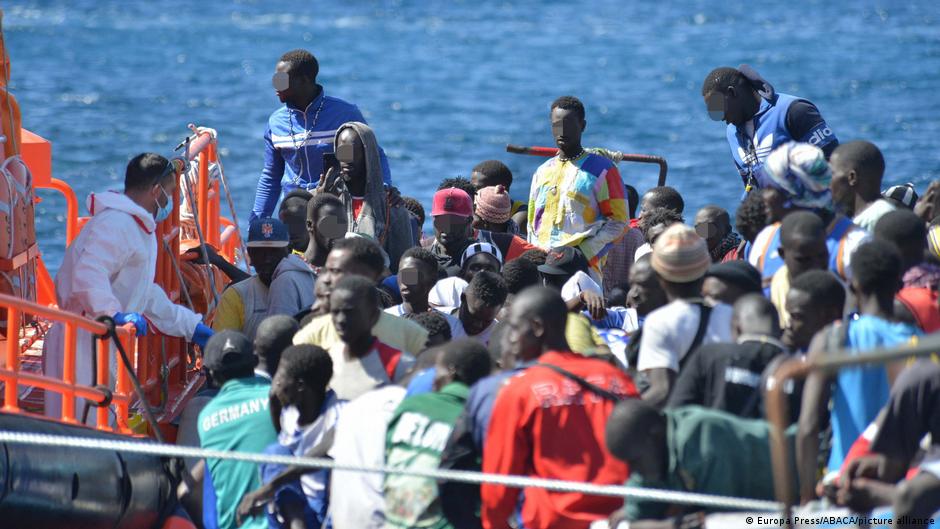
More than 1,000 migrants attempting to reach Spain’s Canary Islands have been rescued from the Atlantic Ocean after seven boats reportedly broke down during the dangerous journey from West Africa.
-

 Auto3 days ago
Kaduna to Lead Govt Patronage of Local Vehicles as Sani Unveils Peugeot 5008
-

 metro2 days ago
El-Rufai Demands ₦10bn from Defence Minister Over Southern Kaduna Killings Allegation
-

 metro3 days ago
Socialite Igho ‘Tiny’ Ubiribo Dies After Penis Enlargement Surgery
-

 metro2 days ago
Catholic priest leaves priesthood, weds Kenyan woman after 12 years in Kenya
-

 News1 day ago
Lagos Moves to Slash Agency Fees, Curb Rent Hikes With New Tenancy Bill
-

 metro2 days ago
Oyoland Grand Chief Imam Celebrates Dr Sharafudeen Raji for Service to Islam
-

 Politics2 days ago
Why Did Peter Obi Attend Seyi Makinde’s Campaign Launch? Here’s What He Said
-
 metro2 days ago
No US Case Against Tinubu, Family Enjoy Unimpeded Transit for UNGA — Ambassador Ibrahim