

International
Iran retaliates against US targets after strikes reportedly kill civilians at wedding
Iran retaliates against US targets after strikes reportedly kill civilians at wedding
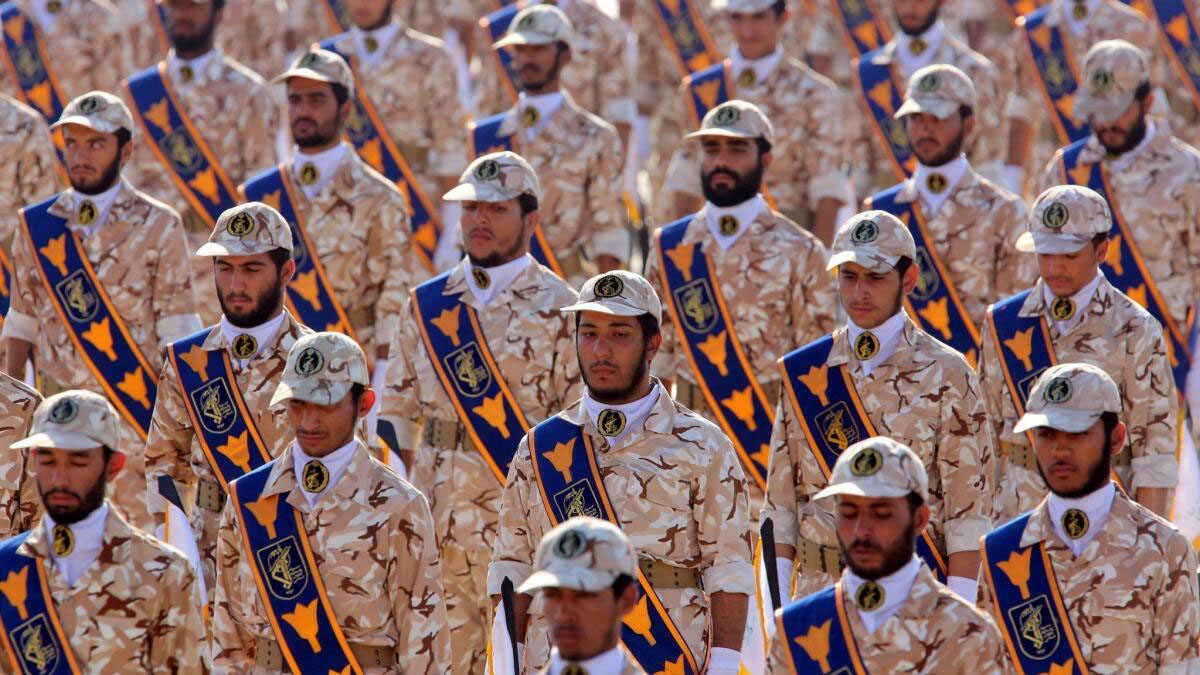
Iran has launched a fresh wave of missile and drone attacks against US-linked military targets across the Middle East following new American strikes on Iranian military facilities that Iranian authorities said killed civilians, including people attending a wedding.
The latest exchange has sharply escalated tensions between Iran and the United States, with Iranian forces targeting American interests in Jordan, Bahrain, Kuwait and Iraq on Wednesday.
Iran’s Islamic Revolutionary Guard Corps (IRGC) said it launched a heavy ballistic missile attack against US military bases in Jordan, while Iranian state media reported drone attacks targeting a US base in Bahrain.
Jordan’s armed forces said its air-defence systems responded to 13 ballistic missiles that entered the country’s airspace. Ten were intercepted, while three landed in remote areas, according to initial reports.
Two US officials also told Reuters that initial assessments indicated there were no casualties from the Iranian attack on US facilities in Jordan.
Bahrain said its forces intercepted and destroyed Iranian drones, while Kuwait reported that its air-defence systems were responding to a hostile drone attack.
In Iraq’s Kurdistan region, the IRGC said it carried out combined missile and drone strikes against US bases in Erbil. Iranian authorities claimed the attacks destroyed a maintenance centre, warehouses and other military equipment.
The claims concerning the extent of damage and possible casualties in Iraq had not been independently verified.
The Iranian retaliation came after the US military conducted a new wave of strikes against Iranian military targets on Tuesday.
READ ALSO:
- Wike to Governors: Account for Subsidy Funds, Stop Hiding Behind NGF
- Uber exits Nigeria after 12 years
- Ceasefire in Name Only: Over 1,300 Killed in Gaza Since October Truce
The US Central Command said its forces struck IRGC air-defence systems, radar sites, maritime assets, mine-laying capabilities and communications facilities.
According to the US military, the operation was aimed at degrading Iranian military capabilities that could be used to threaten American forces and commercial shipping.
The strikes followed renewed tensions around the strategically important Strait of Hormuz, where Washington has accused Iran of attempting to lay sea mines and attacking US military positions.
Iran, however, condemned the American operation and accused Washington of causing civilian casualties.
The Iranian Red Crescent said five people were killed and about 50 others wounded after shrapnel from a US missile struck a home where a wedding celebration was taking place near Sirik in Hormozgan province.
Iranian media reported that a four-year-old child was among those killed, while Iran’s official IRNA news agency, citing a provincial official, said 68 people were wounded.
IRNA separately reported that seven people were killed and eight others injured in US missile strikes on three locations in Khuzestan province.
The reported casualties have not been independently verified.
The US military has also not acknowledged deliberately targeting the wedding gathering.
CENTCOM spokesman Tim Hawkins said the US military does not target civilians, maintaining that American operations are directed against military objectives.
The conflicting accounts have made the reported wedding strike one of the most contentious issues arising from the latest US-Iran confrontation.
READ ALSO:
- Atiku, Obi Unite in Fresh Bid to Unseat Tinubu as 2027 Election Campaign Heats Up
- We were offered $3m to drop Tinubu records campaign — US firm
- NDA Releases 78th Regular Combatant Course Admission List, Sets Reporting Date
Iran has presented the incident as evidence of the civilian consequences of American military operations, while Washington maintains that its campaign is focused on Iranian military infrastructure.
The latest confrontation is closely linked to the growing crisis around the Strait of Hormuz, a vital maritime passage connecting the Persian Gulf with the Gulf of Oman.
The waterway is one of the world’s most important energy routes, with roughly one-fifth of global oil supplies passing through it under normal circumstances.
The security situation has deteriorated significantly since the conflict intensified, with shipping companies becoming increasingly cautious about sending vessels through the strait.
Recent shipping data showed a sharp decline in the number of commercial vessels transiting the waterway, reflecting concerns over missile attacks, sea mines and the wider military confrontation.
The situation has raised fears of a major disruption to global oil supplies, particularly if Iran attempts to restrict shipping through the strait.
Iran has repeatedly warned that if it is prevented from exporting its own crude oil, it could take measures that would affect other oil exports from the Gulf.
Any prolonged disruption could send crude oil prices significantly higher and increase fuel, transportation and electricity costs in countries that depend on Middle Eastern energy supplies.
The impact is already being felt in energy markets, with oil prices rising sharply as traders assess the risk of further disruption.
The crisis could also affect liquefied natural gas (LNG) supplies from major producers in the Gulf, adding further pressure to international energy markets.
The latest Iranian attacks came despite a strong warning from US President Donald Trump, who had threatened Tehran with a more severe response if Iran attacked American personnel or interests.
Trump warned that the next US response could come at a “much harder and higher level” and said an even larger attack was “waiting in the wings”.
READ ALSO:
- Ogogo’s N25m Surfaces After Death, Ilaro Chief Imam Returns Actor’s Money
- ‘Rich Dad Poor Dad’ Author Robert Kiyosaki Reveals He Is $1.2 Billion in Debt
- Lagos Cleric, 74, Remanded Over Alleged Defilement of 9-Year-Old Granddaughter
Iran nevertheless proceeded with its retaliation.
Iranian military spokesman Ebrahim Zolfaghari warned that countries supporting or facilitating US military operations could also face Iranian attacks.
He said countries cooperating with Washington should expect what he described as “more severe, more widespread and destructive responses”.
The warning has increased concerns among countries that host US military bases across the Middle East.
American forces maintain a significant military presence in countries including Jordan, Bahrain, Iraq, Kuwait, Qatar and the United Arab Emirates.
Several of those countries have attempted to avoid becoming direct participants in the conflict while maintaining security cooperation with Washington.
The Iranian attacks nevertheless demonstrate the difficulty of keeping the conflict contained once missiles and drones begin targeting US military facilities across multiple countries.
The latest confrontation also highlights the military capabilities available to both sides.
Iran continues to possess a large arsenal of ballistic missiles and drones, allowing it to strike targets across much of the Middle East.
The United States, meanwhile, maintains substantial air and naval capabilities in the region and has increasingly focused its attacks on Iran’s air-defence systems, radar networks, maritime infrastructure and missile-related capabilities.
The result has been a dangerous cycle of escalation.
The US carries out strikes against Iranian military targets, Iran retaliates against US-linked facilities, Washington threatens a stronger response, and Tehran warns that it will expand its attacks if American operations continue.
The possibility of the confrontation spreading further has raised concerns among governments across the Middle East.
Countries hosting American troops face the difficult task of protecting their populations and infrastructure while avoiding direct involvement in the conflict.
The humanitarian consequences are also becoming increasingly serious.
Iranian authorities have reported civilian deaths and injuries from US strikes, while governments in countries targeted by Iran have had to activate air-defence systems to intercept incoming missiles and drones.
Even when most incoming weapons are intercepted, the threat creates risks for civilians living near military facilities and other strategic targets.
The conflict is also placing additional pressure on an already fragile regional economy.
A prolonged crisis around the Strait of Hormuz could increase shipping insurance premiums, disrupt supply chains and raise the cost of crude oil and natural gas.
For countries heavily dependent on imported petroleum products, higher international oil prices could translate into increased fuel prices and inflation.
The consequences could extend beyond the Middle East if the disruption becomes prolonged.
The latest escalation has also complicated diplomatic efforts aimed at preventing a wider war.
Neither Washington nor Tehran appears willing to back down, with both sides presenting their military actions as necessary responses to threats posed by the other.
The United States says it is defending its forces and protecting commercial shipping, while Iran maintains that it is responding to American aggression and defending its sovereignty.
The reported civilian deaths at the wedding in southern Iran have added an emotional and political dimension to the conflict that could make de-escalation more difficult.
Iranian officials are likely to use the reported incident to strengthen domestic support for retaliation, while Washington is expected to maintain that its military operations are directed at Iranian military capabilities rather than civilians.
The immediate concern is whether the latest exchange will remain limited or trigger a broader regional war involving Iran, the United States and their respective allies.
With US military personnel stationed across the Gulf and Iran capable of launching missiles and drones against targets throughout the region, any miscalculation could rapidly widen the conflict.
For now, Tehran has demonstrated that it is prepared to retaliate despite Washington’s warnings, while US President Donald Trump has signalled that the United States is prepared to escalate further if American forces or interests are attacked.
The renewed fighting has therefore left the Middle East facing another period of heightened uncertainty, with civilian casualties, attacks on military bases, threats to shipping and rising oil prices all adding to concerns about where the conflict goes next.
Iran retaliates against US targets after strikes reportedly kill civilians at wedding










International
UK Threatens to Expel 27 Israeli Diplomats as Jerusalem Consulate Standoff Escalates
UK Threatens to Expel 27 Israeli Diplomats as Jerusalem Consulate Standoff Escalates
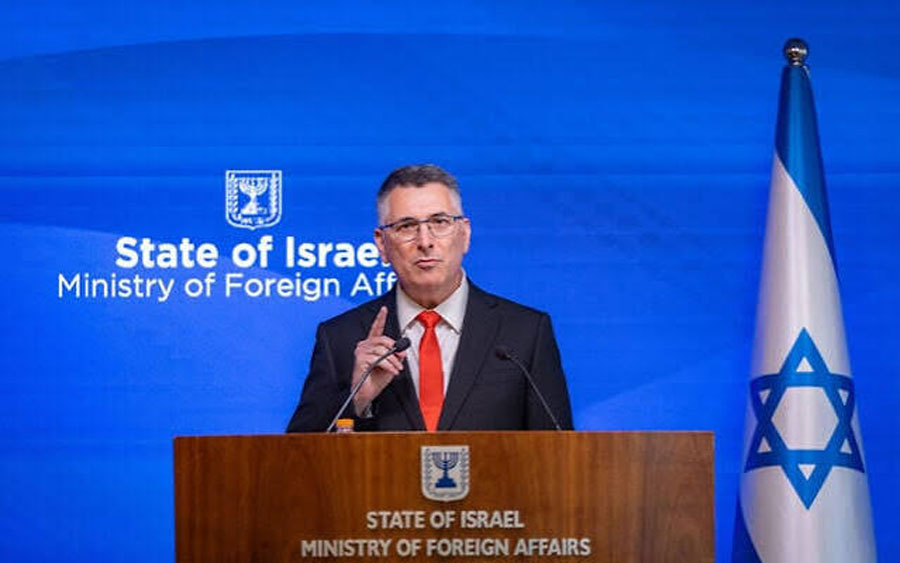
The UK-Israel diplomatic crisis has escalated to its most dangerous level in decades, with Britain threatening to expel 27 Israeli diplomats if Israel proceeds with its plan to shut down the British consulate in East Jerusalem this Thursday. The extraordinary standoff—sparked by UK sanctions on illegal Israeli settlements—now threatens to sever one of the West’s most strategically important bilateral relationships. According to reports confirmed by The Jerusalem Post and The New Arab, British Ambassador to Israel Simon Walters personally delivered the warning to Israeli officials: for every British diplomat forced out of the East Jerusalem consulate, London will expel one Israeli diplomat from its embassy in London. With 27 British staff members facing expulsion, Israel’s London embassy—which has already been without an ambassador since September 2025—could be effectively gutted. The UK Foreign Office declined to comment on the reported threat, while Israeli diplomatic sources told The Jerusalem Post there was “no reason for us to address speculation regarding decisions other countries might make in the future.”
Behind the scenes, UK National Security Adviser Jonathan Powell made a quiet visit to Israel last week in a desperate attempt to prevent the closure, three sources told Reuters. The talks failed to produce an agreement to keep the consulate open, and the British government did not disclose the visit.
The confrontation traces back to September, when UK Foreign Secretary Ed Miliband announced sweeping trade sanctions on goods from illegal Israeli settlements in the occupied West Bank. In a dramatic statement to Parliament, Miliband accused the Israeli government of turning a “blind eye” to what he called “ethnic cleansing” by settler terrorists. “The British government agrees that there is ethnic cleansing of Palestinians in areas of the West Bank, perpetrated by settler terrorists,” Miliband said. “All too often the Israeli government has turned a blind eye to this, and worse members of it have made statements and taken actions to support the forced displacement of Palestinians.” The UK settlement sanctions, announced in coordination with France and Canada, will ban imports from illegal settlements and target companies and individuals providing “construction, infrastructure, financing, or real estate for settlement expansion.” According to the House of Commons Library, the measures will take effect within six to nine months, with the import ban applied geographically based on settlement postcodes. Britain specifically cited the Israeli government-backed E1 settlement project—which would effectively sever the West Bank from East Jerusalem—as a key factor undermining the two-state solution.
READ ALSO:
- President Tinubu Mourns 32 NAF Personnel in Ondo Jet Crash, Orders Immediate Probe
- Tragedy Strikes FMC: Medical Director Loses Two Daughters—A Doctor and a Pharmacist—Within 48 Hours
- BREAKING: Many Feared Dead as Helicopter Crashes in Ondo Community
Israeli Foreign Minister Gideon Sa’ar announced a series of countermeasures on September 8, calling the UK sanctions “morally distorted” and accusing Britain’s ruling Labour Party of interfering in Israel’s upcoming October 27 general election. The Israeli retaliation included closing the British Consulate General in East Jerusalem within 30 days, removing British representatives from the US-led International Gaza Support Center in Kiryat Gat, ending British participation in training Palestinian Authority security forces in Ramallah, and barring 12 British officials deemed “anti-Israel” from entering Israel, including 11 MPs and a lawyer. Sa’ar framed the measures as a necessary response to what he called a “hostile Labour government.” “Israel has nothing against the British people,” he said. “Unfortunately, a hostile Labour Government is in office, systematically acting against the State of Israel, and it has left us with no choice but to finally respond.”
The British Consulate General in East Jerusalem is not a routine diplomatic post. Established in 1838—110 years before the founding of Israel—it operates separately from the UK embassy in Tel Aviv and handles relations with Palestinians in East Jerusalem, the West Bank, and Gaza. The consulate is located in the Sheikh Jarrah neighborhood. The UK, like most of the international community, does not recognize Israeli sovereignty over East Jerusalem, which Israel occupied in 1967 and later annexed in a move not recognized internationally.
The UK sanctions on Israel have drawn fierce criticism from within the British Jewish community. Chief Rabbi Sir Ephraim Mirvis called the measures a “dark day for British Jews,” warning they could “embolden those, at home and abroad, who use hatred as a weapon against Jews.” Miliband, who describes himself as a “proud British Jew,” rejected the chief rabbi’s claim directly. Asked on BBC Radio 4 whether Mirvis was wrong, Miliband replied: “Yes, I am saying I don’t agree with the chief rabbi, somebody over whom I have great respect.” He added: “Anyone who holds British Jews, or indeed Jews around the world, responsible for the actions of the Israeli government is engaging in antisemitism, pure and simple.” The Board of Deputies of British Jews said it followed the announcement with “deep regret,” warning that deteriorating UK-Israel relations could “further inflame community tensions.”
The standoff has been further inflamed by domestic political developments in Britain. On Sunday, the UK Green Party voted to declare Zionism a form of racism, passing the motion by 1,022 votes to 813 at its annual conference. Israel’s foreign ministry declared the resolution “a clear antisemitic text” and announced that Foreign Minister Sa’ar was barring Green Party leader Zack Polanski from entering Israel. Israeli President Isaac Herzog called the Green Party decision “a disgrace,” while Labour Party chair Bridget Phillipson described it as “shameful.”
With the consulate closure deadline set for Thursday, both sides appear entrenched. Israel’s Foreign Ministry has confirmed the consulate will close “as announced.” Two sources told Reuters that while talks were still ongoing, an agreement before the deadline was unlikely. If Israel proceeds and the UK follows through on its threat, the expulsion of 27 Israeli diplomats would mark an unprecedented rupture in British-Israeli relations. Israel’s embassy in London has already been without an ambassador since September 2025. The loss of 27 additional diplomats would effectively gut the mission. A Western diplomat told The Guardian that the closure would set a “dangerous precedent” for the status of diplomatic missions monitoring the status quo in Jerusalem, emphasizing that the UK does not recognize Israeli sovereignty over the city under international law. The coming days will determine whether this UK-Israel diplomatic crisis escalates further—or whether a last-minute compromise can pull both nations back from the brink.
UK Threatens to Expel 27 Israeli Diplomats as Jerusalem Consulate Standoff Escalates
International
2026 Nobel Prize: Three Scientists Win Medicine Award for Optogenetics

2026 Nobel Prize: Three Scientists Win Medicine Award for Optogenetics
American scientist Karl Deisseroth, German scientists Peter Hegemann and Georg Nagel have won the 2026 Nobel Prize in Physiology or Medicine for discoveries that led to optogenetics, a technology that allows scientists to control the activity of nerve cells using light.
The Nobel Assembly at Karolinska Institutet announced the award on Monday, October 5, recognising the trio for their discoveries concerning light-gated ion channels and optogenetics.
Their work has transformed neuroscience, giving researchers a highly precise way to switch individual nerve cells on or off and study how the brain controls functions such as movement, memory, emotions and behaviour.
The breakthrough began with research into how microscopic algae respond to light. Peter Hegemann studied the light-sensitive mechanisms of algae in the 1990s, while Georg Nagel helped demonstrate that a light-sensitive protein known as channelrhodopsin could function as an ion channel.
Their work showed that light could be used to trigger electrical activity in cells. The discovery eventually provided the foundation for optogenetics, which combines genetics and optics to manipulate specific cells with pulses of light.
READ ALSO:
- Temi Nkem Wins N160m BBNaija Season 11 Grand Prize
- Nigeria — My Country of Destiny
- Ex-APC Women Leader Found Dead With Throat Slit in Bauchi
- Supreme Court Ruling: INEC Moves to Clarify Fate of 2027 Candidates
Karl Deisseroth, a neuroscientist at Stanford University, subsequently demonstrated that the technology could be used in nerve cells. His research showed that light-sensitive proteins could be introduced into neurons and used to control their activity.
The technique has since become an important research tool worldwide. Scientists can genetically make selected populations of neurons sensitive to light and then use precisely delivered light to activate or silence them.
The Nobel Assembly said optogenetics has made it possible to switch individual nerve cells on or off in a living brain, allowing researchers to investigate the complex networks underlying brain function.
Beyond basic research, the technology is also being investigated for potential medical applications. Researchers are exploring optogenetic approaches to restore vision in people affected by certain forms of blindness, while other studies are examining whether the technology could contribute to future treatments for neurological disorders.
Deisseroth is based at Stanford University in the United States, while Hegemann is affiliated with Humboldt University of Berlin and Nagel with the University of Würzburg in Germany.
The three laureates will share the 2026 Nobel Prize award of 12 million Swedish kronor.
The Nobel Prize in Physiology or Medicine traditionally opens the annual Nobel announcements, with the prizes for physics, chemistry, literature, peace and economic sciences following during Nobel week.
The 2026 medicine award highlights a scientific breakthrough that has fundamentally changed how researchers study the brain, particularly their ability to examine the role of specific nerve cells with unprecedented precision.
2026 Nobel Prize: Three Scientists Win Medicine Award for Optogenetics
International
Israeli Forces Reportedly Destroy School, Burn Homes in Southern Lebanon
Israeli Forces Reportedly Destroy School, Burn Homes in Southern Lebanon
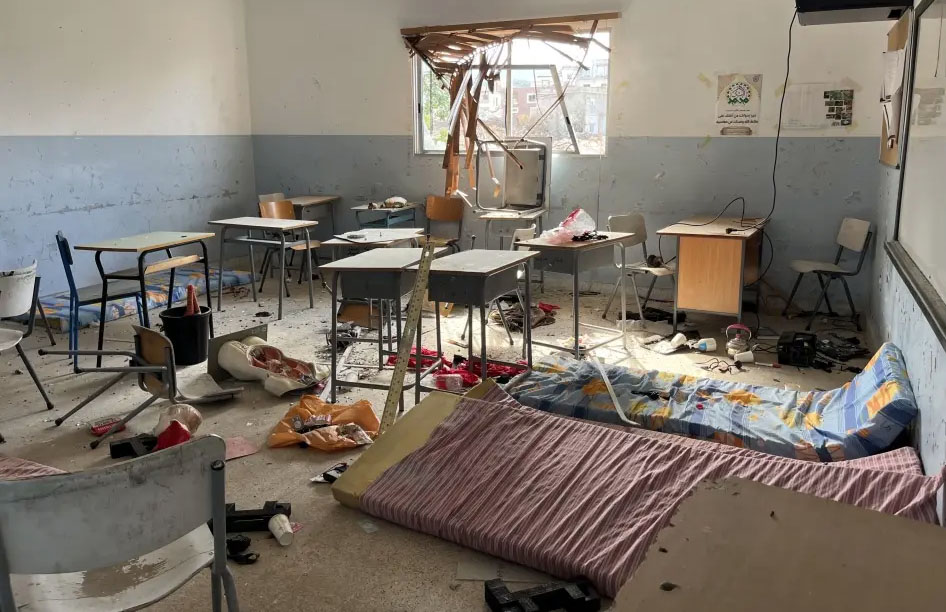
Israeli forces reportedly destroyed a school and set fire to several homes in southern Lebanon as military operations, including airstrikes, artillery fire and demolitions, continued across the region.
The reported incident occurred in Houla, in the Marjayoun district, where Lebanese media said Israeli troops placed explosives inside the Jabal Amel Intermediate School before detonating them.
Local reports said the school was destroyed in an early-morning blast, while further demolitions were reportedly followed by fires in residential buildings in the town.
The reports could not be independently verified, and the Israeli military had not immediately provided a specific response to the allegations concerning the school and homes.
The reported destruction in Houla came amid wider Israeli military operations in southern Lebanon.
Lebanon’s National News Agency reported artillery fire around Khiam, while Tallouseh and Bani Hayyan were also reportedly targeted. Airstrikes were reported in Bani Hayyan and Kfar Tibnit, while artillery fire affected areas around Mayfadoun and Zawtar al-Sharqiyah.
READ ALSO:
- Nine Zamfara Lawmakers Dump APC for ADC Ahead of 2027
- Temi Nkem Wins N160m BBNaija Season 11 Grand Prize
- Nigeria — My Country of Destiny
Further demolitions and explosions were also reported in parts of southern Lebanon, including Beit Yahoun, Qantara and Mansouri.
The latest developments have renewed concerns over damage to civilian infrastructure in southern Lebanon, particularly schools and residential buildings.
The reported destruction of the Houla school comes against a wider backdrop of disruption to education in the region. Previous reporting has indicated that dozens of schools in Lebanon have been damaged or destroyed during the conflict, while thousands of students have been displaced from their communities.
The latest military activity is also occurring amid continuing tensions along the Israel-Lebanon border, despite diplomatic efforts aimed at reducing hostilities.
Israel has previously said its military operations in southern Lebanon are intended to counter Hezbollah infrastructure and security threats near the border. Lebanese authorities and Hezbollah have disputed aspects of Israel’s military activities and their justification.
The United Nations Interim Force in Lebanon (UNIFIL) continues to monitor developments and maintain contact with the parties as part of efforts to prevent further escalation.
The renewed violence has added to concerns over the safety of civilians in southern Lebanon, where communities have already experienced displacement and extensive damage to homes and public infrastructure.
As tensions persist, the situation remains volatile, with further military activity potentially threatening efforts to maintain calm along the border.
Israeli Forces Reportedly Destroy School, Burn Homes in Southern Lebanon
-

 Politics3 days ago
2027: Oshiomhole Dares Opposition Over ₦500 Petrol Promise, Says APC Will Take Argument to Nigerians
-

 metro3 days ago
NYSC Kidnap: Abductors Demand N950m for 19 Prospective Corps Members in Imo
-

 metro2 days ago
‘I Thought I Was Dead’ — Hairstylist’s Daring Escape From Kidnappers After Benin-Ore Ambush
-

 metro3 days ago
Amaechi: Tinubu’s Policies Made My Mother’s Drugs Unaffordable
-

 metro3 days ago
Tension as Kidnappers Threaten to Kill Abducted Oyo Corps Members
-

 metro3 days ago
N500 Petrol, Wage Award: Public Sector Workers Begin Warning Strike
-

 Entertainment3 days ago
Less Than Four Months After Wedding, Jarvis Threatens Peller With Lawsuit Over Second-Wife Plan
-

 Politics3 days ago
Wike to Amaechi: What Did You Bring to Rivers After 24 Years in Power?