
Business
CBN Revokes Licences of 46 Microfinance Banks (FULL LIST)

CBN Revokes Licences of 46 Microfinance Banks (FULL LIST)
The Central Bank of Nigeria (CBN) has revoked the operating licences of 46 microfinance banks (MFBs) across the country, citing insolvency, regulatory breaches and failure to comply with prudential guidelines.
The apex bank announced that the licence revocations take effect from July 1, 2026, following the approval of CBN Governor Olayemi Cardoso, describing the move as part of ongoing efforts to strengthen Nigeria’s financial sector, protect depositors and ensure that licensed institutions operate in line with existing laws.
The decision was disclosed in a statement issued on Wednesday by the Acting Director of the Corporate Communications Department, Hakama Sidi-Ali.
According to the CBN, the action was taken under the provisions of Sections 12 and 13 of the Banks and Other Financial Institutions Act (BOFIA), 2020, which empower the regulator to revoke the licences of financial institutions that fail to meet statutory and regulatory requirements.
The apex bank explained that the affected institutions committed one or more serious regulatory infractions uncovered during routine supervisory examinations and ongoing regulatory oversight.
Among the reasons cited for the licence withdrawals were insufficient assets to meet liabilities, meaning some of the banks had become financially insolvent and were no longer able to fulfil their obligations to customers and creditors.
READ ALSO:
- Former Minister Uche Nnaji Arrested Over Alleged Certificate Forgery
- Many African Pastors Would Lose Their Churches if Enough Jobs Existed – Pastor Chris
- World Bank Approves $1.25bn Loan for Nigeria to Boost Jobs, Private Investment
The CBN also revealed that several of the affected institutions had stopped carrying out banking activities without obtaining the required regulatory approval, while others had remained inactive for prolonged periods and no longer performed their primary role of providing financial intermediation.
In addition, some of the microfinance banks failed to commence operations within 12 months after receiving their operating licences, contrary to the regulatory conditions governing the sector.
The regulator further stated that a number of the institutions failed to maintain the minimum capital requirements prescribed for licensed microfinance banks, with accumulated losses significantly eroding their shareholders’ funds and rendering them incapable of operating safely.
According to the CBN, the decision aligns with its revised regulatory and supervisory framework for microfinance banks, which permits licence revocation where institutions become insolvent, abandon operations, fail to comply with prudential standards or repeatedly violate regulatory directives.
“The revocation of the licences is part of the Bank’s ongoing efforts to safeguard the stability of the financial sector, protect depositors, and ensure that licensed institutions comply with current laws and regulatory requirements,” the statement read.
The Central Bank of Nigeria reiterated its commitment to maintaining a safe, resilient and transparent financial system through effective supervision, early regulatory intervention and strict enforcement of banking regulations.
It stressed that institutions that fail to meet prescribed operational and financial standards would continue to face appropriate supervisory and enforcement actions aimed at sustaining public confidence in Nigeria’s banking industry.
The latest development reflects the intensified regulatory reforms introduced under Governor Cardoso’s administration, which has focused on improving corporate governance, strengthening risk management, enhancing regulatory compliance and restoring confidence across the country’s financial system.
Following the revocation, the Nigeria Deposit Insurance Corporation (NDIC) is expected to commence the liquidation process for the affected banks in accordance with the law. The corporation will oversee the payment of insured deposits to eligible customers, recover assets where necessary and ensure an orderly resolution process for the failed institutions.
Full List of the 46 Microfinance Banks Whose Licences Were Revoked by the CBN
The affected institutions are:
- Minji-Se Churchill Microfinance Bank – Rivers State (Tier 1)
- Merchant Microfinance Bank – Abia State (Tier 2)
- Janmaa Microfinance Bank – Kwara State (Tier 1)
- Busu Microfinance Bank – Niger State (Tier 2)
- Gold Microfinance Bank – Lagos State (Tier 1)
- Zain Microfinance Bank (formerly Dawakin Tofa MFB) – Kano State (Tier 2)
- Bompai Microfinance Bank – Kano State (Tier 1)
- Ajwa Microfinance Bank – Kano State (Tier 2)
- Now Now Digital Microfinance Bank – Kano State (Tier 2)
- Crystabel Microfinance Bank – Bayelsa State (Tier 1)
- Chanelle Microfinance Bank – Lagos State (State-based)
- Abia SME Microfinance Bank – Abia State (Tier 1)
- Kamba Microfinance Bank – Kebbi State (Tier 2)
- Iwade Microfinance Bank – Ogun State (Tier 2)
- Winview Microfinance Bank – Abuja (Tier 1)
- Zuru Microfinance Bank – Kebbi State (Tier 2)
- Minjibir Microfinance Bank – Kano State (Tier 1)
- Shanono Microfinance Bank – Kano State (Tier 2)
- Sumaila Microfinance Bank – Kano State (Tier 2)
- Rimin Gado Microfinance Bank – Kano State (Tier 2)
- Mwaghavul Microfinance Bank – Plateau State (State-based)
- Sycamore Microfinance Bank – Kano State (Tier 2)
- TOFA Microfinance Bank – Kano State (Tier 2)
- Safegate Microfinance Bank – Lagos State (Tier 1)
- Creekline Microfinance Bank – Delta State (Tier 2)
- Bestar Microfinance Bank – Oyo State (Tier 1)
- Livingspring Microfinance Bank – Cross River State (Tier 1)
- Apple Microfinance Bank – Ogun State (Tier 2)
- Stanford Microfinance Bank – Uyo, Akwa Ibom State (State-based)
- Frontline Microfinance Bank – Anambra State (Tier 2)
- Zafec Microfinance Bank – Kaduna State (Tier 2)
- Supreme Microfinance Bank – Lagos State (Tier 1)
- Bejin-Doko Microfinance Bank – Niger State (Tier 2)
- Kanopoly Microfinance Bank – Kano State (Tier 1)
- Bellbank Microfinance Bank (formerly Tsanyawa MFB) – Kano State (Tier 2)
- Yeneng Microfinance Bank – Plateau State (Tier 2)
- Creditville Microfinance Bank – Lagos State (Tier 1)
- MBAG Microfinance Bank – Lagos State (Tier 1)
- Straight Sahara Microfinance Bank – Benue State (Tier 1)
- Our Pass Microfinance Bank – Ondo State (Tier 2)
- Verdant Microfinance Bank – Lagos State (Tier 1)
- Basawa Microfinance Bank – Kaduna State (Tier 2)
- Casha Microfinance Bank – Abuja (Tier 2)
- Esteem Microfinance Bank – Kano State (Tier 2)
- Enterpreneur Microfinance Bank – Lagos State (Tier 1)
- Avantus Microfinance Bank – Osun State (Tier 2)
Industry experts say the latest action demonstrates the CBN’s resolve to enforce prudential standards and ensure that only financially healthy and well-governed institutions remain licensed to operate in Nigeria. Customers of the affected banks are advised to monitor further announcements from the CBN and the NDIC regarding the liquidation process and the payment of insured deposits.
CBN Revokes Licences of 46 Microfinance Banks (FULL LIST)






Business
Dangote Refinery: UK Imports £1.02bn Nigerian Refined Fuel in One Year

LONDON/ABUJA — The United Kingdom imported more than £1 billion worth of refined petroleum products from Nigeria in the 12 months to June 2026, marking a significant shift in the energy trade relationship between both countries amid the expansion of the Dangote Petroleum Refinery.
The imports, valued at approximately £1.02 billion, represented 53.5 per cent of Britain’s total merchandise imports from Nigeria during the period, making refined petroleum products the country’s largest export category to the UK.
The figures were contained in the latest UK government’s Trade and Investment Factsheet on Nigeria, published on November 6, 2026.
According to the report, British imports of refined petroleum products from Nigeria increased by more than 100 per cent compared with the corresponding 12 months ending June 2025.
The development signals a growing shift in Nigeria’s petroleum trade, with the country increasingly exporting processed fuel instead of relying predominantly on crude oil exports.
The expansion of the 650,000-barrel-per-day Dangote Petroleum Refinery in Lagos has coincided with the increase in Nigeria’s refined petroleum exports to international markets.
However, the UK trade factsheet does not identify individual Nigerian refineries or suppliers responsible for the shipments.
In contrast, Britain’s imports of Nigerian crude oil declined significantly during the same period, falling by 56.2 per cent to £550.3 million.
This means refined petroleum products generated approximately £467 million more in export earnings than crude oil, representing an 85 per cent difference in value.
Combined, refined petroleum products and crude oil accounted for approximately £1.57 billion, or 82.4 per cent, of Britain’s total merchandise imports from Nigeria.
Other major Nigerian products purchased by the UK included natural gas, valued at £179.5 million, representing 9.4 per cent of total imports.
READ ALSO:
- VIDEO: NDLEA Discovers Gun Factory in Kaduna, Arrests 45-Year-Old Owner
- 2027: ‘Either Me or Nobody’ Attitude Undermining Opposition Unity, Donald Duke Warns
- Tinubu-Aregbesola Rift: ‘They Still Have Deep Affection for Each Other’ — Adeyeye
Coffee, tea and cocoa products accounted for £40.3 million, while beverages and tobacco contributed another £30 million.
Overall, Britain’s merchandise imports from Nigeria increased by 10.4 per cent to approximately £1.9 billion in the 12 months ending June 2026, representing an increase of £180 million over the preceding period.
The latest figures also revealed that the UK continued exporting refined petroleum products to Nigeria, although the value of those exports declined considerably.
British exports of refined petroleum products to Nigeria stood at £772.3 million during the period, accounting for 51.5 per cent of the UK’s total merchandise exports to the country.
However, the figure represented a 42.7 per cent decline compared with the corresponding 12 months ending June 2025.
Based on the reported figures, Nigeria recorded an estimated £245 million trade surplus in refined petroleum products with the UK during the period.
The development represents a notable change for Nigeria, which historically depended heavily on imported petrol and other refined petroleum products despite being a major crude oil producer.
The United States Energy Information Administration (EIA) also reported a significant increase in Nigeria’s petroleum product exports, attributing the development to increased domestic refining capacity.
According to the agency, Nigeria’s seaborne petroleum product exports averaged approximately 350,000 barrels per day in the second quarter of 2026, compared with 46,000 barrels per day in 2023.
Exports to Europe also increased to approximately 130,000 barrels per day, up from 40,000 barrels per day in 2025.
The EIA noted that increased domestic petroleum production had reduced Nigeria’s dependence on imported refined products while creating opportunities for greater participation in international fuel markets.
The figures provide fresh evidence of the changing dynamics of Nigeria’s downstream petroleum sector as the Dangote refinery expands its domestic and international operations.
Despite the increase in refined petroleum exports, the UK trade data show that petroleum continues to dominate Nigeria’s merchandise exports to Britain, highlighting the country’s continued dependence on the oil and gas sector for export earnings.
Sources: UK Department for Business and Trade, Nigeria: UK Trade and Investment Factsheet, November 6, 2026; The Punch; The Guardian Nigeria.
Dangote Refinery: UK Imports £1.02bn Nigerian Refined Fuel in One Year
Business
OPay Faces ₦994m Regulatory Fines Over Money Laundering, Terrorism Financing Breaches
OPay Faces ₦994m Regulatory Fines Over Money Laundering, Terrorism Financing Breaches
LAGOS, Nigeria — OPay Digital Services Limited, one of Nigeria’s leading financial technology and mobile money operators, is facing increased regulatory scrutiny following reports that the company incurred statutory penalties totalling approximately ₦994 million between 2023 and 2025 over various compliance breaches.
The reported sanctions, which involved the Central Bank of Nigeria (CBN) and other regulatory authorities, included penalties relating to anti-money laundering (AML), counter-terrorism financing (CTF), customer due diligence, consumer protection and data privacy requirements.
The development has brought renewed attention to the compliance and risk-management practices of the fintech company, which has established a significant presence in Nigeria’s digital payments market through its mobile banking services, agent network and electronic payment platforms.
The revelations also come at a difficult time for OPay’s international expansion ambitions, following the collapse of its proposed Initial Public Offering (IPO) in the United States, which was expected to pave the way for its shares to trade on the New York Stock Exchange.
Although the company has not established any direct connection between its Nigerian regulatory penalties and the termination of the American share offering, the two developments have placed its regulatory record and international growth plans under increased scrutiny.
Details contained in regulatory and financial disclosures reportedly indicate that OPay accumulated several financial penalties over a three-year period, reflecting enforcement actions by different regulatory institutions.
Among the major concerns were alleged violations of anti-money laundering and counter-terrorism financing requirements.
These regulations are designed to prevent financial institutions and payment service providers from being used to conceal proceeds of crime, facilitate illegal financial transactions or channel funds to individuals and organisations involved in terrorism.
Financial institutions operating in Nigeria are required to establish effective customer identification and verification procedures, monitor suspicious transactions, maintain appropriate transaction records and report activities that may indicate money laundering or terrorist financing.
READ ALSO:
- 2027: Atiku, Makinde Move Closer to Alliance Deal to Unseat Tinubu
- Bandits Kill Two Abducted Victims After Collecting ₦6m Ransom in Niger State
- Zamfara Bloodbath: 53 Killed as Vigilantes Ambush Bandits After Kidnapping Spree
The regulatory requirements also place obligations on financial service providers to maintain effective internal controls and ensure that their platforms are not exploited for unlawful financial activities.
According to the reported breakdown, OPay incurred a CBN-related penalty of ₦26 million in 2023 over compliance issues connected to anti-money laundering and counter-terrorism financing requirements.
In 2024, the company reportedly faced another ₦113.7 million penalty over similar regulatory concerns.
Additional sanctions included a reported ₦197 million penalty relating to violations of the Banks and Other Financial Institutions Act (BOFIA) 2020, while another ₦10 million was attributed to customer due diligence lapses.
The company also reportedly incurred a ₦2 million penalty over consumer protection-related violations.
The cumulative penalties highlight the range of regulatory obligations facing digital financial institutions as Nigerian authorities intensify efforts to strengthen oversight of the country’s rapidly expanding financial technology sector.
OPay’s regulatory challenges were not limited to the banking and financial services sector.
The Nigeria Data Protection Commission (NDPC) reportedly imposed a ₦125 million penalty on the company over alleged violations of the Nigeria Data Protection Act 2023.
The legislation establishes requirements governing the collection, processing, storage and protection of personal information belonging to individuals.
For digital financial service providers such as OPay, compliance with data protection regulations is particularly important because their platforms routinely process sensitive customer information, including personal identification details, financial records and transaction histories.
The company also reportedly faced penalties from the Advertising Regulatory Council of Nigeria (ARCON) and the Corporate Affairs Commission (CAC) over issues relating to their respective regulatory responsibilities.
The involvement of multiple regulatory agencies underscores the wide range of legal and compliance requirements applicable to companies operating in Nigeria’s financial technology industry.
However, the individual breakdown of all the reported penalties requires further clarification, as the publicly cited itemised figures do not fully reconcile with the reported cumulative amount of ₦994 million.
The regulatory disclosures have coincided with a significant setback for OPay’s ambition to access the international capital market through a proposed listing in the United States.
The fintech company had planned to raise approximately $304 million through an Initial Public Offering involving 16 million American Depositary Shares, with an indicated offering price of $19 per share.
The proposed listing was expected to provide OPay with access to international investors and potentially strengthen its financial position as it pursued further expansion.
However, the plan encountered an unexpected obstacle after the company and its underwriters agreed to terminate their underwriting agreement.
The termination was announced on October 30, 2026, barely a day after the agreement was signed.
The development meant that the planned offering would not proceed as originally scheduled, effectively halting OPay’s anticipated debut on the New York Stock Exchange.
The company attributed the decision to a regulatory inquiry in an unnamed foreign jurisdiction.
Although details surrounding the inquiry were not fully disclosed, the development raised questions about the regulatory and legal considerations surrounding the proposed public offering.
OPay and its underwriters mutually agreed to terminate the arrangement, bringing the immediate IPO plan to an end.
Despite the setback, OPay has sought to reassure customers, business partners and other stakeholders that the foreign regulatory inquiry would not affect its day-to-day operations.
The company reportedly described the jurisdiction involved in the inquiry as immaterial to its core business operations and expressed confidence that the matter would be addressed.
It also maintained that its services remained operational and that its commitment to regulatory compliance and customer service had not changed.
However, the company has not provided comprehensive public details about the nature of the foreign inquiry or indicated when it might reconsider its proposed US listing.
The circumstances surrounding the withdrawal of the IPO are therefore likely to remain a subject of interest among investors and industry observers.
OPay’s reported penalties come amid increasing regulatory attention on Nigeria’s financial technology industry, which has experienced significant growth as millions of Nigerians embrace mobile banking, electronic transfers and other digital payment services.
The expansion of fintech platforms has created new opportunities for financial inclusion, particularly among people who have limited access to traditional banking services.
However, the growth has also increased the responsibility of regulators to ensure that digital payment operators maintain adequate safeguards against financial crimes, protect customer information and comply with consumer protection requirements.
The CBN has continued to emphasise the importance of effective anti-money laundering controls, customer verification and transaction monitoring across the financial services industry.
Similarly, data protection authorities have been strengthening enforcement of rules governing how companies collect and process personal information.
For major mobile money operators, regulatory compliance is essential not only to maintain operating licences but also to preserve public confidence and sustain relationships with financial institutions, investors and international business partners.
The combination of reported regulatory penalties and the aborted US IPO presents important questions about OPay’s next strategic steps.
While the company remains a major participant in Nigeria’s digital payments market, its ability to maintain investor confidence and pursue international expansion will depend partly on how it addresses regulatory concerns and strengthens its compliance framework.
The termination of the proposed IPO does not necessarily mean that the company has abandoned its plans to access international capital markets.
However, any future attempt to list its shares is likely to attract close attention from investors, underwriters and relevant regulatory authorities.
For now, attention remains focused on the company’s response to the reported sanctions, the circumstances surrounding the foreign regulatory inquiry and any further clarification it may provide regarding its compliance record.
OPay Faces ₦994m Regulatory Fines Over Money Laundering, Terrorism Financing Breaches
Auto
Toyota Urban Cruiser: The Compact SUV Set to Make a Big Statement in Nigeria

Toyota Urban Cruiser: The Compact SUV Set to Make a Big Statement in Nigeria
As Nigerian motorists increasingly seek vehicles that combine fuel economy, comfort, safety and the versatility of an SUV, Toyota is positioning the Urban Cruiser as a compelling option in the country’s growing compact sport utility vehicle market.
Designed to deliver the practicality of an SUV without the bulk of larger models, the Toyota Urban Cruiser brings together a 1.5-litre petrol engine, modern connectivity features and safety technologies aimed at making everyday motoring more convenient and reassuring.
Listed on the official website of Toyota (Nigeria) Limited (TNL), the Urban Cruiser represents the Japanese automaker’s offering in the mini-subcompact SUV category, a segment that appeals to motorists looking for a vehicle suitable for urban commuting as well as occasional long-distance journeys.
The model’s appeal lies in its combination of compact proportions, functional design and everyday usability, qualities that could make it attractive to Nigerian professionals, young families and individuals seeking an upgrade from conventional passenger cars.
Engine and performance
At the heart of the Urban Cruiser is an economical 1.5-litre, four-cylinder petrol engine, which Toyota Nigeria identifies as one of the vehicle’s major selling points.
The engine configuration is designed to provide a balance between everyday performance and fuel efficiency, making it relevant to motorists who must contend with rising vehicle ownership and operating costs.
Toyota Nigeria lists both automatic and manual transmission options for the model, giving prospective buyers the opportunity to select a configuration that suits their driving preferences.
READ ALSO:
- Fresh Legal Storm for Atiku as Court Rejects ADC Resignation Letter, Nullifies 2027 Ticket
- Traffickers Target Schoolchildren With Fake Scholarships, Jobs, Private Photo Threats – NAPTIP
- Tinubu Rewards Flamingos With ₦100m Each After Historic World Cup Triumph
The availability of an automatic option is particularly relevant to motorists navigating congested urban roads, where frequent stopping and starting can make driving demanding.
Beyond its engine and transmission, the Urban Cruiser is presented as a compact SUV designed to offer the elevated driving experience and versatility associated with the sport utility vehicle category.
Exterior design and interior appeal
The Urban Cruiser adopts the familiar SUV styling language, combining a commanding road presence with a compact body structure that makes it suitable for everyday use.
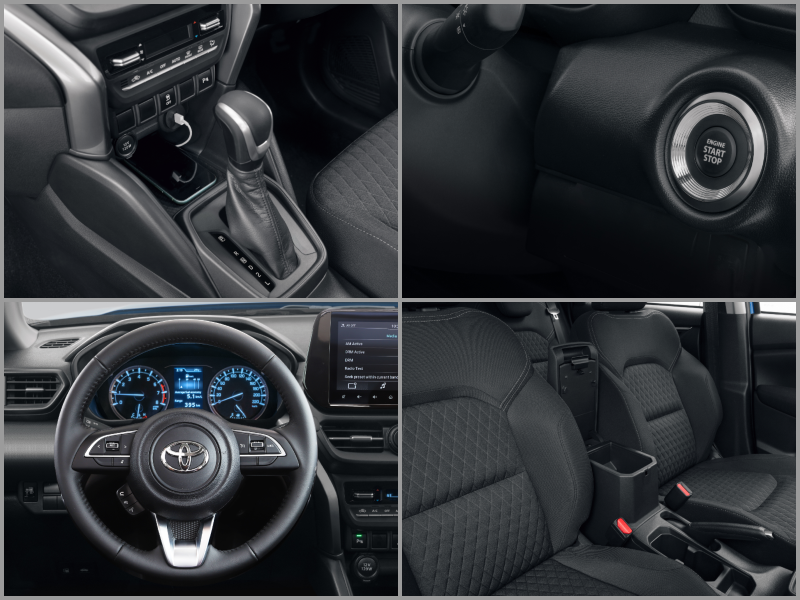
Its design is intended to balance functionality and contemporary styling, offering motorists the visual appeal of an SUV without the dimensions of larger, more expensive models.
Inside, Toyota highlights technology and connectivity as important elements of the vehicle’s appeal.
The manufacturer says the Urban Cruiser allows drivers to connect their mobile devices and access multimedia functions, including audio, hands-free telephone operation, reverse-camera functions and smartphone integration.
Voice-command functionality also enables drivers to interact with selected features while maintaining attention on the road.
These features reflect the increasing importance of in-car technology to modern motorists, particularly younger buyers who expect their vehicles to provide seamless connectivity and convenience.
Safety takes centre stage
Safety is another important feature highlighted by Toyota Nigeria in its presentation of the Urban Cruiser.
The vehicle incorporates Toyota’s Total Effective Control Technology (TECT) body structure, developed to help absorb and disperse impact energy in the event of a collision.
This structural approach is designed to enhance occupant protection by managing the forces generated during an accident.
The model also features an Anti-lock Braking System (ABS), which helps drivers maintain steering control during braking, particularly on slippery road surfaces.
These safety provisions underline the manufacturer’s emphasis on combining driving convenience with occupant protection.
For Nigerian motorists, who frequently encounter varying road conditions, unpredictable traffic situations and changing weather, safety technologies remain important considerations when choosing a vehicle.
A proposition for Nigeria’s changing automotive market
The Urban Cruiser’s positioning comes at a time when affordability, fuel consumption and maintenance considerations are increasingly influencing vehicle purchasing decisions in Nigeria.
With the cost of acquiring and operating vehicles remaining a major concern for many households and businesses, compact SUVs offer an alternative to larger sport utility vehicles for buyers seeking a combination of practicality, comfort and manageable proportions.
The Urban Cruiser’s 1.5-litre engine could therefore be an important consideration for motorists seeking a relatively modest engine capacity without sacrificing the SUV experience.
Its compact configuration also makes it relevant to city driving, where manoeuvrability and ease of handling are important advantages.
However, its appeal will ultimately depend on factors such as acquisition cost, availability, financing arrangements, fuel consumption under Nigerian driving conditions and the cost of routine maintenance.
Toyota’s dealer and after-sales advantage
Beyond the vehicle itself, Toyota’s established presence in Nigeria offers an important consideration for prospective buyers.
Toyota (Nigeria) Limited, trusted distributor of Toyota Motor Corporation in the country, operates through seven accredited dealers.
The company identifies Elizade Nigeria Limited, R.T. Briscoe (Nig.) Plc, Omoregie Motors, Germaine Auto Centre, Kojo Motors, Mandilas Motors and Metropolitan Motors Limited as members of its accredited dealership network.
Its after-sales infrastructure comprises a service centre in Lagos, a parts depot, vehicle diagnostics, mobile workshop services, body and paint facilities and genuine spare parts distribution, among others.
The availability of these facilities is particularly important in a market where access to genuine components, qualified technicians and dependable maintenance services can influence long-term ownership experience.
For buyers considering the Urban Cruiser, the strength of the distributor’s after-sales network could therefore form part of the vehicle’s overall value proposition.
A compact SUV with practical appeal
The Toyota Urban Cruiser brings together several attributes that are increasingly relevant to Nigeria’s changing automotive market: a 1.5-litre petrol engine, transmission choices, modern connectivity, safety provisions and the versatility of a compact SUV.
While its eventual market performance will depend considerably on pricing, availability and customer experience, the model gives Toyota another option for motorists seeking a vehicle that combines everyday practicality with contemporary SUV styling.
As competition intensifies in Nigeria’s compact SUV segment, the Urban Cruiser will be judged not only by its design and equipment but also by how convincingly it delivers on the fundamentals of fuel economy, reliability, comfort and ownership value.
For Toyota, the challenge and opportunity lie in translating the Urban Cruiser’s product attributes into a compelling proposition for Nigerian motorists.

Toyota Urban Cruiser: The Compact SUV Set to Make a Big Statement in Nigeria
-

 Politics1 day ago
Peter Obi, NDC in Fresh Storm as Keyamo Gives Dickson 48 Hours Over Old National Anthem, Raises Secession Alarm
-

 metro1 day ago
“I Cheated Because I’m Human Too” — Divorced Restaurant Owner Accuses Ex-Husband of Sleeping With Over 16 Women
-

 metro1 day ago
Kwankwaso’s Daughter, Kano Governor’s Wife, Files for Divorce, Offers to Refund Dowry
-
 Business11 hours ago
OPay Faces ₦994m Regulatory Fines Over Money Laundering, Terrorism Financing Breaches
-

 metro23 hours ago
Pastor Remanded Over Viral Video of Toluwanisings’ Corpse After Failed Attempt to Raise Singer From Dead
-

 metro12 hours ago
Zamfara Bloodbath: 53 Killed as Vigilantes Ambush Bandits After Kidnapping Spree
-

 Politics11 hours ago
2027: Atiku, Makinde Move Closer to Alliance Deal to Unseat Tinubu
-

 News6 hours ago
Tinubu-Aregbesola Rift: ‘They Still Have Deep Affection for Each Other’ — Adeyeye