

metro
Reps in Rowdy Session Over Motion to Summon Tinubu Over 2025 Budget Delays
Reps in Rowdy Session Over Motion to Summon Tinubu Over 2025 Budget Delays
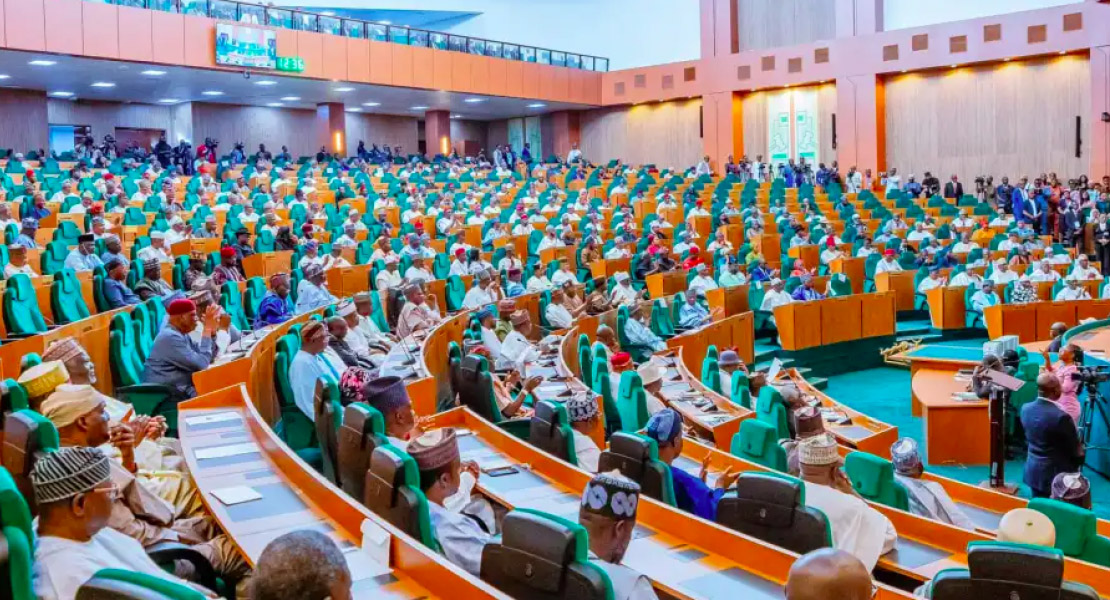
The House of Representatives was thrown into a heated rowdy session on Wednesday as lawmakers sharply disagreed over a controversial motion seeking to invite President Bola Tinubu to appear before the National Assembly to explain the slow implementation of the 2025 Appropriation Act and delays in funding for constituency projects. The chaotic scene unfolded during plenary after two separate motions raised concerns over a June 29 Treasury Circular issued by the Accountant-General of the Federation, Shamseldeen Ogunjimi, which directed all federal Ministries, Departments and Agencies (MDAs) to halt payment processing for constituency and Zonal Intervention Projects (ZIPs) unless they had first obtained a Certificate of Verification and Compliance from the Federal Ministry of Special Duties and Intergovernmental Affairs. The directive, aimed at strengthening accountability and transparency in project implementation, was seen by some lawmakers as an unnecessary bureaucratic hurdle that would further stall already delayed budget execution.
The controversy began when Benedict Etanabene, the lawmaker representing Okpe/Sapele/Uvwie Federal Constituency of Delta State, raised a point of privilege over the Accountant-General’s circular. Etanabene argued that the directive could significantly undermine the implementation of projects already captured in the 2025 budget and frustrate lawmakers’ efforts to deliver constituency projects to their constituents. He urged the House to summon President Tinubu to explain the slow pace of budget implementation and the rationale behind the directive, insisting that the executive owed Nigerians and the National Assembly a clear explanation. A similar motion was then moved by Alex Mascot Ikwechegh (LP – Abia State), who specifically called for President Tinubu to appear before the House to address the persistent funding delays. Ikwechegh highlighted revelations made by ministers and heads of MDAs during ongoing 2026 budget defence sessions, which showed that several agencies received little or no capital releases throughout the 2025 fiscal year. He also cited repeated protests by indigenous contractors over unpaid certificates for completed projects, many of whom had been pushed to the brink of insolvency after borrowing from banks to execute government contracts. Ikwechegh further recalled that President Tinubu had, at a Federal Executive Council meeting in December 2025, directed the immediate settlement of verified contractor liabilities estimated at about N1.5 trillion. However, he argued that despite the presidential directive, releases to MDAs remained slow or non-existent. Heating up the debate, Ikwechegh proposed an amendment to suspend plenary for one week until the issue was resolved.
READ ALSO:
- Dangote launches free petrol delivery in Lagos, Abuja, five other states
- Appeal Court orders status quo in ISI hijab case, adjourns hearing to Oct. 7
- I may not be alive to contest, Peter Obi alleges systematic persecution
The proposal to summon the President immediately divided the House, with some lawmakers supporting the invitation, arguing that the President, as head of the executive arm of government, should account for the implementation of the national budget, while others strongly opposed the move. Among those who opposed the invitation was Yusuf Gagdi (APC – Plateau State), who argued there was no constitutional basis for summoning the President. He insisted that ministers and heads of MDAs were constitutionally responsible for budget execution and should instead be summoned to address the issues. Gagdi called for the motion to be divided so that lawmakers could vote separately on the controversial prayer to invite the President. His remarks triggered loud protests from members, leading to shouting matches across both sides of the chamber as lawmakers attempted to outshout one another. The heated exchanges disrupted proceedings for about 30 minutes, with some members chanting “Sit down! Sit down!” at their colleagues.
Amid the disorder, Speaker Tajudeen Abbas repeatedly called for order and eventually ruled against the motion. Abbas explained that the prayers contained in the motion as read on the floor differed from those contained in the document originally submitted by the sponsor, describing it as a deviation from the approved text. He declined requests to subject the controversial prayer to a separate vote, insisting that the House would proceed in line with its established rules and legislative procedures.
The June 29 circular issued by the Accountant-General’s office mandates all Accounting Officers, Directors, Heads of Finance and Accounts, and Internal Audit units across MDAs to reject any payment request for constituency projects that does not have the Ministry of Special Duties and Intergovernmental Affairs’ Certificate of Verification and Compliance. According to the circular, the decision followed observed lapses in compliance with an earlier circular issued by the Office of the Secretary to the Government of the Federation on September 20, 2023, which introduced revised guidelines for the implementation of constituency projects. The Treasury Office stated that the measure is aimed at tightening financial controls, improving transparency, and ensuring that public funds are released only for duly verified and approved projects. Constituency projects, officially known as Zonal Intervention Projects, are federal budget projects nominated by members of the National Assembly to address developmental needs in their constituencies. Over the years, the programme has come under increasing scrutiny for abandoned projects, duplication, poor execution, weak monitoring, and misuse of public funds.
The incident highlighted growing frustration among lawmakers over the pace of the 2025 budget implementation, delayed releases of capital funds to MDAs, and the mounting backlog of unpaid contractors—issues many legislators say are hampering infrastructure delivery and undermining public confidence in government spending. Earlier reports had indicated that the 2025 budget faced significant implementation challenges, with capital implementation only beginning in October 2025, several months after the budget was signed into law. Economic stakeholders had expressed worry over the delay in budget preparation and execution, with some describing the budgeting process as chaotic and uncoordinated.
Reps in Rowdy Session Over Motion to Summon Tinubu Over 2025 Budget Delays










metro
Court Denies Bail To Anambra Pastor Accused Of Marrying Mother, Daughter

Court Denies Bail To Anambra Pastor Accused Of Marrying Mother, Daughter
The Anambra State High Court sitting in Awka has denied bail to Harrison Anazodo, a pastor and spiritualist facing a seven-count charge over alleged abduction, forced marriage and other offences.
Justice Jude Obiora rejected the bail application as proceedings continued in the case involving the General Overseer of Day Spring Assembly.
Anazodo had sought bail through his lawyer, W. Abonye, who reportedly cited health concerns in asking the court to release his client.
However, the prosecution, led by Chief State Counsel Chineze Ekwerekwu, opposed the application.
The prosecution filed a 20-paragraph counter-affidavit and two exhibits in opposition to the bail request and told the court that the state was ready to proceed with the trial.
The allegations against Anazodo include claims that he abducted a woman and her daughter and allegedly subjected them to forced marriage. He is also accused of taking several women as wives and engaging in conduct allegedly prohibited under the Anambra State Homeland Security Law, 2025.
READ ALSO:
- Troops Take Down Zamfara Bandit Kingpins Baban Love, Mai Zamani, Three Others
- FG Gives N250m To Families Of 37 Miners Who Died In NSCDC Custody
- Tompolo’s PBAT Movement Suspends Campaign Over Ondo Military Crash
Anazodo has pleaded not guilty to the charges, and the allegations against him have not been established by the court.
The case attracted public attention following his arrest by officials of the Anambra State Government in June. Reports surrounding the arrest also alleged that about 11 babies were found at his residence.
The prosecution is expected to call witnesses as the trial progresses, with the state indicating its readiness to present its case.
The court subsequently adjourned the matter until October 16, 2026, for further proceedings.
There was also a confrontation involving some of the defendant’s supporters and journalists at the court premises. Reports said some journalists were allegedly prevented from recording the defendant’s arrival, with claims that phones and cameras belonging to some members of the media were damaged.
The incident was reportedly brought to the attention of the court by Anambra State Attorney-General and Commissioner for Justice, Tobechukwu Nweke, SAN. Defence counsel subsequently apologised over the incident, while the court directed that damaged equipment be replaced.
With the bail application rejected, Anazodo will remain in custody as the criminal trial continues.
Court Denies Bail To Anambra Pastor Accused Of Marrying Mother, Daughter
metro
Missing Robbery Suspect: Anambra CP Queries DPO, Orders Probe
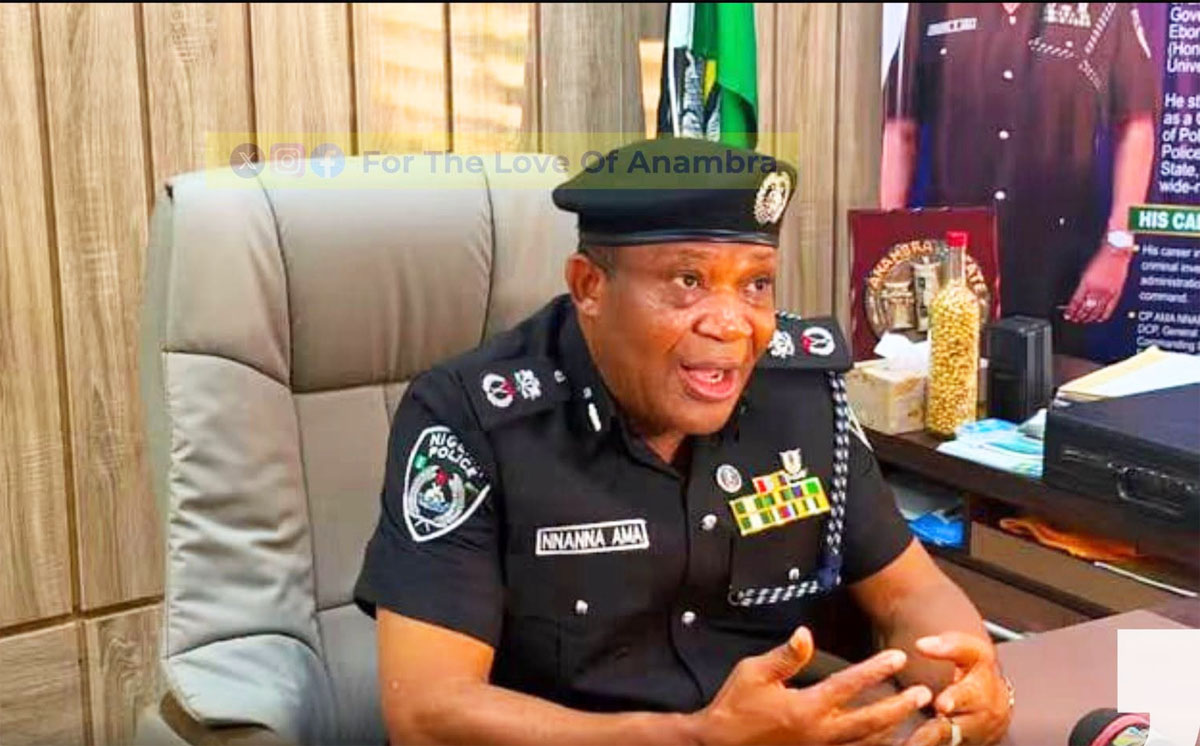
Missing Robbery Suspect: Anambra CP Queries DPO, Orders Probe
The Anambra State Commissioner of Police, CP Nnanna Oji Ama, has ordered queries for the Divisional Police Officer (DPO) of 3-3 Police Station, Onitsha, and a Deputy Superintendent of Police (DSP) following allegations that an armed robbery suspect arrested and taken to the station could no longer be accounted for.
The commissioner also directed the immediate commencement of disciplinary proceedings against an Inspector of Police linked to the matter.
The action followed the circulation of a viral video alleging that the suspect, who had reportedly been arrested and brought to the police station, subsequently disappeared from custody.
Ama personally interviewed the complainant and officers connected to the incident before issuing the directives.
The commissioner described the allegation as serious, stressing that conduct capable of undermining public confidence in the Nigeria Police Force would not be tolerated.
He said the command would take firm action against unprofessional conduct, dereliction of duty, abuse of office and violations of established police procedures.
READ ALSO:
- FULL LIST: NAF Releases Names Of 25 Victims Killed In Ondo Crash
- Supreme Council For Sharia Secretary-General Nafiu Baba-Ahmed Dies
- Former NADECO Leader Ralph Obioha Dies At 80
Following the interviews, Ama ordered the command’s X-Squad to conduct a comprehensive investigation into the circumstances surrounding the suspect’s arrest, detention and documentation, as well as what happened after the suspect was taken into custody.
The investigation will also establish the roles played by the officers involved and determine whether any police personnel breached established procedures.
The commissioner further said operational measures had been put in place to facilitate the rearrest of the suspect, although the police have not publicly disclosed his current whereabouts.
Ama assured the public that the findings of the investigation would be communicated once the facts had been established.
He also warned against the circulation of unverified information that could prejudice the investigation, stressing the need for the matter to be handled based on established facts.
The commissioner reiterated his commitment to police accountability and professional conduct, saying officers entrusted with protecting members of the public must also be subject to scrutiny when allegations of misconduct arise.
The development has drawn attention to the procedures governing the arrest, detention and documentation of suspects in police custody, particularly the responsibility of officers to maintain accurate records and ensure that detainees remain properly accounted for.
For now, the exact circumstances surrounding the suspect’s alleged disappearance remain unclear. The ongoing X-Squad investigation is expected to determine how the suspect allegedly went missing and whether any police officer bears responsibility.
Missing Robbery Suspect: Anambra CP Queries DPO, Orders Probe
metro
Four NAF Engineers Died Days Before Foreign Course Deployment — Sources

Four NAF Engineers Died Days Before Foreign Course Deployment — Sources
Four Nigerian Air Force (NAF) engineers killed in the Ondo aircraft crash had reportedly travelled to Abuja for documentation ahead of specialised foreign training courses.
The personnel were identified as Master Warrant Officer Matini BA, Flight Sergeant Mohammed AI, Sergeant Izibenikien SI and Sergeant Alafuka C.
According to information surrounding the tragedy, the four engineers had travelled to Abuja as part of preparations for their deployment abroad for professional courses. Their deaths came just days before they were expected to begin the specialised training.
The four were among the 25 people on board the NAF 931 ATR-42 aircraft that crashed in the Igbokoda area of Ilaje Local Government Area of Ondo State. The victims comprised five crew members and 20 passengers.
The aircraft was reportedly on a routine mission when it crashed in the riverine area of Ondo State. Search-and-rescue operations were immediately launched, but the Nigerian Air Force later confirmed that there were no survivors.
The tragedy claimed the lives of several military personnel, including Squadron Leader AP Man-Ugwueje, who was among the aircraft’s crew.
READ ALSO:
- FULL LIST: NAF Releases Names Of 25 Victims Killed In Ondo Crash
- Supreme Council For Sharia Secretary-General Nafiu Baba-Ahmed Dies
- Former NADECO Leader Ralph Obioha Dies At 80
Reports following the crash said Man-Ugwueje had recently been promoted and had married about two weeks before the tragedy.
Another victim, Flying Officer IM Adeshina, was also reportedly a relatively recent addition to the NAF and was said to have distinguished himself during his training.
The deaths have sent shockwaves through the Nigerian military, particularly because some of the personnel were reportedly preparing for further professional development when the tragedy occurred.
The Chief of the Air Staff, Air Marshal Sunday Kelvin Aneke, has ordered a comprehensive investigation into the circumstances surrounding the crash.
The Nigerian Air Force has also appealed to the public to avoid speculation and the circulation of unverified information while the investigation continues.
For the four engineers, what was expected to be the beginning of an important phase in their military careers ended in tragedy, with their planned foreign training cut short by the fatal aircraft crash.
Four NAF Engineers Died Days Before Foreign Course Deployment — Sources
-

 metro3 days ago
‘I Thought I Was Dead’ — Hairstylist’s Daring Escape From Kidnappers After Benin-Ore Ambush
-

 metro1 day ago
Tragedy Strikes FMC: Medical Director Loses Two Daughters—A Doctor and a Pharmacist—Within 48 Hours
-

 metro1 day ago
Transporters Urge IGP Disu to Arrest Illegal Highway Tax Collectors
-

 metro3 days ago
Court Restricts Osun Accounts Over $13.9m Arbitration Award
-

 metro1 day ago
Army, DSS, Amotekun Kill ISWAP Commander Planning Attacks in Southern Nigeria
-

 Politics1 day ago
2027: Soludo Govt Accuses Peter Obi Of Plot To Destroy APGA
-

 Entertainment3 days ago
“Sometimes, I Wonder Why I Married My Husband” — Omotola
-

 News1 day ago
BREAKING: Many Feared Dead as Helicopter Crashes in Ondo Community