

Opinion
ENDSARS: Buhari mocks dead police victims

By
Tunde Odesola
(Published in The PUNCH, on Monday, October 19, 2020)
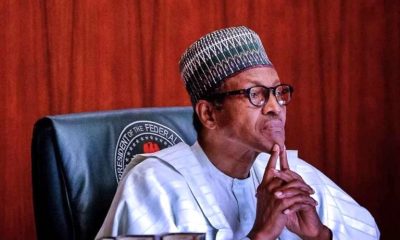
When #ENDSARS protesters upended one of the czars of Nigeria’s 36 states, Babajide Sanwo-Olu, in Lagos and he fled in surrender to Aso Rock last week, Major General Muhammadu Buhari (retd.) burst into laughter.
Buhari’s laughter wasn’t hearty. It was dry and mirthless, whizzing like a horsewhip on bare skin in harmattan. The laughter echoes the snapping of the windpipe when the tiger buries its yellow fangs in the back of the antelope’s neck, eyes glazed.
To many, Buhari’s laughter, sardonically, betrays the ultimate insincerity of Aso Rock about solving Nigeria’s problems. To some others, the unsaid words behind the laughter was, “See how dis small boy governor dey shake like leaf because of common protest. Kai, he don see fire!” In truth, I agree that Sanwo-Olu is a small boy in comparison to General Buhari.
Agitated, small boy Sanwo-Olu, who has been sacked since about two weeks ago from the Governor’s Office, Alausa, by youths protesting non-stop police killings, brutality and extortion nationwide, was seen in a viral video eagerly explaining to Buhari what Lagos State has done about the requests of the youth protesters.
Wearing a face mask and clenching a big brown envelope containing the demands of the protesters, Sanwo-Olu gesticulated and physically presented his envelope to Buhari, who has formed a habit of receiving guests without wearing a face mask, unguardedly sending a signal to the citizenry that foolhardy defiance is a protection against the coronavirus.
Talking with the haste of a pilot whose plane is in distress, Sanwo-Olu told Buhari, “They (protesters) said we should release all the protesters, we’ve released them, they said we should set up a trust fund to pay compensation to the families of the ones that have died, I’ve set up my own trust fund. Today, I’ve announced it.”
Then Buhari laughed.
If Sanwo-Olu was shocked about the graceless laughter, he never showed it. He continued, “The third one, they said that we should set up some inquiry for the persons that are bitter…(Buhari interrupts, saying: “Yeah, I said that. I said that in response.”)
Sanwo-Olu continued, “So, tomorrow, the IGP is coming to the Governors Forum, he’s going to ask each of us to set up a four-man or five-man team. And the final one is, they said we should increase the salary of the police. The IGP said he was working on that. And (the) IGP said he’s going to be working to take some of them through some psychosocial treatments. Some, they’re going to go to the Force hospitals, they’re going to clean them up and check them. The ones that can still be absorbed, they will. So, everything is working but I just want to present this formally. (He hands over the envelope to Buhari). Thank you, sir.”
For mocking, instead of mourning those who have died, many Nigerians have called the President uncharitable names. But as annoying as the President’s inappropriate laughter was, I sincerely plead for forgiveness on his behalf. I plead for forgiveness for Buhari because I know that the sweat of the dog is masked by its fur just as our President’s sweat is masked by the splendour of Aso Rock.
As desirable as laughter is, it’s open to ambiguity, I need say. A laughter can be joyous or sorrowful or empty. If I was Buhari, my line of defence against wailers would be that my laughter during Sanwo-Olu’s presentation was sorrowful. I would remind them of the Yoruba proverb, “Oro buruku tohun terin,” which says misfortune walks side by side with laughter.
To those who seek to know whether the President would have laughed if any of his children was killed while protesting for a better Nigeria, I will say: Major General Buhari’s children are obedient, hard working ladies and gentlemen, too busy to lazy about on highways smoking, eating, drinking and singing. And why would Buhari’s children march on the streets to seek a better country when there’s nothing wrong in the Nigeria that fuels the presidential jets that keep them in the air and the limousines that convey them on land?
Buhari’s sweat or laughter, if you like, is seen by many protesting Nigerians as the gerontocratic trait of a leader in need of urgent retirement away from the rigours of critical thinking and the energy-sapping demands of nation-building. A majority of the protesting youths believes that in thought, word and deed, Buhari has no purpose in governance because he’s not in tandem with modern-day democratic realities.
This is why Major General Buhari deserves our collective empathy because he’s at the end of his tether. I’m sure Buhari is shocked and can’t understand why for the first time in the nation’s history, hitherto docile Nigerian youths have suddenly found their voice and massively risen to confront their oppressors. I can hear Buhari asking, who’s funding these protesting youths? I can imagine the loss on his face when a security report shows that the youths’ call for real change is fuelled by the misrule of his government. I can see worry on the President’s face when told that the youth agitation is being powered on the social media. I can hear, ‘social media kwo? Is social media contesting in 2023?’
Buhari deserves pity because he can’t do more than laugh as the events of the past two weeks are totally beyond him. This is why it took earth-shaking nationwide protests for Buhari to know that Nigerians are being slaughtered by the members of a police force long overdue for reformation.
Or, doesn’t Buhari together with his ministers, legislators in shallow chambers, principalities residing in Government Houses nationwide, the Inspector General of Police, secretaries to federal and state governments etc know that the police are killing, raping, maiming and extorting innocent Nigerians before these protests? They all kept quiet because they don’t represent the people. They only represent their pockets.
While Buhari and Nigeria’s past generation of leaders shout, “Off the mike,” the fresh blood out on the streets of Lagos, Kaduna, Abuja, Kano, Port Harcourt, Enugu, Osogbo, Ibadan, Owerri, shout, “Soro soke!” a synonym for, “Speak louder!” While Buhari, Goodluck Jonathan, Olusegun Obasanjo and their failed political leaderships are enmeshed in innumerable corruption allegations, the young generation of youths protesting on the streets demand openness, probity and equity.
Today, every Nigerian political office holder is afraid. They know the scales are falling off. Nigerian youths have torn the ‘lazy’ tag pinned on them by Buhari. They’ve also defied the notion that only money can mobilise the citizenry. For 60 years, the old order has failed the nation. A new order is rising. May it birth safely.
If the millions of jobs created by Obasanjo, Yar’Adua, Jonathan, Buhari administrations are true, no youth will be out on the streets today. If the thousands of hectares of farmlands they yearly vote billions of naira to cultivate are real, hungry youths won’t troop out to the streets for food at the protest grounds. If there was electricity in homes, some of the protesters would sit back at home to watch TV. If Buhari gave hope, the youths would cope.
Nigerians have perpetually listened to the broken record titled, “Nigeria’s unity is not negotiable.” Today, I laugh to see these funny leaders running helter-skelter, negotiating the country’s peace. Well, Buhari should know that being out of power for 21 years can’t kill the lust for power in Nigeria’s military. Half a word is enough for the wise.
In captivity, when a tiger or lion tastes human blood, it’s killed instantly because the big cats will kill more people after tasting human blood, for human blood is tastier than other animals’ blood because of its saltiness.
Nigerian youths have tasted the power to change the ills of their society. I pray they never remain the same again.
God bless Nigerian youths.
Email: tundeodes2003@yahoo.com
Facebook: @tunde odesola
Twitter: @tunde odesola








Opinion
Ortom and His 23 Cars’ ‘Bonus’, by Dele Sobowale
Ortom and His 23 Cars’ ‘Bonus’, by Dele Sobowale
“As I talk to you, after I left office, vehicles that were given to me legitimately by government, this government went and seized them in a manner that was not befitting.” – Former Governor Samuel Ortom of Benue State
Last week, former Governor Donald Duke of Cross River declared that military rule was, in many respects, better than civil rule since 1999.
I cannot agree more.
I had the privilege of visiting about seven former military governors before 1999.
No military governor had up to 23 cars assigned to the Governor’s Office or residence.
By contrast, since 1999, a civilian governor with only 23 cars in the office alone would be regarded as extremely prudent.
Many have 50 or more.
Ortom’s 23 cars have triggered a dispute. Governors, on their way out of office, routinely take what they deem as their entitlements and thus render their states poorer than they met them.
Most commentaries on Ortom’s 23 cars have been superficial.
The impression they have created is that only 23 cars were taken away.
Nothing can be further from the truth.
Ortom was not the only beneficiary of that largesse.
It is quite possible that over 100 cars were taken away as parting gifts – with Ortom’s approval – as I will explain shortly.
Ortom revealed the hidden truth by saying, with a straight face, that the vehicles were allocated to him and other members of his administration through the State Executive Council, SEC, after they had been used for more than four years.
It was the worst defence for an assault on public funds ever uttered by a former official.
It provided a window into the minds of top government officials everywhere – irrespective of political party affiliation.
Every State Executive Council, SEC, comprises the governor, the deputy governor, the Secretary to the State Government and commissioners.
All the others are selected or appointed by the governor and, with the exception of the deputy governor, can be removed from office.
In other words, the SEC is created by the governor and can take no independent decision of its own.
READ ALSO:
- Abuja Demand Rises as Jetour Brings X70 Plus Experience to FCT
- Enough Is Enough: Muslim Supporters Demand New Man United Owners
- Stray Bullet Kills 400-Level IBBU Student During Land Dispute in Niger
It is not an autonomous body.
Stripped of the subterfuge surrounding it, the decision to allocate 23 cars to Ortom amounted to the governor deciding to go home with the cars and getting his echoes in the SEC to endorse it.
Ortom, inadvertently, disclosed that more cars than 23 were driven home by his government officials when he claimed that the SEC allocated the vehicles in dispute to him “and other members of his administration”.
Since “the other members of his administration” start with the SEC, it stands to reason that the deputy governor, the Secretary to the State Government, all the commissioners, the Chief of Staff, several Special Advisers, heads of state agencies, etc., were also allowed to go home with cars declared over four years old – even if by one day.
Nobody has documented the number of cars Ortom and “the other members of his administration” took away. Over 100 vehicles might be involved.
That leads to the next question because it strikes at the heart of why poverty is increasing in Nigeria.
IS A CAR FOUR YEARS OLD READY FOR THE JUNKYARD?
Most Nigerians known to me, including those driving corporate official cars, are driving vehicles more than five years old.
Mine is 12 years old and can still break the speed limit anywhere in the world.
I also own a LAGRIDE taxi, now four years old.
The Chinese-made car was offered four years ago at N4.8 million, with a down payment of N1.82 million and the balance to be paid in instalments. Today, the car costs N25 million new, and offers have been made to buy my used one for N11–N13 million.
Obviously, when any government gives away, at far less than market value, to departing officials, the public loses.
Ortom’s 23 cars, as well as the others allocated to members of his administration, would have fetched almost five times what the officials paid for them.
To put the matter in perspective, Benue State would have to pay nothing less than N6 trillion just to replace the vehicles.
Left untouched is the question: What else was taken away – furniture, generators, air-conditioners, borehole pumps?
Outgoing officials are never satisfied with taking cars with them.
“Laws grind the poor, and rich [as well as powerful] men rule the law.” – Oliver Goldsmith, 1728–1774
The other half of his self-defence concerns the legality of the allocations.
That the law is an ass has been well established; so is the fact that what we often call law might be injustice codified.
Strictly speaking, everything Abacha did was supported by laws passed as decrees. Justice was never considered.
Civilian governments also make laws which are inherently unjust to the masses.
READ ALSO:
- Oyo Police: Student Who Died by Suicide Was Charged With Assault, Not ₦8,000 Debt
- Delta Police Intercept Sienna With Military Uniforms, Suspected Drugs
- Jehovah’s Witnesses Adjust Blood Transfusion Rules, Allow Personal Choice
The regulation allowing some public servants appointed by the governor to take away very useful public properties cannot be regarded as equitable, given the fact that those who served for 30 or 35 years cannot take away a single pin without being prosecuted.
What exactly does an outgoing governor want to do with 23 cars?
MEANWHILE, GOVERNOR ALIA SETS BACK DEMOCRACY IN BENUE
Governor Hyacinth Alia, a Catholic cleric, honourably fought for justice by having the 23 cars taken away by Ortom retrieved.
It is not clear whether other cars allocated by Ortom’s SEC members were also seized.
If not, the measure would appear personal and discriminatory.
It would appear to be partial justice and tainted with vendetta.
Frequently, individuals transiently invested with near-absolute power, like Nigerian governors, cross the thin line between the divine and the ridiculous within a short time.
When Alia, for the second time, blocked Peter Obi from moving freely about in Benue State, he betrayed democracy and the Constitution of Nigeria he swore to uphold.
He failed the democracy test. He even failed the test of advanced education.
His tenure is limited by the Constitution. Obviously, he will become an ex-governor one day – without armed escorts to protect him and clear the way.
He has established a precedent which will make it legitimate for any governor in Nigeria to block his right of passage.
Two examples in Nigerian history should serve as a warning to Alia.
Military Head of State Obasanjo passed the decree under which General Gowon would have been executed in 1976 – if Britain had not granted the deposed leader political asylum.
The same decree, with slight amendment, was used by Abacha to nail his former boss.
He was saved by divine intervention.
Malam El-Rufai, as governor of Kaduna State, had critics living in other states arrested, brought to Kaduna State and detained without bail for days – before media protests got them released on bail.
Today, El-Rufai is in detention by the DSS and ICPC, without bail for almost six months.
The same media, held in contempt by El-Rufai, has now undertaken the campaign to get him released.
As one of our founding fathers, Dr Nnamdi Azikiwe, reminded us before passing to eternal life: “No condition is permanent.”
Governor Alia should climb down from his high horse and apologise to Obi and Nigerians.
Ortom and His 23 Cars’ ‘Bonus’, by Dele Sobowale
Opinion
2027: Competence, Not Zoning, Should Decide Nigeria’s Next President — Imasuagbon
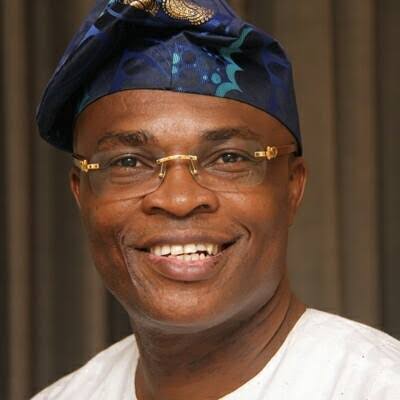
Nigerians should look beyond ethnicity, region and the longstanding debate over rotational presidency when choosing the country’s next leader, according to a chieftain of the African Democratic Congress (ADC), Kenneth Imasuagbon.
The former Edo State governorship aspirant said the priority ahead of the 2027 election should be finding a president with the ability to confront Nigeria’s economic, security and infrastructure challenges.
Speaking to journalists in Benin, Imasuagbon argued that presidential rotation is not a requirement of the Nigerian Constitution and should therefore not outweigh the question of competence.
He said voters should be more concerned about replacing poor schools with better ones, improving healthcare and addressing hardship than debating where the next president comes from.
Imasuagbon specifically appealed to voters in the South to support former Vice President Atiku Abubakar, who is contesting the 2027 presidency on the ADC platform.
According to him, Atiku has demonstrated the experience and determination needed to improve the country, describing the former vice president as someone capable of promoting national unity and fairness.
He also accused the Bola Tinubu administration of worsening economic pressure through policies including the removal of fuel subsidy, while expressing concern about the condition of roads, electricity and other infrastructure.
Imasuagbon argued that the next administration must focus on practical improvements in areas such as power, transportation, employment, security and public services.
The ADC chieftain also dismissed the idea that the ruling All Progressives Congress (APC) would automatically benefit from its incumbency advantage in 2027.
He maintained that the electorate ultimately determines the outcome of an election, arguing that voters could change the political direction of the country if they were determined to do so.
Imasuagbon further criticised what he described as regional and ethnic considerations in the distribution of political appointments and opportunities, insisting that the next president should give Nigerians across different parts of the country a sense of belonging.
His comments come as political parties and their candidates intensify preparations for the 2027 presidential election.
Opinion
Lesson from Dotun Oladipo’s Brave Daughters, by Bamidele Johnson
Lesson from Dotun Oladipo’s Brave Daughters, by Bamidele Johnson
I hope to grow old. I want to see my kids become real adults, find their own feet, make mistakes, recover from them, and perhaps one day complain that their own children are giving them grey hairs. I want that plainly stated before anything else, as everything that follows might read as a man agreeing to an early exit rather than a man simply being honest about the odds.
I want the decades. I want to become the grandfather who repeats the same stories until nobody bothers correcting him anymore. But wanting a thing and being granted are different things. The last year has made that difference harder to ignore than I would like. I have lost many friends recently to keep thinking that optimism is my natural resting state. Some of these men had better blood pressure than mine, better habits, better everything that is supposed to count. It did not save them.
There is no formula I know that reliably separates the men who make it to 70 from those who do not. Anyone who says he knows one is selling something. So, I do not assume that old age is an already booked destination. Even if I once did, which I doubt, the last three years have cured me of such an illusion. As such, I treat it as a hope rather than an expectation, and I have found that a more honest way to live.
It is exactly why I want something placed on record now, while I am still able to place things on record, rather than leave it for people to guess what my wishes were in the fog of a funeral week. If I do not make old bones, my children are not to be asked to read tributes at my funeral. Not one line, however short, however lovingly written.
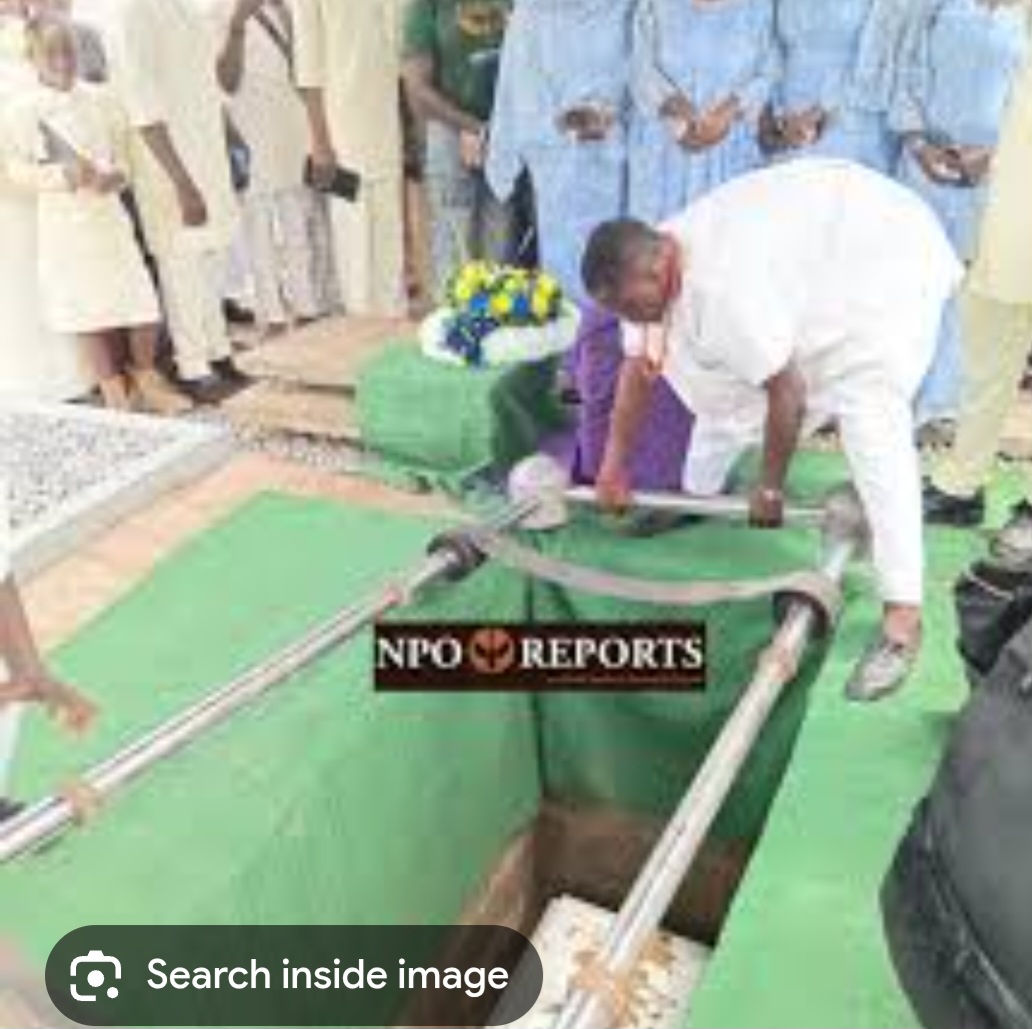
This, for me, was settled today rather than re-opened. At Dotun Oladipo’s funeral service, his three daughters took turns to read their tributes to their dad, and I found myself watching them with awe. There was a kind of strength in them that I do not possess. It is the strength needed to stand in front of a hall brimming with grieving adults and speak about a man they have just lost. Forever. Strength, however, is not the same as ease. I could see plainly what that strength was costing them as they read. Their voices caught. Their composure held and then did not hold and then held again through sheer will.
In front of them, in the pews, men and women considerably older than them came undone in ways the girls themselves were somehow managing to resist. I went mightily close. Some of the sobbing was quiet, the type people try to fold into a handkerchief. Some of it was not quiet at all, the kind that announces itself whether or not you want it.
Those young women honoured their father with a grace that is beyond me. What they did was astonishing. So, what I am attempting is an observation of a custom I have now watched wound people. This was not the first time I had watched this particular ritual extract more than it should from people already running on fumes. I saw an earlier and harder version of it at a friend’s wake back in 2015.
The first son was called forward to read his father’s tribute, and he could not do it. He tried, but the words would not come, and he stood there in front of a crowd of mourners, with his grief simply refusing to organise itself into sentences. The officiating minister, rather than releasing him from the task, urged him to continue. I sat fizzing with sorrow and ire. He could not go on and, eventually, the minister accepted, but not before insisting a while longer than it should have reasonably taken. His younger brother was called up next, presumably on the theory that if one grieving son could not manage it, maybe another one could. He flunked it in the same way. Grief does not distribute itself more conveniently among siblings just because a programme has been printed and needs to be followed.
I have turned that memory over many times since, trying to work out why this part of the rites is treated as mandatory in the first place. I have not found a satisfying answer. Maybe it comes from a belief that a child’s words carry more weight than anyone else’s, which may even be true, but weight is exactly the problem when those carrying it are struggling to hold themselves together with nothing but adrenaline and the fear of dissolving in public.
Maybe it is simply inertia, the reason we still do a hundred things at funerals that nobody can explain the original purpose of. Either way, I have stopped looking for the justification. I no longer think one exists that is good enough to weigh against what I watched happen to that boy in 2015.
So, let this stand as my instruction rather than my preference, the kind of thing I would rather state plainly now than leave for my children to infer later from how uncertain I sound when the subject comes up in passing. If I do not get the old age I am hoping for, my children will not be asked to read a single word over my body. Someone else can speak for me. A friend, a stranger with a steadier voice and a smaller stake in the loss, anyone whose grief will not be quite so total that standing upright becomes almost impossible.
My children, of course, will sit in front and fall apart if that is what the day requires of them, but without the microphone. That, at least, is one small mercy I intend to arrange for them while I am still here to arrange it.
Dotun deserved every bit of the send-off his daughters gave him today, and I suspect he would have been the first to tell them to sit down and let someone else carry the weight for a while. He did not get a say in that, as none of us ever do once we are the ones being spoken of rather than the ones speaking. Rest well, Dotun. You raised three young women whose strength I will not soon forget. That alone says everything worth saying about the man you were.
-
 International2 days ago
18 Suspects Transferred to US Over 2021 Killing of Haitian President Moïse
-

 News2 days ago
NiMet Predicts Thunderstorms, Rain Across Nigeria Till Wednesday
-

 Politics2 days ago
‘Join the Hunt’ — Soludo Urges Igbos to Strategically Align Ahead of 2027
-

 Sports2 days ago
Messi Fires Stunning 75th Career Free-Kick to Reach 930 Goals in Inter Miami Draw
-
 metro2 days ago
My Heart Has Always Been Home With You — Tinubu’s Powerful Message to Oluremi at 66
-
 News2 days ago
Working People United Celebrates Oluremi Tinubu at 66, Commends Her Humanitarian Efforts
-
 News1 day ago
NLC Backs ₦500 Petrol Demand, Workers Propose ₦500,000 Salary
-

 Auto2 days ago
Jetour T1 Storms Abuja as Automaker Accelerates Nigeria Expansion
You must be logged in to post a comment Login