

Politics
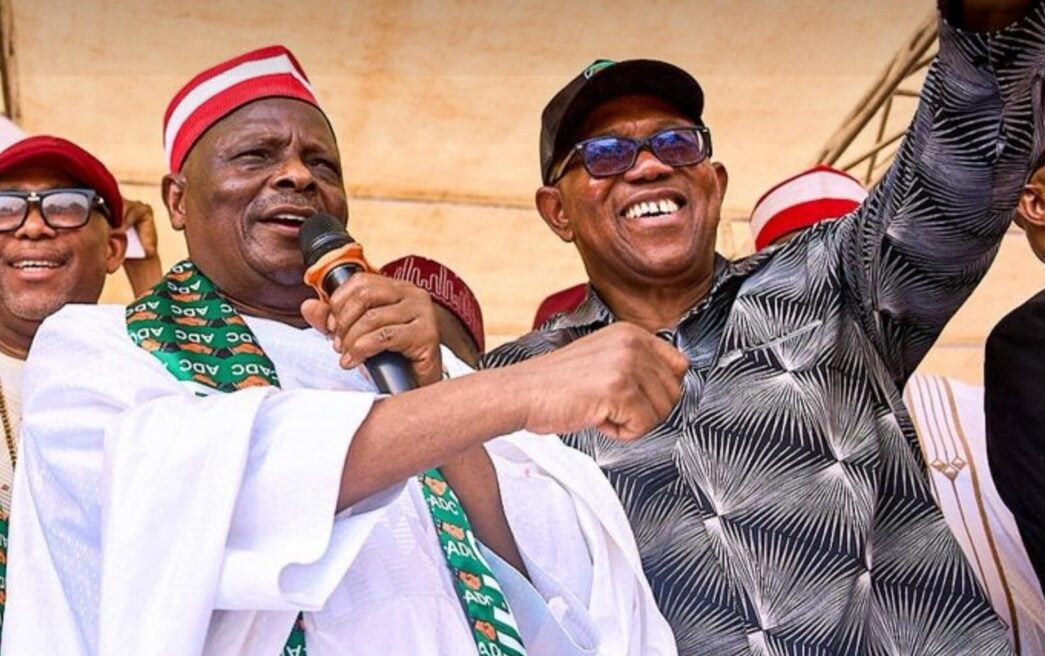
Obasanjo Brokered Obi-Kwankwaso Ticket, Remains Principal Sponsor – Akin Osuntokun
Obasanjo Brokered Obi-Kwankwaso Ticket, Remains Principal Sponsor – Akin Osuntokun
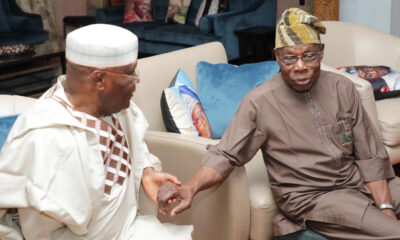
A former Political Adviser to ex-President Olusegun Obasanjo, Akin Osuntokun, has revealed that the former Nigerian leader personally brokered the political alliance between Peter Obi and Rabiu Kwankwaso and remains the principal force behind their joint presidential ticket for the 2027 election. The disclosure has sent shockwaves through Nigeria’s political landscape, offering a rare glimpse into the backroom negotiations shaping the opposition’s challenge to the ruling All Progressives Congress (APC). Osuntokun made the revelation during an interview on Arise Television on Sunday while firmly dismissing suggestions that Obasanjo was secretly working for President Bola Tinubu’s re-election bid. He argued that such claims were inconsistent with the former president’s political actions, insisting that Obasanjo had instead played a leading role in bringing Obi and Kwankwaso together as running mates under the Nigeria Democratic Congress (NDC) ticket.
“If you can say that Obasanjo is supporting any ticket, it is the Peter Obi–Kwankwaso ticket. As a matter of fact, he is the principal sponsor of that ticket,” Osuntokun declared during the interview. He maintained that allegations linking Obasanjo with Tinubu’s political camp lacked logic, especially considering the former president’s alleged involvement in putting the opposition ticket together. “So how do you then suggest that he is secretly working for Tinubu? It does not make sense to me. I think that claim is absolute bunkum. The evidence is in the public domain. Obasanjo is playing a major role in supporting the Obi-Kwankwaso ticket. He was the one who brought the two men together,” he added. When pressed to confirm whether Obasanjo actually brokered the ticket, Osuntokun stood firmly by his remarks. “Yes, of course. That’s what I said. He brokered the ticket between Obi and Kwankwaso. Both of them are quite close to him. It is a ticket that makes sense and has the potential to make a significant impact in the 2027 election. I can tell you for free that he was the one who brought the ticket together,” Osuntokun stated.
The former adviser also revealed that discussions for an Obi-Kwankwaso alliance could have materialized much earlier, saying talks had taken place several years before the current arrangement. “Kwankwaso could have teamed up with Obi four years ago. I remember him saying that if they had agreed then, they would probably have had an arrangement in which they would each spend one term in office, and Kwankwaso would now have been the beneficiary,” he said. He stressed that Obasanjo’s role in the alliance was already public knowledge and questioned why anyone would conclude that the former president was supporting Tinubu simply because the president visited him in 2023. Beyond the political alliance, Osuntokun also rejected claims that former President Obasanjo manipulated the 2003 elections to undermine Alliance for Democracy (AD) governors in the South-West. He described conspiracy theories surrounding that election as unfounded, insisting there were logical reasons why the AD governors lost. “I was very active during that period and I can say categorically that nothing of that sort happened. The election in which the AD governors lost can be explained state by state,” he said.
READ ALSO:
- Army arrests wanted soldier over alleged supply of military gear to terrorists
- BREAKING: Bandits Abduct Kebbi High Court Judge in Midnight Residence Attack
- Why Buhari refused to publicly endorse Tinubu before APC primary – Babachir Lawal
Fresh details have emerged over the political arrangement underpinning the NDC presidential ticket, with the party’s vice-presidential candidate, Senator Rabiu Kwankwaso, revealing that he and the presidential candidate, Peter Obi, signed a written agreement committing the former Anambra State governor to serve only a single four-year term if elected in 2027. The disclosure places the issue of power rotation at the centre of the unfolding 2027 political contest, with Kwankwaso presenting the agreement as part of a broader understanding designed to preserve national balance and sustain cooperation within the party beyond the next election cycle. Speaking during an interview on Channels Television, Kwankwaso said the understanding was not merely verbal but documented through formal agreements reached by both leaders. According to him, the arrangement provides that if the NDC wins the 2027 presidential election, Obi would complete one four-year tenure between 2027 and 2031, after which the presidency would return to Northern Nigeria. “We have agreed to formalise it in writing. We have executed one document for the party and another between the two of us,” Kwankwaso stated.
Responding to questions on whether Obi’s commitment to a single term could be relied upon, Kwankwaso expressed confidence that the former governor would abide by the agreement. “I personally believe him. Based on what I know about him, I don’t think he will change his mind when the time comes. We are all gentlemen, and we have accepted to put it on paper,” he said. He explained that both agreements were designed to guide the partnership throughout the life of a potential administration while laying the foundation for an orderly political transition at the end of the proposed four-year tenure. “The agreement is that after four years, we will continue to work together as a party, as friends and brothers, so that after our four-year term, from 2027 to 2031, power returns to the North. That is the consensus,” he said. Kwankwaso also explained the circumstances that informed his decision to accept the vice-presidential nomination despite previously pursuing the presidency, saying the decision was anchored on what both leaders considered the principles of fairness, equity and national inclusion. According to him, the two politicians reached a consensus that the South should produce the president for one term before the office rotates back to the North, describing the arrangement as one intended to reinforce national cohesion and political stability.
READ ALSO:
- Oyetola, VP’s aide, Opeifa to drive discussions at 2026 TCAN Transport Summit
- Is Nigeria’s Electricity Tariff Going Up? FG Finally Breaks Silence
- ISWAP finance chief surrenders to Nigerian troops with two children in Borno
The formal power-sharing arrangement between Obi and Kwankwaso aligns with the broader zoning framework already adopted by the NDC at its maiden National Convention held in Abuja in May 2026. At that convention, delegates overwhelmingly endorsed a power-rotation formula designed to promote national unity and balance regional interests. Under the resolution, the NDC declared that its presidential candidate for the 2027 general election must emerge from Southern Nigeria and, if elected, serve only one term ending in 2031. After that, the party’s presidential ticket will rotate to Northern Nigeria for the next electoral cycle. The motion was moved by Afam Victor Ogene, who represents Ogbaru Federal Constituency in Anambra State, and was overwhelmingly endorsed by party delegates. Announcing the resolution, the National Chairman of the party, Moses Cleopas, said the arrangement was aimed at promoting equity, inclusiveness and stability within the growing opposition coalition ahead of the 2027 general elections. He explained that under the agreement reached by party stakeholders, the South would produce the party’s presidential candidate in 2027 for only one term of four years, after which the ticket would automatically rotate to Northern Nigeria in 2031. “It will be the turn of the North in 2031,” Cleopas declared while addressing delegates at the convention.
Addressing delegates at the convention, Obi described the NDC as a platform for “national liberation”, insisting Nigerians would resist every attempt to undermine democracy and credible elections. The former presidential candidate warned against attempts to entrench one-party dominance in the country. “We cannot have one party in Nigeria. Nigeria must have democracy. Those who think there will be no free and fair elections in 2027 should rethink because Nigerians will insist on credible elections,” he declared. Obi also painted a grim picture of the nation’s socio-economic situation, claiming that over 140 million Nigerians were living in multidimensional poverty while millions of youths remained unemployed or underemployed. “Nigeria is not poor. Nigeria was looted into poverty, and we are coming to reverse that situation,” he added. Kwankwaso, while endorsing the zoning arrangement at the convention, described it as a necessary step toward fairness, equity and national healing. “It is therefore with great sense of unity and solidarity that as a loyal party member, I support the decision to zone the presidential ticket of the NDC to the South so that it allows the region to complete its turn in producing national leadership,” he stated. He expressed optimism that the NDC would emerge as a platform for national renewal, anchored on inclusive leadership devoid of ethnic and religious bias. “This party shall also ensure to change the way things are done today by prioritising leadership without ethnic jingoism and religious favouritism,” he added.
The emergence of the Obi-Kwankwaso ticket has reshaped political calculations ahead of the 2027 presidential election. Political observers believe the alliance combines Obi’s strong support among young voters, professionals and urban residents with Kwankwaso’s influence through the Kwankwasiyya Movement in Kano and parts of northern Nigeria. Supporters of the ticket argue that the partnership gives the NDC a broader national appeal by bringing together a South-East Christian and a North-West Muslim, while also reducing the fragmentation of opposition votes. The Nigeria Democratic Congress and the Obidient Movement have dismissed former National Chairman of the APC, Abdullahi Ganduje’s claim that the presidential ticket lacks the political legacy to win the 2027 election. Abdulmumin Abdulsalam, Deputy National Publicity Secretary of the NDC, dismissed Ganduje’s comments as inconsequential, saying the former APC chairman had lost political relevance in Kano. He argued that Obi’s electoral performance in the 2023 presidential election demonstrated his national appeal and predicted that the former Anambra governor would attract even more votes in 2027.
However, analysts have also pointed to major challenges facing the alliance, including the organisational strength of the ruling APC, the political influence of the African Democratic Congress, and questions over whether the combined support bases of both candidates will translate into electoral victory in 2027. The APC has dismissed the NDC’s zoning arrangement as no threat to Tinubu’s second-term ambition, insisting that the ruling party remained firmly in control of the nation’s political structure ahead of the 2027 polls. APC National Chairman, Nentawe Yilwatda, argued that the real political battle ahead of 2027 was not between the APC and the NDC, but among opposition parties themselves.
Akin Osuntokun, who served as Political Adviser to President Olusegun Obasanjo between 1999 and 2007, is a Nigerian political scientist, strategist, researcher, administrator, journalist and writer with experience in media advocacy, policy research and implementation and political analysis. He was later appointed Director of the Presidential Campaign of the Peoples Democratic Party in the 2011 general elections. In December 2022, he was announced by the Nigerian Labour Party as the Director General of the Obi-Datti Presidential Campaign Council to lead the 2023 presidential election campaign of Peter Obi. Osuntokun has previously spoken about the fragmentation within Nigeria’s opposition parties, warning that the lack of a united coalition among key figures such as Obi, Kwankwaso and Atiku Abubakar is giving the ruling APC a clear advantage ahead of the 2027 presidential election.
Obasanjo Brokered Obi-Kwankwaso Ticket, Remains Principal Sponsor – Akin Osuntokun





Politics
“I Won’t Slap Wike’s Son, I Won’t Kick Seyi Out — But Tinubu MUST Go!” Fayose Explodes
“I Won’t Slap Wike’s Son, I Won’t Kick Seyi Out — But Tinubu MUST Go!” Fayose Explodes
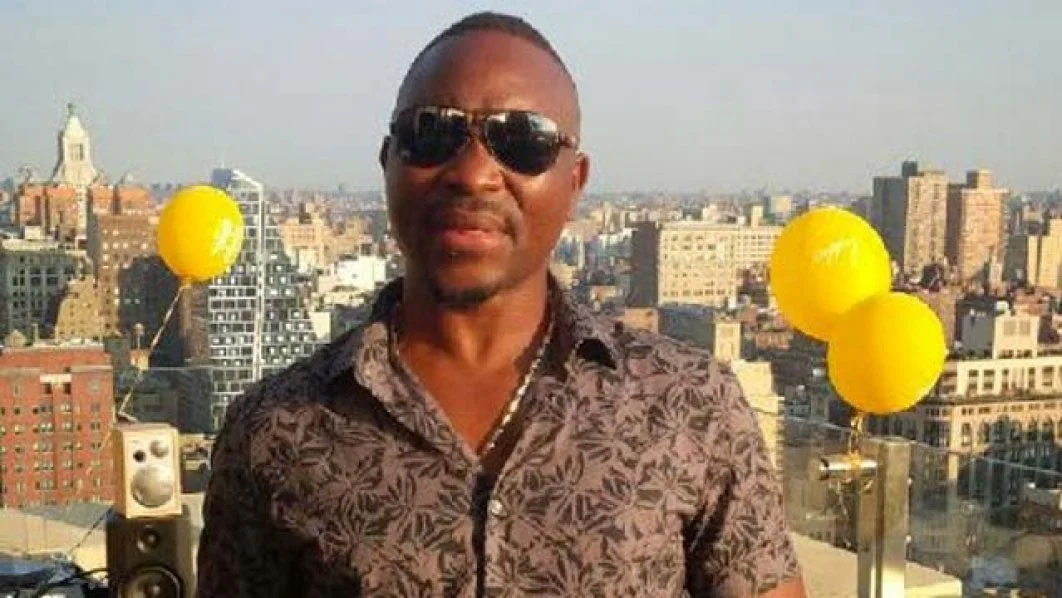
Abuja — Isaac Fayose has fired back at critics in dramatic fashion, declaring he will neither slap Nyesom Wike’s son nor kick President Bola Tinubu’s son Seyi out of his presence — but insisting with equal fury that the President must be voted out in 2027.
The businessman and younger brother of former Ekiti State Governor Ayodele Fayose ignited a firestorm after photos surfaced of him hanging out with Seyi Tinubu and Joaquin Wike, son of the FCT Minister. Critics immediately accused him of betraying the Nigeria Democratic Congress (NDC) and its presidential candidate, Peter Obi.
Fayose, however, refused to back down. In a video posted on his Facebook page, he threw a rhetorical punch at his accusers: “Tinubu must go. Wike is a land grabber. That doesn’t mean that Wike’s son will come and greet me and I will slap him. Or President Bola Tinubu’s son, Seyi, will come and greet me and I will kick him.”
He doubled down on his loyalty to Obi, declaring: “I campaigned for Obi. Do you know how much I spent on the last election? I still support Peter Obi. I still want Tinubu out of power.”
The controversy exploded after Fayose posted a photograph with Joaquin Wike, calling the minister’s son his younger brother. The image set social media ablaze, with users questioning why a self-proclaimed “101% Obidient” supporter would be seen with the family of a top APC figure.
It is not the first time Fayose has faced such backlash. In July 2026, a video showed him alongside Seyi Tinubu and socialite Cubana Chief Priest at an Abuja gathering where prayers were offered for the President and Nigeria. Fayose dismissed the meeting as a private social visit, not a political endorsement.
The latest storm underscores the fever-pitch sensitivity in opposition circles as political actors jostle for position ahead of the 2027 presidential contest. Fayose insists he is drawing a clear line — political allegiance on one side, personal courtesy on the other — but his critics are not buying it.
As of press time, neither the NDC nor Peter Obi’s camp has issued an official statement.
“I Won’t Slap Wike’s Son, I Won’t Kick Seyi Out — But Tinubu MUST Go!” Fayose Explodes
Politics
‘They Created Hunger, Poverty’: Tinubu Fires at Opposition as 2027 Re-election Campaign Begins
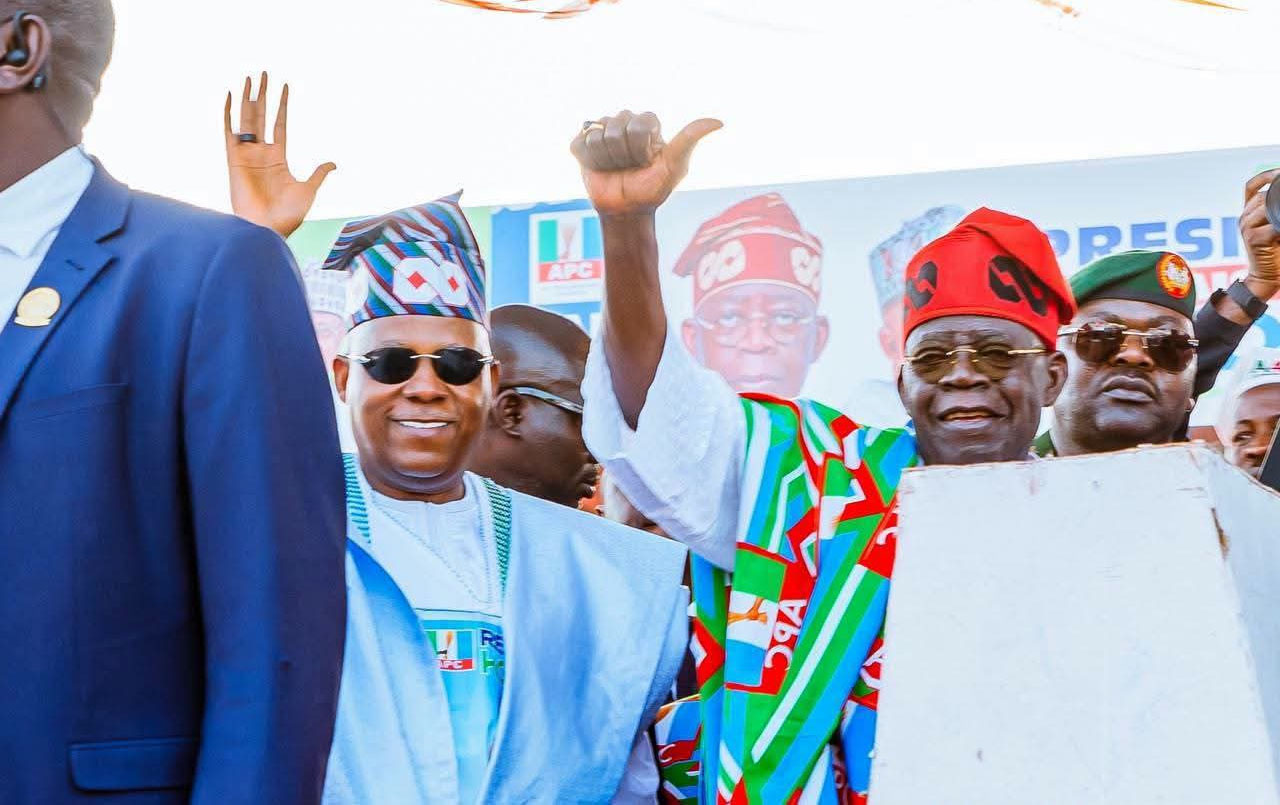
President Bola Ahmed Tinubu has blamed opposition politicians for the hunger and poverty confronting Nigerians, insisting that his administration is working to address the economic challenges as he formally launched his campaign for a second term in office.
Tinubu made the remarks on Saturday, October 24, 2026, during the All Progressives Congress (APC) presidential campaign flag-off rally at the Kaduna Township Stadium, where he urged Nigerians to renew his mandate in the 2027 presidential election.
The President’s comments come amid persistent public concerns over rising food prices, petrol costs, transportation expenses and declining purchasing power, with the economy expected to remain a major issue in the contest for the presidency.
Addressing supporters at the rally, Tinubu challenged opposition politicians who have criticised his administration over hunger and poverty, arguing that they were responsible for creating the problems they now accuse his government of failing to resolve.
“I hear my opponents talking about hunger and poverty. Who created it? They did. They created hunger, they created poverty. We are trying to eradicate them,” the President said.
Tinubu defended his administration’s economic policies, maintaining that his government was taking steps to improve the country’s finances, promote development and create conditions for greater prosperity.
He also commended APC governors for their efforts in their respective states and promised Nigerians improved economic opportunities if he secured a second term.
“To you, the children of our country, we promise prosperity in our second term. You will not regret going to the polls,” he told the gathering.
The President urged eligible voters to obtain their Permanent Voter Cards (PVCs) and participate in the forthcoming election. He also called on APC supporters to vote for the party’s candidates at the presidential, governorship and legislative levels.
READ ALSO:
- Bill Clinton condemns anti-Muslim prejudice, cites Qur’an’s message of coexistence
- MURIC Applauds Army as Mogadishu Cantonment Mosque Reopens After Week-Long Closure
- Atiku Condemns Attack on Edo Comedian Over Refusal to Support Tinubu
Tinubu further defended his administration’s decision to remove the petrol subsidy, insisting that the country would not return to the previous arrangement.
“Fuel subsidy is in our past: no more corruption, no more falsification of invoices, no more lies, no more smuggling of fuel,” he said.
The removal of the petrol subsidy, announced shortly after Tinubu assumed office in May 2023, remains one of the most consequential and controversial economic decisions of his administration.
The government has argued that the policy would reduce public expenditure, eliminate distortions in the petroleum market and free up resources for development. However, the increase in petrol prices following the reform has contributed to higher transportation and distribution costs, putting additional pressure on households and businesses.
The administration’s economic reforms, including changes to the foreign exchange system, have also generated debate over their long-term benefits and immediate effects on living standards.
Opposition politicians have repeatedly questioned the government’s management of the economy, arguing that the reforms have imposed significant hardship on Nigerians without delivering sufficient relief.
Former Vice-President Atiku Abubakar, the presidential candidate of the African Democratic Congress (ADC), criticised Tinubu’s attempt to blame opposition parties for the country’s economic difficulties.
Atiku argued that the APC had governed Nigeria since 2015, first under former President Muhammadu Buhari and subsequently under Tinubu, and should therefore accept responsibility for the country’s economic conditions during its period in power.
He maintained that Nigerians were experiencing significant hardship under the current administration and urged the President to address the concerns of citizens rather than blame political opponents.
The exchange highlights the growing political contest over responsibility for hunger, poverty and the cost-of-living crisis as parties position themselves ahead of the 2027 elections.
At the Kaduna rally, Vice-President Kashim Shettima also urged Nigerians, particularly voters in the North, to support Tinubu’s re-election bid.
Shettima recalled Tinubu’s previous support for northern presidential aspirants, including Atiku in 2007, Nuhu Ribadu in 2011 and Muhammadu Buhari in the 2015 and 2019 elections. He argued that Tinubu had demonstrated political support for northern interests and called on voters to reciprocate.
Kaduna State Governor Uba Sani also appealed to northern voters to back the President, pointing to federal infrastructure projects, education initiatives and security interventions.
The rally attracted prominent APC figures, including Senate President Godswill Akpabio, House of Representatives Speaker Tajudeen Abbas, APC National Chairman Nentawe Yilwatda, campaign Director-General Abdulaziz Yari, ministers, lawmakers and governors.
The event marked the beginning of Tinubu’s campaign for another presidential term, with the President asking Nigerians to give his administration additional time to pursue its economic and development agenda.
However, the debate over the causes of Nigeria’s economic hardship is likely to remain central to the election campaign. While the APC is defending its reforms and promising improved prosperity, opposition parties are demanding greater accountability for the impact of government policies on food affordability, employment, household incomes and living standards.
As the 2027 election approaches, voters will have to assess the competing claims of the ruling party and the opposition against their own experiences of the economy and the policy proposals presented by the candidates.
‘They Created Hunger, Poverty’: Tinubu Fires at Opposition as 2027 Re-election Campaign Begins
Politics
2027: Shettima Urges North to Repay Tinubu’s Support With Re-election
2027: Shettima Urges North to Repay Tinubu’s Support With Re-election
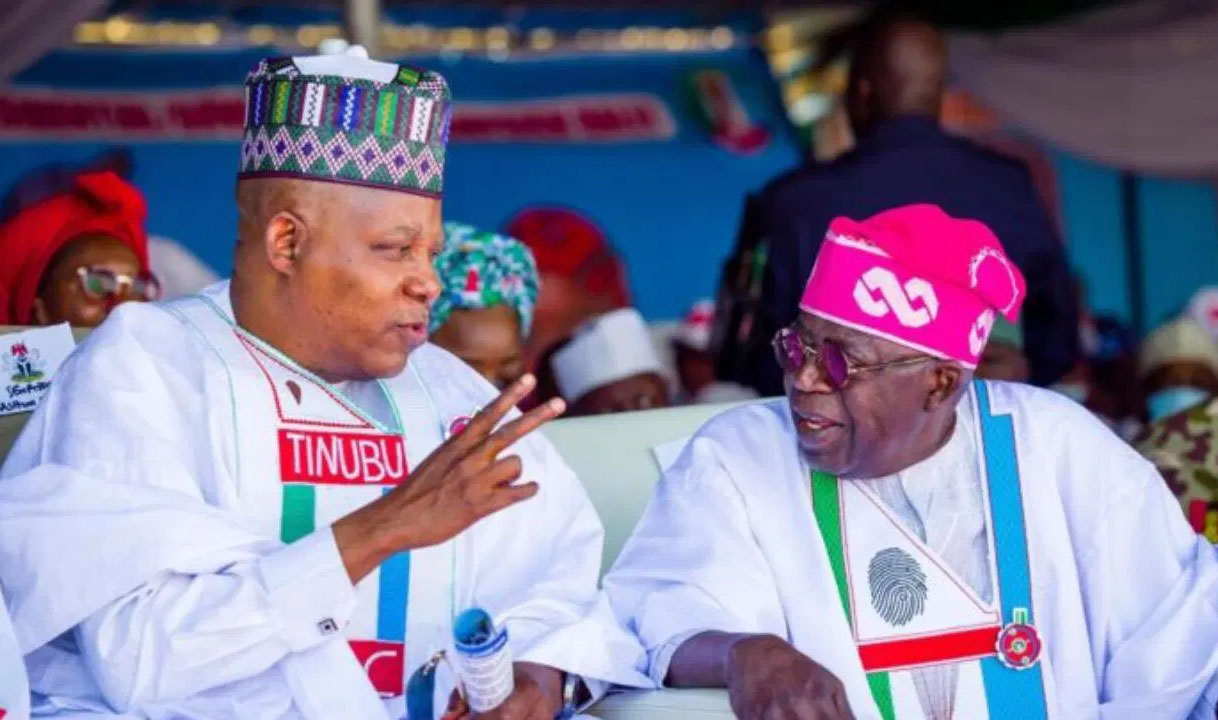
Vice-President Kashim Shettima has called on northern voters to rally behind President Bola Tinubu’s re-election bid in 2027, arguing that the region owes the President a political debt for his longstanding support for northern leaders, including the late President Muhammadu Buhari.
Shettima made the appeal on Saturday at the All Progressives Congress presidential campaign launch in Kaduna, where he urged voters to support Tinubu and other APC candidates across the country in the forthcoming general elections.
According to the Vice-President, Tinubu’s political history demonstrates a consistent willingness to support leaders from the North, making it imperative for the region to reciprocate by backing his administration for another four-year term.
“We have come to ask you to renew a second time for the APC from top to bottom,” Shettima said.
He cited Tinubu’s role in supporting political figures from the North, including former Vice-President Atiku Abubakar, whom he said the President had provided a platform to contest the presidency in 2007 following his departure from the Peoples Democratic Party.
Shettima also recalled Tinubu’s support for Buhari during the 2015 and 2019 presidential elections, describing the former Lagos State governor’s loyalty as evidence of honour and political commitment.
“And you can bear witness that in 2015 and 2019, President Tinubu stood solidly behind the late President Muhammadu Buhari, throughout his first and second term victories. This is a mark of honour and our faith in a man of honour,” he said.
Beyond appealing to the North on the basis of political loyalty, Shettima defended the Tinubu administration’s performance, highlighting projects and institutional developments he said demonstrated its commitment to national growth and the development of Kaduna State.
He said the administration had promised to restore Kaduna’s status as a leading centre of learning and pointed to the establishment of the Federal University of Applied Sciences in Kachia, the transition of the institution in Zaria to a federal university of education and the establishment of a state vocational institute in Rigachikun as evidence of progress.
The Vice-President also listed major infrastructure projects, including the Ajaokuta-Kaduna-Kano gas pipeline, the Kano-Maradi railway, the Lagos-Kano rail corridor and the Abuja-Kaduna-Kano road, as part of the administration’s development agenda.
He further highlighted ongoing work on the Sokoto-Badagry highway, describing the project as a strategic investment that could expand agricultural production and unlock economic opportunities across the country.
According to Shettima, the highway would improve connectivity, open up agricultural communities and strengthen the movement of goods and services, with potential benefits for farmers and businesses.
His appeal in Kaduna combined a call for political reciprocity with a defence of the administration’s record, as the APC seeks to consolidate its support base ahead of the 2027 general elections.
The Vice-President urged northern voters to consider Tinubu’s past political alliances and the administration’s stated achievements in deciding whether to renew the President’s mandate.
-
 Politics3 days ago
2027: APGA Chairman Says South-East Must Back Tinubu to Secure Igbo Presidency
-

 metro19 hours ago
Cancelled Wedding: Man Sues Ex-Fiancée’s Father Over Unpaid ₦70,000 Dowry
-
 International3 days ago
France Deploys 70,000 Police as Cost-of-Living Protests Intensify
-

 Entertainment3 days ago
Tope Alabi Threatens Pastor With Lawsuit Over Toluwanisings’ Death Claims
-

 Politics3 days ago
Atiku Condemns Attack on Edo Comedian Over Refusal to Support Tinubu
-
 metro3 days ago
Borno: Troops Kill 15 Terrorists in Midnight Air Strike
-

 Auto19 hours ago
Car of the Year, other top honours up for grabs as NAJA Awards race begins
-

 International3 days ago
Tibet in Mourning: 7.0 Quake Kills 16, Injures 76 as Rescue Teams Race Against Time in Nagqu