

metro
Police Arrest Seven Over ₦3.6 Billion Crypto Fraud, Romance Scams
Police Arrest Seven Over ₦3.6 Billion Crypto Fraud, Romance Scams
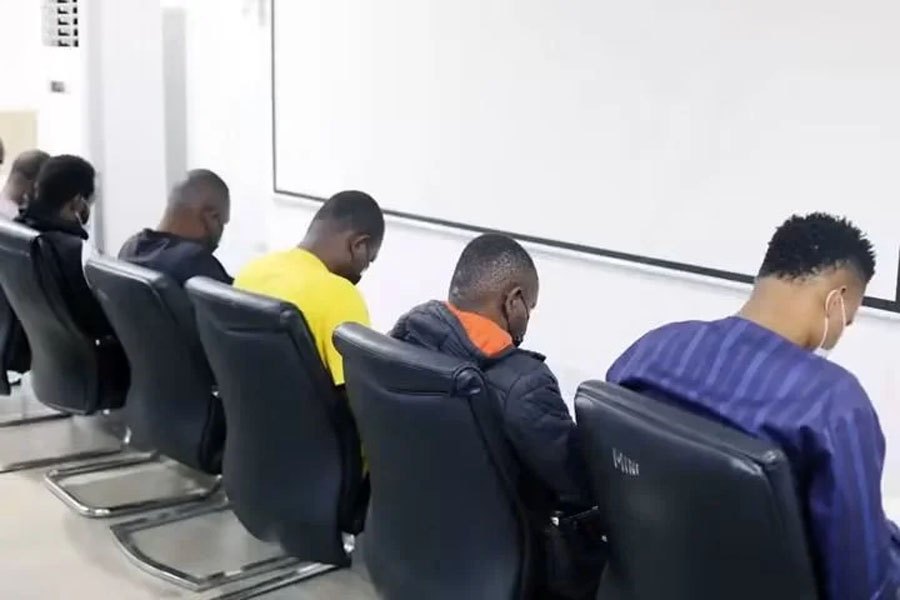
The Nigeria Police Force National Cybercrimes Centre (NPF-NCCC) has arrested seven suspects in a major crackdown on cyber-enabled financial crimes, including a staggering ₦3.6 billion cryptocurrency fraud, sophisticated business email compromise schemes, sextortion, blackmail, identity theft, and romance scams.
The arrests were announced on Wednesday by AIG Akaninyene Ezima, who heads the cybercrime unit, during a press conference in Abuja. The operatives, acting under the codename “Operation Broken Mask,” carried out the arrests in Lagos and Anambra States, with technical support from international law enforcement agencies including Germany’s Federal Police (Bundeskriminalamt – BKA) and the Royal Canadian Mounted Police (RCMP), under the framework of the Budapest Convention 24/7 Network.
According to the police, these arrests represent a significant victory in the ongoing battle against transnational cybercrime networks that use Nigeria as a base to defraud victims both locally and across the globe. The suspects are currently in custody and will face prosecution under Nigeria’s Cybercrimes Act and other relevant money laundering laws.
The first and most high-profile case involves a technology entrepreneur arrested in connection with a massive ₦3.6 billion cryptocurrency money laundering operation. The investigation was triggered by a formal petition from Ugwu Francisca & Co., acting on behalf of two victims, Elizabeth and Prince Iruaregbon. The complainants alleged that they had lost ₦56.3 million after being lured into a fraudulent WhatsApp-based stock trading platform that promised unrealistic high returns on investment.
Following a detailed forensic audit of financial transactions, investigators traced the victims’ funds to accounts linked to a technology company. The prime suspect, who was arrested on August 13 in Agiliti, Lagos, was identified as the proprietor of Kestart Technology. He reportedly admitted to operating the company and engaging in peer-to-peer cryptocurrency trading on the Bybit exchange. A review of the company’s account with Save Heaven Microfinance Bank revealed terminal cash-out inflows and outflows totaling ₦3.2 billion between October 2025 and May 2026 alone.
READ ALSO:
- Bill Gates warns AI could cause mass job losses, weaken critical thinking
- NBA conference: Falana questions VeryDarkMan’s invitation as controversy deepens
- FG installs 668,000 electricity meters as Nigeria moves to close metering gap
More alarmingly, police forensic analysts discovered that approximately ₦3.6 billion in suspected criminal proceeds was systematically converted into Tether (USDT) stablecoins through Bybit peer-to-peer transactions. This conversion, the police say, was a deliberate attempt to launder the money and obscure the financial trail, making it harder for authorities to track and recover the stolen assets.
In another significant breakthrough, the NPF-NCCC arrested a suspect linked to a sophisticated business email compromise (BEC) scheme that targeted companies in over 50 countries. This arrest came after the German Federal Police (BKA) submitted a formal request for data preservation related to an internet protocol (IP) address allegedly used in the operation. The suspect was apprehended on July 20 at his residence in Megamound Estate, Lekki, Lagos.
Forensic examination of electronic devices recovered from the suspect’s home uncovered a chilling database containing over 12.5 million email logs belonging to victims spread across more than 50 nations. Investigators established that the suspect used phishing kits obtained through the encrypted messaging platform Telegram to compromise Microsoft 365 credentials of employees working for targeted companies. By gaining unauthorized access to corporate email systems, he was able to intercept sensitive business communications and redirect large financial payments into accounts he controlled.
READ ALSO:
- Nigerians React as Pastor Okonkwo Launches N700,000 Matchmaking Service
- NFF President Gusau, Board Members Resign Amid Super Falcons World Cup Failure
- Dangote Refinery Threatens to Export Petrol as Import Surge Disrupts Domestic Market
The financial scale of this BEC operation is equally staggering. The suspect’s Bank Verification Number (BVN) was linked to accounts maintained with six different financial institutions and fintech platforms, including Guaranty Trust Bank, Zenith Bank, FairMoney, Carbon, OPay, and PalmPay. Police allege that he made over ₦100 million from this fraudulent enterprise. A Mercedes-Benz AMG GLC 43, which investigators believe was purchased with proceeds from the crime, was also seized during the operation.
The police also arrested two individuals in Anambra State on charges of conspiracy, identity theft, impersonation, and computer-related fraud. This investigation commenced after a formal complaint was lodged by Faruk Yabo, the Permanent Secretary at the Federal Ministry of Solid Minerals Development, who reported that an unknown individual was impersonating him on WhatsApp and Facebook.
The two suspects were taken into custody on August 4 following extensive technical intelligence operations. During searches, law enforcement officers recovered a staggering haul of telecommunications materials: 24 registered and 33 unregistered MTN SIM cards, alongside 26 registered and 18 unregistered Airtel SIM cards, as well as an MTN toolkit. One of the suspects reportedly confessed to buying and selling both registered and unregistered SIM cards, and admitted to creating a fake social media account in the identity of a United Kingdom citizen, which was then used to defraud unsuspecting victims in India.
AIG Akaninyene Ezima emphasized that these arrests are part of a broader, sustained campaign by the NPF-NCCC to dismantle cybercrime networks operating within Nigeria and across international borders. He warned that cybercriminals would not find refuge in encrypted platforms or cryptocurrency, as the police are continuously strengthening their technical capabilities and deepening international partnerships.
The police have confirmed that all seven suspects will be charged in court upon the conclusion of investigations, facing counts that include money laundering, identity theft, computer-related fraud, and violations of the Cybercrimes Act.
Police Arrest Seven Over ₦3.6 Billion Crypto Fraud, Romance Scams










metro
Kano Police Explain Blockade of ‘Tinubu Must Go’ Meeting

Kano Police Explain Blockade of ‘Tinubu Must Go’ Meeting
The Kano State Police Command has explained why it stopped a planned meeting of the “Tinubu Must Go” movement, citing security concerns, uncertainty over the expected participants and the need to prevent a possible breakdown of law and order.
The state Commissioner of Police, Ibrahim Adamu Bakori, said the command intervened because it did not have sufficient information about the gathering, which organisers expected to attract about 700 people.
Bakori, speaking in an interview with DCL Hausa, acknowledged that the organisers had the right to assemble but maintained that notifying the police would have helped the command make arrangements to protect participants and residents.
His explanation followed complaints by Abba Hikima, a lawyer and one of the movement’s conveners, who accused police officers of preventing members from accessing a privately hired venue in Kano on Sunday, October 11, 2026.
Hikima alleged in a live video posted on his verified Facebook page that about 10 Mobile Police vehicles had been deployed around the event centre to stop the gathering from taking place.
The convener said the group had paid for the venue and intended to hold a peaceful meeting to discuss its campaign against President Bola Ahmed Tinubu’s administration ahead of the 2027 general elections.
He argued that the gathering was protected by the constitutional rights to personal liberty, freedom of expression and freedom of association.
READ ALSO:
- Xenophobia: Nigeria Evacuates 111 More Citizens From South Africa as Returnees Hit 2,037
- Russia-Ukraine Truce in Doubt as Zelenskyy Questions Trump’s Ceasefire Announcement
- Djibouti Boat Disaster: 139 Migrants Dead, Dozens Missing
According to Hikima, Bakori contacted him on Saturday to discuss the planned meeting and advised him to inform the police about the gathering. He said he explained that the event would take place in an enclosed venue and would be peaceful.
The lawyer insisted that the movement did not require police permission to hold its meeting, adding that the group would continue its activities despite the intervention.
Bakori, however, said he contacted Hikima after learning about the planned gathering on social media and asked him to postpone the programme and meet with the command to discuss its arrangements.
The commissioner said Hikima indicated that he would consult other members of the movement but did not subsequently respond to his calls.
Bakori explained that the anticipated attendance of about 700 people made it necessary for the police to understand the arrangements, including the identities of participants and where visitors would stay.
He also referred to an incident in Sabon Gari about two weeks earlier, when police reportedly recovered weapons from some individuals who claimed to have travelled to Kano for political activities. He said arrests had been made and the matter remained under investigation.
The commissioner cited the incident as part of the security concerns informing the command’s response to another large gathering whose arrangements, he said, had not been established.
He denied that the intervention was politically motivated, insisting that the police were concerned about protecting the organisers, other participants and residents of Kano State.
Bakori added that the command had previously provided security for activities organised by Hikima when the police were informed in advance.
The movement, however, maintained that its meeting was a lawful exercise of civic rights. Hikima accused the police of obstructing the gathering and said the group would return to hold meetings, protests and demonstrations.
He also alleged that an officer had objected to participants wearing clothing bearing the “Tinubu Must Go” inscription, although the commissioner’s reported explanation focused on security arrangements and the need for information about the event.
The movement describes itself as a non-partisan platform seeking to mobilise Nigerians to vote Tinubu out of office in 2027. Its campaign is based on opposition to the administration’s policies, which its members blame for worsening economic hardship.
The confrontation has raised questions about the balance between the police’s responsibility to maintain public order and citizens’ constitutional rights to peaceful assembly and political expression.
While the police commissioner said advance communication would have enabled the command to provide security, Hikima maintained that the group did not need police permission to convene a peaceful meeting.
The disagreement over the blockade and the conditions under which the gathering could proceed remained unresolved in the reports available on Sunday.
The police said its intervention was intended to prevent security problems, while the movement insisted that it had a right to meet and express its political views without obstruction.
Kano Police Explain Blockade of ‘Tinubu Must Go’ Meeting
metro
Fake Drugs Allegation: NANS Demands Probe Into Ex-SUG President’s Death at NYSC Camp
Fake Drugs Allegation: NANS Demands Probe Into Ex-SUG President’s Death at NYSC Camp
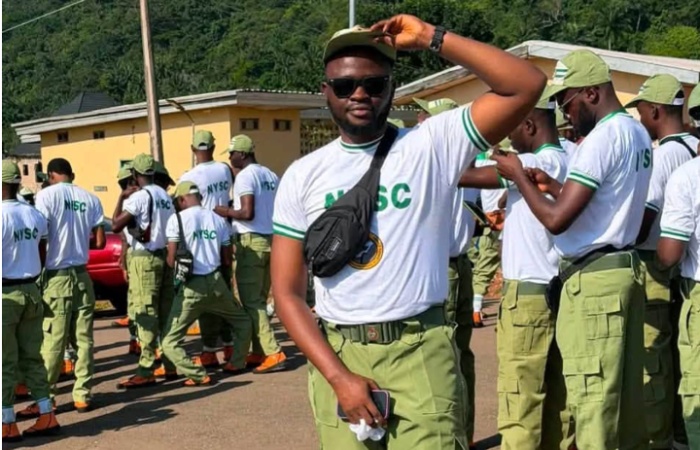
The death of Etimbuk Daniel, the immediate past Students’ Union Government (SUG) president of Akwa Ibom State University (AKSU), at a National Youth Service Corps (NYSC) orientation camp in Enugu State has sparked calls for a thorough investigation into allegations that he was given fake medication and did not receive prompt medical attention.
The National Association of Nigerian Students (NANS) disclosed the circumstances surrounding Daniel’s death in a statement issued by its president, Akinteye Babatunde Afeez, on Sunday, October 11, 2026.
According to NANS, Daniel reportedly complained of a headache while participating in the orientation programme and was given medication by medical personnel at the camp.
His condition allegedly deteriorated after he took the drugs, prompting him to request that he be taken to a hospital for further treatment.
However, NANS claimed that approval for his transfer was delayed and that he died before he could be taken to a hospital.
The student body also said it was informed that a doctor subsequently identified the medication administered to Daniel as fake.
READ ALSO:
- Xenophobia: Nigeria Evacuates 111 More Citizens From South Africa as Returnees Hit 2,037
- Russia-Ukraine Truce in Doubt as Zelenskyy Questions Trump’s Ceasefire Announcement
- Djibouti Boat Disaster: 139 Migrants Dead, Dozens Missing
“We were further informed that the doctor later identified the drugs administered to him as fake. These are deeply troubling allegations that require a thorough investigation to establish the circumstances surrounding his tragic death,” Afeez said.
The claims concerning the medication and the alleged delay in transferring Daniel to a hospital have not been independently verified. The precise medical cause of his death has also not been publicly established in the reports available.
NANS expressed shock over the death, describing it as a painful loss to the Nigerian student community. It extended its condolences to Daniel’s family, friends, former colleagues and the entire AKSU community.
The association also raised concerns about the dangers posed by fake drugs and the importance of ensuring that people who fall ill receive appropriate medical attention without unnecessary delays.
Afeez said NANS was mourning the former student leader and would communicate further actions and its official position on the matter in due course.
Daniel’s death has raised questions about the availability of medical care at NYSC orientation camps and the procedures for referring corps members to external hospitals when their conditions require urgent attention.
A comprehensive investigation would be needed to establish the medication Daniel received, whether it was counterfeit, the medical assistance provided to him and the circumstances surrounding the reported delay in transferring him to a hospital.
The NYSC authorities and relevant health agencies have an important role in clarifying the incident and determining whether any procedural failures occurred.
For now, the allegations remain subject to investigation, and the findings of the relevant authorities will be crucial in establishing what happened during Daniel’s final hours.
The tragedy has left members of the student community mourning a former representative while calls grow for answers and measures to prevent similar incidents at orientation camps.
Fake Drugs Allegation: NANS Demands Probe Into Ex-SUG President’s Death at NYSC Camp
metro
Xenophobia: Nigeria Evacuates 111 More Citizens From South Africa as Returnees Hit 2,037

The Federal Government of Nigeria has evacuated another 111 distressed citizens from South Africa amid concerns over xenophobic and Afrophobic attacks, bringing the total number of Nigerians repatriated under the ongoing exercise to 2,037.
The latest batch, comprising 44 men, 23 women and 44 children, arrived in Lagos aboard South African Airways Flight SA060 on Thursday, October 8, 2026, according to the Ministry of Foreign Affairs.
The returnees were received by officials of the ministry, the Nigerians in Diaspora Commission (NiDCOM), the National Agency for the Prohibition of Trafficking in Persons (NAPTIP), the National Emergency Management Agency (NEMA) and other relevant federal government agencies.
In a statement issued on Sunday, October 11, the ministry’s spokesperson, Oluwafemi Adeniyi, said the evacuation was fully funded by the Redeemed Christian Church of God (RCCG) through its $265,854 donation to support the repatriation of 500 distressed Nigerians from South Africa.
READ ALSO:
- Russia-Ukraine Truce in Doubt as Zelenskyy Questions Trump’s Ceasefire Announcement
- Djibouti Boat Disaster: 139 Migrants Dead, Dozens Missing
- US Names 24 More Nigerians in Fresh Fraud, Money Laundering Crackdown
The latest arrival brings to 318 the number of Nigerians whose one-way tickets have been funded by the church, leaving 182 tickets under its commitment yet to be covered.
The ministry said the latest flight was the 15th consular evacuation from South Africa since the exercise began on June 10, 2026.
Of the 2,037 Nigerians evacuated so far, 1,388 had their repatriation costs fully covered by the Federal Government, according to the ministry.
The government expressed appreciation to the RCCG, led by Pastor Enoch Adejare Adeboye, for its financial contribution towards bringing distressed Nigerians home.
The evacuation programme follows concerns over xenophobia and Afrophobia in South Africa, where Nigerians and other African nationals have faced reported hostility and attacks. The Nigerian government said it would continue engaging relevant stakeholders, including South African authorities, to address the situation and promote the safety and dignity of Nigerians living in the country.
The ministry also urged Nigerians still residing in South Africa to obey local laws, remain vigilant and prioritise their personal safety.
It advised citizens who require assistance to maintain contact with the Nigerian High Commission in Pretoria and the Consulate General in Johannesburg for consular support.
The government reiterated its commitment to protecting the welfare of Nigerians in the diaspora and providing timely assistance to citizens who find themselves in distress abroad.
With more Nigerians still undergoing verification and clearance for possible repatriation, the authorities are expected to continue coordinating with relevant agencies and partners to facilitate further evacuations.
Xenophobia: Nigeria Evacuates 111 More Citizens From South Africa as Returnees Hit 2,037
-
 metro3 days ago
How Parents Raised Millions to Free 20 Abducted NYSC Members
-

 metro3 days ago
[UPDATED] Lagos Train Crash: 55-Year-Old Motorist Survives as Honda Car Is Wrecked at PWD Crossing
-

 metro14 hours ago
Tension in Kano as Phone Traders Confront Chinese Sellers Over Cheaper Phones
-
 Health2 days ago
NAFDAC Raises Alarm Over Toxic Pesticides in Beans, Seizes ₦800m Banned Chemicals
-

 Business2 days ago
NNPCL: We Introduced ₦66 Fuel Discount Before FG’s Announcement
-
 metro1 day ago
Police Launch Manhunt After Fresh Attacks, Kidnappings Rock Four Nigerian States
-

 metro2 days ago
2027: Ekiti Driver Takes ₦3.5m Loan to Back Tinubu’s Re-election Bid
-
 metro3 days ago
MTN Network Outage Hits Lagos, Abuja, Four Other Areas as NCC Reports Service Restoration