

Education
FG opens six-month teacher certification for BSc, HND, ND holders – How to Apply

FG opens six-month teacher certification for BSc, HND, ND holders – How to Apply
The Federal Government has opened applications for a six-month professionalisation programme designed to help Nigerians who are currently teaching without formal professional teaching qualifications obtain recognised education credentials and become eligible for Teachers Registration Council of Nigeria (TRCN) registration.
The programme, known as the Accelerated Teacher Professionalisation Pathway (ATPP), is being implemented by the Federal Ministry of Education in collaboration with the National Teachers’ Institute (NTI) and the Teachers Registration Council of Nigeria (TRCN).
The initiative is targeted at non-professional teachers who already possess academic qualifications but lack formal pedagogical training and professional certification.
Applications for Cohort 1 of the 2026–2027 ATPP programme are currently open and are scheduled to close on September 18, 2026.
The programme offers two major qualification pathways: the Postgraduate Diploma in Education (PGDE) for eligible holders of non-education bachelor’s degrees or HNDs, and the Professional Diploma in Education (PDE) for eligible holders of ND or OND qualifications.
Who can apply for the ATPP?
The programme is designed primarily for serving teachers who are already working but do not have professional teaching qualifications.
Eligible applicants may be teaching in public and non-state schools, as well as in early childhood care, development and education, primary and secondary schools, technical and vocational education and training, non-formal education and alternative learning settings.
Community instructors and volunteer educators are also among those covered by the programme.
However, applicants seeking admission through the qualification pathways are required to have at least 24 months of classroom teaching experience.
This requirement means the programme is primarily intended to professionalise people who are already actively engaged in teaching rather than graduates seeking to enter the teaching profession for the first time.
READ ALSO:
- How I Sold My Twins for N300,000, Stole 13 Other Children — Suspect
- No More Embassy Visits: Step-by-Step Guide to Nigeria’s Contactless Passport Renewal
- Lagos police arrest four suspected robbers, recover 25 phones in Mushin
BSc and HND holders
Nigerians who hold a non-education bachelor’s degree or HND and are currently teaching can apply for the Postgraduate Diploma in Education (PGDE) pathway.
The PGDE runs for six months, comprising four months of hybrid coursework and two months of supervised teaching practice.
The programme carries 40 credit units and is designed to provide participants with the pedagogical knowledge and practical skills required for professional teaching.
Applicants are required to provide a valid National Identification Number (NIN), their bachelor’s degree or HND certificate and evidence that they are currently teaching.
Acceptable evidence of teaching may include an employment or appointment letter, an attestation from a headteacher, principal or relevant school authority, or appropriate pay records.
ND and OND holders
Holders of a National Diploma (ND) or Ordinary National Diploma (OND) in a non-education field who are currently teaching can apply through the Professional Diploma in Education (PDE) pathway.
The PDE also runs for six months, consisting of four months of coursework and two months of supervised teaching practice.
The programme carries 37 credit units and is designed to equip participants with professional teaching knowledge, classroom skills and the competencies required to meet established teaching standards.
Applicants must provide a valid NIN, their ND or OND certificate and evidence of teaching experience.
What will ATPP participants study?
The ATPP says its PGDE and PDE programmes are aligned with the TRCN Professional Standards for Teachers.
The curriculum covers areas including professional knowledge, professional practice, professional values and ethics, professional engagement and continuing professional development.
Participants will also study foundations of education, educational psychology, curriculum and pedagogy, inclusive education and safeguarding, assessment and quality assurance, digital and blended learning, and subject methodology and specialisation.
The programme combines academic learning with supervised teaching practice to give participants both theoretical knowledge and practical classroom experience.
How to apply for FG’s six-month teacher certification programme
Eligible applicants can apply through the official ATPP application portal.
Applicants are required to create an account, provide their personal information, email address and telephone number, select the appropriate qualification pathway and submit the required documents.
READ ALSO:
- Benue Govt Blasts Obi Over ‘Unapproved’ Visit: ‘He Is Looking For Our Trouble’
- Yamal Fires Back at Mbappé: “I’m Not Going to Beg” for Ballon d’Or
- Osun Police Arrest Woman After Vigilante Member Dies During Sexual Encounter in Ile-Ife
Applicants applying on behalf of another person are advised to use the applicant’s own email address because the email may be required for password recovery and other application-related communication.
Prospective applicants should carefully check the eligibility requirements and ensure that the information and documents submitted are accurate before completing the application.
The deadline for ATPP Cohort 1 applications is September 18, 2026.
What happens after the six-month programme?
Completing the ATPP does not automatically mean that a participant immediately becomes a fully registered or licensed teacher.
Candidates are required to complete the prescribed credit units, successfully undertake their supervised teaching practice, demonstrate professional conduct and satisfy the assessment requirements of their institution.
They must also sit for and pass the TRCN Professional Qualifying Examination (PQE).
Candidates who successfully meet the relevant requirements and pass the qualifying examination can then become eligible for TRCN registration in the appropriate category.
Where will the programme be offered?
The ATPP is being delivered through accredited institutions and study centres across Nigeria.
Institutions listed under the programme include the National Teachers’ Institute, Nnamdi Azikiwe University, University of Lagos, University of Port Harcourt, University of Ilorin, Ahmadu Bello University, University of Maiduguri, National Open University of Nigeria, MIVA Open University, Meadow Hall College of Education and Babcock University.
The use of multiple institutions and study centres is intended to make the programme accessible to serving teachers in different parts of the country.
How much does the ATPP cost?
The programme website lists the ATPP fee at ₦200,000 per teacher.
Applicants are advised to follow only the official application and payment procedures provided through the ATPP platform and to avoid making payments to individuals or unofficial platforms claiming to represent the programme.
The Accelerated Teacher Professionalisation Pathway is part of the Federal Government’s broader effort to strengthen teacher professionalisation and improve standards in Nigeria’s education sector.
For eligible BSc, HND, ND and OND holders who are already teaching, the six-month programme provides a structured route to obtain professional education qualifications and progress towards TRCN registration.
With the September 18, 2026 deadline approaching, eligible applicants are encouraged to complete the application process early and ensure that all required information and documents are properly submitted.
FG opens six-month teacher certification for BSc, HND, ND holders – How to Apply












Education
FG Opens N2.5bn Grant Window For 50 Student Innovators Under “Next Moonshot Initiative”

Education
JAMB Releases Underage UTME Results, Sets Strict Conditions for Admission
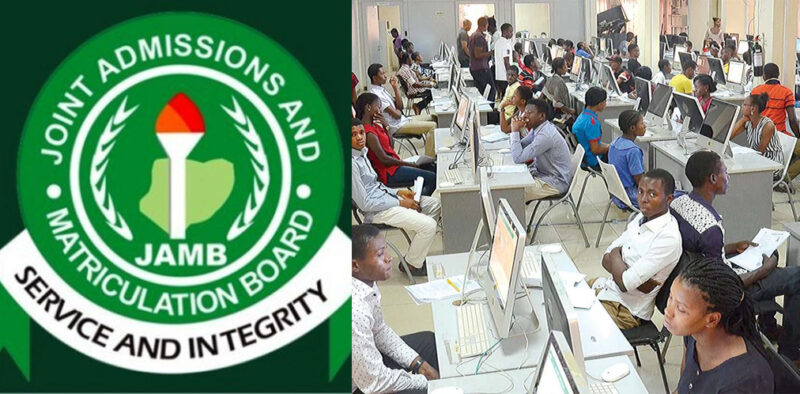
JAMB Releases Underage UTME Results, Sets Strict Conditions for Admission
The Joint Admissions and Matriculation Board (JAMB) has officially released the 2026 Unified Tertiary Matriculation Examination (UTME) results for candidates under the age of 16. However, the board has made it clear that these results are for viewing purposes only and do not guarantee admission into any tertiary institution.
In a statement issued on Saturday in Abuja, JAMB’s Public Communication Adviser, Dr. Fabian Benjamin, explained that while the results are now accessible, only a select group of exceptionally performing underage candidates who meet strict requirements will be considered for admission.
For the 2026 admission cycle, JAMB defines an underage candidate as any applicant who will be less than 16 years old by September 30, 2026. This age benchmark is non-negotiable and serves as the foundation for all admission eligibility decisions regarding younger candidates.
According to the board, the primary reason for releasing the results is to allow candidates, parents, and guardians to view their performance. This transparency is intended to help families assess academic progress and make informed decisions about next steps. However, JAMB stressed that the release does not confer automatic eligibility for admission. The results cannot be used for admission or any other official purpose unless the candidate meets the prescribed conditions for exceptional consideration.
READ ALSO:
- Delta Police Arrest Minor, Five Others Over Alleged Illicit Drug Sales
- BREAKING: OPay Warns Customers Against Viral Shutdown Message, Threatens Legal Action
- Ghana Launches Marrify App to Let Users Verify Partner’s Marital Status Before Marriage
Candidates can check their results by sending the word “RESULT” via SMS to 55019 or 66019. This must be done using the same phone number and SIM card that were used during the UTME registration process. No other method has been authorized for result viewing.
JAMB has outlined a rigorous, multi-stage process for underage candidates who wish to be considered for admission. The requirements are intentionally strict to ensure that only genuinely exceptional candidates are admitted. To qualify, an underage candidate must meet all of the following: a minimum UTME score of 320 out of 400; at least 80% performance in relevant Senior Secondary School Certificate Examination (SSCE) subjects, where applicable; compliance with the Post-UTME requirements of their chosen institution, even if the general Post-UTME exercise has been suspended; and successful completion of a final assessment by experts, designed to evaluate academic maturity and readiness for tertiary education. Dr. Benjamin explained that these measures are in place to distinguish truly gifted candidates from those who may have simply performed well in the UTME but lack the overall academic maturity for university-level studies.
Not yet. JAMB has confirmed that the admission process for exceptionally performing underage candidates is still ongoing. The board is currently awaiting the release of this year’s National Examinations Council (NECO) results to allow candidates awaiting these results to present them for verification. A date for the final stage of assessment will be announced as soon as the NECO results are released. JAMB emphasized that no candidate will be admitted until all stages of assessment and verification are concluded.
JAMB has issued a strong advisory to parents, guardians, and candidates: do not present underage UTME results to any institution for admission unless you meet the exceptional criteria; and beware of fraudsters who claim they can secure admission for underage candidates outside the official process. The board reiterated that participation in the UTME does not guarantee admission, especially for candidates who have not attained the prescribed age. The board also noted that in the 2025 admission cycle, only 85 out of over 41,000 underage applicants qualified for exceptional admission, underscoring how competitive and selective the process truly is.
JAMB has assured the public that the exceptional admission process will remain transparent, rigorous, and merit-based. The board is committed to protecting the integrity of the admission system and ensuring that only candidates who genuinely satisfy all established requirements are admitted.
JAMB Releases Underage UTME Results, Sets Strict Conditions for Admission
Education
From University of Lagos to Canadian Dean: Nigerian Scholar Appointed Law Dean at USask

From University of Lagos to Canadian Dean: Nigerian Scholar Appointed Law Dean at USask
The University of Saskatchewan College of Law in Canada has appointed Nigerian-born legal scholar Dr. Ibironke Odumosu-Ayanu as its new dean for a five-year term beginning October 1, 2026. She succeeds Martin Phillipson, who completed two five-year terms as dean and began administrative leave on July 1, 2026. The appointment was announced by Patti McDougall, interim provost and vice-president, academic at the University of Saskatchewan, who also chaired the search committee for the new dean. McDougall praised Odumosu-Ayanu’s academic record and leadership qualities, stating: “Dr. Odumosu-Ayanu’s appointment as dean reflects a distinguished record of academic excellence, collaborative leadership, and dedication to advancing research and graduate education. Her work as dean will continue to build on the College of Law’s strong reputation for excellence in legal education and research, while strengthening its leadership in Indigenous legal scholarship and engagement with local and global communities”.
Odumosu-Ayanu grew up in Lagos, Nigeria, where she developed an early interest in reading and writing. Although she initially considered pursuing communications, encouragement from her teachers and support from her parents led her towards law. By the end of secondary school, she had decided to study law and enrolled at the University of Lagos (UNILAG), where she earned her Bachelor of Laws (LLB) degree. She later moved to Canada to pursue a master’s degree at the University of Calgary, drawn by its research strengths in natural resources, energy and environmental law. She obtained her LLM from the University of Calgary in 2005. Reflecting on this decision, she noted: “Since I started law school, I always knew that I wanted to do a master’s and to do one abroad. But I always thought I would go to England”. Odumosu-Ayanu initially intended to return to Nigeria after completing her master’s degree and practise as a lawyer. However, she continued her academic journey by pursuing a PhD at the University of British Columbia, which she completed in 2010. She said a doctorate was not part of her original plan, but she eventually embraced the academic path.
READ ALSO:
- ‘I Needed Money for Wedding’ – Police Arrest Three Over N21m Kidnap Ransom in Lagos
- First Lady Commissions N1bn ICT Centre at UNICROSS, Gives Students Free Laptops
- NSCDC Rescues 15 Trafficked Minors Sold for ₦2m Each by Fake NGO Official
Odumosu-Ayanu joined the University of Saskatchewan’s College of Law in 2008 as an assistant professor and has been a member of the faculty since then. Before her appointment as dean, she served as associate dean for research and graduate studies at the college, a position she assumed on July 1, 2025. Prior to joining USask, she was a sessional lecturer at the University of British Columbia Faculty of Law and at the Canadian Institute of Resources Law in Calgary. She is also a barrister and solicitor of the Supreme Court of Nigeria. Before Odumosu-Ayanu assumes office, Professor Doug Surtees, who has been serving as interim dean since July 1, 2026, will continue in the position until September 30. Surtees was appointed interim dean to provide stable leadership during the transition as the search for the next dean continued.
Odumosu-Ayanu is internationally recognised for her research focusing on business and human rights, as well as the intersections of natural resource development, international law on foreign investment, and socio-economic development. Her current research interests focus on local communities and Indigenous peoples and their interactions with legal systems. A recipient of several competitive research grants, including grants from the Social Sciences and Humanities Research Council (SSHRC) , her research has been published in several leading international journals and books. She has coedited books and journal issues, including the 2025 volume Contested Consultations in the Extractive Industries: Rights, Processes and Tensions published by Routledge. She has spoken at numerous international conferences across several continents, delivered invited lectures at leading universities, and co-convened workshops and conferences with leading experts. Her recent publications include “Local Communities, Indigenous Peoples, and Reform/Re-Definition of International Investment Law” in the Journal of World Investment and Trade (2023) and contributions to the Oxford University Press volume Rethinking Investment Law: Perspectives and Prospects.
Beyond her research contributions, Odumosu-Ayanu has developed a strong record in teaching and mentorship, regularly supervising graduate students in law and interdisciplinary programmes. She teaches Contracts, Business Organizations I, Law Development and the International System, and Advanced Law Development and the International System. Her contributions to student support and teaching have earned her several recognitions, including the Provost’s College Award for Outstanding Teaching in 2012 and the USask InterD Advisor Award in 2026. She is also a contributor to one of Canada’s leading contracts law casebooks.
Odumosu-Ayanu has been actively involved in academic and community organisations across Saskatchewan and Canada. She has served on the boards of professional associations, academic journals and community organisations, including the Saskatchewan Intercultural Association. She serves or has served on the editorial/advisory boards of the Business and Human Rights Journal, Law and Society Review, Journal of African Law, African Journal of International Economic Law, and the African Yearbook of International Law. She was co-chair of the Midwest Interest Group of the American Society of International Law and a vice president of the Canadian Law and Society Association. She has also served as a consultant for the United Nations University, chair of a SSHRC committee, and reviewer for granting agencies including SSHRC, as well as external examiner and reviewer for publishers, journals and universities including the University of Oxford and the University of Victoria. Her appointment adds her to the growing list of Nigerian academics who have risen to senior leadership positions within Canadian universities, building on an academic career that has spanned legal education and research in both Nigeria and Canada.
From University of Lagos to Canadian Dean: Nigerian Scholar Appointed Law Dean at USask
-

 metro2 days ago
APC rally: Suspected thugs attack journalists, smash Radio Nigeria vehicle in Kano
-

 Education2 days ago
FG Opens N2.5bn Grant Window For 50 Student Innovators Under “Next Moonshot Initiative”
-

 metro3 days ago
Lagos-Ibadan Expressway: FG begins Kara Bridge repairs Tuesday, deploys traffic agencies
-
 Politics2 days ago
Peter Obi, Others Challenging Tinubu Cannot Transform Nigeria — Datti Baba-Ahmed
-

 Politics2 days ago
Kano Political Earthquake: Kwankwaso Loyalists Dump NDC, Defect to APC in Major 2027 Blow
-

 Entertainment2 days ago
Wizkid Mocks Davido’s Family Wealth: “Rich and Empty” — Afrobeats Feud Escalates
-

 Auto1 day ago
Kaduna to Lead Govt Patronage of Local Vehicles as Sani Unveils Peugeot 5008
-

 metro3 days ago
Oloyede: Muslim Women Can Attain Highest Academic Rank — History Proves It