

Politics
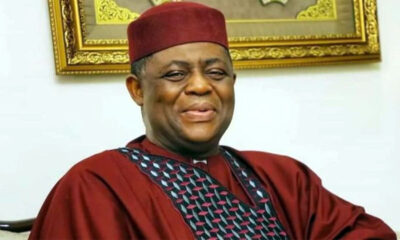
Obi Explains Why He Won’t Step Down for Atiku in 2027

Obi Explains Why He Won’t Step Down for Atiku in 2027
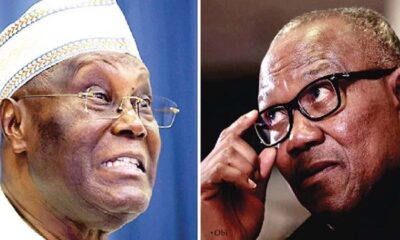
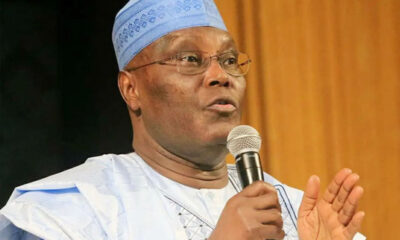
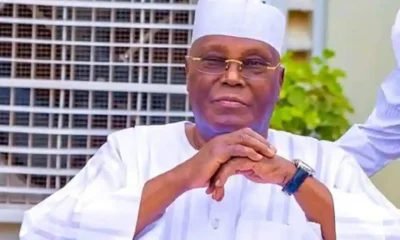
Presidential candidate of the Nigeria Democratic Congress (NDC), Peter Obi, has explained why he is not prepared to step down for his African Democratic Congress (ADC) counterpart, Atiku Abubakar, ahead of the 2027 presidential election, saying any decision on a possible opposition alliance must now be taken by the political parties rather than individual candidates.
Obi said the issue was no longer simply about whether he or Atiku would personally make way for the other, stressing that both politicians are now presidential candidates of separate political parties with their own structures and interests.
The former Anambra State governor made the remarks during an interview with Arise Television, where he discussed the 2027 election, opposition cooperation, the economy, national unity, security and governance.
Asked whether he would step down for Atiku, Obi said the political circumstances had changed because both men now represented different parties.
“Do you know where we are now? Where we are now is that I’m a candidate, my leader Atiku is a candidate of another party, so you are talking about two parties coming together; it’s no longer me or me, as you are now talking about parties coming together,” Obi said.
He explained that with different opposition parties already having their own candidates and political structures, any agreement would have to be negotiated at the party level.
“All those parties have candidates. So, it is a discussion. It is no longer me, as Peter, talking. It is like a situation where two corporations are trying to come together. It is no longer something where the two CEOs go for a drink and say, ‘We are going to work together’. They need to look at how to bring these two corporations together,” he added.
The comments come amid continuing efforts by opposition politicians to forge a single political platform or consensus arrangement capable of challenging President Bola Ahmed Tinubu and the ruling All Progressives Congress (APC) in the 2027 election.
READ ALSO:
- ASUU Threatens Nationwide Strike Over Unpaid Salaries, Unimplemented Agreement
- FG to Give Students 100MB Free Data Daily From October 1
- Two Arrested in London Over Suspected Links to Iran Intelligence
The opposition coalition initially generated expectations that Obi, Atiku and other political leaders could work together after the coalition adopted the ADC as its platform in 2025.
The political arrangement, however, did not result in Obi and Atiku contesting the 2027 presidential election on the same platform.
Obi subsequently emerged as the NDC presidential candidate, while Atiku became the ADC presidential candidate, setting the stage for both former allies to pursue separate presidential bids.
Their separate candidacies have since fuelled speculation over whether either politician could eventually step down in favour of the other as part of efforts to produce a single opposition candidate.
Obi’s latest comments, however, suggest that he does not view the matter as a personal decision to surrender his presidential ticket to Atiku.
Instead, he argued that any possible merger, alliance or consensus arrangement would require negotiations among the political parties involved, including discussions on how their different structures and interests would be accommodated.
The NDC candidate was also asked whether he would accept the position of vice-president if an agreement was eventually reached with Atiku.
Obi denied reports that he had previously rejected an offer to become Atiku’s running mate.
“I don’t know where that was said. I wasn’t even in a position where that was being offered, and I refused,” he said.
The clarification comes amid persistent speculation over a possible Obi-Atiku ticket ahead of the 2027 election.
Obi and Atiku have a history of contesting together. Obi served as Atiku’s running mate on the platform of the Peoples Democratic Party (PDP) in the 2019 presidential election.
Their political paths diverged ahead of the 2023 election, when Obi left the PDP and contested the presidency on the platform of the Labour Party, while Atiku remained the PDP presidential candidate.
The 2027 election will therefore mark another presidential contest involving both politicians, although this time they are seeking the presidency under separate opposition platforms.
Beyond the question of opposition unity, Obi used the interview to outline some of the economic policies he would retain if elected president.
Asked to identify one policy of the Tinubu administration he would keep, Obi named the floating of the naira.
“There’s one – the floating of the Naira. I’m not going to defend it. But I’m going to put productivity to make it more valuable to the people,” he said.
READ ALSO:
- Lagos Woman Jailed for Dumping Refuse in Drain During Rainfall
- Peter Obi’s Benue Convoy Blockade Raises Questions Ahead of 2027
- Honda shakes up Nigeria operations, dissolves HAWA, retains HMN
The naira float was introduced by the Tinubu administration in 2023 as part of broader foreign-exchange reforms designed to allow greater market determination of the currency’s value.
The policy has remained one of the most debated aspects of the administration’s economic programme, particularly because of its impact on the exchange rate, inflation, import costs, businesses and household purchasing power.
Obi’s position indicates that he would not necessarily reverse the floating exchange-rate regime if elected but would seek to strengthen the productive capacity of the economy.
He said his focus would be on increasing productivity so that the naira could become more valuable rather than attempting to defend the currency without addressing the underlying strength of the economy.
The former Anambra governor has consistently advocated a shift from what he describes as a consumption-driven economy towards greater production, agriculture, exports and investment.
His latest position suggests that his economic strategy would focus on expanding domestic production and improving the country’s ability to generate wealth rather than relying heavily on imported goods and oil revenues.
Obi also warned against allowing tribalism and ethnic politics to dominate the 2027 presidential election.
“Our election should not be driven by tribalism,” he said.
According to him, Nigerians should assess political candidates based on their competence, character, policies and ability to address the country’s problems rather than their ethnic or regional backgrounds.
He also sought to reassure Nigerians in the North that his political ambitions were not directed against the region.
“I am committed to the future of the North. I believe the North has so much to offer Nigeria. As a country, we can make more money from agriculture than we do from oil,” Obi said.
The NDC candidate also addressed historical grievances associated with Nigeria’s political past, including attempts to associate him personally with the 1966 military coup.
READ ALSO:
- Fire Scare at Abuja Train Station as Electrical Fault Sparks Blaze, NRC Assures Passengers
- Veteran Nollywood Actress Cries Out for Financial Help Over Cervical Cancer Battle
- MURIC Raises Alarm Over Alleged Religious Imbalance in NDA 78RC Admission
Obi said he was only four years old when the event occurred and urged Nigerians to move beyond historical grievances.
“There were regrettable things that happened in our collective history. I was not personally involved in those sad events, but it is time to show love and pursue unity in Nigeria. We must not dwell on the past. We can only build through love,” he said.
He argued that agriculture could become one of Nigeria’s major sources of economic growth, particularly in the North, where he said the country could generate significant wealth from agricultural production.
His position forms part of his broader argument that Nigeria must increase domestic production, create jobs, expand exports and reduce dependence on oil and imported goods.
Obi also criticised the practice of Nigerian presidents spending their holidays outside the country, saying the President should remain connected to the realities faced by citizens.
The NDC presidential candidate said that, if elected, he would spend presidential holidays within Nigeria and use the opportunity to visit communities facing security and developmental challenges.
“Nigeria’s President must spend his vacation in Nigeria. We cannot continue with this nonsense,” Obi said.
He argued that the President should be able to visit states affected by insecurity, including Borno, Zamfara and Benue, and use such visits to engage directly with residents, traditional rulers, state officials and other stakeholders.
“Nigeria’s President should go to Zamfara, to Borno, to Anambra, to anywhere. As President of Nigeria, I will visit other countries, but I will not take my holidays there,” he said.
When asked about the security implications of spending holidays in areas affected by insurgency and banditry, Obi maintained that security concerns should not prevent the President from being physically present in troubled parts of the country.
He argued that presidential visits to areas affected by insecurity should go beyond brief official engagements and should involve sustained interaction with communities.
Obi said the President should spend enough time in affected states to understand the challenges confronting residents and engage the relevant stakeholders.
“He should go to Benue and say, ‘I’m here for the next three days; I want to see these stakeholders in the state,’” he stated.
The former Anambra governor also criticised what he described as brief presidential visits to crisis-hit areas, arguing that spending more time with affected communities would enable the President to better understand the security and developmental challenges confronting them.
His comments come as security, the economy, cost of living, national unity and opposition cooperation are expected to feature prominently in the 2027 presidential campaign.
For now, Obi remains the NDC presidential candidate, while Atiku remains the ADC presidential candidate. Their separate candidacies mean that any eventual opposition alliance would require negotiations involving the political parties and their respective structures.
Obi’s latest remarks therefore leave open the possibility of further discussions among opposition parties while rejecting the idea that the 2027 contest should be reduced to a personal decision by him to step aside for Atiku.
The outcome of the ongoing opposition negotiations could determine whether the parties eventually field separate candidates or reach a consensus arrangement ahead of the 2027 presidential election.
Obi Explains Why He Won’t Step Down for Atiku in 2027






Politics
“I Won’t Slap Wike’s Son, I Won’t Kick Seyi Out — But Tinubu MUST Go!” Fayose Explodes
“I Won’t Slap Wike’s Son, I Won’t Kick Seyi Out — But Tinubu MUST Go!” Fayose Explodes
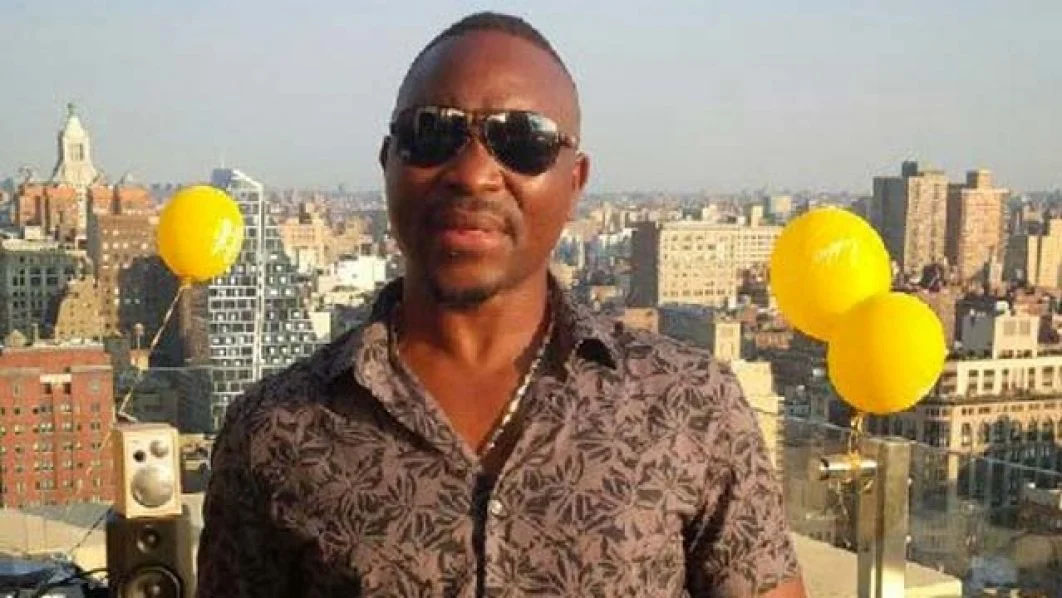
Abuja — Isaac Fayose has fired back at critics in dramatic fashion, declaring he will neither slap Nyesom Wike’s son nor kick President Bola Tinubu’s son Seyi out of his presence — but insisting with equal fury that the President must be voted out in 2027.
The businessman and younger brother of former Ekiti State Governor Ayodele Fayose ignited a firestorm after photos surfaced of him hanging out with Seyi Tinubu and Joaquin Wike, son of the FCT Minister. Critics immediately accused him of betraying the Nigeria Democratic Congress (NDC) and its presidential candidate, Peter Obi.
Fayose, however, refused to back down. In a video posted on his Facebook page, he threw a rhetorical punch at his accusers: “Tinubu must go. Wike is a land grabber. That doesn’t mean that Wike’s son will come and greet me and I will slap him. Or President Bola Tinubu’s son, Seyi, will come and greet me and I will kick him.”
He doubled down on his loyalty to Obi, declaring: “I campaigned for Obi. Do you know how much I spent on the last election? I still support Peter Obi. I still want Tinubu out of power.”
The controversy exploded after Fayose posted a photograph with Joaquin Wike, calling the minister’s son his younger brother. The image set social media ablaze, with users questioning why a self-proclaimed “101% Obidient” supporter would be seen with the family of a top APC figure.
It is not the first time Fayose has faced such backlash. In July 2026, a video showed him alongside Seyi Tinubu and socialite Cubana Chief Priest at an Abuja gathering where prayers were offered for the President and Nigeria. Fayose dismissed the meeting as a private social visit, not a political endorsement.
The latest storm underscores the fever-pitch sensitivity in opposition circles as political actors jostle for position ahead of the 2027 presidential contest. Fayose insists he is drawing a clear line — political allegiance on one side, personal courtesy on the other — but his critics are not buying it.
As of press time, neither the NDC nor Peter Obi’s camp has issued an official statement.
“I Won’t Slap Wike’s Son, I Won’t Kick Seyi Out — But Tinubu MUST Go!” Fayose Explodes
Politics
‘They Created Hunger, Poverty’: Tinubu Fires at Opposition as 2027 Re-election Campaign Begins
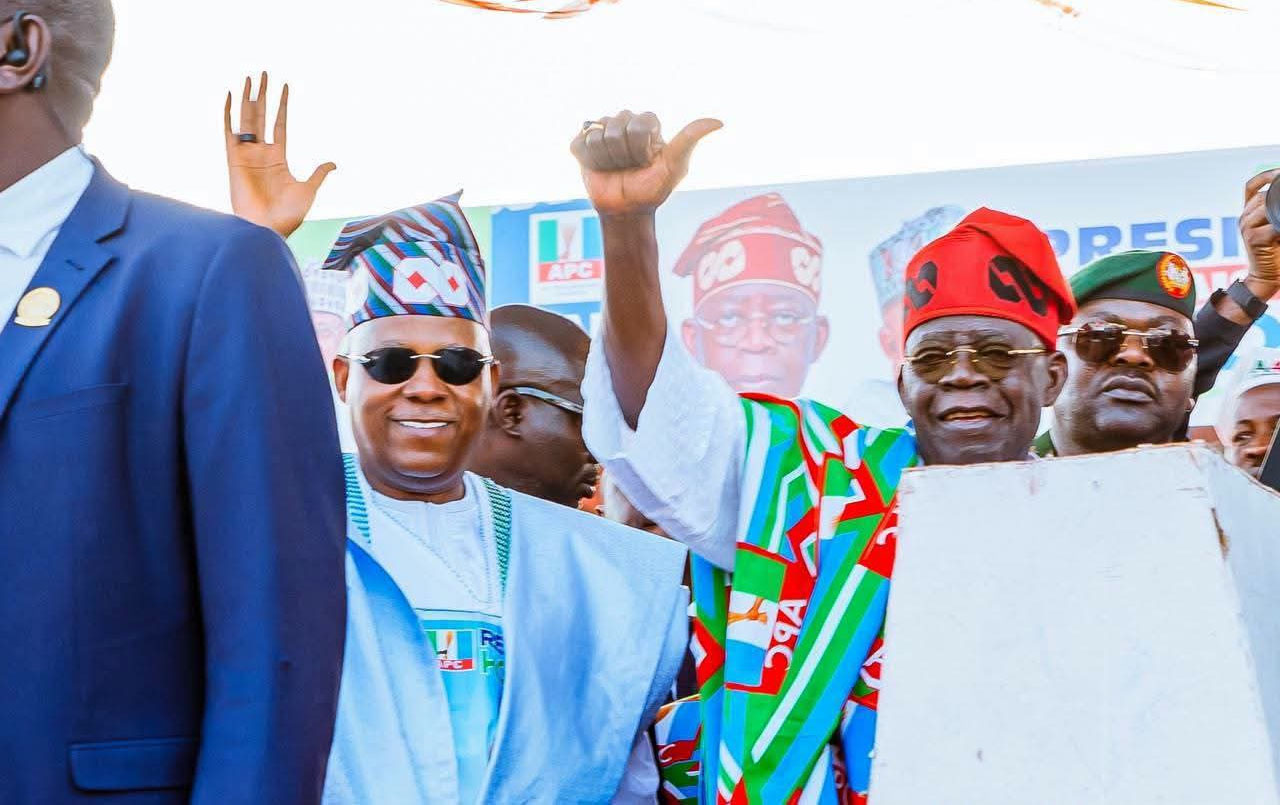
President Bola Ahmed Tinubu has blamed opposition politicians for the hunger and poverty confronting Nigerians, insisting that his administration is working to address the economic challenges as he formally launched his campaign for a second term in office.
Tinubu made the remarks on Saturday, October 24, 2026, during the All Progressives Congress (APC) presidential campaign flag-off rally at the Kaduna Township Stadium, where he urged Nigerians to renew his mandate in the 2027 presidential election.
The President’s comments come amid persistent public concerns over rising food prices, petrol costs, transportation expenses and declining purchasing power, with the economy expected to remain a major issue in the contest for the presidency.
Addressing supporters at the rally, Tinubu challenged opposition politicians who have criticised his administration over hunger and poverty, arguing that they were responsible for creating the problems they now accuse his government of failing to resolve.
“I hear my opponents talking about hunger and poverty. Who created it? They did. They created hunger, they created poverty. We are trying to eradicate them,” the President said.
Tinubu defended his administration’s economic policies, maintaining that his government was taking steps to improve the country’s finances, promote development and create conditions for greater prosperity.
He also commended APC governors for their efforts in their respective states and promised Nigerians improved economic opportunities if he secured a second term.
“To you, the children of our country, we promise prosperity in our second term. You will not regret going to the polls,” he told the gathering.
The President urged eligible voters to obtain their Permanent Voter Cards (PVCs) and participate in the forthcoming election. He also called on APC supporters to vote for the party’s candidates at the presidential, governorship and legislative levels.
READ ALSO:
- Bill Clinton condemns anti-Muslim prejudice, cites Qur’an’s message of coexistence
- MURIC Applauds Army as Mogadishu Cantonment Mosque Reopens After Week-Long Closure
- Atiku Condemns Attack on Edo Comedian Over Refusal to Support Tinubu
Tinubu further defended his administration’s decision to remove the petrol subsidy, insisting that the country would not return to the previous arrangement.
“Fuel subsidy is in our past: no more corruption, no more falsification of invoices, no more lies, no more smuggling of fuel,” he said.
The removal of the petrol subsidy, announced shortly after Tinubu assumed office in May 2023, remains one of the most consequential and controversial economic decisions of his administration.
The government has argued that the policy would reduce public expenditure, eliminate distortions in the petroleum market and free up resources for development. However, the increase in petrol prices following the reform has contributed to higher transportation and distribution costs, putting additional pressure on households and businesses.
The administration’s economic reforms, including changes to the foreign exchange system, have also generated debate over their long-term benefits and immediate effects on living standards.
Opposition politicians have repeatedly questioned the government’s management of the economy, arguing that the reforms have imposed significant hardship on Nigerians without delivering sufficient relief.
Former Vice-President Atiku Abubakar, the presidential candidate of the African Democratic Congress (ADC), criticised Tinubu’s attempt to blame opposition parties for the country’s economic difficulties.
Atiku argued that the APC had governed Nigeria since 2015, first under former President Muhammadu Buhari and subsequently under Tinubu, and should therefore accept responsibility for the country’s economic conditions during its period in power.
He maintained that Nigerians were experiencing significant hardship under the current administration and urged the President to address the concerns of citizens rather than blame political opponents.
The exchange highlights the growing political contest over responsibility for hunger, poverty and the cost-of-living crisis as parties position themselves ahead of the 2027 elections.
At the Kaduna rally, Vice-President Kashim Shettima also urged Nigerians, particularly voters in the North, to support Tinubu’s re-election bid.
Shettima recalled Tinubu’s previous support for northern presidential aspirants, including Atiku in 2007, Nuhu Ribadu in 2011 and Muhammadu Buhari in the 2015 and 2019 elections. He argued that Tinubu had demonstrated political support for northern interests and called on voters to reciprocate.
Kaduna State Governor Uba Sani also appealed to northern voters to back the President, pointing to federal infrastructure projects, education initiatives and security interventions.
The rally attracted prominent APC figures, including Senate President Godswill Akpabio, House of Representatives Speaker Tajudeen Abbas, APC National Chairman Nentawe Yilwatda, campaign Director-General Abdulaziz Yari, ministers, lawmakers and governors.
The event marked the beginning of Tinubu’s campaign for another presidential term, with the President asking Nigerians to give his administration additional time to pursue its economic and development agenda.
However, the debate over the causes of Nigeria’s economic hardship is likely to remain central to the election campaign. While the APC is defending its reforms and promising improved prosperity, opposition parties are demanding greater accountability for the impact of government policies on food affordability, employment, household incomes and living standards.
As the 2027 election approaches, voters will have to assess the competing claims of the ruling party and the opposition against their own experiences of the economy and the policy proposals presented by the candidates.
‘They Created Hunger, Poverty’: Tinubu Fires at Opposition as 2027 Re-election Campaign Begins
Politics
2027: Shettima Urges North to Repay Tinubu’s Support With Re-election
2027: Shettima Urges North to Repay Tinubu’s Support With Re-election
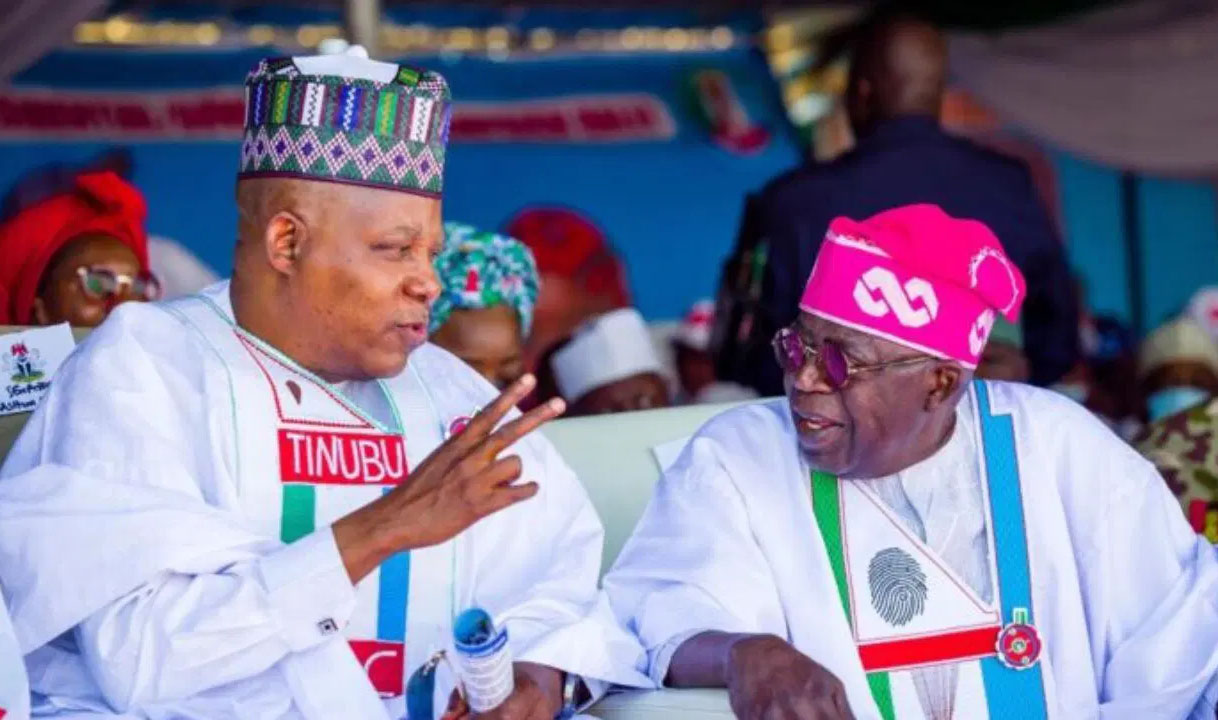
Vice-President Kashim Shettima has called on northern voters to rally behind President Bola Tinubu’s re-election bid in 2027, arguing that the region owes the President a political debt for his longstanding support for northern leaders, including the late President Muhammadu Buhari.
Shettima made the appeal on Saturday at the All Progressives Congress presidential campaign launch in Kaduna, where he urged voters to support Tinubu and other APC candidates across the country in the forthcoming general elections.
According to the Vice-President, Tinubu’s political history demonstrates a consistent willingness to support leaders from the North, making it imperative for the region to reciprocate by backing his administration for another four-year term.
“We have come to ask you to renew a second time for the APC from top to bottom,” Shettima said.
He cited Tinubu’s role in supporting political figures from the North, including former Vice-President Atiku Abubakar, whom he said the President had provided a platform to contest the presidency in 2007 following his departure from the Peoples Democratic Party.
Shettima also recalled Tinubu’s support for Buhari during the 2015 and 2019 presidential elections, describing the former Lagos State governor’s loyalty as evidence of honour and political commitment.
“And you can bear witness that in 2015 and 2019, President Tinubu stood solidly behind the late President Muhammadu Buhari, throughout his first and second term victories. This is a mark of honour and our faith in a man of honour,” he said.
Beyond appealing to the North on the basis of political loyalty, Shettima defended the Tinubu administration’s performance, highlighting projects and institutional developments he said demonstrated its commitment to national growth and the development of Kaduna State.
He said the administration had promised to restore Kaduna’s status as a leading centre of learning and pointed to the establishment of the Federal University of Applied Sciences in Kachia, the transition of the institution in Zaria to a federal university of education and the establishment of a state vocational institute in Rigachikun as evidence of progress.
The Vice-President also listed major infrastructure projects, including the Ajaokuta-Kaduna-Kano gas pipeline, the Kano-Maradi railway, the Lagos-Kano rail corridor and the Abuja-Kaduna-Kano road, as part of the administration’s development agenda.
He further highlighted ongoing work on the Sokoto-Badagry highway, describing the project as a strategic investment that could expand agricultural production and unlock economic opportunities across the country.
According to Shettima, the highway would improve connectivity, open up agricultural communities and strengthen the movement of goods and services, with potential benefits for farmers and businesses.
His appeal in Kaduna combined a call for political reciprocity with a defence of the administration’s record, as the APC seeks to consolidate its support base ahead of the 2027 general elections.
The Vice-President urged northern voters to consider Tinubu’s past political alliances and the administration’s stated achievements in deciding whether to renew the President’s mandate.
-

 metro15 hours ago
Cancelled Wedding: Man Sues Ex-Fiancée’s Father Over Unpaid ₦70,000 Dowry
-
 Politics3 days ago
2027: APGA Chairman Says South-East Must Back Tinubu to Secure Igbo Presidency
-

 Entertainment3 days ago
Tope Alabi Threatens Pastor With Lawsuit Over Toluwanisings’ Death Claims
-

 International3 days ago
France Deploys 70,000 Police as Cost-of-Living Protests Intensify
-
 metro3 days ago
Borno: Troops Kill 15 Terrorists in Midnight Air Strike
-

 Auto15 hours ago
Car of the Year, other top honours up for grabs as NAJA Awards race begins
-

 Politics3 days ago
Atiku Condemns Attack on Edo Comedian Over Refusal to Support Tinubu
-

 International3 days ago
Tibet in Mourning: 7.0 Quake Kills 16, Injures 76 as Rescue Teams Race Against Time in Nagqu