

Politics
Haske Dumps APC for APM, Sets Sights on 2027 Adamawa Governorship
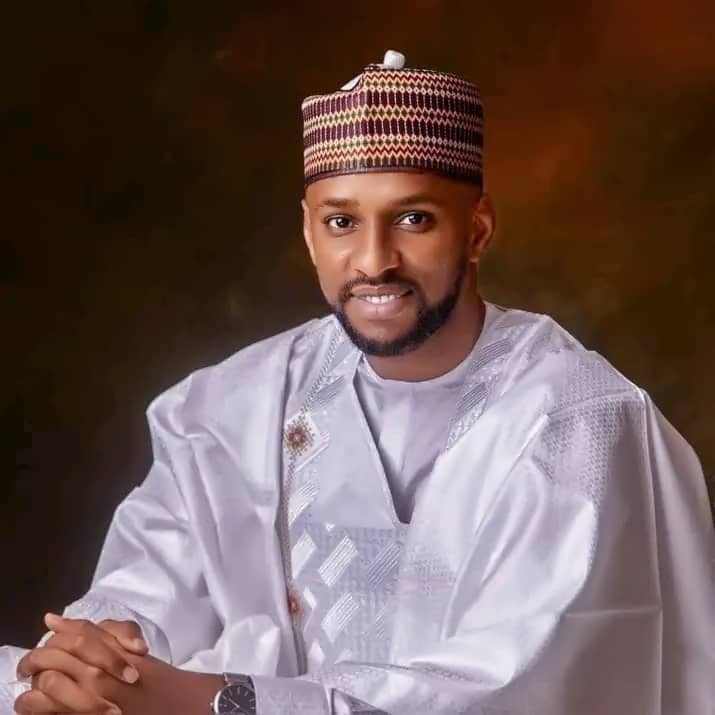
The political contest for Adamawa State’s governorship in 2027 has taken a new turn following Abdulrahman Haske‘s decision to abandon the APC and contest the election on the platform of the Allied Peoples Movement.
Haske, a businessman and politician, formally joined the APM at a gathering in Yola on Saturday attended by party officials, community leaders and supporters drawn from across Adamawa.
His decision comes months after he sought the APC ticket for the governorship race. Reports earlier in September had indicated that he was preparing to leave the ruling party, with associates saying his supporters were also moving towards the APM.
Now under the APM, Haske says his political agenda will centre on improving the lives of residents through stronger investment in agriculture, infrastructure, education and healthcare.
He also identified security, job creation and economic empowerment as priorities, while promising greater accountability in the handling of government resources.
Accepting the party’s ticket, Haske expressed appreciation to the APM leadership and pledged to approach the 2027 contest with what he described as integrity, hard work and commitment to public service.
Dantalle, the APM national chairman, said Haske’s emergence followed consultations by the party and reflected its confidence in his leadership capacity.
According to him, the former APC aspirant’s emphasis on inclusive development and youth empowerment made him suitable to represent the party in the election.
At the state level, APM chairman Badejo Bello described Haske as a bridgebuilder who understands the challenges facing Adamawa and said the party was confident his candidacy could provide voters with an alternative in 2027.
With Haske now formally carrying the APM flag, attention will turn to how his new political platform affects the race and the wider alignment of political forces in Adamawa ahead of the election.







Politics
Bamanga Tukur Dies at 90, Tinubu Pays Tribute to Ex-PDP Chairman
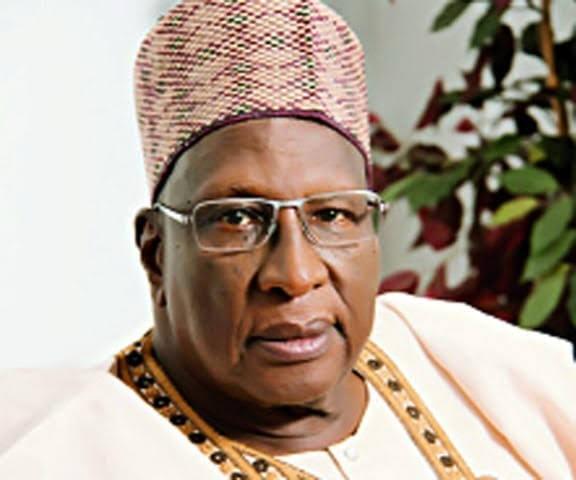
Bamanga Tukur Dies at 90, Tinubu Pays Tribute to Ex-PDP Chairman
President Bola Tinubu has mourned the death of former Peoples Democratic Party National Chairman, Bamanga Mohammed Tukur, describing the former governor and minister as a towering statesman whose footprints cut across Nigeria’s political, economic and business history.
Tukur, who also served as governor of the old Gongola State and Minister of Industries, died on Saturday at the age of 90.
In a condolence statement issued by his Special Adviser on Information and Strategy, Bayo Onanuga, Tinubu said Tukur’s long career in public administration, governance, industry, politics and pan-African business leadership made him an important figure in Nigeria’s national development.
Born on September 15, 1935, Tukur served as General Manager of the Nigerian Ports Authority between 1975 and 1982, where the President credited him with contributing to the development of Nigeria’s maritime sector.
He later ventured into partisan politics and was elected governor of the old Gongola State in 1983, before the state was eventually split into the present Adamawa and Taraba states.
Paying tribute to the deceased, Tinubu described Tukur as “urbane, generous and deeply rooted in the values of integrity and service that the Adamawa Emirate and the nation hold dear.”
He added, “He was a man of big ideas and bold enterprise who believed in Nigeria’s limitless potential. Nigeria will sorely miss his wise counsel and fatherly guidance.”
Beyond public office, Tukur established a strong presence in the private sector as Chairman of BHI Holdings and the DADDO Group of Companies, with business interests spanning manufacturing, agriculture, logistics and trading.
He also contributed to African economic integration and business advocacy, serving as Executive President of the African Business Roundtable and Chairman of the NEPAD Business Group.
At the political level, Tukur became National Chairman of the PDP in March 2012, serving until January 2014 under former President Goodluck Jonathan.
Tinubu extended his condolences to the Tukur family, the Fombina Emirate, the Adamawa State Government and the political and business communities in Nigeria and across Africa.
He prayed to Allah to forgive the deceased’s shortcomings, grant him Aljannah Firdaus and give his family and other mourners the strength to bear the loss.
The family had earlier announced Tukur’s death in a statement signed by his son, Hon. Awwal D. Tukur.
Politics
Yari: God Chose Me to Lead Tinubu’s 2027 Campaign
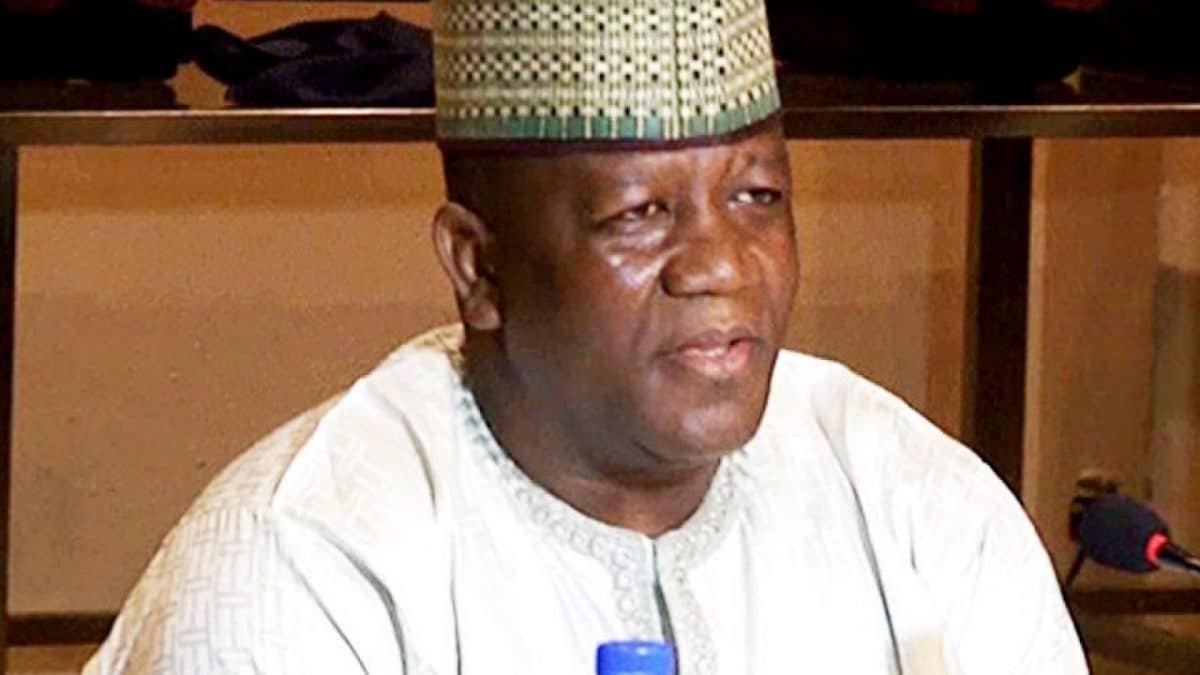
Yari: God Chose Me to Lead Tinubu’s 2027 Campaign
The Director-General of President Bola Tinubu’s 2027 campaign council, Senator Abdul’aziz Yari Abubakar, has said he believes God chose him for the position.
Yari spoke on Friday in Gusau during a meeting with APC leaders and stakeholders as part of efforts to mobilise support for Tinubu ahead of the 2027 election.
He said he would travel across the country to present Tinubu’s achievements and explain why Nigerians should support his bid for a second term.
According to Yari, however, success in Zamfara would depend on the support of party leaders and members across the state.
READ ALSO:
- Iran’s President Seeks End to War as US Tightens Economic Pressure
- Woman disguises as Muslim woman in Niqab to steal in Ado-Ekiti market, video sparks outrage
- AI on the Roads: LASTMA Turns to China to Fix Lagos Traffic
He predicted massive support for Tinubu from Zamfara and said the campaign would be driven by the administration’s record rather than attacks on opposition figures.
Yari admitted that some of Tinubu’s economic policies had brought hardship but maintained that certain reforms were necessary to strengthen the economy.
He also defended the government’s tax reforms, saying they were designed to ensure that people contribute based on their income without placing an unfair burden on the masses.
On security, Yari said the government was committing significant resources to fighting terrorism and banditry. He argued that although the spending could have been used for development, tackling insecurity was necessary to create room for economic growth.
Yari said the campaign would focus on the country’s challenges and the government’s plans for the future.
“Nigeria is before us as Nigerians” he said.
Yari: God Chose Me to Lead Tinubu’s 2027 Campaign
Politics
2027: Obi Supporters Won’t Trust INEC With Their Votes — Aisha Yesufu

2027: Obi Supporters Won’t Trust INEC With Their Votes — Aisha Yesufu
Political activist and member of the Nigeria Democratic Congress (NDC), Aisha Yesufu, has said supporters of the party’s presidential candidate, Peter Obi, will not rely solely on electoral institutions to protect their votes in the 2027 presidential election.
Yesufu said Obi supporters would establish strong structures at polling units and deploy representatives to monitor voting, counting and the movement of result sheets through the various stages of collation, up to the final declaration in Abuja.
She made the remarks during an interview on Arise News, where she discussed Obi’s chances in the 2027 presidential election, the lessons from the 2023 election and the strategy she believes his supporters should adopt ahead of the next poll.
According to Yesufu, the experience of 2023 showed the need for voters and political organisations to take a more active role in monitoring the electoral process after ballots have been cast.
“Yes, we are going to have people at every polling unit to protect the votes,” she said.
She explained that the proposed structure would monitor results from the polling unit through the ward, local government and state collation levels until the final collation in Abuja.
“No result sheet will leave our sight. We will follow the results from the polling units all the way to Abuja,” Yesufu said.
She said the objective was to ensure that the results eventually declared accurately reflected the votes cast by Nigerians.
Yesufu further said she had “zero trust” in INEC, security agencies and the judiciary, arguing that voters could not afford to leave the protection of their votes entirely to public institutions.
Her comments highlight the emphasis she intends to place on grassroots mobilisation and vote protection ahead of the 2027 election.
Rather than focusing exclusively on large campaign rallies, Yesufu said supporters should build structures at the grassroots and prepare people to monitor the electoral process at their respective polling units.
She had earlier explained that Nigerians should not expect to see her travelling around the country with Obi in the same manner she did during the 2023 campaign.
According to her, her role in the previous election was largely focused on helping to mobilise support for Obi and counter perceptions that his candidacy was limited to a particular ethnic or religious group.
For the 2027 election, she said her priority would be to help establish structures capable of mobilising voters and ensuring that votes cast for Obi are properly counted and protected.
Yesufu has urged supporters to organise themselves before election day and understand the procedures for voting, counting and result collation.
She believes that monitoring should continue beyond the polling unit, with supporters following the results through the ward, local government and state collation centres.
Her position comes amid continuing debate over electoral transparency, result management and voter confidence in INEC ahead of the 2027 general election.
INEC remains legally responsible for conducting elections and managing the official collation and declaration of results, while political parties and their accredited agents are entitled to observe proceedings and raise objections through established legal channels.
Yesufu’s call for greater vigilance is therefore centred on encouraging supporters to observe the process closely and ensure that discrepancies are documented and challenged through lawful mechanisms.
She also spoke about the recent incident in Benue State, where Obi’s movement was reportedly obstructed while he was attempting to reach the Yelwata area.
Yesufu defended Obi’s decision not to engage those who reportedly blocked his convoy, arguing that he had other engagements to attend and should not allow people she described as “miscreants” to dictate his movements.
The incident generated political reactions, particularly over the circumstances surrounding Obi’s reported inability to proceed to the area.
Yesufu also expressed confidence in Peter Obi’s chances in the 2027 presidential election, arguing that economic hardship and insecurity would be important factors in determining how Nigerians vote.
She criticised the administration of President Bola Ahmed Tinubu, describing it as a “colossal failure” and arguing that improvements claimed in some macroeconomic indicators had not translated sufficiently into better living conditions for ordinary Nigerians.
According to Yesufu, Nigerians remain concerned about rising living costs, insecurity and declining purchasing power, adding that economic policies should ultimately be judged by their effect on households and businesses.
She also argued that voters were increasingly interested in competence, character and capacity, rather than allowing religious or ethnic considerations to determine their choices.
Yesufu expressed confidence that Obi could perform strongly across the country and specifically said she expected him to retain significant support in Lagos during the 2027 election.
Her comments come as opposition parties continue preparations for the 2027 presidential contest.
Obi is the NDC presidential candidate, while Atiku Abubakar is the presidential candidate of the African Democratic Congress (ADC). Both opposition figures have continued to pursue their respective political platforms amid discussions about possible cooperation among opposition parties.
Obi has also said recently that any agreement involving opposition presidential candidates would ultimately have to be negotiated by the political parties rather than by individual candidates alone.
The opposition landscape therefore remains fluid, with discussions about alliances, cooperation and the possibility of a common strategy continuing ahead of the 2027 election.
For Yesufu, however, political alliances are only one aspect of the challenge facing opposition parties.
She said the immediate priority should be ensuring that supporters are organised at the grassroots and prepared to participate actively in protecting their votes on election day.
The activist, who said she was not seeking elective office, said her focus would remain on mobilising supporters for the 2027 presidential election and helping to ensure that votes cast for Obi are properly accounted for.
She believes the experience of the 2023 election demonstrated that campaign popularity must be matched by effective election-day organisation.
Her strategy therefore places greater responsibility on supporters to understand the electoral process, remain present during counting, verify result entries and follow the lawful collation process.
As preparations for the 2027 general election intensify, Yesufu’s comments are likely to add to the debate over voter mobilisation, electoral credibility, result transmission and the capacity of political parties to protect their votes.
For the activist, winning support at campaign rallies is only part of the electoral contest. The greater challenge, she argues, is ensuring that every vote cast is counted, correctly recorded and followed through the collation process.
2027: Obi Supporters Won’t Trust INEC With Their Votes — Aisha Yesufu
-

 metro2 days ago
Police Arrest Woman Over Fake OPay Shutdown Notice
-

 metro21 hours ago
Woman disguises as Muslim woman in Niqab to steal in Ado-Ekiti market, video sparks outrage
-

 Politics2 days ago
Amaechi will be caged politically, Wike shouldn’t bother about Ikwerre votes — Wihioka
-

 metro2 days ago
Residents Cry Out Over Poorly Constructed Entrance of Ademola Abiola Street, Demand Urgent Intervention
-
 Politics2 days ago
Remi Tinubu Appeals To South-East Voters, Says She Wants To ‘Enjoy Nigeria’ In Old Age
-
 Politics2 days ago
Breaking the Cycle of Collective Guilt: When a Ruling Party Voice Backs Peter Obi
-

 News1 day ago
AI on the Roads: LASTMA Turns to China to Fix Lagos Traffic
-
 Business7 hours ago
Dangote: ₦525 Refinery Shares Could Rise to ₦10,000