

News
PDP crisis worsens as reps caucus asks Secondus to resign immediately
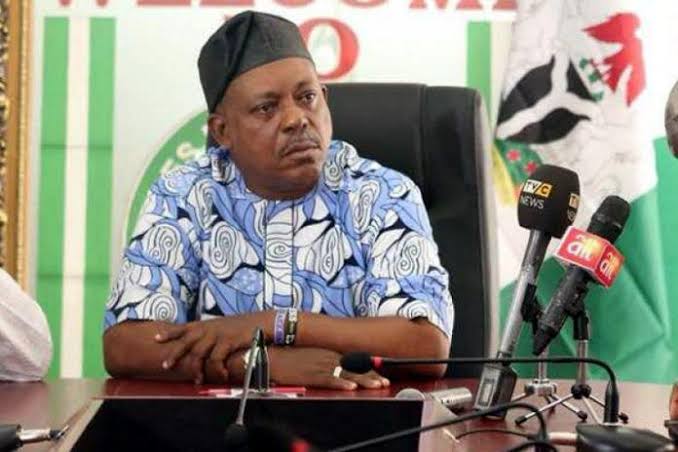
The Peoples Democratic Party (PDP) caucus in the house of representatives has asked Uche Secondus, national chairman of the party, to resign from his position.
The PDP is embroiled in a leadership crisis, which has resulted in some stakeholders leaving the opposition party.
TheCable had reported that seven deputy national officers of the party resigned last week in protest against what they called “poor leadership”.
However, the board of trustees (BoT) of the PDP last Thursday, set up a committee that includes governors and former ministers, to resolve the crisis.
But it appears the crisis is far from being over as federal lawmakers at the lower legislative chamber elected on the platform of the party have asked the national chairman to resign “immediately”.
According to a statement issued on Sunday and jointly signed by Kingsley Chinda and Chukwuka Onyema, PDP caucus leader and deputy leader respectively, the resolution was reached on Saturday at an online meeting.
The lawmakers accused Secondus of “lax and bedroom managerial attitude” which has resulted in “mass exit from party members”.
The main opposition party lawmakers said Secondus’ stay in office “will do grave injustice to the party and put us in a precarious situation as every hour should matter now”.
“To many, the national chairman seems much more contented with occupying the office and therefore preoccupied with holding onto his position rather than preparing for next elections; this explains for his inexplicably missing endless opportunities that ought to have been utilized for consolidating a viable opposition; skewing party congresses to favour personal future ambition and frustrating genuine party members across states which have resulted in mass exit of party members at the national assembly,” the statement reads.
“There is no clear road map, blue print or policy programme for the PDP by the Chairman, thus the party is allowed to flow with the tide, only showing up with weak press releases once in a while without commensurate sustainable action.
“The lax and bedroom managerial attitude of the Chairman who runs the party from his home and only surfaces in the party office for meetings, coupled with several promises without commensurate action has led to inept management of complaints, despondency amongst members and consequently an exodus of members of the party at all levels, including a member of the Board of Trustee of the party.
“Whilst these misfortunes befell the party and concerned party members are busy trying to stem the tide, the party chairman has carried on as if all is well and does not appear to see the caldron awaiting the party if it continues on that trajectory.
“While the PDP National Chairman, Chief Uche Secondus contributed notably to the party in the past, cogent accusations currently being levelled against his leadership far transcend personal issues as there is an established consistent and persistent pattern of inadequate consultations, even with members of the PDP House Caucus, thereby giving rise to hitherto unspoken feelings of intra-party alienation in several quarters including in his NWC.
“Such has manifested into, or encouraged or fueled the exit of many prominent and highly-experienced party members with many more at the brink of leaving, if nothing is done fast”.
The lawmakers asked Secondus “to consider making the necessary personal sacrifice worthy of a leader in the party’s current and future interest with a firm assurance of honourable regard and appreciation by the party leadership now and in years to come, by honourably resigning his position as party chairman immediately, to allow the party an early start”.
The lawmakers advised the board of trustees (BOT) and governors elected under the party to “ensure immediate and firm resolution of current challenges to enable a re-engineering, re-focusing process that would restore party members and millions of other Nigerians’ hope and confidence in the PDP”.

News
Tinubu Agrees to Meet South African Envoy After Ramaphosa’s Intervention
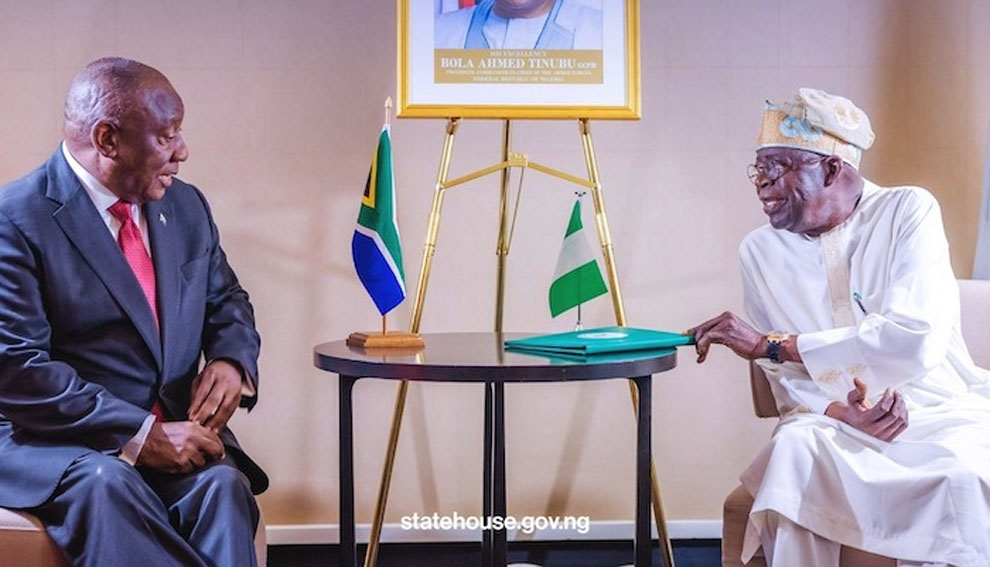
Tinubu Agrees to Meet South African Envoy After Ramaphosa’s Intervention
President Bola Ahmed Tinubu has reversed his earlier decision and agreed to receive the South African special envoy, following a telephone conversation with President Cyril Ramaphosa over the weekend. The South African delegation, led by Minister of International Relations and Cooperation Ronald Lamola, arrived in Abuja on Friday, July 24, 2026, with what was described as a “very important message” for the Nigerian leader. The delegation had reportedly been left waiting at the Transcorp Hilton Hotel in Abuja after being unable to secure an audience with President Tinubu.
The initial refusal to receive the South African envoy came amid growing concerns over persistent xenophobic attacks against Nigerians in South Africa. The diplomatic standoff was further intensified by the alleged killing of a Nigerian national, Chika Ibe, who was reportedly taken from his residence at Parksig Villas Complex in Bellville, Cape Town, and tortured to death by personnel of the South African Police Service (SAPS). Nigeria’s Minister of Foreign Affairs, Bianca Odumegwu-Ojukwu, advised that it was not an appropriate time for President Tinubu to receive the South African envoy, citing the continued attacks on Nigerians, their businesses, and properties in South Africa. According to diplomatic sources, she stressed that the South African delegation could not secure a presidential audience without a prior appointment and concrete commitments from Pretoria.
A key condition set by Nigeria is the ratification of the Memorandum of Understanding on the Early Warning Mechanism (EWM) , which both countries signed in Abuja on October 22, 2025. The agreement was designed to strengthen cooperation between both countries in monitoring threats of violence, protecting citizens, and addressing consular matters. It also provides for rapid communication channels to de-escalate security risks involving foreign nationals and prevent xenophobic attacks. South Africa has reportedly failed to ratify the agreement, citing what Nigerian officials described as inadequate reasons. Officials at the Ministry of Foreign Affairs noted that the framework could have facilitated compensation claims for Nigerians whose businesses and properties were destroyed during previous xenophobic attacks in South Africa. However, South African authorities have so far declined to compensate victims.
READ ALSO:
- “We Can’t Run a Country on Vibes” – Rufai Oseni Knocks Peter Obi Over Lack of Clear Policy Details
- Three-Storey Student Hostel Collapses Near Oko Polytechnic, Many Trapped
- Lawyers Begin Indefinite Strike Over Unpaid Allowances, Salary Harmonisation
Following back-channel moves by South African authorities, including a call initiated by President Ramaphosa over the weekend, President Tinubu agreed to meet with the delegation. The meeting is expected to hold later, with the Minister of State for Foreign Affairs, Ambassador Sola Enikanolaiye, playing a crucial role in the absence of the Minister of Foreign Affairs, who is currently in Addis Ababa. The diplomatic engagement comes as South Africa faces growing pressure over anti-immigrant protests and the treatment of foreign nationals. Lamola has been engaging leaders on the continent to explain Pretoria’s approach to migration management and efforts to prevent violence against foreign nationals.
Nigeria has maintained a firm stance against xenophobic attacks in South Africa. At the 69th Ordinary Session of the Authority of Heads of State and Government of ECOWAS, held recently in Lungi, Sierra Leone, Vice President Kashim Shettima, who represented President Tinubu, condemned the attacks and pledged that Nigeria would push for stronger measures against xenophobia at the African Union. Shettima called for a united continental response to protect the rights and dignity of Africans living across the continent and disclosed that the Federal Government had evacuated 1,490 Nigerians affected by previous xenophobic violence. He reaffirmed Nigeria’s commitment to working with regional and continental institutions to address the crisis. Observers believe South Africa’s diplomatic outreach may be driven by concerns over the potential impact of deteriorating relations on South African investments and businesses operating in Nigeria, as well as Nigeria’s growing campaign for tougher continental measures against xenophobia. South African companies with significant investments in Nigeria include major firms in telecommunications, banking, and retail sectors, which could face heightened scrutiny if tensions persist. The meeting between Tinubu and the South African envoy is expected to provide an opportunity for both countries to address the concerns and strengthen bilateral engagement on migration management, diplomatic cooperation, and the protection of nationals affected by recent tensions.
Tinubu Agrees to Meet South African Envoy After Ramaphosa’s Intervention
News
Nigeria’s Renewable Energy Milestone: 15 Universities Now Fully Connected to Solar Farms

Nigeria’s Renewable Energy Milestone: 15 Universities Now Fully Connected to Solar Farms
The Rural Electrification Agency has achieved a major milestone in Nigeria’s energy transition, successfully connecting 15 federal universities to solar farms while advancing the world’s largest publicly funded renewable energy access programme. The Rural Electrification Agency (REA) has announced that 15 universities across Nigeria have been fully connected to solar farms through its renewable energy intervention programmes, marking a transformative step toward sustainable energy infrastructure for the nation’s education sector. REA Managing Director and Chief Executive Officer, Abba Aliyu, disclosed this achievement during an interview on Channels Television’s The Morning Brief on Monday, confirming that all 15 institutions are now fully operational with their solar installations. “We also have completed our interventions in the universities where we completed 15 universities as of today. All these universities now are fully connected with the solar farms,” Aliyu stated. This development represents a critical pivot away from the unreliable national grid toward localized, renewable energy generation for Nigeria’s tertiary education sector, delivering uninterrupted power to support 202,983 students, 23,088 staff members, and 5,500 medical professionals across these institutions.
The university solarisation forms an integral component of the Distributed Access through Renewable Energy Scale-up (DARES) project, which Aliyu described as the largest publicly funded renewable energy access programme in the world. The DARES initiative is structured to catalyze the off-grid energy market through targeted grant support for mini-grid and standalone solar projects, aiming to impact the lives of approximately 17.5 million Nigerians. The Nigeria DARES Project is a $750 million initiative funded by the World Bank and is designed to accelerate access to reliable, decentralized energy solutions for unserved and underserved communities across Nigeria. The project aims to empower state governments, enable private sector participation, and scale solar technologies while contributing to the broader Mission 300 agenda—a global effort to deliver energy access to 300 million people in Sub-Saharan Africa by 2030. Aliyu emphasized that the project has attracted significant interest and participation from the private sector, contributing to its rapid expansion, noting that for the first time in the country, the agency is deploying more than 1,000 mini-grids nationwide, including both isolated and interconnected mini-grids.
READ ALSO:
- Reps Uncover 29 Forged Documents in Fake Agency Probe, Order IGP to Produce Suspect Adeyemi
- Prophetess who made husband swear fidelity oath celebrates mother-in-law’s death
- MURIC Tells Adeleke to ‘Pack Your Dancing Kits’ Ahead of Osun 2026 Election
The university solarisation is primarily executed under the REA’s Energizing Education Programme (EEP) , a Federal Government of Nigeria initiative aimed at providing reliable and sustainable electricity to Federal Universities and their affiliated Teaching Hospitals through solar hybrid power plants and rehabilitated distribution infrastructure. The programme is being implemented in phases, with EEP Phase II, funded by the World Bank, covering seven universities and two teaching hospitals where commissioning is already underway across all institutions, delivering a combined 32MW of newly installed captive solar power plants across beneficiary institutions. Notable installations under Phase II include a 12MW hybrid system at the University of Maiduguri and its Teaching Hospital in Borno State, a 7MW plant at the University of Calabar and its Teaching Hospital, a 3MW installation at the University of Abuja, 3MW installations at the Federal University of Agriculture in Abeokuta and the Michael Okpara Federal University of Agriculture in Umudike, a 2.5MW facility at the Nigerian Defence Academy in Kaduna, and a 1.5MW installation at Federal University, Gashua in Yobe State. EEP Phase III, funded by the African Development Bank (AfDB), covers eight federal universities and one teaching hospital, with commissioning targeted for Q4 2025, adding another 36.5MW of clean capacity across eight additional university campuses, with Aliyu confirming that “another round of eight more have been developed” as the agency continues expanding its footprint in the education sector.
The cost-saving impact of the programme has been remarkable, with Alex Ekwueme Federal University saving almost ₦2 billion in the last five years on energy bills, showcasing how sustainable energy solutions can drive financial efficiency in public institutions, which is particularly significant given that recent increases in electricity tariffs have impacted public universities, with some paying between N150 million and N300 million monthly for electricity bills. Beyond power access, the EEP Phase II projects have already equipped 140 female STEM students with hands-on training in power system design and construction, while an additional 700 students will be trained in renewable energy courses at world-class training centers in the first year of operations and maintenance, demonstrating the programme’s commitment to inclusive capacity building.
READ ALSO:
- Gunshots, Teargas Rock Osun Motor Park as Thugs Defy Adeleke’s NURTW Suspension Order
- Kogi Poly Suspends 7 Lecturers Over Sex-For-Marks, Handout Sales Amid Cultism Crisis
- Tinubu appoints Olanrewaju-Smart as Special Adviser on House of Reps matters
The REA’s renewable energy push extends beyond universities, with the agency currently deploying more than 1,000 mini-grids nationwide, alongside 48 interconnected mini-grid projects developed in collaboration with electricity distribution companies, operating on aggressive execution timelines of between six and eight months per site. The DARES project has also attracted significant private-sector interest and participation, with Aliyu confirming that the agency has signed several memoranda of understanding with Nigerian banks covering equipment financing, debt financing, and bridge financing for private-sector operators, catalyzing N1.1 billion private sector funding to deploy 1,350 mini grids. Under the Performance-Based Grant sub-component for isolated mini-grids, for instance, Privida Power Limited secured a grant to deploy 2.47 megawatts of solar mini-grids across eleven communities in Kogi State, providing over 11,027 new connections, while eight companies under the Standalone Solar Systems component signed agreements to roll out tier 1 and 2 plug-and-play solutions to households and MSMEs across rural Nigeria. The REA recently completed Nigeria’s first nationwide electricity access mapping exercise, which identified more than 750,000 communities requiring energy infrastructure development, providing critical data for the expansion of electricity access through renewable energy projects.
In a move to ensure the long-term viability of these investments, the REA has established a sustainability framework requiring beneficiary institutions to actively maintain their solar infrastructure, with representatives from 15 universities signing collaborative agreements during the 2024 EEP Stakeholders’ Engagement Forum committing to regular maintenance protocols and financial responsibility for ongoing operational costs. The REA maintains that the approach is private-sector driven, with capital grants used to incentivise operators rather than relying solely on traditional government contracting models, ensuring sustainability as private operators have their own financial stake in the infrastructure they deploy and manage. Aliyu highlighted the agency’s commitment to expanding access to underserved communities, noting that the comprehensive mapping exercise has enabled the agency to strategically target interventions where they are most needed, ensuring that the benefits of renewable energy reach all corners of the country.
Nigeria’s Renewable Energy Milestone: 15 Universities Now Fully Connected to Solar Farms
News
Tinubu appoints Olanrewaju-Smart as Special Adviser on House of Reps matters
Tinubu appoints Olanrewaju-Smart as Special Adviser on House of Reps matters
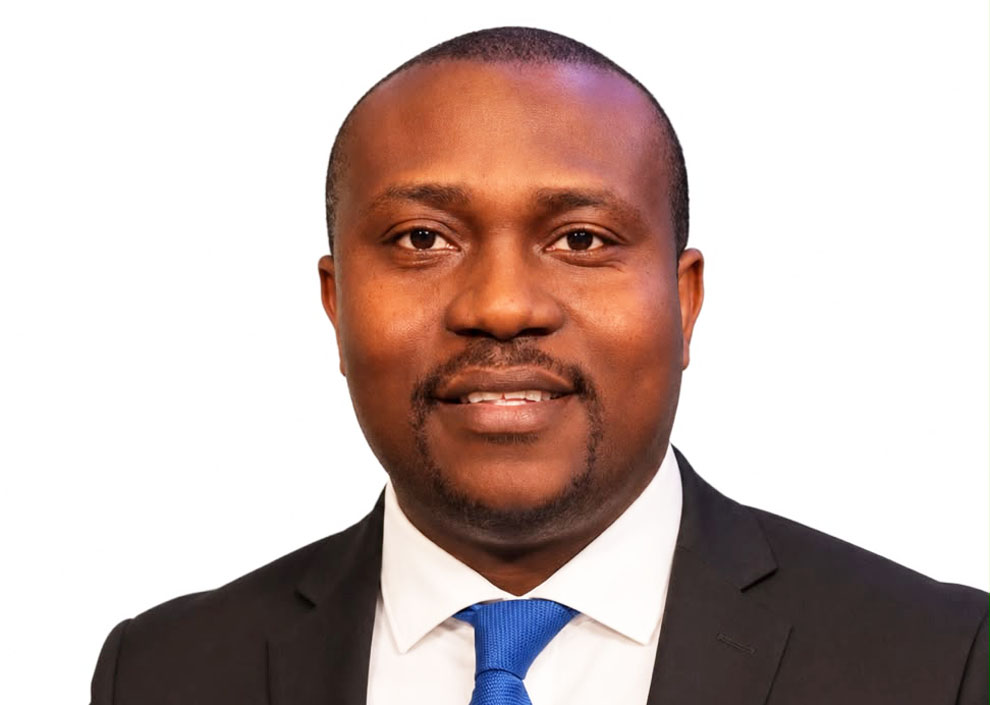
President Bola Tinubu has appointed Dr. Wasiu Olanrewaju-Smart as the new Special Adviser to the President on National Assembly Matters (House of Representatives), following the resignation of Hon. Ibrahim Olanrewaju, who stepped down to pursue an elective political office in his home state.
The appointment takes immediate effect and was announced in a statement issued on Sunday by the President’s Special Adviser on Information and Strategy, Bayo Onanuga.
According to the Presidency, the appointment is part of ongoing efforts to strengthen collaboration between the Executive and the National Assembly, particularly the House of Representatives, as the Tinubu administration advances key legislative reforms and governance priorities.
Olanrewaju-Smart is widely regarded as an experienced legislative strategist and public policy expert, having served in several senior positions within both the National Assembly and the Presidency.
He holds a Doctorate in Educational Management from Lead City University, a Master’s degree in Public Administration from Harvard University, where he was an Edward Mason Fellow in Public Policy at the Harvard Kennedy School, and is also a LEAPS Fellow at the Massachusetts Institute of Technology (MIT).
In addition, he earned a Professional Diploma in Public Relations from the London School of Public Relations and served as a Policy Fellow at Quantum Alliance AI in the United States, where his work focused on artificial intelligence, digital governance and civic technology.
READ ALSO:
- Gunmen invade Osun PVC distribution centre, flee with voter cards
- NDLEA intercepts ₦10bn worth of cocaine, Loud, opioids in Lagos
- Super Falcons recover stolen cash after hotel theft suspect confesses
His legislative career began during the 7th and 8th National Assemblies, when he served as Research and Media Assistant to both the Minority and Majority Leaders of the House of Representatives.
Over the years, he rose through the ranks to become Special Adviser, Deputy Chief of Staff, and later Chief of Staff to the Speaker of the House of Representatives during the 9th and 10th National Assemblies, gaining extensive experience in legislative administration, policy coordination and executive-legislative engagement.
In October 2023, President Tinubu appointed him Senior Special Assistant to the President on Intergovernmental Affairs, a role in which he coordinated relationships between the Presidency, Ministries, Departments and Agencies (MDAs), state governments and other stakeholders.
The Presidency also credited Olanrewaju-Smart with contributing to policy development and legislative research for several important bills, including the Interest-Free Student Loan Act, one of the administration’s flagship education reforms designed to improve access to higher education for Nigerian students.
Announcing the appointment, President Tinubu expressed confidence that Olanrewaju-Smart’s experience, academic background and understanding of legislative processes would strengthen cooperation between the Presidency and the House of Representatives.
The President said the new adviser is expected to improve policy coordination, facilitate legislative engagement and deepen collaboration between the Executive, lawmakers and government institutions to support the implementation of the administration’s reform agenda.
Political observers say the appointment reflects the administration’s commitment to maintaining cordial Executive-legislative relations, which remain crucial to the passage of government bills, budget implementation and broader governance reforms.
With his extensive experience in parliamentary affairs and public policy, Olanrewaju-Smart is expected to play a key role in promoting effective communication between the Presidency and members of the House of Representatives while supporting the smooth implementation of government policies requiring legislative backing.
The Presidency said the appointment takes effect immediately.
Tinubu appoints Olanrewaju-Smart as Special Adviser on House of Reps matters
-
 metro2 days ago
PFICP scandal: How ₦1.3bn ‘fake agency’ traced to Buhari’s government entered 2026 budget
-
 Politics3 days ago
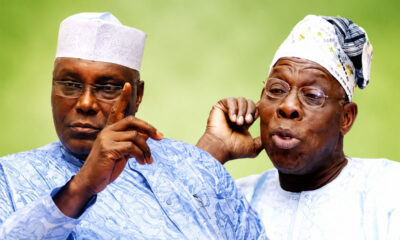
Atiku denies Obasanjo’s N5m bribery claim, links accusation to 2027 presidential race
-
 metro2 days ago
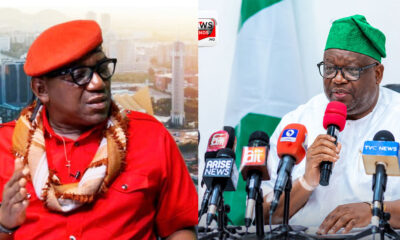
Dalung gives Mutfwang 72-hour ultimatum to withdraw apology to Igbos over civil war role
-

 Education3 days ago
Oluwo Urges Youths to Pair Degrees with Skills, Commends Westland University’s Excellence
-
Politics1 day ago
2027 election: Atiku accuses Obasanjo of reviving false allegations to favour preferred candidate
-

 metro10 hours ago
NDLEA intercepts ₦10bn worth of cocaine, Loud, opioids in Lagos
-
 metro3 days ago
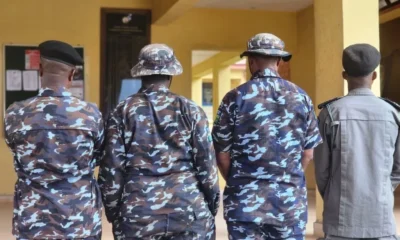
Police Detain 4 Officers Over Viral Ethnic Profiling Video on Lagos–Benin Expressway
-
 metro3 days ago
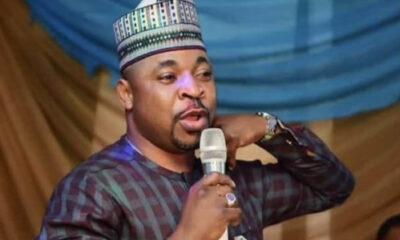
“No Governor Has Such Power” – MC Oluomo Fires Back at Gov Adeleke Over Osun NURTW Ban