

Business
Nigeria spends N6tn to fight terrorists, loses N5.4tn to tax evasion – EFCC
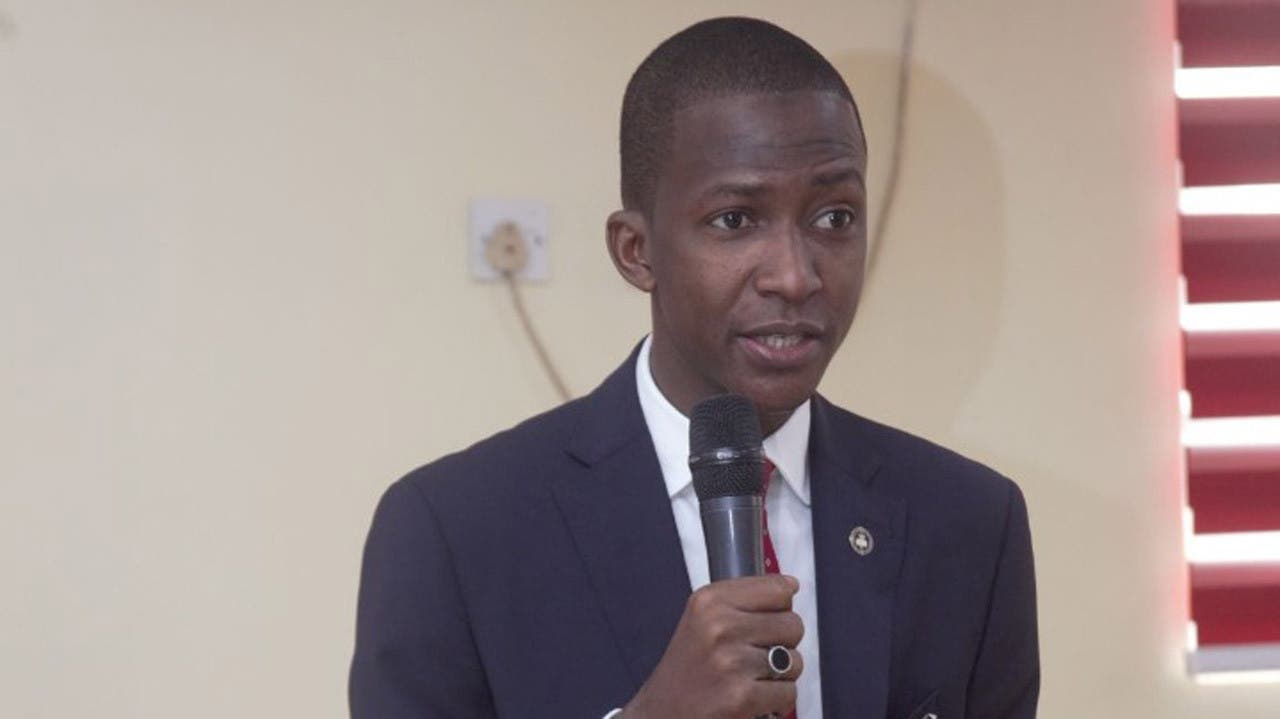
Nigeria has spent over N6tn to prosecute its war against terrorism since 2008, Chairman of the Economic and Financial Crimes Commission, Abdulrasheed Bawa, has said.
He also said the country lost N5.4tn to tax evasion by multinationals between 2011 and 2021.
Bawa made the disclosure during a paper presentation, ‘combating of crime, corruption and implication for development and security’, at the 38th Cambridge international symposium on economic crime, organised on Friday by the Centre for International Documentation on Organised and Economic Crime, Jesus College, University of Cambridge, United Kingdom.
A statement by spokesman for the commission, Wilson Uwujaren, said Bawa was represented at the event by his Deputy Chief of Staff, Sambo Mayana.
He also stated that since he took over in March, the agency had recovered over N6tn and over $161m from people who committed economic crimes.
The agency also recovered £13,000, €1,730, 200 Canadian dollars, CFA 373,000, ¥8,430 and 30 real estates, he added.
“We have arrested over 1,500 internet fraudsters, many of whom are being prosecuted,” he said.
He said till date the EFCC since its creation had secured over 3,400 convictions.
Bawa called on leaders across the world to rise to the challenge of fighting corruption to enhance global economic development and security.
According to the EFCC boss, economic and financial crimes including corruption, which manifest in various forms in different nations, are at the core of global development and security challenges.
Citing a report by the Organization for Economic Cooperation and Development OECD, he said, “Resources that could support a country’s development are lost through criminal acts like corruption, tax evasion, money laundering, and others.
“The ‘spoiler’ effects on countries’ development processes are diverse, and particularly severe for fragile states: economic crime, including illicit financial flows, diverts much needed resources needed to rebuild countries’ public services, from security and justice to basic social services such as health and education.”
The EFCC chair said the absence of substantial improvement in the living condition of the people in Africa and the rest of the developing countries, in spite of their natural resources, could be blamed on pervasive economic crimes taking place in these countries.
He said, “The incidence of illegal mining, smuggling of goods, tax evasion, illegal oil bunkering, illegal arms deals just to mention but a few does not allow the government to receive the full accruals from the continent’s vast resources that are needed for development.
“The revenue generated is embezzled by government officials and their collaborators in the private sector. This does not allow for economic growth and by extension a hindrance to development.”









Auto
After-Sales Support Will Define Future of Nigeria’s Auto Industry – Carloha Marketing Chief

After-Sales Support Will Define Future of Nigeria’s Auto Industry – Carloha Marketing Chief
As competition intensifies in Nigeria’s auto industry, after-sales support is becoming a key driver of customer loyalty and brand trust. In this interview, Felix Mahan, General Manager, Marketing at Carloha Nigeria, examines why reliable after-sales service is critical to business growth, customer retention and the future of the automotive industry:
Why should automotive companies regard after-sales service as a strategic business function?
After-sales service is central to customer retention, brand reputation and long-term business growth. In the automotive industry, the relationship between a company and its customer does not end with the purchase of a vehicle. Rather, it continues throughout the ownership journey.
A strong after-sales operation reinforces customer confidence, encourages repeat patronage and generates valuable referrals. It also strengthens brand loyalty and differentiates a business in a competitive market. For these reasons, after-sales should be regarded as a strategic investment in sustainable growth, not simply an operational expense.
How does the quality of service delivery influence customer trust and confidence in an automotive brand?
Trust is built when businesses consistently deliver on their promises. Customers expect transparency, timely communication and dependable solutions whenever they require assistance.
While advertising and marketing may attract buyers, their actual ownership experience ultimately determines whether they develop confidence in a brand. A company must therefore ensure that the quality of its service delivery matches the promises made at the point of sale. Ultimately, after-sales performance is what validates a brand’s claims and strengthens its relationship with customers.
What key performance indicators should automotive companies monitor to assess the effectiveness of their after-sales operations?
Automotive companies should pay close attention to service turnaround time, first-time repair success rates, spare-parts availability, complaint-resolution time, customer satisfaction and retention rates.
These indicators provide valuable insights into operational efficiency and the overall customer experience. However, measuring performance alone is not enough. Companies must use the findings to identify service gaps, address recurring problems and implement continuous improvements that deliver tangible benefits to customers.
Can a strong after-sales service proposition influence a customer’s decision to purchase a vehicle in the first place?
Absolutely. Beyond a vehicle’s features, specifications and price, prospective buyers want assurance that they will receive dependable support after making their purchase.
A credible after-sales proposition reduces the uncertainties associated with vehicle ownership and gives customers greater confidence in their investment. This is particularly important in Nigeria, where maintenance costs, spare-parts availability and access to qualified technicians remain significant considerations for vehicle owners.
Consequently, the quality of after-sales support can be just as influential as the vehicle itself in determining a customer’s purchasing decision.
What lessons can the Nigerian automotive industry learn from ownership programmes that combine multiple after-sales benefits?
Integrated ownership programmes simplify the customer experience by bringing essential benefits together under clearly defined commitments.
At Carloha, our CarlohaCare 6-6-7 programme is an example. It combines a six-year warranty, six years of free servicing and a seven-day repair promise, subject to applicable terms and conditions.
The broader lesson for the industry is that businesses must move beyond general assurances of quality service and introduce measurable commitments that customers can understand, appreciate and hold them accountable for. Such initiatives help build confidence by giving buyers greater clarity about the support available throughout their ownership experience.
How should automotive distributors respond when competitors introduce initiatives that raise customer expectations and service standards?
They should regard it as an opportunity to improve rather than a threat. Healthy competition should encourage higher service standards, stronger customer protection and greater accountability across the industry.
At Carloha, we believe customers ultimately benefit when businesses continually challenge themselves to deliver better ownership experiences. The objective should not simply be to imitate what competitors are doing but to raise the standard of service delivery and create greater value for customers.
What role should corporate leadership play in driving improvements in after-sales service?
Leadership plays a critical role because it determines the priority an organisation gives to after-sales and provides the resources required to achieve service excellence. This includes investing in technical training, modern diagnostic equipment, adequate spare-parts infrastructure and efficient service processes. Management must also establish clear accountability structures and regularly assess performance against customer expectations.
After-sales excellence cannot be left entirely to frontline personnel. It must be driven from the highest levels of management and embedded in the organisation’s culture, policies and everyday operations.
What would a truly customer-centred Nigerian automotive market look like?
A customer-centred automotive market is one in which buyers make informed decisions based not only on vehicle prices and specifications but also on the quality and reliability of after-sales support.
Such a market should have transparent warranty policies, dependable spare-parts supply, competent technicians, accessible service centres and clearly defined complaint-resolution procedures.
Most importantly, automotive businesses should be evaluated not just by what they promise before a sale but by what they actually deliver throughout the customer’s ownership journey. That is how the industry can build lasting relationships and earn public confidence.
What specific measures should automotive company boards and executive management teams adopt to ensure that after-sale service receives the attention it deserves?
Boards and executive management teams should make after-sales performance a core business priority, supported by measurable targets, dedicated budgets and direct management accountability.
Customer experience should receive the same level of attention as sales growth and financial performance during management reviews. Companies must recognise that the success of an automotive business cannot be measured solely by the number of vehicles it sells.
Ultimately, the real measure of success is how reliably, confidently and satisfactorily those vehicles serve their owners over time. When businesses understand this, after-sales becomes more than a support function; it becomes a fundamental driver of customer loyalty, brand credibility and sustainable growth.
Auto
Seven Drivers Emerge for Todays Naija Driver Challenge Grand Finale in Lagos

Seven Drivers Emerge for Today’s Naija Driver Challenge Grand Finale in Lagos
The maiden Nigerian Drivers Challenge will reach its climax on Tuesday, November 10, with seven finalists set to compete for honours at the National Stadium, Surulere, Lagos, in a contest aimed at promoting responsible driving, professionalism and improved road safety in Nigeria.
The grand finale, scheduled to begin at 9am, follows a nationwide response that saw 160 drivers register for the hybrid competition from 23 states of the federation.
The seven finalists emerged after preliminary assessments, including a proctored online Computer-Based Test (CBT), with participants required to attain a minimum pass mark of 60 per cent.
The final stage will feature practical driving assessments designed by the Lagos State Drivers’ Institute (LASDRI) to evaluate participants’ driving skills, vehicle control, road-use awareness and compliance with safety principles.
The eventual winner will be determined through a combination of CBT performance and practical assessment scores.
Organised to raise driving standards and promote safer roads, the Nigerian Drivers Challenge seeks to draw attention to the critical role of competent, disciplined and professionally trained motorists in reducing preventable road crashes.
The event is expected to attract representatives of government agencies, road safety institutions, automotive industry stakeholders, sponsors, the media and members of the public.
Speaking on the vision behind the initiative, Project Director, Adrian Egonu, said the encouraging response to the maiden edition demonstrated the need for platforms that promote responsible motoring.
“The Nigerian Drivers Challenge was conceived out of a conviction that safer roads begin with responsible, competent and professional drivers,” Egonu said.
He added that the initiative was more than a driving competition, describing it as a platform for raising road safety consciousness, improving driving standards and celebrating excellence behind the wheel.
The Project’s Head of Administration, Modupeola A. Elegba, also expressed satisfaction with the feedback from participants, particularly those who completed the training and CBT stages.
She said the positive responses, including participants’ appreciation of the knowledge gained on safe road use and the competition’s seamless online platform, had encouraged the organisers to expand the initiative in subsequent editions.
The organisers acknowledged the support of institutional partners, including LASDRI, the Federal Road Safety Corps and the Automobile and Touring Club of Nigeria.
Sponsors include Skinetics Aesthetics Skin Care Clinic and Med Spa, BUA Cement, Sovereign Trust Insurance Plc and AXA Mansard Health Ltd, while supporting organisations include the Lagos State Signage and Advertisement Agency, Lagos State Safety Commission, Lagos State Traffic Management Authority and Work and Play.
The public, stakeholders and members of the media have been invited to attend the grand finale.
Auto
Four-day Abuja International Motor Fair begins tomorrow Nov 10

Four-day Abuja International Motor Fair begins tomorrow Nov 10
Nigeria’s automotive industry is set for a major convergence of manufacturers, investors, policymakers and technology players as the 26th Abuja International Motor Fair opens on November 10, 2026, at Eagle Square, Abuja, with a renewed focus on accelerating local production, investment and industry transformation.
The four-day exhibition, organised by the National Automotive Design and Development Council (NADDC) in partnership with BKG Exhibitions Limited, will bring together stakeholders across the automotive value chain, including vehicle manufacturers and assemblers, component producers, financial institutions, technology firms, transport operators, logistics companies and government agencies.
A major highlight will be a three-day industry conference themed, “Driving Nigeria’s Automotive Transformation: Policy, Production, and Prosperity.” The conference is expected to examine critical policy directions, investment opportunities, local manufacturing and emerging technologies shaping the future of Nigeria’s automotive sector.
In a statement, BKG Exhibitions said the conference would feature contributions from industry leaders and experts across relevant sectors.
Chairman of the Organising Committee and Managing Director of BKG Exhibitions, Mr Ifeanyi Agwu, said NADDC Director-General, Otunba Joseph Osanipin, would deliver the keynote address, alongside presentations by leading figures in the automotive and transport industries.
Agwu said the fair would offer participants opportunities to engage policymakers, investors and business executives while exploring new vehicles, technologies, products and investment prospects.
Other attractions include the Nigeria Automotive Excellence Awards Night, Abuja Automotive Road Show, Ultimate Test-Drive experience, exotic car displays and the Automotive and Future Mobility Arena.
The annual exhibition has established itself as a major platform for automotive business networking, product promotion and policy engagement, with this year’s edition expected to further advance conversations around investment, innovation, local production and sustainable industry growth.
-

 metro1 day ago
Fayose Petitions IGP, Threatens Lawsuit Over Rape, Torture Allegations
-

 metro2 days ago
‘Miracle’ Turns Sour as Visiting Pastor Vanishes with Congregants’ Phones During Crusade in Edo
-

 Auto2 days ago
Four-day Abuja International Motor Fair begins tomorrow Nov 10
-
 News1 day ago
Despite Tegbe’s 72-Hour Promise, Nigerians Still Battle Power Outages
-
 Politics2 days ago
ADC Raises Alarm as Court Delays Release of Lifu’s Judgment Despite Payment
-

 Politics3 days ago
ADC Crisis: Aregbesola Heads to Appeal Court, Challenges Judgment Nullifying Mark-Led Leadership
-

 Railway2 days ago
Tinubu Targets December 3 Inauguration for Kaduna-Kano Rail Project as Construction Hits 90%
-
 Politics3 days ago
Hamzat, GRV Clash Over Housing, Transport, Governance at Lagos Debate