

News
Buhari’s full speech at 76th United Nations General Assembly
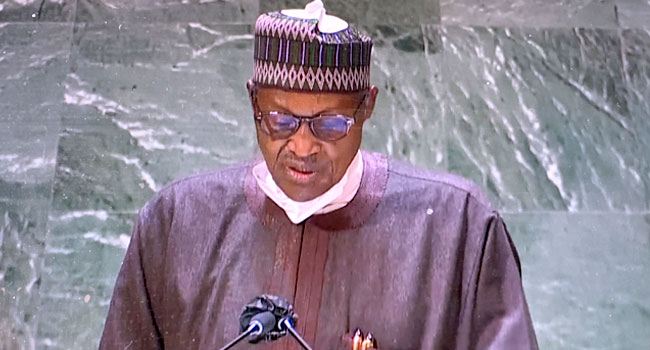
ADDRESS BY HIS EXCELLENCY, MUHAMMADU BUHARI, PRESIDENT OF THE FEDERAL REPUBLIC OF NIGERIA AT THE GENERAL DEBATE OF THE 76TH SESSION OF UNITED NATIONS GENERAL ASSEMBLY IN NEW YORK, USA FRIDAY 24TH SEPTEMBER, 2021
Protocols:
Mr. President,
Let me, on behalf of the government and people of Nigeria, congratulate you on your well-deserved election as President of the 76th Session of the United Nations General Assembly. I would like to assure you of the full support and cooperation of the Nigerian delegation throughout your tenure.
- I would like to commend your predecessor, His Excellency, Mr. Volkan Boskir, for the many remarkable achievements recorded during his tenure, despite the challenges posed by the COVID-19 pandemic.
- Permit me to congratulate the Secretary General, Antonio Guterres, on his re-election and commend his strong commitment to making the UN more alive to its responsibilities.
- I also want to express my gratitude to him for re-appointing Ms. Amina Mohammed, as the Deputy Secretary General to assist him in discharging his heavy responsibilities.
Mr. President,
5. The theme of this year’s General Assembly – “Building resilience through hope – to recover from COVID-19, rebuild sustainably, respond to the needs of the planet, respect the rights of the people, and revitalise the United Nations, sums up our common desire to rescue our planet, recover our economies, and restore hope to all the peoples of the world.
- In this regard, my delegation will continue to support the United Nations, as the indispensable forum for international cooperation and the cornerstone of the multilateral system, rooted in respect for international law, including international human rights law and predicated on a rules-based order.
Mr. President,
- I want to thank the international community for the concerted response to COVID-19. The solidarity and drive to contain the first truly global health emergency of our time is a pointer to the many things we can achieve if we work together.
- On our part, Nigeria has made strenuous efforts to contain the virus and halt its deadly onslaught on our people. Our efforts have been rewarded with moderate success.
- At the outset, we recognised detection and contact tracing to be important tools in combating the virus. In this connection, from a mere four laboratories with testing and detection capacities, we ramped up the facilities to over 140 centres today.
- Similarly, we built isolation centres and emergency hospitals wards in record time all over the country. We carry out genomic sequencing in designated laboratories across the country with a view to detecting variants in circulation.
- In addition, over 40,000 health care workers have recently been trained on Infection, Prevention and Control measures with the support of various partners. Through the Nigerian Centre for Disease Control, we have established 16 infectious disease treatment centres located within our Teaching Hospitals and Federal Medical Centres.
- Nigeria remains grateful for the assistance received from our partners and friends all over the world. Vaccination is the key to our safe emergence from the pandemic. We fully support the COVAX initiative from which we have benefitted. We also thank the United States of America, Turkey, India, China, European Union, and others for the vaccines provided.
- Despite the acknowledgement however, I would like to reiterate my call for a fairer and more equitable distribution of vaccines to all countries so that, together, we can fight and contain the pandemic. The rising wave of newer and more contagious strains, makes this even more urgent. No country can afford the socio-economic implications of prolonged shutdown. It is imperative to underscore that no one is safe until everyone is safe.
Mr President,
- Nigeria remains deeply concerned over the illicit trade, transfer, and circulation of small arms and light weapons. Their excessive accumulation and uncontrolled spread in many regions of the world are having devastating humanitarian and socio-economic consequences, especially on the continent of Africa.
- It is on this note that my delegation calls for the world wide application of the Arms Trade Treaty to codify accountability in conventional arms trade, which is critical to the security of nations. This is in recognition of the need for a broad-based global partnership in the on-going battle against trans-border crimes, including terrorism and piracy.
Mr. President,
16. We must deal not only with the symptoms of conflict but also the immediate causes that fuel conflicts in the first place. These include poor and undemocratic governance, human rights abuses, poverty, ignorance, injustice and inequalities.
- There are no easy solutions to these conditions. They require long term investments and more effective international cooperation. In this connection, my delegation underscores the importance of promoting peaceful, unfettered, and inclusive participation of states in global actions towards conflict prevention. This will facilitate the achievement of the 2030 Agenda for Sustainable Development and the African Union Agenda 2063.
18 In West Africa especially, our democratic gains of the past decades are now being eroded. The recent trend of unconstitutional takeover of power, sometimes in reaction to unilateral changes of constitutions by some leaders, must not be tolerated by the international community. Nigeria fully supports the efforts by ECOWAS to address this growing challenge and appreciates the support of both the African Union and the United Nations. In this regard, I would like to reiterate that as leaders of our individual Member-States we need to adhere to the constitutional provisions of our countries, particularly on term limits. This is one area that generates crisis and political tension in our sub-region.
Mr President,
- Nigeria is fully committed to nuclear non-proliferation and has always supported the view that it should involve all States.
- Disarmament Conventions deserve the support of all states, small, large, nuclear or non-nuclear. Nuclear weapons remain the ultimate agents of mass destruction, and their total elimination should be the final objective of all disarmament processes within the broad spectrum of goals being pursued by the United Nations.
- In this regard, Nigeria would participate actively in the forthcoming Review Conference of the Nuclear Prohibition Treaty and also the First Meeting of States Parties to the landmark Treaty on the Prohibition of Nuclear Weapons, scheduled to take place within the first quarter of 2022.
- Nigeria regards these upcoming events as important steps towards the realisation of a world free of nuclear weapons. We are, therefore, supportive of any diplomatic efforts in this direction. We hope that the upcoming NPT review conference would lead to a successful outcome that would facilitate the denuclearisation of the world. We would do our part to ensure such an outcome.
Mr. President,
- Terrorism continues to dominate security discourse worldwide. In Nigeria, Boko Haram terrorists group, though fragmented by internal strife and weakened by our defence forces, is still active and preying on soft targets. Nigeria will continue to work closely with UN Counter-Terrorism bodies and entities with a view to bringing this scourge to an end.
- Nigeria has spared no effort in addressing the challenges of terrorism posed by the activities of Boko Haram in North-East Nigeria and the Lake Chad region, as well as banditry in the North-West and North-Central Nigeria. The Nigerian Security Forces have recorded considerable success in the fight against terrorism. As a result of the renewed vigour of our military, many terrorist fighters are voluntarily surrendering to our security forces.
- I and three other Nigerian Heads of State served actively as peace keepers and Nigeria continues to support peacekeeping efforts. We know the sacrifice involved, we also know how important peace keeping is for those in vulnerable situations. Nigeria will continue to play its part fully in supporting United Nations peacekeeping operations within Africa and beyond.
Mr. President,
- The impact of climate change is already with us in Nigeria, manifesting in various ways: conflicts trigger; food insecurity, drying up of lakes; loss of livelihood, and youth migration, among others. The trend is the same in many other countries that are threatened by forest fires, rising sea levels, drought and desertification.
- In the circumstances, we intend to build a climate-resilient economy that effectively aligns with the SDGs and that has great potentials to unlocking the full opportunities in different sectors of the economy, while protecting the resources for present and future generations. I know, in several ways, this is also a familiar story in many countries.
- As leaders, we must create inclusive and gender-sensitive policies that address all issues connected to climate action, from mitigation to resilience.
- Nigeria believes that protecting our planet and its biodiversity and climate are important to our collective survival. That is why, we are working on a transition to low carbon economy, consistent with achieving the Paris Climate Agreement and the Sustainable Development Goals.
Mr. President,
- Combating illicit financial flows and ensuring the recovery and return of illicitly acquired assets have the potential to provide resources in the immediate term for financing development in this era of the COVID-19 pandemic and beyond.
- Similarly, corruption across national borders has huge negative impact on the stability, peace, and economic prospects of millions, particularly in developing countries.
- It deprives national Governments of resources needed to provide adequate and meaningful sources of livelihood for their citizens. The latter gives rise to more irregular migration patterns, with unwholesome consequences for inter-state and human relations.
- I, therefore, call on all leaders to demonstrate the much-needed political will by supporting the recommendations for systemic reforms made by the FACTI Panel.
- We support establishing modalities for a global coordination mechanism at the United Nations Economic and Social Council to systematically monitor illicit financial flows and strengthen financial integrity for sustainable development, with the participation of all relevant stakeholders.
Mr. President,
- On the issue of debt, we have seen that developing countries have been faced with unsustainable debt burdens even before the pandemic. The COVID-19 pandemic has increased the risk of new wave of deepening debt, where vital public financial resources are allocated to external debt servicing and repayments at the expense of domestic health and financing for critical developmental needs.
- I must commend the current initiatives by the international financial institutions and the G20 aimed at significantly mitigating the economic situation of the indebted countries and urge for more efforts in this regard.
- Therefore, there is an urgent need to consider expansion and extension of the Debt Service Suspension Initiative to include all Developing, Least Developed Countries and Small Island Developing States facing fiscal and liquidity challenges. In addition, a review of the eligibility criteria for debt suspension, including outright cancellation, is needed for countries facing the most severe challenges.
Mr. President,
- Nigeria reaffirms that international trade is an engine for development and sustained economic growth, as well as the global eradication of poverty.
- My delegation would like to reaffirm the critical role that a universal, rules-based, open, non-discriminatory and equitable multilateral trading system can play in stimulating economic growth and development.
- Fair and equitable trade would eventually eliminate the need for aid. My country and indeed all African countries do not intend to stay indefinitely looking for aid. All we need is a fair and equitable system of international trade.
- We, therefore, call for a reform agenda that will engender better recovery from this crisis, build resilience to future shocks and pursue transformative development strategies that can deliver the 2030 Sustainable Development Goals.
Mr. President,
- The global food system has, in recent times, been impacted by several factors such as population growth, availability and accessibility of arable land and water resources, climate change, and loss of biodiversity.
- Increased competition for resources such as land, water, and energy, has affected food access and supply, particularly in developing countries. Climate change and unpredictable shocks, such as the current global pandemic, further exacerbate vulnerabilities in the global food system, requiring the UN’s urgent attention.
- The Government of Nigeria remains determined to improve the productivity and incomes of small-scale farmers by promoting equal access to land, technology and markets, sustainable food production systems and resilient agricultural practices.
- At the heart of Nigeria’s post-COVID-19 response is the Economic Sustainability Plan, which has a major component, called the Agriculture for Food and Jobs Programme where we seek to leverage suitable technologies to build a resilient food system for the country.
- An integral part of our food systems’ transformation strategy is to create an enabling and supportive environment to implement these policies in a participatory manner.
- Global efforts to mitigate and sustain food systems must involve key stakeholders, including Governments, farmers, investors, multilateral organizations, regional bodies, international financial institutions, private partners and civil society organizations.
Mr. President,
- Nigeria has been steadfast in safeguarding human rights, including the advancement of women, the protection of children, the protection of the rights of people living with disabilities, the treatment of migrants, refugees, returnees and displaced persons as well as, the promotion of fundamental freedoms through all legitimate means. In this regard, my delegation commends the positive example of leaders like Prime Minister Jacinda Arden of New Zealand.
- In this context Nigeria calls for collective global action through a Treaty to end all forms of violence against women and girls of all ages.
- Nigeria remains unwavering in its commitment to ensuring the advancement of human rights within its shores and beyond. This is so even in the context of a vicious decade-long onslaught by terrorists against Nigerians, quite contrary to unwholesome reports by some who hardly verify what they state against us.
- The recent rise in hate related crimes globally underscores the urgent need to continue our engagement about racism, racial discrimination, xenophobia and other related intolerance. It is sad to note that the issue of racism remains alive globally.
- We are beginning to forget our affirmation of the inherent dignity and the equal and inalienable rights of every individual as enshrined in the UN Charter. No society can claim to be free or just if it deprives anyone of these rights.
- Nigeria has long been a principled fighter against racism and all forms of discrimination inspired by its African experience. In the past, racism oiled the machine of slavery and colonialism. Today, racism drives hate crimes and institutional discrimination. In all this, Africans and people of African descent are among the major victims.
- Cognizant of these, I commend Member States for adopting by consensus the resolution on the Establishment of the Permanent Forum of People of African Descent on 2nd August 2021. I am confident that this forum will make significant impact in the quest to end race-related vices and injustices.
Mr. President,
- No reform of the United Nations system is more urgent than that of the Security Council. Stakeholders around the world are asking how such power could be concentrated, with scant representation. The intergovernmental negotiations have taken too long, some 15 years. We must avoid going in cycles. Consensus has been achieved in some of the elements of this reform, especially that of the representation of Africa on the basis of the Elzuwini consensus and the Sirte Declaration. It is unreasonable to expect unanimity in this matter. The issue, indeed, is about justice, not unanimity. Without justice, the legitimacy (even efficacy) of our Organization is called to question. We can and must make substantial, irreversible progress on Security Council reform in the current session.
Mr. President,
- Connected to this, is the question of justice, fairness, and equity in respect of the Palestinian people. The situation in the Middle East is long-standing and gives cause for concern. Nigeria encourages Israel and Palestine to re-engage in dialogue based on relevant UN resolutions and Initiatives. The two-state solution has the support of the international community and is widely acknowledged as the path to lasting peace.
Mr President,
- Our organization is at the peak of the multilateral system. It is also the pre-eminent body for solving our current and emerging challenges, and for developing norms that are protective of us all. We need to re-commit to it, rejuvenate it to better serve us. Nigeria re-affirms its faith in the United Nations and is further resolved to continue to work with all Member-States for peace and security, development and the protection of human rights. In the current moment, hope for these, is dependent on how we assist each other to get COVID-19 out of all countries, regardless of their classification. We can and must do so.
- In this regard, let me close my statement by paying special tribute to a great and humane internationalist, and an exemplary practitioner of multilateral cooperation. I am speaking of Chancellor Angela Merkel of the Federal Republic of Germany. As she exits the stage, we wish her well.
I thank you.






News
Four-Storey Building Collapses in Enugu, Workers Trapped Inside
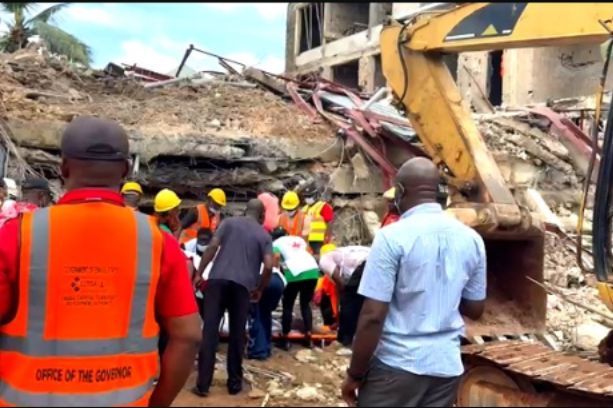
An early-morning building collapse in Enugu has left one person dead and four others injured after a four-storey structure under construction suddenly gave way in the Independence Layout area of the state.
The incident occurred around 6 a.m. on Sunday on Ogbalu Street, where workers were reportedly sleeping inside the construction site when the building collapsed.
Four workers were pulled from the debris alive and taken to the Enugu State Teaching Hospital for medical treatment.
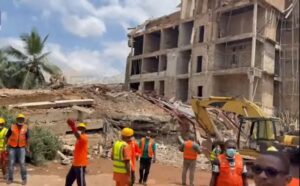
Authorities said six people had been sleeping at the site before the incident, but one of them had reportedly stepped out shortly before the structure came down. The body of another victim was recovered from the rubble.
The rescue operation has drawn the involvement of several emergency and security agencies, including the National Emergency Management Agency, Nigerian Red Cross Society, State Emergency Management Agency, Enugu State Capital Territory Development Authority and the Police.
Officials are still working at the scene to determine whether anyone else may be trapped beneath the debris.
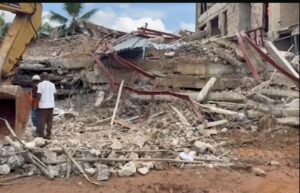
The cause of the collapse remains unknown as of the time of reporting.
The incident has also renewed questions about compliance with construction standards, site safety and the effectiveness of regulatory monitoring in Enugu.
News
Adeleke Orders Arrests After Associate Ajagungbade Is Reportedly Killed in Ife

Osun State Governor Ademola Adeleke has directed security agencies to arrest anyone found to have been involved in the reported killing of his associate, Olamilekan Ajagungbade, popularly known as Emir Ajagungbade.
Ajagungbade was reportedly shot dead in Ile-Ife on Sunday amid a dispute connected to the leadership of a motor park.
Reacting to the incident, Adeleke ordered Commissioner of Police Ibrahim Zungura to take immediate action against those responsible. The directive was disclosed by the governor’s spokesperson, Olawale Rasheed.
The governor also ordered rival groups involved in the park dispute to leave the motor parks while security agencies work to restore calm.
“There will be no sacred cows as all culprits will be brought to book” Adeleke said, while urging residents to remain calm.
As part of his response, the governor announced plans to bring back the Park Management System across the state, saying an Executive Order would soon be issued to provide the legal backing for the arrangement.
The renewed system is expected to regulate the operation of motor parks and garages and address disputes over their management.
Ajagungbade was described in the report as a close associate of the governor and a member of the Accord Party.
The circumstances surrounding the shooting and the identities of those responsible had not been fully disclosed at the time of reporting.
News
Police Arrest Two in Delta, Recover Guns, Daggers and Battle Axe
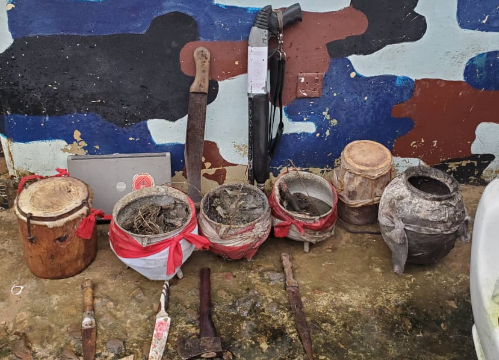
Two suspects are in police custody in Delta State following separate raids that resulted in the recovery of firearms, ammunition and other items, the state police command has said.
The latest operation involved the arrest of Chukwuka Nzete, also known as “Ododo”, in Isupe Community, Ndokwa West Local Government Area.
Police said Nzete was suspected of dealing in illegal firearms and alleged that he ran a shrine used to fortify suspected criminal elements.
Items recovered during a search of his residence included a pump-action gun, four dagger knives, a battle axe and pots containing substances suspected to be charms.
The command said detectives were investigating to establish the extent of Nzete’s activities and whether he had links with other criminal groups.
A separate operation also led to the arrest of Joel Iwomi, 36, in Umuebu, Obiaruku.
According to the police, Iwomi resisted attempts by operatives of the Command Anti-Cult Unit to enter his residence before officers eventually gained access and conducted a search.
The search allegedly produced a pump-action gun and 18 live cartridges.
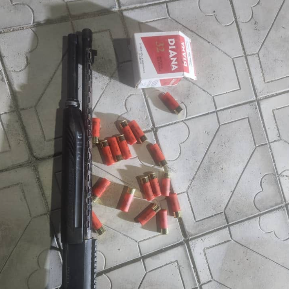
Both suspects have been taken into custody while investigations continue.
The Delta State Commissioner of Police, Samuel E. Erale, said the command would continue efforts to keep illicit firearms away from criminal elements and prevent weapons capable of threatening public safety from circulating in the state.
He urged residents to cooperate with security agencies by reporting suspicious movements, illegal firearms and other criminal activities.
The police said information supplied by members of the public would be handled confidentially.
-

 metro2 days ago
Woman disguises as Muslim woman in Niqab to steal in Ado-Ekiti market, video sparks outrage
-

 metro2 days ago
Ondo Herbal Drink Tragedy: Survivor Vows Never to Drink Again as Death Toll Tops 30
-

 metro2 days ago
Sokoto Cleric Stabbed Twice in Neck After Juma’at Prayer, Attacker Killed
-
 Business2 days ago
Dangote: ₦525 Refinery Shares Could Rise to ₦10,000
-

 Africa3 days ago
Murder of Nigerian Bishop in South Africa Sparks Outcry Over Unsolved Killings
-

 News2 days ago
AI on the Roads: LASTMA Turns to China to Fix Lagos Traffic
-

 Community2 days ago
Kaduna Traditional Rulers Set for 100% Pay Rise as Zazzau Emir Backs Proposal
-
 metro2 days ago
Abia Police Arrest Father, Three Others Over Alleged Attempt to Sell 16-Month-Old Daughter