

Politics
Why I Gave Peter Obi My Vehicle During Benue Visit — Ortom

Why I Gave Peter Obi My Vehicle During Benue Visit — Ortom
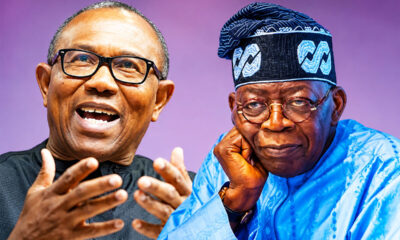
Former Benue State Governor Samuel Ortom has explained why he allowed Peter Obi, the presidential candidate of the Nigeria Democratic Congress (NDC), to use his vehicle during the former Anambra State governor’s recent visit to Benue.
Ortom said there was nothing political or unusual about his decision to make the vehicle available to Obi, insisting that it was simply an act of courtesy and hospitality to a fellow former governor and presidential candidate.
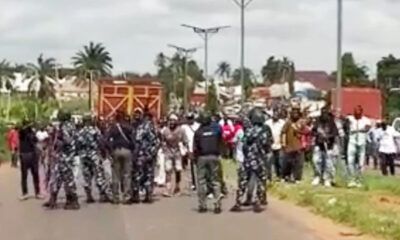
The explanation came amid a growing controversy over Obi’s visit to Benue, where his convoy was blocked by youths along the Makurdi-Gboko Federal Highway, preventing him from proceeding to Yelewata in Guma Local Government Area.
Obi had travelled to the state to sympathise with families affected by the deadly June 2025 Yelewata attack, in which more than 200 people were killed.
Speaking through his media aide, Terver Akase, Ortom said it would have been petty and inhospitable for him to deny Obi the use of his vehicle during the visit.
He argued that political differences should not prevent leaders from extending basic courtesies to one another, particularly when a former governor was visiting the state for a humanitarian engagement.
Ortom also rejected suggestions that allowing Obi to use his vehicle amounted to an endorsement of the NDC candidate’s 2027 presidential ambition.
The former governor acknowledged that he supported Obi during the 2023 presidential election, but stressed that his political position had since changed.
According to him, he has publicly declared his support for President Bola Ahmed Tinubu ahead of the 2027 election and has not concealed that position.
READ ALSO:
- Sanders Urges Trump, Xi to Halt AI Race, Ban Superintelligence
- DSS warns Osun churches, mosques, markets over alleged terrorist attack plot ahead of 2027
- ‘Tinubu Will Win Again in 2027’ — Charismatic Bishops’ Secretary
He therefore dismissed suggestions that his decision to assist Obi meant he was secretly supporting the former Anambra governor.
Ortom described claims that he was being “double-faced” over the matter as laughable, maintaining that helping a political opponent with transportation was not the same as endorsing his political ambition.
The vehicle controversy emerged after Obi arrived in Makurdi for his planned visit to Yelewata.
The Benue State Government later raised questions about the vehicle used to convey the NDC candidate from the airport, with reports indicating that Federal Road Safety Corps (FRSC) records linked the vehicle to Ortom.
The revelation generated political debate, particularly because of Ortom’s support for Tinubu and his earlier relationship with Obi.
Ortom, however, maintained that the gesture should be seen as an example of political leaders putting courtesy and humanity above partisan differences.
He also questioned why the provision of a vehicle for a visiting presidential candidate had become a political issue, arguing that the state government itself should ordinarily have made adequate arrangements for Obi’s movement.
The controversy over Ortom’s vehicle followed a more serious incident involving the obstruction of Obi’s convoy.
According to the Benue State Police Command, 46 people have been arrested in connection with the blockade.
The Commissioner of Police, Cletus Nwadiogbu, said the arrests followed intelligence-led operations after youths blocked Obi’s convoy on the Makurdi-Gboko highway.
The police said officers initially avoided using force to disperse the group because of fears that such action could result in casualties and destruction of property.
READ ALSO:
- Fake miracles, bogus grants: How clerics allegedly fleece Nigerians of millions
- ‘Unacceptable’ — Arteta Furious Over Sunderland Penalty in Arsenal Win
- US Blockade Tightens As CENTCOM Redirects 100 Commercial Ships From Iranian Ports
Nwadiogbu said the police eventually escorted Obi safely back to the airport after his movement was disrupted.
He also warned that nobody had the right to unlawfully prevent another person from moving freely, regardless of political affiliation.
The police commissioner said the command had been informed about Obi’s planned visit and had deployed security personnel to protect him.
In a subsequent clarification, Nwadiogbu said representatives of the NDC had informed the police about the visit for security purposes.
He also stated that the NDC did not ask him to transmit its notification letter to Governor Hyacinth Alia.
The clarification became significant because the Benue State Government had criticised the organisation of Obi’s visit and questioned whether appropriate protocols had been followed.
The state government has consistently denied involvement in the blockade.
Governor Alia’s administration said it had no role in preventing Obi from travelling to Yelewata and rejected allegations that individuals acting on behalf of the government were responsible for the incident.
The government maintained that it does not engage or deploy political thugs as instruments of governance or security.
It also questioned why Obi’s visit was not formally communicated to relevant authorities in a manner that would have allowed adequate coordination and security arrangements.
Obi, however, condemned the blockade and appealed to security agencies to ensure that political actors could move freely during the build-up to the 2027 general election.
He said he had chosen not to confront the protesters because doing so could have escalated the situation and endangered lives.
The incident has attracted condemnation from several political figures, who argued that disagreements over political activities should be settled through democratic means rather than road blockades or intimidation.
Minister of Aviation and Aerospace Development Festus Keyamo also condemned the obstruction, saying political grievances should be expressed through the ballot box rather than violence or intimidation.
The police have meanwhile continued investigations into the circumstances surrounding the blockade and the identities and motives of those arrested.
The incident has raised broader concerns about political tolerance, freedom of movement and electoral security as political parties and presidential candidates begin to intensify activities ahead of 2027.
Obi’s planned visit to Yelewata was particularly sensitive because of the scale of the 2025 violence there.
The community became a national symbol of Benue’s worsening security crisis after the attack left hundreds of people dead and displaced many residents.
Obi had intended to meet affected residents and families and express solidarity with them.
The fact that he was unable to reach the community transformed what his supporters described as a humanitarian visit into a major political controversy.
The latest dispute has also revived questions about the relationship between Ortom and Obi.
Ortom was among the prominent political figures who supported Obi’s presidential campaign in 2023. He has since aligned himself with Tinubu ahead of the next presidential election.
The former Benue governor insists, however, that his current political allegiance does not prevent him from showing courtesy to Obi or any other political figure.
He argued that leaders should be able to disagree politically while maintaining respect and civility.
For Ortom, therefore, the decision to provide his vehicle was not a secret political arrangement but an ordinary gesture of hospitality that should not be interpreted beyond what it was.
The episode nevertheless highlights the increasingly charged political atmosphere in Benue and across Nigeria as preparations for the 2027 presidential election gather momentum.
With the police investigation into the Peter Obi convoy blockade still ongoing and 46 suspects already arrested, attention is now focused on determining who organised the obstruction and whether the incident had any political sponsorship.
Ortom, meanwhile, has maintained that his support for Tinubu remains unchanged, while his decision to assist Obi during the Benue visit was simply an act of courtesy to a fellow political leader.
Why I Gave Peter Obi My Vehicle During Benue Visit — Ortom





Opinion
‘Tinubu Will Win Again in 2027’ — Charismatic Bishops’ Secretary
‘Tinubu Will Win Again in 2027’ — Charismatic Bishops’ Secretary
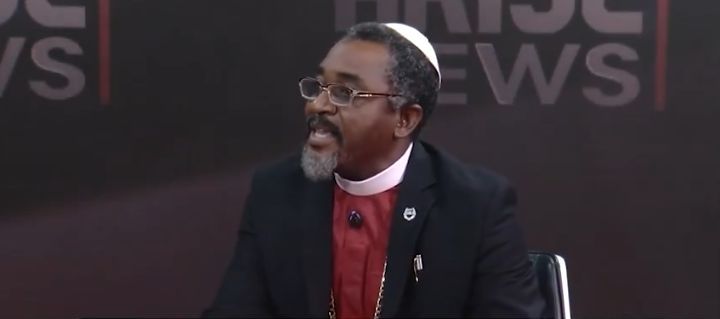
A senior Nigerian cleric, Archbishop Chivir Chianson, has declared that President Bola Tinubu will retain the presidency after the 2027 general election, attributing the prediction to a message he said came from God.
Chianson, who serves as Secretary General of the Charismatic Bishops’ Conference of Nigeria, made the statement while appearing on Arise Television on Saturday.
Rather than basing his prediction on political calculations, the archbishop said his confidence came from what he described as the prophetic role of bishops.
He maintained that the conference had previously spoken about Tinubu’s political future based on what he said was divine revelation and that the President would return for another term.
Chianson also predicted that Tinubu’s performance would improve if he wins the 2027 election.
READ ALSO:
- DSS warns Osun churches, mosques, markets over alleged terrorist attack plot ahead of 2027
- ‘Tinubu Will Win Again in 2027’ — Charismatic Bishops’ Secretary
- Fake miracles, bogus grants: How clerics allegedly fleece Nigerians of millions
Addressing the political opposition, the cleric said the bishops could not be blamed if rival parties failed to unite or organise themselves effectively ahead of the election.
He also sought to clarify the position of the bishops when dealing with government, saying their role in speaking truth to power did not mean they should approach political leaders with hostility or disrespect.
According to him, the Constitution, alongside their religious convictions, should guide how they engage the President and the country.
Chianson said he was sufficiently confident in his prediction to promise that he would return to the Arise TV studio after the 2027 election, when he expects the result to demonstrate that the bishops’ prophecy was correct.
His comments add a religious dimension to the increasingly active political conversation surrounding the 2027 presidential race.
‘Tinubu Will Win Again in 2027’ — Charismatic Bishops’ Secretary
Politics
Five Islamic Clerics Abducted After Tinubu Re-Election Prayer At Yari’s Zamfara Residence
Five Islamic Clerics Abducted After Tinubu Re-Election Prayer At Yari’s Zamfara Residence
Five Islamic clerics have reportedly been abducted by suspected terrorists shortly after attending a special prayer gathering for President Bola Tinubu’s re-election at the residence of former Zamfara State Governor and serving Senator Abdul’aziz Abubakar Yari in Talata Mafara Local Government Area of the state.
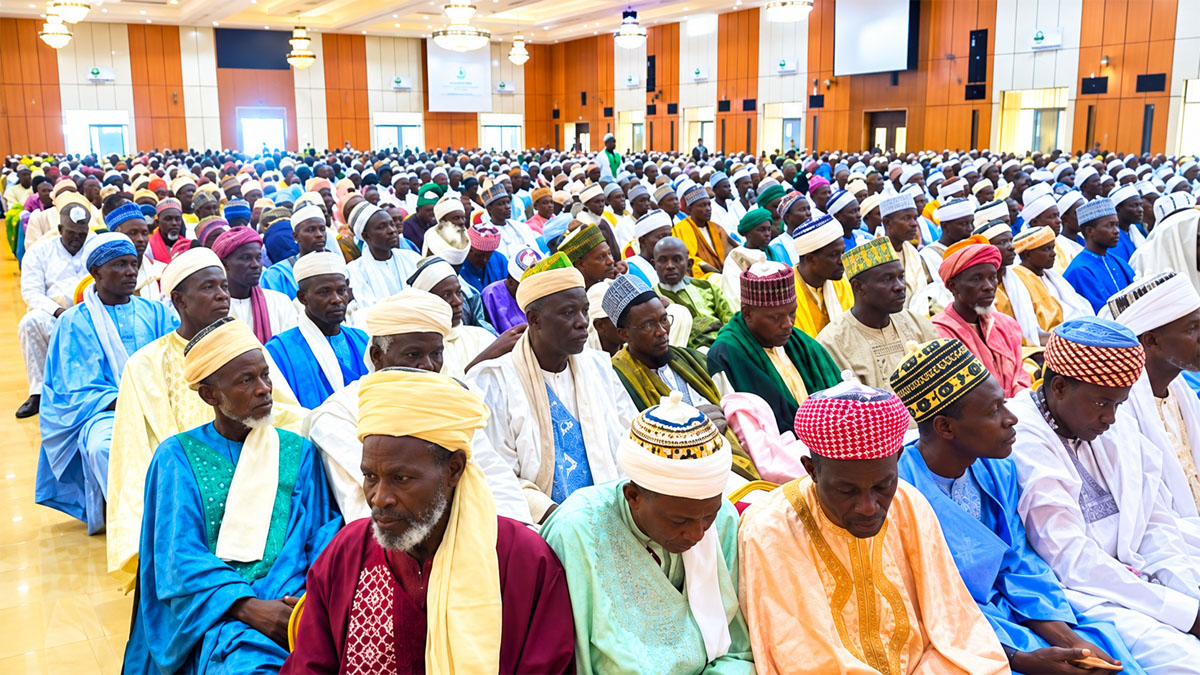
The reported abduction occurred on Saturday, September 12, 2026, shortly after hundreds of Islamic scholars and clerics gathered at Yari’s residence for prayers ahead of the 2027 presidential election.
According to reports, the clerics were allegedly intercepted and taken away after leaving the gathering, raising fresh concerns over the worsening security situation in Zamfara State.
SaharaReporters reported that the victims included Imam Yahuza, the First Jumma’at Imam in Dogon Madacci; Magawata Abdullahi, the Second Jumma’at Imam in Dogon Madacci; Malam Shehu Dakko; Imam Bala Fagon; and Na’ibi Tasi’u of Tungar Nagudai.
The clerics were said to have travelled from communities in Bakura and Talata Mafara Local Government Areas to attend the prayer gathering before the alleged abduction.
The reported incident occurred against the backdrop of a major religious gathering held at Yari’s Talata Mafara residence.
While SaharaReporters reported that about 1,000 Islamic scholars attended the gathering, another report by New Telegraph put the number at more than 3,000 clerics and Imams drawn from across the 14 Local Government Areas of Zamfara State.
The prayers were organised to seek divine intervention for the restoration of lasting peace in Zamfara and Nigeria, the peaceful conduct of the 2027 elections and the victory of President Tinubu.
Prayers were also offered for Nigerian troops and other security personnel battling terrorists and criminal groups across the country.
According to New Telegraph, several prominent Islamic scholars participated in the prayers, including Sheikh Liman Dan Alhaji of the Gusau major mosque and Sheikh Sadiqu Saddeeq.
Speaking during the gathering, Yari reportedly called for intensified prayers for the security of Nigerians and for an end to terrorist activities in Zamfara and other parts of the country.
The former governor, who is serving as Director-General of Tinubu’s 2027 presidential campaign, also urged the clerics to pray for the protection of citizens and security personnel.
He reportedly prayed for divine intervention against terrorists troubling Zamfara and Nigeria, as well as for peace and economic recovery.
The gathering therefore brought together Islamic scholars at a time when Zamfara remains one of the states severely affected by banditry, kidnapping and other forms of violent crime.
READ ALSO:
- Obafemi Martins Plans Six-Zone Football Tournament for Tinubu’s Re-election
- NANS Threatens ‘Mother of All Protests’ Over Ondo Varsity Strike
- Former PDP Chairman Bamanga Tukur Dies at 90
However, shortly after the prayer session, the five clerics were reportedly abducted by suspected terrorists.
The identities of the alleged abductors and the exact circumstances surrounding the incident remained unclear as of the time of reporting.
It was also unclear whether the victims were abducted at the same location or intercepted at different points while travelling back to their respective communities.
The reported incident has generated fresh concerns because the victims were allegedly abducted after participating in a high-profile gathering attended by thousands of Islamic scholars.
As of the time of the report, there was no official confirmation from security agencies regarding the alleged abduction.
SaharaReporters reported that the Zamfara State Police spokesman, Yezid Abubakar, had not responded to calls and messages seeking clarification on the incident.
Consequently, the circumstances of the reported abduction, the identities of the attackers, the whereabouts of the five clerics and whether any ransom demand had been made remained unconfirmed.
The development, if confirmed, would further highlight the security challenges confronting Zamfara, where armed groups have continued to target communities and travellers despite ongoing military and security operations.
For now, families and communities of the affected clerics are awaiting further information on their whereabouts and efforts by security agencies to secure their release.
Five Islamic Clerics Abducted After Tinubu Re-Election Prayer At Yari’s Zamfara Residence
Politics
2027: Tinubu Edges Peter Obi by 1.55 Points in Oxford-Metro Poll
2027: Tinubu Edges Peter Obi by 1.55 Points in Oxford-Metro Poll
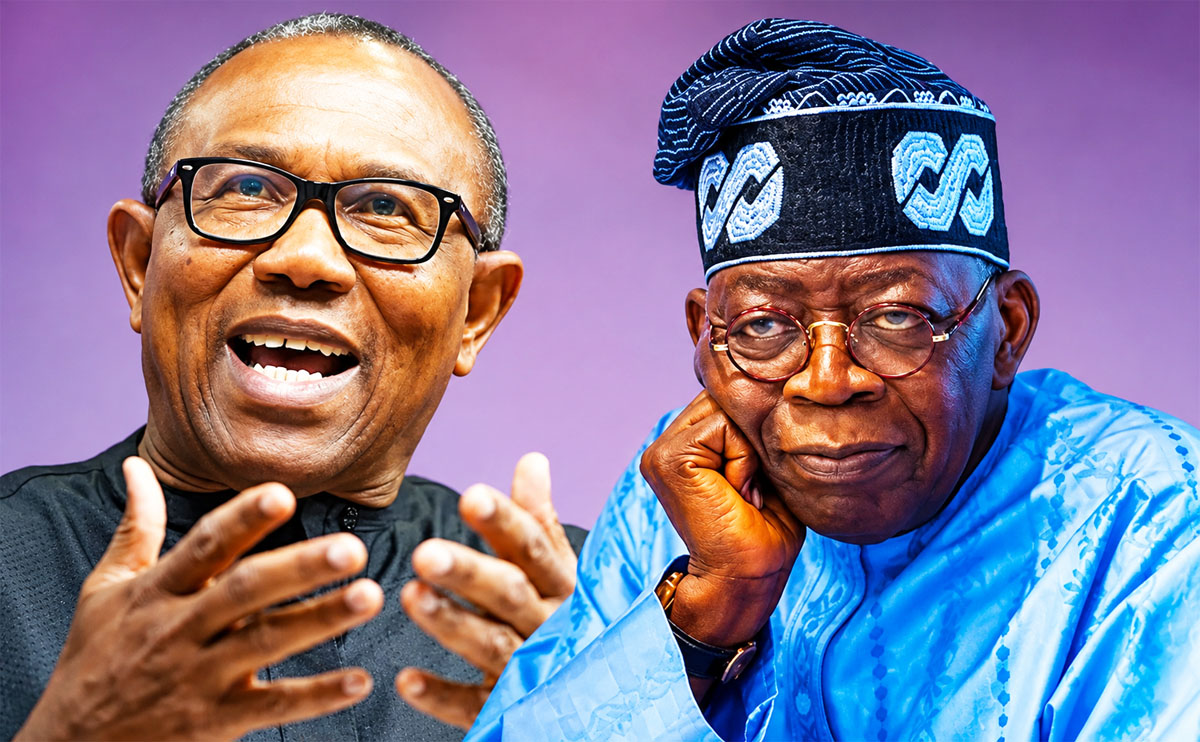
President Bola Ahmed Tinubu has narrowly edged Peter Obi in the latest Oxford-Metro Analytics National Trust Poll conducted ahead of Nigeria’s 2027 presidential election, with the incumbent recording 1,067 more responses than the former Anambra State governor.
The poll, which closed on September 7, recorded 69,110 approved and unflagged responses in its final analytical dataset. Tinubu received 24,469 responses, representing 35.41 per cent, while Obi polled 23,402 responses, representing 33.86 per cent.
The figures put Tinubu 1.55 percentage points ahead of Obi, based on the published percentages. Former Vice-President Atiku Abubakar, the ADC presidential candidate, finished third with 18,430 responses, representing 26.67 per cent of the total.
The result points to a closely contested three-way race among Tinubu, Peter Obi and Atiku Abubakar, although the poll should not be interpreted as a prediction of the eventual outcome of the 2027 election.
The geographical distribution of the responses presented a more complex picture. Tinubu recorded the highest number of responses in 20 states and the Federal Capital Territory, while Obi and Atiku each led in eight states.
Tinubu’s reported support extended into several northern states where he did not emerge as the leading presidential candidate in the 2023 election. He recorded the highest number of responses in Kaduna, Katsina and Gombe, states won by Atiku in 2023.
The President also led in Kano, where Rabiu Kwankwaso of the New Nigeria Peoples Party won the presidential election in 2023.
READ ALSO:
- Obafemi Martins Plans Six-Zone Football Tournament for Tinubu’s Re-election
- NANS Threatens ‘Mother of All Protests’ Over Ondo Varsity Strike
- Former PDP Chairman Bamanga Tukur Dies at 90
- Police Arrest Woman Over Alleged Drug Trafficking in Delta
At the geopolitical-zone level, Tinubu led in the South-West, North-West and North-Central, while Obi recorded the strongest showing in the South-East and South-South. Atiku dominated the North-East.
Tinubu’s strongest regional performance came in the South-West, where he received 10,968 responses, representing 43.53 per cent of participation in the zone. He also led in the North-West with 4,129 responses, representing 43.10 per cent, while his 6,370 responses in the North-Central accounted for 36.97 per cent of participation.
Obi recorded his strongest performance in the South-East, where he secured 5,796 responses, representing 63.97 per cent of the region’s participation. He also led in the South-South with 2,389 responses, representing 41.48 per cent.
Atiku’s strongest regional showing came in the North-East, where he received 1,235 responses, accounting for 55.46 per cent of participation in the zone.
The regional figures underline the different political bases of the three leading contenders. While Tinubu recorded a broader geographical spread in the poll, Obi maintained a commanding position in the South-East and a lead in the South-South, while Atiku’s strongest support remained concentrated in the North-East.
Some state-level contests were particularly close. In Kogi State, Tinubu received 39 responses, compared with 38 for Atiku and 33 for Obi, out of 110 responses recorded.
The Federal Capital Territory recorded a considerably larger number of participants. Tinubu polled 5,599 responses against Obi’s 5,278, giving the President a lead of 321 responses, while Atiku received 3,954.
In Rivers State, Tinubu also finished ahead of Obi, polling 975 responses against Obi’s 892, while Atiku received 568.
Beyond the three leading contenders, Omoyele Sowore received 1,016 responses, followed by Oyo State Governor Seyi Makinde with 519 and former President Goodluck Jonathan with 284.
Other candidates recorded significantly smaller figures, with Anita Zugwai-Chukwu receiving 18 responses, Sandy Onor six and Prince Kennedy Ahanotu two.
The poll also recorded 638 participants who selected “I Do Not Trust Any Candidate Yet”, while 204 respondents were undecided and 122 selected “Other Candidate”.
READ ALSO:
- Dangote raises petrol price 6.7% to N1,350/litre
- Anambra Police Arrest Woman Over Alleged Sexual Abuse of Child, Rescue Four
- MURIC fires back at Peter Obi: Forget Sallah ceremony, free Nigerian Muslims
One of the most significant features of the exercise was the concentration of participation in a relatively small number of locations. Lagos and the FCT accounted for 54.44 per cent of all responses, meaning more than half of the final dataset came from the two locations.
The final dataset also contained 56 diaspora responses, which were excluded from the six domestic geopolitical-zone tallies.
The distribution of responses varied considerably from state to state. While Lagos and the FCT recorded tens of thousands of responses combined, some states had fewer than 100 participants. This variation is important when interpreting state-by-state comparisons and the broader national figures.
Oxford-Metro Analytics describes the exercise as an open public-pulse poll rather than a conventional scientific opinion survey. The organisation says its platform applies measures designed to identify duplicate submissions, suspicious voting patterns and other forms of manipulation.
However, the poll’s own methodology makes clear that it should not be regarded as a population-representative scientific poll or an official election forecast. The results reflect the preferences expressed by people who participated in the online exercise and were approved for inclusion in the final dataset.
That distinction is particularly important ahead of the 2027 Nigerian presidential election, as the actual electorate will be determined by registered voters who participate in the election conducted by the Independent National Electoral Commission.
The Oxford-Metro figures nevertheless provide an indication of the political preferences expressed by participants in the exercise and highlight the competitiveness of the emerging presidential contest.
Tinubu’s narrow national lead over Obi contrasts with the stronger regional leads recorded by the two opposition contenders in their respective areas of strength. The figures also show Atiku retaining significant support in the North-East despite trailing Tinubu and Obi nationally.
The results could therefore fuel further debate among political parties and supporters about the strength of the major candidates as preparations for the 2027 presidential election intensify.
For Tinubu, the poll’s most notable feature is the reported lead across the South-West, North-West and North-Central, alongside gains in northern states where other candidates performed strongly in 2023.
For Obi, the figures reinforce his continued dominance among participants in the South-East and his lead in the South-South. Atiku’s performance in the North-East, meanwhile, points to his continuing regional strength.
Overall, the Oxford-Metro exercise places Tinubu on 35.41 per cent, Obi on 33.86 per cent and Atiku on 26.67 per cent among the 69,110 approved responses.
With the difference between Tinubu and Obi standing at just 1,067 responses, the figures indicate a close contest within the poll, while the significant regional variations suggest that the geographical distribution of political support could remain a major factor in the build-up to the 2027 election.
2027: Tinubu Edges Peter Obi by 1.55 Points in Oxford-Metro Poll
-

 metro2 days ago
Woman disguises as Muslim woman in Niqab to steal in Ado-Ekiti market, video sparks outrage
-

 metro3 days ago
Police Arrest Woman Over Fake OPay Shutdown Notice
-

 Politics3 days ago
Amaechi will be caged politically, Wike shouldn’t bother about Ikwerre votes — Wihioka
-

 metro3 days ago
Residents Cry Out Over Poorly Constructed Entrance of Ademola Abiola Street, Demand Urgent Intervention
-
 Politics3 days ago
Remi Tinubu Appeals To South-East Voters, Says She Wants To ‘Enjoy Nigeria’ In Old Age
-

 metro1 day ago
Ondo Herbal Drink Tragedy: Survivor Vows Never to Drink Again as Death Toll Tops 30
-
 Business22 hours ago
Dangote: ₦525 Refinery Shares Could Rise to ₦10,000
-
 Politics3 days ago
Breaking the Cycle of Collective Guilt: When a Ruling Party Voice Backs Peter Obi