

Business
IMF Mission asks FG to remove fuel, electricity subsidies
The International Monetary Fund (IMF) Article IV Staff Mission has advised the President Muhammadu Buhari administration to completely discard with fuel and electricity subsidies in Nigeria.
This formed the highlight of the concluding statement of the Article IV staff Mission to Nigeria, released yesterday.
It said, “The complete removal of regressive fuel and electricity subsidies is a near-term priority, combined with adequate compensatory measures for the poor.
“The mission stressed the need to fully remove fuel subsidies and move to a market-based pricing mechanism in early 2022 as stipulated in the 2021 Petroleum Industry Act.
“In addition, the implementation of cost-reflective electricity tariffs as of January 2022 should not be delayed.”
The staff, however, called for a “Well-targeted social assistance” to cushion negative impacts on the poor particularly in light of still elevated inflation.
While projecting a fiscal deficit of as wide as 6.3 per cent of the Gross Domestic Product (GDP), the mission also advised the federal government to implement revenue-based fiscal consolidation.
READ ALSO:
- Gunmen kidnap ex-Imo deputy governor’s father
- 7 female Maulud celebrants drown as boat capsizes in Jigawa
- EndSARS: Controversy as panel members, govt clash over alleged technicalities, discrepancies in report
“The headline fiscal deficit is projected to worsen in the near term and remain elevated over the medium term.
“Despite much higher oil prices, the general government fiscal deficit is projected to widen in 2021 to 6.3 percent of GDP, reflecting implicit fuel subsidies and higher security spending, and remain at that level in 2022. There are significant downside risks to the near-term fiscal outlook from the ongoing pandemic, weak security situation and spending pressures associated with the electoral cycle.
“Over the medium term, without bold revenue mobilization efforts, fiscal deficits are projected to stay elevated above the pre-pandemic levels with public debt increasing to 43 percent in 2026.
“General government interest payments are expected to remain high as a share of revenues making the fiscal position highly vulnerable to real interest rate shocks and dependent on central bank financing,” the mission warned.
On the foreign exchange situation in the country, the staff observed that continued reliance on administrative measures to address persistent foreign exchange shortages was negatively impacting confidence. “The mission welcomed steps taken toward unification of the exchange rate and stressed the need for further actions. The discontinuation of the official exchange rate is a step in the right direction but continued dependence on administrative measures to address FX shortages sustains uncertainties and increases the risks of a sudden and large adjustment in the exchange rate.
READ ALSO:
- BREAKING: Hilton Hotel owner, Adedoyin, speaks from detention, says ‘I know nothing about OAU student’s death’
- N32bn debt: I’ll soon take over GTB, says Innoson boss
- BREAKING: Boko Haram kidnap 22 girls in Rafi, Niger for marriage
“Taking advantage of the favorable global conditions, improving current account and robust oil prices, the mission advised a move to a unified and market-clearing exchange rate without further delays. To preserve competitiveness, any exchange rate adjustment should be accompanied by clear communications regarding exchange rate policy going forward, macroeconomic policies to contain inflation and structural policies to facilitate new investment”
According to the mission “manufacturing and oil sectors remain weak, reflecting continued foreign exchange shortages, and security and technical challenges.”
The mission warned of significant downside risks to the near-term outlook arising from the uncertain course of the pandemic and the domestic security situation.
It added, “In the medium term, there are upside risks from faster-than-expected reaching of the Dangote refinery’s production capacity along with effective implementation of the 2021 Petroleum Industry Act in terms of higher manufacturing production and investment in the oil sector.”
On debt, the staff said that significant additional domestic revenue mobilization was critical to put the public debt and debt-servicing capacity on a sustainable path.
The mission advised, “The near-term priorities are to implement e-customs reforms including efficient procedures and controls, developing a VAT Compliance Improvement Program, improving compliance across large, medium, and micro/small taxpayers and rationalizing tax incentives and customs duty waivers.
“As the recovery gains strength and compliance improves, Nigeria will have to adopt tax rates comparable to its peers in the Economic Community of West African States (ECOWAS) to raise revenues to levels targeted in the 2021-25 National Development Plan.
READ ALSO:
- Troops kill 11 ISWAP terrorists in Borno
- Breaking: Reprive as railway workers call off strike
- Buhari to Igbo Leaders: I’ll consider your demand for Nnamdi Kanu’s release, but…
“The cumulative net savings from the recommended measures, after making room for additional social assistance to cushion impacts of reforms, could amount to 5.1 percent of GDP over 2022-26. Such a consolidation would keep public debt below 40 percent of GDP and reduce dependence on central bank financing of the deficit.”
The team welcomed the recent passage of the Petroleum Industry Act (PIA) and stressed its timely implementation, while expressing optimism that it would boost investment in the sector.
The Staff Mission Statement position requires management approval which would be presented to the Executive Board and approved before it becomes the position of the IMF.
Vanguard









Auto
OMAA Unveils Three CNG, Electric Buses, Offers 48-Month Vehicle Finance
OMAA Unveils Three CNG, Electric Buses, Offers 48-Month Vehicle Finance
…Introduces ₦890,000 monthly payment plan as Nigerian mobility firm marks sixth anniversary
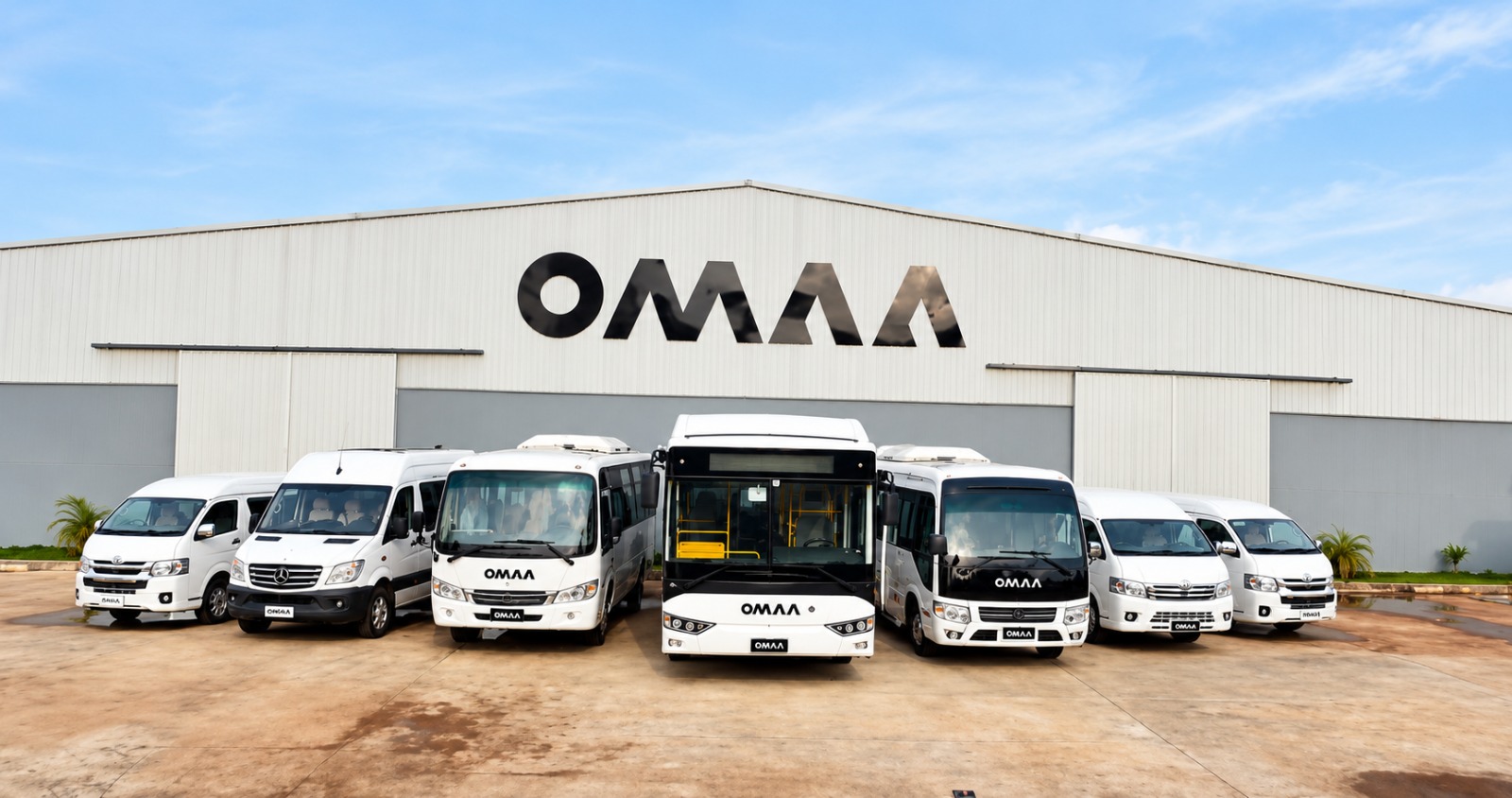
Nigerian vehicle and energy company, OMAA, has unveiled three passenger vehicle models in compressed natural gas (CNG) and battery-electric variants, alongside a financing scheme offering repayment periods of up to 48 months to help transport operators and corporate organisations expand their fleets.
The new models — OMAA U3 minibus, K7 bus and V12 high-capacity city bus — are designed to serve different segments of the passenger transport market, from urban shuttles and institutional transport to large-scale mass transit operations.
The announcement, which coincides with the company’s sixth anniversary, also marks the introduction of OMAA Finance, a programme developed in partnership with Nigerian financial institutions to ease the burden of upfront vehicle acquisition costs.
Under the scheme, advertised monthly payments start from ₦890,000 for the OMAA U3 minibus, with an initial deposit of 10%. Financing terms, however, will depend on eligibility requirements, repayment tenure and the customer’s equity contribution.
The company has also opened pre-orders for the three models, giving prospective buyers the option of choosing between CNG and battery-electric powertrains according to their routes, operating costs and access to the necessary energy infrastructure.
Speaking on the development, OMAA’s Managing Director, Chinedu Oguegbu, said the launch reflected the company’s commitment to local automotive manufacturing and the expansion of cleaner, more affordable transport solutions.
“Six years ago, we set out to demonstrate that commercial vehicles could be assembled in Nigeria and powered by cleaner, more affordable energy. Today, the introduction of the OMAA U3, K7 and V12 in both CNG and electric variants, alongside our vehicle financing programme, represents another significant step towards that vision,” Oguegbu said.
He explained that the company’s objective extended beyond supplying vehicles to helping operators manage running costs, access after-sales support and build sustainable transport businesses.
“By combining locally supported servicing, parts availability and structured financing, we are creating opportunities for schools, hospitals, corporate organisations and mass transit operators to expand their fleets with greater confidence,” he added.
Three models target different market segments
The new lineup covers a broad range of passenger transportation needs.
The OMAA U3 is a 12-to-15-seater minibus designed for urban and intercity transport operators, institutional shuttle services and businesses requiring compact passenger vehicles.
The K7, with a capacity of 23 to 30 passengers, targets staff transportation, school bus services, corporate fleets and medium-capacity passenger routes.
The V12, the largest of the three models, is configured to accommodate between 43 and 70 passengers. It is designed for mass transit operators and businesses serving routes with high passenger demand.
All three models are offered in CNG and battery-electric configurations, allowing fleet owners to evaluate alternative powertrains based on fuel or electricity costs, vehicle utilisation, maintenance requirements and access to refuelling or charging facilities.
The dual-powertrain strategy comes as transport operators increasingly explore ways to manage energy expenses and improve the economics of commercial vehicle operations.
Special-purpose vehicles broaden applications
Beyond passenger buses, OMAA is offering special-purpose vehicle configurations based on the same platforms.
The options include cargo vans, ambulances, VIP transport vehicles and airport shuttles, extending the potential applications of the company’s vehicle range to logistics, healthcare, corporate mobility and airport transportation.
The use of common vehicle platforms could also help fleet owners streamline maintenance, spare-parts management and technical training, particularly where organisations operate different vehicle configurations.
Finance scheme targets high acquisition costs
OMAA Finance is a central component of the company’s strategy to lower the barriers to commercial vehicle ownership.
By spreading acquisition costs over repayment periods of up to four years, the programme is intended to help operators preserve working capital while expanding or renewing their fleets.
The advertised starting monthly payment of ₦890,000 for the U3, subject to a 10% initial deposit, provides an entry point for prospective buyers. The actual cost of financing will depend on the applicable terms, including the vehicle price, deposit, interest and other charges, where applicable.
The company is also promoting a total cost of ownership (TCO) approach, which considers not only the purchase price but also energy consumption, servicing, spare parts and other expenses incurred throughout a vehicle’s operating life.
According to OMAA, the combination of structured financing, local servicing support and spare-parts availability is intended to help customers plan operating expenses and make more informed fleet investment decisions.
However, the potential savings will vary according to the vehicle selected, financing conditions, energy prices, mileage, maintenance costs and the availability of suitable CNG refuelling or electric charging infrastructure.
Six years of operations
Headquartered in Umunya, Anambra State, with offices in Lagos, Abuja and Accra, OMAA operates in Nigeria and Ghana, serving fleet operators, institutions and businesses.
The latest launch builds on the company’s six-year operating history and its efforts to combine local vehicle assembly, alternative energy solutions and financing options in the commercial mobility market.
For transport operators contending with rising operating expenses and the high cost of fleet expansion, the new models and financing arrangements offer additional options for acquiring passenger vehicles.
The initiative’s long-term impact, however, will depend on the vehicles’ performance under local operating conditions, the accessibility and affordability of financing, reliable after-sales support and the availability of the infrastructure required to sustain CNG and electric mobility.
With the latest unveiling, OMAA is seeking to position itself beyond vehicle supply, offering an integrated commercial mobility proposition that combines vehicle acquisition, alternative energy choices, maintenance support and financing.
Auto
FG Moves to Expand CNG Vehicle Production, Targets Cheaper Transport Fares
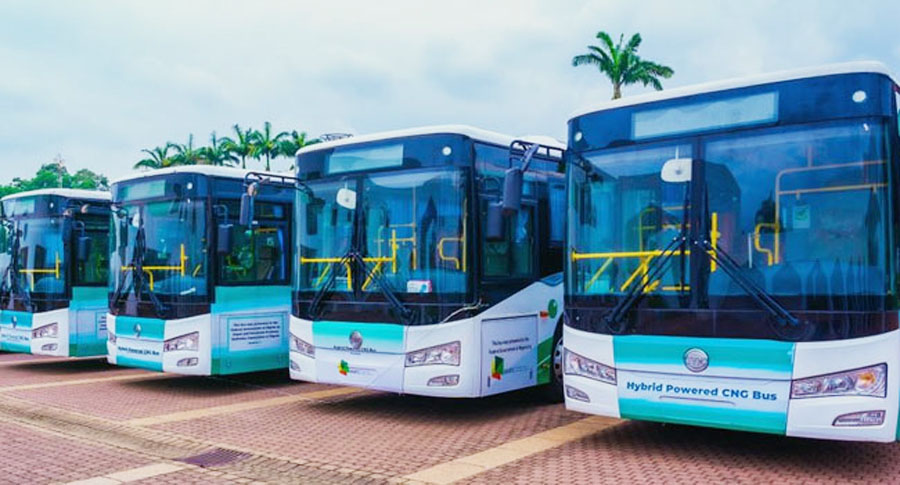
FG Moves to Expand CNG Vehicle Production, Targets Cheaper Transport Fares
The Federal Government has stepped up efforts to strengthen Nigeria’s automotive industry and promote more affordable transportation through collaboration with local vehicle manufacturers, following visits to two manufacturing facilities in Anambra State.
Board members of the National Automotive Design and Development Council (NADDC) inspected the facilities of Innoson Vehicle Manufacturing (IVM) in Nnewi and Kojo Motors Auto Assembly in Umunya to assess their production capacity, identify operational challenges and explore ways to support indigenous manufacturers.
The visit comes amid the Federal Government’s drive to expand the use of compressed natural gas (CNG) and electric vehicles as alternatives to petrol-powered transportation, with the aim of reducing operating costs and making public transport more affordable.
The manufacturers welcomed the government’s new policy directing ministries, departments and agencies (MDAs) to patronise locally manufactured vehicles, saying it could increase demand for their products and strengthen domestic production.
Secretary to the Government of the Federation, George Akume, had issued a circular directing government establishments to purchase vehicles from local manufacturers.
Managing Director of Innoson Vehicle Manufacturing, Chief Innocent Chukwuma, said he was encouraged by the government’s emphasis on CNG, describing the fuel as an important option for sustaining Nigeria’s automotive industry amid rising petrol and diesel costs.
Chukwuma disclosed that the company had dedicated its newest large-scale facility to producing CNG-powered trucks and electric vehicles.
READ ALSO:
- 2027: Adeleke’s Camp Promises 1.5 Million Votes for Tinubu in Osun
- APC Expands Tinubu’s Campaign Council, Names Wike, Adeleke, Soludo
- 2027: Tompolo Unveils 57 Tinubu Campaign Vehicles, Warns Lagosians Against 2023 Repeat
He said wider adoption of CNG could help lower transportation and operating costs while supporting local industrial growth and creating employment opportunities.
The industrialist also called for stronger backward integration in the automotive sector, arguing that manufacturers should focus on producing components that Nigeria has the capacity to manufacture competitively.
At the Umunya facility, the executive director of Kojo Motors, Chinedu Oguegbo, said the company was concentrating on commercial vehicles designed for Nigeria’s transport needs.
He said the company had begun benefiting from the government’s local vehicle procurement policy but had faced challenges arising from the sharp depreciation of the naira and exchange-rate fluctuations.
Oguegbo added that the company was developing its natural gas facility, which he expected to become operational in the future. He also expressed optimism that the company’s Omma Bus brand could eventually be exported to international markets.
NADDC Director-General Oluwemimo Joseph said the inspection was intended to give the council first-hand knowledge of the challenges confronting local vehicle manufacturers.
He explained that the council was reviewing existing policies and working on proposed legislation to improve the operating environment for the industry.
According to him, information gathered during the visits would help the council develop measures to address manufacturers’ concerns and identify vehicle components that could be produced locally.
Joseph said Nigeria had numerous small and medium-sized enterprises capable of supplying components to the automotive industry, adding that stronger partnerships could create new business opportunities and reduce dependence on imported parts.
He also acknowledged concerns about the effect of imported used vehicles on local manufacturers, noting that the council was considering measures to address the competitive disadvantages faced by domestic producers.
NADDC Chairman, Chief Emma Eneukwu, said the council was advocating legislation to protect local vehicle manufacturers from the influx of imported used cars.
He argued that local producers needed a more supportive policy environment to compete effectively and expand production.
The Federal Government’s broader CNG and electric mobility programme is designed to reduce transport costs by encouraging the deployment of vehicles powered by alternative energy sources. However, the impact on passenger fares will depend on the availability of vehicles, refuelling infrastructure, operating costs and the extent to which transport operators pass savings on to commuters.
The Anambra visits form part of efforts to strengthen local manufacturing, encourage investment and improve the availability of vehicles for Nigeria’s public transportation system. While the collaboration could support cheaper transport over time, the visits did not announce a specific new fare reduction or implementation timetable.
FG Moves to Expand CNG Vehicle Production, Targets Cheaper Transport Fares
Business
NNPC Petrol Discount: Motorists Must Download App to Save ₦66 Per Litre
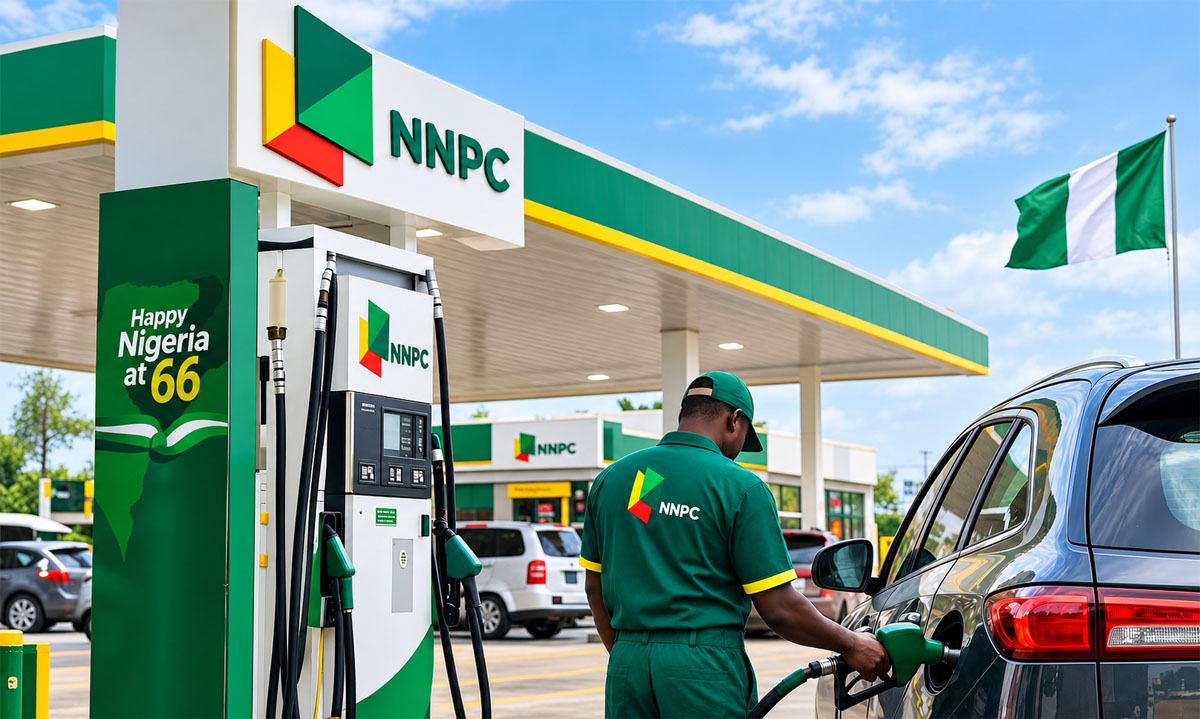
The Nigerian National Petroleum Company Limited (NNPC) has made access to its ₦66-per-litre petrol discount conditional on customers downloading its mobile application and paying digitally, meaning motorists who pay directly at the pump may have to pay the higher displayed price.
Checks at NNPC retail outlets in Abuja showed that petrol was selling for ₦1,405 per litre for customers paying directly at the pump, while motorists using the company’s mobile application paid ₦1,339 per litre, according to a report by Saturday PUNCH published on October 10, 2026.
The difference of ₦66 per litre means motorists must complete the required digital payment process to benefit from the discount. The price reduction is not automatically applied to customers paying directly at the pump.
A fuel attendant at the NNPC mega station along Obasanjo Way in Abuja reportedly confirmed that customers had to download the application and pay through it to qualify for the lower price. Similar arrangements were observed at other NNPC outlets in the Federal Capital Territory.
The payment condition has raised questions about access to the relief initiative, particularly for motorists who prefer cash transactions or do not have smartphones, reliable internet access or experience using mobile payment applications.
READ ALSO:
- Panama Earthquake: 27 Injured as Powerful 7.7-Magnitude Tremor Damages Hundreds of Buildings
- EFCC Wins ₦132m Money Laundering Case as Court Orders Forfeiture of Lagos Properties
- Hardship: ACF Gives Tinubu Three Months to Deliver Relief, Demands Clear Timelines
NNPC introduced the petrol discount on October 1, 2026, as part of activities marking Nigeria’s 66th Independence Anniversary. The company subsequently announced that the offer would continue until October 31, 2026, at its retail stations nationwide.
The company said the initiative was intended to provide temporary relief to households and businesses facing rising fuel costs amid increases in global crude oil prices linked to tensions and conflict in the Middle East.
The Federal Government also announced a 30-day relief measure under which NNPC Retail would forgo its retail profit margin and sell petrol at cost. Finance Minister and Coordinating Minister of the Economy, Taiwo Oyedele, said the intervention was designed to cushion the impact of rising fuel prices on Nigerians, particularly vulnerable households and commercial transport operators.
NNPC has maintained that the discount is a temporary relief measure and does not represent a return to the petrol subsidy regime.
However, requiring motorists to use a mobile application to access the price reduction means that customers’ ability to benefit depends on their access to and use of the approved digital payment channel.
For commercial drivers and other frequent petrol buyers, the difference could add up over time. A motorist purchasing 20 litres, for example, would save ₦1,320 at the discounted rate compared with the higher price reported at the Abuja outlets.
The discount also carries a financial cost for NNPC. According to Saturday PUNCH, the company could forgo an estimated ₦4.62 billion in gross revenue if its average monthly petrol sales qualified for the reduction.
The observed prices in Abuja do not necessarily represent the pump price at every NNPC station nationwide, as retail prices may vary by location and prevailing supply conditions.
Motorists intending to benefit from the offer before its scheduled end on October 31 should confirm the payment requirements at participating NNPC stations and ensure they are using the company’s approved application.
The initiative comes as Nigerians continue to face pressure from petrol prices and the resulting effects on transport fares, food distribution, household expenses and business operating costs.
NNPC Petrol Discount: Motorists Must Download App to Save ₦66 Per Litre
-
 Politics3 days ago
Obi Positioning for SGF Role Under Atiku’s ADC Ticket – Sowore
-

 metro3 days ago
How Bandits Demand ₦300m Ransom for Abducted Kaduna Couple, Baby in Viral Video
-

 Politics3 days ago
Okonkwo Alleges Return of Subsidy, Accuses NNPC of Plotting Trillions in ‘Lost Profit’
-

 metro2 days ago
Oyo School Kidnappings: How ANSARU Allegedly Used Children to Pressure FG
-
 metro2 days ago
Tragedy in Ibadan as Truck Kills Female Corps Member, Injures Others
-
 metro3 days ago
How Military Air Strike Crushed ISWAP Attack Plot, Killed Over 40 Fighters in Borno
-

 News3 days ago
FG Approves Upward Review of Feeding Allowance for NYSC Members
-
 International2 days ago
French Students Return to Streets as Anger Over School Conditions Grows