

metro
Again, Police, PSC Set to Clash over Recruitment of 10,000 Constables

– PSC vows to resist attempt to hijack its mandate
-Force yet to approach S’Court after losing at A’Court
The last has not been heard of the tussle between the Police Service Commission (PSC) and the Nigerian Police over the recruitment of 10,000 police constables, as both organisations are planning separate exercises for 2021.
The PSC, had on Wednesday, in Abuja, disclosed that as soon as the 2020 recruitment exercise for which the aptitude test was conducted last week, was concluded, the commission would begin the 2021 exercise.
But the Inspector General of Police (IG), Usman Alkali Baba, at the weekend called for applications from suitably qualified applicants for the 2021 recruitment exercise.
President Muhammadu Buhari had in 2018 given approval for the recruitment of 60,000 police constables for six years.
The 2020 recruitment exercise, however, ran into troubled waters when the police insisted that it had the mandate to recruit constables.
But the PSC had stood its ground, also insisting that it was constitutionally empowered to conduct recruitment for the police.
READ ALSO:
- My 10-month-old baby reason I’ve not committed suicide – Amputee impregnated, dumped by Facebook lover
- Gunmen kidnap DPO, demand N50m ransom in Edo
- Those who buried OAU student could provide clue on murder – Lawyer
The exercise soon became a subject of litigation with the police under the former Inspector-General of Police, Mr. Mohammed Adamu, winning the first round at the Federal High Court in Abuja.
The ruling of the high court was later set aside by the Court of Appeal which declared that the Police Service Commission was constitutionally empowered to conduct recruitment of police constables.
While the police authorities had given the impression that they would challenge the judgment at the Supreme Court, they were yet to approach the apex court.
On resumption of duties as the new police chief, Alkali Baba had visited the PSC, and in the spirit of reconciliation, called on the PSC to resume its duties giving the impression that the litigation saga was over.
The two agencies later held a one-day retreat at the Force Headquarters on the way forward.
But at a briefing in Abuja, Chairman of the PSC, Mr. Musiliu Smith, a retired Inspector-General of Police, stated that as soon as the 2020 exercise which was delayed by the litigations, was concluded, the commission would embark on the recruitment of another 10,000 for 2021 and subsequently kick-start the 2022 edition in fulfillment of the presidential directive for the recruitment of 60,000 police constables.
He said the position of the commission became necessary following repeated calls and inquiries from Nigerians on whether the commission was part of the process of the ongoing completion of the 2020 recruitment exercise.
He said aptitude tests for shortlisted applicants from the earlier suspended 2020 recruitment were held on Friday, October 29, and Saturday, October 30, 2021, across the 36 states of the federation and the Federal Capital Territory (FCT).
READ ALSO:
- Notorious bandit terrorising Kaduna-Abuja Road killed inside hotel
- Customers outraged over excessive bank charges
- Why we back FG on petrol subsidy removal by 2022 – IPMAN, others
“Mr. President, had, in 2018, approved the recruitment of 10,000 Nigerians annually into the constable cadre of the Nigeria Police Force for six years. This is to inject needed additional personnel and to bridge the manpower gap in the force, especially with the resurgence of banditry, terrorism, and kidnapping in different parts of the country and regular loss of personnel through dismissal, retirement, natural death, accident, and others”, he said.
The retired IG said the 2020 recruitment exercise which was suspended midway was the third edition after the successful 2018 and 2019 exercises.
“It is necessary to state that the ongoing completion of the suspended 2020 edition was a joint decision of the commission and that of the Nigeria Police Force and it was meant to further fast-track the injection of required personnel into the force. A joint committee of the commission and that of the Nigeria Police Force met severally in the commission and approved a timeline for the completion of the exercise,” he said.
He noted that with the completion of the aptitude tests across the country recently, successful candidates were undergoing medical examinations at the 17 zonal police headquarters in the country after which fit and proper 10,000 candidates would be recruited by the commission and sent to the police colleges/training schools for training.
“The commission is aware of the manpower gaps in the Nigeria Police Force especially with rapid wastages of officers and men due to many reasons earlier highlighted.
“The commission wishes to commend Mr. President for his kind and gracious approval for the recruitment of 10,000 Nigerians into the constable cadre of the Nigeria Police Force continuously for six years. We are grateful to the National Assembly for the support in approving releases of required funds for this exercise,” he added.
On the litigation, the PSC chair hinted that the police might still be forging ahead with the court matter.
“The Appeal Court delivered a favourable judgment to PSC. They (police) have given the impression that they want to go to the Supreme Court.
“We will encourage them to go there because that is the highest court in the land”, he added.
But the police high command at the weekend called for applications from suitably qualified applicants for the 2021 recruitment exercise.
READ ALSO:
- Bianca Ojukwu begs Buhari to release Nnamdi Kanu
- Nigerian govt asks all workers to resume December
- ‘More expensive than subsidy?’ — Is FG’s N5,000 transport grant dead on arrival?
The public notice titled: “2021 Recruitment into the Nigeria Police Force,” said in the first paragraph that “the Nigeria Police Force (NPF) in conjunction with the Police Service Commission (PSC) invites applications from interested and qualified Nigerians for enlistment into the Nigeria Police Force as Police Constable (Recruits)”.
However, a top official of the PSC told THISDAY yesterday that the commission would resist any attempt to hijack or undermine its mandate.
“The commission is amazed and disappointed by the development but will resist any attempt to hijack or undermine its mandate,” the source said.
The Court of Appeal had in its judgment, declared that the Police Act 2020, enacted in September of the same year as it affects the constitutional mandate of the Police Service Commission is unconstitutional and void.
The provision of the Act, it ruled, was obviously in conflict with paragraph 30 Part 1 of the Third Schedule to the 1999 Constitution, which empowers the commission to appoint persons into offices in the Nigeria Police Force except for the office of the Inspector General of Police.
The details of the Appeal Court judgment in the appeal instituted by the commission against the ruling of the Federal High Court in Abuja, was contained in the Certified True Copy (CTC) received by the Commission on Tuesday, October 13, 2020.
Justice Emmanuel Akomaye Agim, one of the three Justices of the Court in his concurrent judgment, ruled that Paragraph 30 of Part 1 of the Third Schedule to the 1999 Constitution gives the power to the commission to appoint persons into offices in the Nigeria Police “and did not exclude constables and cadets to Nigeria Police Academy from offices in the Nigeria Police into which the appellant can appoint persons”
He further declared that no Act of the National Assembly or law can take away or curtail such power.
Justice Agim noted that even if the Nigeria Police carried out the disputed enlistment under a directive or approval of the President of the federation, “the enlistment would remain contrary to the Constitution and therefore unconstitutional and void. Such a directive cannot repair its unconstitutionality and illegality”.
In the lead judgment delivered by Justice Olabisi Ige, the Court of Appeal gave a declaration that by Section 1 subsection 3 of the Constitution of the Federal Republic of Nigeria, 1999 (as amended) “any piece of legislation or instrument relied upon by the defendants (including but not limited to the Police Act and the Police Regulations) in exercising or purporting to exercise the powers to appoint, promote, dismiss or discipline persons holding or aspiring to hold offices in the Nigeria Police Force, being inconsistent with the provisions of the Constitution particularly section 153 subsection (1)(m), Section 153 subsection (2) and section 215(1)(b) of the Constitution of the Federal Republic of Nigeria 1999 (as amended) and Paragraph 30 part 1 of the Third Schedule to the Constitution, is invalid, null and void and of no effect whatsoever”
It also gave an order of perpetual injunction restraining the Police, and other defendants, jointly and severally, from interfering or further interfering in any manner howsoever with the commission’s discharge of its constitutional and statutory functions in “respect of the appointment, promotion, dismissal, or exercise of disciplinary control over persons holding or aspiring to hold offices in the Nigeria Police Force other than the Inspector General of Police”.
Attempt to reach Force Public Relations Officer, Mr. Frank Mba, a Commissioner of Police, was unsuccessful, as he did not respond to text messages sent to his mobile phone on the issue.
Thisdaylive









metro
School Bus Driver Turns Kidnapper, Collects ₦503,000 Ransom, Rapes 14-Year-Old Delta Student
School Bus Driver Turns Kidnapper, Collects ₦503,000 Ransom, Rapes 14-Year-Old Delta Student
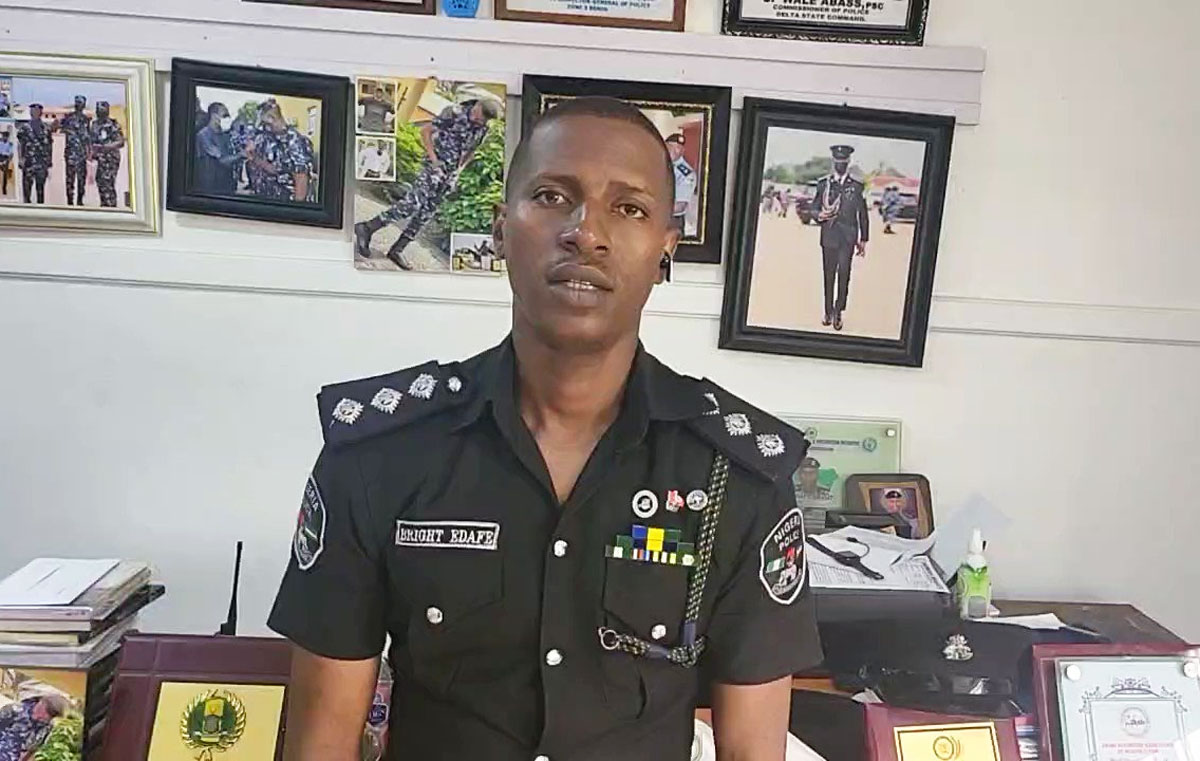
SAPELE, DELTA STATE — The Delta State Police Command has arrested a 28-year-old school bus driver, Onome Lucky Ughagha, for the horrific kidnapping and sexual assault of a 14-year-old female student in Sapele, after extorting a ransom from her desperate father.
According to a statement by the Command’s Public Relations Officer, SP Bright Edafe, the nightmare unfolded on October 20, 2026, when the victim’s father reported that his daughter was abducted while preparing for school .
Police investigations revealed that Ughagha, who was entrusted with the safety of the minor, contacted the father and demanded a ransom of ₦503,000, threatening to kill the girl if the money was not paid . Following the payment, the suspect allegedly abandoned the traumatized teenager along Oton Road in Sapele, where she was reunited with her family .
Medical examinations later indicated that the minor had been sexually assaulted . The suspect had abandoned the school bus and fled the scene, prompting an intense manhunt by operatives of the Sapele Area Command .
Acting on credible intelligence, police traced Ughagha to his hideout in the Ajimele area of Sapele, where he was arrested on October 23, 2026 . During preliminary interrogation, the suspect reportedly confessed to his involvement in the crime .
The school’s principal and vice-principal have been invited for questioning as investigations continue . Ughagha is currently being transferred to the State Criminal Investigation Department (SCID) in Asaba for further investigation .
Delta State Commissioner of Police, Samuel Erale, condemned the incident, reaffirming the command’s commitment to protecting children from violence and exploitation . He assured the public that the investigation would be thorough and urged school authorities and transport operators to exercise greater vigilance in safeguarding children .
School Bus Driver Turns Kidnapper, Collects ₦503,000 Ransom, Rapes 14-Year-Old Delta Student
metro
Massacre in Taraba: Death Toll Soars to 48 as Fleeing Villagers Drown in Desperate Escape
Massacre in Taraba: Death Toll Soars to 48 as Fleeing Villagers Drown in Desperate Escape
JALINGO, Taraba State — A horrific wave of bloodletting has swept through Binnari village in Taraba State, leaving at least 48 people dead in its wake, police confirmed on Sunday. The grim discovery followed a terrifying four-hour rampage by gunmen that forced panicked residents into a nearby river, where dozens drowned in a desperate bid to escape the slaughter.
The death toll has continued to climb as search parties comb through the surrounding bushes and riverbanks, with rights group Amnesty International warning that as many as 52 people may have been killed in the attack on the Karim Lamido area community.
According to the Taraba State Police Command, the nightmare unfolded shortly after midday prayers on Friday when a heavily armed gang swooped into the remote village. The assailants—reportedly riding a convoy of about 50 motorcycles—unleashed terror, looting shops and setting homes ablaze during an orgy of violence that lasted up to four hours.
Taraba State Police spokesperson, Assistant Superintendent Victor Mshelizah, confirmed the escalating toll on Sunday. He revealed that while the initial recovery yielded 10 bodies bearing gunshot wounds, the weekend search uncovered a far more macabre scene. Mshelizah stated that several victims, including women and children, had drowned in a nearby river while frantically trying to outrun the attackers, while others were found executed in the surrounding undergrowth.
“The attackers were very familiar with the terrain, which made immediate pursuit difficult,” Mshelizah said, noting that police were only able to disperse the gunmen after they had already fled the scene.
However, the official police account conflicts sharply with the chilling testimonies of survivors and the findings of human rights organizations. Amnesty International’s Nigeria director, Isa Sanusi, stated that the organization had independently verified 52 deaths, adding that 37 victims had already been hurriedly buried in a mass funeral by grieving families.
Community leader Malam Abubakar Saifullahi described the sheer scale of the assault, revealing that the bandits, traveling two per motorcycle, methodically looted shops for cash and foodstuffs before seizing the motorcycles abandoned by fleeing residents.
The most harrowing accounts come from those who survived the chaos. Resident Bashir Mamuda Musa provided a devastating timeline of the recovery effort: “On Friday, we found seven bodies after the bandits attacked our community. The following day, Saturday, we discovered another 43 bodies in the river, bringing the total to 50.”
Survivor Isiyaku Musa recounted the sheer panic that drove villagers toward the water. “People were running in different directions to escape the attack. Nobody knew where it was safe to go,” he said. The mass drowning occurred as dozens of terrified residents fled toward the river, only to be mercilessly pursued into the water by the advancing gunmen.
The brutal massacre has drawn fierce condemnation from rights groups, who accuse authorities of systemic failure. In a blistering post on X, Amnesty International stated: “The consistent failure of the authorities to bring the suspected perpetrators to justice is clearly emboldening impunity.”
The Binnari bloodbath underscores the worsening security crisis plaguing Nigeria’s rural heartlands. Criminal gangs—locally known as bandits—continue to operate with devastating impunity across regions bordering the northeast and central zones, leaving a trail of death, abduction, and destruction.
As security forces continue to comb the grim landscape, authorities have warned that the final death toll may rise even further once all missing persons are accounted for.
Massacre in Taraba: Death Toll Soars to 48 as Fleeing Villagers Drown in Desperate Escape
metro
Court Sentences POS Operator to Death for Role in Kidnap That Killed 83-Year-Old Man, Driver

Court Sentences POS Operator to Death for Role in Kidnap That Killed 83-Year-Old Man, Driver
An Imo State High Court has sentenced a 28-year-old point-of-sale (POS) operator, Isaac Okorie, to death by hanging for his role in the kidnapping and murder of an 83-year-old man, Chief Alexander Chukwuma Okoli, and his driver, Daniel Sarki, despite the payment of ransom by the victims’ family.
Justice Matthew Ijezie, sitting at the High Court in Urualla, within the Orlu Judicial Division, delivered the judgment on Tuesday, October 20, 2026, after finding Okorie guilty on six counts bordering on armed robbery, hostage-taking and murder.
The court held that the prosecution had proved its case beyond reasonable doubt through the evidence presented during the trial.
According to the judgment, the incident occurred on October 14, 2023, at Isiekenesi in Ideato South Local Government Area of Imo State, when Okoli and his driver were abducted by members of an armed criminal gang.
The court heard that Okorie conspired with other members of the gang, who were armed with guns, to seize the two men and take them into a bush.
The kidnappers also reportedly stole Okoli’s gold-coloured Toyota Corolla, with registration number AAH 989 RM.
The gang subsequently demanded a ransom of ₦100 million from the victims’ family in exchange for their release.
However, the family eventually paid ₦2.515 million, but the payment did not secure the safe return of the two men.
According to the court’s account, the gang killed both victims despite receiving the money and later sent photographs of their lifeless bodies to the family.
The remains of Okoli and his driver had yet to be recovered as of the time the judgment was reported, leaving their family members without the opportunity to give them a proper burial.
During the trial, the court heard that police investigations identified Okorie’s role in the criminal operation as receiving ransom payments from the families of kidnapping victims.
The evidence linking him to the operation formed part of the prosecution’s case, which the court found sufficient to establish his guilt on all six counts.
Following the conviction, the court gave Okorie an opportunity to plead for leniency before sentencing, a procedure known as allocutus.
Okorie reportedly appealed to the court for mercy, but Justice Ijezie proceeded to sentence him to death by hanging.
Reacting to the judgment, Ikenna Obi, a senior state counsel with the Imo State Ministry of Justice who prosecuted the case, described the ruling as significant.
Obi said the judgment would provide some measure of relief to the victims’ family, despite the continuing uncertainty surrounding the whereabouts of their remains.
He expressed hope that the conviction would deter individuals involved in kidnapping, armed robbery and other violent crimes, while discouraging others from joining criminal gangs.
The prosecutor also commended the judge for delivering what he described as a well-considered judgment in accordance with the law.
Amanda, the daughter of one of the victims, also reportedly expressed relief that the court had punished the convict.
She, however, said the family remained deeply distressed by the failure to recover the bodies of her father and his driver.
Although the judgment offered the family some comfort, she expressed hope that security agencies would intensify efforts to locate the remains and arrest other suspects who were still at large.
The conviction marks a significant development in the case, which began with the abduction of the elderly man and his driver nearly three years before the judgment.
However, the family’s search for closure remains incomplete, as the recovery of the victims’ remains and the prosecution of any outstanding suspects remain unresolved.
Court Sentences POS Operator to Death for Role in Kidnap That Killed 83-Year-Old Man, Driver
-

 News2 days ago
EFCC Opens Recruitment for Nigerians, Sets Age Limits for Four Job Categories
-

 News2 days ago
41 Days in Bandits’ Den: Five Islamic Clerics Still Held After Tinubu Re-Election Prayer Trip
-

 Politics2 days ago
2027: Remi, Seyi Tinubu Reportedly Differ Over APC Youth Mobilisation
-

 Politics1 day ago
2027: APGA Chairman Says South-East Must Back Tinubu to Secure Igbo Presidency
-
 Politics2 days ago
Igbo Presidency: Soludo Tells South-East to Back Tinubu for Future Power Shift
-
 metro2 days ago
Police Arrest Suspect Eight Months After Retired Teacher’s Killing in Ogun
-

 Sports2 days ago
Kane Beats Yamal to Win Major Football Award Ahead of Ballon d’Or Ceremony
-

 metro1 day ago
Borno: Troops Kill 15 Terrorists in Midnight Air Strike