

metro
NDLEA nabs 44-year-old man for ingesting 96 pellets of cocaine at Abuja airport
Arrests five varsity students, 72-year-old man, others over 5,721.92kg drugs
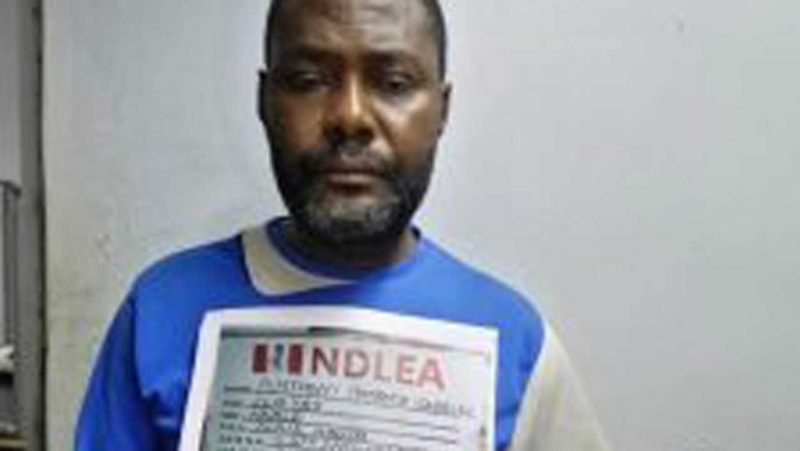
Operatives of the National Drug Law Enforcement Agency (NDLEA) have arrested a 44-year-old father of three, Gabriel Anthony Patrick at the Nnamdi Azikiwe International Airport (NAIA), Abuja for ingesting 96 pellets of cocaine, which he excreted in the custody of the agency.
Patrick, a native of Nike in Enugu North Local Council of Enugu State, was arrested on Friday, November 26, during an outward clearance of Turkish Airline at the boarding screening area of the airport enroute Abuja-Istanbul-Madrid.
According to a statement by NDLEA spokesperson, Femi Babafemi, yesterday, the suspect had travelled to Germany in 1996 for two years on asylum, after which he relocated to Spain in 1999 where he currently holds a residence permit and works as a driver in a food manufacturing company.
He claimed he came into Nigeria on November 17 to sell clothes and car spare parts he shipped to Lagos earlier. Patrick however said he couldn’t sell his consignments, which cost him 4,000 Euros excluding the cost of shipment because they were priced below the cost price at Ladipo market in Lagos and he needed to travel back to Spain to resume work after the expiration of his annual leave.
READ ALSO:
- JAMB’ll clear backlog of illegal admissions — Oloyede
- Nigeria, Egypt, South Africa… Canada rejects COVID test results from 10 African countries
- Separate us, my wife is dating Rector — Offa Poly lecturer, Bankole tells court
This, he said, led him to accept an offer to traffic the drug for which he would be paid 1,500 Euros when he successfully delivers the consignment to someone in Spain.
He claimed he left Lagos for Enugu to see his family members, and then travelled on November 25 to Onitsha, Anambra State where he was picked from Upper Iweka park at night and taken to a house where he was given the 96 pellets of cocaine to ingest before leaving for Abuja to board his flight to Madrid the following day.
ALSO, NDLEA operatives at the Murtala Muhammed International Airport (MMIA), Lagos have arrested one Okorie Godwin Onyeribe over his attempt to export 21.85kg of cannabis concealed in foodstuff to London. He was nabbed at the NAHCO export shed of the airport on Friday, December3.
SIMILARLY, five students of American University of Nigeria, Yola, Adamawa and University of Maiduguri, Borno State were among suspects arrested for drug offences in raids across nine states in the last week.
Babafemi said two of the students, Emmanuel Thlama and Jonah Joshua were arrested with 16.750kg cannabis on the night of November 30, when operatives raided a settlement opposite Gate 4 of the University of Maiduguri.
He gave the names of the other three, all AUN undergraduate students, as, Ekene Asher, Daniel Alkali and Emmanuel Smooth who were arrested at 11:30p.m. on Thursday, December 2, after taking delivery of Loud, a strong variant of cannabis ordered by Ekene for them to smoke.
Earlier same day, Babafemi said, operatives also intercepted a motorised concrete mixer truck used to conceal 2000.6kg of cannabis, loaded at Ogbese in Ondo State.
READ ALSO:
- WARNING: Hackers can access your money if you answer their calls
- (UPDATED) 8 children die inside vehicle in Lagos community (VIDEO +PHOTO)
- Prosecuting Nnamdi Kanu while ignoring bandits is nepotism – Ohanaeze chieftain tells Buhari
He said: “Two suspects arrested with the drugs, Matthew Donuwe and Friday Nborgwu claimed they have spent a month on the road from Ondo State, hoping to deliver the consignment in Mubi, Adamawa before they were arrested at Girei in Girei Local Council of the state.
“In Oyo State, operatives intercepted 608.40kg of cannabis sativa concealed in a black Toyota Sequoia SUV with registration number Lagos MUS 553 GN and parked around toll gate area, Ibadan-Ife Expressway, Egbeda Local Council in Ibadan on Friday, December 3.
“The following day, operatives equally seized 85.90kg cannabis recovered from the boot of a Nissan Primera car, marked Lagos FJK890DZ and in one of the rooms of an apartment where search operation was carried out at Adegbayi area, Alakia, Egbeda Local Council.
“Those arrested in connection with the seizure include, Benson Uzoka, 46; Kafayat Adeyemi Uzoka, 40; Ndidi Uzoka, 39 and Christopher Uzoka, 42.
“While the duo of Praise Emmanuel and Aminu Aliyu were arrested with 228kg cannabis in Kano, operatives in Taraba stormed cannabis farms in Changso village, Kurmi LGA, located on the mountains between Nigeria and Cameroon, evacuated 364kg of the illicit drug and set the rest on fire. Equally, ThankGod Danladi who has just finished a jail term in October was arrested on Wednesday 1st December with 67 kg cannabis in another raid in the state.
“In Niger State, operatives intercepted a commercial bus with 215 kg cannabis concealed in a false bottom and side door of the bus, along Mokwa – Jebba road.
“Two suspects, a driver and his conductor were arrested and they claimed to have loaded the consignment in Ogere, Ogun State and were heading to Sokoto as their final destination.
“In Delta State, a lady Tina Ujene was arrested in Ibusa with 1.1kg cannabis while a follow up raid on her supplier’s home led to the recovery of 54.7kg of the same substance.
READ ALSO:
- How to halt N1t electricity subsidy, CBN’s N1.5t interventions
- UK suspends indefinitely visitor visa applications from Nigeria
- UNIABUJA probes 10 cases of sexual harassment
“Different quantities of cannabis, Methamphetamine, cocaine, heroin, Diazepam and Exol-5 were seized in raids at AP- Eleme and Garki, Oil Mill areas of Port Harcourt, as well as Lewe and Kadiri in Gokana LGA, Rivers state on Friday 3rd Dec. In Ondo state, a 72-year-old Emmanuel Akanbi was arrested at Odofin camp, Uso, Owo LGA with 2,050kg cannabis.
“Chairman/Chief Executive Officer of NDLEA, Brig. Gen. Mohamed Buba Marwa (Retd), has commended officers and men of the agency for their recent efforts.
“He charged them along with their colleagues in other commands to constantly focus on raising the bar of their achievements until the last gram of illicit drug is taken away from every community in Nigeria.”
Guardian








metro
Three Young Herders Killed, Two Missing in Plateau Attack
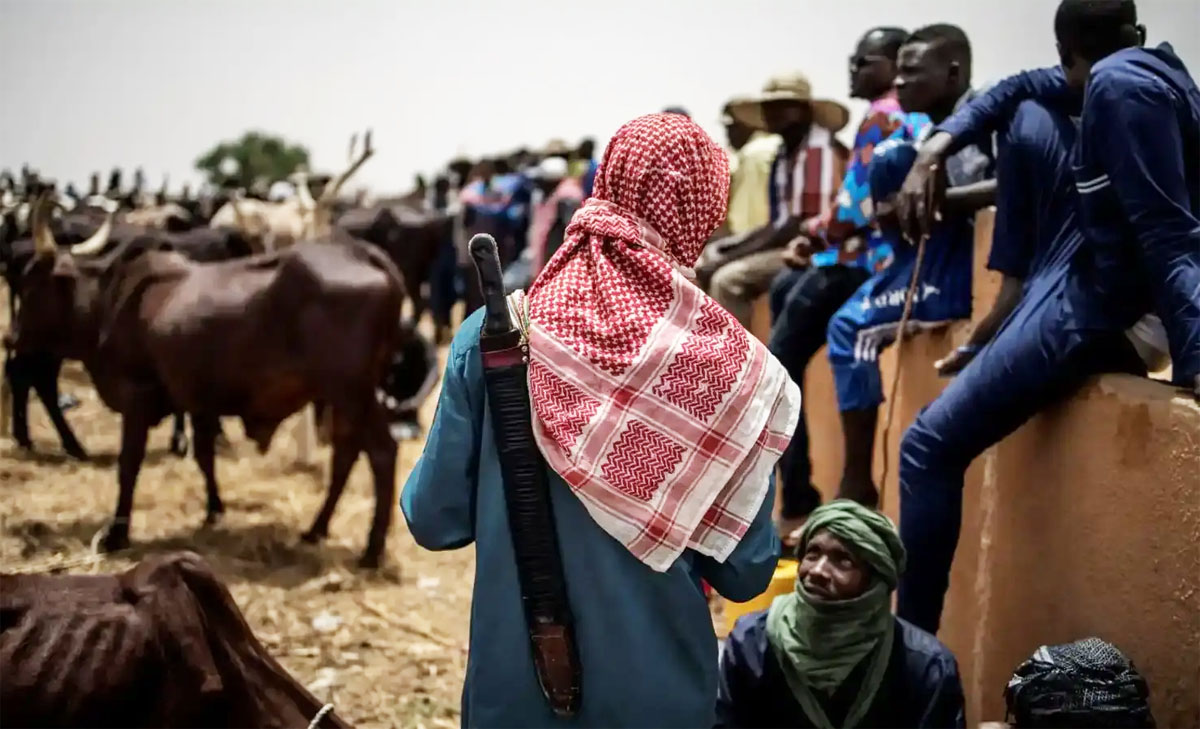
Three Young Herders Killed, Two Missing in Plateau Attack
Three young herders have been killed and two others reported missing after suspected gunmen attacked a group tending cattle in the Aloghom area of Mangu Local Government Area, Plateau State.
The attack occurred on Saturday, September 12, 2026, in the Sabon Gari district of Mangu, an area that has experienced repeated incidents of violence involving farming and herding communities.
The victims were identified as Garzali Shaibu, 18; Bashiru Yakubu, 14; and Salim Abubakar, 15.
According to reports citing a military situation report, troops of Operation Enduring Peace were alerted after receiving information that herders grazing in the area had come under attack. Soldiers deployed from Sabon Gari subsequently moved to the location and recovered the bodies of the three victims.
Surviving members of the group reportedly told the troops that two other herders were unaccounted for, prompting efforts to establish their whereabouts.
The attack also resulted in significant losses of livestock. A situation report cited by security-focused publication Zagazola Makama put the number of cattle killed at 36, while 12 others were reportedly found with gunshot wounds. Community sources, however, estimated that about 50 cattle were killed in the attack.
The differing figures could not immediately be reconciled, but reports agree that the incident caused substantial losses of livestock belonging to the affected herding community.
Hashimu Yahaya, coordinator of the Fulbe Fulani Development Association in Mangu, identified the three victims and condemned the killings.
The Plateau State chairman of the Miyetti Allah Cattle Breeders Association of Nigeria (MACBAN), Ibrahim Yusuf Babayo, also condemned the attack and called for an investigation into the killings.
READ ALSO:
- JAMB Allows Candidates to Change Lost SIM, Email Addresses
- How Nigerians Can Get Federal High Court Affidavit Online Without Visiting Court
- Plateau Violence: Several Killed as Fresh Attacks Trigger Mass Exodus
Community representatives alleged that the attackers were members of a militia suspected to be operating in the area. That allegation has not been independently established, and the identities of the attackers and their motive remained under investigation.
There were also allegations that security personnel from another agency were present around the area during the incident but failed to intervene. The claim was reported as an allegation and had not been independently verified.
Security personnel reportedly recovered empty tear-gas canisters from the scene as troops intensified patrols and other operations in the area.
The military also warned against any attempt by members of the affected community to retaliate, amid concerns that the killings could trigger further violence between communities.
The latest incident came amid a fresh series of attacks in Plateau State, particularly in Mangu and neighbouring areas.
The state government subsequently condemned fresh attacks recorded in Mangu and a separate attack at Dungus Junction in Jos South Local Government Area, while urging residents to reject reprisals and cooperate with security agencies.
The violence has also occurred against the backdrop of efforts by security agencies and community stakeholders to mediate disputes between farmers and herders.
In Bokkos Local Government Area, for instance, troops of Operation Enduring Peace recently facilitated a settlement between farmers and herders after farms in Dambwash, Danbukor and Fokko were reportedly destroyed. Under the agreement, affected herders paid N4.5 million in compensation to 38 farmers, according to reports citing the military situation report.
Despite such interventions, recurring attacks continue to raise concerns over the security of farming and herding communities in Plateau.
The three slain herders were later buried in Mangu following funeral prayers at the Mangu Central Mosque, with community leaders using the occasion to appeal for calm and government action. Security personnel present at the burial reportedly urged residents to allow investigations into the killings to continue and avoid retaliatory attacks.
The killings have renewed concerns about the vulnerability of young people involved in livestock production and the wider impact of prolonged insecurity on livelihoods in Plateau.
For residents of Mangu and surrounding communities, the immediate concern remains preventing the incident from triggering another cycle of reprisal violence, while security agencies face pressure to identify those responsible, establish the fate of the two missing herders and strengthen protection for communities at risk.
Authorities have not publicly established the identities of the perpetrators, and investigations into the circumstances surrounding the attack remain ongoing.
Three Young Herders Killed, Two Missing in Plateau Attack
metro
EFCC Opens Mambilla Probe as Atiku, Malami, Others Named in ICC Arbitration Award

EFCC Opens Mambilla Probe as Atiku, Malami, Others Named in ICC Arbitration Award
The Economic and Financial Crimes Commission (EFCC) has reportedly constituted a special investigative team to examine alleged questionable transactions and dealings connected to the long-running Mambilla Hydroelectric Power Project, following a major International Chamber of Commerce (ICC) arbitration ruling involving Nigeria and Sunrise Power and Transmission Company Limited.
The development comes days after an ICC tribunal ruled in favour of the Federal Government of Nigeria, rejecting claims brought by Sunrise Power and its promoter, Leno Adesanya, over the controversial power project.
The reported EFCC investigation is expected to examine transactions and allegations arising from the 616-page arbitration award.
Among the individuals named or discussed in the tribunal proceedings are former Vice-President Atiku Abubakar, his former wife Jennifer Douglas Abubakar, former Attorney-General of the Federation Abubakar Malami, former Minister of Power and Steel Olu Agunloye, former National Security Adviser Sambo Dasuki, his son Abubakar Dasuki, former Solicitor-General of the Federation Abdullahi Yola, and former Permanent Secretary in the Ministry of Power Dere Awosika.
The appearance of a person’s name in the arbitration award does not, however, establish criminal liability. The reported EFCC investigation is a separate process through which allegations and financial transactions may be examined under Nigerian law.
The ICC tribunal rejected Sunrise Power’s claims against Nigeria, including a demand linked to an earlier settlement agreement. The tribunal also ordered Sunrise and Adesanya to reimburse Nigeria about $11.8 million in legal fees and expenses.
The arbitration was connected to the disputed Mambilla Power Project in Taraba State, which has been the subject of legal and contractual disagreements for more than two decades.
One of the transactions examined by the tribunal was a $500,000 payment made by Adesanya in January 2003 from an account associated with his offshore company, China Castle Investments Ltd, to a United States bank account belonging to Jennifer Douglas Abubakar.
READ ALSO:
- Jetour T1 Storms Abuja as Automaker Accelerates Nigeria Expansion
- Kidnapped Female Police Officer Found Dead in Ebonyi as Suspect Leads Police to Remains
- CNN, MS NOW, Politico Sue Trump Over White House Access Ban
According to the tribunal findings, Adesanya said the payment was connected to a foreign-exchange transaction undertaken for Atiku through his bureau de change business.
The tribunal, however, said the explanation was not supported by sufficient documentary evidence. It noted that records establishing the underlying naira payment, exchange rate, instructions or other documentation corroborating the explanation were not produced.
The tribunal described the circumstances surrounding the transaction as raising significant questions, particularly because of its timing and Adesanya’s efforts to secure the Mambilla contract.
The tribunal also considered other payments involving individuals connected to the project, including payments allegedly made to former minister Olu Agunloye through an aide and a payment of about $1.74 million made to Abubakar Dasuki.
In relation to Atiku, the tribunal’s findings require particular distinction. While it examined the $500,000 payment and the circumstances surrounding it, the tribunal did not find evidence that Atiku used his position as a government official to secure the Mambilla contract for Sunrise.
That finding is significant because the EFCC‘s reported investigation should not be presented as an established finding of criminal wrongdoing against Atiku or any other individual named in the award.
The arbitration also contained critical findings concerning former Attorney-General Abubakar Malami.
The tribunal criticised Malami’s handling of settlement negotiations with Sunrise and, according to the award, raised serious concerns about his dealings with Adesanya.
The tribunal also concluded that the settlement arrangements at the centre of the dispute were not binding on Nigeria because the required presidential approval had not been obtained.
The findings concerning Malami are part of an arbitration award rather than a criminal conviction. Any criminal consequences would depend on further investigation and, where applicable, prosecution and adjudication by the appropriate Nigerian courts.
The Mambilla Power Project dates back to a 2003 arrangement for the development of a major hydropower facility in Taraba State. The project subsequently became embroiled in disputes over the validity of the contract, settlement agreements and compensation claims.
Sunrise Power later pursued arbitration proceedings against Nigeria, including claims running into hundreds of millions of dollars.
The latest ICC decision rejected the claims before the tribunal and was welcomed by the Federal Government as a major development in the prolonged dispute.
President Bola Ahmed Tinubu welcomed the ruling and said it removed a significant legal obstacle surrounding the project.
Sunrise Power promoter Leno Adesanya, however, said the company’s legal team would review the arbitration decision and consider available lawful options.
The reported EFCC investigation now introduces a separate domestic dimension to the Mambilla controversy.
Investigators are expected to examine the financial transactions, relationships and official decisions highlighted during the arbitration proceedings and determine whether any of the conduct amounts to offences under Nigerian law.
The EFCC has not publicly announced criminal charges against Atiku, Malami or the other individuals whose names appeared in the tribunal proceedings based on the reports surrounding the latest development.
Consequently, being named in the ICC Mambilla arbitration award should not be interpreted as equivalent to being charged with or convicted of a crime.
The latest development nevertheless places the Mambilla Power Project, the disputed financial transactions and the conduct of several former public officials under renewed scrutiny as the reported EFCC investigation progresses.
The focus will now be on what the domestic investigation establishes independently of the ICC proceedings, while the Federal Government continues efforts to advance the long-delayed hydropower project.
EFCC Opens Mambilla Probe as Atiku, Malami, Others Named in ICC Arbitration Award
metro
Kidnapped Female Police Officer Found Dead in Ebonyi as Suspect Leads Police to Remains
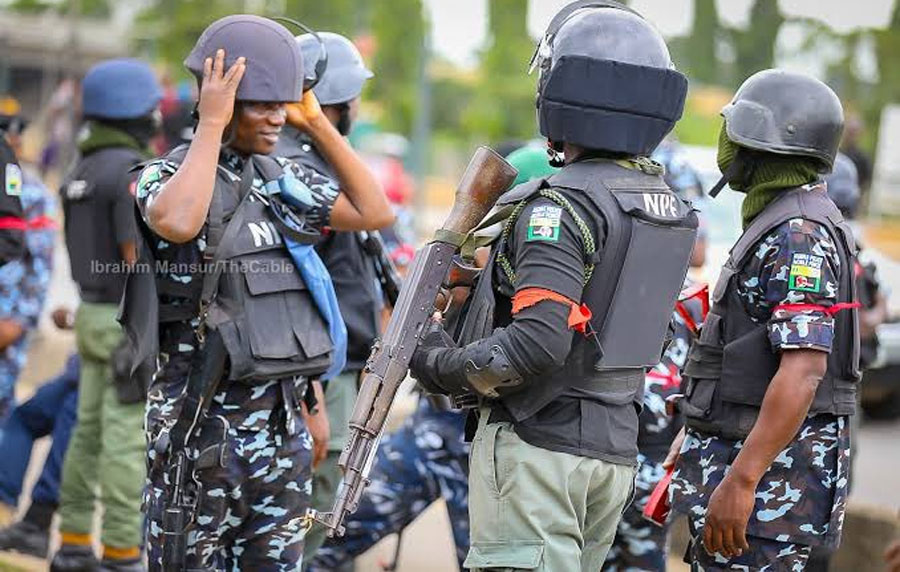
Kidnapped Female Police Officer Found Dead in Ebonyi as Suspect Leads Police to Remains
A female police officer kidnapped in Ebonyi State has been found dead after police arrested a principal suspect in connection with her abduction and recovered her remains from a location allegedly identified by the suspect.
The development was disclosed by the Nigeria Police Force in its latest nationwide operational update, which highlighted arrests, rescue operations and the recovery of weapons and other exhibits across several states.
According to the police, the suspect was arrested following sustained intelligence-driven and technology-based investigations into the abduction of the female officer.
The suspect allegedly led police operatives to the location where the remains of the kidnapped police officer were recovered.
The Force did not, however, disclose the identity of the officer, the circumstances surrounding her abduction or the cause of her death.
It also did not state how long the officer had been missing before her remains were recovered or whether additional suspects had been arrested in connection with the case.
The development represents a major breakthrough in the investigation into the officer’s disappearance, but police said the case remains under investigation.
The suspect is being treated as an alleged member of a kidnapping syndicate pending the conclusion of investigations and any subsequent court proceedings.
Police said the investigation was supported by intelligence gathering and technology, which eventually led operatives to the principal suspect.
Following the arrest, the suspect allegedly provided information that enabled investigators to locate the scene where the officer’s remains were recovered.
The circumstances surrounding the officer’s death are yet to be publicly established. Police have not disclosed whether the remains showed evidence of violence or whether a forensic examination has been conducted to determine the cause of death.
Investigators are expected to examine the recovered remains and other evidence as they work to establish what happened to the officer and determine whether other individuals were involved in her abduction and death.
READ ALSO:
- CNN, MS NOW, Politico Sue Trump Over White House Access Ban
- JAMB Allows Candidates to Change Lost SIM, Email Addresses
- How Nigerians Can Get Federal High Court Affidavit Online Without Visiting Court
The Ebonyi case was included in a wider Nigeria Police Force operational report covering security operations across the country. The Force said its operations resulted in the arrest of 334 suspects and the rescue of kidnapped victims, alongside the recovery of firearms, ammunition and other exhibits in different states.
In another operation reported in Adamawa State, police said two kidnapped victims were rescued from a suspected kidnappers’ hideout in Shako Forest, Toungo Local Government Area, while a suspect was arrested and allegedly provided information implicating five fleeing accomplices. (Primetimes)
The police said the various cases remain under investigation by the relevant State Criminal Investigation Departments (CID) and the CID at Force Headquarters in Abuja.
For the Ebonyi investigation, the immediate focus is expected to be on determining the circumstances of the officer’s abduction, identifying all those allegedly involved and establishing how and when she died.
The recovery also gives investigators an opportunity to gather further physical and forensic evidence that could help link suspects to the crime.
The police have not announced any further arrests in the case or disclosed whether any weapons, vehicles, communication devices or other exhibits were recovered during the operation.
The Force has increasingly emphasised intelligence-led policing, technology-assisted investigations and inter-agency cooperation in its response to kidnapping and other organised crimes.
The latest development in Ebonyi underscores the continuing security challenges faced by police personnel and other residents in areas affected by kidnapping and violent criminal activity.
While the arrest represents progress in the investigation, the police have yet to provide a full account of the circumstances leading to the officer’s death.
Further details are expected as investigators continue questioning the suspect and examining evidence recovered from the scene.
Until the investigation and any court proceedings are concluded, the suspect remains presumed innocent and allegations against him have not been established by a court.
Kidnapped Female Police Officer Found Dead in Ebonyi as Suspect Leads Police to Remains
-

 metro2 days ago
Oyo Police: Student Who Died by Suicide Was Charged With Assault, Not ₦8,000 Debt
-

 Entertainment3 days ago
“She Wanted to Stay Single”: Rema Opens Up About Rejection That Inspired Hit Song ‘Oh No’
-

 metro3 days ago
Niger Miners’ Deaths: Families Demand Compensation, Justice for Victims
-

 metro3 days ago
Mambilla: ICC Raises Questions Over $500,000 Payment to Atiku’s Former Wife
-
 International21 hours ago
18 Suspects Transferred to US Over 2021 Killing of Haitian President Moïse
-

 Auto2 days ago
Abuja Demand Rises as Jetour Brings X70 Plus Experience to FCT
-

 metro2 days ago
Irreconcilable Developments: Wedding Cancelled 24 Hours Before Ceremony
-

 metro3 days ago
Niger Miners’ Deaths: Survivor Alleges Substance Was Sprayed in Cell as Probe Intensifies