

Business
Six multinationals to pay N249bn oil proceeds in January – NNPC

• Company to deduct N270.83bn from FAAC same month
A total of N249.3bn for October 2021 domestic crude oil sales by six multinational oil companies operating in the upstream sector will be paid in January 2022, the Nigerian National Petroleum Company Limited has said.
The NNPC made this known in its latest report on Nigeria’s crude oil export and domestic crude oil sales in the month of October 2021. The report was obtained in Abuja on Thursday.
This came as the oil firm revealed that it would also deduct N270.83bn from what would be shared by the three tiers of government during the Federal Accounts Allocation Committee meeting in January next year.
It said the N270.83bn was its November 2021 value shortfall. The NNPC posts value shortfalls as a result of what it spends on the monthly subsidy of Premium Motor Spirit, popularly called petrol.
On oil sales, it explained in the report that while the October 2021 crude oil exports of 50,000 barrels under Production Sharing Contract, valued at $4.18m was payable in November 2021, the October 2021 domestic crude oil payment expected in January 2022 from the six firms is N249.3bn.
The company further noted that the October 2021 domestic crude oil payable in January 2022 by the NNPC was in line with the 90 days payment terms, adding that the six firms were its Joint Venture partners.
It outlined the firms from where the funds were being expected to include Chevron Nigeria Limited, Mobil Producing Nigeria, Shell Petroleum Development Company, MidWestern, Pillar and First Exploration and Production.
READ ALSO:
- Despite my criticisms, Buhari picks my calls – Kukah
- Masari’s arms-for-civilians call evidence of Buhari’s failure – SANs
- Naira drops to N570/$1 on high forex demand
It said CNL would be paying for 2.268 million barrels of domestic crude valued at N73.85bn, while MPN would remit N123.22bn for 3.8 million barrels of domestic crude oil.
The SPDC and MidWestern would be paying for 828,556 and 100,000 barrels of domestic crude oil valued at N26.966bn and N3.25bn, respectively.
For Pillar and First E&P, the firms would pay for 20,000 and 649,677 barrels of domestic crude oil valued at N650.91m and N21.36bn, respectively.
The report put the total volume of domestic crude oil payable by the firms in January 2022 at 7.666 million barrels, while the value of the commodity was put at N249.3bn.
On the N270.83bn deduction from what would be shared by FAAC in January 2022, the NNPC stated that the amount was an estimate of its value shortfall in November this year.
It said, “The estimated value shortfall of N270,831,143,856.56 is to be recovered from the December, 2021 proceed due for sharing at the January 2022 FAAC meeting.
“This value shortfall consists of N220,110,853,427.56 for November and N50,720,290,429.00 deferred for recovery in December 2021 FAAC Report.”
The NNPC had been posting value shortfalls on a monthly basis due to its spendings on petrol subsidy, a development that had consistently reduced its remittances to FAAC.
State governors had kicked against the continued subsidy on petrol by the NNPC, but experts and labour unions cautioned the government to be careful as it considers a halt in the PMS subsidy regime.
The NNPC has remained the sole importer of petrol into Nigeria for about four years running and has been shouldering the cost of the PMS subsidy, being the provider of last resort.
Other oil marketers stopped the importation of petrol due to the instability in the country’s foreign exchange rate and the inability of marketers to efficiently access the United States dollar for PMS imports.
Punch








Business
Nigerians Pay N44 Extra Per Litre as Retailers Defy Falling Depot Prices – Full Report

Auto
Abuja Roars to Life as Jetour X50 Headlines Three-Day Motoring Experience
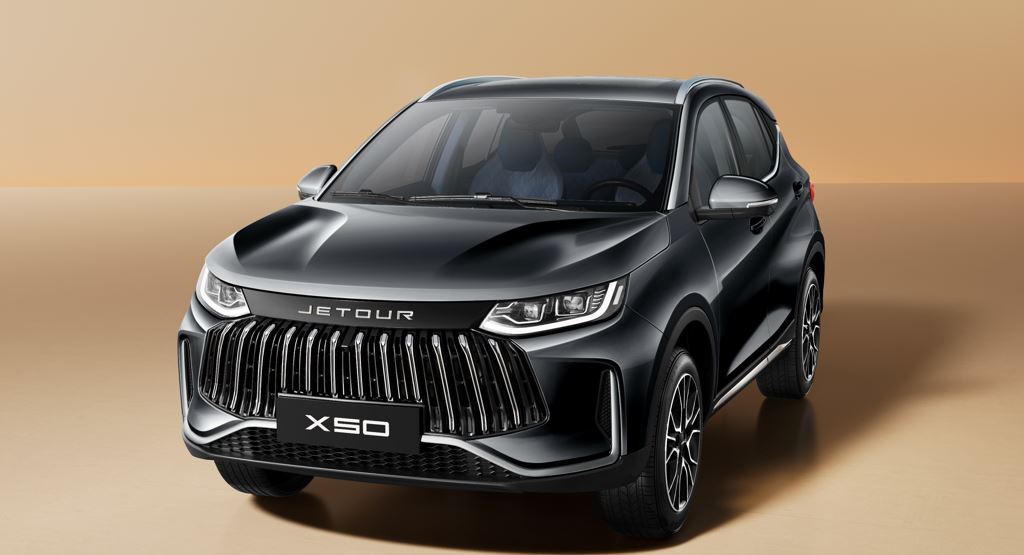
Abuja Roars to Life as Jetour X50 Headlines Three-Day Motoring Experience
Abuja is gearing up for a major motoring spectacle as Jetour Nigeria brings its fast-growing brand experience to the Federal Capital Territory, with the stylish Jetour X50 set to take centre stage in a three-day showcase of performance, technology and automotive innovation.
Scheduled for September 22 to 24, 2026, the Jetour Experience Abuja will move beyond the conventional vehicle exhibition, giving motorists and prospective buyers the opportunity to test-drive the X50, interact with automotive specialists and experience a range of entertainment and interactive activities.
The Abuja activation follows the strong reception recorded during Jetour Nigeria’s recent Lagos experience and forms part of the automaker’s strategy to deepen customer engagement while expanding its footprint across Nigeria.
Backed by an expanding authorised dealer network comprising Elizade Nigeria Limited, Mandilas Autos, Germaine Auto Centre, Kojo Motors, R.T. Briscoe, Tab Autos and New Era AutoVehicle Services, Jetour is also strengthening access to vehicle sales, after-sales support, genuine spare parts and certified technical services nationwide.
At the heart of the Abuja experience will be the Jetour X50, a compact SUV designed to combine contemporary styling, performance and a technology-rich driving environment.
Powered by a 1.5-litre turbocharged engine paired with a dual-clutch transmission, the X50 has positioned itself as a strong contender in Nigeria’s competitive compact SUV segment.
Jetour has equipped the model with a range of premium features, including a 360-degree camera, Blind Spot Detection, 10.5-inch infotainment system with Apple CarPlay and Android Auto, wireless charging and leather upholstery.
The combination of technology, comfort and performance is part of Jetour’s strategy of offering premium motoring features at competitive price points.
The Abuja event also highlights Jetour’s aggressive expansion strategy in Nigeria, following the brand’s recognition with industry accolades including Fastest Growing Auto Brand and Auto Brand of the Year.
With its expanding dealer network providing nationwide sales and after-sales support, Jetour is seeking to deepen customer engagement while making its vehicles and ownership services more accessible to motorists across the country.
As Abuja prepares to welcome the Jetour Experience, the three-day activation is expected to provide motorists with an opportunity to see, feel and drive the X50 while experiencing first-hand what is driving the brand’s growing appeal in Nigeria.
Business
Dangote Refinery Sets ₦525 Per Share for Landmark IPO
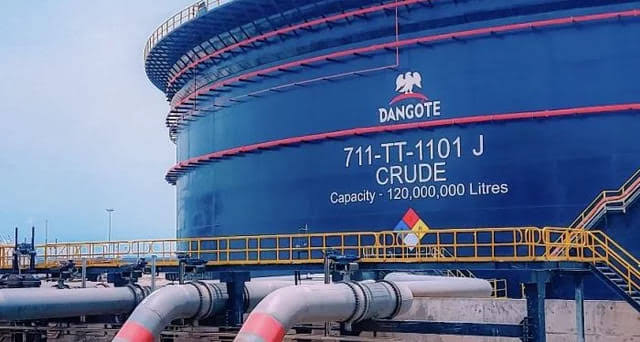
For ₦5,250, Nigerians could soon own a piece of the refinery that has reshaped the country’s fuel market.
-

 Politics3 days ago
Peter Obi, Others Challenging Tinubu Cannot Transform Nigeria — Datti Baba-Ahmed
-

 Auto2 days ago
Kaduna to Lead Govt Patronage of Local Vehicles as Sani Unveils Peugeot 5008
-

 metro1 day ago
El-Rufai Demands ₦10bn from Defence Minister Over Southern Kaduna Killings Allegation
-

 metro2 days ago
Socialite Igho ‘Tiny’ Ubiribo Dies After Penis Enlargement Surgery
-

 metro1 day ago
Catholic priest leaves priesthood, weds Kenyan woman after 12 years in Kenya
-

 Politics3 days ago
Demystifying the Political Monolith: Wike’s ‘See Finish’ Doctrine and Nigeria’s New Political Calculus
-

 metro1 day ago
No US Case Against Tinubu, Family Enjoy Unimpeded Transit for UNGA — Ambassador Ibrahim
-

 metro2 days ago
Three Women Killed, 10 Injured in Multiple Crash on Lagos-Ibadan Expressway Bridge