

metro
Families worry over whereabouts of two kids, phone repairer in Lagos

Parents of two children, Daniel Mudashiru, two, and five-year-old Qozeem Ayinde are currently worried over their whereabouts since November 28 and December 30, 2021 respectively.
This is just as the family of a phone repairer, Emmanuel David, was thrown into distress over the disappearance of the 23-year-old on Sunday, January 2.
City Round learnt that Mudashiru was playing with his peers outside his parents’ residence on Olayinka Street, in the Ajegunle area of Lagos when he went missing.
His mother, Mercy, told our correspondent she was inside on that day, stating that neither his playmates nor her neighbours could explain his whereabouts.
She said, “He was playing with other children outside when I went inside. About 25 minutes later, I noticed that I didn’t hear his voice again and came out but I didn’t see him. His playmates said they left him outside and went back to meet their parents.
“I looked everywhere but I didn’t see him. My neighbours also said they didn’t know his whereabouts. We reported the case at the Ajeromi Police Station. The police said they are still investigating. My husband and I have become worried since then. We are always concerned about his fate.”
It was learnt that Ayinde went missing during a commotion caused by a cult fight in the Ijora Badia area of the state on December 30.
His stepfather, Abdulafeez Owolabi, said the boy was in front of his mother’s shop on Church Street when the confusion ensued.
READ ALSO:
- Charly Boy collected N70m to back 50 Cents against me — Edris Abdulkareem
- North Korea fires fresh missiles in response to US sanctions
- Benue Assembly amends Benue grazing law, provides stiffer penalties
Owolabi stated, “A day before he went missing, there was a cult clash on Amosun Street, Badia. The following day, around 7pm, those boys started again and everybody ran helter-skelter. He was in front of his mother’s shop on Church Street. When the commotion calmed 20 minutes later, we couldn’t find him.
“We looked for him till 12am. Some people urged us to be patient till the following day that somebody might have taken him to safe custody. We couldn’t sleep throughout the night.
“I went to Amuko and Orile police stations to make reports. Till now, we have not found him. We are praying to God to let him return safely. No one knew I wasn’t his father until the incident happened.”
Our correspondent learnt that David, a mobile phone repairer, his elder sister, Jeamine, and three other family members, had visited an amusement park at Akowonjo on January 2 and were returning home when he went missing.
Jeamine told Sunday PUNCH that they could not get motorcycles back home at the same time and Emmanuel was left behind, adding that they were nervous when his line indicated it was switched off.
She said, “We went out as a family to the park at Akowonjo that Sunday. We got there around 10pm and left around 11pm. We were five and took bikes back home. He was the last person at the bus stop. When we got home, we called him and asked him where he was. He said he was still looking for a bike.
“Five minutes after, we called him again to know if he had got a bike but his number was not reachable. We assumed it was a network problem. We tried the number again and it was switched off. Everybody was in fear.
“We reported at the Gowon Estate Police Station and wrote statements. I also visited other police stations around the area but they said he was not in their custody. He repairs phones. He never told me he had any misunderstanding with anyone.”
The state Spokesperson in the state, CSP Adekunle Ajisebutu, promised to get back to our correspondent with updates on the three cases but had yet to do so as of the time of filing this report.
Punch












metro
‘Have Some Shame!’ Kwankwaso’s Daughter, Nafisa, Launches Scathing Attack on Gov Yusuf Over Sister’s Divorce

‘Have Some Shame!’ Kwankwaso’s Daughter, Nafisa, Launches Scathing Attack on Gov Yusuf Over Sister’s Divorce
A fresh controversy has erupted over the marital crisis between Kano State Governor, Abba Kabir Yusuf, and his estranged wife, Zainab Kwankwaso, following a blistering public attack on the governor by his sister-in-law, Barrister Nafisa Kwankwaso.
Nafisa, a daughter of former Kano State governor and Senator Rabiu Musa Kwankwaso, accused Yusuf of ingratitude and failing to appreciate the sacrifices her sister allegedly made during their nearly 20 years together.
In a strongly worded Facebook post on Wednesday, November 18, Nafisa challenged the governor to reflect on how Zainab stood by him during his financially difficult years before he eventually attained political prominence.
“Abba Kabir Yusuf, have some shame. There is no woman who would marry you and spend 20 years with you in poverty and hardship, moving from one rented house to another, remaining loyal to you and protecting your dignity, only to go to court to seek a divorce after you have become somebody,” she wrote.
Nafisa further claimed that her sister came from a privileged family background but chose to endure difficult living conditions with Yusuf after their marriage.
According to her, Zainab’s father was already a minister when she married the governor, but she allegedly followed him from one rented apartment to another rather than insisting on a comfortable lifestyle.
She also claimed that an individual whom the governor allegedly speaks disrespectfully about had previously provided accommodation for him and his children during his difficult years.
Nafisa expressed disappointment that, despite the sacrifices she said her sister made, the relationship had deteriorated to the point where Zainab was seeking to dissolve the marriage through the courts.
The Kwankwaso’s daughter also accused the governor of showing insufficient respect and appreciation to her sister and her family, questioning his attitude towards those who allegedly supported him before his rise to political power.
Nafisa also questioned reports surrounding Yusuf’s alleged interest in taking another wife while his marriage to Zainab remained unresolved.
She warned that women and families familiar with the circumstances surrounding the marital crisis might be reluctant to become associated with the governor under the prevailing circumstances.
“Any woman who understands what is happening today is already in mourning. No father who understands the value of his daughter would willingly give her to you,” she stated.
Her comments have further intensified public discussions surrounding the governor’s troubled marriage, particularly against the backdrop of his once-close relationship with Senator Kwankwaso.
The controversy follows reports that Zainab Kwankwaso, who is said to be the mother of six children she shares with Governor Yusuf, approached an Upper Area Court in Gudu, Abuja, seeking dissolution of their marriage.
The marriage was reportedly contracted on July 29, 2006, when Zainab was serving as an aide to her father.
Reports surrounding the court action indicated that the relationship had broken down, with the estranged wife reportedly citing a loss of affection and mutual care.
The development has attracted considerable attention because Yusuf was previously regarded as a political protégé and son-in-law of Senator Kwankwaso before their political relationship deteriorated.
Their personal disagreement has consequently become a subject of wider political discussion in Kano State, where the Kwankwasiyya political movement remains an influential force.
Nafisa’s intervention has now brought the family dimension of the dispute into sharper public focus, although Governor Yusuf had yet to publicly respond to her latest accusations in the reports available.
As the reported divorce proceedings continue to attract attention, political observers will be watching whether the escalating family disagreement will further complicate the already strained relationship between the governor and his former political benefactor.
The allegations made by Nafisa have not independently been established, and the governor’s response to her claims remains important.
‘Have Some Shame!’ Kwankwaso’s Daughter, Nafisa, Launches Scathing Attack on Gov Yusuf Over Sister’s Divorce
metro
Cross River Tragedy: Nine Dead, 46 Injured As Overloaded Truck Carrying 85 Crashes

Cross River Tragedy: Nine Dead, 46 Injured As Overloaded Truck Carrying 85 Crashes
At least nine people have been confirmed dead, while 46 others sustained injuries after a heavily loaded DAF truck conveying 85 people crashed around the Yahe Bridge area of Cross River State on Wednesday, November 18, 2026.
The Federal Road Safety Corps (FRSC) confirmed the casualties, attributing the fatal accident to speeding and the driver’s loss of control while attempting to avoid a head-on collision with another truck approaching from the opposite direction.
The FRSC Unit Commander in Yahe, Pascal Anigbo, disclosed the incident to journalists, identifying the truck by its registration number, GAS706XA.
According to Anigbo, the driver was travelling with 85 people aboard the truck when he encountered another truck approaching from the opposite direction. In an attempt to prevent a head-on collision, he reportedly swerved off the road, causing the vehicle to veer into the bush.
“The driver tried to avoid a head-on collision with another truck coming from the opposite direction, so the truck veered off the road into the bush,” Anigbo said.
The FRSC official disclosed that nine people died in the accident, 46 passengers sustained varying degrees of injuries, while 30 others escaped unhurt.
He explained that rescue operations were immediately carried out by FRSC personnel working alongside military officers, who helped evacuate the injured victims to a hospital for medical attention.
Anigbo further provided details of the handling of the deceased, revealing that three bodies were deposited at a mortuary after a doctor confirmed their deaths, while six others were taken away after being identified by their relatives or representatives.
“We have evacuated those injured to a hospital for treatment.
“Three bodies were deposited at the mortuary after a doctor confirmed them dead, while six others were taken away after being identified,” he said.
Further details surrounding the incident revealed that the truck was not only conveying a large number of passengers but was also transporting various goods, including palm oil, refrigerators and motorcycles, when the accident occurred.
The circumstances have raised fresh concerns about the dangers of overloading vehicles, particularly heavy-duty trucks carrying both passengers and goods on Nigerian highways.
The tragedy also highlights the risks associated with excessive speed and dangerous road manoeuvres, especially when motorists encounter oncoming vehicles on highways.
The FRSC has consistently warned motorists and transport operators against speeding, overloading and other traffic violations capable of resulting in fatal crashes.
The Yahe Bridge accident adds to concerns over road safety in Nigeria, with calls for stricter enforcement of traffic regulations and greater responsibility among commercial vehicle operators to prevent avoidable deaths.
Cross River Tragedy: Nine Dead, 46 Injured As Overloaded Truck Carrying 85 Crashes
metro
MURIC Accuses Adeleke of Persecuting Muslim Traditional Rulers, Demands Reversal of Obas’ Demotions
MURIC Accuses Adeleke of Persecuting Muslim Traditional Rulers, Demands Reversal of Obas’ Demotions
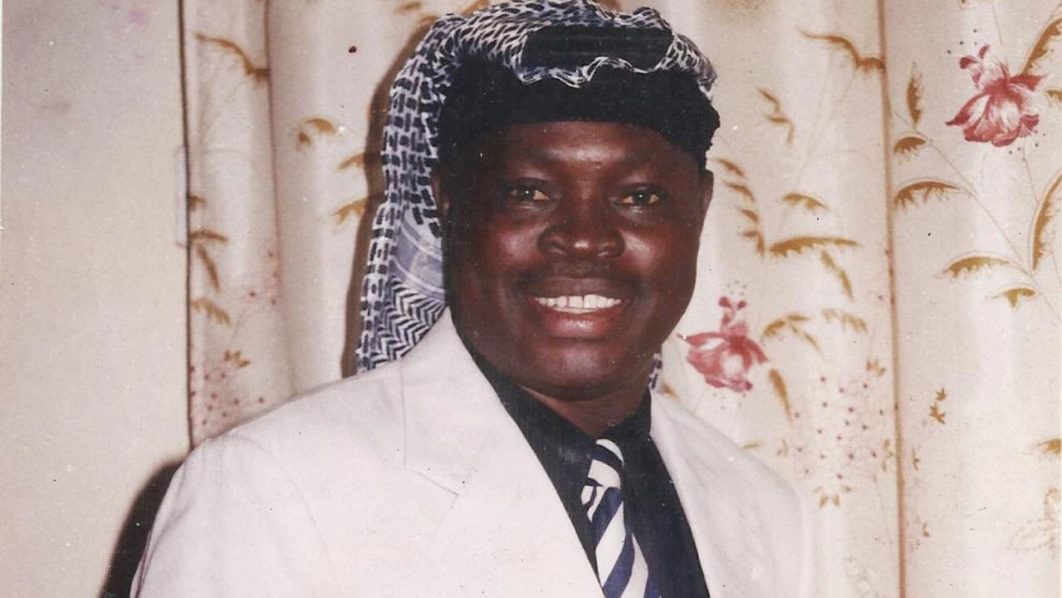
The Muslim Rights Concern (MURIC) has accused Osun State Governor, Ademola Adeleke, of allegedly harassing and victimising traditional rulers in the state, warning that the governor’s actions could undermine the independence and dignity of the traditional institution.
The Islamic human rights organisation specifically criticised the alleged demotion of two traditional rulers and what it described as repeated warnings issued to the Oluwo of Iwo, Oba Abdul Rasheed Adewale Akanbi.
MURIC called on the Osun State House of Assembly and other state legislatures across the country to initiate legislative measures to strip governors of the power to depose or demote traditional rulers, arguing that such authority is being abused for political purposes.
The organisation made its position known in a press statement issued on Tuesday, November 17, 2026, by its Founder and Executive Director, Professor Ishaq Akintola.
According to the statement, at least three traditional rulers in Osun State have allegedly faced punitive actions under the Adeleke administration.
They include the Oluwo of Iwo, Oba Abdul Rasheed Adewale Akanbi; the Alagunbeelewo of Agunbeelewo, Oba Maruf Olayiwola; and the Olu of Irepodun, Oba Adewale Adeniyi Sikiru, in Osogbo.
MURIC alleged that the Oluwo had been cautioned twice over his public remarks, while the other two monarchs were demoted under the Chief’s Law (Cap 25), Laws of Osun State, 2002.
The organisation, however, noted that the government letters communicating the demotions did not expressly state the reasons behind the decisions.
It added that the Alagunbeelewo of Agunbeelewo, Chief Maruf Olayiwola, had reportedly disclosed that the monarchs were accused of associating with the All Progressives Congress (APC) instead of the Accord Party in the state.
Reacting to the development, MURIC described the alleged actions against the traditional rulers as high-handed, vindictive and politically motivated.
The group accused the governor of using his executive powers to punish monarchs allegedly perceived to be sympathetic to opposition interests, warning that traditional rulers should not be subjected to political pressure or treated as instruments of partisan interests.
MURIC also raised concerns over the religious identities of the affected traditional rulers, observing that all three are Muslims.
According to the organisation, the names of the Oluwo, Oba Abdul Rasheed Akanbi, Oba Maruf Olayiwola and Oba Sikiru Adeniyi suggest their Muslim identities.
The group said the coincidence raised questions about the governor’s relationship with Muslims in the state, although it offered no independent evidence establishing that religion was the basis for the actions against the monarchs.
Professor Akintola went further to accuse Adeleke of allegedly harbouring an anti-Muslim agenda, claiming that the governor’s political appointments did not adequately reflect Muslim representation.
MURIC also questioned the governor’s religious commitment, alleging that he merely presents himself as a Muslim while harbouring anti-Muslim sentiments.
The organisation, however, did not provide specific supporting evidence in the statement to substantiate its allegations of religious discrimination.
Beyond the religious dimension, MURIC said its position was informed by its longstanding advocacy for the independence of traditional institutions and the protection of monarchs from what it described as excessive executive interference.
The group argued that traditional rulers, who occupy important positions in their communities and preserve the cultural heritage of their people, should not be exposed to arbitrary decisions by governors.
It maintained that governors and other elected political officeholders hold temporary mandates, whereas traditional rulers are traditionally expected to remain on their thrones for life, subject to applicable laws and customary provisions.
MURIC accused politicians of exploiting the influence of traditional rulers during election campaigns and abandoning or victimising them after elections when they are perceived not to have supported their political interests.
The organisation insisted that the traditional institution should remain above partisan politics and that monarchs should be allowed to discharge their responsibilities without intimidation or political interference.
It further recalled its previous campaigns calling for constitutional and legislative reforms to remove the powers of governors to depose traditional rulers.
According to MURIC, it had made similar demands following developments involving traditional institutions in Kano State and other parts of the country.
The organisation also recalled that in November 2024, it specifically urged the National Assembly and state houses of assembly to initiate legislation that would strip governors of the authority to dethrone traditional rulers.
Reaffirming its position, MURIC said it would not abandon the campaign, insisting that traditional rulers deserved adequate protection against what it described as reckless executive abuse.
The organisation consequently appealed to state legislatures to begin the process of reviewing existing laws governing traditional institutions.
It specifically called on the Osun State House of Assembly to repeal or amend the Chief’s Law (Cap 25), Laws of Osun State, 2002, which it identified as the legal framework under which the two monarchs were reportedly demoted.
MURIC argued that legislative intervention was necessary to protect traditional rulers from political victimisation and preserve the dignity of their ancestral stools.
The group also challenged Governor Adeleke to explain whether traditional rulers in Osun State were not allegedly mobilised to work for political interests during the August 2026 electioneering activities.
Although it declined to provide further details, MURIC suggested that traditional rulers might have been exposed to political pressures during the electoral process, warning against what it described as the use and subsequent abandonment of monarchs by politicians.
The organisation also accused unnamed individuals of attempting to undermine its activities through the emergence of groups it described as fake Islamic organisations following its previous criticism of the governor.
MURIC maintained that, as a non-governmental organisation, it had a responsibility to scrutinise government policies, actions and public statements, insisting that public officeholders must be prepared to tolerate criticism.
The group warned Muslim leaders and Islamic organisations across Yorubaland not to treat the development as an isolated dispute involving individual traditional rulers.
It described the situation as a potential threat to Muslim traditional institutions in Osun State and urged Muslim leaders to become more vigilant.
According to MURIC, the alleged gagging of the Oluwo of Iwo and the demotion of two other Muslim traditional rulers could have wider implications for Muslims in the region.
The organisation therefore called on Muslim traditional rulers across Osun State to remain alert and urged religious and community leaders to pay attention to developments surrounding the traditional institution.
MURIC concluded by describing Adeleke as a governor of particular concern, reiterating its demand that the alleged harassment of traditional rulers should stop.
The group also urged the governor to avoid actions capable of escalating political and religious tensions in the state.
The allegations and demands were contained in MURIC’s November 17 statement signed by Professor Ishaq Akintola.
MURIC Accuses Adeleke of Persecuting Muslim Traditional Rulers, Demands Reversal of Obas’ Demotions
-

 metro2 days ago
Goodluck Jonathan’s Second Wife, Ayima, to Unveil Memoir ‘Gold Dust’ in Abuja at 50
-

 metro3 days ago
Tragedy: “I Suffered With This Man When He Had Nothing” — Woman Who Begged Alleged Rival To Leave Her Family Dies At 39
-

 Business2 days ago
Petrol Prices Crash as Dangote Refinery, NNPCL, MRS Adjust Rates Nationwide
-

 Politics2 days ago
Presidency Deletes AI-Generated Tinubu Rally Photo After Public Outcry
-

 Politics2 days ago
Sheikh Nuru Khalid Speaks on Tinubu, Atiku, Mosque Visits, Warns Against Mixing Politics With Religion
-
 International1 day ago
Canada: Eight Nigerians Among 12 Arrested in $4.5m Auto Theft Bust, 96 Vehicles Recovered
-
 News2 days ago
Tinubu Unveils 5-Year Plan to End Insecurity, Approves Recruitment of 78,000 Soldiers, Police Officers
-

 International2 days ago
Eight Dead in New York Building Collapse as Nigerian Landlord’s Troubling Past Emerges