

Business
Fuel subsidy: NEC considers report today, TUC meets, ASCSN threatens showdown
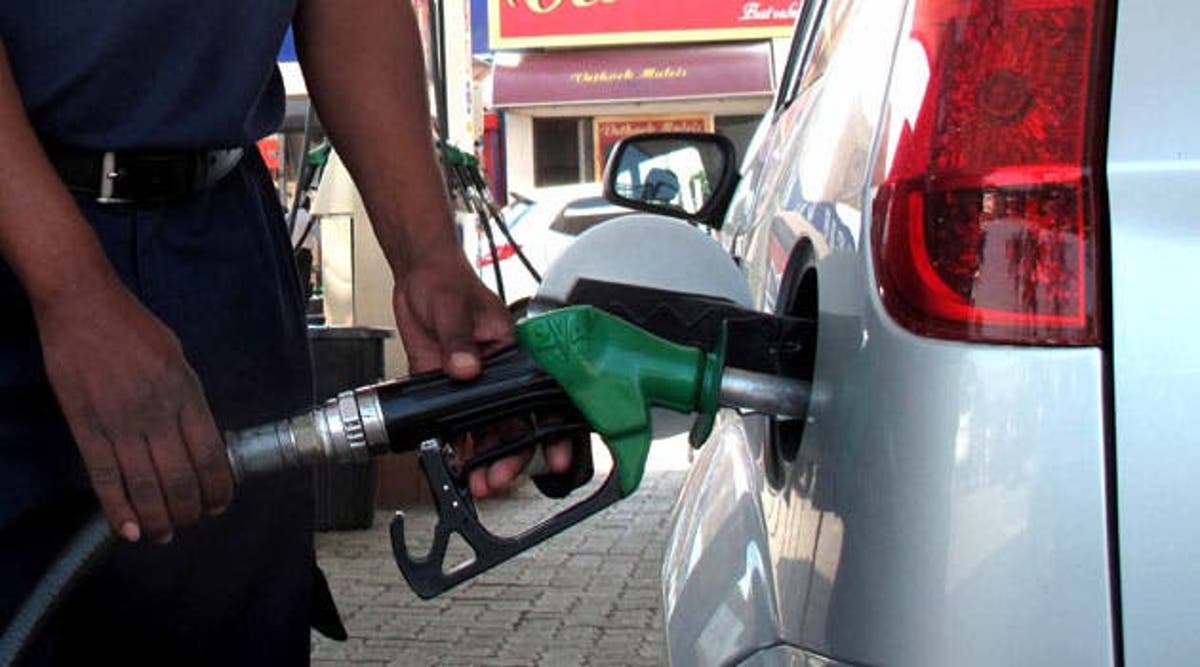
THE Trade Union Congress will today (Thursday) take a position on the planned removal of the fuel subsidy by the Federal Government.
The TUC Deputy Secretary, Nuhu Toro, disclosed to The PUNCH in Abuja on Wednesday, that the congress would hold a meeting over the subsidy issue.
Toro disclosed this ahead of the National Executive Council’s meeting on Thursday.
NEC consisting of including all 36 governors, Vice-President Yemi Osinbajo and other federal officials is expected to consider the adoption of a report by its ad hoc committee on fuel subsidy removal and the increase of petrol price to N302 per litre.
On its part, the TUC deputy secretary said the congress would hold a meeting over the subsidy issue.
He said, “We are having a meeting tomorrow (Thursday). The congress will disclose its decision after that meeting.”
Also speaking with The PUNCH, the Association of Senior Civil Servants of Nigeria opposed the plan by the Federal Government to remove the fuel subsidy and increase the pump price.
The ASCSN President, Tommy Okon, said his association and Nigerians would resist the move.
He said, “Of course, Nigerians are rest assured that they would be defended by our union; that’s why we are here and that’s why we are saying it is a wrong decision to take at this time when workers wages are still stagnant. No increase, they have not made any provision.
READ ALSO:
- Governors To Engage Labour Leaders Amid Plot To Jerk Up Fuel Price
- Insecurity: We’ve never had it so bad – Afenifere
- [BREAKING] AFCON: Nigeria beat Guinea Bissau 2-0, set record
- Just in: National Assembly removes compulsory direct primary clause from electoral bill
“The transport system has not been looked into. So, you just wake up and say you are removing fuel subsidy. Where in other climes has this been done? Even when you give the subsidy, is it not the wealthy few that still hijacked it? The fight is not about workers, it is what Nigerians must rise and resist.”
Okon stated that the union had already taken a position on the issue, insisting that “no sane government should at this point of economic harshness decide to impoverish the people.”
There have been fears of likely fuel price increase since the Minister of Finance and National Planning, Zainab Ahmed, announced the plan to remove petrol subsidy last June.
An online news medium, The Cable, reported on Wednesday that a committee of the National Economic Council had recommended that petrol should be sold at N302 per litre from February when the government would cease to subsidise the petroleum products in the country.
The report explained that NEC made the recommendations last November. The recommendations were reportedly put forward by the NEC ad-hoc committee interfacing with the Nigerian National Petroleum Corporation on the appropriate pricing of PMS in Nigeria.
The report was said to have been presented by Governor Nasir El-Rufai of Kaduna State and the head of the committee.
According to the news report, the committee recommended full deregulation of PMS prices by February 2022 — raising the price by about N130/140 per litre.
It also recommended that all retailers should post PMS prices at all times on a designated website and smartphone app — and they are expected to post price changes no earlier than within 15 minutes of the price change.
READ ALSO:
- Protest as DSS officers driving against traffic kill tipper driver, injure two
- Buhari assures of drop in price of rice soon as PDP mocks president, APC over pyramids
- Neighbours beat Osun housewife for bathing daughter with hot water over errand
With the recommendations, the committee added that the federal government would save N250 billion per month on petrol subsidy removal.
“At current rates, the PMS subsidy is reducing transfers into the federation by about NGN 250 billion per month, and could, if PMS subsidies are not eliminated, result in deductions of NGN 3 trillion in 2022.
“The large-scale time-limited (six-month) cash transfer proposed as a way of transferring the subsidy “directly to the people” would cost N600bn but would by paving the way for the elimination of PMS subsidies, enable the federation to recover N3tn in revenues that would otherwise go to PMS subsidies.
“If PMS subsidies are eliminated by February 2022, N250 billion in deductions would have been incurred, but the remaining N195 billion in anticipated PMS subsidy deductions could be redirected towards FGN funding of the cash-transfer programme,” The Cable said in its report.
But the Vice-President’s Spokesman, Laolu Akande, said the discussions were still ongoing and NEC had not yet taken any decision.
“While there are indeed ongoing discussions on the issue of fuel subsidy, at no time has NEC made any such resolution,” Akande said on Twitter.
The Federal Government last year revealed plans to remove fuel subsidy even as governors lamented that the monthly amount spent on subsidy was affecting the revenue that should accrue to states from the Federation Account.
However, Senate President Ahmad Lawan on Tuesday said the President told him that he did not order anyone to remove fuel subsidy.
Punch








Business
Petrol, Diesel Prices Drop as Dangote Cuts Ex-Depot Rates
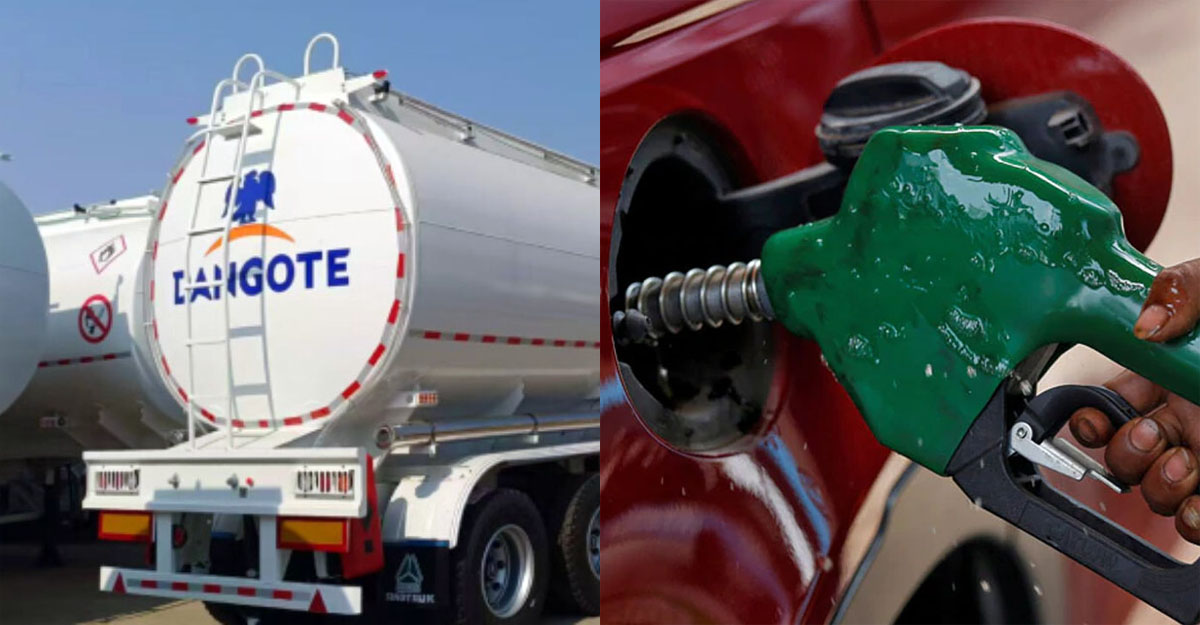
Petrol, Diesel Prices Drop as Dangote Cuts Ex-Depot Rates
Motorists and businesses may get some relief from fuel costs as Dangote Petroleum Refinery announced fresh reductions in the ex-depot prices of petrol and diesel, cutting the prices by N50 and N80 per litre respectively.
Under the new pricing regime, the refinery reduced the ex-depot price of Premium Motor Spirit (PMS), popularly known as petrol, from N1,215 to N1,165 per litre.
The price of Automotive Gas Oil (AGO), or diesel, was also reduced from N1,650 to N1,570 per litre.
The latest adjustment represents a 4.1 per cent reduction in the price of petrol and a 4.8 per cent cut in diesel.
The refinery said in a statement issued by the Dangote Group on Wednesday that the review was aimed at improving energy affordability, expanding access to locally refined petroleum products and supporting economic activities across the country.
The company said the new prices reflected its commitment to delivering affordable and quality petroleum products while maintaining a stable supply to the Nigerian market.
“Dangote Petroleum Refinery has announced a reduction in the ex-depot prices of Premium Motor Spirit (PMS) and Automotive Gas Oil (Diesel), reaffirming its commitment to providing affordable, high-quality petroleum products to the Nigerian market,” the statement said.
It added that the refinery would continue to leverage operational efficiencies and pass the resulting benefits to consumers whenever market conditions allowed.
The latest reduction comes less than two weeks after the refinery resumed naira-denominated petrol sales and raised its ex-depot price to N1,215 per litre following a brief shift to dollar-based transactions.
The earlier change had triggered concerns among petroleum marketers over rising downstream costs.
In July, the refinery had temporarily suspended petrol truck loading and introduced dollar-denominated sales, with petrol priced at $0.779 per litre under the new framework. It subsequently returned to naira transactions and fixed the ex-depot price at N1,215 per litre.
With the latest adjustment, the refinery has now reversed part of that increase, reducing the petrol price by N50 and diesel by N80.
However, the new figures are ex-depot prices and do not necessarily translate into an equivalent reduction in pump prices. The final price paid by motorists will depend on factors including transportation, depot charges, margins and other downstream costs.
Dangote said it remained committed to ensuring stable supplies while improving operational efficiency and supporting consumers, businesses and other stakeholders.
The refinery, which has a nameplate capacity of 650,000 barrels per day, has increasingly become a major source of locally refined petrol, diesel and other petroleum products as Nigeria seeks to reduce its dependence on imported refined fuels.
The company said its operations were contributing to Nigeria’s energy security by strengthening domestic refining capacity, reducing reliance on imports and supporting economic development.
It added that it would continue to pass on the benefits of improved operational efficiencies to consumers whenever market conditions permitted.
Auto
High Power Bills Force BUK to Halt Electric Vehicle Charging on Campus
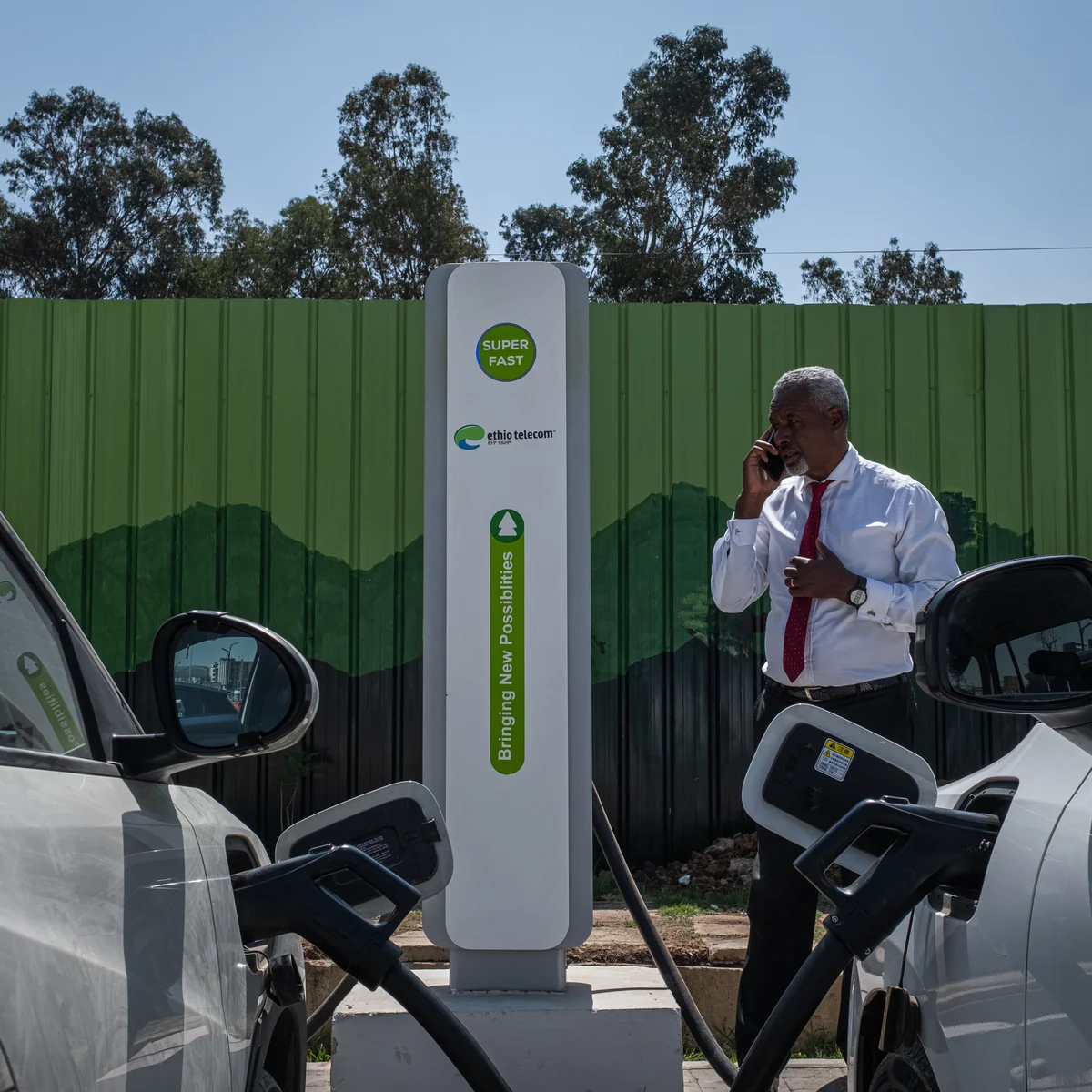
High Power Bills Force BUK to Halt Electric Vehicle Charging on Campus
Rising electricity costs have forced Bayero University, Kano, to ban the charging of privately owned electric motorcycles and other electric vehicles across its campuses.
The university said the growing practice of using its electricity supply to charge private electric vehicles had contributed significantly to a sharp increase in its power bills, creating an additional financial burden for the institution.
The directive, which takes immediate effect, was contained in a statement issued on Tuesday by the university’s Director of Public Affairs, Lamara Garba.
According to the statement, the management has observed the “indiscriminate charging” of privately owned electric motorcycles and other electric vehicles using the university’s electricity supply.
It said the development was no longer sustainable at a time when the institution was seeking to manage its resources prudently.
READ ALSO:
- Explosion kills ISWAP bombmakers, foreign IED experts in Borno
- Alleged Coup Mastermind Suggested Approaching Wike for Funding, Court Documents Show
- Adeleke challenges EFCC over freezing of Osun government account
“The Management of Bayero University, Kano has observed with concern the indiscriminate charging of privately owned electric motorcycles and other electric vehicles using the University’s electricity supply across its campuses.
“This practice has contributed significantly to the sharp increase in the University’s electricity bills, thereby placing an enormous financial burden on the institution,” the statement said.
The university consequently directed all staff, students, commercial motorcycle operators and other users of electric motorcycles to stop charging their vehicles with the institution’s electricity.
It warned that anyone who violated the directive would face disciplinary action in accordance with the university’s rules and regulations.
“Management expects full compliance with this directive. Any person found violating this ban will be liable to appropriate disciplinary action,” the statement added.
To enforce the ban, the university directed provosts, deans, directors, heads of departments and heads of units to monitor compliance in their respective areas and report any violations to the appropriate authorities.
It also announced that a monitoring team would conduct regular patrols across the campuses to ensure strict adherence to the directive.
The institution urged all affected persons to cooperate with the measure, saying it was part of broader efforts to reduce energy costs and promote the prudent use of university resources.
High Power Bills Force BUK to Halt Electric Vehicle Charging on Campus
Business
Zenith Bank confirms cyberattack, says customers’ contact information was accessed
Zenith Bank confirms cyberattack, says customers’ contact information was accessed
Zenith Bank has confirmed that hackers gained unauthorised access to limited customer information, including email addresses and phone numbers, following a cyberattack linked to a broader global attack affecting organisations across different sectors.
The bank disclosed the incident in an email sent to customers on Tuesday, assuring them that its banking services and digital channels remain secure and fully operational.
According to the lender, the breach involved only limited customer information, while its core banking infrastructure and digital platforms were not affected.
Zenith Bank said it activated its incident response procedures and other cybersecurity measures immediately after the unauthorised access was discovered.
The bank added that investigations were ongoing to establish the circumstances surrounding the incident, determine its full impact and strengthen measures designed to prevent further security breaches.
“Hackers accessed limited customer information, including email addresses and phone numbers, during a cyberattack that forms part of a broader global attack on organisations across different sectors,” the bank said.
Although Zenith Bank did not disclose the number of customers affected or identify the individuals or group responsible for the attack, it maintained that its banking services remained secure.
The bank also did not indicate whether sensitive financial information, such as account balances, transaction records, passwords, PINs or banking credentials, was accessed.
READ ALSO:
- Adeleke challenges EFCC over freezing of Osun government account
- Nollywood Actress Temitope Osoba Dies at 40 After Courageous Cancer Battle
- BREAKING: 61.54% Pass Rate as WAEC Releases 2026 WASSCE Results – How to Check Results
The development has raised concerns about possible phishing attacks, fraudulent text messages and deceptive phone calls, as cybercriminals may attempt to use customers’ contact information to impersonate the bank or obtain confidential banking details.
Zenith Bank urged customers to remain alert and exercise caution when receiving unexpected emails, text messages or phone calls claiming to originate from the bank.
The lender warned customers not to disclose their passwords, Personal Identification Numbers, One-Time Passwords or other security credentials to anyone.
Customers were also advised to avoid clicking suspicious links, downloading unfamiliar attachments or responding to unsolicited requests for banking information.
The bank said customers should independently verify suspicious communications through its official channels before taking any action.
Zenith Bank has previously warned customers about fraudulent messages and impersonation attempts, stressing that customers should rely only on verified communication channels when seeking banking support. (Zenith Bank Gambia)
The latest Zenith Bank cyberattack has renewed concerns about the growing threat of cybercrime in Nigeria’s financial sector, particularly as more customers depend on mobile banking applications, internet banking and other digital financial services.
In August 2024, Guaranty Trust Bank, now operating under GTCO, reported attempts to compromise its website domain. The bank said at the time that customers’ data had not been affected and that its banking operations remained secure.
The Central Bank of Nigeria (CBN) has also warned Nigerians about fraudulent emails, online messages and other communications falsely presented as official notices from financial institutions and regulatory agencies.
Such messages may contain suspicious links or requests for personal information intended to deceive recipients and gain unauthorised access to their accounts.
Zenith Bank said it remained committed to protecting customers’ information and thanked customers for their continued trust while investigations into the security incident continue.
As of the time of filing this report, the bank had not disclosed the number of customers affected, the source of the cyberattack or whether any financial information was compromised.
Zenith Bank confirms cyberattack, says customers’ contact information was accessed
-

 Auto3 days ago
Lanre Shittu Motors Leads Drive to Steer Lagos Students Away from Crime, Donates books to public Schools
-

 metro1 day ago
Troops arrest four suspected Boko Haram, ISWAP suppliers, intercept 20 relatives
-

 Education3 days ago
UNIOSUN ranks third among state universities in latest Webometrics ranking
-

 Auto3 days ago
FRSC Boss: Tinubu’s CNG, EV Drive Creating Jobs, Attracting Investment
-
 News1 day ago
Tinubu Meets Jim Ovia, NELFUND CEO at Aso Rock as Student Loans Hit ₦303bn
-

 metro2 days ago
TikToker undergoes cleansing after filming Oloolu procession in Ibadan
-
 Education1 day ago
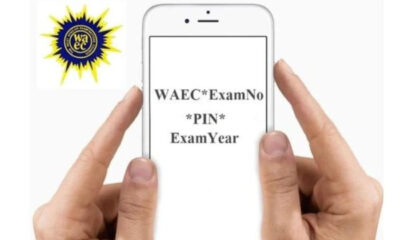
BREAKING: 61.54% Pass Rate as WAEC Releases 2026 WASSCE Results – How to Check Results
-
Opinion2 days ago
WHO WILL SPEAK FOR WASILAT? WHEN TRADITION BECOMES HUMILIATION, JUSTICE MUST SPEAK