
Business
N4.2trn Debt Service: Economy in real crisis –Lawan
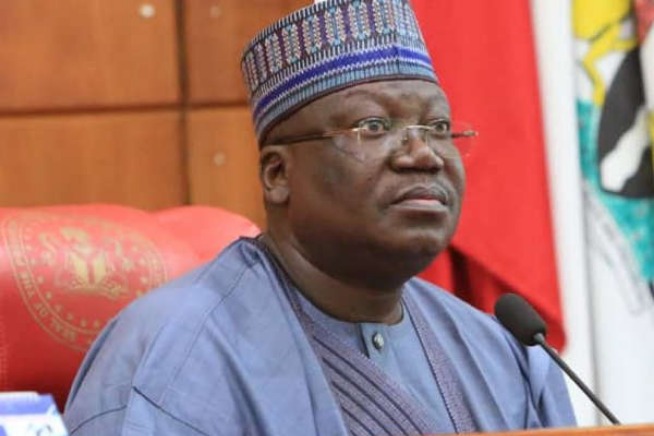
WITH a debt service of N2.49 trillion in 2021, the senate yesterday, admitted the economy is in serious crisis.
In his goodwill message at the 40th Anniversary of Chartered Institute of Taxation (CITN), in Abuja, the Senate President, Dr. Ahmed Lawan, alluded that the debt service rose from N2.11 trillion in 2019 to N2.49 trillion in 2021 while the contribution of the major revenue- generating agencies to consolidated revenue account in 2020 was over N8 trillion.
“Last year it got to N11. 93 trillion. And today, we have almost half a trillion deficit of expenditure in terms of infrastructure delivery. Invariably, the economic problem in this country cannot happen without the active collaboration of elitist groups like CITN and other professional bodies,” he said.
Lawan who was represented by his Special Adviser on Economic Matters, Professor Nazif Abdullahi Darma, explained that Nigeria’s economy is a growing one with a population of over 200 million and three per cent growth rate. This implies that every year, six million people are added to the nation.
“Our economy is a growing one. We have over 200 million citizens. We have a growth rate of over three per cent. Meaning, every year, six million citizens are added.
READ ALSO:
- 5 Killed, Houses Burnt In Fresh Zangon Kataf Attack
- Ramsey Nouah is my crush in Nollywood, says Nwogu
- (ICYMI) WAEC release withheld results
- Obasanjo fumes over fire in Benue farm, Ortoms orders probe
On a daily basis, 26,000 babies are born. These demographic indicators are real challenges of providing quality social service welfare for its citizens” he said.
However, he said, the people’s participation in governance is predicated on their ability to pay tax.
“In most democracies in the world today, people’s participation in governance is predicted on the ability of those citizens to pay taxes as and when due. And that is where we saw a lot of fundamental questions raised on the way and manner the economies are being managed because taxpayers are actually the contributors of the resources that are used in running such economies” he noted.
In his remarks, the Vice President, Professor Yemi Osinbajo, lamented that Nigeria’s tax to Gross Domestic Products (GDP) ratio is the lowest in the world while its comparators are in the neighborhood of about 15 per cent to 25 per cent.
This, he noted, was symptomatic of undue reliance on oil revenue as a result of fiscal imbalances in the nation’s financial landscape.
Osinbajo who spoke through the Minister of Finance Budget and National Planning, Mrs Zainab Shamsuna Ahmed, who in turn was represented by the Permanent Secretary, Ministry of Finance Budget and National Planning, Mallam Ahmed Aliyu, stated that tax collection has improved to the extent that FIRS exceeded its target for Year 2021 with N6.450 trillion from both oil and non-oil revenues.
Sun









Auto
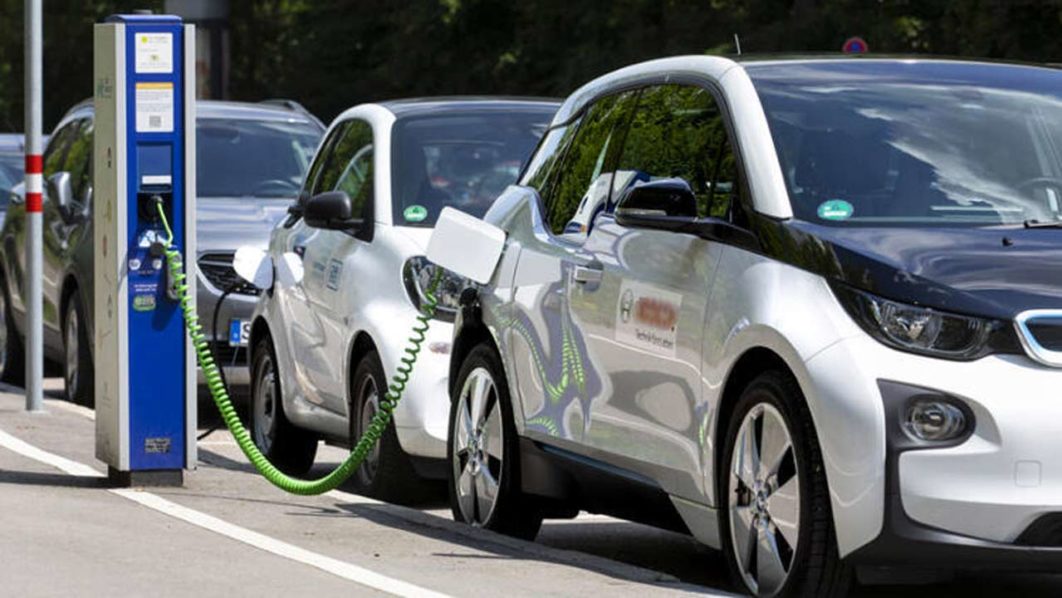
Soaring Fuel Prices Drive Nigerians Toward Electric Vehicles
Soaring Fuel Prices Drive Nigerians Toward Electric Vehicles
Rising fuel prices in Nigeria are accelerating interest in electric vehicles (EVs) as households, transport operators, and businesses seek cost-effective alternatives to petrol- and diesel-powered cars. Experts say the spike in petrol costs is no longer just an economic concern but a turning point, pushing electric mobility from a futuristic idea into a practical solution for everyday commuting and commercial use.
At the Abuja Compact on Electric Mobility Roundtable, stakeholders highlighted how increasing transport expenses are reshaping decisions, especially among commercial drivers and small business owners. Rising fuel costs are prompting many Nigerians to see EVs as a survival strategy rather than a luxury option.
Chairman of the Presidential Initiative on Compressed Natural Gas and Electric Vehicles (Pi-CNG & EV), Ismaeel Ahmed, explained that the removal of fuel subsidies has widened the cost gap between petrol-powered vehicles and EVs. Charging an EV for a 200-kilometre journey costs around ₦4,500, compared to roughly ₦22,500 for petrol vehicles — a difference that offers a “strong economic incentive” influencing consumer choices. Ahmed added that the federal government is pursuing a balanced transition strategy supporting both compressed natural gas (CNG) and electric vehicles to encourage sustainable energy alternatives.
Financial solutions are helping Nigerians overcome the high upfront costs of EVs. Mohammed Abdul, Divisional Head at Alternative Bank, noted that lease-to-own, pay-as-you-go, and partnership schemes are making EVs accessible to drivers in the informal transport sector. These financing models allow gradual adoption while easing financial burdens.
READ ALSO:
- Ogun Partners with NAHCON, Names Key Hajj Leadership Team
- Timi Frank: INEC Actions Threaten Democracy, Calls on Trump to Support Nigeria
- ADC Defies INEC, Moves Ahead with Congresses, Convention
Industry leaders also see wider economic benefits from EV adoption. Yusuf Suleiman, CEO of Bankrol Camel EV and Blue Camel Energy Ltd, said EV investments could improve energy access, boost industrial growth, and reduce Nigeria’s reliance on imported fossil fuels. Ahmed Garba Ahmed, COO of Bankrol Camel EV, added that EVs can cut energy costs per kilometre by up to 60%, benefiting ride-hailing drivers, logistics companies, and fleet operators.
Dapo Adesina, President of the Electric Mobility Promoters Association of Nigeria (EMPAN), explained that EV adoption can strengthen Nigeria’s power sector. Solar-powered charging hubs can simultaneously power vehicles and supply electricity to nearby communities, particularly in underserved areas. Private sector initiatives are also supporting Nigeria’s EV transition. Companies like SolarCity Gas are deploying superfast EV charging stations across key urban hubs and petrol stations, expanding the country’s charging infrastructure to meet growing demand.
Despite growing adoption, electric mobility in Nigeria faces challenges such as limited electricity infrastructure and inconsistent power supply. Analysts warn that significant investments in charging networks and supportive policies are necessary for sustainable EV growth. Nevertheless, with fuel prices remaining high, EVs are increasingly viewed as economically smart and environmentally friendly alternatives, offering Nigerians a viable solution to rising transport costs.
Soaring Fuel Prices Drive Nigerians Toward Electric Vehicles
Business
Rite Foods, BJAN champion consumer safety at Ososa factory tour

Rite Foods, BJAN champion consumer safety at Ososa factory tour
By Daphne Uduneje
To commemorate World Consumer Rights Day 2026, the Brand Journalists’ Association of Nigeria (BJAN) partnered with Rite Foods Limited to host a high-level stakeholder engagement at the company’s ultra-modern manufacturing plant in Ososa, Ogun State.
Under the theme “Safe Products, Confident Consumers,” the event combined rigorous policy discourse with a firsthand look at the cutting-edge technology behind one of Nigeria’s leading indigenous brands.
The journey began at Rite Foods’ Lagos office, transitioning from the city’s urban bustle to the expansive, scenic greenery of the Ososa facility. For the journalists in attendance, the factory’s exterior—a sprawling, sophisticated complex—signalled a facility capable of competing on a global scale.
Inside, the hum of precision machinery served as the backdrop for the day’s discussions. Olufemi Ajileye, General Manager for Operations at Rite Foods, welcomed guests by emphasizing that safety is the bedrock of their market strategy.
Since breaking into the carbonated soft drink sector, Rite Foods has leveraged advanced technology and stringent quality controls—including international laboratory testing for water purity—to earn and maintain public trust.
Despite improvements in legislation, speakers noted a persistent gap in consumer awareness. Sola Salako-Ajulo, founder of the Consumer Advocacy Foundation of Nigeria (CAFON), described consumer confidence as the “oxygen of any market.”
To empower the public, she unveiled the CAFON Consumers Companion (3C), an AI-powered platform designed to educate Nigerians on their rights and provide a roadmap for dispute resolution.
“Consumers often feel powerless,” she noted, “but technology can bridge the gap between grievance and redress.”
The Regulatory Stance
The Federal Competition and Consumer Protection Commission (FCCPC) and NAFDAC reaffirmed their commitment to enforcement:
FCCPC: Executive Vice Chairman Tunji Bello (represented by Olubunmi Dorcas Otti) urged businesses to maintain transparency, noting that economic participation thrives only when safety is guaranteed.
NAFDAC: Director-General Mojisola Adeyeye (represented by Tinuola Akinnubi) reminded attendees that consumer rights are legally enforceable obligations, highlighting the importance of “technological traceability” in the modern market.
BJAN Chairman Daniel Obi emphasized that the association had sustained this initiative for over a decade because consumer protection is a collective burden.
“It is not the responsibility of regulators alone,” Obi stated. “Businesses, media, and civil society must work in harmony.”
The event concluded with a guided tour of the production floor. Journalists observed a seamless, automated “dance” of technology where drinks were corked, labeled, and packaged with surgical precision.
As the delegation departed Ososa, the takeaway was clear: building a “confident consumer” requires more than just marketing—it requires the transparency of the factory floor and the accountability of the boardroom.


Business
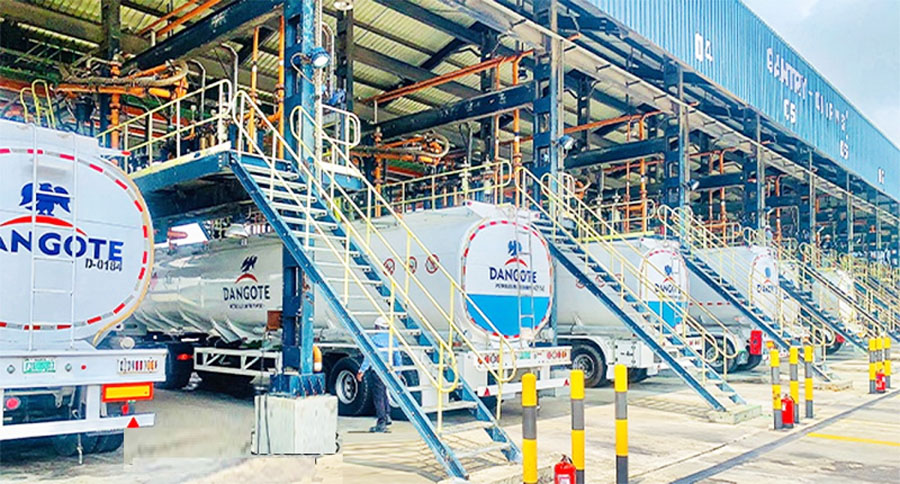
NNPC Boosts Crude Supply to Dangote Refinery to Address Rising Fuel Prices
NNPC Boosts Crude Supply to Dangote Refinery to Address Rising Fuel Prices
The Nigerian National Petroleum Company Limited (NNPC) has raised the allocation of crude oil cargoes to the Dangote Petroleum Refinery from five to seven cargoes for May 2026, a strategic move aimed at strengthening domestic fuel production and reducing Nigeria’s dependence on imported crude amid rising petrol prices.
According to Reuters, two trade sources and a senior refinery official confirmed the development. “NNPC has allocated more cargoes to Dangote Refinery for May. While this will not completely meet our demands, it can help. We are also in negotiation with NNPC for additional volumes,” the official said.
READ ALSO:
- Couple Jailed 15 Years for Selling Infant, Toddler in Calabar
- IGP Orders Massive Security Deployment in Plateau After Deadly Jos Killings
- Ohanaeze Ndigbo Disowns ‘Igwe Ndigbo’ Installation in South Africa
For April 2026, the refinery will continue to receive the five cargoes previously allocated, as the increase only takes effect in May. Dangote Refinery CEO, David Bird, had earlier stated that the plant typically requires 13 to 15 cargoes per month under the crude-for-naira programme, but currently receives only five. The shortfall has forced the refinery to import additional crude at premiums of up to $18 per barrel above Brent crude prices, driven by global market disruptions, including the ongoing Iran-US-Israel conflict.
The refinery, which has a production capacity of 650,000 barrels per day, has been increasing gasoline supplies to Nigeria’s domestic market, currently meeting over two-thirds of daily petrol demand, roughly 60 million litres. However, the limited crude supply has exposed the refinery to global price volatility, prompting multiple ex-gantry price adjustments in March 2026 — from ₦774 to ₦1,275 per litre, before settling at ₦1,200 per litre.
Analysts say the increased allocation of crude cargoes will help ease the pressure on domestic petrol prices and provide a buffer against international crude market fluctuations, but the refinery still relies partly on imports to meet its full operational capacity. The move underscores NNPC’s commitment to supporting local refining capacity and ensuring energy security in Nigeria.
NNPC Boosts Crude Supply to Dangote Refinery to Address Rising Fuel Prices

-

 Education2 days ago
WAEC Releases 2026 WASSCE Timetable for School Candidates
-

 Auto2 days ago
Lagos NURTW Chairman Sego Distributes Exotic Cars, Luxury Items to Cabinet Members (Video)
-

 metro2 days ago
Cars Torched as South Africans Protest Alleged Nigerian ‘Igbo King’ Coronation
-

 Railway1 day ago
Easter train: NRC increases Lagos-Ibadan trips, offers free Osun holiday transit
-

 Sports2 days ago
Osimhen Among Highest-Paid African Footballers in 2026 — See Full List
-

 Education2 days ago
JAMB Releases 2026 UTME Mock Results, Delists Over 20 CBT Centres
-

 Business2 days ago
Bottles of Death: SWAN rallies media to combat ₦472bn illicit alcohol crisis
-

 Politics2 days ago
Adebayo Adelabu Resigns as Power Minister to Run for Oyo State Governorship