

Opinion
Nigeria’s growing begging economy, By Farooq Kperogi

Nigeria’s growing begging economy, By Farooq Kperogi
As the economy bites harder and end-of-year festivities rev up, the routine “tax” on middle-class Nigerians (the few of them that still exist, that is,) the political class and Nigerians in the diaspora predictably intensifies.
December is always expensive in Nigeria, but it now comes with an additional, informal levy: the expectation that anyone perceived as doing “well” must redistribute their resources far beyond family obligation.
For a long time, begging in Nigeria was associated with what Marxists once called the lumpen proletariat, that is, the dirt-poor, socially marginal and largely unorganized underclass. In Nigeria, this image was most vividly represented by the almajirai in the North, children sent to Qur’anic schools who were expected to fend for themselves through street begging.
That picture no longer captures the reality. Begging has morphed into a flourishing, multi-layered industry with widening entrants, diversified platforms and increasingly normalized practices. What was once stigmatized has become routinized, rationalized and, in some cases, even celebrated.
One major accelerant of this shift is online begging, or e-begging. It first gained social legitimacy through “giveaways” staged by social media influencers seeking to grow the numerical strength of their subscriber base and boost engagement metrics. What began as a marketing tactic quickly turned into a cultural script. The logic is that public generosity creates visibility, visibility creates clout and clout converts to income.
But the giveaways did something more corrosive. They normalized public solicitation. Today, hordes of Nigerians drop their names and bank account numbers in comment sections without the slightest embarrassment. Sometimes they do so during announced giveaways. Increasingly, they do so even when there is no giveaway at all. The request itself has become the performance.
This represents a sharp cultural break. Shame and moderation, once important moral regulators in many Nigerian societies, have been eroded. Mendicancy has shed its stigma. Asking publicly for money, repeatedly and without restraint, no longer attracts social penalty. In some online spaces, it attracts admiration for “boldness.”
To be clear, taxing wealthier relatives to feed, clothe and educate poorer kin is not new. Many Nigerians from economically deprived homes benefited from the kindness and generosity of more successful relatives. I am one of them.
READ ALSO:
- LG Autonomy: Tinubu warns governors, considering Executive Order to enforce direct allocations
- Joshua Ends Paul’s Fairy Tale with Sixth-Round Knockout, Targets Fury Next
- JIM-ISUZU, JéGO EV, Nord A9, New Era Win NAJA ‘New Entrants of the Year’
We also learn that when we climb the ladder, we have a moral obligation to pay it forward. This ethic of mutual aid is deeply embedded in many Nigerian cultures, and it has helped countless people survive in the absence of a functional welfare state.
What has changed is not the ethic itself but its scale, scope and coercive intensity.
In the last few years, driven by rising inequality and the normalization of begging as an income strategy, the financial and emotional burden placed on comparatively well-off professionals has widened dramatically. The obligation now extends well beyond extended family. Acquaintances, friends of friends, former classmates, distant community members and even strangers now feel entitled to private redistribution.
Worse still, not everyone whose burden is carried by others is poor. For many, begging has become a source of passive income, an alternative revenue stream or even the primary means of livelihood. I have heard multiple accounts of people who built entire houses, from foundation to finishing, purely from proceeds of beggary. This is no longer emergency relief. It is enterprise.
What sustains this culture is a peculiar sense of entitlement. For example, Nigerians who live abroad, especially in countries with stronger currencies, are widely imagined to be awash in vast oceans of money.
The brutal realities of rent, taxes, health insurance, childcare and precarious labor markets abroad are erased. They conveniently replace the lived experience of diasporan Nigerians with a crude, ignorant exchange-rate arithmetic.
As a result, even acts of real sacrifice are interpreted not as generosity but as sprouting from effortless abundance.
I once extended a significant financial favor to a relative. Instead of gratitude, I later learned that this person had told another relative that I did not deserve too much praise because the dollar-to-naira exchange rate meant that “a few thousand dollars” from me amounted to millions of naira. The assumption was that thousands of dollars are to Americans what thousands of naira are to Nigerians.
This is fantasy economics, of course, but it is powerful fantasy. It turns helpers into inexhaustible wells. Nothing they give is ever enough because the imagined surplus is infinite.
READ ALSO:
- Aisha Buhari Opens Up on Buhari’s Final Year: “Our Calendar Was Filled With Funerals”
- ANAMMCO, Stallion, RT Briscoe Honoured as Nigeria’s Most Resilient Auto Brands
- Dangote Sinotruk, Innoson, IPI Shine at 18th NAJA Auto Awards
Politicians and people close to political power experience the same dynamic. Merely being adjacent to authority is enough to generate demands. People assume access to limitless resources, contracts, favors and cash. Every refusal is read as “wickedness.” Every gift is insufficient. Gratitude disappears because entitlement has taken its place.
What makes this phenomenon especially troubling is that it is rarely recognized as structural. It is personalized, moralized and weaponized. If you resist, you are accused of selfishness or betrayal. If you comply, you’re seen as embodying boundless abundance, and the demands escalate. Either way, the individual absorbs the costs of collective failure.
There is no question that the scale and persistence of begging are increasing daily in Nigeria. Previously proud and self-respecting people now engage in what can only be described as executive begging: polished, strategic, emotionally manipulative solicitation performed by people who know exactly how to frame vulnerability for maximum extraction.
Unfortunately, this is not a victimless system. Fairly well-to-do Nigerians, both at home and abroad, are stretched and stressed. They are not simply “helping family.” They are informally tasked with carrying portions of the nation’s social welfare burden. They subsidize state collapse with private sacrifice. But no seems to know or care.
The consequences are profound. Many delay building their own homes. Others postpone retirement savings. Some abandon entrepreneurial ambitions. Intergenerational wealth transfer becomes impossible when today’s surplus is permanently pre-empted by yesterday’s deprivation. What looks like generosity in the short term reproduces fragility in the long term.
This is why the phenomenon deserves systematic study. How much is the begging economy worth annually in Nigeria? What proportion of household income flows through informal redistribution networks? How much investment, savings and productive capital formation is foregone as a result? Until we quantify these questions, we will continue to treat a structural crisis as a series of private moral dilemmas.
Individualizing a structural problem harms everyone. It breeds resentment among givers, dependency among receivers and moral confusion in society at large. We end up with a culture where no one feels responsible for fixing institutions, but everyone feels entitled to someone else’s paycheck.
Nigeria needs a system where the burden of state failure is not casually transferred to individuals lucky enough to escape it. We need social norms that reward productivity and dignity rather than permanent solicitation. We need public policy that reduces desperation instead of romanticizing survivalism. Most of all, we need to recover the idea that begging should be a last resort, not a business model.
Until then, Nigeria’s growing begging economy will continue to expand, insidiously taxing the few who manage to stay afloat while deepening the very inequalities that made it possible in the first place.
Kperogi is a renowned columnist and United States-based professor of Journalism









Opinion
2027: Competence, Not Zoning, Should Decide Nigeria’s Next President — Imasuagbon
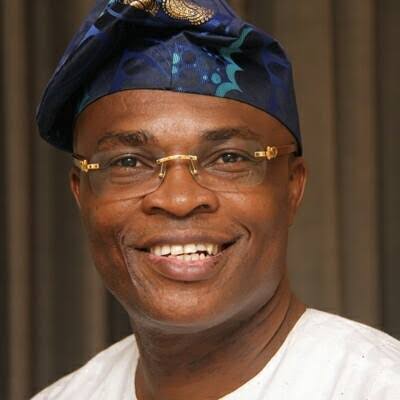
Nigerians should look beyond ethnicity, region and the longstanding debate over rotational presidency when choosing the country’s next leader, according to a chieftain of the African Democratic Congress (ADC), Kenneth Imasuagbon.
The former Edo State governorship aspirant said the priority ahead of the 2027 election should be finding a president with the ability to confront Nigeria’s economic, security and infrastructure challenges.
Speaking to journalists in Benin, Imasuagbon argued that presidential rotation is not a requirement of the Nigerian Constitution and should therefore not outweigh the question of competence.
He said voters should be more concerned about replacing poor schools with better ones, improving healthcare and addressing hardship than debating where the next president comes from.
Imasuagbon specifically appealed to voters in the South to support former Vice President Atiku Abubakar, who is contesting the 2027 presidency on the ADC platform.
According to him, Atiku has demonstrated the experience and determination needed to improve the country, describing the former vice president as someone capable of promoting national unity and fairness.
He also accused the Bola Tinubu administration of worsening economic pressure through policies including the removal of fuel subsidy, while expressing concern about the condition of roads, electricity and other infrastructure.
Imasuagbon argued that the next administration must focus on practical improvements in areas such as power, transportation, employment, security and public services.
The ADC chieftain also dismissed the idea that the ruling All Progressives Congress (APC) would automatically benefit from its incumbency advantage in 2027.
He maintained that the electorate ultimately determines the outcome of an election, arguing that voters could change the political direction of the country if they were determined to do so.
Imasuagbon further criticised what he described as regional and ethnic considerations in the distribution of political appointments and opportunities, insisting that the next president should give Nigerians across different parts of the country a sense of belonging.
His comments come as political parties and their candidates intensify preparations for the 2027 presidential election.
Opinion
Lesson from Dotun Oladipo’s Brave Daughters, by Bamidele Johnson
Lesson from Dotun Oladipo’s Brave Daughters, by Bamidele Johnson
I hope to grow old. I want to see my kids become real adults, find their own feet, make mistakes, recover from them, and perhaps one day complain that their own children are giving them grey hairs. I want that plainly stated before anything else, as everything that follows might read as a man agreeing to an early exit rather than a man simply being honest about the odds.
I want the decades. I want to become the grandfather who repeats the same stories until nobody bothers correcting him anymore. But wanting a thing and being granted are different things. The last year has made that difference harder to ignore than I would like. I have lost many friends recently to keep thinking that optimism is my natural resting state. Some of these men had better blood pressure than mine, better habits, better everything that is supposed to count. It did not save them.
There is no formula I know that reliably separates the men who make it to 70 from those who do not. Anyone who says he knows one is selling something. So, I do not assume that old age is an already booked destination. Even if I once did, which I doubt, the last three years have cured me of such an illusion. As such, I treat it as a hope rather than an expectation, and I have found that a more honest way to live.
It is exactly why I want something placed on record now, while I am still able to place things on record, rather than leave it for people to guess what my wishes were in the fog of a funeral week. If I do not make old bones, my children are not to be asked to read tributes at my funeral. Not one line, however short, however lovingly written.
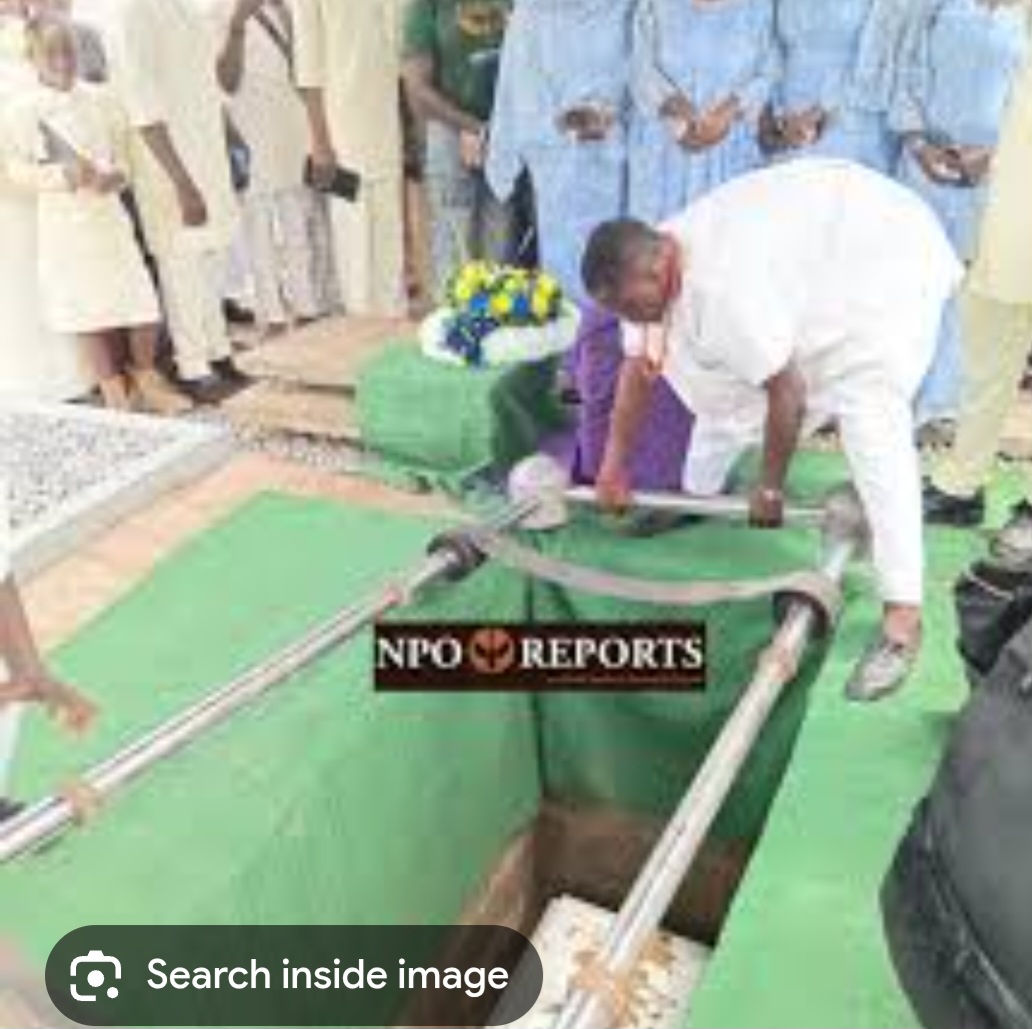
This, for me, was settled today rather than re-opened. At Dotun Oladipo’s funeral service, his three daughters took turns to read their tributes to their dad, and I found myself watching them with awe. There was a kind of strength in them that I do not possess. It is the strength needed to stand in front of a hall brimming with grieving adults and speak about a man they have just lost. Forever. Strength, however, is not the same as ease. I could see plainly what that strength was costing them as they read. Their voices caught. Their composure held and then did not hold and then held again through sheer will.
In front of them, in the pews, men and women considerably older than them came undone in ways the girls themselves were somehow managing to resist. I went mightily close. Some of the sobbing was quiet, the type people try to fold into a handkerchief. Some of it was not quiet at all, the kind that announces itself whether or not you want it.
Those young women honoured their father with a grace that is beyond me. What they did was astonishing. So, what I am attempting is an observation of a custom I have now watched wound people. This was not the first time I had watched this particular ritual extract more than it should from people already running on fumes. I saw an earlier and harder version of it at a friend’s wake back in 2015.
The first son was called forward to read his father’s tribute, and he could not do it. He tried, but the words would not come, and he stood there in front of a crowd of mourners, with his grief simply refusing to organise itself into sentences. The officiating minister, rather than releasing him from the task, urged him to continue. I sat fizzing with sorrow and ire. He could not go on and, eventually, the minister accepted, but not before insisting a while longer than it should have reasonably taken. His younger brother was called up next, presumably on the theory that if one grieving son could not manage it, maybe another one could. He flunked it in the same way. Grief does not distribute itself more conveniently among siblings just because a programme has been printed and needs to be followed.
I have turned that memory over many times since, trying to work out why this part of the rites is treated as mandatory in the first place. I have not found a satisfying answer. Maybe it comes from a belief that a child’s words carry more weight than anyone else’s, which may even be true, but weight is exactly the problem when those carrying it are struggling to hold themselves together with nothing but adrenaline and the fear of dissolving in public.
Maybe it is simply inertia, the reason we still do a hundred things at funerals that nobody can explain the original purpose of. Either way, I have stopped looking for the justification. I no longer think one exists that is good enough to weigh against what I watched happen to that boy in 2015.
So, let this stand as my instruction rather than my preference, the kind of thing I would rather state plainly now than leave for my children to infer later from how uncertain I sound when the subject comes up in passing. If I do not get the old age I am hoping for, my children will not be asked to read a single word over my body. Someone else can speak for me. A friend, a stranger with a steadier voice and a smaller stake in the loss, anyone whose grief will not be quite so total that standing upright becomes almost impossible.
My children, of course, will sit in front and fall apart if that is what the day requires of them, but without the microphone. That, at least, is one small mercy I intend to arrange for them while I am still here to arrange it.
Dotun deserved every bit of the send-off his daughters gave him today, and I suspect he would have been the first to tell them to sit down and let someone else carry the weight for a while. He did not get a say in that, as none of us ever do once we are the ones being spoken of rather than the ones speaking. Rest well, Dotun. You raised three young women whose strength I will not soon forget. That alone says everything worth saying about the man you were.
Opinion
‘Tinubu Will Win Again in 2027’ — Charismatic Bishops’ Secretary
‘Tinubu Will Win Again in 2027’ — Charismatic Bishops’ Secretary
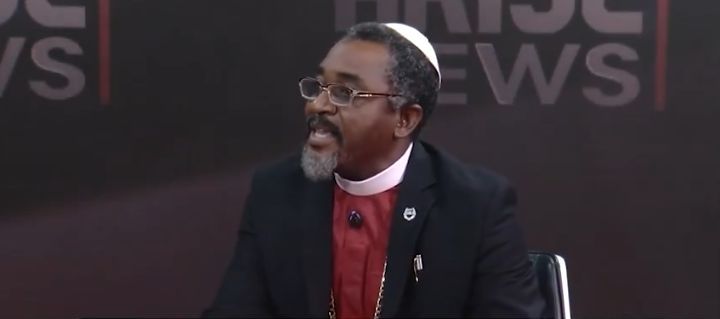
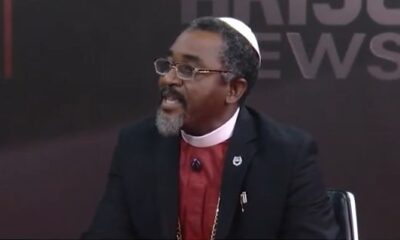
A senior Nigerian cleric, Archbishop Chivir Chianson, has declared that President Bola Tinubu will retain the presidency after the 2027 general election, attributing the prediction to a message he said came from God.
Chianson, who serves as Secretary General of the Charismatic Bishops’ Conference of Nigeria, made the statement while appearing on Arise Television on Saturday.
Rather than basing his prediction on political calculations, the archbishop said his confidence came from what he described as the prophetic role of bishops.
He maintained that the conference had previously spoken about Tinubu’s political future based on what he said was divine revelation and that the President would return for another term.
Chianson also predicted that Tinubu’s performance would improve if he wins the 2027 election.
READ ALSO:
- DSS warns Osun churches, mosques, markets over alleged terrorist attack plot ahead of 2027
- ‘Tinubu Will Win Again in 2027’ — Charismatic Bishops’ Secretary
- Fake miracles, bogus grants: How clerics allegedly fleece Nigerians of millions
Addressing the political opposition, the cleric said the bishops could not be blamed if rival parties failed to unite or organise themselves effectively ahead of the election.
He also sought to clarify the position of the bishops when dealing with government, saying their role in speaking truth to power did not mean they should approach political leaders with hostility or disrespect.
According to him, the Constitution, alongside their religious convictions, should guide how they engage the President and the country.
Chianson said he was sufficiently confident in his prediction to promise that he would return to the Arise TV studio after the 2027 election, when he expects the result to demonstrate that the bishops’ prophecy was correct.
His comments add a religious dimension to the increasingly active political conversation surrounding the 2027 presidential race.
‘Tinubu Will Win Again in 2027’ — Charismatic Bishops’ Secretary
-

 metro3 days ago
MURIC fires back at Peter Obi: Forget Sallah ceremony, free Nigerian Muslims
-

 News2 days ago
SERAP Threatens Legal Action Over ₦126bn INEC Electoral Funds
-

 International3 days ago
Trump Tells Supporters to ‘Cheat Like Hell’ Ahead of US Election
-
 Politics2 days ago
Five Islamic Clerics Abducted After Tinubu Re-Election Prayer At Yari’s Zamfara Residence
-

 Auto3 days ago
Jetour Takes Award-Winning Dashing, Other SUVs to Abuja
-

 Business3 days ago
Dangote raises petrol price 6.7% to N1,350/litre
-
 Opinion2 days ago
‘Tinubu Will Win Again in 2027’ — Charismatic Bishops’ Secretary
-
 metro3 days ago
Fani-Kayode Condemns Fresh Killing of Two Nigerians in South Africa