

Opinion
Experts Warn US Strikes in Nigeria Could Harm Civilians, Fuel Sectarian Tensions
Experts Warn US Strikes in Nigeria Could Harm Civilians, Fuel Sectarian Tensions
Security analysts and local observers have raised concerns over the recent United States military strikes in Nigeria, warning that the operations could misfire and exacerbate tensions rather than curb terrorism.
The strikes, carried out in Sokoto State on Christmas Day under the guise of counterterrorism, mark the first US military operation on Nigerian soil in modern history. The action follows repeated claims by former US President Donald Trump, who alleged a “Christian genocide” in Nigeria and threatened military intervention.
According to eyewitnesses, the areas targeted have no established history of terrorist or bandit activity, with some strikes reportedly affecting civilian-populated areas rather than forested hideouts typically associated with terrorist groups like Boko Haram and ISWAP. Analysts warn that this raises questions about intelligence accuracy and operational planning.
READ ALSO:
- Fenerbahçe Move Ahead of Galatasaray in Race to Sign Nigerian Star Ademola Lookman
- Benue Police Foil Christmas Day Kidnap, Rescue Victim Unharmed
- Alleged Alterations Threaten Nigeria’s January Tax Reforms, Lawmakers Call for Suspension
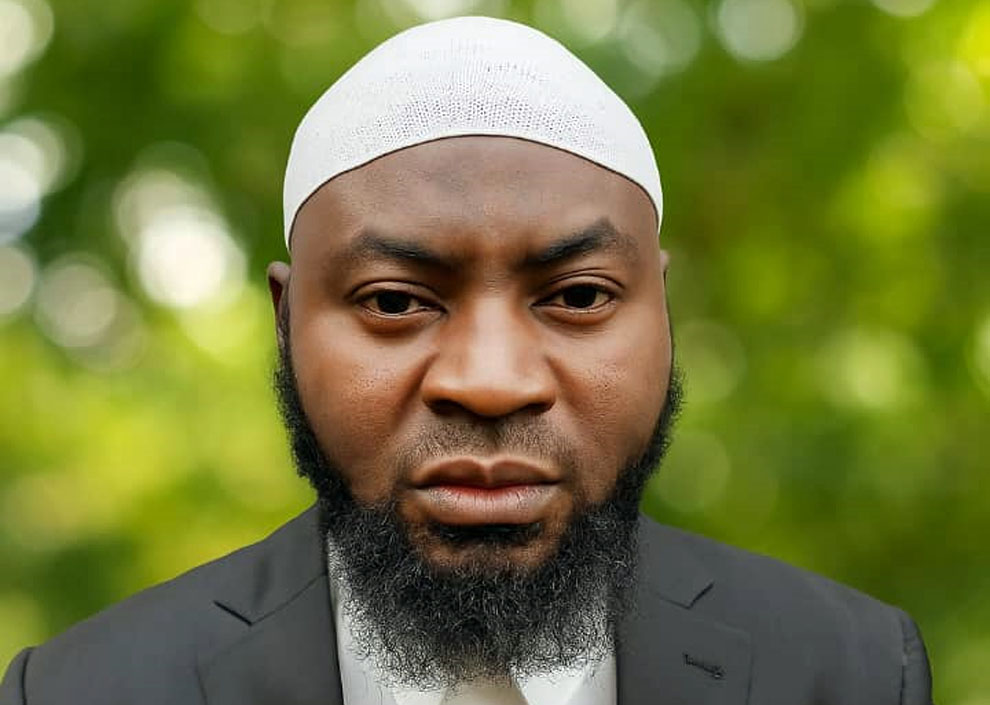
Mallam Ibrahim Agunbiade, writing on the implications of the strikes, emphasized that Nigeria’s security challenges are regionally specific. Boko Haram and ISWAP are concentrated in the North-East, while armed banditry is largely confined to forested regions in Zamfara and Niger states. “Any counterterrorism effort that ignores these realities is either grossly incompetent or deliberately misleading,” he noted.
Experts also caution against framing Nigeria’s crisis as a religious conflict, pointing out that both Muslims and Christians are affected by terrorism. Weaponizing religion to justify foreign military intervention could delegitimize Nigeria’s sovereignty and inflame sectarian tensions.
Agunbiade stressed that the country needs intelligence-driven cooperation and respect for its territorial integrity, rather than indiscriminate bombardments that may increase civilian casualties, deepen resentment, and destabilize communities.
“The goal must be accuracy, accountability, and restraint. Anything less is not counterterrorism; it is a reckless intervention with potentially devastating consequences,” he wrote.
Experts Warn US Strikes in Nigeria Could Harm Civilians, Fuel Sectarian Tensions









Opinion
2027: Competence, Not Zoning, Should Decide Nigeria’s Next President — Imasuagbon
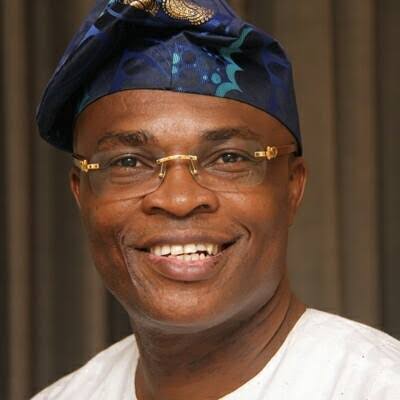
Nigerians should look beyond ethnicity, region and the longstanding debate over rotational presidency when choosing the country’s next leader, according to a chieftain of the African Democratic Congress (ADC), Kenneth Imasuagbon.
The former Edo State governorship aspirant said the priority ahead of the 2027 election should be finding a president with the ability to confront Nigeria’s economic, security and infrastructure challenges.
Speaking to journalists in Benin, Imasuagbon argued that presidential rotation is not a requirement of the Nigerian Constitution and should therefore not outweigh the question of competence.
He said voters should be more concerned about replacing poor schools with better ones, improving healthcare and addressing hardship than debating where the next president comes from.
Imasuagbon specifically appealed to voters in the South to support former Vice President Atiku Abubakar, who is contesting the 2027 presidency on the ADC platform.
According to him, Atiku has demonstrated the experience and determination needed to improve the country, describing the former vice president as someone capable of promoting national unity and fairness.
He also accused the Bola Tinubu administration of worsening economic pressure through policies including the removal of fuel subsidy, while expressing concern about the condition of roads, electricity and other infrastructure.
Imasuagbon argued that the next administration must focus on practical improvements in areas such as power, transportation, employment, security and public services.
The ADC chieftain also dismissed the idea that the ruling All Progressives Congress (APC) would automatically benefit from its incumbency advantage in 2027.
He maintained that the electorate ultimately determines the outcome of an election, arguing that voters could change the political direction of the country if they were determined to do so.
Imasuagbon further criticised what he described as regional and ethnic considerations in the distribution of political appointments and opportunities, insisting that the next president should give Nigerians across different parts of the country a sense of belonging.
His comments come as political parties and their candidates intensify preparations for the 2027 presidential election.
Opinion
Lesson from Dotun Oladipo’s Brave Daughters, by Bamidele Johnson
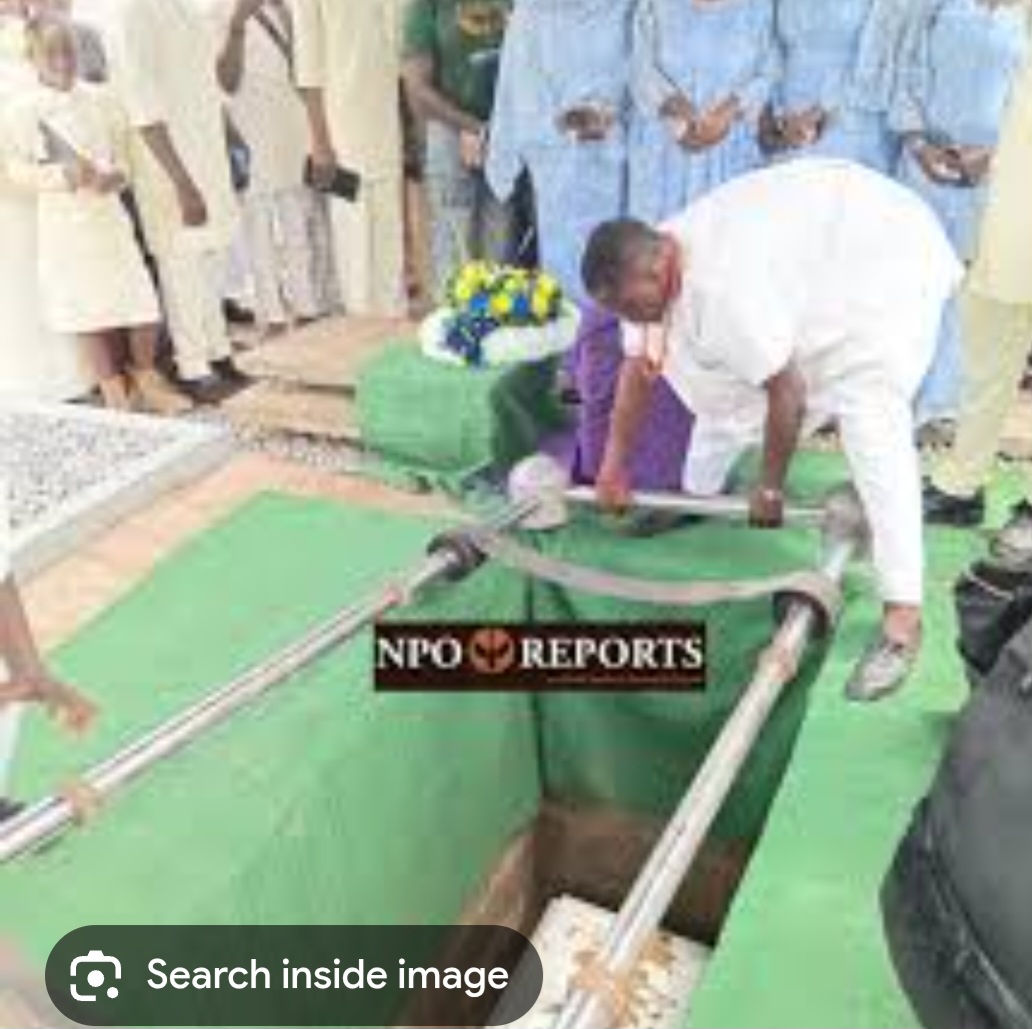
Lesson from Dotun Oladipo’s Brave Daughters, by Bamidele Johnson
I hope to grow old. I want to see my kids become real adults, find their own feet, make mistakes, recover from them, and perhaps one day complain that their own children are giving them grey hairs. I want that plainly stated before anything else, as everything that follows might read as a man agreeing to an early exit rather than a man simply being honest about the odds.
I want the decades. I want to become the grandfather who repeats the same stories until nobody bothers correcting him anymore. But wanting a thing and being granted are different things. The last year has made that difference harder to ignore than I would like. I have lost many friends recently to keep thinking that optimism is my natural resting state. Some of these men had better blood pressure than mine, better habits, better everything that is supposed to count. It did not save them.
There is no formula I know that reliably separates the men who make it to 70 from those who do not. Anyone who says he knows one is selling something. So, I do not assume that old age is an already booked destination. Even if I once did, which I doubt, the last three years have cured me of such an illusion. As such, I treat it as a hope rather than an expectation, and I have found that a more honest way to live.
It is exactly why I want something placed on record now, while I am still able to place things on record, rather than leave it for people to guess what my wishes were in the fog of a funeral week. If I do not make old bones, my children are not to be asked to read tributes at my funeral. Not one line, however short, however lovingly written.
This, for me, was settled today rather than re-opened. At Dotun Oladipo’s funeral service, his three daughters took turns to read their tributes to their dad, and I found myself watching them with awe. There was a kind of strength in them that I do not possess. It is the strength needed to stand in front of a hall brimming with grieving adults and speak about a man they have just lost. Forever. Strength, however, is not the same as ease. I could see plainly what that strength was costing them as they read. Their voices caught. Their composure held and then did not hold and then held again through sheer will.
In front of them, in the pews, men and women considerably older than them came undone in ways the girls themselves were somehow managing to resist. I went mightily close. Some of the sobbing was quiet, the type people try to fold into a handkerchief. Some of it was not quiet at all, the kind that announces itself whether or not you want it.
Those young women honoured their father with a grace that is beyond me. What they did was astonishing. So, what I am attempting is an observation of a custom I have now watched wound people. This was not the first time I had watched this particular ritual extract more than it should from people already running on fumes. I saw an earlier and harder version of it at a friend’s wake back in 2015.
The first son was called forward to read his father’s tribute, and he could not do it. He tried, but the words would not come, and he stood there in front of a crowd of mourners, with his grief simply refusing to organise itself into sentences. The officiating minister, rather than releasing him from the task, urged him to continue. I sat fizzing with sorrow and ire. He could not go on and, eventually, the minister accepted, but not before insisting a while longer than it should have reasonably taken. His younger brother was called up next, presumably on the theory that if one grieving son could not manage it, maybe another one could. He flunked it in the same way. Grief does not distribute itself more conveniently among siblings just because a programme has been printed and needs to be followed.
I have turned that memory over many times since, trying to work out why this part of the rites is treated as mandatory in the first place. I have not found a satisfying answer. Maybe it comes from a belief that a child’s words carry more weight than anyone else’s, which may even be true, but weight is exactly the problem when those carrying it are struggling to hold themselves together with nothing but adrenaline and the fear of dissolving in public.
Maybe it is simply inertia, the reason we still do a hundred things at funerals that nobody can explain the original purpose of. Either way, I have stopped looking for the justification. I no longer think one exists that is good enough to weigh against what I watched happen to that boy in 2015.
So, let this stand as my instruction rather than my preference, the kind of thing I would rather state plainly now than leave for my children to infer later from how uncertain I sound when the subject comes up in passing. If I do not get the old age I am hoping for, my children will not be asked to read a single word over my body. Someone else can speak for me. A friend, a stranger with a steadier voice and a smaller stake in the loss, anyone whose grief will not be quite so total that standing upright becomes almost impossible.
My children, of course, will sit in front and fall apart if that is what the day requires of them, but without the microphone. That, at least, is one small mercy I intend to arrange for them while I am still here to arrange it.
Dotun deserved every bit of the send-off his daughters gave him today, and I suspect he would have been the first to tell them to sit down and let someone else carry the weight for a while. He did not get a say in that, as none of us ever do once we are the ones being spoken of rather than the ones speaking. Rest well, Dotun. You raised three young women whose strength I will not soon forget. That alone says everything worth saying about the man you were.
Opinion
‘Tinubu Will Win Again in 2027’ — Charismatic Bishops’ Secretary
‘Tinubu Will Win Again in 2027’ — Charismatic Bishops’ Secretary
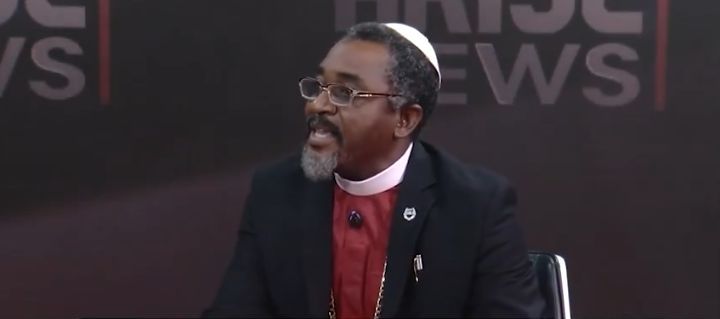
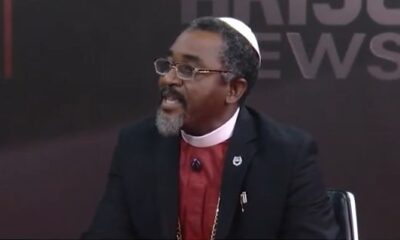
A senior Nigerian cleric, Archbishop Chivir Chianson, has declared that President Bola Tinubu will retain the presidency after the 2027 general election, attributing the prediction to a message he said came from God.
Chianson, who serves as Secretary General of the Charismatic Bishops’ Conference of Nigeria, made the statement while appearing on Arise Television on Saturday.
Rather than basing his prediction on political calculations, the archbishop said his confidence came from what he described as the prophetic role of bishops.
He maintained that the conference had previously spoken about Tinubu’s political future based on what he said was divine revelation and that the President would return for another term.
Chianson also predicted that Tinubu’s performance would improve if he wins the 2027 election.
READ ALSO:
- DSS warns Osun churches, mosques, markets over alleged terrorist attack plot ahead of 2027
- ‘Tinubu Will Win Again in 2027’ — Charismatic Bishops’ Secretary
- Fake miracles, bogus grants: How clerics allegedly fleece Nigerians of millions
Addressing the political opposition, the cleric said the bishops could not be blamed if rival parties failed to unite or organise themselves effectively ahead of the election.
He also sought to clarify the position of the bishops when dealing with government, saying their role in speaking truth to power did not mean they should approach political leaders with hostility or disrespect.
According to him, the Constitution, alongside their religious convictions, should guide how they engage the President and the country.
Chianson said he was sufficiently confident in his prediction to promise that he would return to the Arise TV studio after the 2027 election, when he expects the result to demonstrate that the bishops’ prophecy was correct.
His comments add a religious dimension to the increasingly active political conversation surrounding the 2027 presidential race.
‘Tinubu Will Win Again in 2027’ — Charismatic Bishops’ Secretary
-
 News2 days ago
SERAP Threatens Legal Action Over ₦126bn INEC Electoral Funds
-
 Politics2 days ago
Five Islamic Clerics Abducted After Tinubu Re-Election Prayer At Yari’s Zamfara Residence
-
 Opinion2 days ago
‘Tinubu Will Win Again in 2027’ — Charismatic Bishops’ Secretary
-

 metro2 days ago
Mother ‘sold daughter’s abuse videos for $300’: Nigeria child pornography case shocks nation
-

 Sports2 days ago
‘Unacceptable’ — Arteta Furious Over Sunderland Penalty in Arsenal Win
-
 Politics20 hours ago
2027: Northern Lecturers Back Tinubu, ASUU Disowns Endorsement
-
 Politics3 days ago
Bamanga Tukur Dies at 90, Tinubu Pays Tribute to Ex-PDP Chairman
-
 News1 day ago
Nwifuru Dismisses Cubana Chief Priest as ‘Attention-Seeker’