

metro
No Ransom, No Negotiation: President Reveals Intelligence Behind Oriire School Rescue
No Ransom, No Negotiation: President Reveals Intelligence Behind Oriire School Rescue
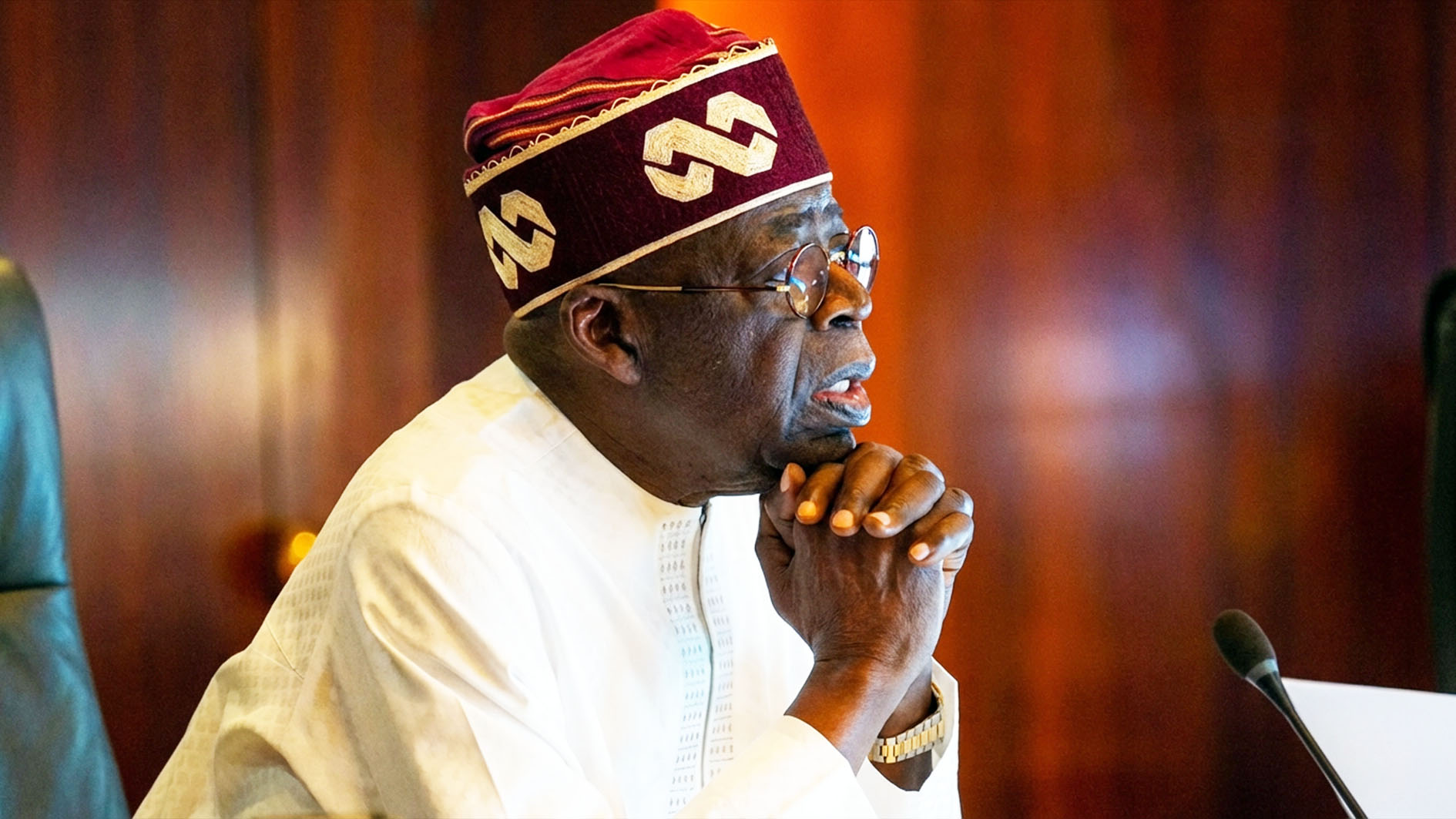
President Bola Ahmed Tinubu has publicly revealed the intelligence-driven strategy behind the successful rescue of 46 schoolchildren and teachers abducted in Oriire Local Government Area of Oyo State, confirming that security forces tracked and arrested the families of the kidnappers to pressure the terrorists into releasing their captives—without paying ransom or negotiating with criminals. The President made the disclosure on Thursday while receiving a delegation of traditional rulers from Oyo State, led by the Olubadan of Ibadanland, Oba Rashidi Ladoja, at the Presidential Villa in Abuja. The visit was a thank-you mission to appreciate the Federal Government and the Armed Forces for securing the release of the victims after they spent 56 days in captivity.
Speaking publicly for the first time since the victims were rescued on July 10, Tinubu said the kidnappers presented two conditions for the release of the hostages: a demand for money and the release of detained members of their criminal gang who were already in custody. The Federal Government rejected both demands outright. “We refuse to negotiate for ransom. These criminals wanted us to release from detention members of their criminal gangs that were already arrested. That was one of their conditions, outside of the money they were looking for. And we said no deal. We are not going to negotiate with criminals. They committed murder, and we were ready to finish with their families, members of their own communities. They grew up somewhere,” the President stated. He emphasised that the government’s refusal to negotiate was aided by the military’s detailed knowledge of the forest terrain where the kidnappers were holed up. “We refused to pay ransom. We have the geography of the forest. We know what it is, and in answer to it, you’ve seen that from eight divisions, we are now moving to 12 divisions, to shorten the response time and give that response time the teeth needed to defeat terrorism and banditry,” he said.
According to security sources, the operation was driven by intelligence that led operatives of the Department of State Services (DSS) to track down and arrest several wives and children of the suspected kidnappers across different communities and cities nationwide. The family members were subsequently moved to Abuja, where they were interrogated in accordance with investigative procedures. Investigators believe the arrest of the terrorists’ family members reduced the likelihood that the abductors would harm the hostages, fearing possible consequences for their own relatives. Security sources further disclosed that video recordings of the interrogations were somehow leaked to the kidnappers, a development that reportedly unsettled the terrorists and made them more responsive to negotiations. “The kidnappers suddenly became more responsive. They abandoned their earlier hardline position and started making frequent contact instead of disappearing after making demands,” one source said. The terrorists thereafter proposed releasing the abducted schoolchildren and teachers in exchange for the freedom of their wives and guarantees of safe passage. However, security agencies rejected the proposal, insisting that the captives must first be released unconditionally. A source familiar with the operation disclosed that the final order to storm the camp was issued on Thursday night after fresh intelligence confirmed that the abducted schoolchildren and teachers were no longer being used as human shields. The assault was swift, well coordinated, and backed by overwhelming firepower, catching the terrorists off guard. During the operation, scores of terrorists were killed, while eight others were arrested.
READ ALSO:
- Unpaid arrears: Resident doctors threaten total nationwide strike
- IGP Redeploys Osun CP to Force Headquarters Ahead of August 15 Governorship Election
- Where Will Peter Obi’s Votes Come From? I Can’t See It – Keyamo Predicts Tinubu’s Landslide Victory
In a related development, the Department of State Services has arraigned five men accused of complicity in the May 15 kidnapping and the subsequent killing of two victims. The five alleged members of the Jama’atu Ansarul Muslimina fi-Biladis Sudan (Ansaru) terrorist group were identified as Mahmud Muhammad (aka Abu Bara’a, Abbas Mukhtar); Abubakar Abbas (aka Isah Adam, Mallam Mahmuda Al-Nigeri); Abdulrazak Umar (aka Abu Khalifa/Abu Khalid); Yunusa Musa (aka Abu Yunusa Bin Musa); and Shamsu Adamu Sani (aka Abu Itisar). In count one of the charge, Muhammad and Abbas were accused of ordering their foot soldiers within Ansaru, including Umar, Musa and Sani, to kidnap and kill people across the country in the event of their arrest, in order to compel the government to accede to their demands. In count two, the DSS alleged that the May 15 kidnapping of pupils and teachers in Oriire and the killing of two of the victims were carried out in furtherance of that order. The five pleaded not guilty when each count on the charge sheet was read to them. Justice Salim Ibrahim granted the prosecution’s request to remand the defendants in DSS custody, ordering that they be given unhindered access to their lawyers and two members of their immediate families, and that they be accorded adequate medical attention. The case was adjourned till September 25 for the commencement of trial.
President Tinubu revealed that the lessons learned from the Oriire abduction prompted a review of the country’s security architecture, leading to his directive to expand the Nigerian Army from eight to 12 divisions. The expansion, which also includes the recruitment of 28,000 additional personnel, aims to shorten response time, decentralise operational decision-making, and strengthen border security and counter-insurgency operations. Under the new structure, the Army will operate 12 divisions strategically located across the country, with new divisions established in Makurdi (Benue State), Ilorin (Kwara State), Jalingo (Taraba State), and Benin City (Edo State). The implementation will be carried out in two phases, with the first phase expected to be completed by September 2026 and the second phase by December 2026. The President also announced plans to establish state police with safeguards against abuse and to enhance the capacity of forest guards to combat criminal elements operating in forests. “They are not just to chase antelopes and animals. We are going to have them chase the criminals and deal with them in various forests,” Tinubu said.
Oba Ladoja, speaking on behalf of the delegation, said the traditional rulers had confidence in the capability of Nigerian security agencies but remained apprehensive about the victims’ safe return. He expressed gratitude to the President and all stakeholders for their efforts in securing the rescue. The Olubadan also used the occasion to thank the Tinubu administration for ongoing and proposed federal road projects aimed at improving connectivity across Oyo State, including the dualisation of the Ibadan-Ijebu Ode Road, Ogbomoso-Ilorin Road, and the Badagry-Sokoto Highway passing through the Ibarapa and Oke-Ogun axis of the state.
The Oriire school attack occurred on May 15, 2026, when gunmen stormed three schools—Community Grammar School, Baptist Nursery and Primary School, and L.A. Primary School—in Esiele and Yawota communities of Oriire Local Government Area, abducting about 39 pupils and seven teachers. A mathematics teacher, Michael Oyedokun, was beheaded during the attack, and another teacher, Deacon John Olaleye, was later killed in captivity. The victims regained their freedom on July 10 after spending 56 days in captivity in an intelligence-led operation that resulted in the arrest of eight suspected kidnappers without the payment of ransom.
No Ransom, No Negotiation: President Reveals Intelligence Behind Oriire School Rescue








metro
Kaduna APC Calls for Probe Into Alleged Attacks, Vandalism

Kaduna APC Calls for Probe Into Alleged Attacks, Vandalism
The Kaduna State chapter of the APC has appealed for calm after reporting alleged attacks, vandalism and intimidation involving its members and party-related facilities.
The party wants the police and other security agencies to determine what happened and identify those responsible for any offences established by the evidence.
APC Publicity Secretary Sani Dan Azare said vehicles were allegedly damaged during an incident at party premises, while some members and supporters were reportedly assaulted or intimidated elsewhere in the state.
Rather than draw conclusions from the competing claims, the party asked security agencies to examine all credible leads and evidence before taking action.
The appeal comes as political activities intensify in Kaduna ahead of the 2027 elections. The state has already recorded a separate dispute involving ADC supporters and security operatives during a campaign-related walk, with the parties giving different accounts of the confrontation.
The APC said such incidents should not undermine what it described as progress made in reducing political, ethnic and religious tensions in the state.
It therefore urged political parties, candidates and supporters to conduct their activities peacefully and within the law.
Dan Azare also asked APC members and support groups to avoid retaliation, warning against any form of self-help.
“Let the facts be established. Let due process prevail. Let the law take its course” the party said.
The APC added that anyone with relevant information should make it available to security agencies to help establish what happened and determine whether anyone should face legal action.
Kaduna APC Calls for Probe Into Alleged Attacks, Vandalism
metro
Fatal NURTW Leadership Clash in Osun Leaves Two Dead; State Orders Park Shut Down
Fatal NURTW Leadership Clash in Osun Leaves Two Dead; State Orders Park Shut Down
As Olalekan Oyeyemi is buried in Osogbo, authorities transfer murder probe to the State Criminal Investigation Department.
metro
Lagos Power Outage: Ikeja Electric Blames TCN as Businesses, Homes Groan

Lagos Power Outage: Ikeja Electric Blames TCN as Businesses, Homes Groan
Residents and businesses in several parts of Lagos are enduring prolonged power outages, with Ikeja Electric attributing the disruption to significant constraints on the Transmission Company of Nigeria (TCN) network.
The development has triggered frustration among electricity consumers who say the prolonged blackout is disrupting household activities and commercial operations, while increasing their dependence on generators and other alternative sources of power.
Ikeja Electric, one of Nigeria’s largest electricity distribution companies, said the situation was caused by a reduction in the amount of electricity available to it from the transmission network.
According to the company, the transmission constraints have affected the volume of power it can distribute to customers across parts of its franchise area, resulting in extended periods of load-shedding.
The company said it was engaging with TCN over the situation and was working to improve supply to affected communities as soon as additional transmission capacity becomes available.
The latest disruption has affected customers in several parts of Lagos, with residents in areas including Akoka, Egbeda, Ojodu Berger, Ogudu and Shomolu reporting prolonged interruptions.
Some residents said electricity supply had been unavailable for several consecutive days, while others reported intermittent restoration followed by further outages.
The disruption has also affected small businesses and households that rely heavily on electricity for daily activities.
Business operators such as barbers, hairdressers, food vendors, cold-room operators, charging-centre owners, internet-dependent businesses and other small enterprises have been particularly affected by the unreliable supply.
For many households, prolonged outages have also affected refrigeration, water pumping, phone charging, internet access and other basic activities that depend on electricity.
READ ALSO:
- US Court Blocks Trump Visa Rule Limiting Stay of Foreign Students, Journalists
- Sokoto Shuts Mosque After Cleric Stabbing, Names Ulamas Probe Panel
- Iran Rejects US Talks as Trump’s Mixed Signals Deepen Hormuz Standoff
The situation has forced some residents and businesses to increase their use of generators, adding to operating costs at a time when fuel and other energy expenses remain high.
Some consumers have also resorted to commercial charging centres and other paid alternatives to keep phones, rechargeable devices and business equipment operational.
The latest disruption comes amid continuing challenges across Nigeria’s electricity value chain, where problems involving generation, gas supply, transmission infrastructure and distribution networks can affect electricity availability to consumers.
TCN operates the country’s transmission network, while electricity distribution companies such as Ikeja Electric are responsible for delivering available power to customers through their distribution networks.
This distinction is significant in the latest Lagos outage because Ikeja Electric has attributed the immediate supply shortfall to constraints on the transmission network, rather than announcing a fault affecting its entire distribution system.
Power interruptions in Lagos, however, have previously resulted from different causes.
Parts of the state have experienced outages linked to distribution equipment faults, infrastructure damage, planned maintenance and other incidents affecting electricity infrastructure.
Earlier disruptions in Lagos have also been associated with incidents such as tanker fires damaging electricity infrastructure, while transmission maintenance and constraints have caused supply reductions in other instances.
The varying causes mean that the duration and geographical spread of an outage can differ significantly from one community or electricity feeder to another.
Ikeja Electric has apologised to affected customers over the latest disruption and said it understands the difficulties caused by the reduced supply.
READ ALSO:
- Saudi Arabia Vows ‘Firm’ Response as Houthi Attacks Wound 13
- Peter Obi Rejects Anambra Debt Claims, Challenges Soludo Govt to Produce Evidence
- Peter Obi: Release My UNN Academic Records, I Have Nothing to Hide
The company said it was monitoring developments and engaging relevant stakeholders in an effort to restore improved electricity supply.
The latest development has again highlighted concerns over the vulnerability of Lagos residents and businesses to fluctuations in electricity supply.
For many small businesses, prolonged blackouts mean additional spending on diesel or petrol-powered generators, while households face similar costs when alternative electricity sources are required.
The disruption also comes at a time when businesses are already dealing with high operating costs, making extended reliance on generators an additional financial burden.
Consumers have increasingly called for more reliable electricity supply and better coordination among the different operators in Nigeria’s power sector.
The TCN, generation companies and distribution companies form interconnected parts of the electricity supply chain, meaning a constraint at one stage can quickly affect consumers downstream.
For Ikeja Electric customers, the immediate expectation is that transmission constraints will ease and supply will gradually improve across the affected feeders.
Until then, residents and businesses in the affected areas may continue to experience irregular electricity supply depending on available transmission capacity and the operational condition of individual distribution feeders.
The latest outage has therefore renewed the debate over Nigeria’s long-standing electricity challenges and the need for sustained investment in power generation, transmission and distribution infrastructure to provide more stable electricity for homes and businesses.
For Lagos, where thousands of businesses depend on electricity for daily operations, prolonged outages carry consequences beyond inconvenience, affecting productivity, household welfare and the cost of doing business.
Ikeja Electric said it would continue to provide updates as the situation develops and work with TCN to improve supply to affected customers.
Lagos Power Outage: Ikeja Electric Blames TCN as Businesses, Homes Groan
-
 News3 days ago
SERAP Threatens Legal Action Over ₦126bn INEC Electoral Funds
-
 Politics3 days ago
Five Islamic Clerics Abducted After Tinubu Re-Election Prayer At Yari’s Zamfara Residence
-

 Opinion3 days ago
‘Tinubu Will Win Again in 2027’ — Charismatic Bishops’ Secretary
-

 Politics1 day ago
2027: Northern Lecturers Back Tinubu, ASUU Disowns Endorsement
-

 metro3 days ago
Mother ‘sold daughter’s abuse videos for $300’: Nigeria child pornography case shocks nation
-

 Sports3 days ago
‘Unacceptable’ — Arteta Furious Over Sunderland Penalty in Arsenal Win
-

 News3 days ago
Petrol Subsidy: Presidency Rejects Atiku’s Plan, Says No Going Back
-
 News2 days ago
Nwifuru Dismisses Cubana Chief Priest as ‘Attention-Seeker’