

Politics
If we don’t fix our politics urgently, it will destroy Nigeria permanently – Ezekwezili
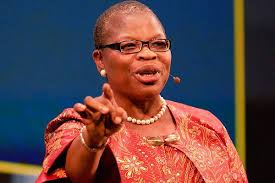
Oby Ezekwesili, former vice president of the World Bank’s Africa region and ex-education minister, in this interview with some journalists, speaks on her latest research work, which focuses on how to fix Nigeria’s political problems and enthronement of democratic culture in Africa. Excerpt:
As a prominent stakeholder in Nigeria’s socio-economic development, what would you identify as the major setbacks to genuine enthronement of democratic culture?
I recently completed research on this issue as a Richard von Weizacker Fellowship at the Robert Bosch Academy in Berlin. As a candidate for the office of the President of Nigeria in the 2019 elections, I directly witnessed the absurdity of our politics and it naturally awakened my intellectual curiosity. What I observed in politics in that short time set me off on a journey to reflect and better understand the challenges of our Democracy, Politics and Governance. My research #FixPolitics has some interesting findings that specifically address your question. There are three interconnected factors that hinder democratic development in Nigeria and the rest of our continent. These are : The absence of a productive and politically literate, empowered and engaged voting population; The dominant culture of a political class (politicians and their allies across society) that subordinates the collective good of the society to their personal interest without any consequences; and The existence of weak constitutional, political and electoral institutions and context which lead to an ineffective regulatory context for politics.
What essential features should define the ambitious project of fixing politics in Africa, particularly in Nigeria, the most populous black country?
My #FixPolitics research findings concluded that every democracy including that of Nigeria can function well when it stands on three triangulated pillars of : Empowered and Engaged Citizens who vote rationally for candidates that can effectively run government on their behalf; Ethical, Competent and Capable Politicians who compete for votes by presenting citizens with alternative plans of how they will govern on their behalf; credible Institutions that include constitutional , political and electoral bodies to regulate the relationship between citizens and politicians. This means there are three key factors that determine the quality of political culture and outcomes in democracy; the engagement of the citizens as informed and active electorate; the quality of the political class and politicians who vie for elective offices; and the institutional integrity of the political regulatory system and context.
The #FixPolitics research evaluated how well these three triangulated pillars are doing in Nigeria and Africa more broadly. We have five major findings: Adopting a theoretical model that assumes Governance as a product or service in a market structure, we simplified and were able to interrogate what happens between the demand side ( that is, the electorate or voters), the supply side (that is, the political class who run for elective offices) and; the institutional and regulatory context ( that is, constitutional, political and electoral environment) in which both sides interact; Our politics is structurally challenged with unequal power relations between the people and a political class that is unaccountable in the exercise of their public mandate. We named the phenomenon, “monopolistic democracy” and like all monopolies, society is endangered by the distortionary effect it has on social outcomes; If we do not #FixPolitics urgently, politics will disintegrate and destroy Nigeria permanently and that is because, our ruling class has entrenched a corrupted political culture that stunts the common good of citizens and their society without any consequences.
Others are the corrupted political culture which undermines citizens, families, communities, society at large, businesses and the economy as well as government, public institutions and the governance processes; and the corrupted political culture is invasive and pervasive and thus constitutes a major obstacle to economic growth and development of Nigeria and continent. This inhibitive effect on development is the reason for high incidence of extreme poverty in Nigeria despite the huge endowment of population and natural resources. The good thing is that the solutions to these problems were also identified by the research.
Where should the effort to fix politics begin and what could be a probable timeframe to evaluate progress?
The research found that any effort to #FixPolitics has to begin with the Citizens pillar of the democracy triangle. It is only the Citizens Pillar that retains the credibility to fix the broken political system and corrupted culture that is to be fixed. The Political Class Pillar cannot #FixPolitics because they are the primary beneficiaries of the anomaly in our politics therefore inherently lack the incentive to correct it. The Regulatory Pillar unfortunately lacks the independence, strength, capability and the credibility to check the excesses of the political class in particular. It therefore leaves only what makes the research unique is how it uses evidence to sequentially guide citizens that are persuaded to act. Fundamentally, the Citizens who step out to #FixPolitics must act on all three pillars concurrently and simultaneously.
The solutions highlighted each Pillar must be systemically launched at the same time as the others. Citizens have to execute the political structural transformation agenda in a systematic, coherent, coordinated and collaborative way. It is the only way citizens’s effort will gather the systemic momentum and creates political structural shifts that correct political culture and outcomes. A silo approach at addressing the problems identified for each of the triangulated pillars will fail for lack of integrative impact. It is why the Work Study Group- WSG is made up of a diverse group of Nigerians from all regions of Nigeria, works of life and political persuasion. The members of the WSG are bound in the common vision, mission and core values of transforming Nigeria’s deformed politics and governance by rallying behind the #FixPolitics research findings. The WSG members work together to design and execute the programs under each of the three pillars while collaborating on cross-cutting issues in an ecosystem-building approach. On evaluating progress of #FixPolitics, it is important to clearly convey that this initiative is not a dash but a marathon. This initiative is not about 2023. #FixPolitics is about designing Nigeria’s and Africa’s way out of the trap of underdevelopment occasioned by our faulty political foundation. It is not partisan. It is about building a new political culture of taking responsibility through participation and empowered engagement by citizens and providing service and public accountability by public leaders.
More specifically, the work-plans developed for each pillar have specific and easy-to-measure actions that are of short, medium and long-term delivery and impact. For example, in the Emerging a New and Value-Based Political Class Pillar, we are establishing an Unconventional School of Politics, Policy and Governance which will fully commence in 2021 and annually produce at scale a new class of value-based politicians on a mixed curriculum of theory and practice of ethical politics, design of sound economic, social, sectoral and structural policies and building strong, open, accessible, transparent and accountable institutions, regulatory and legal contexts. We are aiming to graduate 500 such people twice each year. Our school is unconventional because it is designed to disrupt the mindset of the 500 citizens that will have the privilege of being admitted into each class cohort every six months. Since the current marketplace of supply of politicians is holding the country hostage to a destructive political culture, we can upend their dominance by producing a new political class of public leaders with the requisite character, competence and capacity.
A complex mix of challenges, including low literacy level and economic deprivation has thrown up what could be described as crisis of democracy in Nigeria. Is it possible to inject sanity into the country’s politics?
You are spot on identifying the adverse impact of low literacy level and poverty on our democracy. In my research, there is a conclusion that these two factors inhibit the quality of voting decisions of our electorate that are within the low-income class. First, the illiterate is likely to be poor. The daily financial worth of the productivity of poor people in our country is extremely low and so whatever is offered them by unscrupulous politicians on Election Day is hugely attractive. For them Election Day is simply another day of struggles to eke out a living. Election Day is not a decision about the next four years for most poor voters. They have concluded that since governance did not improve their wellbeing in the previous years, nothing in the future would change. They therefore rationally make a decision to sell their vote and “earn an income” for each time they do so. In my conclusions, I wrote it this way: “The Price of the vote of the low-income voters in Nigeria is extremely low, and corrupted politicians can easily pay for it.” Second, the poor who are illiterate will also likely lack political literacy and so do not realize the power of their constitutional right to vote. In the power relations between the electorate and those they vote into office, the former have failed to take their primacy in our democracy.
What does the #FixPolitics research recommend for these two issues?
Design a bundled and simultaneous programme of economic empowerment and political literacy for low income voters. The economic empowerment component of the program raises their productivity. The political literacy component raises their political consciousness and awareness of their self-interest in elections and governance that follows afterward. Organizations and groups interested in emerging an empowered and engaged electorate then work together to use Technology to identify, connect, combine and scale up existing and new programs of economic empowerment for women and young people who together make up more than 70 percent of the voting population. Remember that women and young people are also the voting constituencies that actually turn up to vote on Election Day to vote. Imagine that in between our electoral cycles (that’s four years between one election and another), some organizations and groups collaborate to design a new economic empowerment initiative that is bundled with political literacy sessions or that they redesign existing programs in an intentional way to raise the productivity and political knowledge of say, Akara sellers across Nigeria. Imagine that currently Akara sellers toil for just a daily net income of say, N1000- N2000. Imagine that the programs succeed such that their average daily financial output double or triple , rising above the “price that politicians will offer for their vote in elections”. Now imagine that four years later, the now more productive, empowered and more politically-conscious Akara seller is faced with the offer to sell their vote. What do you think will happen in their decision-making? It is more probable that they would resist the offer and rather vote for candidates that will govern to improve their wellbeing because they have experienced improvement from a thoughtful and effective intervention. Now they know why choosing the right candidates in elections can further improve their households and communities.
Finally, design and launch an innovative data-based nationwide political literacy campaign using community organizing modules to awaken and engage the over 60% of low-income registered voter-population that has never participated in elections by voting after being registered to vote. That only 15 million out of 84 million registered voters elected a President into office in 2019 is a risk that can be transformed into an opportunity to bring in new voters without the distorted incentives of repeat voters to sell their vote.
With a faulty constitution that opens with a lie, dubious census figures and pliable institutions, do you think Nigerians can repose confidence in the country’s political system and participate effectively?
The faulty foundation of our constitution is way deeper than even those issues you raised in that it was never the product of a citizens’ process. The military and some civilians collaborated to write a constitution which they handed to our 4th republic democracy at the transition of 1999. The tone of the constitution is militaristic and the content, unitary for a country that parades itself as a Federation. It is not “The People’s Constitution” that it portends to be. The 1999 constitution does not reflect any form of negotiated common identity, values, vision, aspirations, political and governance structures of a country with a complex spectrum of ethnic, language, regional, cultural, religious and other diversities like Nigeria. Nigerians have never had the privilege of determining their choices of what kind of Union they wish to have as we enter deeper into the 21st Century.
One of the finding of the #FixPolitics research is that a credible citizens- led constitutional process and the consensus provisions the people agree to, are key to helping transform (even) countries with multi-ethnic nationalities into nations. There is a big difference between a country and a nation. Sadly, because of many factors that end up in elite failure, Nigeria remains a mere country and not a nation, sixty years after our independence in 1960. Worse is that even now there are credible threats to its existence as a country. The tragic failure of our political class to successfully mobilize our citizens behind a commonly agreed identity while at the same time respecting our multiple uniqueness happened at least twice in our history. The Nigerian people could have at the end of colonial rule in 1960 and after the Biafra war ended in 1970 confronted their fractured and factional union in open and honest dialogues designed to agree key rules and terms of remaining one people.
As a result of those failures to build consensus, Nigeria has hobbled along as a country of people who are not unified around common aspirations and shared principles. How different the outcomes would be if we were a country guided by aspirations like equal opportunity, inclusive growth and prosperity, social cohesion and stability. These are proven from our #FixPolitics research as some of the building blocks on which other countries transformed their societies. We found countries like Botswana, Singapore and South Korea to have prioritized human development, merit, productivity and healthy competition among constituent parts as well as their citizens. The results show up in their economic performance and the vastly improved wellbeing of their citizens in contrast to Nigeria all three countries gained independence in the 1960s from Britain.
However, reality is setting in now. For after many decades of ignoring the obvious, it is becoming clearer to all discerning and reasonable compatriots that our Union is in facing the severest threat to its existence now. All is simply not well with Nigeria and Nigerians. Our country, Nigeria is on the brink of a break-up despite the delusional protestations of federal government officials and their sycophants.
Our ethnic and religious divides and differences have never been sharper and deeper than now. And this is all because of the irresponsible, clannish, provincial, incompetent and ineffectual management of our diversity by President Buhari who simply does not know how to nor have the temperament to learn how to lead a diverse society like Nigeria. The totalities of factors that threaten the existence of Nigeria are expressed in the consistent and unabashed ethnic bigotry of President Buhari.
That President Buhari – who was elected by a representative section of the Nigerian people in a protest vote against his failed predecessor- has in turn dug Nigeria deeper into the trenches of humongous failure, will remain a wonder of historical proportion.
Nigeria’s failures under President Buhari have become profoundly unsustainable. It is perplexing to watch our political leaders carrying on with their pretense that Nigeria is currently being governed. How can the political leadership of a country which is practically insolvent, terribly brittle on all fronts of national security and lost its diplomatic leadership and influence even in West Africa keep acting as if everything is normal.
Such imperviousness was the same attitude exhibited by the previous government of the current opposition party. Most Nigerians are fed up with the Siamese Twins-type syndrome of our politicians, regardless of whether they belong to the All People’s Congress APC or the People’s Democratic Party, PDP. Their party acronyms may differ but the people in our politics today are of one embryo and exhibit a common and dominant political culture that places the narrow interests of our politicians over and above the wellbeing of the people they govern.
Nigerians have experienced and now openly express frustration at the “hand-down” and “turn-by-turn failure “ of the political leadership class in Nigeria at federal, state or local government levels. They are designed by the environment that enables them act without consequences and the incentive they respond to, to govern in ways that do not produce results for citizens. The finding from #FixPolitics research on countries which similarly came to the precipice because of ethnic and other tensions in the last few decades is that the citizens are the block with the credibility and legitimacy to push society toward fruitful dialogues and agreements which become translated to a new constitution. Conduct of a Citizens-Referendum is an innovation that was used in some countries to commence the national dialogue process with the first phase of deciding the key issues to be discussed and negotiated in a constitutional process.
In the case of our country, there is no doubt that Nigeria cannot carry on for much longer under a bumbling political class and grossly weakened bureaucracy. The center is no longer holding because the Nigeria-State, its institutions and political operators have lost their credibility with the people. There is no known social contract binding citizens to their governments. The social capital that once minimally existed among members of society is now vastly eroded and depleted.
Are you saying it is possible to have a qualitative governance system in Nigeria without qualitative and informed citizenry?
I think my previous answer to another question shows that it is impossible to run a democracy of uninformed and indifferent citizens and end up with qualitative governance. If a country’s democracy is lacking in the basic features of democratic ethos, values, principles and institutions, governance will less likely produce good outcomes for the larger number of people. This is what we see in our country. It is why despite all our huge endowment of population, natural resources and geography, we are the world’s capital of extremely poor people with more than 80 million Nigerians in that category. Nigeria is ranked one of the most insecure countries in the world, the number 3 spot on terrorism ravaged table and 13 on the States fragility index. Sixty years after independence, we have infant and maternal mortality rates that are higher than the average in Africa. We are the country with the largest number of out-of-school children. And by the way, on this matter of Out-of-School children, we did prove that there are sound policy solutions that work to reduce it and get children into the classrooms especially in the Northern States. As minister of education between 2006-2007, we reduced the number from about 7million to 6.5 million. Within one academic session. Today the number is a painful 13.5 million children growing as illiterate in the 21st century. No. It is impossible for our democracy to deliver qualitative governance without informed, active and engaged citizenry who make a deliberate move to take their center stage in the electoral and governance processes. What I have said of Nigeria is unfortunately applicable in most of the other African countries. It is why by 2035, if we do not #FixPolitics on our continent, more than 90 percent of the world’s remaining poor people will be on our continent. That would be a monumental tragedy.
Does #FixPolitics involve holding leaders to account? If so, how could a product of rigged election, say a lawmaker, be held accountable, for instance?
Yes, it will. Election is not the end-game in a democracy. Voting at elections is therefore only a part of the duties that citizens have for staying eternally vigilant and demanding accountability from those who exercise delegated authority on their behalf. The political literacy programs for both the middle and low income class must be designed to support post-election engagements — that is during the time that governance commences after elections— of citizens to hold those they voted into office (or against) to account for the performance of their public responsibility. The #OfficeOfTheCitizen was identified as a credible initiative to empower such citizens’ actions. When you have more citizens in the constituency that delegated their authority to the kind of lawmaker you described, they will more probably become accountable. Why? They will because there is a disincentive of the credible threat of recall by united citizens in their constituency, working successfully together to remove the lawmaker. Not even the most perverse National Assembly can survive the pressure from a persistent citizens collective action.
Based on this grand agenda of sanitising democracy, which country serves as a realistic model to emulate and is that possible within the social limitations in Nigeria, viz educational attainments and income levels?
First, from my research, no country’s democracy is perfect and taken for granted as having attained. This is absolutely crucial to note by those who assume that democracy has a destination which when a country arrives, the citizens can then rest and “leave the institutions to work”. No, it does not work that way. Constant participation and vigilance is the only way a people can preserve their democracy and keep it working for their wellbeing. Second, no country fully resembles Nigeria; not even Indonesia which shares a significant range of similarities with Nigeria. So if we are to learn any lessons at all, it is this. We the people, the Citizens are the ones with the right to gather around the table and design the functional democracy that serves all our people well.

Politics
Osun APC Warns Adeleke Govt Over Alleged Victimisation of Local Govt Workers
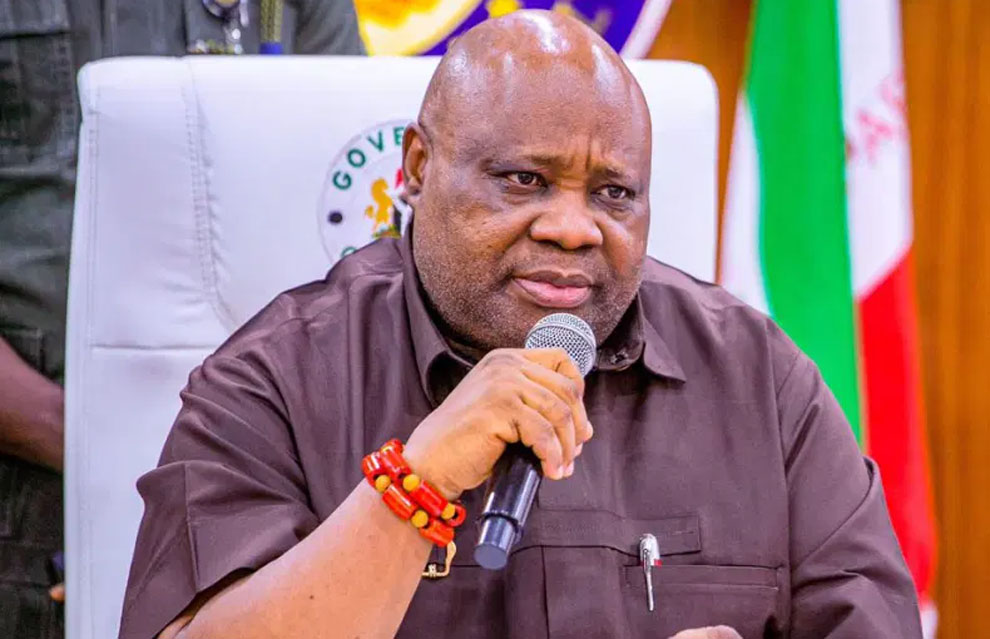
Osun APC Warns Adeleke Govt Over Alleged Victimisation of LG Workers
The Osun State chapter of the All Progressives Congress (APC) has issued a fresh warning to the administration of Governor Ademola Adeleke over allegations that some local government workers are being subjected to investigation and disciplinary proceedings because of their perceived political affiliations.
The party alleged that the Osun State Local Government Service Commission had constituted a committee to investigate council employees suspected of supporting the APC during the August 15, 2026 governorship election.
The allegation was contained in a statement signed by the APC Director of Media and Information, Kola Olabisi, who accused the state government of using the ongoing exercise to target workers believed to have supported the party’s candidate, Bola Oyebamiji.
According to the APC, some affected workers have been summoned before an investigative and disciplinary panel at the Local Government Service Commission premises in the state Secretariat, Abere, Osogbo.
The party further alleged that some of the workers were questioned about their political activities and contacts before and during the election.
It also claimed that some workers were asked to submit their mobile phones for scrutiny, with the alleged objective of checking their communications with APC members and supporters.
The APC additionally alleged that some workers’ banking transactions were examined and that some employees had been threatened with suspension, dismissal or other disciplinary measures.
The party described the alleged actions as unacceptable and called on the Adeleke administration to reactivate any salary accounts that had been deactivated and dissolve the committee.
READ ALSO:
- 18 Suspected Bandits Killed as Security Forces Foil Mass Kidnap in Katsina
- Police Arrest Two Arms Dealers, Recover 300 Rounds of Ammunition in Kaduna
- Petrol Depot Prices Fall as Dangote, Marketers Cut Rates, Pump Price Reduction Looms
The opposition party argued that public servants should not be punished for their political choices, noting that elections in Nigeria are conducted through a secret ballot.
However, the Osun State Government has rejected the allegation that the workers are being investigated because of their political affiliations.
Commissioner for Information and Public Enlightenment, Kolapo Alimi, said the workers under investigation were being questioned over alleged double salary payments, rather than their political activities.
According to the commissioner, the investigation followed a petition alleging that some local government employees were receiving salaries from two sources.
Alimi said the government was investigating claims that some workers were allegedly collecting salaries from the state government while also receiving payments from the APC-backed local government officials involved in the prolonged council administration dispute.
He maintained that the exercise was focused on alleged financial infractions and not political affiliation.
The governor’s spokesperson, Olawale Rasheed, also dismissed the APC’s allegation of political victimisation, saying the administration had no policy of targeting local government employees because of their political choices.
The latest dispute comes amid the long-running controversy over the control of Osun’s 30 local government councils, which has pitted the Adeleke administration against APC-backed council officials.
The council dispute has also had implications for local government finances and workers’ salaries. Earlier in the year, the Osun Government said local government workers’ core salaries had continued to be paid despite what it described as the withholding or diversion of local government allocations. (Osun State Official Website)
The competing claims over the latest investigation have therefore added another layer to the broader political and administrative dispute between the APC and the Adeleke administration.
While the APC maintains that the affected workers are being targeted because of their political affiliations, the state government says the investigation concerns alleged financial misconduct, particularly claims of workers receiving salaries from more than one source.
As of the latest reports, there is no independently established evidence showing that the investigation was instituted solely because the affected workers supported the APC. The allegations remain disputed between the opposition party and the state government. (Osun)
Osun APC Warns Adeleke Govt Over Alleged Victimisation of LG Workers
Politics
2027: Tompolo-Backed Group Deploys 44 Vehicles for Tinubu-Shettima Campaign in Borno
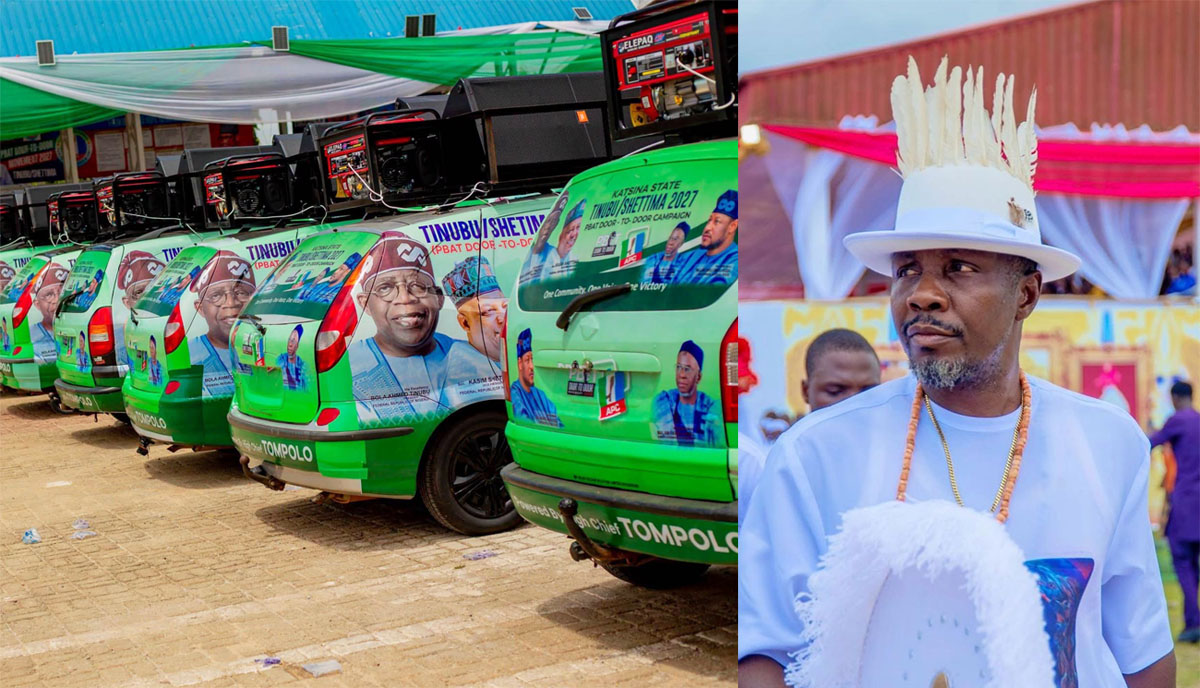
2027: Tompolo-Backed Group Deploys 44 Vehicles for Tinubu-Shettima Campaign in Borno
The PBAT Door-to-Door Movement, a political support group backed by Niger Delta businessman and Tantita Security Services Nigeria Limited chief executive, Government Ekpemupolo, popularly known as Tompolo, has commenced grassroots mobilisation in Borno State ahead of the 2027 general elections.
The group, which is campaigning for the re-election of President Bola Ahmed Tinubu and Vice President Kashim Shettima, unveiled 44 campaign vehicles and other mobilisation equipment at an event held at Sir Kashim Ibrahim Square, College of Education, Maiduguri.
The equipment presented during the Borno mobilisation included 44 generators, 44 amplifiers, 44 microphones and 88 speakers, according to reports from the event.
The Borno launch represents another stage in the expansion of the Tinubu 2027 campaign structure being developed by the PBAT Door-to-Door Movement, following its northern launch in Katsina earlier in September.
Tompolo, who is the Grand Patron of the movement, was represented at the Maiduguri event by Kestin Pondi, Managing Director of Tantita Limited.
In his message to the gathering, Tompolo called on residents of Borno to support the Tinubu-Shettima ticket, drawing particular attention to Shettima’s connection to the state.
He urged members and supporters of the movement to take the campaign to communities and engage residents at the grassroots ahead of the 2027 election.
Tompolo also commended the Borno State Government for what he described as development achievements and called on residents to support the APC governorship candidate, Mustapha Gubio, as part of efforts to sustain the current administration’s programmes.
The claims about the performance of the Tinubu administration and the Borno State Government were political assessments made by supporters of the administration and were not independent evaluations.
The mobilisation was formally unveiled with the participation of the Borno State Government. Governor Babagana Zulum was represented by his deputy, Umar Usman Kadafur.
Kadafur said the state was prepared for what he described as significant grassroots support for Tinubu and Shettima in the 2027 election.
READ ALSO:
- MTN, Gates Foundation Launch $25m AI Maternal Health Initiative for 500,000 Nigerian Women
- Niger Mosque Attack: Bago Says 63 Abducted, 14 Freed, Three Killed
- UNGA 81: Trump Threatens to ‘Annihilate’ Iran if No Deal Is Reached
Also present was the APC Deputy National Chairman, North, Ali Bukar Dalori, who urged members of the movement to take the campaign beyond political meetings and into communities across the state.
The APC governorship candidate in Borno, Mustapha Gubio, also expressed support for the Tinubu-Shettima ticket and said the administration had delivered what he described as dividends of democracy.
The Borno mobilisation is part of a broader political organisation by the PBAT Door-to-Door Movement, which was founded and sponsored by Tompolo to mobilise grassroots support for Tinubu’s 2027 re-election bid.
The movement inaugurated its national executives in Abuja in July, with its stated objectives including grassroots mobilisation, voter education, community engagement and communicating the Federal Government’s policies and programmes directly to residents.
At the time of its national inauguration, the movement said it intended to take its activities to wards, local government areas, communities, markets and households across Nigeria.
The group subsequently moved its northern mobilisation campaign to Katsina, where it inaugurated coordinators across the state’s 34 local government areas and presented campaign vehicles to them.
The Katsina deployment involved 34 campaign vehicles, with each of the state’s 34 local government areas assigned a coordinator.
The Borno rollout therefore brings the campaign’s reported vehicle deployment in the two northern states to at least 78 vehicles, based on the publicly reported 34 vehicles in Katsina and 44 unveiled in Borno.
The expansion comes as several political groups and support platforms are beginning to organise ahead of the 2027 Nigerian presidential election.
Other pro-Tinubu mobilisation structures have also been announced, including Arewa for Asiwaju (A4A), a group formed by northern political figures, former governors and lawmakers to support Tinubu’s re-election campaign across the 19 northern states and the Federal Capital Territory.
The development indicates that political parties and affiliated support groups are increasingly establishing grassroots structures ahead of the 2027 election.
For the PBAT Door-to-Door Movement, however, the strategy centres on direct engagement with voters. Its organisers have said the objective is to explain government policies and programmes, promote voter education and mobilise supporters at the ward and community levels.
Tompolo has previously said the movement would rely on local volunteers and place emphasis on engaging ordinary Nigerians, including women and young people, as part of its grassroots outreach.
The group has also framed its campaign around the Renewed Hope agenda of the Tinubu administration, arguing that economic reforms and other government programmes should be allowed to continue.
Those positions represent the movement’s stated political case for supporting Tinubu and are separate from independent assessments of the administration’s performance.
With the Borno launch, the Tinubu-Shettima 2027 campaign mobilisation backed by Tompolo has now established a visible operational presence in at least two northern states, with further grassroots activities expected as political parties and support groups prepare for the 2027 elections.
2027: Tompolo-Backed Group Deploys 44 Vehicles for Tinubu-Shettima Campaign in Borno
Politics
Obi vs Soludo: ₦86.67bn Handover Figure Meets ₦127.37bn Debt Claim
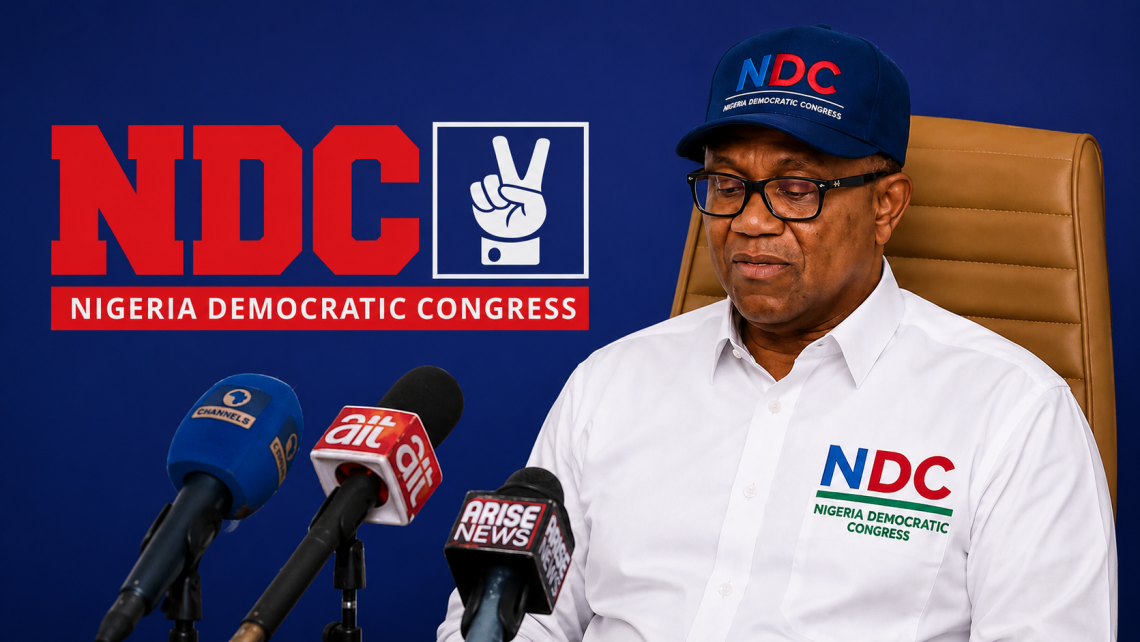
Obi vs Soludo: ₦86.67bn Handover Figure Meets ₦127.37bn Debt Claim
The renewed Anambra debt dispute has intensified after former Governor Peter Obi released his 2014 handover document to counter claims by the state government that his administration left behind substantial outstanding loans and other financial liabilities.
The controversy centres on competing accounts of Anambra State’s finances when Obi handed over power to Willie Obiano on March 17, 2014.
Obi’s handover document shows a positive financial position of about ₦86.67 billion after provisions for certain liabilities, while the current Anambra State Government says eight external financing facilities associated with projects undertaken during Obi’s tenure had an outstanding balance of $92.35 million, equivalent to about ₦127.37 billion, as of June 30, 2026.
However, the two figures describe different things and should not be treated as if they were direct measurements of the same debt position.
The ₦86.67 billion figure comes from the financial position presented in the 2014 handover report. The ₦127.37 billion figure is the value the state government assigns in 2026 to the outstanding balance on eight external financing facilities whose original amounts totalled about $123.77 million.
The central unresolved question is therefore how much of those facilities was actually outstanding when Obi left office in March 2014, how much had been disbursed by then, what was subsequently disbursed, how much was repaid by succeeding administrations and what remains outstanding today.
The dispute was reignited after Anambra State officials said the administration of Governor Chukwuma Soludo was still servicing loans and other obligations incurred by previous administrations, including that of Obi.
Obi rejected the claim, insisting that he did not leave Anambra owing salaries, pensions, gratuities or contractors who had completed certified work.
He subsequently challenged the state government to substantiate its claims and released the 2014 Anambra State Handover Report as part of his response.
The document, dated March 17, 2014, was addressed to Obiano and contained a summary of the state’s financial position as of the close of business on March 14, 2014, described as the final working day of Obi’s administration.
According to the document, Anambra had about ₦27 billion committed to local investments.
It also listed approximately $156 million in foreign-currency investments, which was valued at about ₦25.6 billion at the exchange rate used at the time.
The report further listed approximately ₦28.27 billion in balances relating to certified state ministries, departments and agencies, alongside ₦10 billion refunded to the state by the Federal Government.
Those figures produced a combined financial position of about ₦91.67 billion.
The outgoing administration, however, made provision for about ₦5 billion in liabilities, including March 2014 salaries, pensions, gratuities and certified payments relating to projects that had already been executed.
After that provision, the report placed the net financial position at approximately ₦86.67 billion.
Former Secretary to the Anambra State Government Oseloka Obaze, who served under Obi, has defended the document and said he was involved in the handover process.
Obaze has maintained that the financial records were presented to Obiano during the transition and that the incoming governor acknowledged receipt of the documents.
READ ALSO:
- UK Student Visa: 63 Countries Exempt From Proof of Funds, Nigeria Excluded
- Lagos Intensifies Surveillance as Adulterated Palm Oil Raises Food Safety Concerns
- Saudi Arabia Rejects Nigeria’s Request for More 2027 Hajj Slots
However, acknowledgement of a handover document does not necessarily mean that every figure in it was independently audited or certified by the incoming administration.
There is also historical evidence that some elements of Obi’s financial account were subsequently acknowledged by Obiano.
During a television appearance ahead of the 2017 Anambra governorship election, Obiano reportedly confirmed that he inherited about ₦9 billion in cash and approximately ₦25.6 billion in investment-related assets.
That does not, however, resolve the wider question of the state’s liabilities and outstanding borrowing at the time of the transition.
The Anambra State Government has released a separate set of records to support its claim that loans connected with the period of Obi’s administration remain obligations of the state.
According to the government, eight external financing facilities associated with projects approved or implemented between 2007 and 2013 had a combined original value of about $123.77 million.
The state said the outstanding balance on those facilities stood at approximately $92.35 million as of June 30, 2026, which it valued at ₦127.37 billion using the exchange rate applied in its calculation.
The facilities identified by the state government relate to development programmes covering areas such as healthcare, agriculture, education, malaria control and erosion management.
Among the projects listed are the Malaria Control Booster Project, Third FADAMA Development Project, Health System Development Project II, State Education Programme Investment Project and the Nigeria Erosion and Watershed Management Project.
The government has said successive administrations have continued to service the facilities.
It has also maintained that its criticism is not directed at borrowing as a financing tool, arguing that loans can be justified when used for viable development projects and human-capital investment.
Obi, however, has rejected the description of his administration as having left Anambra with the debt burden now being cited.
He has maintained that his administration paid what was due before leaving office and did not owe workers, pensioners or contractors whose claims had been properly processed.
He has also said his administration saved substantial funds for the incoming government.
The most important issue arising from the competing accounts is that a loan contracted during an administration is not necessarily the same as the debt outstanding at the moment that administration leaves office.
A financing agreement can have an approved or contracted value, but the amount actually drawn down at a particular point in time may be lower.
Similarly, repayments may reduce the principal balance, while subsequent disbursements can increase the amount outstanding.
READ ALSO:
- MURIC Warns FG: Any Move Against Atiku Now Lacks Tact
- Jetour T1 Storms Abuja as Automaker Accelerates Nigeria Expansion
- Kidnapped Female Police Officer Found Dead in Ebonyi as Suspect Leads Police to Remains
The timing of those transactions therefore matters in determining what a government actually inherited.
This is particularly significant in the current Anambra controversy because the $123.77 million cited by the state represents the original amounts associated with the eight facilities, while the $92.35 million figure represents the balance the state says remains outstanding in June 2026.
Neither figure, by itself, establishes the exact debt stock on March 17, 2014.
Official debt records have also been cited in the debate, showing Anambra’s external debt stock at about $30.32 million as of December 31, 2013, alongside domestic debt of approximately ₦3.03 billion at the same period.
Those figures are much closer to the date of Obi’s departure, although they do not by themselves establish the precise financial position on March 17, 2014.
They nevertheless add another layer to the debate because they show why the original value of all financing facilities cannot automatically be equated with the state’s debt stock at the time of handover.
The question of how much had actually been disbursed by March 2014 is therefore central.
So is the question of how much remained unpaid at that date.
The subsequent repayment history is equally important.
If part of a facility was repaid after Obi left office, that repayment would reduce the outstanding balance. Conversely, if additional funds under an existing financing agreement were drawn after the change of administration, those later transactions would need to be reflected in any assessment of the debt inherited by the incoming government.
The current state government’s publication gives a picture of the 2026 outstanding balance, but a complete reconstruction of the financial position at the 2014 handover would require the loan-by-loan balances at that date, disbursement records, repayment schedules and subsequent transactions.
This distinction has become central to the public debate.
The Anambra Government argues that loans associated with projects undertaken during Obi’s administration remain outstanding and are still being serviced.
Obi’s position is that the state had substantial funds and investments when he left office and that he did not leave behind the unpaid obligations being alleged.
Both positions can be examined without treating the ₦86.67 billion handover figure and the ₦127.37 billion current outstanding-loan figure as contradictory measurements of the same financial item.
The handover report primarily addresses the assets, balances and estimated liabilities presented by the outgoing administration.
The state’s latest debt statement addresses the current balance of specific external financing facilities.
The broader financial picture therefore requires the two sets of records to be reconciled rather than simply placed against each other.
The dispute also extends beyond external loans.
The Anambra Government has alleged that some salary, pension and gratuity obligations remained outstanding after Obi left office.
The state has cited arrears involving workers and retirees and said the Soludo administration has continued to settle inherited liabilities.
Obi and his supporters have disputed the characterisation of those obligations and maintained that the outgoing administration had settled the liabilities it was responsible for at the time of handover.
Another contested issue is an alleged ₦2.1 billion ecological fund.
The state government has disputed Obi’s account of the fund and said its examination of the relevant bank records did not support the claim that the amount existed in the account in the manner described.
Obi’s camp has maintained its position regarding the funds.
The dispute over the ecological fund is separate from the question of the eight external loans and should not be conflated with the figures contained in the 2014 handover report.
There is also a broader political dimension to the controversy because Obi is now the NDC presidential candidate for the 2027 election, making his record as Anambra governor a subject of renewed public scrutiny.
However, the financial questions themselves concern historical state records and can be examined independently of the political arguments surrounding the former governor.
At the centre of the matter is a relatively straightforward accounting question: what exactly was Anambra State’s financial position when Obi handed over power in March 2014?
Answering that question requires more than the total amount originally attached to loans contracted between 2007 and 2013.
It requires a loan-by-loan reconciliation showing the original facility, the amount disbursed before March 17, 2014, the amount repaid before and after the handover, subsequent drawdowns and the outstanding principal at each stage.
It also requires reconciliation of the cash balances, investments and liabilities listed in the 2014 handover document with the state’s audited accounts and official debt records.
The current controversy has therefore moved beyond a simple argument over whether Obi left money in Anambra’s coffers.
The available records show that the 2014 handover report recorded substantial assets and financial balances, while the current state government has produced records showing that external financing facilities associated with the period of Obi’s administration still have outstanding balances.
What remains contested is the precise amount of debt Anambra inherited on the day Obi left office and how that figure relates to the loans now being serviced.
Until those figures are reconciled, the Anambra debt dispute remains a matter of competing interpretations of financial records spanning more than 12 years.
For taxpayers and residents, the most useful resolution would be a transparent reconciliation of the state’s finances from the March 2014 handover to the present, showing the assets inherited, liabilities outstanding, loans drawn, repayments made and balances remaining.
Such a record would provide a clearer basis for understanding how Anambra’s current debt position developed and which obligations were inherited, serviced or incurred by successive administrations.
Obi vs Soludo: ₦86.67bn Handover Figure Meets ₦127.37bn Debt Claim
-
 News2 days ago
NLC Backs ₦500 Petrol Demand, Workers Propose ₦500,000 Salary
-

 Auto3 days ago
Jetour T1 Storms Abuja as Automaker Accelerates Nigeria Expansion
-

 Politics2 days ago
Obi vs Soludo: ₦86.67bn Handover Figure Meets ₦127.37bn Debt Claim
-

 Education3 days ago
JAMB Allows Candidates to Change Lost SIM, Email Addresses
-
 metro3 days ago
Kidnapped Female Police Officer Found Dead in Ebonyi as Suspect Leads Police to Remains
-

 International3 days ago
CNN, MS NOW, Politico Sue Trump Over White House Access Ban
-
 News3 days ago
MURIC Warns FG: Any Move Against Atiku Now Lacks Tact
-

 metro2 days ago
Saudi Arabia Rejects Nigeria’s Request for More 2027 Hajj Slots
You must be logged in to post a comment Login