

Auto
Newly inaugurated Toyota-certified Lagos service centre excites Osinbajo

Vice-President Yemi Osinbajo on Monday inaugurated a Toyota-certified service centre in the Oshodi end of the Apapa-Oshodi Expressway Lagos.
The state-of-the-art facility built by Toyota Nigeria Limited is described as a legacy project comprising a standard showroom, a collision repair centre, a general repair workshop with sophisticated equipment and a spare parts warehouse.

Osinbajo said with the level of sophistication and deployment of modern technology at the facility, the centre stands out as a milestone achievement that would contribute immensely to the development of the auto industry and the nation’s economy.
He said, “I must confess to being quite fascinated by the multiple resources and outcomes that this facility possesses and is designed to achieve.
“It is not merely a service centre for providing quality after-sale service (although we are told that is one of the objectives for establishing it), it is actually developed as a teaching, research and resource centre, to provide dealers with world-class, practical hands-on training.”
The VP said the capacity building aspect of the facility tallied with a number of skill acquisition and empowerment schemes of the Federal Government for young Nigerians.
“This year also, the Nigeria Jubilee Fellows Programme will begin. Every year under the programme, 20,000 graduates, after their youth service, will be given fully-paid internships that will last for 12 months in reputable private and public sector organisations across the country such as Toyota Nigeria Limited.
According to him, part of the duties of government is to provide the fertile ground and enabling environment for businesses to thrive.
He commended the TNL team led by its chairman, Chief Michael Ade.Ojo for the visionary project.
“We must all be proud of the achievements of Toyota Nigeria in the past decades.Toyota is by far Nigeria’s favourite car. But it came to be so because of the foresight, commitment to high values and focused investments of Chief Michael Ade-Ojo, OON, the founder and visioner of this foremost automotive enterprise, starting over 50 years ago with the establishment of Elizade Motors.”

Minister of Industry, Trade and Investment, Otunba Adeniyi Adebayo, said the establishment of the centre showed the commitment of Toyota Nigeria towards addressing the concerns of its consumers.
“Today’s event is a brilliant manifestation of the enabling business environment created by this administration and their unparalleled leadership,” he said.
The minister also said, “Nobody hopes for a collision or looks forward to repairing their car but when these challenges do arise, knowing that there is a place that one can take one’s car to, and it will be operated on by the manufacturer gives consumers peace of mind.”
He reiterated the ministry’s commitment to complementing the efforts of Toyota Nigeria in reviving the auto sector.

Lagos State Governor, Mr Babajide Sanwo-Olu, who was represented by the Secretary to the State Government, Mrs Folasade Jaji, said the establishment of the centre was a clear statement of the Toyota Nigeria’s commitment to the continuous growth of the company.
“In addition, the modern technology and equipment available within the facility will boost the technical capability of the local technicians and impact positively on the drive to improve our capacity as a nation in science and technology,” the governor said.
Chairman of the TNL, Chief Michael Ade.Ojo, described the event as memorable one that gave him fulfilment.

Managing Director of the TNL, Mr Kunle Ade-Ojo, said following the movement of the corporate headquarters of the TNL to Lekki, Lagos, in 2009, the company decided to convert the old office to a standard after-sale centre.
He said apart from providing quality maintenance service, genuine spare parts and standard showroom for Toyota vehicles, the facility would serve as a resource place “for market study to gather data on market dynamics and obtain feedback on customers experiences and expectations.”
He said the centre would help in bridging the demand/supply gap for quality after-sale service by vehicle owners in Nigeria.
Ade-Ojo stressed that the company had entered into partnerships with some of the world-leading relevant firms to ensure the service delivery at the centre would be driven by global best practice processes and well-trained certified technicians.







Auto
X90 Plus Leads Jetour’s Abuja Drive for Bigger SUV Market Share
X90 Plus Leads Jetour’s Abuja Drive for Bigger SUV Market Share
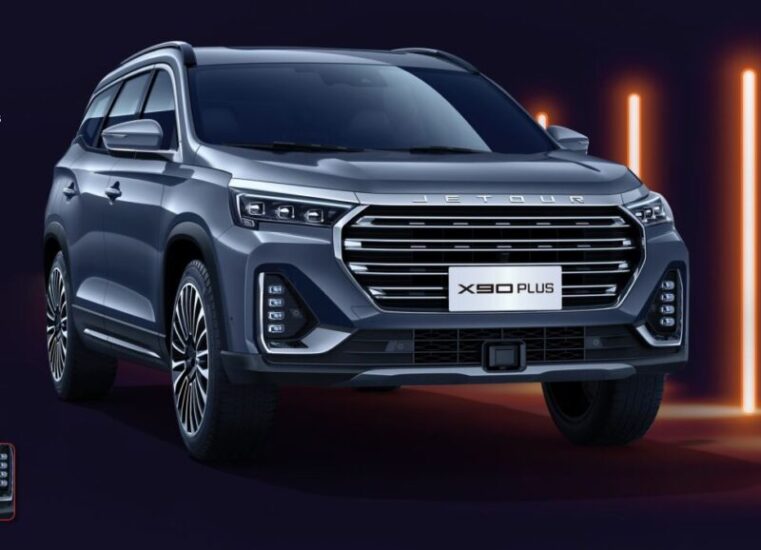
Jetour Nigeria is taking its premium SUV battle to Abuja, with the seven-seater X90 Plus set to headline the Jetour Experience Abuja from September 22 to 24, as the automaker moves to capture a larger share of Nigeria’s fast-growing high-end family SUV market.
The three-day motoring showcase will give prospective buyers, families and auto enthusiasts in the Federal Capital Territory and neighbouring states an opportunity to experience the X90 Plus and other models in the Jetour range through test drives and hands-on demonstrations.
The Abuja showcase follows the success of the brand’s earlier Jetour Experience in Lagos, where strong customer interest, inquiries and sales momentum reportedly encouraged the company to take the initiative to the Federal Capital Territory.
Jetour Nigeria said growing demand from customers in Abuja and neighbouring states was a major factor behind the decision to expand the experience to the northern market.
Positioned as a full-sized family SUV, the X90 Plus is designed for executives and families seeking a combination of space, technology, performance and comfort without the price tag associated with some luxury SUVs.
The model is offered with 1.6-litre and 2.0-litre turbocharged engines paired with a seven-speed dual-clutch transmission. The powertrain produces up to 254 horsepower and 390Nm of torque.
Inside the cabin, the X90 Plus features a 12.3-inch LCD touchscreen infotainment system, panoramic sunroof, Sony premium audio system and wireless charging.
Its safety and driver-assistance features include a 360-degree panoramic camera, Forward Collision Warning, Lane Departure Warning and electronic stability systems.
Jetour’s growing profile in Nigeria has also earned the brand recognition from the Nigeria Auto Journalists Association (NAJA), which named it Fastest Growing Auto Brand, while it was also recognised as Auto Brand of the Year at the Nigeria Transport Lecture.
To support its expanding customer base, Jetour Nigeria, the sole authorised distributor, operates through seven accredited dealer partners across the country: Elizade Nigeria Limited, Mandilas Autos, R.T. Briscoe Motors, Germaine Auto Centre, Kojo Motors, Tab Autos Limited and New Era Auto Vehicle Services Limited.
The Abuja Experience is expected to provide Jetour with another platform to engage potential customers and reinforce its position in Nigeria’s increasingly competitive SUV market.
Auto
Jetour Takes Award-Winning Dashing, Other SUVs to Abuja
Jetour Takes Award-Winning Dashing, Other SUVs to Abuja
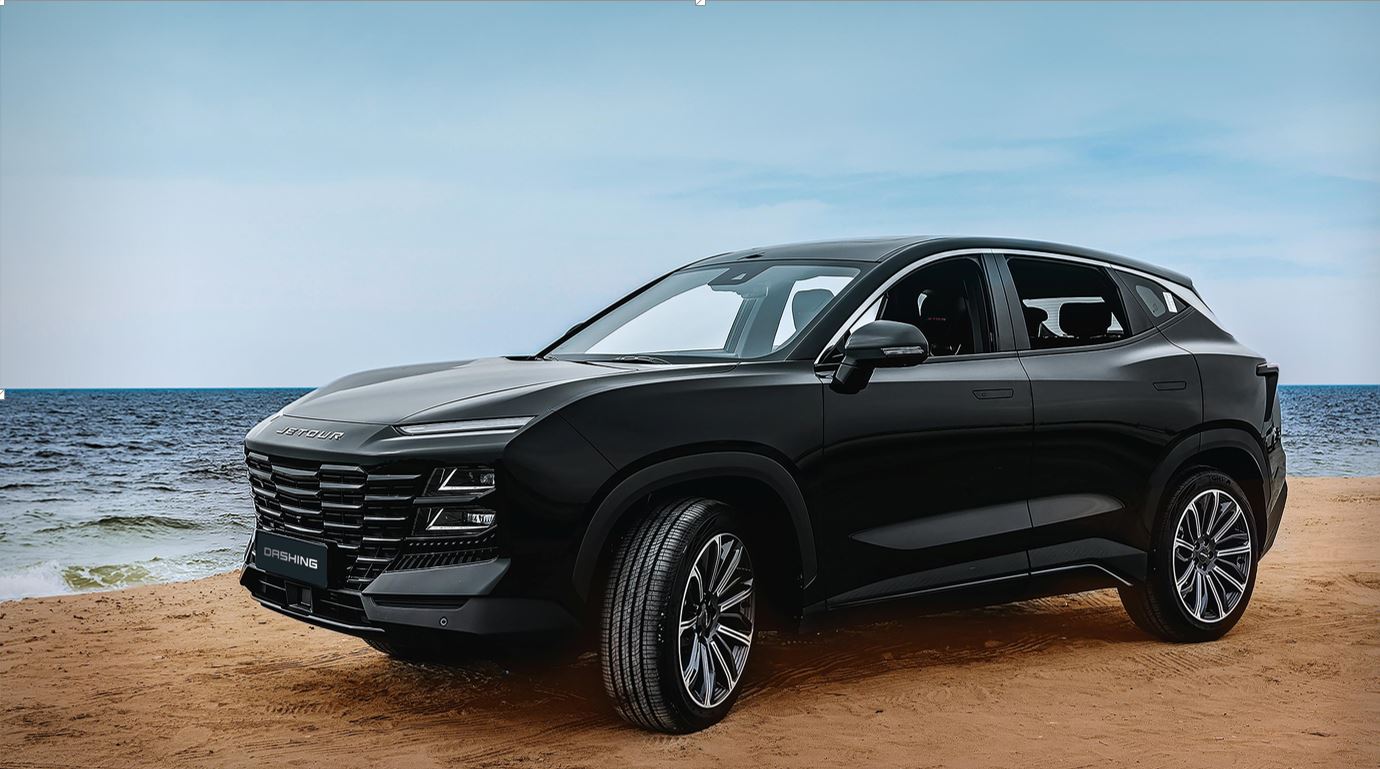
Motorists in Abuja are set for a close encounter with Jetour’s award-winning Dashing and other models as Jetour Nigeria moves to deepen its foothold in the nation’s capital with the Jetour Experience Abuja, beginning September 22.
The three-day motoring event, which runs until September 24, is expected to draw prospective buyers and automobile enthusiasts to a hands-on experience featuring test drives, product demonstrations and direct engagement with Jetour’s seven authorised dealers and product specialists.
The participating dealer network comprises Elizade Nigeria Limited, Kojo Motors, Mandilas Autos, Germaine Auto Centre, R.T. Briscoe, Tab Autos and New Era Auto Vehicle Services Limited.
READ ALSO:
- Police Arrest Woman Over Alleged Drug Trafficking in Delta
- Dangote raises petrol price 6.7% to N1,350/litre
- Anambra Police Arrest Woman Over Alleged Sexual Abuse of Child, Rescue Four
The Abuja Experience follows the success of the Lagos edition, which attracted thousands of visitors for test drives and direct engagement with product specialists. According to the organisers, strong demand and inquiries from motorists in Abuja and neighbouring states prompted the expansion of the event to the Federal Capital Territory.
The Dashing has gained attention in Nigeria’s competitive compact SUV segment for its combination of modern styling, technology, performance and competitive pricing.
The SUV is available with 1.5-litre and 1.6-litre turbocharged engines, producing up to 145kW of power and 290Nm of torque, paired with six- or seven-speed dual-clutch transmissions.
Its features include a 15.6-inch central touchscreen infotainment system, panoramic sunroof, wireless charging and smartphone integration.
For safety, the vehicle comes with a 360-degree surround-view camera, automatic emergency braking, lane departure warning, blind-spot detection and multiple airbags.
Beyond vehicle sales, the authorised dealers provide warranty, genuine spare parts and after-sales support to Jetour customers across their respective locations.
The Abuja Experience is expected to strengthen customer engagement and give motorists in the FCT a closer look at Jetour’s growing range of vehicles, while further expanding the brand’s footprint in the northern market.
Jetour Takes Award-Winning Dashing, Other SUVs to Abuja
Auto
Jetour T2 PHEV Storms Abuja as Jetour Steps Up Nigeria Expansion

Jetour T2 PHEV Storms Abuja as Jetour Steps Up Nigeria Expansion
Abuja is set for a major dose of electrified motoring as Jetour Nigeria takes its technologically advanced T2 Plug-in Hybrid Electric Vehicle (PHEV) to the nation’s capital for an experiential showcase aimed at deepening the brand’s growing footprint in Nigeria.
The Jetour T2 PHEV will headline the Jetour Experience Abuja, scheduled for September 22 to 24, 2026, following the strong reception recorded at the brand’s Lagos edition earlier this year, where customer participation, test drives and sales enquiries reportedly surged.
The move to Abuja, according to Jetour Nigeria, was largely driven by growing demand from motorists in the Federal Capital Territory who have been seeking an opportunity to experience the brand’s latest vehicles, particularly the T2 PHEV.
The Abuja activation will feature test drives, product demonstrations and interactions with Jetour’s technical and sales teams, giving prospective buyers first-hand access to the SUV and its plug-in hybrid technology.
Jetour Nigeria, the sole authorised distributor of the brand in the country, is also leveraging an expanding nationwide dealer network comprising Elizade Nigeria Limited, New Era AutoVehicle Services Limited, Kojo Motors, Germaine Auto Centre, TAB Autos Limited, R.T. Briscoe Motors and Mandilas Autos to strengthen sales and after-sales support across key markets.
READ ALSO:
- Obi Explains Why He Won’t Step Down for Atiku in 2027
- ASUU Threatens Nationwide Strike Over Unpaid Salaries, Unimplemented Agreement
- FG to Give Students 100MB Free Data Daily From October 1
The company said the decision to stage the Abuja experience was also driven by requests from patrons and prospective customers in the capital who want an opportunity to experience Jetour’s latest products, including the technologically advanced T2 PHEV.
The Jetour T2 PHEV combines rugged SUV capability with hybrid efficiency, advanced technology and comprehensive safety features, positioning it as an attractive option for Nigerian motorists seeking performance, comfort and improved fuel economy.
Since its entry into the Nigerian market, Jetour has recorded growing acceptance, with its SUV range gaining popularity among families, professionals and adventure enthusiasts.
The brand’s expanding customer base has been supported by competitive pricing, after-sales service and vehicles engineered to cope with diverse road and driving conditions across Nigeria.
Jetour’s growing reputation has also been reinforced by a number of local and international recognitions spanning product quality, design, innovation and customer satisfaction.
Its vehicles have also earned strong global safety ratings, with the T2 achieving a 5-Star NCAP safety rating, placing it among vehicles meeting high benchmarks for occupant safety.
The Abuja event is expected to feature test drives, product demonstrations and direct interactions with Jetour’s technical and sales teams, giving visitors an opportunity to experience the brand’s products and understand the technology behind the T2 PHEV.
Beyond showcasing its expanding SUV lineup, Jetour said the Abuja activation reflects its commitment to bringing the brand’s ownership and customer experience closer to motorists across Nigeria.
With the Federal Capital Territory as its next destination, Jetour is looking to build on the momentum generated in Lagos while deepening its footprint in one of Nigeria’s most important automotive markets.
Jetour T2 PHEV Storms Abuja as Jetour Steps Up Nigeria Expansion
-

 News2 days ago
SERAP Threatens Legal Action Over ₦126bn INEC Electoral Funds
-
 Politics2 days ago
Five Islamic Clerics Abducted After Tinubu Re-Election Prayer At Yari’s Zamfara Residence
-
 Opinion2 days ago
‘Tinubu Will Win Again in 2027’ — Charismatic Bishops’ Secretary
-

 metro2 days ago
Mother ‘sold daughter’s abuse videos for $300’: Nigeria child pornography case shocks nation
-
 Politics20 hours ago
2027: Northern Lecturers Back Tinubu, ASUU Disowns Endorsement
-

 Sports2 days ago
‘Unacceptable’ — Arteta Furious Over Sunderland Penalty in Arsenal Win
-
 News1 day ago
Nwifuru Dismisses Cubana Chief Priest as ‘Attention-Seeker’
-

 Education2 days ago
JAMB Takes Over HND Admissions in Polytechnics, Health Institutions Nationwide