

metro
Fear, Anguish In Southern Kaduna Over Recurrent Killings

Fear, anguish and gloom have once again engulfed parts of Kaduna’s southern senatorial district after a night attack claimed over 30 lives, while at least 200 homes were razed down on Sunday, March 20.
In a matter of hours, hundreds of residents of Agban community in Kagoro chiefdom and Maraban Kagoro, both in Kaura Local Government Area of the state, fled their communities.
Security agents answering a distress call were equally ambushed, and two personnel attached to the Operation Safe Haven, a multi-security taskforce of the Defence headquarters maintaining peace in Plateau State and parts of southern Kaduna had paid the ultimate price.
As the attack took a reprisal tendency and threatened to engulf Kafanchan in Jema’a and Zangon Kataf local government areas, the state government had to slam a 24-hour curfew on Kaura and Jema’s local government areas to avert further loss of lives.
This, however, did not curtail several reprisal attacks that took place on highways in Kaura Local Government, as well as Fulani settlements of Zauru and Kurdan of Zangon Kataf.
The latest upheaval in southern Kaduna is the continuation of many years of mutual suspicion partly between the Fulani and the Atyap people.
Even though leaders of the various groups have identified other factors as responsible for the continued loss of lives and property in the affected communities, experts are of the opinion that both the federal and Kaduna State governments must fashion out a holistic roadmap that will bring peace.
Unforgettable moments
Speaking with Daily Trust, Maryam Zauru, whose community was attacked in the latest reprisal on Monday, March 21, 2022, said one of her relatives, Hussaini, was still missing while the rest of them are now taking refuge at Isa Muhammed LEA Primary School in Kafanchan, Jema’a Local Government Area of the state.
READ ALSO:
- PDP asks court to deregister APC, wants convention declared illegal
- APC unveils convention hashtag, says party united as ever
- Osun housewife, husband arrested for stealing six-day-old baby
“We used to live peacefully with our neighbours under Bajju chiefdom, but following the recent attacks in Kaura, some people came and attacked us and burnt all our properties.
“We are now homeless and taking refuge in a primary school. And we don’t have food and clothes,” she said
Daily Trust reports that the recent breakdown of law and order has created more suspicion while also sabotaging months of peace building efforts by the government, security agencies, religious and traditional leaders, as well as civil society organisations that have relentlessly engaged stakeholders and residents in months of peace process.
As dust begins to settle in southern Kaduna, Luka Abah, who survived the attack on Maraban Kagoro, narrated how he lost four members of his family and neighbours.
“I lost my father, mother and two of my children to the attackers. We were sitting at home on Sunday evening, and around 9pm we started hearing gunshots.
“Before we realised what was happening, there was pandemonium and people were running in various directions.
“The attackers took advantage of the confusion and shot at will. While they continued to shoot as they advanced, another set of attackers were setting fire to our houses,” he said.
Gwafan Kefas, who also survived the attack on Agban in Kagoro chiefdom, said he lost three members of his family as they tried to rescue children and the elderly from the gunshots.
“We could have lost many more people if not for the foresight to quickly move children and the elderly to a safe location,” he said.
Derek Christopher, a resident of Agban community, said that due to the lack of camps for displaced persons in the area, their people, mostly women and children, were scattered across various communities in an effort to find succour among friends and relatives.
Our correspondent reports that a few hours before the attack on Agban and Maraban Kagoro, there had been peace meetings between the various tribes in the area.
It was gathered that three days earlier, a young herder identified as Aminu had climbed a mango tree to cut fresh leaves for the cattle he was rearing in Kaura and got into an altercation with some young men who claimed ownership of the tree. Aminu, it was gathered, was allegedly killed.
Twenty-four out of the cows were also killed and 25 others were missing.
READ ALSO:
- I’m recuperating after being poisoned third time – Mr Ibu
- Pantami’s Son Rescued Hours after Kidnap
- Ukraine ‘disappointed’ in NATO, as Biden visits U.S. troops in Poland
- Lady who shared petrol as party gift in Lagos jailed 27 months
No serious measures to support us
Speaking on the issue, the Kaduna State spokesman of the Miyetti Allah Cattle Breeders Association of Nigeria (MACBAN), Ibrahim Bayero, confirmed the killing of the herder and said no measure had been taken to condole his family.
While condemning the killings in Agban and Maraban Kagoro, the MACBAN state chairman, Haruna Usman Tugga, said the fact that some criminals attacked and killed innocent people a few hours after a peace meeting was an indication that there were merchants of crisis in the area.
In southern Kaduna, Kaura, Kauru and Zangon Kataf local government areas have witnessed a series of attacks and counterattacks recently, which have led to loss of lives and property.
The first of the recent attacks around the axis occurred on January 30, 2022 in Kurmin Masara in Atyap chiefdom of Zangon Kataf Local Government Area.
The attackers had killed 11 people and burnt 30 houses, Daily Trust gathered.
Veronica Jerry from Kurmin Masara in Atyap chiefdom said the attackers had killed her 20-year-old nephew and his corpse was never seen by the family.
“Pictures of those killed were brought to us, including that of my nephew, but up till now, we haven’t seen his corpse,” she said.
Before the attack on Kurmin Masara, a Fulani herder was reportedly beheaded at the Zaman Dabo district of Atyap chiefdom.
Two days later, another Fulani herder was killed in Bakin Kogi market in Kauru Local Government Area.
Cause of recent attack
According to Bayero, the root cause of the renewed crises in Atyap chiefdom of Zango Kataf can be linked to the killing of the two Fulani herders who were grazing their cows.
He alleged that local armed militias who crossed the river from Kurmin Masara had attacked the herders and killed them.
READ ALSO:
- Court orders forfeiture of ex-Petroleum Minister, Diezani’s land to FG
- Nigeria Vs Ghana FIFA World Cup playoff ends in 0-0
- Terrorism: US Donates $2m Worth Of Nuclear Detectors To Police
“The armed militias also went to the houses of the Fulani and burned them down with a one-year-old baby boy, Bilal Bukar in one of the rooms,” he said.
He said that days later, a 19-year-old herder was also killed at Ungwan Gankon village in Gora district of Zango Kataf .
We must live together – Atyap leader
However, the national president of Atyap Community Development Association (ACDA), Samuel Achi, said no matter the causes of the crisis, both Atyap and Fulani must put an end to the killings and learn to live with each other.
“It is time to stop killing ourselves in the name of ancestral land,” he said, adding that the causes of the killings in the area are numerous but can be reduced to the desire to grab lands by the conflicting parties.
On his part, the Kaduna State secretary of the youth wing of the Christian Association of Nigeria (CAN), Joel Adegboyega, said most of the conflicts in southern Kaduna could be avoided if the parties learnt to forgive one another.
“There should be forgiveness before it results into violent conflict. Attacking innocent travellers who know nothing about the local conflict is very wrong.
“People should stop taking laws into their hands, it is a very bad signal,” he said.
Also, the secretary, Jama’atu Nasril Islam (JNI) in Jema’a Local Government Area, Alhaji Ilyasu Musa Kalla, said drug abuse and the mounting roadblocks to attack innocent travellers must stop.
He said government and security agencies must take drastic steps to stop the circulation of hard drugs among the youth and ensure they punish the perpetrators of the killings.
“We have lost many of our people on roads across southern Kaduna, just because of ethnicity or religion. The recent one is in connection with Sunday’s attack in Kaura.
The protesting youths blocked the road and killed one of our sons while two others were killed behind Kafanchan camp of the Kaduna State University,” he said.
Address poverty to end killings
Two security experts, Khamis Ismail and Michael John said there is no problem that has no solution.
According to Ismail, “the crises in southern Kaduna dates back to the 80s and honestly they are all about resource control and inclusion.
“Hundreds of people have been killed over the decades and the truth is that nobody has been held responsible. People from across the divide with each other with impunity because they know nothing will happen.”
He said the way forward is for the government to punish offenders.
“And beyond that basic privileges of existence should be provided for them. The Kaduna State government should look at how it can empower the people economically.
“It should empower the traditional institutions and give them a sense of belonging so that they can call their people to other.
“It appears there is a wide gap between the government and the governed not only in Kaduna but everywhere in Nigeria,” he said.
On his part, John said the Fulani, the Atyap and other tribes in southern Kaduna and beyond cannot dislodge one another.
“All the parties in the crises have been there for hundreds of years so who will leave the place for others?” he asked.
DAILY TRUST










metro
MURIC Accuses Adeleke of Persecuting Muslim Traditional Rulers, Demands Reversal of Obas’ Demotions
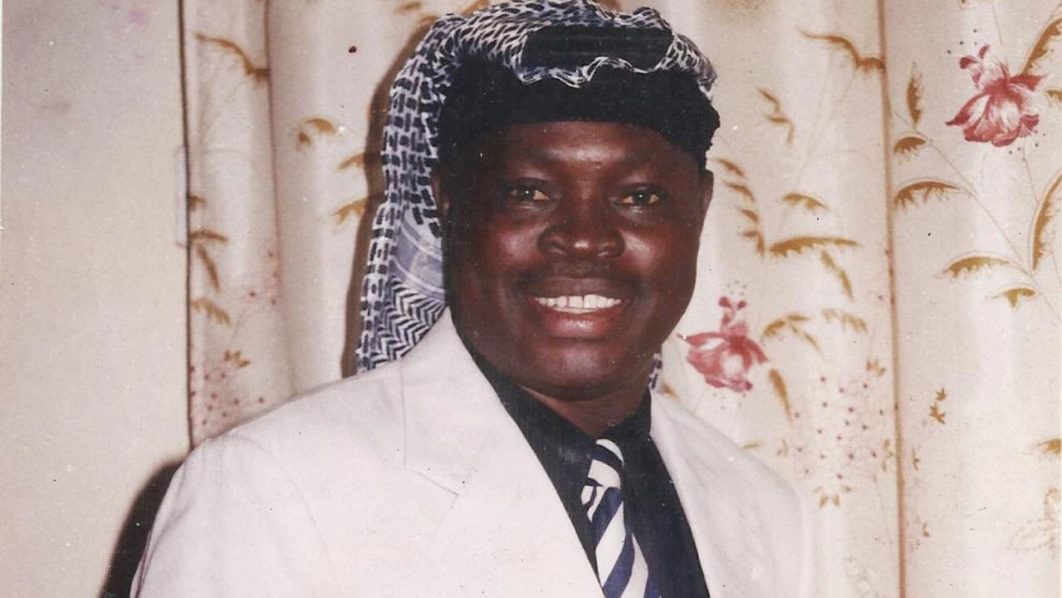
MURIC Accuses Adeleke of Persecuting Muslim Traditional Rulers, Demands Reversal of Obas’ Demotions
The Muslim Rights Concern (MURIC) has accused Osun State Governor, Ademola Adeleke, of allegedly harassing and victimising traditional rulers in the state, warning that the governor’s actions could undermine the independence and dignity of the traditional institution.
The Islamic human rights organisation specifically criticised the alleged demotion of two traditional rulers and what it described as repeated warnings issued to the Oluwo of Iwo, Oba Abdul Rasheed Adewale Akanbi.
MURIC called on the Osun State House of Assembly and other state legislatures across the country to initiate legislative measures to strip governors of the power to depose or demote traditional rulers, arguing that such authority is being abused for political purposes.
The organisation made its position known in a press statement issued on Tuesday, November 17, 2026, by its Founder and Executive Director, Professor Ishaq Akintola.
According to the statement, at least three traditional rulers in Osun State have allegedly faced punitive actions under the Adeleke administration.
They include the Oluwo of Iwo, Oba Abdul Rasheed Adewale Akanbi; the Alagunbeelewo of Agunbeelewo, Oba Maruf Olayiwola; and the Olu of Irepodun, Oba Adewale Adeniyi Sikiru, in Osogbo.
MURIC alleged that the Oluwo had been cautioned twice over his public remarks, while the other two monarchs were demoted under the Chief’s Law (Cap 25), Laws of Osun State, 2002.
The organisation, however, noted that the government letters communicating the demotions did not expressly state the reasons behind the decisions.
It added that the Alagunbeelewo of Agunbeelewo, Chief Maruf Olayiwola, had reportedly disclosed that the monarchs were accused of associating with the All Progressives Congress (APC) instead of the Accord Party in the state.
Reacting to the development, MURIC described the alleged actions against the traditional rulers as high-handed, vindictive and politically motivated.
The group accused the governor of using his executive powers to punish monarchs allegedly perceived to be sympathetic to opposition interests, warning that traditional rulers should not be subjected to political pressure or treated as instruments of partisan interests.
MURIC also raised concerns over the religious identities of the affected traditional rulers, observing that all three are Muslims.
According to the organisation, the names of the Oluwo, Oba Abdul Rasheed Akanbi, Oba Maruf Olayiwola and Oba Sikiru Adeniyi suggest their Muslim identities.
The group said the coincidence raised questions about the governor’s relationship with Muslims in the state, although it offered no independent evidence establishing that religion was the basis for the actions against the monarchs.
Professor Akintola went further to accuse Adeleke of allegedly harbouring an anti-Muslim agenda, claiming that the governor’s political appointments did not adequately reflect Muslim representation.
MURIC also questioned the governor’s religious commitment, alleging that he merely presents himself as a Muslim while harbouring anti-Muslim sentiments.
The organisation, however, did not provide specific supporting evidence in the statement to substantiate its allegations of religious discrimination.
Beyond the religious dimension, MURIC said its position was informed by its longstanding advocacy for the independence of traditional institutions and the protection of monarchs from what it described as excessive executive interference.
The group argued that traditional rulers, who occupy important positions in their communities and preserve the cultural heritage of their people, should not be exposed to arbitrary decisions by governors.
It maintained that governors and other elected political officeholders hold temporary mandates, whereas traditional rulers are traditionally expected to remain on their thrones for life, subject to applicable laws and customary provisions.
MURIC accused politicians of exploiting the influence of traditional rulers during election campaigns and abandoning or victimising them after elections when they are perceived not to have supported their political interests.
The organisation insisted that the traditional institution should remain above partisan politics and that monarchs should be allowed to discharge their responsibilities without intimidation or political interference.
It further recalled its previous campaigns calling for constitutional and legislative reforms to remove the powers of governors to depose traditional rulers.
According to MURIC, it had made similar demands following developments involving traditional institutions in Kano State and other parts of the country.
The organisation also recalled that in November 2024, it specifically urged the National Assembly and state houses of assembly to initiate legislation that would strip governors of the authority to dethrone traditional rulers.
Reaffirming its position, MURIC said it would not abandon the campaign, insisting that traditional rulers deserved adequate protection against what it described as reckless executive abuse.
The organisation consequently appealed to state legislatures to begin the process of reviewing existing laws governing traditional institutions.
It specifically called on the Osun State House of Assembly to repeal or amend the Chief’s Law (Cap 25), Laws of Osun State, 2002, which it identified as the legal framework under which the two monarchs were reportedly demoted.
MURIC argued that legislative intervention was necessary to protect traditional rulers from political victimisation and preserve the dignity of their ancestral stools.
The group also challenged Governor Adeleke to explain whether traditional rulers in Osun State were not allegedly mobilised to work for political interests during the August 2026 electioneering activities.
Although it declined to provide further details, MURIC suggested that traditional rulers might have been exposed to political pressures during the electoral process, warning against what it described as the use and subsequent abandonment of monarchs by politicians.
The organisation also accused unnamed individuals of attempting to undermine its activities through the emergence of groups it described as fake Islamic organisations following its previous criticism of the governor.
MURIC maintained that, as a non-governmental organisation, it had a responsibility to scrutinise government policies, actions and public statements, insisting that public officeholders must be prepared to tolerate criticism.
The group warned Muslim leaders and Islamic organisations across Yorubaland not to treat the development as an isolated dispute involving individual traditional rulers.
It described the situation as a potential threat to Muslim traditional institutions in Osun State and urged Muslim leaders to become more vigilant.
According to MURIC, the alleged gagging of the Oluwo of Iwo and the demotion of two other Muslim traditional rulers could have wider implications for Muslims in the region.
The organisation therefore called on Muslim traditional rulers across Osun State to remain alert and urged religious and community leaders to pay attention to developments surrounding the traditional institution.
MURIC concluded by describing Adeleke as a governor of particular concern, reiterating its demand that the alleged harassment of traditional rulers should stop.
The group also urged the governor to avoid actions capable of escalating political and religious tensions in the state.
The allegations and demands were contained in MURIC’s November 17 statement signed by Professor Ishaq Akintola.
MURIC Accuses Adeleke of Persecuting Muslim Traditional Rulers, Demands Reversal of Obas’ Demotions
metro
FCTA Forgery Scandal: Anita Odom Flees as ICPC Pursues Case Over Alleged Fake Degree, NYSC Certificate

FCTA Forgery Scandal: Anita Odom Flees as ICPC Pursues Case Over Alleged Fake Degree, NYSC Certificate
ABUJA, Nigeria — A certificate forgery controversy involving a senior official of the Federal Capital Territory Administration (FCTA), Mrs Anurika Anita Odom, has taken another turn following reports that a court has issued an arrest warrant against her over allegations of falsifying academic and National Youth Service Corps (NYSC) credentials.
The official, also identified in reports as Obasi Anurika Anita, is alleged to have used questionable educational and NYSC documents to secure employment in the FCTA in 2009.
Reports have further claimed that she may have left Nigeria after allegedly failing to appear for court proceedings. However, the reported arrest warrant and her alleged departure from the country have not been independently confirmed by the available reports reviewed for this publication.
Investigations by the Foundation for Investigative Journalism (FIJ), published in December 2025 and February 2026, had previously raised questions about the authenticity of the documents allegedly used to secure her appointment.
According to FIJ’s February 2026 investigation, the Independent Corrupt Practices and Other Related Offences Commission (ICPC) filed a four-count criminal charge against her before the High Court of the Federal Capital Territory in a case marked CR/717/2025.
The allegations centre on her purported University of Port Harcourt (UniPort) degree certificate and NYSC discharge certificate, which investigators reportedly examined during their investigation.
In a response to an ICPC verification request, the University of Port Harcourt reportedly confirmed that Odom had been admitted as a student but did not complete her programme successfully. The university also reportedly questioned the authenticity of the degree certificate presented in her name.
The NYSC equally disowned the discharge certificate allegedly presented by the FCTA official. In a letter dated March 18, 2024, the scheme stated that its records contained no evidence of her mobilisation or deployment for national service in Imo State in 2008.
The NYSC further explained that the call-up number did not exist and that certificate number A001143537 was not among the numbers issued for certificates of national service in Imo State during the relevant period.
According to documents cited in the investigations, Odom was employed by the FCTA on August 17, 2009, as an Administrative Officer II. She subsequently rose through the civil service ranks to Grade Level 13 while working with the Abuja Geographic Information Systems (AGIS).
The ICPC subsequently instituted criminal proceedings against her in December 2025, alleging that she forged academic and NYSC documents to obtain public employment.
It is important to distinguish the criminal prosecution from an earlier civil case, marked FHC/ABJ/CD/929/2024, instituted by a private individual seeking the production and verification of her academic and employment records.
The latest reports of an arrest warrant and her alleged escape from Nigeria, if confirmed, would represent a significant development in the prosecution. However, the specific court order, the circumstances surrounding its issuance and her reported whereabouts remain matters requiring confirmation from the court and the relevant law enforcement authorities.
The case has renewed public attention on the verification of academic qualifications and NYSC certificates presented by individuals seeking or occupying positions in Nigeria’s public service.
As proceedings continue, the allegations remain subject to judicial determination, and the accused is entitled to the presumption of innocence until proven guilty.
FCTA Forgery Scandal: Anita Odom Flees as ICPC Pursues Case Over Alleged Fake Degree, NYSC Certificate
metro
Man Gets Two Life Sentences for Killing Parents Over Inheritance
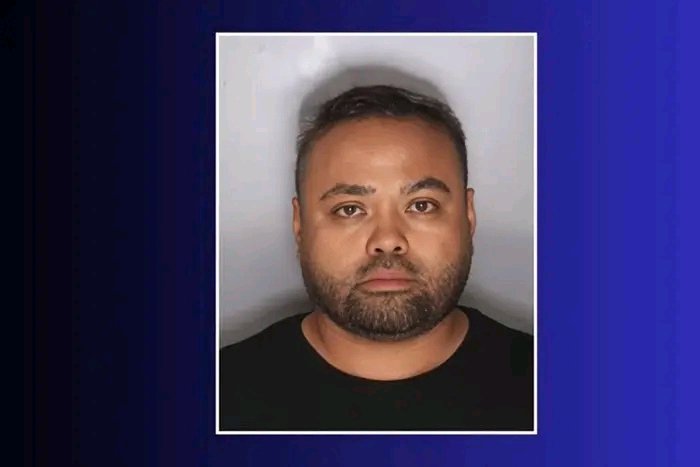
Man Gets Two Life Sentences for Killing Parents Over Inheritance
ELK GROVE, CALIFORNIA — A 46-year-old American man has been sentenced to two consecutive life terms in prison without the possibility of parole for murdering his elderly parents in a calculated plot to obtain their inheritance.
The defendant, identified as **Mark Andre Tomas Navarrete**, was sentenced by Sacramento County Superior Court Judge Michael Bowman after a jury found him guilty of the first-degree murders of his 73-year-old father, Augusto Tacsuan Navarrete, and his 70-year-old mother, Marjorie Jane Tomas Navarrete.
The shocking case, which exposed a combination of financial fraud, family resentment and a carefully planned double murder, has drawn widespread attention because of the extraordinary measures Navarrete reportedly took to conceal his involvement, including bringing his own children to the scene and pretending to discover the bodies.
According to the Sacramento County District Attorney’s Office, the murders occurred on June 28, 2024, at the victims’ residence in Elk Grove, California.
Prosecutors said Navarrete was motivated by financial gain and stood to inherit half of his parents’ estate if they died.
Investigations revealed that he had previously been involved in fraudulent investment schemes through which he collected money from friends and relatives, promising them unusually high returns.
However, when some of the people involved began demanding repayment, his parents reportedly intervened and settled debts their son owed to other family members.
Rather than appreciating their assistance, Navarrete allegedly became resentful towards his parents, who prosecutors said eventually became targets of his financial ambitions.
Prosecutors said Navarrete carefully planned the killings to avoid being identified by surveillance cameras around his parents’ residence.
On the morning of June 28, 2024, he reportedly drove from his home in Elk Grove to his parents’ neighbourhood and parked his vehicle several blocks away from their residence.
He subsequently put on a mask and gloves before using a kick scooter to travel the remaining distance to the house.
To avoid detection by the home’s Ring security camera positioned at the front entrance, he reportedly entered through a side gate and approached his parents through the backyard.
After meeting them at the back door, Navarrete allegedly persuaded his parents to enter the garage, where he attacked them.
According to prosecutors, he struck both victims on the head with an object before strangling them to death.
After carrying out the killings, he reportedly drove away in his parents’ vehicle, parked it a short distance from where he had initially left his own car and used the scooter to return to his vehicle before leaving the area.
In one of the most disturbing aspects of the case, Navarrete reportedly attempted to create the impression that everything was normal after murdering his parents.
Later that same morning, he sent a text message to the victims asking whether they wanted to come over to his house for dinner, despite the fact that both of them were already dead.
The situation became more complicated when his sister became worried after repeated attempts to contact their parents proved unsuccessful.
Prosecutors said Navarrete subsequently returned to his parents’ residence accompanied by his own children and pretended to discover their lifeless bodies.
The staged discovery was part of the series of actions investigators later examined while reconstructing the events surrounding the murders.
Despite his efforts to conceal his involvement, investigators eventually uncovered evidence linking Navarrete to the killings.
Detectives from the Elk Grove Police Department reportedly relied on surveillance recordings, including footage from Flock automated camera systems and other traffic cameras, to reconstruct his movements on the day of the murders.
The recordings helped investigators trace his movements, including his journey to and from his parents’ neighbourhood.
Another crucial breakthrough came when detectives discovered the kick scooter allegedly used during the operation inside Navarrete’s garage.
Forensic examinations also produced significant evidence against him. DNA testing revealed traces of Navarrete’s DNA underneath his mother’s fingernails, providing evidence linking him to the physical confrontation before her death.
Investigators also established the financial background behind the killings, including his alleged fraudulent investment activities and his parents’ efforts to repay some of the debts he had accumulated.
Following investigations and trial proceedings, a jury found Navarrete guilty on October 16, 2026, of two counts of first-degree murder.
The jury also upheld special-circumstance allegations that he committed multiple murders and that the killings were carried out for financial gain.
The verdict paved the way for the maximum punishment, with Judge Michael Bowman subsequently imposing two consecutive life sentences without the possibility of parole.
The Sacramento County District Attorney’s Office announced the sentencing, describing the case as a murder committed for financial gain.
With the sentence, Navarrete is expected to spend the remainder of his life in prison, having been convicted of killing the two people who had reportedly helped him settle financial obligations to other members of their family.
The case has also highlighted how surveillance technology and forensic DNA evidence helped investigators unravel a carefully planned crime that initially appeared to be the discovery of two deceased elderly parents by a concerned family member.
Man Gets Two Life Sentences for Killing Parents Over Inheritance
-

 metro2 days ago
Goodluck Jonathan’s Second Wife, Ayima, to Unveil Memoir ‘Gold Dust’ in Abuja at 50
-

 metro3 days ago
Tragedy: “I Suffered With This Man When He Had Nothing” — Woman Who Begged Alleged Rival To Leave Her Family Dies At 39
-

 Business2 days ago
Petrol Prices Crash as Dangote Refinery, NNPCL, MRS Adjust Rates Nationwide
-

 Politics2 days ago
Presidency Deletes AI-Generated Tinubu Rally Photo After Public Outcry
-

 Politics2 days ago
Sheikh Nuru Khalid Speaks on Tinubu, Atiku, Mosque Visits, Warns Against Mixing Politics With Religion
-
 International1 day ago
Canada: Eight Nigerians Among 12 Arrested in $4.5m Auto Theft Bust, 96 Vehicles Recovered
-

 News2 days ago
Tinubu Unveils 5-Year Plan to End Insecurity, Approves Recruitment of 78,000 Soldiers, Police Officers
-

 International2 days ago
Eight Dead in New York Building Collapse as Nigerian Landlord’s Troubling Past Emerges