

metro
BREAKING: FCTA Seals Ministry Of Works, Federal Character Commission Over Debt

The Federal Capital Territory Administration (FCTA)has sealed the Federal Ministry of Works, Federal Character Commission, Merit house Maitama and Murg plaza over waste management debts owed to Abuja Environmental Protection Board (AEPB).
Addressing journalists during the exercise, Director of the board, Engr Osilama Briamah, said the affected agencies refused to pay for the services of the board.
He explained that the board had huge amount laying without response from the defaulters.
“We tried to negotiate to have a better way to achieve results but there was no positive response; we gave them payment plan but many of them refused to take the opportunity seriously, the board then resorted to legal means to recover the debts. The board got court orders to seal the premises” he said.
According to him, the exercise which has just begun, will cover all public and private offices owing the board.
READ ALSO:
- Why FG Is Yet To Deploy Tucano Jets In N/West — Presidency
- Battle for Donbas region has begun, says Volodymyr Zelensky
- Inflation: Adjust Policies to Boost Supply, World Bank Tells Nigeria, Others
A senior magistrate court sitting in Wuse II, Abuja had served the defendants with summons to appear before it on March 30, 2022, but they failed to honour the court.
The breakdown of the debts showed that Federal ministry of Education owed N25,838,275, Federal Ministry of Defence -N17,220,775.00 and Federal character commission–N10,128,906.25.
Others include Civil service commission–N2,451,649.50, Revenue mobilisation and fiscal commission—N21,683,750.00; Federal ministry of Health N 14,204,843.75, Fed ministry of Trade & Investment—N19,222,287.50, Federal ministry of Works — N9,998,625.00, Nigeria Security and civil Defence corps wuse- N16,583,031.25.
The senior Special Assistant on Monitoring Inspection and Enforcement to the minister of FCT, Ikahro Attah, who led the enforcement said the operation followed the initiative put together by the minister of FCT and the permanent secretary to recover the extreme debts owed the board.
Attah stated that the FCT Administration is worried about the high amount being owed FCTA.
“FCT Administration needs enough fund to build infrastructure and keep the city running. The administration has decided to go after the Ministries, parastatals, agencies and private individuals. We cannot wait to see government money tied down, it’s wrong for people not to pay for services rendered,” he said.
DAILY TRUST









metro
NSCIA Rejects Genocide Claims, Demands Urgent Security Overhaul
NSCIA Rejects Genocide Claims, Demands Urgent Security Overhaul
The Nigerian Supreme Council for Islamic Affairs (NSCIA) has rejected claims that Christians or any other religious community is facing genocide in Nigeria, saying the country’s insecurity affects citizens regardless of their faith.
The council, however, demanded an urgent and comprehensive reform of Nigeria’s security architecture, while supporting decentralised policing subject to constitutional safeguards, professionalism, impartiality, accountability, adequate funding and respect for fundamental rights.
The position was contained in a communiqué issued after the NSCIA General Assembly held at the Abuja National Mosque on October 1, 2026, under the theme, “Nigerian Muslims and the Imperative of Nation-building.”
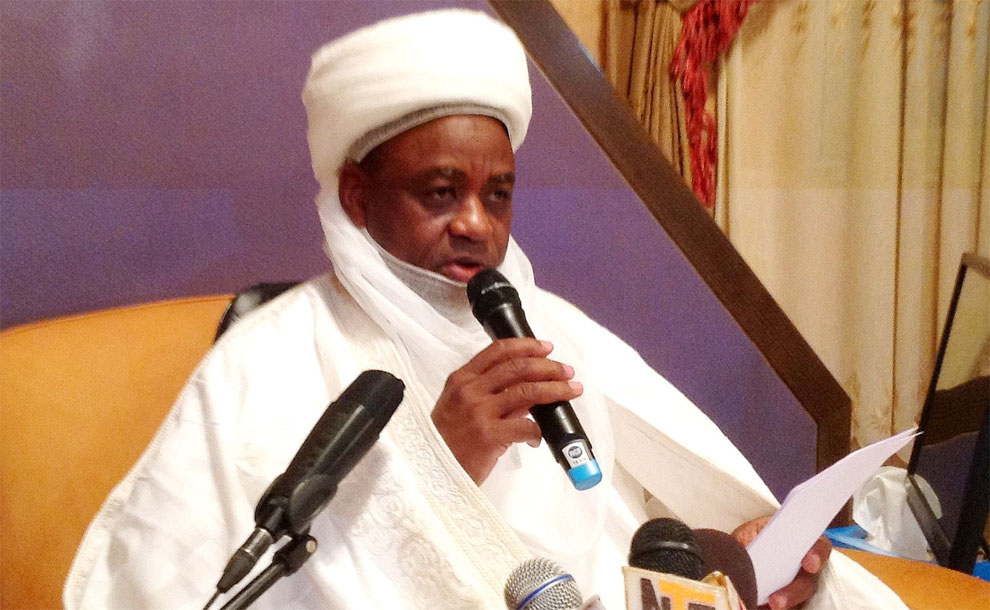
The assembly was presided over by the Sultan of Sokoto and NSCIA President-General, Muhammad Sa’ad Abubakar, with Islamic scholars, traditional rulers, Chief Imams, leaders of major Islamic organisations and delegates from across the 36 states and the Federal Capital Territory in attendance.
On the country’s security challenges, the council said insecurity affects all Nigerians regardless of faith, rejecting attempts to frame the crisis as an attack on one particular religious group.
It urged the Federal Government to undertake a comprehensive review of the security system and improve coordination between federal and state security institutions.
The NSCIA backed state or decentralised policing, but stressed that any such arrangement must be built around professionalism, impartiality, accountability, sustainable funding, constitutional safeguards and protection of fundamental human rights.
READ ALSO:
- Abuja: 33-Year-Old Nabbed While Writing FCT Promotion Exam For Father
- FG Releases Eight-Month Arrears After SSANU Strike Threat
- Yobe: 9-Year-Old Boy Burns Stepmothers, Brothers To Death In Revenge Attack
The council’s position comes amid continuing national debate over proposals to amend Nigeria’s constitutional framework to allow more decentralised policing.
Beyond security, the NSCIA urged the government to accelerate measures to reduce the rising cost of food and transportation, saying ordinary Nigerians were still facing significant economic hardship.
The council acknowledged efforts to revive the economy but called for faster action to ease the burden on households.
The Islamic body also cautioned against using religion to promote hatred, violence and division.
It urged Muslim scholars to resolve disagreements through internal mechanisms rather than publicly attacking one another, while encouraging Muslims to verify information before circulating allegations or claims that could damage individuals or deepen social tensions.
On religious rights, the council called on government institutions to respect the right of Muslim women and girls to wear the hijab, including female students, NYSC members, security personnel and Muslim women working in other organisations.
The NSCIA also criticised what it described as hostile positions by the University of Ibadan, Obafemi Awolowo University and the University of Lagos concerning Supreme Court judgments on hijab use in their international schools.
It urged the institutions to comply with the relevant court decisions and adopt more inclusive policies.
The council further called on the Rivers State Government and the management of Rivers State University to implement a Supreme Court judgment concerning the construction of a mosque for Muslim students at the institution.
Ahead of the 2027 general elections, the NSCIA urged Muslims to obtain their National Identification Numbers (NINs) and Permanent Voter Cards (PVCs) and participate actively in choosing leaders at all levels.
It said civic participation was part of the responsibility of citizens and encouraged Muslims to contribute positively to nation-building.
The council also encouraged Muslim organisations to promote economic independence through lawful investments and stronger administration of Zakat and Waqf as tools for sustainable poverty reduction.
On education, it called for greater emphasis on quality learning that combines Islamic knowledge with Science, Technology, Engineering, Arts and Mathematics (STEAM).
The General Assembly also adopted the 2026 report of the National Hajj Commission of Nigeria (NAHCON) and endorsed its recommendations for repositioning the Hajj industry.
The NSCIA additionally honoured its Secretary-General, Professor Is-haq Oloyede, for his contributions to education and national development during his tenure as JAMB Registrar from August 2016 to July 2026.
The council’s resolutions come amid continuing debate over religious violence, insecurity and allegations of persecution in Nigeria.
By rejecting a religious-genocide framing while demanding broad security reforms, the NSCIA said the country’s security crisis should be addressed as a national challenge affecting Nigerians across religious lines.
NSCIA Rejects Genocide Claims, Demands Urgent Security Overhaul
metro
Breaking: PINL Drags Asari-Dokubo To DSS Over N2.7tn Pipeline Claim
Breaking: PINL Drags Asari-Dokubo To DSS Over N2.7tn Pipeline Claim
Pipeline Infrastructure Nigeria Limited (PINL) has petitioned the Department of State Services (DSS) over a claim by Niger Delta activist Asari-Dokubo that about N2.7 trillion is paid annually for pipeline surveillance contracts.
In the petition dated October 7, 2026, PINL described the allegation as false and inciting, arguing that the claim could expose its directors and senior management to security threats and undermine peace in the Niger Delta.
The company said Dokubo made the allegation in a video circulated on social media on October 5 while discussing pipeline surveillance contracts and other developments in the oil-producing region.
PINL urged the DSS to investigate the allegation, establish its source and invite Dokubo to provide evidence supporting the claim.
The company further asked that if the allegation is found to be false, Dokubo should publicly retract it and face any appropriate legal action.
PINL said the circulation of the claim could create the impression that huge amounts of public money were being diverted to particular individuals or interests, potentially fuelling resentment among communities in the oil-producing region.
The company also expressed concern that the allegation could heighten ethnic tensions involving Ijaw, Itsekiri and Urhobo communities, warning that renewed tensions could threaten security gains recorded in the Niger Delta.
READ ALSO:
- 2027: Donald Duke Pledges To Bring Petrol Price Down To N300 Per Litre
- Olu of Warri Denies N2.7tn Pipeline Deal, Demands Evidence From Dokubo
- BREAKING: NLC Shuts Down Abuja Indefinitely Over FCT Teachers’ Promotion Dispute
According to PINL, the security of oil infrastructure has wider implications for Nigeria’s crude oil production, government revenue and foreign exchange earnings, making stability in the region a matter of national importance.
The company said it had contributed to efforts to combat crude oil theft, pipeline vandalism and militancy, and warned that any deterioration in security could affect national oil output.
PINL also asked the DSS to conduct a threat assessment and consider protection for its directors, management, employees and project sites.
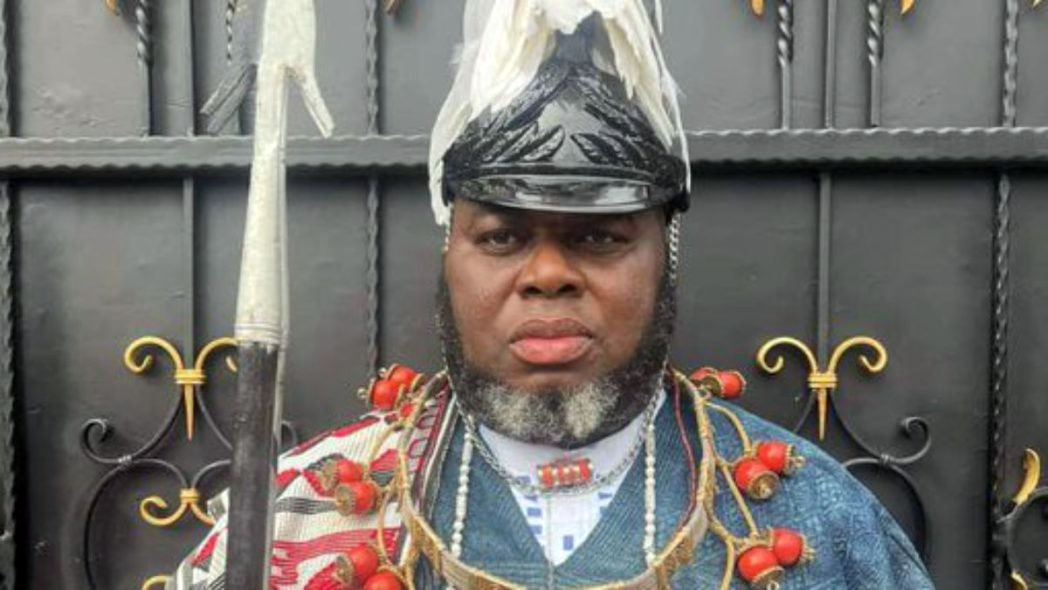
The company’s petition comes amid a wider controversy over pipeline surveillance contracts in the Niger Delta, following Dokubo’s allegations involving the Olu of Warri, Ogiame Atuwatse III, and other stakeholders.
The Olu of Warri has separately rejected the allegation that he receives N2.7 trillion annually from pipeline surveillance contracts.
Through his representative to NNPC Limited and its joint-venture partners, Collins Edema, the monarch challenged Dokubo to produce documentary evidence supporting the claim.
Edema also called for relevant pipeline surveillance contracts, procurement records, government approvals, corporate documents and performance reports to be examined if questions have been raised about the arrangements.
The monarch’s representative said allegations concerning the management of Nigeria’s oil infrastructure should be addressed through evidence and independent scrutiny rather than rhetoric.
The dispute has therefore widened from a public exchange over the alleged N2.7tn pipeline contract payments into a formal security complaint, with PINL asking the DSS to investigate the claims and determine whether they constitute a threat to individuals or public order.
The actual value, beneficiaries and terms of the pipeline surveillance arrangements remain matters for documentary verification and investigation.
Breaking: PINL Drags Asari-Dokubo To DSS Over N2.7tn Pipeline Claim
metro
Breaking: 20 Abducted Corps Members Regain Freedom In Imo
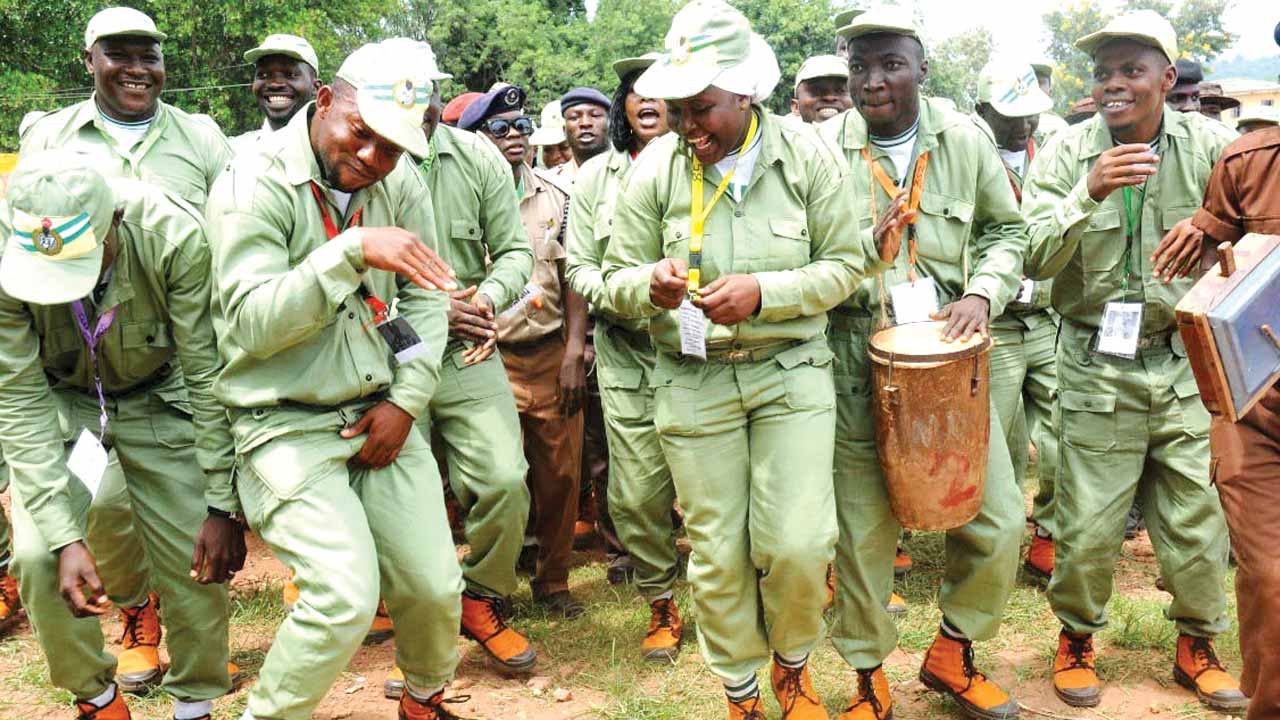
Breaking: 20 Abducted Corps Members Regain Freedom In Imo
Twenty prospective National Youth Service Corps (NYSC) members and another person abducted along the Owerri-Onitsha Road in Imo State have regained their freedom.
The abducted corps members were reportedly rescued on Wednesday, October 7, 2026, bringing relief to their families after days in captivity.
The victims are currently receiving medical treatment at the Department of State Services (DSS) Hospital in Owerri, according to a report confirming their release. (NPO Reports)
The prospective corps members were among passengers travelling from Ibadan, Oyo State, to NYSC orientation camps in the South-East and South-South when gunmen attacked vehicles conveying them along the Owerri-Onitsha Road in Imo State on October 1.
READ ALSO:
- Abuja: 33-Year-Old Nabbed While Writing FCT Promotion Exam For Father
- FG Releases Eight-Month Arrears After SSANU Strike Threat
- Yobe: 9-Year-Old Boy Burns Stepmothers, Brothers To Death In Revenge Attack
The incident triggered a major security operation involving the police, military, DSS and other security agencies as efforts intensified to locate and rescue those taken into captivity.
Earlier reports said the abductors had demanded ransom from the families of the victims, while relatives raised concerns about the safety and wellbeing of the kidnapped graduates.
Security agencies had also deployed additional personnel and operational assets to Imo State as pressure mounted for the safe recovery of the NYSC members.
The latest development means the 20 prospective corps members and another abducted person are now out of captivity and receiving medical attention.
Details of the circumstances surrounding their rescue, including whether any arrests were made or ransom was paid, were not immediately available.
The development is expected to bring significant relief to the families who had spent days seeking the safe return of their loved ones.
Breaking: 20 Abducted Corps Members Regain Freedom In Imo
-

 metro2 days ago
Tragedy Strikes FMC: Medical Director Loses Two Daughters—A Doctor and a Pharmacist—Within 48 Hours
-

 metro2 days ago
Transporters Urge IGP Disu to Arrest Illegal Highway Tax Collectors
-
 Politics2 days ago
2027: Soludo Govt Accuses Peter Obi Of Plot To Destroy APGA
-
 metro2 days ago
Army, DSS, Amotekun Kill ISWAP Commander Planning Attacks in Southern Nigeria
-
 metro3 days ago
Kidnappers torture abducted corps members, slash ransom to N100m
-
 News2 days ago
BREAKING: Many Feared Dead as Helicopter Crashes in Ondo Community
-

 metro2 days ago
Grand Chief Imam of Oyoland Urges Rabitah 1964 to Regulate ‘Yorubaland’ Islamic Titles
-
 metro2 days ago
Ondo Air Tragedy: Soldiers, Families Among 32 Killed In NAF Crash