

News
Eid-il-Fitr: Sultan advises FG on ASUU strike, rising food prices

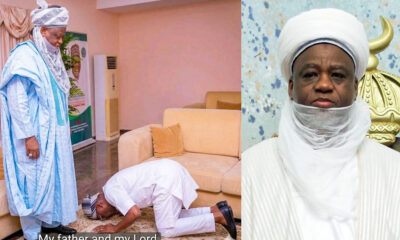
The Federal Government must urgently find solution to the current nationwide strike by university lecturers, the Sultan of Sokoto and the President General of the Nigeria Supreme Council for Islamic Affairs, Alhaji Sa’ad Abubakar III, has said.
He also called on the government to address the twin problem of inflation and insecurity in the country.
These are contained in the Sultan’s Eid-il-Fitr message released on Friday and signed by the NSCIA’s Director of Administration, Zubairu Usman-Ugwu,
He specifically urged security agencies to up their game in order to address the country’s dangerous security situation.
He urged traders to desist from the habit of arbitrarily increasing the price of food items, just as he appealed to Muslims to exercise their rights to contest for elective positions and participate actively in the electoral process by not only obtaining their Permanent Voters Cards, but also casting their votes on the election days.
The statement read in part, “The Nigerian Supreme Council for Islamic Affairs (NSCIA), under the leadership of its President-General and Sultan of Sokoto, His Eminence, Alh. Muhammad Sa’ad Abubakar, CFR, mni, felicitates with the Nigerian Muslim Ummah and indeed the entire Muslim world on the auspicious occasion of the 1443 AH ‘Idul Fitr. We beseech Allah to grant everyone the opportunity to witness many more of it.
READ ALSO:
- Nigeria Deploys 205 Troops To Gambia On Peacekeeping Mission
- Afe Babalola excited as ABUAD leads 2022 universities’ ranking
- Oshiomhole dismisses rumours of presidential declaration
“The council seizes the opportunity of Eid to express its serious concern about the skyrocketing prices of food and consumables in the country and appeal to the government to stem the tide of inflation while urging traders too to desist from the habit of arbitrarily increasing the price of food items.
“We appeal to ASUU and the Federal Government to find an amicable solution to the ongoing impasse/strike and not allow some unscrupulous individuals to mobilise students in the name of protests to destabilise the country;
“We call on security agencies to up their game and forcefully address the dangerous security situation in the country.
“We appeal to politicians to consider politics as a service to the Nation, which should not be pursued as a do-or-die affair. Nigerians should freely choose their leaders on the basis of those who will lead them with justice, fairness and character in the line with our usual prayer, ‘O Allah, make the best of us our leaders and don’t make the worst of us our leaders. Don’t make us, on account of our sins, be under those who will neither fear you nor be compassionate to us.
“We urge Muslims to exercise their rights to contest for elective positions and also participate actively in the electoral process by not only obtaining their Permanent Voters Cards, which is still ongoing but also casting their votes on the days of elections. The Council insists that it is a religious duty for every Muslim to obtain his/her voter’s card.”
The Sultan welcomed the policy of the Nigeria Police Force to allow female personnel to use a head covering and urged other military, paramilitary and security agencies to toe the line, stressing that it would promote inclusivity and civility in service.
The NSCIA, however, expressed serious concern about the persecution of Muslims, particularly in Bauchi and many southern states.
He urged Muslims to continue to exercise patience and restraint in the interest of peace and national development.
The council further enjoined Muslims all over the country to look out for the end of fasting announcement by the Sultan after the moon must have been sighted.



Education
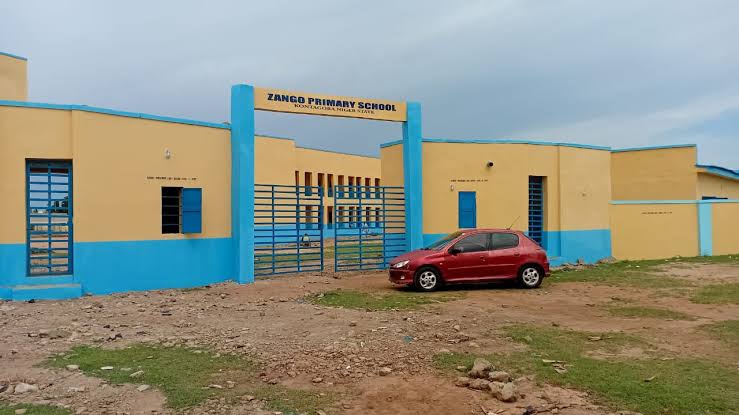
Niger State Urges Local Communities to Protect Newly Completed Public Schools
Niger State Urges Local Communities to Protect Newly Completed Public Schools
Basic education officials deliver modern classrooms to help children learn safely, kicking off an ambitious statewide renovation drive.
State education leaders in Niger State are calling on neighborhood residents and parent groups to take good care of newly renovated primary schools.
On Wednesday, the head of the Niger State Universal Basic Education Board, Dr. Ibrahim A. Liman, reminded communities that public classrooms belong to everyone, warning that state funding can only make a lasting difference when local people watch over these shared spaces.
To prepare for handing over the keys, board officials visited Zango Primary School in Kontagora and Richard Lander Primary School in New Bussa. These two locations are the first to finish out of seven model schools currently under construction.
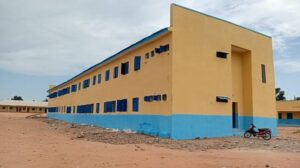
During their visits, team members inspected classrooms to make sure builders followed high safety standards, while encouraging neighbors to keep the grounds secure, tidy, and ready for pupils.
Furthermore, state officials explained that these building projects are part of a larger plan to improve early education across every community. Alongside these new classrooms, the board is starting repair work on about 400 primary schools throughout the state.
In addition to fixing desks and roofs, authorities are upgrading classroom teaching tools and supporting teachers. As a result, children across all backgrounds will have safe, welcoming spaces to learn and grow together.
Niger State Urges Local Communities to Protect Newly Completed Public Schools
Health
Adamawa Health Officials Report 20 Deaths from Suspected Diphtheria Cases
Adamawa Health Officials Report 20 Deaths from Suspected Diphtheria Cases
Parents and caregivers are advised to seek early medical help and update childhood vaccinations as response teams expand outreach.
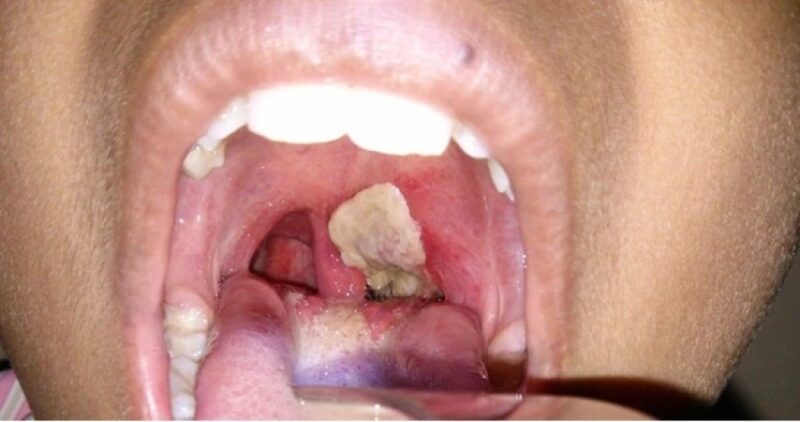
Health authorities in Adamawa State are responding to a diphtheria outbreak that has caused 20 deaths across 13 local government areas. Speaking on Wednesday, State Epidemiologist Jones Steven Kadabiyu confirmed that health workers have recorded 126 suspected cases throughout the state, with six patients currently receiving medical care in local hospitals.
Diphtheria is a serious bacterial illness that spreads through airborne droplets from coughing or close personal contact. It mainly affects the throat and airway, causing sore throats, mild fevers, swollen neck glands, and difficulty swallowing or breathing.
READ ALSO:
- Kara Bridge Repairs, Multiple Crashes Trigger 14-Hour Gridlock on Lagos-Ibadan Expressway
- 2027: Court Gives Atiku Seven Days to Serve Tinubu Through APC in Eligibility Suit
- 2027: Northern Students Back Tinubu, Pledge Campus-to-Campus Mobilisation
Health officials emphasized that the biggest risk to patients has been waiting too long to visit a health center, as some families try informal remedies at home first before seeking professional medical attention.
The state government is working alongside health partners to track new cases, provide specialized antibiotics and treatments, and protect medical workers and family members.
Officials stressed that while diphtheria can affect people of any age, young children are the most vulnerable to serious complications. Parents and guardians are strongly encouraged to ensure their children are up to date on their routine vaccines and to visit the nearest clinic immediately if anyone develops throat swelling or breathing issues.
Adamawa Health Officials Report 20 Deaths from Suspected Diphtheria Cases
News
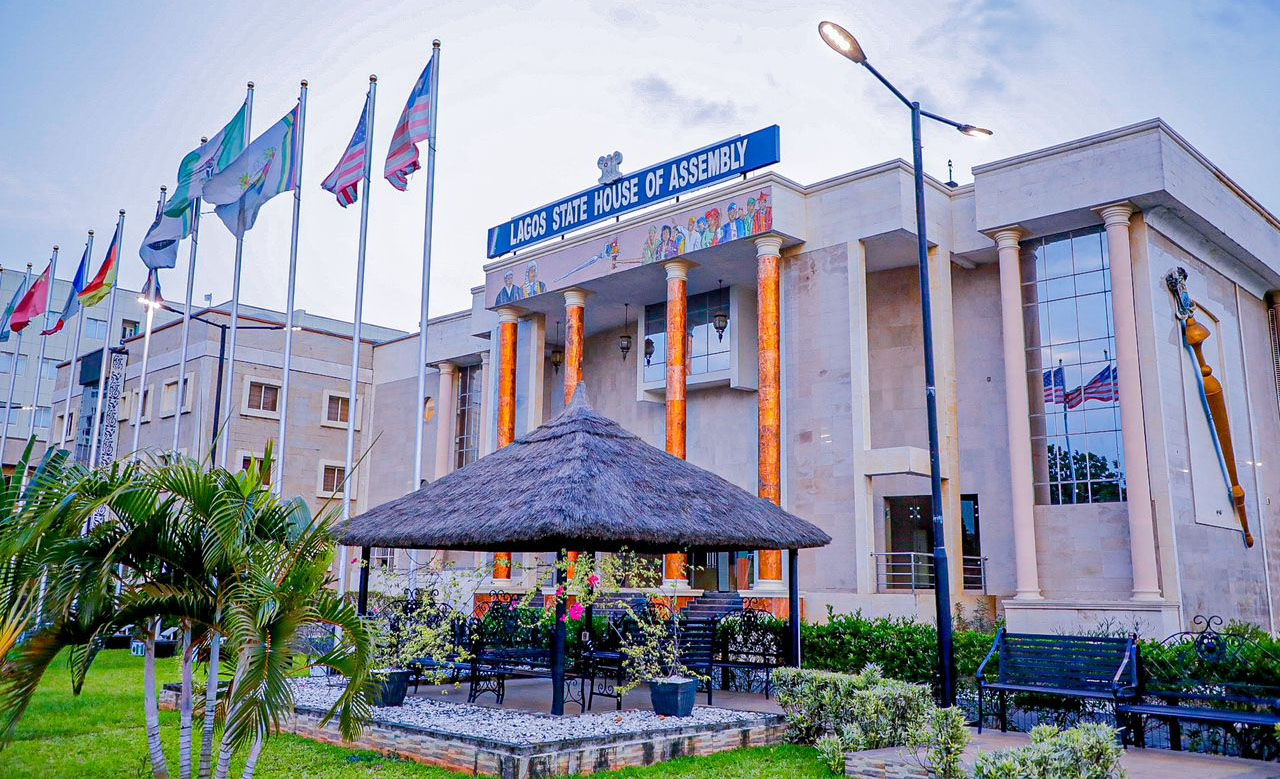
Blue Line Rail, Hospitals Get Boost as Lagos Approves ₦200bn Bond and Budget Reordering
Blue Line Rail, Hospitals Get Boost as Lagos Approves ₦200bn Bond and Budget Reordering
Following Governor Sanwo-Olu’s request, the state legislature approves expanded capital financing for the final months of the fiscal year.
The Lagos State House of Assembly has approved changes to the state’s 2026 spending plan to speed up work on key community infrastructure, including public transit lines, general hospitals, and flood prevention systems.
The decision came after Governor Babajide Sanwo-Olu requested a review of the budget to make sure government funds are directed where they are needed most during the rest of the year.
To support these priority projects, lawmakers agreed to raise the state’s infrastructure bond from ₦150 billion to ₦200 billion. Budget committee chairman Lukmon Olumoh explained that this financial adjustment will help contractors finish essential public facilities faster.
The revised funds will help extend the Blue Line train service between Mile 2 and Trade Fair Station, complete the new Massey Street Children’s Hospital, and finish the 280-bed General Hospital in Ojo.
The amended plan also sets aside funds for fixing potholes on neighborhood roads, clearing drainage channels to prevent flooding, and buying new service vehicles for sanitation and traffic teams.
Lawmakers emphasized that legislative committees will closely monitor how these funds are spent to ensure projects are delivered on schedule and within clear standards. Speaker Mudashiru Obasa confirmed that the approved bill has been sent to the governor to be officially signed into law.
Blue Line Rail, Hospitals Get Boost as Lagos Approves ₦200bn Bond and Budget Reordering
-
 Politics2 days ago
2027: Northern Lecturers Back Tinubu, ASUU Disowns Endorsement
-
 metro2 days ago
Police Arrest Mother Over Alleged Brutal Abuse of 7-Year-Old Girl in Anambra
-

 Sports2 days ago
‘I Was Never the Chosen One’ — Dembele Responds to Mbappe
-
 News3 days ago
Nwifuru Dismisses Cubana Chief Priest as ‘Attention-Seeker’
-
 Politics3 days ago
2027: Sowore Promises ₦500,000 Minimum Wage, Free Education, 24-Hour Electricity
-

 Education2 days ago
JAMB Moves 2027 UTME Time — Here’s What Candidates Need To Know
-
 metro3 days ago
Grand Chief Imam calls for professional communication structure for Rabitoh 1964
-
 Politics1 day ago
2027: APC Governors Reject Wike’s Rainbow Coalition, Insist on Party Loyalty