

Opinion
Farooq Kperogi: Celebrating ASUU-FG’s historic reset with caveats

Farooq Kperogi: Celebrating ASUU-FG’s historic reset with caveats
After sixteen years of stalemate, serial strikes and ritualized brinkmanship, the Federal Government and the Academic Staff Union of Universities (ASUU) have finally signed a renegotiated agreement that replaces the moribund 2009 pact. This is at once historic, consequential and praiseworthy.
For the first time in a generation, Nigeria’s public universities have a framework that promises industrial harmony, predictability of academic calendars and an end to the cruel cycle in which students lose years of their lives to shutdowns that have nothing to do with them. If implemented faithfully, the agreement will allow students to graduate on time, restore confidence in public universities and begin the long task of rebuilding Nigeria’s battered higher education system.
Credit is due to the Minister of Education, Dr. Tunji Alausa, and to President Bola Ahmed Tinubu for pushing this through. In fact, the ASUU agreement is about the only major promise Tinubu made in the poetry of campaign that he has clearly kept in the prose of governance.
The symbolism is even more striking when contrasted with the immediate past. The Muhammadu Buhari administration presided over one of the most destructive eras in the history of Nigerian university education.
This was made all the more tragic by the presence of Adamu Adamu as Minister of Education. Before his appointment, Adamu, for whom I had enormously unconditional respect, was a well-known public defender of ASUU in his intrepid newspaper columns in the Daily Trust. Once in office, however, he turned out to be one of the most hostile ministers Nigerian academics have ever encountered.
On October 9, 2022, at the height of that administration’s war with ASUU, I wrote on social media: “Adamu Adamu, an erstwhile ASUU ally, is turning out to be the deadliest foe ASUU has ever had. With help from Ngige, he’s dealing the union one crushing blow after another…. Lesson: the fact that someone is your friend today doesn’t mean they can’t be a murderous foe tomorrow.”
The Tinubu administration has, at the very least, reversed that posture of antagonism and replaced it with negotiation, compromise and a willingness to reset the relationship between government and academia.
At its core, the new pact addresses the three issues that have driven nearly two decades of conflict: pay, welfare and the structure of university funding.
READ ALSO:
- Court Asked to Force EFCC to Prosecute Three Former Abia Governors
- Anthony Joshua Returns to Gym, Draws New Strength After Surviving Car Crash
- BREAKING: Court stops Rivers Assembly from proceeding with impeachment against Fubara
First is a 40 percent salary increase for lecturers, effective January 1, 2026. Someone rightly remarked that it’s the single largest upward review of academic salaries in over a decade. It’s a long overdue correction after years of erosion by inflation and currency collapse.
For professors, this comes with a new professorial cadre allowance of about 140,000 naira monthly, while readers (roughly equivalent to associate professors) receive about 70,000 naira. Earned academic allowances have also been restructured and tied more clearly to actual academic labor such as postgraduate supervision, fieldwork and research coordination.
Second is a major reform of retirement benefits. Professors who retire at the statutory age of 70 are now guaranteed pension benefits equivalent to their full annual salary. This provision alone is transformative. It ends the shameful tradition of professors retiring into poverty after decades of service and sends a powerful signal to younger academics that a life devoted to teaching and research will not be punished at the end.
Third is the institutionalization of research funding through the proposed establishment of a National Research Council, funded at not less than one percent of GDP. For the first time in Nigeria’s history, research financing is being embedded in national planning rather than left to donor whims and sporadic government interventions.
If implemented properly, this could anchor doctoral training, strengthen laboratories and libraries and finally position Nigeria as a serious knowledge producer.
Fourth is a new funding structure for universities that links capital funding, infrastructure development and staff development to long-term planning rather than emergency interventions. TETFund remains central, but funding is now part of an overarching reform framework.
Fifth is a recommitment to university autonomy and academic freedom, including protections against political interference in hiring, curriculum and internal governance. If faithfully implemented, which is never a guarantee but noteworthy nonetheless, vice-chancellors may not be the glorified political appointees that many of them are now, and universities may cease to be extensions of the civil service.
Finally, the agreement formally buries the 2009 pact that haunted the system like a zombie document. The new framework, produced by the Yayale Ahmed Committee after fourteen months of negotiations, is structured, phased and subject to periodic review. This gives ASUU leverage and gives government predictability.
Yet it is important to separate celebration from illusion. The new agreement is a noteworthy improvement on the living and working conditions of Nigerian university lecturers. But it is not yet competitive by continental standards, and it is unlikely, on its own, to halt academic brain drain.
READ ALSO:
- Gunmen Kill Two Police Officers in Enugu Ambush, Patrol Vehicle Burnt
- Lagos Govt: Ikorodu School Block That Collapsed Was Already Marked for Demolition
- Kebbi Man Arrested for Allegedly Killing Wife With Hoe in Bayawa
Before the agreement, a full professor in a federal university earned roughly 525,000 naira to 630,000 naira monthly. With a 40 percent raise and the new 140,000-naira professorial allowance, a senior professor will now earn in the range of 1 million naira to 1.1 million naira per month, depending on rank and allowances.
That sounds impressive in naira terms. In continental terms, however, it remains deeply uncompetitive.
In South Africa, professors earn the equivalent of about $4,500 to $5,000 per month. In Kenya, professors earn around $1,300 monthly. In Uganda, the figure is about $1,100. In Ghana, professors earn roughly $700 to $800 monthly. In Egypt and Morocco, senior academics earn well above Nigeria’s new scale.
At current exchange rates, a Nigerian professor earning 1.1 million naira a month makes roughly $700. That places Nigeria near the bottom of Africa’s academic pay ladder, ahead of only a handful of fragile economies.
This is why Nigerian universities continue to hemorrhage talent. Professors are leaving for South Africa, Rwanda, Kenya, Botswana, the Gulf, Europe and North America not because they dislike Nigeria but because Nigeria does not value academic labor competitively. A Nigerian professor now earns in a month what a South African professor earns in a week.
The salary increase is therefore a necessary correction, not a strategic solution. It slows the bleeding. It does not stop it.
There is also a potential booby trap embedded in the agreement that deserves sober reflection. The guarantee of full-salary pensions for retired professors has been widely welcomed, and rightly so. But pension experts have warned that this provision resembles a return to the old defined-benefit pension system that Nigeria abandoned two decades ago because it was fiscally unsustainable.
A January 16, 2026, report by TheCable highlighted the controversy sparked by the Director-General of the National Pension Commission, who defended the ASUU deal amid fears that it could undermine the contributory pension scheme. Critics argue that guaranteeing pensions equivalent to full salaries without a clearly defined funding mechanism risks recreating the very problems that forced Nigeria to reform its pension system in the first place.
If the new pension promise is not carefully structured, transparently funded and legally insulated from political manipulation, it could become a future flashpoint for industrial conflict that unfairly punishes students and parents.
Expectations will rise. Budgetary pressures will mount. Regulators will resist. And another round of industrial disharmony could follow.
There is one more omission in the agreement that deserves attention. My friend Prof. Moses Ochonu and I have long argued that the federal government should not simply accede to ASUU’s demands, however legitimate, without also insisting on mechanisms for instructional accountability, research productivity, service delivery and innovation.
Without a system to institutionalize accountability and transparency, students will always be shortchanged, and the nation will be betrayed by lecturers who show little commitment to their craft or to genuine knowledge production and dissemination.
It has become a disturbing culture in Nigerian universities for lecturers to show up in class whenever they please without consequence. In my undergraduate days, I took courses where lecturers appeared only twice in the entire semester, first to introduce themselves and last to set an exam on material they never taught. My conversations with today’s undergraduates suggest that this still happens.
Of course, not everyone is guilty of this. Many Nigerian academics are dedicated teachers and serious scholars working under brutal conditions. But not even one person should be allowed to get away with such negligence.
University lecturers should also not be allowed to publish in substandard, pay-to-play, predatory journals simply to climb the academic ladder. Promotion should reward intellectual rigor, not transactional publishing.
If Nigeria is going to invest billions in salaries, pensions, and research funding, it must also demand excellence in return. Anything less is a betrayal of students and of the country’s development aspirations.
This agreement gives Nigeria a chance to rebuild. Whether it becomes a renaissance or another chapter in the long story of squandered opportunity will depend on what happens next.
Kperogi is a renowned Nigerian columnist and United States-based Professor of Journalism.






Opinion
Ortom and His 23 Cars’ ‘Bonus’, by Dele Sobowale
Ortom and His 23 Cars’ ‘Bonus’, by Dele Sobowale
“As I talk to you, after I left office, vehicles that were given to me legitimately by government, this government went and seized them in a manner that was not befitting.” – Former Governor Samuel Ortom of Benue State
Last week, former Governor Donald Duke of Cross River declared that military rule was, in many respects, better than civil rule since 1999.
I cannot agree more.
I had the privilege of visiting about seven former military governors before 1999.
No military governor had up to 23 cars assigned to the Governor’s Office or residence.
By contrast, since 1999, a civilian governor with only 23 cars in the office alone would be regarded as extremely prudent.
Many have 50 or more.
Ortom’s 23 cars have triggered a dispute. Governors, on their way out of office, routinely take what they deem as their entitlements and thus render their states poorer than they met them.
Most commentaries on Ortom’s 23 cars have been superficial.
The impression they have created is that only 23 cars were taken away.
Nothing can be further from the truth.
Ortom was not the only beneficiary of that largesse.
It is quite possible that over 100 cars were taken away as parting gifts – with Ortom’s approval – as I will explain shortly.
Ortom revealed the hidden truth by saying, with a straight face, that the vehicles were allocated to him and other members of his administration through the State Executive Council, SEC, after they had been used for more than four years.
It was the worst defence for an assault on public funds ever uttered by a former official.
It provided a window into the minds of top government officials everywhere – irrespective of political party affiliation.
Every State Executive Council, SEC, comprises the governor, the deputy governor, the Secretary to the State Government and commissioners.
All the others are selected or appointed by the governor and, with the exception of the deputy governor, can be removed from office.
In other words, the SEC is created by the governor and can take no independent decision of its own.
READ ALSO:
- Abuja Demand Rises as Jetour Brings X70 Plus Experience to FCT
- Enough Is Enough: Muslim Supporters Demand New Man United Owners
- Stray Bullet Kills 400-Level IBBU Student During Land Dispute in Niger
It is not an autonomous body.
Stripped of the subterfuge surrounding it, the decision to allocate 23 cars to Ortom amounted to the governor deciding to go home with the cars and getting his echoes in the SEC to endorse it.
Ortom, inadvertently, disclosed that more cars than 23 were driven home by his government officials when he claimed that the SEC allocated the vehicles in dispute to him “and other members of his administration”.
Since “the other members of his administration” start with the SEC, it stands to reason that the deputy governor, the Secretary to the State Government, all the commissioners, the Chief of Staff, several Special Advisers, heads of state agencies, etc., were also allowed to go home with cars declared over four years old – even if by one day.
Nobody has documented the number of cars Ortom and “the other members of his administration” took away. Over 100 vehicles might be involved.
That leads to the next question because it strikes at the heart of why poverty is increasing in Nigeria.
IS A CAR FOUR YEARS OLD READY FOR THE JUNKYARD?
Most Nigerians known to me, including those driving corporate official cars, are driving vehicles more than five years old.
Mine is 12 years old and can still break the speed limit anywhere in the world.
I also own a LAGRIDE taxi, now four years old.
The Chinese-made car was offered four years ago at N4.8 million, with a down payment of N1.82 million and the balance to be paid in instalments. Today, the car costs N25 million new, and offers have been made to buy my used one for N11–N13 million.
Obviously, when any government gives away, at far less than market value, to departing officials, the public loses.
Ortom’s 23 cars, as well as the others allocated to members of his administration, would have fetched almost five times what the officials paid for them.
To put the matter in perspective, Benue State would have to pay nothing less than N6 trillion just to replace the vehicles.
Left untouched is the question: What else was taken away – furniture, generators, air-conditioners, borehole pumps?
Outgoing officials are never satisfied with taking cars with them.
“Laws grind the poor, and rich [as well as powerful] men rule the law.” – Oliver Goldsmith, 1728–1774
The other half of his self-defence concerns the legality of the allocations.
That the law is an ass has been well established; so is the fact that what we often call law might be injustice codified.
Strictly speaking, everything Abacha did was supported by laws passed as decrees. Justice was never considered.
Civilian governments also make laws which are inherently unjust to the masses.
READ ALSO:
- Oyo Police: Student Who Died by Suicide Was Charged With Assault, Not ₦8,000 Debt
- Delta Police Intercept Sienna With Military Uniforms, Suspected Drugs
- Jehovah’s Witnesses Adjust Blood Transfusion Rules, Allow Personal Choice
The regulation allowing some public servants appointed by the governor to take away very useful public properties cannot be regarded as equitable, given the fact that those who served for 30 or 35 years cannot take away a single pin without being prosecuted.
What exactly does an outgoing governor want to do with 23 cars?
MEANWHILE, GOVERNOR ALIA SETS BACK DEMOCRACY IN BENUE
Governor Hyacinth Alia, a Catholic cleric, honourably fought for justice by having the 23 cars taken away by Ortom retrieved.
It is not clear whether other cars allocated by Ortom’s SEC members were also seized.
If not, the measure would appear personal and discriminatory.
It would appear to be partial justice and tainted with vendetta.
Frequently, individuals transiently invested with near-absolute power, like Nigerian governors, cross the thin line between the divine and the ridiculous within a short time.
When Alia, for the second time, blocked Peter Obi from moving freely about in Benue State, he betrayed democracy and the Constitution of Nigeria he swore to uphold.
He failed the democracy test. He even failed the test of advanced education.
His tenure is limited by the Constitution. Obviously, he will become an ex-governor one day – without armed escorts to protect him and clear the way.
He has established a precedent which will make it legitimate for any governor in Nigeria to block his right of passage.
Two examples in Nigerian history should serve as a warning to Alia.
Military Head of State Obasanjo passed the decree under which General Gowon would have been executed in 1976 – if Britain had not granted the deposed leader political asylum.
The same decree, with slight amendment, was used by Abacha to nail his former boss.
He was saved by divine intervention.
Malam El-Rufai, as governor of Kaduna State, had critics living in other states arrested, brought to Kaduna State and detained without bail for days – before media protests got them released on bail.
Today, El-Rufai is in detention by the DSS and ICPC, without bail for almost six months.
The same media, held in contempt by El-Rufai, has now undertaken the campaign to get him released.
As one of our founding fathers, Dr Nnamdi Azikiwe, reminded us before passing to eternal life: “No condition is permanent.”
Governor Alia should climb down from his high horse and apologise to Obi and Nigerians.
Ortom and His 23 Cars’ ‘Bonus’, by Dele Sobowale
Opinion
2027: Competence, Not Zoning, Should Decide Nigeria’s Next President — Imasuagbon
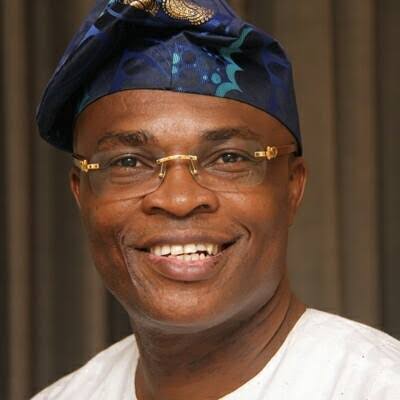
Nigerians should look beyond ethnicity, region and the longstanding debate over rotational presidency when choosing the country’s next leader, according to a chieftain of the African Democratic Congress (ADC), Kenneth Imasuagbon.
The former Edo State governorship aspirant said the priority ahead of the 2027 election should be finding a president with the ability to confront Nigeria’s economic, security and infrastructure challenges.
Speaking to journalists in Benin, Imasuagbon argued that presidential rotation is not a requirement of the Nigerian Constitution and should therefore not outweigh the question of competence.
He said voters should be more concerned about replacing poor schools with better ones, improving healthcare and addressing hardship than debating where the next president comes from.
Imasuagbon specifically appealed to voters in the South to support former Vice President Atiku Abubakar, who is contesting the 2027 presidency on the ADC platform.
According to him, Atiku has demonstrated the experience and determination needed to improve the country, describing the former vice president as someone capable of promoting national unity and fairness.
He also accused the Bola Tinubu administration of worsening economic pressure through policies including the removal of fuel subsidy, while expressing concern about the condition of roads, electricity and other infrastructure.
Imasuagbon argued that the next administration must focus on practical improvements in areas such as power, transportation, employment, security and public services.
The ADC chieftain also dismissed the idea that the ruling All Progressives Congress (APC) would automatically benefit from its incumbency advantage in 2027.
He maintained that the electorate ultimately determines the outcome of an election, arguing that voters could change the political direction of the country if they were determined to do so.
Imasuagbon further criticised what he described as regional and ethnic considerations in the distribution of political appointments and opportunities, insisting that the next president should give Nigerians across different parts of the country a sense of belonging.
His comments come as political parties and their candidates intensify preparations for the 2027 presidential election.
Opinion
Lesson from Dotun Oladipo’s Brave Daughters, by Bamidele Johnson
Lesson from Dotun Oladipo’s Brave Daughters, by Bamidele Johnson
I hope to grow old. I want to see my kids become real adults, find their own feet, make mistakes, recover from them, and perhaps one day complain that their own children are giving them grey hairs. I want that plainly stated before anything else, as everything that follows might read as a man agreeing to an early exit rather than a man simply being honest about the odds.
I want the decades. I want to become the grandfather who repeats the same stories until nobody bothers correcting him anymore. But wanting a thing and being granted are different things. The last year has made that difference harder to ignore than I would like. I have lost many friends recently to keep thinking that optimism is my natural resting state. Some of these men had better blood pressure than mine, better habits, better everything that is supposed to count. It did not save them.
There is no formula I know that reliably separates the men who make it to 70 from those who do not. Anyone who says he knows one is selling something. So, I do not assume that old age is an already booked destination. Even if I once did, which I doubt, the last three years have cured me of such an illusion. As such, I treat it as a hope rather than an expectation, and I have found that a more honest way to live.
It is exactly why I want something placed on record now, while I am still able to place things on record, rather than leave it for people to guess what my wishes were in the fog of a funeral week. If I do not make old bones, my children are not to be asked to read tributes at my funeral. Not one line, however short, however lovingly written.
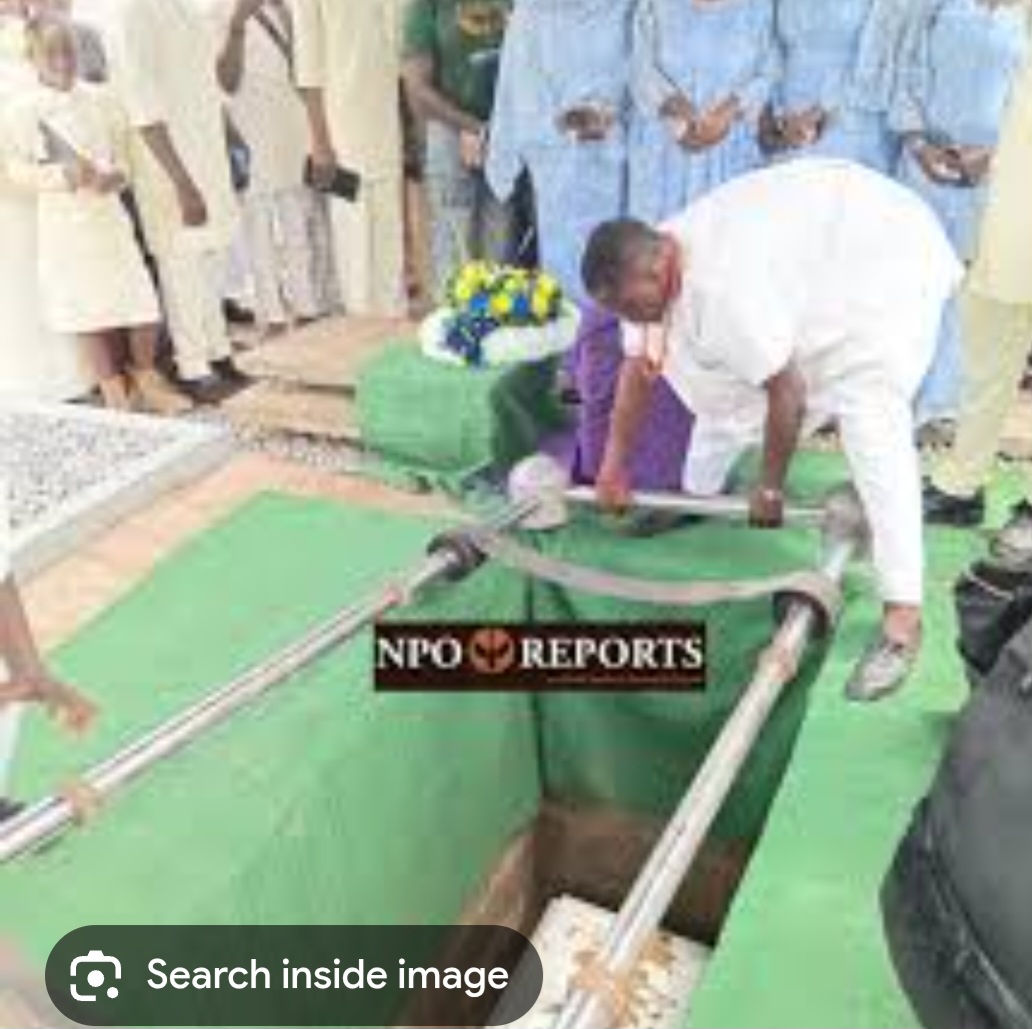
This, for me, was settled today rather than re-opened. At Dotun Oladipo’s funeral service, his three daughters took turns to read their tributes to their dad, and I found myself watching them with awe. There was a kind of strength in them that I do not possess. It is the strength needed to stand in front of a hall brimming with grieving adults and speak about a man they have just lost. Forever. Strength, however, is not the same as ease. I could see plainly what that strength was costing them as they read. Their voices caught. Their composure held and then did not hold and then held again through sheer will.
In front of them, in the pews, men and women considerably older than them came undone in ways the girls themselves were somehow managing to resist. I went mightily close. Some of the sobbing was quiet, the type people try to fold into a handkerchief. Some of it was not quiet at all, the kind that announces itself whether or not you want it.
Those young women honoured their father with a grace that is beyond me. What they did was astonishing. So, what I am attempting is an observation of a custom I have now watched wound people. This was not the first time I had watched this particular ritual extract more than it should from people already running on fumes. I saw an earlier and harder version of it at a friend’s wake back in 2015.
The first son was called forward to read his father’s tribute, and he could not do it. He tried, but the words would not come, and he stood there in front of a crowd of mourners, with his grief simply refusing to organise itself into sentences. The officiating minister, rather than releasing him from the task, urged him to continue. I sat fizzing with sorrow and ire. He could not go on and, eventually, the minister accepted, but not before insisting a while longer than it should have reasonably taken. His younger brother was called up next, presumably on the theory that if one grieving son could not manage it, maybe another one could. He flunked it in the same way. Grief does not distribute itself more conveniently among siblings just because a programme has been printed and needs to be followed.
I have turned that memory over many times since, trying to work out why this part of the rites is treated as mandatory in the first place. I have not found a satisfying answer. Maybe it comes from a belief that a child’s words carry more weight than anyone else’s, which may even be true, but weight is exactly the problem when those carrying it are struggling to hold themselves together with nothing but adrenaline and the fear of dissolving in public.
Maybe it is simply inertia, the reason we still do a hundred things at funerals that nobody can explain the original purpose of. Either way, I have stopped looking for the justification. I no longer think one exists that is good enough to weigh against what I watched happen to that boy in 2015.
So, let this stand as my instruction rather than my preference, the kind of thing I would rather state plainly now than leave for my children to infer later from how uncertain I sound when the subject comes up in passing. If I do not get the old age I am hoping for, my children will not be asked to read a single word over my body. Someone else can speak for me. A friend, a stranger with a steadier voice and a smaller stake in the loss, anyone whose grief will not be quite so total that standing upright becomes almost impossible.
My children, of course, will sit in front and fall apart if that is what the day requires of them, but without the microphone. That, at least, is one small mercy I intend to arrange for them while I am still here to arrange it.
Dotun deserved every bit of the send-off his daughters gave him today, and I suspect he would have been the first to tell them to sit down and let someone else carry the weight for a while. He did not get a say in that, as none of us ever do once we are the ones being spoken of rather than the ones speaking. Rest well, Dotun. You raised three young women whose strength I will not soon forget. That alone says everything worth saying about the man you were.
-
 metro2 days ago
Workers to Begin Nationwide Warning Strike Over Petrol Price, Wage Award
-
 metro2 days ago
[UPDATED] Imo Highway Attack: 10 Rescued after Gunmen Abducted NYSC Prospective Members
-

 Entertainment2 days ago
Phyna Knocks Out Nkechi Blessing in Fourth Round, Wins ₦50m, New Car
-
 Politics3 days ago
2027: Amaechi Recalls How APC Defeated PDP, Orders ADC Mobilisation
-

 Business3 days ago
Dangote Sets 40-Month Deadline for $16bn East Africa Refinery in Kenya
-
 News3 days ago
Independence Day: Tinubu Unveils Plan to Cut Living Costs, Expand Jobs
-
 metro2 days ago
2027 Hajj: Nigeria Secures 10,000 Extra Slots, Allocation Hits 60,000
-
 Politics3 days ago
2027: Wike Vows to Resign If Tinubu Loses FCT, Rivers