

Politics
Opinion: Bólèk’ájà Party Primaries, By Lasisi Olagunju

“You heard the commanding voice of Senator Bola Tinubu last Thursday demanding the presidency of Nigeria as a matter of right. “E gbé e fún mi/Èmi ló kàn (Give it to me; it is my turn).” That scene, complete with all the finger-pointing ‘thingfication’ of a sitting governor inside his Government House, reenacted what the conductor did on lorries of the past.”
Bólèk’ájà means ‘come down and let’s fight’. If you lived in Yoruba land of 1970s with its wood-bodied passenger Bedford and Austin lorries, the slang wouldn’t be strange to you. Sometimes, the push for a fight came from the scruffy lorry boy; some other time, it was a bad passenger who wanted a fight in the gutter – or right there on the dusty road. The come-down-let’s-fight challenge might lead to the real thing or it might end a mere bluff and bluster to silence the impudent. But, in both cases, it served to inject some excitement to the capricious life on the road and its insufferable tension.
You heard the commanding voice of Senator Bola Tinubu last Thursday demanding the presidency of Nigeria as a matter of right. “E gbé e fún mi/Èmi ló kàn (Give it to me; it is my turn).” That scene, complete with all the finger-pointing ‘thingfication’ of a sitting governor inside his Government House, reenacted what the conductor did on lorries of the past. Irreverent children of comical remix soon hijacked that “èmi l’ó kàn” battle cry. They’ve weaponised it and it is trending and unraveling an aspiration that has cost decades and billions to erect.
I do not belong to Bola Tinubu’s the-king-does-no-wrong crowd. When some old friends asked me not to share the career-threatening social media remix of his bad outing of last week, I told them that the owner of Lagos himself loves dragging others; his butt knows neither age nor reverence. He would share those stuffs if it was his next-door rival that was in this raging storm. His politics knows no good and bad; what it knows is the ultimate end of his “life-long ambition to be president of Nigeria.” The trending ‘Emi lo kan’ mash-up of Tinubu gives us a reason to smile amidst the devastations of today’s misgovernance. So, why should I not laugh that a cook is getting baked in his own oven? Chinweizu, iconic literary critic, addressed this issue 38 years ago: “There comes a time…in the affairs of men and of nations when it becomes necessary for them to engage in bólèk’ájà criticism for them to drag the stiflers of their life down to earth for a corrective tussle.” That is what the memes are doing right now. We should enjoy them before the next one is created at today’s convention of the ruling party.
It doesn’t rain in Nigeria; it pours. After overlord Tinubu’s portentous demand for the crown came his party chairman, Abdullahi Adamu’s outburst on Saturday. The leader condemned the national leader; he said Tinubu did the unthinkable: he insulted untouchable Buhari. “It must never happen again,” Adamu warned. I listened to Adamu’s foaming response and wondered whether it was not an unnecessary overkill; a completion of the bólèk’ájà construct of that party of commotion. He particularly promised to punish the Lion of Bourdillon. I gasped. Six years ago (2016), there was a video of Tinubu dancing to the beats of a local band. It was during that year’s Iléyá festival. The accompanying song made a lot of political sense, so he danced with gusto: “Òpè ni wón o, won ò mo nkankan/Àjànàkú yo l’ókèrè, wón lo m’oré dání/Erin kojá eran à nf’òpá lù…(They are neophytes, they know nothing/Ajanaku struts out at a distance, they went for canes/Elephant is more than an animal you beat with sticks…).” Headmaster Adamu needs to go and watch that video and study the body language of the man he wants to beat like an errant school boy. But I do not blame Adamu; I blame Tinubu. When an àgbàlagbà (elder) ties corn to his agbádá, he becomes the pecking victim of chickens.
I watched Abdullahi Adamu’s threats and felt like abusing him in defence of Tinubu. But I reasoned, what is my own in that family feud? Tinubu should be clear on why he ate what he ate – the fúra that is giving him the trending constipation. If you live in harmony with God’s reason for your existence, you won’t go stray into the snare of the world’s fowler. That is what has happened here to a man who thinks he is surer than fate. May we not be too big to think the eyes of the earth are fitting stool for our beaded feet. Ìwà rere l’èsó ènìyàn (good character is man’s adornment). Good character has properties; arrogance is not one of them. Greed is not. The principles of Ìwà contrast sharply with a life of clutter and entitled gluttony. Chaos, frustration and failure are natural outgrowths of non-alignment with the foundational principles of Ìwà. The big man, Tinubu, lamented that for over 25 years, he had served his boys; he called them ‘àwon omo’ (children). I suggest he reads Sara Berry’s ‘Fathers Work for Their Sons: Accumulation, Mobility, and Class in an Extended Yoruba Community.’ The book is an anthropological account of cocoa farming in my and Tinubu’s part of Yoruba land. It is about kinship as investment and about what Dwayne Woods, a reviewer, describes as the “perpetual restlessness” that makes people move from old fields to new ones. The fathers in that book did not regret or complain about the service they rendered as fathers. And the sons were good too; they did not undermine their father. It is tragic that all the field commanders whom Tinubu kitted up for this day are on the side of the enemy. But with him they share hubris and whatever he suffers they will suffer.
You’ve seen how the PDP did its 2023 primary thing. You are seeing APC’s ‘Anointing Oil’ politics with its Bólèk’ájà counterforce. The grand finale starts today. It will be Soyinka’s ‘A Dance of the Forests’ with Dead Man, Dead Woman and Half-Child and all other characters to, once and for all, settle their unfinished business. In all these, let me ask: where is the face of deliverance for the hungry and the ill in unlit cities and villages? Evil appears to have triumphed in Nigeria. It is not as if God has stopped creating good people. They may exist in the country but they are silent (or silenced), resigned and lethargic. Lethargy means “a lack of energy and enthusiasm”; it also means “deep inactivity.” Thomas Jefferson, author of America’s Declaration of Independence, in a 1787 letter described ‘lethargy’ as the “forerunner of death to public liberty.” We’ve almost lost it completely here. Jefferson’s American project has been a success because its conscience is not clogged by a complicit culture of silence and inactivity. Here, everyone is scared or bought. The price is high.
Let us go back to Tinubu and his eruption. Was he wrong to say that the presidency is not for the North alone? He was very right; no one could fault him on that. Perhaps, that was the real reason Adamu was very angry. Why should anyone be angry because of that basic truth of our nationhood?
There is a man called Babachir David Lawal. He used to be Nigeria’s Secretary to the Government of the Federation (SGF) until his friends yanked his fingers off the soup pot. His enemies call him ‘the Grasscutter’ and that is because, as SGF, he awarded multi-million naira grass-cutting contracts and got caught. The case is still in court. Like Adamu, Lawal spoke in response to Tinubu, particularly on this North thing and what it could do if southerners continued to say stuffs bigger than their mouths. Lawal is (or was) a loyalist of Bola Tinubu. He was unhappy that his favourite Yoruba man misgoverned himself in Abeokuta and said political power was not the birthright of the North and that it was the turn of the Yoruba – and his turn – to be president. Lawal felt that this Sango miscarried his baby. So, the ex-SGF forgot their friendship and came out firing as an enemy: “When Yorubas vilify the North like this, our sense of fear and insecurity under a Yoruba presidency gets heightened and in the end, pushes us to rethink our support for not only Bola (Tinubu) but any Yoruba as president for that matter.” Errant, promiscuous fruits always invite stones to their mothers. Lawal did not stop at the bashing of his friend and benefactor; he had to extend his insolence to every living Yoruba man. He thinks the northerner is the only one with unconditional rights to Nigeria’s presidency; anyone else who claims it is a threat. But Lawal himself is a butterfly calling himself a bird. He is a Christian from Kwambila village in Adamawa State. Can he ever be president of Nigeria under the present unjust system? He is more marginalized and disadvantaged than the Yoruba man that he threatened.
I enjoy discussing Nigeria and its politics with one man I have not met in person. He is from the North. My northern friend insists he is not Fulani; he says he is Hausa. But he believes so much in the North and laments its multifarious illnesses and diseases. He thinks, however, that the permanence of the North’s headship of Nigeria would cure it of its afflictions. Amidst wars and rumours of wars shaking the ruling All Progressives Congress (APC), my friend would ‘try’ me with a torrent of WhatsApp messages last week: “Let me ask you this…. Do you think power going South is in the interest of the North? We need to be in power to develop our region. You southerners have a strong diaspora population to leverage to fund development in your region. Out of $25 billion remittance from abroad, 95% goes to southern Nigeria. We are very backward and underdeveloped. Catching up with the South is a near impossible mission. You have more wealth per capita than us. May be something like 1:100. Just look at that report on industrial production. Lagos and Ogun account for 98%. By the time you add other southern states, you will have 99.999999%. Where is the economic justice?”
The words were clearly provocative, but I observed that my northern friend was very calm and deliberate in composing and sending his message. It was a direct proposition of slavery. The Ijesa of Yoruba land would say: “orí mi má je kan bè mí l’ébè ìyà (may my head not let ‘them’ beg me to come and suffer).” Wooing a man to come and live in slavery is alien to my part of the world. In a ping pong manner, we played ball with words. I told him the presidency residing in the north for a million years would not make any positive impact and that it would remain a curse there unless they changed their ways. I told him: “Unfortunately, there is nothing you can do to keep power beyond your allotted time. Even the British with all their wisdom and sophistication had to leave in 1960. You cannot punish the South for the effects of the choices you made with open eyes. Even as we speak, your people are still opposed to education. You and I know that the only antidote to poverty and underdevelopment is education. We see the effect in our individual lives. I blame you northern elites. You do not love your people. You use them.” My friend agreed that the northern elite are predatory and grossly irresponsible. He, however, added that “we can’t have peace and development when a large part of the country is left behind. A country is only as strong as its weakest part.” I agreed with him but asked why he wouldn’t agree with me that “every part of Nigeria could be made to work without injuring any other part.” My friend loves having the last word, so he said: “the truth is that if southerners want peace and stability in this country, they must get involved in building and developing the North.” Towards the end of last week in Lagos, I showed the chat thread to a friend, an editor with The Punch. He shivered.
And then, the news broke on Saturday night that the APC bloc of the Northern Governors Forum had endorsed the party’s ticket to go to the South. Imperial Buhari followed up with instructions that all the aspirants should go and reach a consensus on one of them before today’s convention. But as of Sunday morning, Senate President Ahmed Lawan and Kogi State governor, Yahaya Bello, were still waving the flags of their provocative ambitions. There were also immediate, sponsored plebeian protests against the governors’ position. What could all these suggest? Think. My friend’s reaction to that development was “I honestly don’t want this power to go to the south. We have many problems in the north which can be addressed only by a northern president.” I keep imagining how many of the well-read up there think like my friend. The discussion with my northern friend was a long one; it will likely continue this week after Muhammadu Buhari, Bayajjida II, must have chosen our next president for us.




Politics
‘Tinubu Must Stay’ Movement Launches Ahead of 2027 Election

‘Tinubu Must Stay’ Movement Launches Ahead of 2027 Election
A political advocacy group, Tinubu Must Stay (TMS), has launched a national campaign ahead of the 2027 general election, calling for continuity in President Bola Ahmed Tinubu’s administration.
The movement was formally unveiled in Abuja on Thursday, October 1, 2026, with its National Convener, Ibrahim Uba, saying the organisation would promote its position through public engagement, data and what it described as fact-based communication.
Uba said the group was established by Nigerians who support the continuation of the Tinubu administration and want the government’s policies, programmes and reported achievements subjected to public discussion.
He acknowledged that major economic reforms, particularly the removal of the petrol subsidy and changes to the foreign-exchange system, had increased pressure on households through higher living, transportation and energy costs.
However, he argued that the reforms should also be assessed against their stated objectives, measurable outcomes and unresolved challenges.
According to Uba, TMS will operate around three main areas: presenting what it calls fact-based responses to criticisms of the administration, providing alternative explanations of government programmes based on available evidence, and increasing civic engagement ahead of the 2027 election.
READ ALSO:
- Trump Threatens Iran With ‘Very Hard’ Response Over Flydubai Attack
- Phyna Knocks Out Nkechi Blessing in Fourth Round, Wins ₦50m, New Car
- NDC Protests Police Cancellation of Obi-Kwankwaso March in Akwa Ibom
The group cited recent economic indicators in making its case. Uba referred to Nigeria’s reported 4.43 per cent real GDP growth in the second quarter of 2026, compared with 4.23 per cent in the same quarter of 2025 and 3.89 per cent in the first quarter of 2026. He also cited the reported moderation in headline inflation in August.
Uba, however, said economic statistics should not be used to dismiss the difficulties faced by Nigerians, arguing that government programmes should ultimately be assessed by their impact on citizens.
The movement also highlighted the Nigerian Education Loan Fund (NELFUND), the 3 Million Technical Talent (3MTT) programme, the National Health Fellows Programme and NG-CARES among initiatives it believes should feature in assessments of the administration.
On infrastructure, TMS cited projects including the Lagos-Calabar Coastal Highway, Sokoto-Badagry Super Highway and Abuja-Kaduna-Zaria-Kano Road, as well as housing projects under the Renewed Hope Housing Programme.
The group also pointed to the Federal Government’s Compressed Natural Gas (CNG) programme, saying it was part of efforts to provide alternatives to petrol and reduce transportation costs following the removal of the subsidy.
On security, Uba acknowledged that insecurity remains a major challenge, while saying government operations against terrorism, banditry, kidnapping, oil theft and other violent crimes had been intensified.
He said the movement would encourage Nigerians to examine both the administration’s reported achievements and the problems that remain unresolved as political activity ahead of the 2027 presidential election intensifies.
The launch of TMS adds to the growing number of political advocacy groups organising around President Tinubu’s political future. While TMS is campaigning for continuity, other groups have adopted opposing positions and are calling for a change of government in 2027.
Uba said TMS would pursue its campaign through what he described as peaceful, factual and democratic engagement, urging Nigerians to assess competing claims about the administration before making their choices in the election.
‘Tinubu Must Stay’ Movement Launches Ahead of 2027 Election
Politics
NDC Protests Police Cancellation of Obi-Kwankwaso March in Akwa Ibom
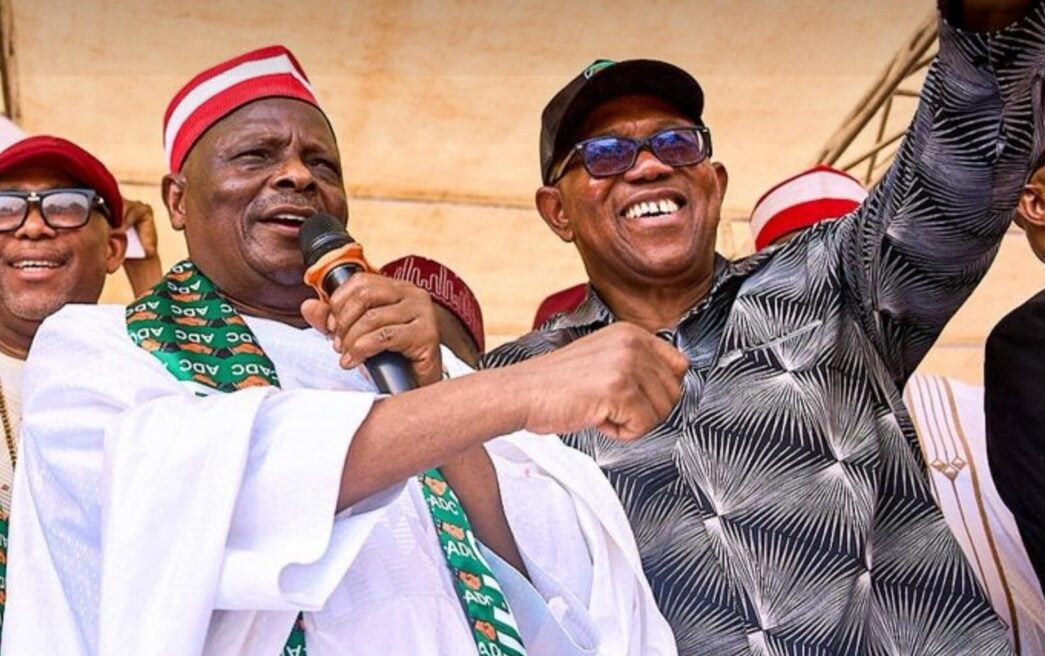
NDC Protests Police Cancellation of Obi-Kwankwaso March in Akwa Ibom
The Nigeria Democratic Congress (NDC) and the Obidient Movement in Akwa Ibom State have protested the cancellation of a planned two-million-man march for Peter Obi and Rabiu Kwankwaso in Uyo.
The march, organised in support of the NDC presidential candidate, Peter Obi, and his running mate, Rabiu Kwankwaso, was scheduled for Thursday, October 1, 2026, to coincide with Nigeria’s Independence Day celebration.
The Akwa Ibom State Police Command, however, directed all political parties, groups and associations to reschedule rallies, meetings, processions and other political activities earlier approved for the day.
In a statement signed by the state Police Public Relations Officer, DSP Timfon John, the command said the decision followed intelligence indicating that some individuals might exploit scheduled political activities to cause disturbances and threaten public peace.
The police said the directive was issued in the interest of public safety and security and applied across Akwa Ibom State.
Addressing journalists in Uyo, the state director of the Obidient Movement, Benjamin Smith, expressed anger over the cancellation, describing the decision as an afterthought.
Smith said the movement had previously engaged the police over the proposed march and claimed that the Commissioner of Police, CP Baba Azare, had initially approved the event.
READ ALSO:
- 2027 Hajj: Nigeria Secures 10,000 Extra Slots, Allocation Hits 60,000
- [UPDATED] Imo Highway Attack: 10 Rescued as Gunmen Abduct NYSC Prospective Members
- Workers to Begin Nationwide Warning Strike Over Petrol Price, Wage Award
According to him, representatives of the party and the organising committee met with the police on September 29. He said the police subsequently raised concerns about the availability of personnel to provide security for a gathering of the proposed size.
Smith said the police also cited the fact that the Peoples Democratic Party (PDP) had been scheduled to hold its own rally in the state from October 1 to 3, raising concerns about possible clashes between supporters of the different political groups.
The Obidient Movement director claimed that more than N20 million had already been spent on mobilisation across Akwa Ibom’s 31 local government areas before the police directive was issued.
He accused the police of violating the group’s rights to peaceful assembly and said the NDC and its supporters would oppose any future cancellation of the event.
Smith, however, urged supporters to remain law-abiding and said a new date for the march would be announced.
The cancellation was followed by the reported arrest of Elijah Noah, the Akwa Ibom coordinator of the Obi-Kwankwaso Movement, during efforts to stop supporters from proceeding with the march in Uyo. Premium Times reported that Noah was arrested after the police directive cancelling previously approved political processions for October 1. (premiumtimesng.com)
The development occurred amid heightened political mobilisation ahead of the 2027 general elections, with the Obi-Kwankwaso camp stepping up activities across the country.
The cancellation and subsequent confrontation have brought renewed attention to the balance between political gatherings, public safety and the right to peaceful assembly as parties and political movements intensify preparations for the 2027 elections.
NDC Protests Police Cancellation of Obi-Kwankwaso March in Akwa Ibom
Politics
Nigeria at 66: Peter Obi Laments Poverty, Insecurity, Says ‘Worst Place to Be Born’
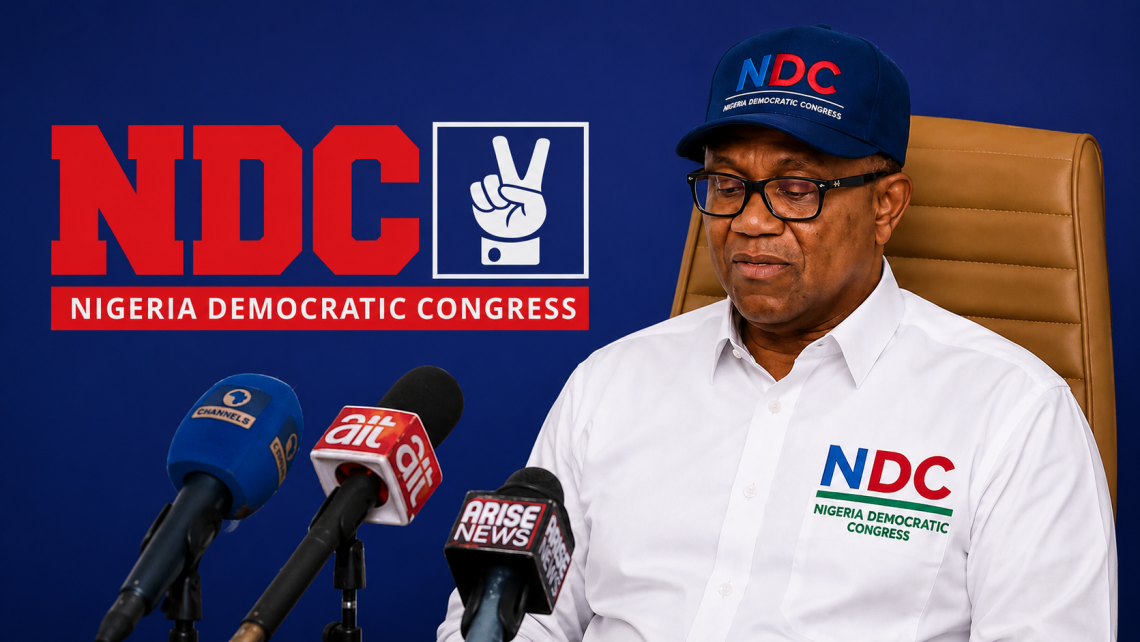
Nigeria at 66: Peter Obi Laments Poverty, Insecurity, Says ‘Worst Place to Be Born’
Presidential candidate of the Nigeria Democratic Congress (NDC), Peter Obi, has described Nigeria as the “worst place to be born”, citing poverty, insecurity, hunger, unemployment, poor healthcare and the high number of out-of-school children.
Obi made the statement in his Independence Day address on Thursday as Nigeria marked its 66th anniversary, using the occasion to call for an honest assessment of the country’s condition and outline his proposed approach to addressing its challenges.
According to Obi, more than 140 million Nigerians are living in poverty and severe hardship, while more than 18 million children are out of school.
He also raised concerns over insecurity, including terrorism, banditry and kidnapping, saying such threats continue to endanger lives and livelihoods across the country.
On food insecurity, Obi claimed that more than 40 million Nigerians could face extreme hunger by the end of 2026.
He also cited what he described as high levels of youth unemployment and underemployment, putting the affected population at more than 35 million.
READ ALSO:
- Workers to Begin Nationwide Warning Strike Over Petrol Price, Wage Award
- Nigeria at 66: MURIC Urges Unity, Peace, Justice Ahead of 2027 Elections
- Atiku Challenges Tinubu’s Prosperity Claim, Says Nigerians Can Barely Afford to Live
Obi further drew attention to Nigeria’s infant and maternal mortality, drug and substance abuse and life expectancy, arguing that the figures reflected serious challenges in the country’s human development.
“Today, Nigeria is the worst place to be born,” Obi said while highlighting the conditions confronting Nigerian children and young people.
The former Anambra State governor said Nigeria’s difficulties could not be attributed to a lack of resources, describing the country as richly endowed with human and natural resources.
He argued that the central challenge was the failure to convert those resources into human development, productivity, security and shared prosperity.
Obi said his assessment followed a two-day visit to Sokoto State, where he and his running mate, Senator Rabiu Kwankwaso, held consultations on insecurity, poverty, out-of-school children, youth unemployment and drug abuse.
The delegation also visited an Internally Displaced Persons (IDP) camp at Ramin Kura in Sokoto metropolis, where Obi said thousands of women and children were living after being displaced from their communities.
He said many of the displaced children lacked access to education, while mothers and children faced limited access to basic healthcare.
Obi argued that Nigerians displaced by insecurity should be able to return safely to their communities, resume farming and businesses, and send their children to school.
He said that, if elected president, his administration would make security, education, healthcare and productive enterprise major priorities.
Obi also promised to make governance more measurable and accountable, with the welfare and productivity of citizens at the centre of government policy.
He said his administration would seek to move Nigeria from a consumption-driven economy to a productive economy capable of creating jobs, expanding agriculture and manufacturing, investing in human capital and improving opportunities for young people.
The NDC candidate also pledged to spend his presidential holidays within Nigeria if elected, saying he would use the periods to visit different states, interact with citizens and gain a closer understanding of their challenges.
His address came on the same day President Bola Ahmed Tinubu said Nigeria had moved beyond the most difficult phase of his administration’s economic reforms and was entering what he described as an era of shared and widespread prosperity. Tinubu said the government’s focus was now on lowering the cost of living, expanding production, creating jobs and improving opportunities.
Obi’s Independence Day message presented a contrasting assessment of Nigeria’s current condition, with the opposition candidate focusing on poverty, insecurity and social indicators while proposing a shift towards greater productivity, accountability and human development.
He ended his address by urging Nigerians not to lose hope, saying a new Nigeria was possible through accountable leadership, responsible citizenship and a stronger focus on the welfare of citizens.
Nigeria at 66: Peter Obi Laments Poverty, Insecurity, Says ‘Worst Place to Be Born’
-
 metro1 day ago
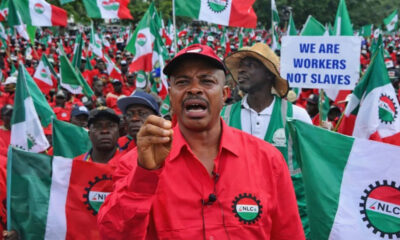
Workers to Begin Nationwide Warning Strike Over Petrol Price, Wage Award
-
 metro2 days ago
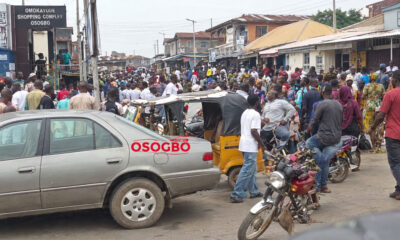
Osogbo Food Bonanza: Angry Customers Loot Warehouse After Operators Vanish
-
 metro2 days ago
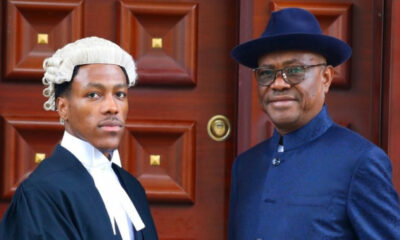
$2.1m Land Suit: Court Orders Wike’s Son to Produce American Passport
-
 News2 days ago
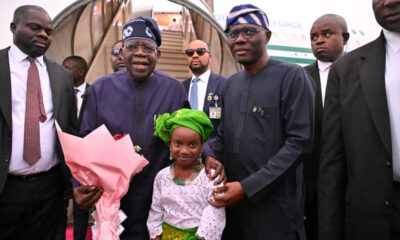
Tinubu Returns After 30 Days in Europe, Says ‘I’m Healthy and Ready to Work’
-

 metro2 days ago
Two Nigerians Jailed 15 Years Over $2.4m US Cyber Fraud
-
 Business1 day ago
Dangote Sets 40-Month Deadline for $16bn East Africa Refinery in Kenya
-

 Business2 days ago
Dangote Draws Battle Lines as Fuel Import Fight Heads Back to Court
-
 metro2 days ago
Flood Cuts Off Part of Agbarho-Ughelli Road, Strands Commuters in Delta