

Politics
Amid PDP Crisis, Ayu Jets Out Of Nigeria, Hands Over To Deputy

Despite the unresolved issues in the party, the National Chairman of the Peoples Democratic Party, (PDP) Dr. Iyorchia Ayu, has handed over to the Deputy Chairman (North) of the party, Umar Iliya Damagun.
Ayu’s Special Adviser on Media and Communications Simon Imobo-Tswam, on Tuesday evening said the Chairman will be out of the country till the end of the month.
The reason for the journey and where exactly Ayu is going in Europe was not made known.
READ ALSO:
- Insecurity: North’s governors, monarchs call for state police
- NNPC seals gas pipeline project agreement with Morocco’s hydrocarbon office, ECOWAS
- My life under threat over Queen Elizabeth’s tweet – Prof
The PDP is expected to unveil its campaign council ahead of September 28, 2022, kick off date of campaign.
This means that Ayu might be away when the party will announce its campaign council and also kickstart the campaign proper for the 2023 general elections.
The PDP has been enmeshed in crisis since the presidential primaries won by Atiku Abubakar and the nomination of the Delta State Governor Ifeanyi Okowa as his running mate against Rivers state Governor, Nyesom Wike, favored by some party stakeholders.







Politics
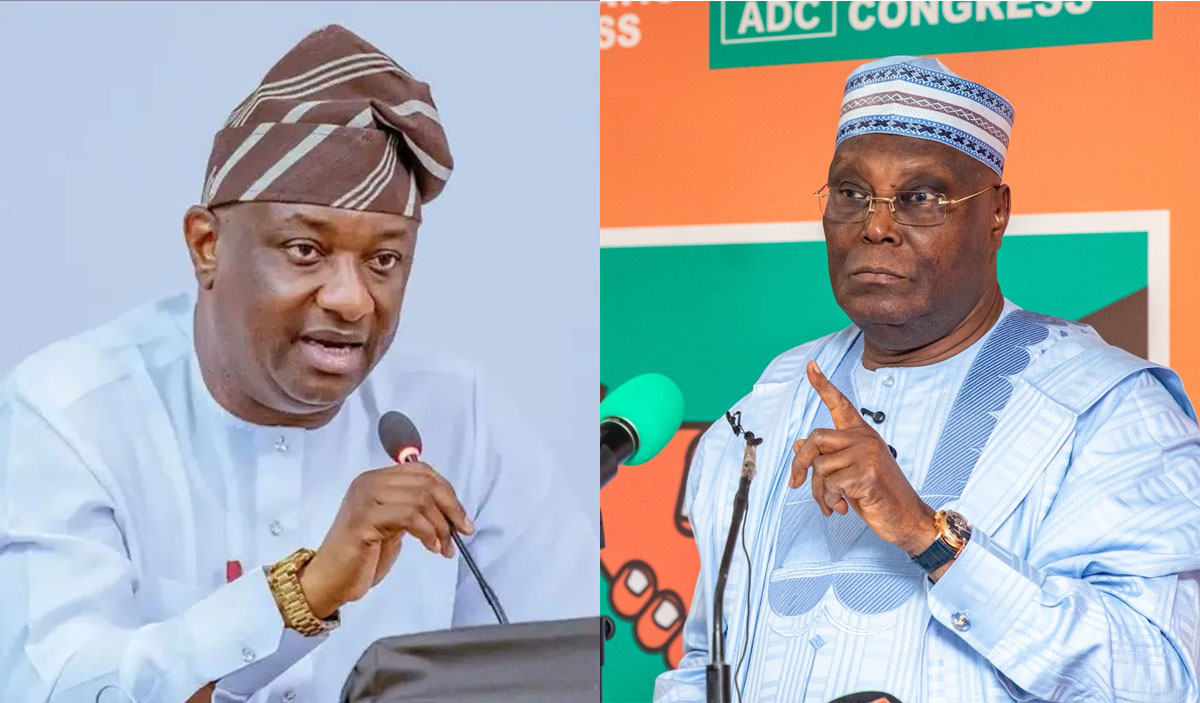
‘Tinubu Is Clearing Your Mess’ – Keyamo Blasts Atiku Over Nigeria Airways
‘Tinubu Is Clearing Your Mess’ – Keyamo Blasts Atiku Over Nigeria Airways
Minister of Aviation and Aerospace Development, Festus Keyamo, has described former Vice-President Atiku Abubakar as a “hypocrite” and a “con artist” over his criticism of President Bola Ahmed Tinubu’s administration, accusing him of distancing himself from controversial decisions taken while he was in government.
Keyamo’s remarks followed Atiku’s criticism of Nigeria’s worsening economic conditions and insecurity ahead of the 2027 general elections. The former vice-president had urged Nigerians to collect their Permanent Voter Cards (PVCs), promising to make life more affordable and restore security if given the opportunity to lead the country.
In his post, Atiku said rising living costs had made it increasingly difficult for families to provide basic necessities, while pensioners faced difficult choices between buying food and obtaining medication. He also expressed concern about kidnapping and attacks that have left communities living in fear.
Reacting in a post on his official X account on Wednesday, October 14, Keyamo challenged Atiku’s criticism, citing the liquidation of the defunct national carrier, Nigeria Airways, in September 2004, when Atiku was vice-president under former President Olusegun Obasanjo.
“Your Excellency, Atiku Abubakar, this is hypocrisy at its peak! Let me just talk only about the sector that I head, Aviation,” Keyamo wrote.
The minister alleged that the liquidation left thousands of airline workers without jobs and that their pensions and gratuities, amounting to billions of naira, remained unpaid for years.
He argued that Atiku could not criticise the current administration over economic hardship without addressing the record of the government in which he served.
Keyamo further claimed that some former Nigeria Airways workers died while waiting for their outstanding entitlements, leaving their families to bear the consequences of the prolonged delay in payment.
According to the minister, President Tinubu had approved and released ₦36 billion to settle the outstanding entitlements owed to the former airline workers.
READ ALSO:
- Nigeria Secures UN Human Rights Council Seat With 172 Votes
- Houthi Missile Targeting Riyadh Shot Down as Debris Injures Four, Damages 15 Homes
- Outrage as Israeli Settlers Torch Mosque, Burn Vehicle in Occupied West Bank
Keyamo said payments had begun reaching beneficiaries and claimed that the workers’ union had recognised Tinubu’s intervention.
He presented the payment as evidence that the current administration was addressing an outstanding obligation inherited from previous governments, although the claim about the release and disbursement of the funds was made by the minister.
The aviation minister also accused Atiku of selectively taking credit for the achievements of the Obasanjo administration while distancing himself from decisions that attracted criticism.
“When it is convenient for you, you claim some credit of the Obasanjo-Atiku government and when not convenient, you say Obasanjo was in charge and not you as Vice-President,” he wrote.
Keyamo said younger Nigerians who were unfamiliar with the former vice-president’s political record could be misled by his criticism of the Tinubu administration.
He added that Atiku’s political ambitions should not, in his view, be disguised by what he described as misleading rhetoric.
“The proper posturing of a con artist!” the minister concluded.
The exchange adds to the growing political confrontation between the Tinubu administration and opposition figures as political activities intensify ahead of the 2027 elections.
Atiku, the presidential candidate of the African Democratic Congress (ADC), has repeatedly criticised the Federal Government over the cost of living, insecurity and the impact of its economic policies on households and businesses.
Tinubu’s administration, meanwhile, has defended its economic reforms and highlighted measures it says are intended to address longstanding fiscal challenges and support affected groups.
Keyamo’s latest comments shift the argument from the current administration’s performance to the record of the previous government, particularly its handling of Nigeria Airways and the entitlements owed to the airline’s former employees.
Atiku’s response to Keyamo’s latest allegations was not included in the reports available at the time of publication.
‘Tinubu Is Clearing Your Mess’ – Keyamo Blasts Atiku Over Nigeria Airways
Politics
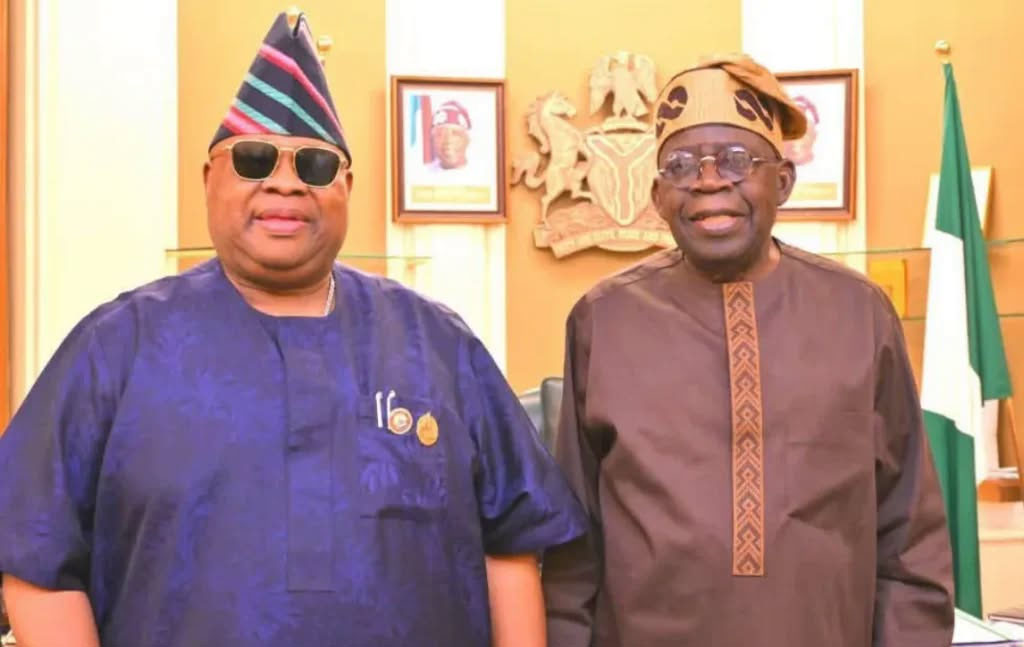
2027: Adeleke’s Camp Promises 1.5 Million Votes for Tinubu in Osun
2027: Adeleke’s Camp Promises 1.5 Million Votes for Tinubu in Osun
The Imole Campaign Council of Osun State Governor Ademola Adeleke has pledged to mobilise 1.5 million votes for President Bola Ahmed Tinubu in the 2027 presidential election, following the governor’s appointment as the state coordinator of the president’s re-election campaign.
The council, through its Director-General, Senator Olalere Oyewumi, announced the pledge on Tuesday, October 13, while welcoming Adeleke’s inclusion in the revised All Progressives Congress (APC) Presidential Campaign Council.
Oyewumi said the political structure of the Accord Party in Osun State would work towards securing Tinubu’s victory, expressing confidence that Adeleke would justify the confidence placed in him by the president.
“The Imole Campaign Council welcomes the appointment of Governor Adeleke as State Coordinator of the PBAT Presidential Campaign Council in Osun,” Oyewumi said.
He described the appointment as well deserved and assured Tinubu that the governor would work towards delivering the state for the president in the forthcoming election.
“We promise the President, just like Governor Adeleke said some time ago, that we will deliver 1.5 million votes to ensure his victory in the coming presidential election,” the council’s director-general said.
READ ALSO:
- APC Expands Tinubu’s Campaign Council, Names Wike, Adeleke, Soludo
- 2027: Tompolo Unveils 57 Tinubu Campaign Vehicles, Warns Lagosians Against 2023 Repeat
- Shell Exits Nigeria’s Gas Distribution Business, Sells Stake to Vaaris Energy
The council also urged Osun residents to continue supporting Adeleke, linking the governor’s administration to Tinubu’s re-election bid.
“Our message to the people of Osun State is to keep trusting and supporting Governor Adeleke as he continues to deliver on his campaign promises. A vote for President Tinubu is a support for Governor Adeleke,” the statement added.
Adeleke’s appointment places him at the centre of Tinubu’s campaign mobilisation in Osun, even though the governor belongs to the Accord Party rather than the ruling APC.
The revised campaign council also names prominent political figures, including Federal Capital Territory Minister Nyesom Wike, Delta State Governor Sheriff Oborevwori and Anambra State Governor Chukwuma Soludo, in key campaign roles.
The appointments indicate an effort to build support for Tinubu beyond the APC’s formal membership as political parties and influential figures position themselves ahead of the 2027 general election.
In a separate development, the All Progressives Grand Alliance (APGA) has also expressed support for Soludo’s appointment as Anambra coordinator of Tinubu’s presidential campaign.
APGA’s National Publicity Secretary, Ejimofor Opera, said the party had adopted Tinubu as its consensus presidential candidate for the 2027 election, citing its commitment to cooperation with the Federal Government.
The latest political alignments come as parties and campaign organisations begin strengthening their structures ahead of the next presidential contest.
However, the 1.5 million votes promised by Adeleke’s camp remain a campaign target. The actual number of votes Tinubu receives in Osun will depend on voter participation and the choices made by eligible voters on election day.
2027: Adeleke’s Camp Promises 1.5 Million Votes for Tinubu in Osun
Politics
APC Expands Tinubu’s Campaign Council, Names Wike, Adeleke, Soludo
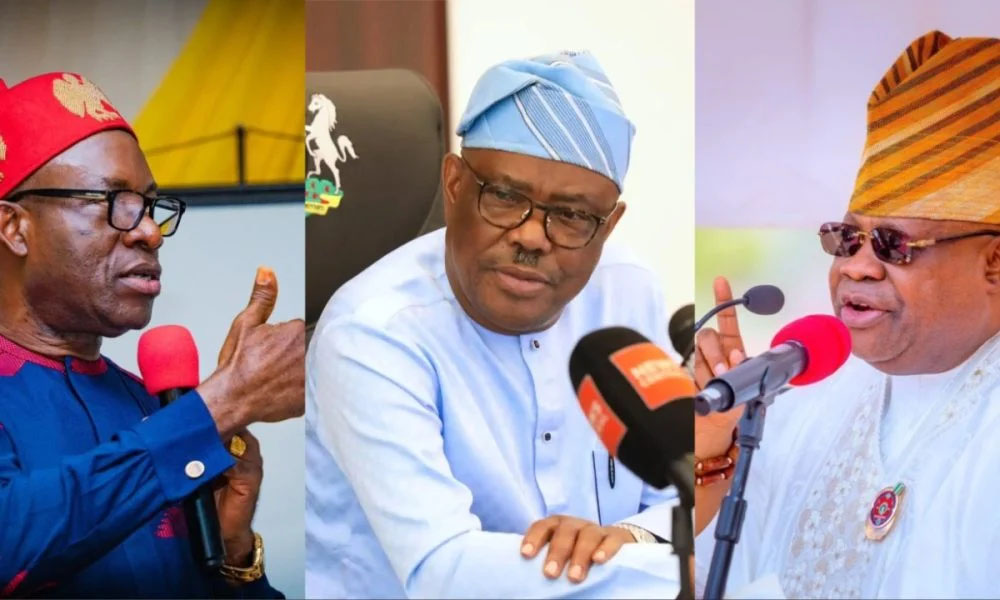
The All Progressives Congress (APC) has expanded its presidential campaign council for the 2027 general election, naming Federal Capital Territory Minister Nyesom Wike, Osun State Governor Ademola Adeleke, Anambra State Governor Chukwuma Soludo and several other prominent political figures to key positions.
The revised list, released on Tuesday, October 13, reflects the ruling party’s efforts to broaden its political support base ahead of President Bola Ahmed Tinubu’s re-election campaign.
The appointments have attracted attention because Wike belongs to the Peoples Democratic Party (PDP), Soludo is a member of the All Progressives Grand Alliance (APGA), while Adeleke belongs to the Accord Party.
Under the new arrangement, Wike will coordinate the APC’s presidential campaign in Rivers State and the Federal Capital Territory. Soludo has been assigned responsibility for Anambra State, while Adeleke will coordinate campaign activities in Osun State.
Delta State Governor Sheriff Oborevwori, former Lagos State Governor Babatunde Fashola, Aviation Minister Festus Keyamo and Marine and Blue Economy Minister Adegboyega Oyetola are also among the prominent figures featured in the expanded campaign structure.
Oyetola was appointed Deputy National Coordinator I for Stakeholders’ Mobilisation in the South-West.
President Tinubu will serve as chairman of the campaign council, with Vice-President Kashim Shettima and APC National Chairman Nentawe Yilwatda as vice-chairmen.
READ ALSO:
- 2027: Tompolo Unveils 57 Tinubu Campaign Vehicles, Warns Lagosians Against 2023 Repeat
- Shell Exits Nigeria’s Gas Distribution Business, Sells Stake to Vaaris Energy
- Delta Tragedy: Man Allegedly Kills Wife, Dies by Suicide After Land Dispute
Senate President Godswill Akpabio, Speaker of the House of Representatives Tajudeen Abbas and Kwara State Governor AbdulRahman AbdulRazaq have been named deputy vice-chairmen.
Senator Abdulaziz Yari, a former governor of Zamfara State, retains his position as Director-General of the campaign council.
Other deputy directors-general include Yobe State Governor Mai Mala Buni, Senate Leader Opeyemi Bamidele, Deputy Senate President Barau Jibrin and Deputy Speaker of the House of Representatives Benjamin Kalu.
Senator Adams Oshiomhole will oversee mobilisation, while Femi Gbajabiamila will handle administration. Works Minister David Umahi has been assigned responsibility for infrastructure mobilisation and sensitisation.
Imo State Governor Hope Uzodimma will serve as secretary of the council, with APC National Secretary Ajibola Basiru as deputy secretary and Hadiza Bala Usman as assistant secretary.
The revised structure also provides for campaign coordinators across the six geopolitical zones and at state level, including arrangements for states where the APC does not control the governorship.
The list includes 14 advisers, among them former Osun State Governor Bisi Akande, former Ogun State Governor Segun Osoba, Secretary to the Government of the Federation George Akume, former Ogun State Governor Ibikunle Amosun and former APC National Secretary Iyiola Omisore. Former Coordinating Minister of the Economy Wale Edun is also among the advisers.
The expanded council follows the initial list released in August, which generated questions about the campaign structure and the distribution of responsibilities. The latest revision introduces additional appointments and adjusts several positions within the council.
The inclusion of Wike, Adeleke and Soludo also highlights the importance of political alliances beyond the APC’s formal membership as the party prepares for the 2027 presidential election.
On Wednesday, October 14, reports indicated that the PDP, APGA and Accord had expressed support for the participation of their respective political figures in Tinubu’s campaign council.
The APC is expected to use the expanded structure to coordinate nationwide mobilisation, engage political stakeholders and strengthen its campaign organisation ahead of the election.
APC Expands Tinubu’s Campaign Council, Names Wike, Adeleke, Soludo
-

 metro2 days ago
₦8.7bn Erosion-Control Budget Gap Raises Questions as Anambra Gullies Expand
-
 Politics2 days ago
Obi Positioning for SGF Role Under Atiku’s ADC Ticket – Sowore
-

 metro2 days ago
How Bandits Demand ₦300m Ransom for Abducted Kaduna Couple, Baby in Viral Video
-

 News3 days ago
OASIS Foundation Webinar: Physician Urges Healthy Living to Prevent Chronic Diseases
-

 metro2 days ago
Child Soldiers, Baby Factories: US Raises Alarm Over Official Complicity in Nigeria
-

 Politics2 days ago
Okonkwo Alleges Return of Subsidy, Accuses NNPC of Plotting Trillions in ‘Lost Profit’
-
 metro2 days ago
2027 Elections: Atiku Demands Names of INEC Ballot Printers, Questions Secret Contracts
-

 News2 days ago
Fuel Subsidy May Ease Hardship Today, But Could Cripple Nigeria’s Economy Tomorrow — FG