

metro
‘How Neighbour Took Custody Of My Children, Converted Them To Christianity’

Aishatu Muhammad, a widow and mother of two still struggles with the orientation of her two daughters, aged nine and 10 after they were abducted and converted to Christianity, five years ago. She recently told Daily Trust Saturday that the Lagos State Police Command had failed to investigate the matter and arrest the suspect whom she identified by the name Kudira, who lives in Adamo Olorunda, Ikorodu area of Lagos State. The widow explained that the matter had been reported to the police at Olorunda but they had showed little concern and did not initiate an investigation or effect arrest on the suspect.
Having lost her husband six years ago when they lived in Ado-Ekiti, Ekiti State, the mother of two said she relocated to Oshogbo, in Osun State with her two children and later fell ill. She said due to her ailment, her neighbour, Kudira had offered to care for her children because Aishatu was preparing to move to the northern part of the country for treatment. “I agreed to leave the children with her since she was my neighbour, and we lived in the same house,” Aishatu said. “While away, I would call her on phone to check on my children, and she would tell me that they were fine and were even going to school,” she narrated.
But suddenly, Aishatu said it became difficult to reach her neighbour on phone and soon after she had recuperated, she travelled down to Oshogbo to see her children, but found that Kudira and the children had relocated to Lagos State.
READ ALSO:
- Nigerian Steals $6.7m From US Taxpayers
- Benue residents flee as overflowing river floods homes
- BREAKING: Building collapses in Lagos, rescue operation on going
“I followed her to Lagos after some good Samaritans raised some money for me but I was unable to find her. I spent lot of time over there till I exhausted my finances and had to return to the North, where I sought for prayers from some clerics, in a bid to recover my children,” she said.
Soon after she raised some money again, Aishatu said she returned to Oshogbo where a woman she was acquainted with told her she had her ex-neighbour’s current phone number. “She helped me call her on phone but she was aggressive to her and was shouting why she had to call her and talk about the children. The woman ended the call, and told me that there was nothing she could do, but disclosed that Kudira and my children were living in Ikorodu area of Lagos.”
Armed with this information, Aishatu travelled to Ikorodu, and for days went around on a motorcycle in search of her children. “I was doing that for days then one day, I heard the voice of my youngest child shouting my name. I stopped the bike man, grabbed her and interrogated her. I asked of her older sister and she told me that she was in another house with another woman who sells food. I asked her to lead me to the house and on reaching there, the woman refused to release my daughter claiming that the actual woman (Kudira) who gave her the child was not around. She said Kudira had travelled to the North to buy yam and that she could only release the child when she returned.”
The mother of two said she had noticed that her youngest daughter’s physical appearance had changed and that she was wearing a cross neck piece. “Her name is Zainab but they renamed her Sarah. So, I asked of the Sarkin Hausawa in the area and someone took me to him. I explained my ordeal to him and he immediately took me to the police station at Olorunda and laid a complaint. The police asked us to wait till Kudira returns and when she did, I went with the Sarkin Hausawa to meet her but she insisted she was not going to release my child. When the Sarkin Hausawa told her that he had reported the matter to the police and requested that we all go to the police station, she agreed to release her.”
READ ALSO:
- Suspend me if you can, Wike dares PDP
- PDP: S’Court strikes out suit seeking S’East presidency
- CAN inaugurates political strategy committee
- ASUU to file appeal today, says Falana as union proclaims FG has declared war
However, expressing disappointment, Aishatu said after the Sarkin Hausawa called the police on phone and informed them that Kudira had returned, instead of inviting the suspect or arresting her, the police asked the Sarkin Hausawa to take charge of the case, since the woman was now willing to release the child. “That was how I got my children, through the help of Sarkin Hausawa. To some extent, my eldest child who had been renamed Deborah refused to follow me because she had lived with them for years and she was being threatened by them,” she said.
The widow, whose children, aged nine and 10 now live with her said she had been denied five years of living with her girls saying she is now doing her best to care for them.
“Even as I don’t have much to offer them, I am now staying in Sabo in Ondo State, doing some petty jobs, such as cleaning and washing plates so as to care for my children. What i can say now is that my children need prayers and proper orientation,” she said.
The Sarkin Hausawa of Adamo Olorunda, Malam Abdurahman Sulaiman told Daily Trust Saturday that he had earlier reported the case to the police, and that Kudira, who abducted the children was around when he called the police on phone to notify them. “They asked me whether she was willing to release the children and I told them yes, but that we needed to come to the police station for documentation but the police said it was not necessary that I could also do that in my palace. Ans so, I did and asked my secretary to write and both parties signed,” he said.
Corroborating this, Abubakar Alhassan, the Secretary of the Sarkin Hausawa of Olorunda who recorded the video and posted it on Facebook to draw the attention of the relevant authorities however said his account had been hacked after the video went viral. All efforts made by our correspondent to get the comments of the Lagos State Police Command was unsuccessful as the Police Public Relations Officer, Benjamin Hundeyin did not answer calls and did not reply a text message sent to him.










metro
Lagos Club Robbery: Police Arrest Suspect After N5m Bounty
Lagos Club Robbery: Police Arrest Suspect After N5m Bounty
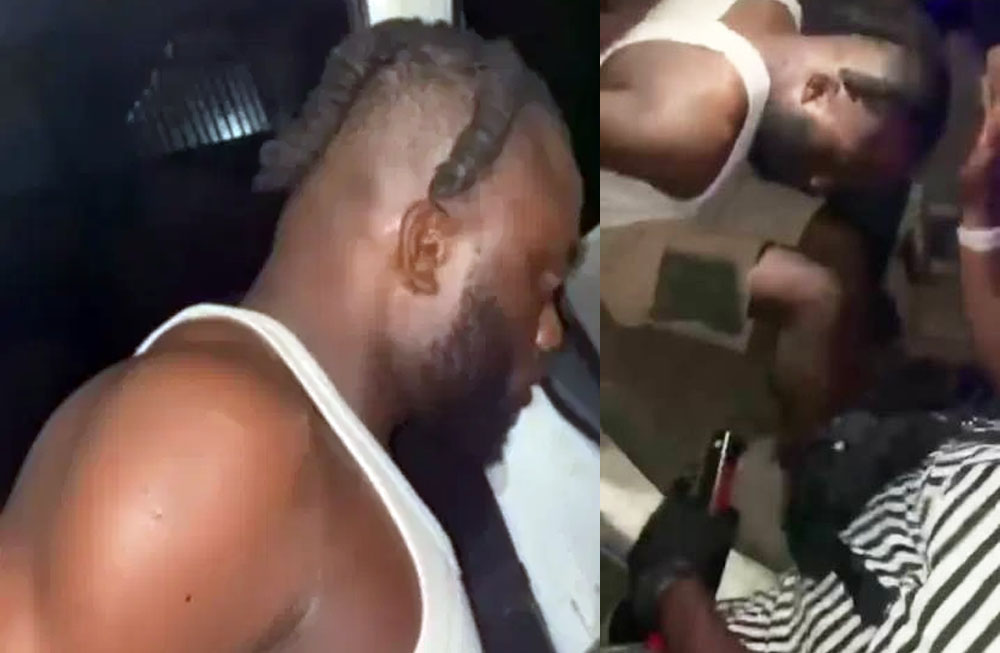
The Lagos State Police Command has arrested a suspected member of the gang that allegedly robbed clubgoers outside Ghost and Spirits Lounge on Ekoro Road, Abule Egba, Lagos.
The suspect was reportedly identified from video footage of the incident, which showed several people being attacked outside the entertainment venue in the early hours of the morning.
The Lagos club robbery reportedly occurred at about 4am on Saturday after some customers had left the lounge and gathered around their vehicles.
Footage from the scene showed several clubgoers sitting around a vehicle when the suspected robbers approached.
READ ALSO:
- Five Arrested Near US-Used RAF Fairford in UK Terror Probe
- Kano Upgrades Five PHCs to General Hospitals, Begins Assessment
- Iran Claims Capture of Second US Underwater Drone in Strait of Hormuz
One of the suspects, reportedly dressed in a green shirt and cap, appeared to move among the people before allegedly targeting one of the victims.
Another member of the group was reportedly seen in an SUV parked across the road before a gunshot was fired, causing some of the people at the scene to run for safety.
The suspect in the green shirt was then allegedly seen taking a wristwatch from one of the victims, while other members of the group reportedly collected valuables before escaping in their vehicle.
Following the incident, the management of the lounge announced a N5 million reward for information leading to the arrest of the perpetrators.
The reward and subsequent investigation helped the police identify and track one of the suspects, who was eventually arrested.
A police source said the suspect was in custody and being interrogated, with investigators seeking information that could lead to the arrest of the other alleged members of the gang.
The Lagos Police Command has also intensified efforts to locate the remaining suspects, who are reportedly still at large.
The incident has raised concerns among residents and nightlife customers in Abule Egba, particularly over the security of people leaving entertainment venues during the early hours.
Police authorities have urged residents with useful information about the suspects or the robbery to assist the investigation.
The arrested suspect remains presumed innocent unless proven guilty in court, while investigations continue into the alleged robbery and the identities and whereabouts of the other suspects.
Lagos Club Robbery: Police Arrest Suspect After N5m Bounty
metro
Passenger Dies After Jumping From Moving Bus In Lagos
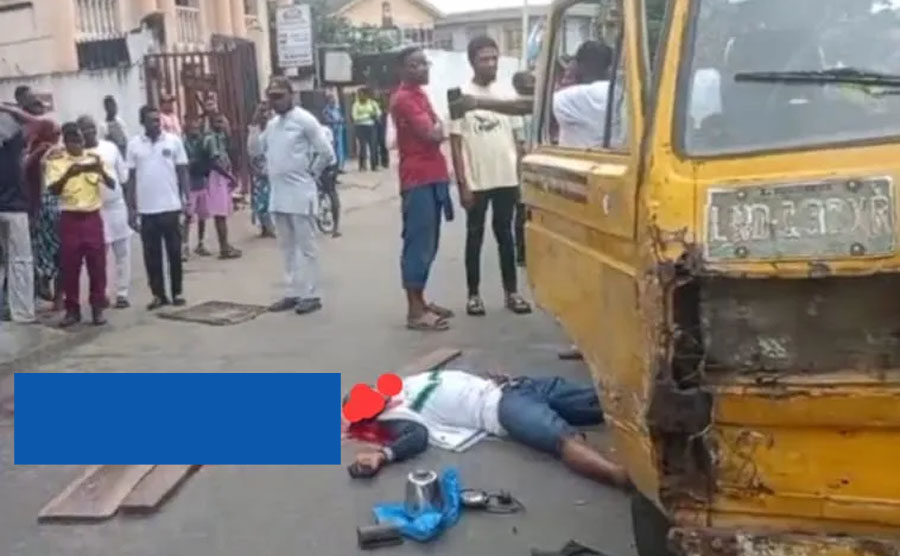
Passenger Dies After Jumping From Moving Bus In Lagos
A passenger has died after jumping from a moving commercial bus at Ogunlana Junction, inward Ojuelegba, in the Surulere area of Lagos.
The incident involved a Volkswagen commercial bus with registration number LND 130 XR, which reportedly crashed into a median pole around the Fallout area of Surulere.
The Lagos State Traffic Management Authority (LASTMA) said preliminary security reports indicated that the driver was allegedly under the influence of alcohol and had been driving recklessly shortly before the crash.
According to the agency, motorists approaching the bus from behind had to exercise caution to avoid colliding with the vehicle as it reportedly moved erratically.
Amid the incident, a male passenger reportedly jumped from the moving bus, apparently attempting to escape from the uncontrolled vehicle. He sustained serious injuries after hitting the ground and later died from his injuries.
LASTMA officials conducting routine traffic surveillance along the Ojuelegba axis responded to the scene after noticing the crash. They secured the area, managed traffic and removed the damaged bus and the deceased passenger from the carriageway to reduce the risk of a secondary collision.
READ ALSO:
- Five Arrested Near US-Used RAF Fairford in UK Terror Probe
- Kano Upgrades Five PHCs to General Hospitals, Begins Assessment
- Iran Claims Capture of Second US Underwater Drone in Strait of Hormuz
Police officers from the Area C Police Division, Ojuelegba, provided security at the scene, while officials of the State Emergency Management Agency evacuated the remains of the deceased.
LASTMA General Manager, Olalekan Bakare-Oki, described the incident as a reminder of the dangers associated with driving under the influence of alcohol, reckless driving and operating vehicles that may not be mechanically fit for the road.
Bakare-Oki urged commercial and private motorists to conduct comprehensive checks on their vehicles before every journey, with particular attention to the braking system, tyres, steering mechanism and other critical safety components.
He also commiserated with the family of the deceased and reaffirmed LASTMA‘s commitment to responding promptly to road crashes, managing traffic and clearing accident scenes.
The agency urged motorists and other road users to report accidents, vehicle breakdowns and other traffic obstructions through its toll-free short code, 3367.
Passenger Dies After Jumping From Moving Bus In Lagos
metro
Kubwa Explosion: Vehicle Crashes Into Gas Outlet, Damages Nine Shops
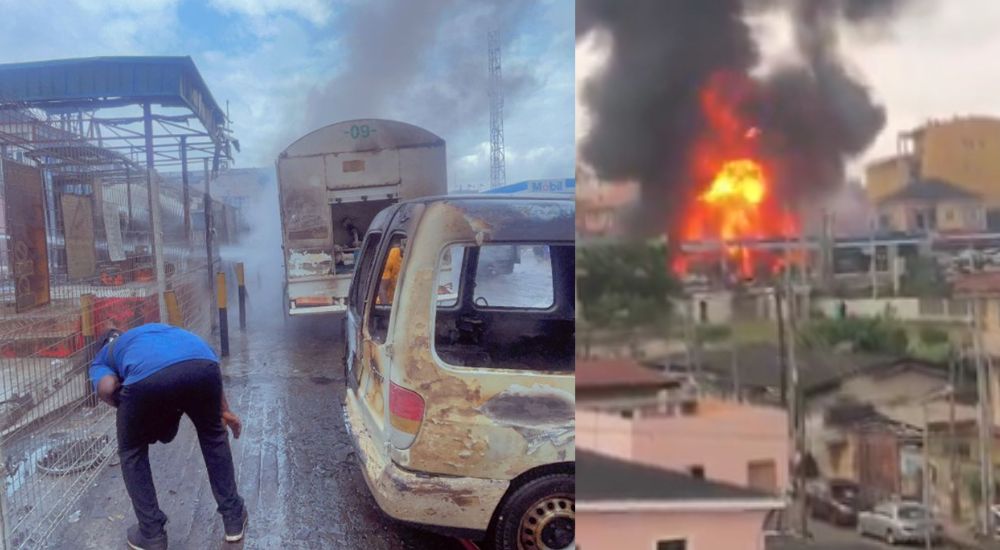
Kubwa Explosion: Vehicle Crashes Into Gas Outlet, Damages Nine Shops
Panic broke out in Kubwa, Abuja, on Sunday morning after a gas explosion rocked the Liberty Junction area, following a vehicle crash into a roadside gas retail outlet.
The incident occurred at about 6:15 a.m., sending a powerful blast through the area and causing nearby buildings to shake, while thick smoke and flames rose from the affected facility.
The vehicle reportedly veered off the road and crashed into the gas outlet, triggering the explosion and subsequent fire.
The impact affected several businesses around the junction, with reports indicating that nine shops were damaged or destroyed by the ensuing fire.
A nearby police traffic post was also reportedly uprooted by the force of the explosion, while other structures and sections of the surrounding area were damaged.
The vehicle involved in the crash was badly burnt in the incident. Emergency responders, however, reportedly rescued the driver and a child from the wreckage.
The injured driver was taken to a medical facility for treatment, while emergency personnel worked to prevent the fire from spreading to other shops and properties in the densely populated area.
READ ALSO:
- Newlywed Arrested After Allegedly Excreting 72 Cocaine Wraps at Enugu Airport
- Bauchi Police Arrest Four Over Alleged Gun-Making, Rape
- Tinubu to Nigerians: We Are Correcting Past Mistakes, Give Us More Time
The explosion triggered panic among residents and commuters, with people reportedly rushing away from the scene as the fire continued to burn.
Emergency response agencies, including the Federal Fire Service, FCT Fire Service, National Emergency Management Agency (NEMA), Nigeria Security and Civil Defence Corps (NSCDC) and the Nigeria Police Force, were deployed to the scene.
Firefighters battled the flames for hours before the situation was brought under control.
The incident also caused significant traffic disruption around Liberty Junction and the Kubwa axis, as motorists slowed down and emergency responders worked at the scene.
Security personnel subsequently moved people away from the immediate area and helped manage traffic while the damaged vehicle and other debris were cleared.
Initial reports did not indicate a confirmed death from the explosion, although the driver was reported to have sustained injuries.
Authorities had yet to provide a detailed official account explaining why the vehicle veered off the road or confirming the full extent of the damage and injuries as of the time of reporting.
The incident has again drawn attention to safety concerns surrounding gas outlets located close to busy roads, shops and residential areas, particularly in densely populated parts of the Federal Capital Territory.
Further assessment by relevant authorities is expected to establish the precise circumstances of the crash, the extent of the property damage and whether any safety breaches contributed to the incident.
Kubwa Explosion: Vehicle Crashes Into Gas Outlet, Damages Nine Shops
-

 News3 days ago
Anambra Releases ₦473m Salary Arrears Document as Obi’s Debt Claim Sparks Fresh Dispute
-

 News2 days ago
Keyamo: ₦70,000 Minimum Wage No Longer Enough as Cost of Living Soars
-
 metro3 days ago
EFCC Chairman Raises Alarm Over Alleged Theft of Nigeria’s Public Funds
-

 Sports2 days ago
AFCON 2027 Qualifier: Nigeria Fight Back to Beat Madagascar 2-1 in Uyo
-
 Politics3 days ago
2027: Otti Explains Why He Supports Tinubu Despite Remaining in Labour Party
-
 metro3 days ago
Umahi Announces First Niger Bridge Reopening Next Week, Orders Tinubu Pictures
-

 metro3 days ago
Anambra Police Arrest 25-Year-Old Suspect Linked to 2023 Kidnap, Murder
-

 Entertainment2 days ago
Jetour Takes Adventure Beyond the Road, Brings Solar-powered Borehole to Ibeju-Lekki community