

Politics
Gumi: Clerics who join politics are better than those praying for politicians
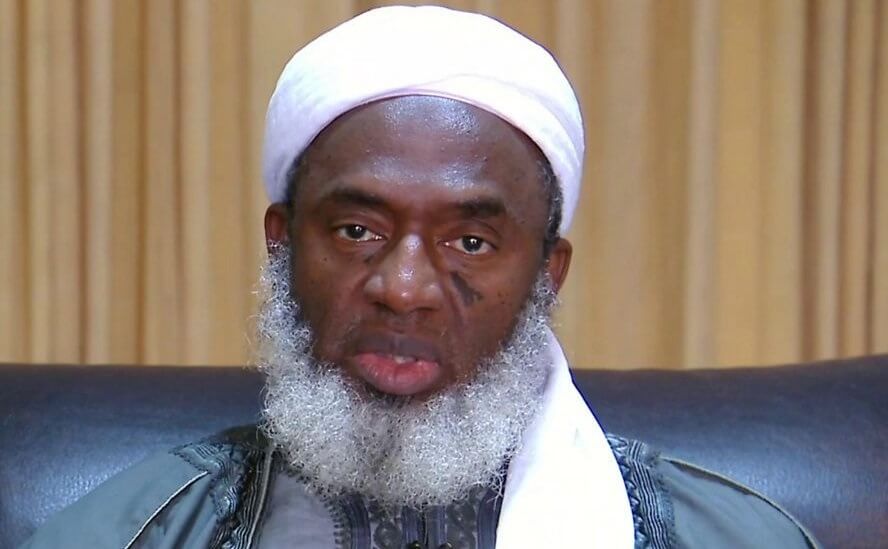
Gumi: Clerics who join politics are better than those praying for politicians
Prominent Islamic scholar, Sheikh Ahmad Abubakar Gumi, has defended the participation of religious scholars in politics, arguing that clerics who actively engage in the political process and accept its challenges are better positioned to contribute to society than those who remain outside and only pray for political leaders.
Gumi made the remarks amid growing debate over whether Islamic clerics should participate directly in partisan politics or focus exclusively on religious teachings, spiritual guidance and public advocacy.
The discussion has gained renewed attention following the political involvement of several respected Islamic scholars, particularly in northern Nigeria, where religious leaders play influential roles in community development, public discourse and social affairs.
The issue has become more prominent following the emergence of former Minister of Communications and Digital Economy, Professor Isa Ali Ibrahim Pantami, as a Peoples Democratic Party (PDP) governorship candidate in Gombe State ahead of the 2027 general election.
Pantami’s political ambition has generated mixed reactions, with supporters describing his participation as an opportunity for a religious scholar and public policy expert to contribute directly to governance. However, critics have raised concerns about the possible impact of partisan politics on the independence, public image and moral authority of religious leaders.
READ ALSO:
- FRSC Boss: Tinubu’s CNG, EV Drive Creating Jobs, Attracting Investment
- Lanre Shittu Motors Leads Drive to Steer Lagos Students Away from Crime, Donates books to public Schools
- UNIOSUN ranks third among state universities in latest Webometrics ranking
While some religious scholars have previously held political appointments or served in government, the increasing interest of prominent clerics in elective offices has renewed debate over the appropriate role of religious leaders in Nigeria’s political system.
Those opposed to clerics participating in partisan politics argue that the political environment can be highly divisive and may expose religious leaders to personal attacks, public criticism, political rivalry and allegations that could affect the respect they command among their followers.
They believe clerics may be more effective when they remain independent of political parties and use their platforms to provide spiritual guidance, promote ethical leadership, advise public officials and hold governments accountable.
Supporters, however, argue that religious scholars should not remain on the sidelines while the country continues to face challenges related to governance, insecurity, economic hardship and public service delivery.
They maintain that scholars who possess leadership experience, professional competence, integrity and a clear vision for public service should be free to seek elective offices and participate directly in efforts to improve governance.
According to this view, meaningful political change may require responsible citizens, including religious leaders, to move beyond public criticism and take part in the decision-making process.
Weighing in on the debate in a Facebook post, Gumi said there was nothing wrong with religious scholars joining politics and participating actively in governance.
He argued that clerics who enter politics and endure its demands are making a more direct contribution than those who remain outside the political system and only offer prayers for elected officials.
“A religious scholar who gets involved in politics and bears its rigours is better than one who sits on a prayer mat, offering prayers for politicians,” Gumi wrote.
Gumi’s comments reflect the view that religious scholars should be prepared to participate in practical efforts aimed at improving leadership and governance rather than limiting their involvement to sermons, prayers and public commentary.
The scholar’s position has added a fresh dimension to the ongoing conversation about the relationship between religion and politics in Nigeria, especially as political activities ahead of the 2027 general election continue to gather momentum.
The debate is expected to remain active as more religious leaders consider political appointments or elective offices and as Nigerians continue to assess the role of faith-based leadership in public governance.
While supporters believe clerics can bring moral values, discipline and accountability into government, critics insist that religious leaders must carefully protect their independence and avoid allowing political affiliations to divide their communities.
Ultimately, the debate raises broader questions about whether direct political participation would enable religious scholars to contribute more effectively to governance or expose them to political pressures that could affect their religious responsibilities and public influence.
Gumi: Clerics who join politics are better than those praying for politicians










Politics
2027: Datti Baba-Ahmed Threatens to Expose More Secrets About Peter Obi, Warns Obidients
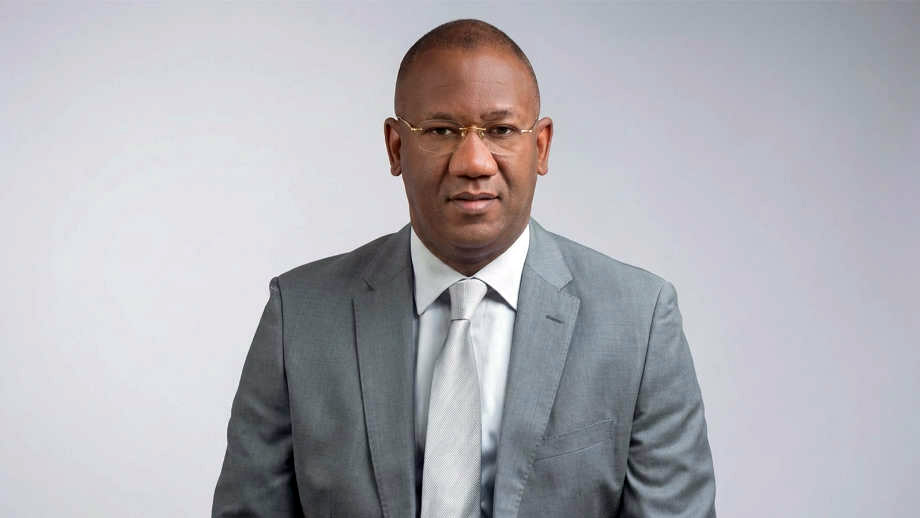
2027: Datti Baba-Ahmed Threatens to Expose More Secrets About Peter Obi, Warns Obidients
Former Labour Party vice-presidential candidate, Yusuf Datti Baba-Ahmed, has warned supporters of Peter Obi, popularly known as Obidients, against attacking him over his recent comments about the former Anambra State governor, threatening to make further damaging revelations about the 2023 presidential campaign.
Baba-Ahmed, who served as Obi’s running mate in the 2023 presidential election, said he had more information to disclose about what transpired during their political partnership, insisting that attacks from Obi’s supporters would not silence him.
He made the remarks during an interview with Symfoni TV, where he accused some Obidients of attacking anyone who expresses views contrary to their expectations about their political principal.
“Obidients are always eager to attack me. I have more damaging things to reveal. You attack me because I told you the truth about Peter Obi,” he said.
The former senator’s outburst comes amid growing disagreements over Peter Obi’s political calculations ahead of the 2027 general elections, particularly discussions surrounding a possible alliance or presidential ticket involving former Kano State Governor, Rabiu Kwankwaso.
Baba-Ahmed had argued that an Obi-Kwankwaso ticket might struggle to attract sufficient support in Northern Nigeria, claiming that his experience during the 2023 campaign had exposed significant challenges facing Obi in the region.
He recalled that shortly after joining Obi on the Labour Party ticket in 2022, he had to contend with controversies surrounding allegations that northerners were required to obtain identification cards in Anambra State, the demolition of a mosque and the leaked telephone conversation between Obi and the founder of Living Faith Church, Bishop David Oyedepo.
According to Baba-Ahmed, these controversies created difficulties for the campaign in Northern Nigeria, forcing him to personally undertake efforts to address the concerns and convince voters to support Obi.
He claimed that he took Obi to several locations, including Borno, Kano and Zaria, to counter the allegations and improve his acceptance among northern voters.
Baba-Ahmed maintained that his assessment of the political challenges surrounding Obi remained valid, insisting that his comments were based on his personal experience as the former presidential candidate’s running mate.
His latest remarks have further exposed the growing tension between him and sections of the Obidient movement, whose members have criticised him over his perceived opposition to Obi’s political decisions.
The former vice-presidential candidate, however, insisted that he would not be intimidated into silence, warning that he had more revelations to make if the attacks against him continued.
The development adds another dimension to the political realignments and disagreements unfolding among opposition figures as preparations gradually gather momentum ahead of the 2027 general election.
The allegations and recollections concerning the 2023 campaign remain Baba-Ahmed’s claims and have not been independently established.
2027: Datti Baba-Ahmed Threatens to Expose More Secrets About Peter Obi, Warns Obidients
Politics
Umahi Disowns Peter Obi, Says South East Has No Presidential Candidate for 2027
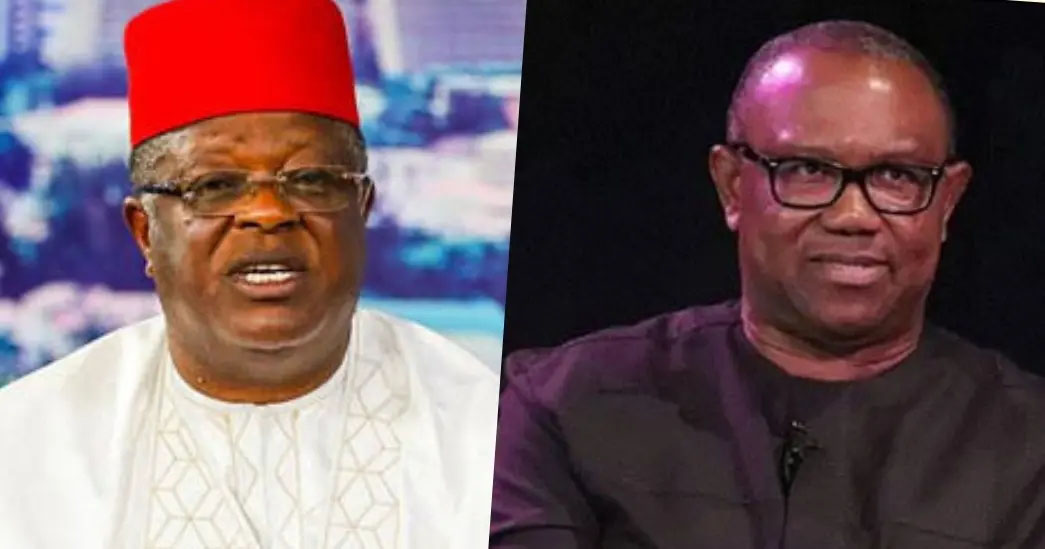
Umahi Disowns Peter Obi, Says South East Has No Presidential Candidate for 2027
ABUJA – The Minister of Works, Senator David Umahi, has stirred the political landscape ahead of the 2027 general elections, declaring that the South-East geopolitical zone currently has no presidential candidate.
Speaking during a political event on Sunday, Umahi specifically dismissed the presidential ambitions of Mr. Peter Obi, the candidate of the Nigeria Democratic Congress (NDC), stating that the former Anambra State Governor does not represent the interest of the region.
The Minister’s comments come amid rising political realignments as the nation looks toward the next electoral cycle. While Peter Obi, who was the Labour Party (LP) flagbearer in the 2023 election, has maintained a strong grassroots following, Umahi insisted that the South-East does not have a “consensus” candidate.
Addressing supporters, Umahi, who is a chieftain of the ruling All Progressives Congress (APC), emphasized that the South-East is not yet ready to project a candidate for the presidency. He described the NDC and its candidate as lacking the structure and national appeal required to secure the highest office in the land.
READ ALSO:
- NDLEA Arrests Woman With 266 Rounds of Live AK-47 Ammunition on Abuja-Kaduna Expressway
- How 40 Motorcycles-Riding Bandits Ambushed, Brutalised Six Kwara Security Operatives
- Nigeria’s Auto Dealers Face New Challenge as After-Sales Service Takes Centre Stage
“Let me be clear: there is no presidential candidate in the South-East in the 2027 general election,” Umahi stated. “We are not just looking for a candidate; we are looking for a President. As it stands, the region has not produced a candidate that we can all rally around.”
The Minister’s dismissal of Obi is seen as a significant political statement, highlighting the ongoing fragmentation within the South-East political elite. While Obi enjoys a massive cult-like following—often referred to as the “Obidient” movement—his relationship with key political figures in the region, particularly those in the APC, has soured since the 2023 elections.
Umahi’s remarks suggest a strategic shift by the ruling party to consolidate its grip on the South-East, potentially sidelining the Labour Party/NDC influence in the region. By declaring that there is “no candidate,” Umahi may be signaling that the APC is open to negotiations or that the region should align with the national ruling party to secure developmental benefits, rather than running a “lone race” that may end in defeat.
Political analysts suggest that Umahi’s statement is a direct attack on the viability of the NDC and Peter Obi’s renewed bid. It remains to be seen how Peter Obi’s supporters and the leadership of the NDC will respond to the Minister’s assertion that the South-East has no candidate.
As the 2027 elections draw closer, the battle for the soul of the South-East—and the definition of its true political leadership—is clearly heating up.
Umahi Disowns Peter Obi, Says South East Has No Presidential Candidate for 2027
Politics
2027: ‘Tinubu Must Stay’ Chants Rock Jigawa as NITDA DG Opens Campaign Office

2027: ‘Tinubu Must Stay’ Chants Rock Jigawa as NITDA DG Opens Campaign Office
A crowd of supporters in Jigawa State has chanted “Tinubu Must Stay” as the Director-General of the National Information Technology Development Agency (NITDA), Kashifu Inuwa Abdullahi, led a grassroots mobilisation campaign in support of President Bola Ahmed Tinubu’s anticipated re-election bid in 2027.
The mobilisation took place on Sunday, November 1, at Garun Gabas Ward in Malam Madori Local Government Area, where Abdullahi inaugurated a campaign office for the Tinubu Movement for Sustainable Governance Foundation (TMS), popularly known as the Tinubu Must Stay Movement.
The event attracted All Progressives Congress (APC) chieftains, community leaders, women, youths and other supporters. It also provided a platform for some members of the Peoples Democratic Party (PDP) and the National Democratic Congress (NDC) to announce their defection to the APC.
Abdullahi, who is the chairman of the TMS Board of Trustees and its national coordinator, said the movement was expanding its grassroots structures to promote public understanding of the Tinubu administration’s policies and mobilise support for the President ahead of the 2027 general election.
He explained that the group intended to take the administration’s reform agenda to communities across the country, particularly its emphasis on economic diversification and inclusive national development.
According to him, the administration’s interventions in education, agriculture, food security, national security, digital literacy and healthcare were designed to stimulate economic growth, improve livelihoods and strengthen national development.
The NITDA director-general cited South Korea, Singapore, Saudi Arabia, the United Arab Emirates and Malaysia as examples of countries whose development experiences, he argued, demonstrated the importance of sustained economic reforms and policy consistency.
READ ALSO:
- Trump Steps In as Ghana Demands Justice for 15-Year-Old Boy Shot Dead on Way to School in US
- Adeboye Fires Back at Journalists Over Viral Jonathan Protest Photo, Says It Was Prayer Walk
- Edo Youths Chase Policemen, Vigilantes From Checkpoint Over Alleged Extortion
He urged residents to support Tinubu’s return to office in 2027, expressing the view that continuity would help sustain the administration’s development agenda.
“On this note, I implore the people to come out en masse and ensure a landslide victory for President Bola Ahmed Tinubu in 2027,” Abdullahi told the gathering.
Beyond political mobilisation, he announced plans to empower an additional 200 women in Garun Gabas Ward through the movement’s community intervention programmes.
He said the proposed intervention would complement previous empowerment exercises in Jigawa State, including a recent programme in Hadejia, where beneficiaries reportedly received financial assistance, sewing machines, bakery equipment and agricultural inputs to support small businesses and improve household incomes.
Abdullahi added that the movement would continue to prioritise women, youths, children and persons with disabilities through economic empowerment, educational assistance and other community development initiatives.
He also thanked residents for their support for Tinubu’s administration, assuring them that the movement would sustain its engagement with communities.
The gathering also witnessed the reception of some defectors from the PDP and NDC into the APC. The new members, who were received by Abdullahi and the Malam Madori APC leadership, attributed their decision to what they described as development interventions and improvements in their communities.
They specifically cited projects facilitated through NITDA, saying the interventions had strengthened their confidence in the administration’s development agenda.
READ ALSO:
- Lami Dawa: CAN Takes 14-Year Jail Sentence to Appeal Court, Borno Govt Reacts
- Hijab Controversy: MURIC Demands Suspension of Law School Exams, Threatens Peaceful Protests
- Breaking: Two Fresh Ebola Cases Emerge in North-East, says NCDC, begins test
Speaking at the event, the APC chairman in Malam Madori Local Government Area, Alhaji Tanko Ahmad, commended Abdullahi for facilitating digital infrastructure projects, particularly the establishment of an Information and Communication Technology Development Centre at Government Secondary School, Garun Gabas.
Ahmad said the facility had expanded students’ access to digital skills and improved opportunities for young people to prepare for an increasingly technology-driven economy.
He pledged the support of the party’s structures in the area for the Tinubu Must Stay Movement and its planned grassroots mobilisation activities ahead of the 2027 elections.
The movement’s convener in Garun Gabas, Engineer Hashim Suleiman, described the turnout as an indication of local support for the initiative.
He said the movement began its activities in the United Kingdom before its formal launch in Abuja and subsequent expansion into communities across Nigeria.
Suleiman described the inauguration as the beginning of further grassroots engagements and urged beneficiaries of the empowerment programmes to use the assistance productively to establish sustainable businesses.
The ceremony ended with the presentation of an Award of Recognition to Abdullahi by the TMS leadership in Garun Gabas in acknowledgement of his contributions to digital infrastructure development and grassroots engagement.
The organisers said the movement planned to establish more structures across Jigawa and other parts of the country through political sensitisation, community engagement and empowerment programmes as preparations for the 2027 presidential election gather momentum.
2027: ‘Tinubu Must Stay’ Chants Rock Jigawa as NITDA DG Opens Campaign Office
-

 metro2 days ago
Ogun Murder: Suspect Reveals How He Strangled, Macheted Retired Civil Servant Over N3.45m
-
 Politics2 days ago
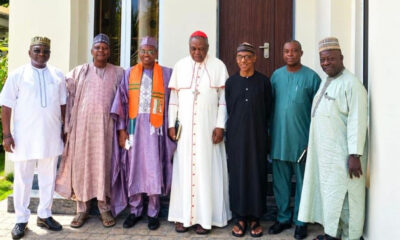
2027: G100 Coalition Moves to Unite Opposition as Leaders Meet Cardinal Onaiyekan
-
 metro2 days ago
₦50,000 Monthly Relief: FG Begins Cash Payments to Vulnerable Nigerians
-

 International2 days ago
Romance Scam: FBI Declares Nigerian Woman Wanted, Offers ₦6.7m Reward
-

 metro3 days ago
‘You Must Treat Me With Respect’ – Oshiomhole Blasts Rufai Oseni During Heated Live TV Interview
-

 metro2 days ago
N100,000 Deposit: FG Opens Homeownership Window for Teachers, Nurses, Police Officers
-

 Politics2 days ago
2027: INEC Rejects Adebutu, Gwarzo, Clears Pantami as Ogun, Kano Opposition Parties Face Setback
-

 metro2 days ago
Ghanaian Teen Chased, Shot Dead on Way to School in New York