

metro
Chidinma voluntarily wrote she murdered Ataga, says police witness

A prosecution witness, ASP Olufunke Madeyinlo, on Tuesday testified that Chidinma Ojukwu, the alleged murder suspect of the Chief Executive Officer of Super TV, Usifo Ataga, wrote her statement voluntarily.
Madeyinlo made the statement while testifying as the second prosecution witness in the trial within trial to ascertain whether Ojukwu was coerced or induced to make a statement that she killed Ataga by herself.
Ojukwu, a 300-level Mass Communication undergraduate of the University of Lagos, is standing trial for the alleged murder of Ataga.
She is also charged with stealing and forgery alongside one Adedapo Quadri and her sister, Chioma Egbuchu.
The News Agency of Nigeria (NAN) reports that Ojukwu’s counsel, Mr Onwuka Egwu, had objected to the admissibility of the defendant’s statement.
He said that the defendant did not make the statements voluntarily which made the court to go into trial within trial to ascertain the voluntariness of the defendant’s statement.
At the resumed hearing, the Deputy Director of Prosecution, Mrs Adenike Oluwafemi, called her second witness for the continuation of trial within trial.
However, the first defendant’s counsel, Mr Onwuka Egwu, announced his appearance, while the second defendant’s counsel, Mr Babatunde Busari, as well as the third defendant’s counsel, Mrs F.O. Ilesanmi, also announced their appearance.
Madeyinlo who had worked for 33 years in the police, said that on June 24, 2021, the Officer in Charge of the homicide session, Panti Yaba, Razak Oseni, brought the defendant to her office to write her statement.
She said that she gave the first defendant a statement form and a pen.
According to the witness, DCP Adegoke Bayoade, sent for Oseni, who left the first defendant in her office.
Madeyinlo said that about 40 minutes later, Oseni came back to her office and took Ojukwu’s written statement.
She said, “Oseni collected the statement and went away with the first defendant.
“Nothing happened and nobody forced her to write the statement. She wrote the statement herself.”
During cross-examination by Ojukwu’s counsel, the witness said that she shared her office with three other officers, ASP Gbolahon Jemiyo, ASP Gbola Alabi, and Insp. Kolawole Lukman.
When asked if it was after Jemiyo had assaulted the first defendant that her statement was taken, the witness said that she was in the office with only Alabi when the defendant wrote her statement.
Asked if she interacted with Ojukwu while she was writing her statement, Madeyinlo answered in the affirmative.
“I did not ask her any questions, she wrote her statement herself. The only question I asked her was if she was satisfied with the statement she wrote.
“She answered yes, then I asked her to sign it,” the witness said.
Egwu asked the witness if she gave a 10-year-old girl wrapper to cover herself in the night, on June 23 and 24, 2021.
The witness said that she could not remember because the incident happened a long time ago.
Asked if she knew what happened to the statement the first defendant made on June 24, 2021, she said no.
However, Justice Yetunde Adesanya adjourned the case until November 17, for the first defendant to testify in the trial within trial. (NAN)











metro
Niger Gold Mine Scandal: IBB Breaks Silence, Rejects Ownership Claim
Niger Gold Mine Scandal: IBB Breaks Silence, Rejects Ownership Claim
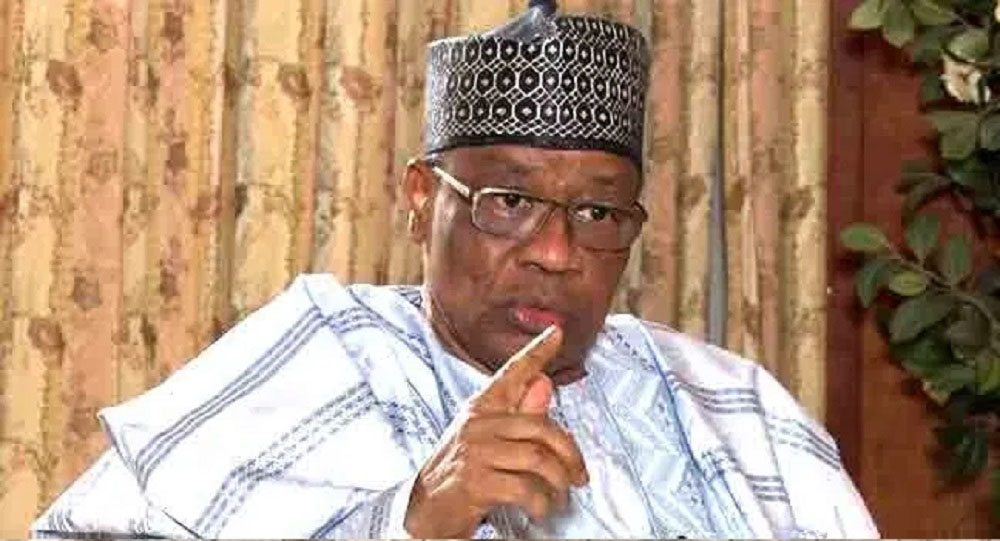
Former military Head of State, General Ibrahim Badamasi Babangida (retd.), has denied any connection with the gold-mining site in Niger State where dozens of suspected illegal miners were arrested before 37 of them died in the custody of the Nigeria Security and Civil Defence Corps (NSCDC).
Babangida’s denial came after a survivor of the incident allegedly identified the former military ruler as the owner of the mining site where the miners were arrested.
The allegation has added a fresh dimension to the controversy surrounding the deaths, which have already triggered investigations by federal and state authorities.
The survivor, identified as Malam Babawo Tudun Nasera, reportedly made the claim while recounting the arrest and death of his 17-year-old brother, Salim, who was among those detained by NSCDC personnel.
According to reports, Nasera said the miners were ordered to stop working at the site by security personnel but that the owner had allegedly directed them to continue mining.
When asked who owned the site, the survivor reportedly answered that it belonged to Babangida and later clarified that he was referring to the former military Head of State. He also alleged that Babangida had instructed the miners to continue their activities.
However, the ownership allegation has not been independently established.
Reacting to the report, Babangida, through his representative, Dr Danladi Umar Abdulhameed, strongly denied any involvement with the mining operation.
Abdulhameed described the allegation as “false, baseless and completely without foundation,” insisting that Babangida had no connection whatsoever with the mining site.
He demanded that the impression created by the report be corrected and urged members of the public to disregard the allegation.
The representative’s statement came after the survivor’s account was published, with the report itself noting that the ownership claim could not independently be verified. It was also unclear whether the survivor’s reference to Babangida concerned ownership of the mining operation, a mining lease, the land or another form of connection.
The ownership controversy comes against the backdrop of a major security and human-rights controversy in Niger State, following the deaths of suspected miners in NSCDC custody.
READ ALSO:
- “She Wanted to Stay Single”: Rema Opens Up About Rejection That Inspired Hit Song ‘Oh No’
- Ronaldo Included in Portugal’s Nations League Squad as Jorge Jesus Begins New Era
- Rivers Fire: Mother, Four Children Die in Okochiri House Inferno
At least 37 suspected illegal miners died while in NSCDC custody after they were arrested during enforcement operations around the M.I. Wushishi and Lukoto areas of Niger State on September 15 and 16, 2026.
Niger State Governor, Mohammed Umaru Bago, confirmed the deaths and disclosed that 67 artisanal and suspected illegal miners had been detained in an NSCDC cell before 37 died.
The governor said the actual cause of death had not been established, stressing that medical, forensic and autopsy examinations were required before any definitive conclusion could be reached.
The NSCDC initially linked the deaths to a suspected disease outbreak. However, other accounts have raised concerns about the conditions under which the suspects were detained.
Reports have cited allegations of overcrowding and poor ventilation, while authorities have also considered possible exposure to hazardous substances associated with mining activities as one of the issues requiring investigation.
The deaths have prompted strong action from the Federal Government.
The Niger State NSCDC Commandant, Suberu Siyaka Aniviye, was suspended following the incident, while authorities ordered a comprehensive investigation into what happened to the detainees.
The NSCDC also constituted an investigative team to examine the circumstances surrounding the deaths, including the condition of the suspects when they were arrested, the period they spent in custody, the conditions in which they were detained and the medical attention provided to them.
The Niger State Government equally established a committee of inquiry and ordered autopsies to help determine the cause of death.
The Federal Government has also constituted an independent committee to investigate the incident following President Bola Ahmed Tinubu’s directive for a comprehensive and transparent probe.
The committee is expected to establish what happened, determine responsibility where applicable and make recommendations arising from its findings.
The deaths sparked anger in Minna, with protests reported around NSCDC facilities.
Police reportedly used tear gas to disperse protesters as tension rose over the circumstances surrounding the deaths.
The state government subsequently appealed for calm and warned youths against resorting to violence while investigations continued.
Governor Bago had earlier announced mourning arrangements for the victims and expressed concern over the deaths, saying the authorities were working to establish the identities of the deceased and contact their families.
The incident has also raised wider questions about the treatment of suspects in detention and the conditions under which they were held.
Some survivors and witnesses have alleged that the detainees were packed into an overcrowded facility, while other accounts have raised allegations of physical abuse and exposure to harmful substances.
These allegations remain part of the ongoing investigations and have not been established as the official cause of the deaths.
The authorities have stressed the importance of allowing medical and forensic investigations to establish the facts before definitive conclusions are reached.
Amid the controversy, Amnesty International has also questioned the blanket description of the deceased as “illegal miners”, arguing that the designation should not be treated as established guilt, particularly because the deceased would no longer be able to defend themselves.
The allegation linking Babangida to the mining site has therefore introduced another dimension to the unfolding controversy.
For now, there are two sharply conflicting accounts: the survivor’s allegation identifying Babangida as the alleged owner of the site and the former military ruler’s categorical denial that he has any connection with the mining operation.
No publicly available evidence cited in the reports reviewed has independently established Babangida’s ownership or involvement in the mining site.
The central questions surrounding the deaths — including why the miners were detained, the conditions under which they were held, what caused the deaths and whether any officials or other individuals should bear responsibility — remain subjects of investigation.
As the various probes continue, attention is expected to focus on the findings of the medical examinations, autopsies and independent investigations, which could determine the circumstances that led to the deaths of the 37 detainees.
Until those investigations are completed, claims concerning the cause of death, responsibility for the fatalities and the alleged ownership of the mining site remain subject to verification.
Niger Gold Mine Scandal: IBB Breaks Silence, Rejects Ownership Claim
metro
Abia: 3 Policemen Arrested Over Alleged Extortion of More Than 200 Victims

Abia: 3 Policemen Arrested Over Alleged Extortion of More Than 200 Victims
Three police officers attached to the S-Squad of the Abia State Police Command have been arrested over alleged extortion and abuse of police powers, while four other officers linked to the investigation are being sought by the authorities.
The development followed an investigation into alleged activities of a seven-man police team accused of conducting unauthorised operations across several parts of Abia State, with more than 200 people reportedly affected.
The Assistant Inspector-General of Police in charge of Zone 9, Umuahia, Polycarp Emeka, disclosed the development during a briefing in Umuahia.
According to the AIG, the three officers already arrested comprise an Inspector, a Sergeant and a Corporal, while efforts are ongoing to locate the remaining four personnel.
Preliminary findings indicate that the officers allegedly operated in about nine Local Government Areas of the state.
The areas mentioned in connection with the investigation include Aba, Obingwa, Ukwa East and Ukwa West.
The alleged activities reportedly continued for more than a year before police authorities were alerted following complaints from the leadership of one of the affected communities.
Investigators are examining allegations that the officers targeted patent medicine dealers and operators of maternity homes, carrying out purported sting operations during which money, pharmaceutical products and other property were allegedly seized.
The police authorities said the operations were not conducted in accordance with approved police procedures.
READ ALSO:
- “She Wanted to Stay Single”: Rema Opens Up About Rejection That Inspired Hit Song ‘Oh No’
- Ronaldo Included in Portugal’s Nations League Squad as Jorge Jesus Begins New Era
- Rivers Fire: Mother, Four Children Die in Okochiri House Inferno
The AIG further alleged that the officers spent extended periods in hotels while moving around different parts of the state in connection with the operations.
More than 200 alleged victims have reportedly been identified, although the investigation is expected to establish the exact number of people affected and the full value of property and money allegedly taken.
Police investigators have reportedly recovered some of the pharmaceutical products allegedly seized during the operations.
A bus and security-crest jackets allegedly connected to the suspects were also recovered and are being examined as part of the investigation.
The recovered items could help investigators establish how the operations were organised and whether the alleged activities were carried out by the officers alone or involved other people.
Some of the alleged victims have accused the officers of using their police positions to intimidate them and demand money during the purported enforcement operations.
However, the allegations have not been established in court.
At least one of the arrested officers has reportedly denied wrongdoing and maintained his innocence.
The police authorities have said the investigation will be conducted thoroughly, with personnel found culpable expected to face appropriate disciplinary and legal action.
Emeka warned that the Nigeria Police Force would not tolerate conduct capable of damaging public confidence in the institution.
He also stressed the need for police officers to operate within the law and follow established procedures when carrying out enforcement activities.
The investigation is expected to establish whether the officers had any legitimate policing mandate for the operations and, if so, whether that mandate was exceeded.
This will be particularly relevant because patent medicine stores and maternity homes can legitimately be subject to inspections or enforcement by authorised government agencies where there are concerns about licensing, medicines, medical practice or public safety.
The police inquiry will therefore examine whether the operations were officially authorised and whether the officers allegedly used such operations for purposes unrelated to lawful policing.
READ ALSO:
- Niger Miners’ Deaths: Survivor Alleges Substance Was Sprayed in Cell as Probe Intensifies
- Lagos APC Orders 2027 Candidates to Stay in Nigeria Until After Election
- BREAKING: Bloodbath at Pakistan Mosque as Suicide Blast Kills 21, Injures 103
Investigators are also expected to determine the source and destination of any money allegedly collected during the operations and establish whether any recovered property belongs to the reported victims.
The authorities have not publicly disclosed the identities of the seven officers being investigated or provided a detailed breakdown of the alleged proceeds.
The four officers who have not been arrested remain subjects of the investigation, with efforts reportedly underway to locate them.
The case has renewed attention on complaints of police extortion and abuse of power, particularly allegations involving unlawful demands for money during police operations.
Police authorities have repeatedly warned personnel against conduct capable of undermining public trust in law enforcement.
For the Abia investigation, the next stage will involve taking statements from alleged victims and witnesses, examining recovered items and determining the individual roles of the officers under investigation.
The authorities will also have to establish whether the alleged activities were isolated incidents or part of a coordinated operation.
If investigators establish sufficient evidence of criminal conduct, the affected officers could face prosecution in addition to internal disciplinary proceedings.
Until the investigation is concluded and any case determined by a competent court, the allegations against the officers remain allegations and should not be treated as established criminal convictions.
The arrests nevertheless mark a significant step in the police inquiry into alleged extortion involving more than 200 people, while the authorities continue efforts to apprehend the four other officers linked to the case.
Abia: 3 Policemen Arrested Over Alleged Extortion of More Than 200 Victims
metro
Mambilla: ICC Raises Questions Over $500,000 Payment to Atiku’s Former Wife
Mambilla: ICC Raises Questions Over $500,000 Payment to Atiku’s Former Wife
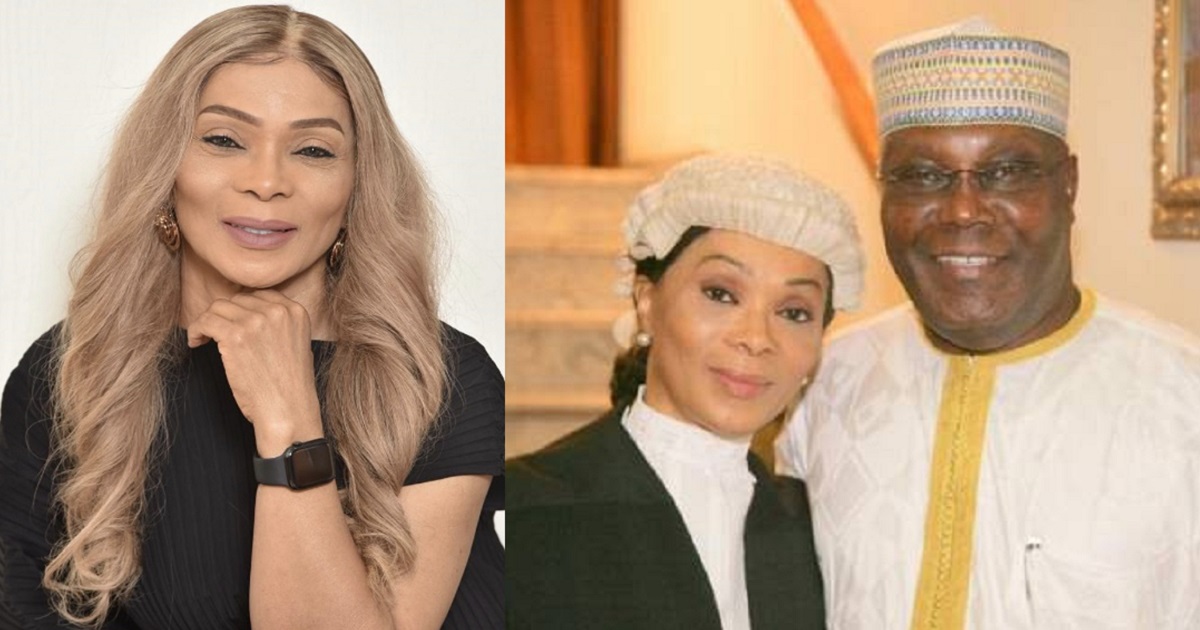
An International Chamber of Commerce (ICC) arbitration tribunal has raised questions over a $500,000 payment made to Jennifer Douglas, the then-wife of former Vice-President Atiku Abubakar, during the period when Sunrise Power and Transmission Company was pursuing the long-delayed Mambilla Hydroelectric Power Project in Taraba State.
The payment, made on January 30, 2003, has become a major political issue after details emerged from the ICC’s final award in the arbitration between Sunrise Power and Transmission Company Limited and the Federal Government of Nigeria.
The tribunal heard that Leno Adesanya, promoter of Sunrise Power, transferred the money through his offshore company, China Castle Investments Limited, into a United States bank account belonging to Douglas.
Adesanya told the tribunal that the payment was a foreign-exchange transaction carried out for Atiku, who was Vice-President at the time.
However, the three-member tribunal found that Sunrise and Adesanya had not provided sufficient documentary or independent witness evidence to support that explanation.
According to the tribunal’s findings, Adesanya did not produce records showing the underlying naira payment, the exchange rate used, instructions from Atiku or his aides, correspondence relating to the transaction or documents establishing its commercial purpose.
The tribunal also noted that neither Atiku nor Douglas provided witness statements or declarations supporting Adesanya’s explanation.
The timing of the transaction was another issue examined by the tribunal.
The $500,000 transfer was made less than four months before Sunrise was purportedly awarded a build-operate-transfer (BOT) contract for the Mambilla project by then Minister of Power and Steel, Olu Agunloye, on May 22, 2003.
The tribunal described the circumstances surrounding the payment as raising “significant red flags”, given its timing and the parties involved.
READ ALSO:
- Rivers Fire: Mother, Four Children Die in Okochiri House Inferno
- Niger Miners’ Deaths: Survivor Alleges Substance Was Sprayed in Cell as Probe Intensifies
- Lagos APC Orders 2027 Candidates to Stay in Nigeria Until After Election
However, the findings require an important distinction.
The ICC proceedings were an arbitration between Sunrise and the Federal Government, not a criminal trial of Atiku. The tribunal’s examination of the payment did not amount to a criminal conviction of the former Vice-President.
The tribunal also found no evidence in the arbitration record that Atiku had actually exercised his official duties in a manner that secured the Mambilla contract for Sunrise.
Atiku has rejected suggestions that the ICC tribunal found him guilty of corruption, challenging the All Progressives Congress (APC) to identify where the final award convicted him of receiving a $500,000 bribe, influencing the Mambilla contract or abusing his office.
Atiku, through his Senior Special Assistant on Public Communication, Phrank Shaibu, said the APC was presenting allegations examined during the arbitration as though they constituted a corruption verdict against him.
He also argued that he was not a party to the arbitration proceedings and did not testify before the tribunal.
The controversy intensified after the APC Presidential Campaign Council, through its spokesman Dele Alake, called on Atiku to withdraw from the 2027 presidential race.
The campaign council accused the former Vice-President of compromising Nigeria’s interests over the Mambilla project and linked the $500,000 payment to the circumstances surrounding Sunrise’s pursuit of the contract.
The APC also alleged that Atiku and Agunloye worked together to facilitate the project despite objections to the proposed arrangement.
Those claims are political allegations by the APC and have been rejected by Atiku.
The ICC tribunal, meanwhile, examined the payment as part of a much broader dispute over the Mambilla project and the various transactions surrounding it.
The tribunal noted that Adesanya had been pursuing the Mambilla project for years and had interacted with senior Nigerian officials during the process.
Atiku’s role in the project also came under examination because he was Vice-President between 1999 and 2007 and was involved in government discussions concerning the proposed hydroelectric development.
The tribunal noted that Atiku led a Nigerian government delegation to Beijing in July 2002, with Adesanya among the participants.
During the visit, Nigeria and a Chinese state-owned company signed a memorandum of understanding relating to cooperation on major infrastructure projects, including the proposed Mambilla development.
The $500,000 transfer took place about six months later.
The tribunal also examined separate payments involving Agunloye.
According to the findings, three payments totalling about $15,000 were made between August and November 2019 to Agunloye through his aide, Jide Sotinrin.
The payments formed part of the wider corruption allegations examined in relation to the Mambilla dispute.
The project itself dates back to the early 2000s and has remained stalled for more than two decades.
Sunrise relied on a May 22, 2003 letter from Agunloye as evidence that it had been awarded a BOT contract to develop the project.
Former President Olusegun Obasanjo, however, disputed the validity of the arrangement and maintained that the Federal Government had not authorised the minister to commit Nigeria to the contract on the terms contained in the letter.
The dispute eventually moved into international arbitration.
Sunrise subsequently pursued billions of dollars in claims against Nigeria, arguing that the government had breached obligations associated with the Mambilla project.
In the latest ICC proceedings, the tribunal rejected Sunrise’s claims against Nigeria.
The company had sought $680 million in connection with a settlement dispute, while a separate arbitration connected with the project involved claims exceeding $2.7 billion.
The tribunal also ordered Sunrise and Adesanya to reimburse Nigeria for 75 per cent of its legal fees and expenses, reported at approximately $11.8 million.
President Bola Ahmed Tinubu welcomed Nigeria’s victory, describing the ruling as removing a major legal obstacle that had hindered the Mambilla project for years.
The Presidency said the Federal Executive Council had never authorised the original 2003 contract and commended former President Obasanjo and the late President Muhammadu Buhari, who testified in the arbitration.
The tribunal’s ruling also dealt with a later $200 million settlement agreement between Nigeria and Sunrise and an addendum that introduced another $200 million default provision.
In separate findings, the tribunal concluded that the settlement arrangements were not binding on Nigeria because they lacked the required presidential approval. It also found the agreements to be products of corruption involving former Attorney-General of the Federation Abubakar Malami and Adesanya.
Those findings relate to the later settlement arrangements and are distinct from the tribunal’s examination of the 2003 $500,000 payment involving Atiku’s former wife.
The different strands of the ICC award have nevertheless become intertwined in the political debate over Atiku’s 2027 presidential bid.
The APC has focused on the $500,000 payment, its timing and the relationship between Adesanya and Atiku’s family, arguing that the circumstances require political accountability.
Atiku, on the other hand, has maintained that the tribunal did not find that he received a bribe or used his office to influence the award of the Mambilla contract.
The ICC’s findings show that the tribunal questioned the explanation for the $500,000 transfer because it lacked supporting documentation, while also stating that it found no evidence in the arbitration record that Atiku used his official duties to secure the contract for Sunrise.
The distinction is important because the arbitration was primarily a contractual dispute between Sunrise Power and Nigeria, with the payment examined as part of the evidence surrounding the contested Mambilla contract.
The controversy is now likely to remain part of the political debate ahead of the 2027 presidential election, particularly as Atiku, the ADC candidate, faces attacks from the ruling APC over his record in government.
Meanwhile, Nigeria’s victory before the ICC has removed the immediate arbitration claims brought by Sunrise and its promoter over the disputed project.
The Mambilla Hydroelectric Power Project, proposed as a major power-generation project in Taraba State, remains a significant component of Nigeria’s long-running plans to expand electricity generation.
Mambilla: ICC Raises Questions Over $500,000 Payment to Atiku’s Former Wife
-

 metro2 days ago
Niger Mosque Abductions: Terrorists Execute 30 of 500 Captive Muslim Worshippers
-

 Business2 days ago
Fuel Prices Climb to ₦1,500 per Litre Across Nigeria, Sparking Calls for Urgent Action
-

 Entertainment3 days ago
BREAKING: Olu Jacobs Dies at 84, Atiku Mourns Cultural Icon
-

 News3 days ago
Blue Line Rail, Hospitals Get Boost as Lagos Approves ₦200bn Bond and Budget Reordering
-

 News2 days ago
OAU Investigates Death of Final-Year Student as Police Begin Probe
-
 News1 day ago
ECOWAS Biometric Card Expands as Seven Countries Begin Rollout
-
 metro3 days ago
US-Based Nigerian Lawyers Disbarred: Full List of Fraud, Theft and Misconduct Cases
-
 Interview2 days ago
He Does Not Lose Elections”: Abdulmumin Jibrin Predicts 65% Landslide for Tinubu in 2027