

Politics
We haven’t endorsed Peter Obi, Dogara, aggrieved Northern APC

Former Speaker of the House of Representatives, Yakubu Dogara, and other members of the aggrieved Northern All Progressives Congress, APC camp have dismissed speculations that the group has endorsed the Obi-Datti presidency ahead of the 2023 general elections.
The group made the dismissal in a statement jointly-signed by Simon Achuba, Hon Albert Atiwurcha, Prof Doknan Sheni, Mela A. Nunge, SAN, Gen Ishaya Bauka Rtd, Prof Ibrahim Haruna and Mrs Leah Olusiyi.
Recall that the Chairman of the group and former Secretary to the Government of the Federation, Babachir Lawal, had said the group has endorsed the Labour Party presidential candidate, Obi and his running mate, Yusuf Datti Baba-Ahmed.
According to him, Obi was endorsed, after painstakingly reviewing and analysing the alternative candidates.
But, Dogara and other members of the group have distanced themselves from the endorsement, saying they are yet to conclude consultations and that their position will be made public.
READ ALSO:
- Lagos- Ibadan expressway will not become another Abuja-Kaduna Expressway – Gani Adams
- 2023: Peter Obi Will Fade Away Soon – Omokri
- APC Candidate to Be Tried for ‘Defrauding Kuwait Citizen of $1.3m’
He said, “We want to draw the attention of the general public to the recent position canvassed by our Chairman, Engr B D Lawal as the position of our Group. We wish to state that necessary consultations have been concluded, and based on manifestly unassailable empirical data, the group is poised to adopt a position that will be made known to the public at an interfaith event to be held very soon.
“Suffices to say that no one in the group including the Chairman has been mandated to speak to the public about our position at this material time. Based on our modus Operandi, our position was meant to be presented to the general public at the event above referred to. That has not changed.
“Consequently, the decision to endorse a particular candidate and the statement credited to the chairman are solely the decision and views of the Chairman which he is absolutely entitled to but not that of the group. We hope this statement clears all the queries most of us have been inundated with on this all-important subject matter,” he added.
Vanguard





Politics
Why Buhari refused to publicly endorse Tinubu before APC primary – Babachir Lawal
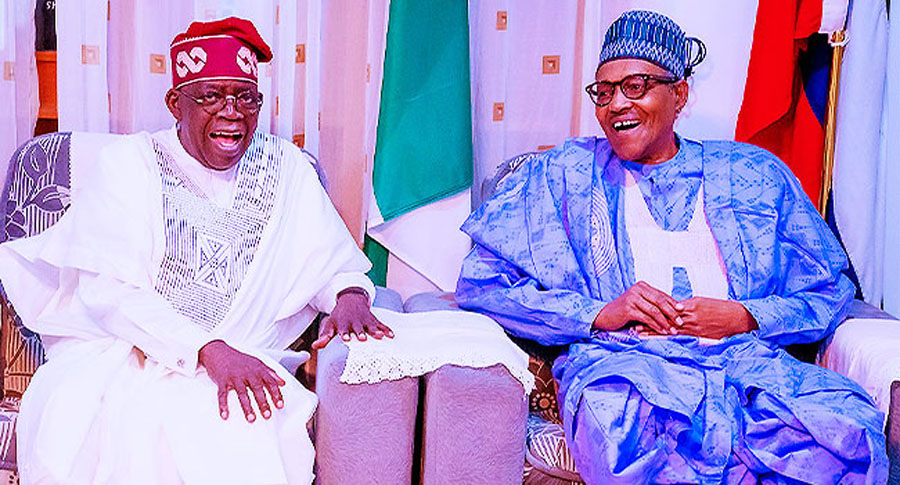
Why Buhari refused to publicly endorse Tinubu before APC primary – Babachir Lawal
Former Secretary to the Government of the Federation (SGF), Babachir Lawal, has disclosed that late former President Muhammadu Buhari deliberately chose not to publicly endorse President Bola Tinubu ahead of the All Progressives Congress (APC) presidential primary in 2022 because of concerns rooted in his religious beliefs, personal ethics and reservations about Tinubu’s suitability to succeed him.
Lawal made the revelation during an interview on Symfoni TV, offering fresh insight into the internal consultations and political calculations that shaped the APC‘s presidential primary, which eventually produced Tinubu as the party’s candidate for the 2023 election.
According to the former SGF, Buhari acknowledged Tinubu’s immense contributions to the APC and his role in helping the party secure electoral victories in 2015 and 2019. However, he said the former president remained conflicted over whether to openly support Tinubu’s presidential ambition.
Lawal explained that Tinubu played a critical role in Buhari’s political journey by mobilising influential political leaders, coordinating campaign strategies and strengthening the APC’s national structure during previous election campaigns.
He recalled confronting Buhari with those facts, arguing that it would be unfair to frustrate Tinubu’s ambition after benefiting from his political support.
“Bola Tinubu brought people and we changed the trajectory of the campaign through those his people. Buhari is a decent man, and I confronted him with those facts because I was there,” Lawal said.
According to Lawal, Buhari did not dispute Tinubu’s contributions but insisted that his personal convictions made it difficult for him to openly support the former Lagos State governor.
READ ALSO:
- Oyetola, VP’s aide, Opeifa to drive discussions at 2026 TCAN Transport Summit
- Is Nigeria’s Electricity Tariff Going Up? FG Finally Breaks Silence
- ISWAP finance chief surrenders to Nigerian troops with two children in Borno
The former SGF said that as the APC presidential primary approached, he proposed a compromise that would allow Buhari to remain neutral while leaving the final decision to party delegates.
He said he advised the former president that neutrality would protect his integrity while allowing the democratic process within the APC to determine its presidential candidate.
“I told him, ‘Stay neutral and allow the party faithful to decide. If delegates reject him, then your hands are clean because you did not stop him,'” Lawal recounted.
However, Buhari was initially unconvinced.
According to Lawal, the former president argued that if he was allowed to supervise the process, Tinubu would almost certainly emerge as the APC‘s presidential candidate because of Lawal’s political strategy and longstanding relationship with him.
“He told me, ‘I know you. Since 2002 we have worked together. If I leave the process to you, Bola Tinubu will get the ticket.’ I replied, ‘Are you now a prophet?'” Lawal said.
Lawal explained that he eventually persuaded Buhari by reminding him that even if Tinubu secured the APC ticket, Nigerians would still have the final say during the presidential election.
He also revealed that Buhari expressed concern about whether Tinubu, if elected president, would treat members of their political camp fairly and protect their political interests.
Lawal said he assured Buhari that those concerns could be addressed through continued dialogue and engagement.
Following the discussions, Buhari agreed to adopt a neutral position throughout the APC presidential primary process.
Instead of publicly endorsing any aspirant, the then president repeatedly urged delegates to vote according to their conscience and choose the candidate they believed best represented the party’s ideals.
That neutral stance became one of the defining moments of the 2022 APC presidential primary, as Buhari resisted pressure from different political interests to openly back any of the leading contenders.
At the APC Special National Convention held in Abuja in June 2022, Tinubu defeated former Vice President Yemi Osinbajo, former Minister of Transportation Rotimi Amaechi, former Senate President Ahmad Lawan, former Kogi State Governor Yahaya Bello, and several other aspirants to emerge as the party’s presidential candidate.
Tinubu went on to win the 2023 presidential election and was sworn in as Nigeria’s President on May 29, 2023.
Lawal’s latest comments provide one of the most detailed public accounts yet of the consultations that preceded the APC primary and have reignited debate over Buhari’s succession strategy and the internal dynamics that shaped the ruling party’s presidential ticket.
Political analysts say the revelations are likely to fuel fresh discussions within the APC as political stakeholders begin positioning ahead of the 2027 general election, with Buhari’s leadership decisions continuing to attract public interest even after his death.
Why Buhari refused to publicly endorse Tinubu before APC primary – Babachir Lawal
Politics
2027 election: Atiku accuses Obasanjo of reviving false allegations to favour preferred candidate
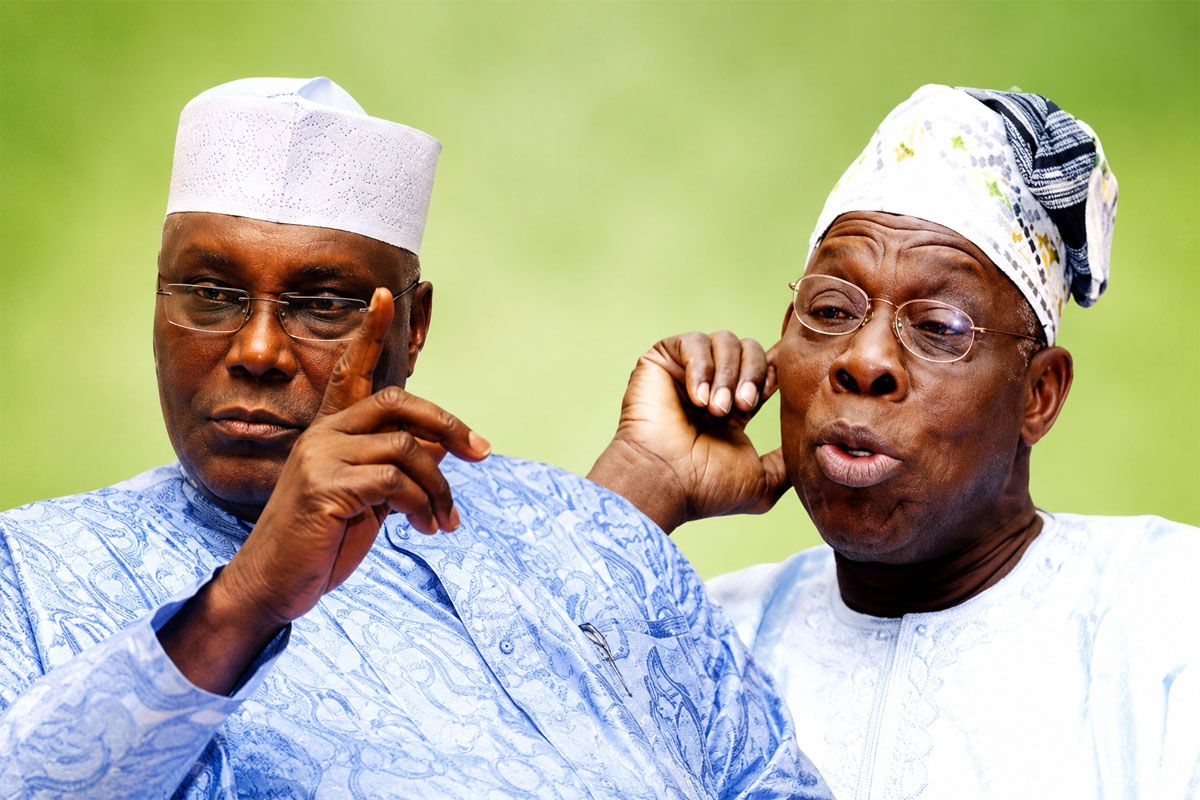
2027 election: Atiku accuses Obasanjo of reviving false allegations to favour preferred candidate
Former Vice President and presidential candidate of the African Democratic Congress (ADC), Atiku Abubakar, has accused former President Olusegun Obasanjo of reviving what he described as false allegations against him to create political advantage for his “kinsman” ahead of the 2027 general election.
The fresh exchange marks another chapter in the long-running political rivalry between the two former allies, whose relationship has remained strained since the closing years of the Obasanjo administration.
The latest dispute was triggered by Obasanjo’s claim that Atiku gave the late former Speaker of the House of Representatives, Ghali Umar Na’Abba, ₦5 million to initiate impeachment proceedings against him during his first term in office.
Obasanjo made the allegation while reflecting on political developments leading to the 2003 general election. According to the former president, Atiku allegedly held a private meeting with Na’Abba, encouraged him to ensure he served only one term as president, and later provided funds to commence impeachment proceedings.
The former president also claimed that the alleged meeting and payment were documented and reported to him by his then Chief of Staff, whom he described as a trained intelligence officer.
However, Atiku has strongly denied the allegations, describing them as baseless, politically motivated and designed to influence public perception ahead of the 2027 presidential election.
In a statement issued by his Senior Special Assistant on Public Communication, Phrank Shaibu, the former vice president said the accusations were nothing more than an attempt to rewrite history for political purposes.
READ ALSO:
- Alleged Coup Plot: How Attack on Aso Rock, Airports Was Planned — Court Documents
- Gumi Questions FG’s Refusal To Dialogue With Bandits, Boko Haram, Cites Niger Delta Precedent
- Police deny IGP Olatunji Disu issued shoot-on-sight order for illegal firearm carriers
According to Atiku, the timing of the allegations raises questions, coming at a period when political consultations and alignments ahead of the next general election are gathering momentum.
He argued that the claims were intended to damage his credibility while giving an unfair political advantage to a preferred presidential hopeful whom he referred to as Obasanjo’s “kinsman.”
Although Atiku did not identify the individual, he maintained that Nigerians would not be deceived by what he described as recycled accusations that had resurfaced more than two decades after the events in question.
The former vice president also questioned why no criminal investigation or prosecution was initiated during Obasanjo’s administration if there had been credible evidence that he bribed the former Speaker.
According to him, the federal government at the time controlled all relevant security and anti-corruption agencies and had sufficient authority to investigate or prosecute anyone found guilty of such an offence.
He argued that the absence of any legal action undermines the credibility of the latest allegations.
Atiku further criticised Obasanjo for making allegations involving the late Na’Abba, saying it was inappropriate to rely on the name of someone who is no longer alive to confirm or deny the claims.
He described the development as contrary to African values, arguing that the dead should not be drawn into political controversies because they cannot defend themselves.
The former vice president also revisited the political disagreements that strained his relationship with Obasanjo while they were in office.
He insisted that their fallout was rooted in his opposition to the controversial third-term agenda, which sought constitutional changes that would have allowed Obasanjo to remain in office beyond the two-term constitutional limit.
Atiku said he resisted the proposal through lawful and democratic means because he believed protecting Nigeria’s constitutional democracy was more important than personal political interests.
According to him, the latest allegations appear to reflect lingering resentment over his opposition to the third-term bid rather than a genuine effort to establish historical facts.
The ADC presidential candidate also stated that Obasanjo is constitutionally free to support any candidate of his choice ahead of the 2027 election, but urged him to do so openly instead of reviving allegations that cannot be independently verified because the principal witness, Na’Abba, is deceased.
He added that he would not allow himself to be distracted by prolonged exchanges over events that occurred more than two decades ago while millions of Nigerians are grappling with pressing national challenges.
According to Atiku, the country’s priority should be addressing rising inflation, economic hardship, insecurity, unemployment, poverty and governance issues rather than reopening old political disputes.
The renewed war of words comes as political parties continue consultations, coalition talks and strategic realignments ahead of the 2027 general election, with several leading politicians expected to declare their presidential ambitions in the coming months.
Political observers believe exchanges between prominent figures such as Atiku and Obasanjo are likely to shape public discourse as preparations for the next election gather pace.
2027 election: Atiku accuses Obasanjo of reviving false allegations to favour preferred candidate
Politics
ADC leadership crisis deepens as court dismisses objections by David Mark, Aregbesola

ADC leadership crisis deepens as court dismisses objections by David Mark, Aregbesola
The Federal High Court in Abuja has dismissed objections filed by African Democratic Congress (ADC) National Chairman Senator David Mark and the party’s National Secretary, Rauf Aregbesola, against an application seeking to amend a suit challenging their emergence as the party’s national leaders.
In a ruling delivered on Friday, Justice Peter Lifu described the objections raised by the two defendants as “frivolous, baseless and without an iota of merit,” holding that the plaintiff’s request to amend his originating summons was a lawful and necessary step to ensure justice.
The court subsequently granted the application filed by Nafiu Bala Gombe, a former Deputy National Chairman of the ADC, and ordered David Mark and Aregbesola to pay ₦500,000 each as costs to the plaintiff.
Justice Lifu ruled that the amendment became necessary following a change of legal counsel and emphasized that it did not prejudice the defendants, who still have the legal right to respond by filing fresh counter-affidavits to the amended suit.
According to the judge, amendments to court processes before judgment are well-established in law and are often allowed to enable courts determine disputes on their merits rather than on technicalities.
“The defendants have not shown how the amendment will occasion any miscarriage of justice against them,” the judge held while dismissing all objections to the application.
The latest ruling marks another significant development in the legal battle over the leadership of the ADC, which has intensified since the opposition party emerged as the platform for a coalition of opposition politicians preparing for the 2027 general election.
READ ALSO:
- Tyson Fury Dominates Wach, Sets Up Potential Joshua Clash with Seventh-Round TKO
- Tinubu hits Atiku hard, says: ‘I’m clearing the mess you created’
- Oluwo Urges Youths to Pair Degrees with Skills, Commends Westland University’s Excellence
The substantive suit was instituted by Nafiu Bala Gombe, who is challenging the emergence of David Mark as National Chairman and Rauf Aregbesola as National Secretary.
Gombe contends that the process leading to their emergence violated both the ADC Constitution and the provisions of the Electoral Act. He is asking the court to declare their appointments invalid and restrain them, alongside other members of the party’s National Working Committee, from presenting themselves as the legitimate national leadership of the party.
Represented by senior lawyer Lukman Fagbemi (SAN), the plaintiff argued that he was legally entitled to amend his originating summons before judgment and that the proposed amendments were necessary to enable the court effectively determine all issues in dispute.
However, counsel to David Mark, Dr. Suleiman Umar (SAN), urged the court to reject the application, arguing that the parties had already exchanged legal processes and joined issues.
According to him, allowing the amendment after the defendants had disclosed their legal arguments would hand the plaintiff an unfair advantage and offend the principles of fair hearing.
Similarly, counsel to Rauf Aregbesola, Realwan Okpanachi, opposed the application, insisting that the amendment substantially altered the character of the case by introducing fresh claims and additional documents.
He maintained that the ADC National Executive Committee (NEC) validly restructured the party’s leadership during its meeting on July 29, 2025, after giving the required statutory notice to the Independent National Electoral Commission (INEC) on July 1, 2025, in compliance with the Electoral Act.
Okpanachi further alleged that Gombe initially relied on an unsigned copy of the ADC Constitution before later introducing a signed version after seeing the defendants’ objections.
He argued that the action was an attempt to strengthen a weak case and urged the court to reject the amendment, insisting that a litigant seeking equitable relief must approach the court with clean hands.
Justice Lifu, however, rejected those arguments, ruling that the proposed amendments neither changed the substance of the dispute in a manner that would prejudice the defendants nor denied them the opportunity to adequately defend themselves.
Consequently, the court dismissed the objections filed by David Mark and Aregbesola, granted leave for Gombe to amend his originating summons and awarded ₦500,000 in costs against each of the two defendants.
The ruling is the latest twist in the prolonged ADC leadership crisis, which has generated multiple legal proceedings since the party’s leadership restructuring.
Earlier in the dispute, conflicting court orders created uncertainty over the party’s leadership, prompting the Independent National Electoral Commission (INEC) to temporarily suspend recognition of the David Mark-led National Working Committee.
The uncertainty was later eased after the Supreme Court set aside the Court of Appeal’s order that directed parties to maintain the status quo. The apex court subsequently ordered an accelerated hearing of the substantive suit, after which INEC restored the David Mark-led leadership on its official records pending the final determination of the case.
Despite Friday’s ruling, the court did not determine the substantive issues surrounding the legitimacy of the party’s leadership.
Instead, the decision clears the way for the plaintiff to proceed with his amended claims, while the Federal High Court continues hearing the suit that could ultimately determine the future leadership of one of Nigeria’s major opposition parties ahead of the 2027 elections.
ADC leadership crisis deepens as court dismisses objections by David Mark, Aregbesola
-
 Politics2 days ago
Presidency, Obasanjo attack Atiku over US lobbying, reopen decades-old loyalty dispute
-

 Opinion2 days ago
Osun election: Àtàọ́ja should stop running joro-jara-joro
-

 Entertainment2 days ago
“Don’t Let Me Die”: Veteran Nollywood Actress Ngozi Nwosu Begs for ₦30m Surgery Fund
-

 Business2 days ago
Dollar to Naira Exchange Rate Today: Naira Holds Steady as Fuel Importer Demand Mounts
-
 Politics2 days ago
Atiku denies Obasanjo’s N5m bribery claim, links accusation to 2027 presidential race
-

 metro3 days ago
Trackers, Profiling as FG Unveils Special Guards to Secure Coastal Highway
-
 Education2 days ago
Oluwo Urges Youths to Pair Degrees with Skills, Commends Westland University’s Excellence
-
 metro1 day ago
PFICP scandal: How ₦1.3bn ‘fake agency’ traced to Buhari’s government entered 2026 budget