

Politics
Tinubu: Private sector should drive economy; speaks on power, insecurity, electoral violence, his identity

- Delegates aides to speak at Chatham House conference
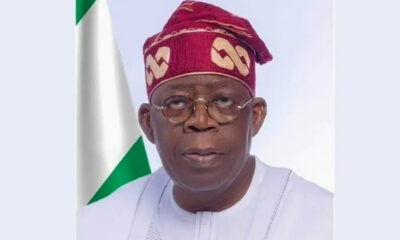
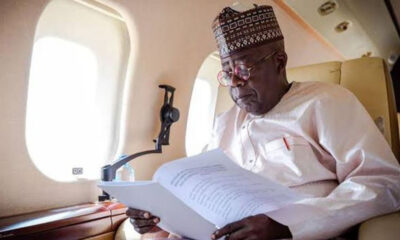
Presidential candidate of the All Progressives Congress(APC) presidential candidate Asiwaju Bola Ahmed Tinubu on Monday was a guest at the Chatham House, London, where he highlighted his plans for Nigeria if elected president in 2023.
He also spoke about his true age, identity, electoral violence, diaspora voting just as he delegated some members on his entourage to respond to some questions posed to him by the audience at the forum.
His lecture was titled: “Nigeria’s 2023 election: Security, economy and foreign policy imperatives.”
The former Lagos State governor expressed his commitment to the sanctity of the ballot box, saying the next crop of leaders should evolve from free, fair, democratic and transparent elections.
He said, “I stand firmly against all forms of electoral violence and intimidation. Having spent most of my career in the political opposition, I have long fought against electoral malpractice and any attempts to extinguish the legitimate choice of voters. I will continue to do so.
“I urge all my fellow contestants in this election to do the same. Let the sovereign will of the people decide the path of our nation. And let this election be determined by voters making their choice freely rather than the domineering intimidation of the troublesome few.”
Insecurity
Tinubu, who lamented that insecurity had persisted despite the progress made by the Muhammadu Buhari administration, said if elected, he would tackle the crisis so that Nigeria could also effectively provide security support for its neighbouring nations.
He said, “The challenges which have manifested themselves with regard to our national and regional development and security trajectories are very well-known to all of us here: radical extremist violence, terrorism, banditry, kidnapping, human trafficking, trafficking in weapons, trafficking in drugs, climate change and resource-driven conflicts etc.
“Mostly manifesting initially as national problems, these challenges evolved over time into trans-border and multinational challenges.
“We see the thousands of people who have been internally displaced at home or forced into refugee camps abroad. With farming activities disrupted, we have seen shortages of basic food items and food price inflation that are further undermining human security.
“To respond meaningfully to the discontents and to redress the many dislocations arising from them, we must begin by reminding ourselves of that old dictum: Foreign policy is but a continuation of domestic policy.
“As a first step, we must recalibrate domestic policy in order to revamp the foundation on which our quest to pursue human security rests.”
Power outage
Tinubu identified regular electricity as the key to economic revitalisation and industrial growth, promising to improve the framework already in place for boosting energy generation and distribution.
He said, “Fixing the perennial riddle of energy supply is another priority. There is no version of the world where Nigeria’s ambitions for itself can be achieved without solving the problem of how to provide energy to homes and businesses across the country.
“It is time to recognise that the centralised approach to energy policy and infrastructure is not an optimal arrangement and is unlikely to improve by mere tinkering around the sides.
“The Federal Government as regulator and operator, and price fixer is a broken model and one that we fully intend to fix if elected.
“We have privatised power distribution in Nigeria and generation to a certain degree. What we need to do, going forward, is to improve the enabling environment and further reform the legal and regulatory framework to attract more private investments in the sector as we have experienced in the telecom industry.”
He also spoke on his plan to reposition agriculture as a strong tool for economic development, saying, “The present administration has invested heavily in agriculture, providing loans and expanding the country’s total acreage of cultivated land.
“We will build on this, but our focus will be on using technology and expertise to accelerate growth and development by providing the critical infrastructure necessary to achieve the commodity transformations in the agriculture value chain.”
He added, “Roads, rail, access to ports, and storage infrastructure are what we require to radically transform the agriculture sector and increase its value to the nation.
“Providing these will be the areas of our focus so that the full potential of our agro-economy can be achieved, and we can reap the benefits in jobs, improved economic opportunities and increased prosperity.”
Private sector-driven economy
Tinubu promised to engage the private sector to drive economic development.
He said, “My belief that the private sector is the fulcrum of economic progress is evident and documented.
“However, fundamental flaws with the basic design of our national economy imperil the private sector from playing the role it ought to and adding the value it is capable of.
“In this instance, the government must act as a catalyst. We shall do this on all fronts. We will address the conflict between monetary and fiscal policies.
“Budgeting will be based on the projected spending levels needed to push real annual growth rate above seven per cent while reducing the unemployment rate so that we can double the economy in ten years.”
On his age and identity, Tinubu said his birthday was March 29, 1952, adding that his records are with his alma mater, Chicago State University, United States, and Mobil Oil, where he worked as treasurer.
He said, “At the time of birth, I was born march 29, 1952 in the family record.
“I have good exposure in life, my record is consistent. For the school and university I attended, the records are there. The transcript is also there.
“I’m not claiming another father. I am Tinubu and Tinubu proper. If they want DNA, they can as well request that. Chicago State University where I graduated has attested to that (education).
“I’ve received my original replacement certificate from them. Deloitte trained me, and Mobil Oil has also attested to my record. I got to the pinnacle of my career. Who among them can brag about that?
“You want to wrestle with the pig, you need to live with dirt. I got into politics knowing that it is muddy water, one has to live with the dirt.
“I see myself as a marketable individual. They want to use me to make money, and I say no.”
Tinubu, who said that Nigerians in the Diaspora should be entitled to vote, however noted that the Independent National Electoral Commission (INEC) was yet to give an assurance that the electronic transmission of election results is reliable.
During question and answer session, he asked Speaker of the House of Representatives, Femi Gbajabiamila, Governor of Kaduna State, Nasir El-Rufai, Cross River State governor, Ben Ayade, and his former commissioners in Lagos, Dele Alake and Wale Edu, to respond to questions that fell within their areas of core competence.
El-Rufai, who answered questions on security, stated that banditry, terrorism, separatism, and oil theft require a new approach including increasing the number of security operatives.
“The numbers must change and the Bola Tinubu administration already has a blueprint which is embedded in our action plan to address this.
“We will scale up the numbers of the armed forces. We’ll ramp up not only the numbers but the training and the equipment,” the Kaduna governor said.
Alake answered the question of how Tinubu plans to lift Nigerians out of poverty if elected and also curb oil theft in six months. “The key to his policy for increasing economic growth is to enable the private sector to make the investment that will increase productivity, grow the economy, create jobs, and reduce poverty,” he said.
Gbajabiamila responded to the question on the strategies of Tinubu on defence; the APC national women’s leader answered the question on healthcare delivery, and how to convert brain drain into a gain for the country, amongst others.

Tinubu was accompanied to the London’s forum by key party stalwarts such as Kaduna State Governor Nasir El-Rufai, House of Representatives Speaker Femi Gbajabiamila, former Lagos State Commissioner for Information and Strategy Dele Alake, one-time Lagos State Commissioner for Finance Wale Edun and National Women Leader Dr. Beta Edu shed light on Tinubu’s manifesto, ‘Renewed Hope for 2023,’ particularly those aspects related to their areas of competence.
Others are Governors Abdullahi Ganduje (Kano), Dapo Abiodun (Ogun), Babajide Sanwo-Olu (Lagos), Abubakar Sani Bello (Niger), Ben Ayade (Cross River), Abubakar Badaru, (Jigawa) and David Umahi (Ebonyi); former Ekiti State Governor Kayode Fayemi, ex-Edo State Governor Adams Oshiomhole; Deputy National Women Leader Hajiya Zainab Ibrahim, former Lagos State Deputy Governor Chief Femi Pedro, Senator Tokunbo Abiru, Senator Fatai Buhari and Senator Adeola Olamilekan.
Also on his entourage are Senator Musiliu Obanikoro, Senator Tokunbo Afikuyomi, former Ogun State Deputy Governor Segun Adesegun, Hadiza Bala-Usman and Alhaji Mutiu Are.






Politics
Lekki-Ikoyi Bridge: Hamzat, Gbadamosi Clash Over N29bn Cost, Toll Collection
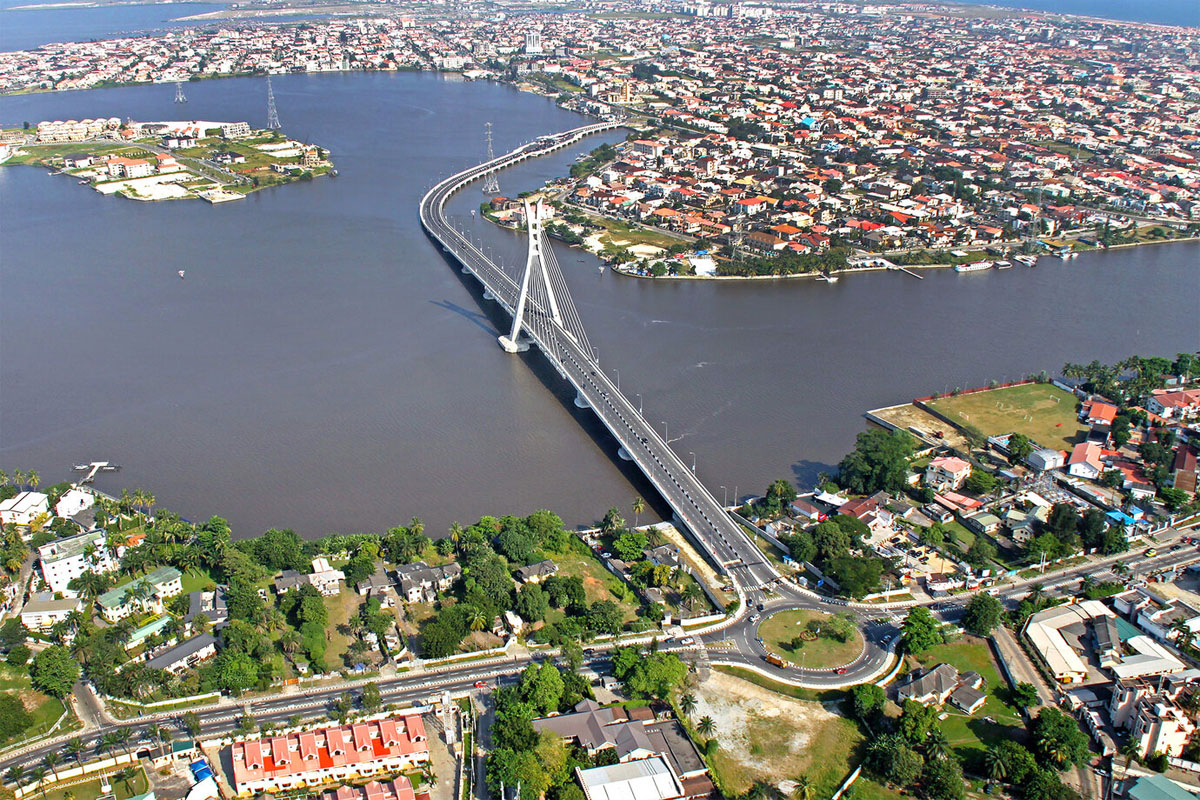
Lagos State Deputy Governor and All Progressives Congress (APC) governorship candidate, Dr Obafemi Hamzat, has defended the construction of the Lekki-Ikoyi Link Bridge following allegations of public funds mismanagement by the African Democratic Congress (ADC) deputy governorship candidate, Babatunde Gbadamosi.
The two politicians exchanged words over the cost, financing and toll collection arrangements for the 1.68-kilometre bridge, which was constructed during the administration of former Lagos State Governor Babatunde Fashola, when Hamzat served as Commissioner for Works.
Hamzat, in a statement on Monday, described the bridge as a landmark infrastructure project that had improved connectivity and eased traffic for commuters travelling within Lagos.
He said the decision to construct the bridge was driven by the need to reduce time spent in traffic, ease the burden on motorists and improve access to the Lekki Peninsula.
According to him, the project was delivered in collaboration with Fashola and represented an important milestone in Lagos State’s infrastructure development.
The deputy governor said the bridge had become an iconic feature of the Lagos skyline, arguing that its impact on commuters could not be dismissed by political criticism or attempts to rewrite history.
“Critics may try to rewrite history, make unfair comparisons or turn progress into a political argument but they cannot erase the difference this bridge has made in the lives of the millions of people who use it,” he said.
READ ALSO:
- Kidnappers Seize Husband, Five Others Conveying Wife’s Corpse, Demand N15m
- NLC-TUC Feud: Ajaero Questions Osifo’s Whereabouts, Challenges Immigration Service
- Police Report Seven Homicides In 24 Hours As N10,000 Dispute Claims Osun Man’s Life
Hamzat maintained that his commitment to public service remained focused on transparency, infrastructure development and improving the living conditions of Lagos residents.
He also challenged critics of the project to demonstrate their own contributions to infrastructure development.
“When anyone attempts to undermine projects that have made life better for Lagosians, one simple question is worth asking: What have they built?” he added.
However, Gbadamosi, in a statement published on October 31, questioned the cost of the 1.68-kilometre Lekki-Ikoyi Link Bridge, alleging that the project raised concerns about the management of public funds under the Fashola administration.
He recalled that Fashola announced in 2013 that the bridge had been fully funded by Lagos taxpayers at a cost of N29 billion, which Gbadamosi estimated at approximately $195 million.
To support his criticism, the ADC chieftain compared the Lagos project with China’s 42-kilometre Qingdao Jiaozhou Bay Bridge, which he said cost approximately $2.3 billion.
He argued that the Lekki-Ikoyi Bridge was considerably more expensive on a per-kilometre basis, putting its cost at approximately $143 million per kilometre, compared with $55 million for the Chinese bridge.
Gbadamosi also questioned the arrangement that allowed a private company to collect tolls on the Lekki-Ikoyi Bridge, alleging that the company did not finance its construction.
The toll collection arrangement has been a subject of public debate, with the Lekki Concession Company (LCC) officially identified as the operator of the bridge’s toll plaza since June 2016.
Lekki-Ikoyi Bridge: Hamzat, Gbadamosi Clash Over N29bn Cost, Toll Collection
Politics
2027: Datti Baba-Ahmed Threatens to Expose More Secrets About Peter Obi, Warns Obidients
2027: Datti Baba-Ahmed Threatens to Expose More Secrets About Peter Obi, Warns Obidients
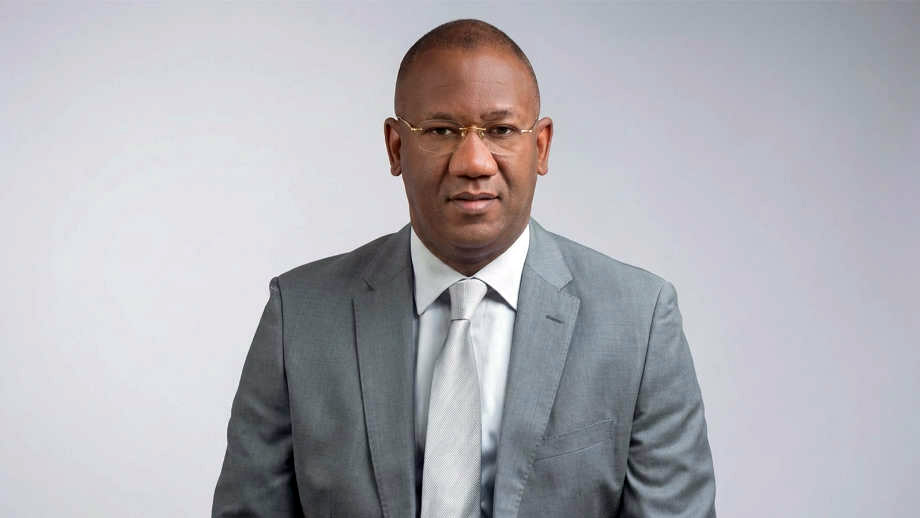
Former Labour Party vice-presidential candidate, Yusuf Datti Baba-Ahmed, has warned supporters of Peter Obi, popularly known as Obidients, against attacking him over his recent comments about the former Anambra State governor, threatening to make further damaging revelations about the 2023 presidential campaign.
Baba-Ahmed, who served as Obi’s running mate in the 2023 presidential election, said he had more information to disclose about what transpired during their political partnership, insisting that attacks from Obi’s supporters would not silence him.
He made the remarks during an interview with Symfoni TV, where he accused some Obidients of attacking anyone who expresses views contrary to their expectations about their political principal.
“Obidients are always eager to attack me. I have more damaging things to reveal. You attack me because I told you the truth about Peter Obi,” he said.
The former senator’s outburst comes amid growing disagreements over Peter Obi’s political calculations ahead of the 2027 general elections, particularly discussions surrounding a possible alliance or presidential ticket involving former Kano State Governor, Rabiu Kwankwaso.
Baba-Ahmed had argued that an Obi-Kwankwaso ticket might struggle to attract sufficient support in Northern Nigeria, claiming that his experience during the 2023 campaign had exposed significant challenges facing Obi in the region.
He recalled that shortly after joining Obi on the Labour Party ticket in 2022, he had to contend with controversies surrounding allegations that northerners were required to obtain identification cards in Anambra State, the demolition of a mosque and the leaked telephone conversation between Obi and the founder of Living Faith Church, Bishop David Oyedepo.
According to Baba-Ahmed, these controversies created difficulties for the campaign in Northern Nigeria, forcing him to personally undertake efforts to address the concerns and convince voters to support Obi.
He claimed that he took Obi to several locations, including Borno, Kano and Zaria, to counter the allegations and improve his acceptance among northern voters.
Baba-Ahmed maintained that his assessment of the political challenges surrounding Obi remained valid, insisting that his comments were based on his personal experience as the former presidential candidate’s running mate.
His latest remarks have further exposed the growing tension between him and sections of the Obidient movement, whose members have criticised him over his perceived opposition to Obi’s political decisions.
The former vice-presidential candidate, however, insisted that he would not be intimidated into silence, warning that he had more revelations to make if the attacks against him continued.
The development adds another dimension to the political realignments and disagreements unfolding among opposition figures as preparations gradually gather momentum ahead of the 2027 general election.
The allegations and recollections concerning the 2023 campaign remain Baba-Ahmed’s claims and have not been independently established.
2027: Datti Baba-Ahmed Threatens to Expose More Secrets About Peter Obi, Warns Obidients
Politics
Umahi Disowns Peter Obi, Says South East Has No Presidential Candidate for 2027
Umahi Disowns Peter Obi, Says South East Has No Presidential Candidate for 2027
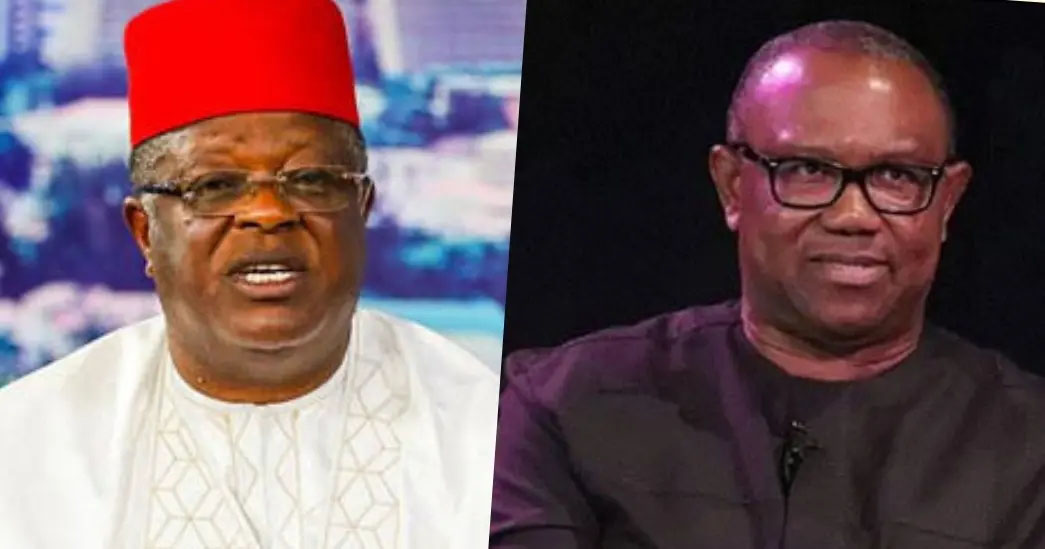
ABUJA – The Minister of Works, Senator David Umahi, has stirred the political landscape ahead of the 2027 general elections, declaring that the South-East geopolitical zone currently has no presidential candidate.
Speaking during a political event on Sunday, Umahi specifically dismissed the presidential ambitions of Mr. Peter Obi, the candidate of the Nigeria Democratic Congress (NDC), stating that the former Anambra State Governor does not represent the interest of the region.
The Minister’s comments come amid rising political realignments as the nation looks toward the next electoral cycle. While Peter Obi, who was the Labour Party (LP) flagbearer in the 2023 election, has maintained a strong grassroots following, Umahi insisted that the South-East does not have a “consensus” candidate.
Addressing supporters, Umahi, who is a chieftain of the ruling All Progressives Congress (APC), emphasized that the South-East is not yet ready to project a candidate for the presidency. He described the NDC and its candidate as lacking the structure and national appeal required to secure the highest office in the land.
READ ALSO:
- NDLEA Arrests Woman With 266 Rounds of Live AK-47 Ammunition on Abuja-Kaduna Expressway
- How 40 Motorcycles-Riding Bandits Ambushed, Brutalised Six Kwara Security Operatives
- Nigeria’s Auto Dealers Face New Challenge as After-Sales Service Takes Centre Stage
“Let me be clear: there is no presidential candidate in the South-East in the 2027 general election,” Umahi stated. “We are not just looking for a candidate; we are looking for a President. As it stands, the region has not produced a candidate that we can all rally around.”
The Minister’s dismissal of Obi is seen as a significant political statement, highlighting the ongoing fragmentation within the South-East political elite. While Obi enjoys a massive cult-like following—often referred to as the “Obidient” movement—his relationship with key political figures in the region, particularly those in the APC, has soured since the 2023 elections.
Umahi’s remarks suggest a strategic shift by the ruling party to consolidate its grip on the South-East, potentially sidelining the Labour Party/NDC influence in the region. By declaring that there is “no candidate,” Umahi may be signaling that the APC is open to negotiations or that the region should align with the national ruling party to secure developmental benefits, rather than running a “lone race” that may end in defeat.
Political analysts suggest that Umahi’s statement is a direct attack on the viability of the NDC and Peter Obi’s renewed bid. It remains to be seen how Peter Obi’s supporters and the leadership of the NDC will respond to the Minister’s assertion that the South-East has no candidate.
As the 2027 elections draw closer, the battle for the soul of the South-East—and the definition of its true political leadership—is clearly heating up.
Umahi Disowns Peter Obi, Says South East Has No Presidential Candidate for 2027
-
 metro3 days ago
Ogun Murder: Suspect Reveals How He Strangled, Macheted Retired Civil Servant Over N3.45m
-

 International2 days ago
Romance Scam: FBI Declares Nigerian Woman Wanted, Offers ₦6.7m Reward
-
 metro2 days ago
₦50,000 Monthly Relief: FG Begins Cash Payments to Vulnerable Nigerians
-
 metro3 days ago
N100,000 Deposit: FG Opens Homeownership Window for Teachers, Nurses, Police Officers
-
 Politics2 days ago
2027: G100 Coalition Moves to Unite Opposition as Leaders Meet Cardinal Onaiyekan
-
 Politics2 days ago
2027: INEC Rejects Adebutu, Gwarzo, Clears Pantami as Ogun, Kano Opposition Parties Face Setback
-
 metro3 days ago
Ghanaian Teen Chased, Shot Dead on Way to School in New York
-

 News2 days ago
Breaking: Two Fresh Ebola Cases Emerge in North-East, says NCDC, begins test