

Education
Varsity strike may continue as non-academic unions reject FG-ASUU deal

- Protest N40bn earned allowances sharing formula
The expectation of academic activities resuming at the Nigerian public universities after Wednesday’s suspension of the protracted strike by lecturers may not materialise as three non-academic unions have kicked against the N40bn earned academic allowance deal sealed by the Federal Government and the lecturers’ union.
The three unions, the Senior Staff Association of Nigeria Universities, (SSANU); Non-Academic Staff Union of Educational and Associated Institutions (NASU) and the National Association of Academic Technologists (NAAT), said they would not resume in January when universities reopen unless the Federal Government corrected the “imbalance.”
They accused the government of allocating about 75 per cent of the N40 billion EAA to members of the Academic Staff Union of Universities, leaving members of the three other unions with only 25 per cent.
National President of NAAT Ibeji Nwokomma said anyone thinking that the non-teaching staff unions in the universities would resume with the recent development was day-dreaming
He said the discrepancy in the sharing of the N40bn contradicted the Memorandum of Understanding (MoU) signed between the Federal government and NAAT on November 18 during a conciliatory meeting called by the Federal Ministry of Labour and Employment.
Nwokoma said, “My union is rejecting the sharing formula of the earned allowances as it is being done by the government.
“Government has allocated 75 per cent to ASUU and 25 per cent to all other non-teaching unions in the universities. This is grossly inadequate.
“That is robbing Peter to pay Paul and using divide and rule in the university system. No union, not even ASUU, has the monopoly of opening or closing of schools through strike. Other unions also have that capacity to ensure that the system does not work.
“Secondly, my union, ASUU and other unions negotiated with the government, so, payment of Earned Allowances will be based on unions, it should be on the basis of the 2009 agreement; that is where the Earned Allowances is derived from. Lumping my union with other non-teaching staff is totally unacceptable to us.
“We have an MoU with the government just signed on November 15, which says that government should clearly define what should go to each union and government agreed that it was going to do that and today they just shared the money anyhow without adhering to the MoU.
“My union is asking that our own Earned Allowances should be specified, whatever it is should be specified just like they did to ASUU. If nothing is done, we will close down the system until we are fairly treated.”
National President of SSANU, Haruna Ibrahim, said his union would not take the lopsided sharing formula.
He said, “I believe that this remains a rumour even though I know it could be true. I have seen 75 per cent and 25 per cent.
“We have stated in no uncertain terms that we will not take this kind of lopsided allocations again because what is the scientific measurement used to give this money. We have stated before now that the least we can take is 50-50; they are not more in numbers.
“If they give for example 60-40, do you think the noise will be there? Government does not want peace if it is giving 75 per cent to only one union and giving 25 per cent to three unions. Does it make sense?”
“Certainly, my members are more than willing to down tools if this becomes a reality.”
The Federal Government has agreed to pay all withheld salaries of the ASUU members who had not enrolled in the Integrated Personnel and Payroll Information System (IPPIS) between December to January, 2021.
The government, through the Office of the Accountant General of the Federation also agreed to release the N40bn as the EAA by end of this month.
It offered to release N30bn for revitalization of the universities as part of one tranche of N220bn on or before January 31, 2021 as a sign of commitment to the MoU it signed in 2013.
The government said the withheld salaries would be paid in instalment because of “special management of funds.”
It also agreed that all members of ASUU who had been omitted from payment between February and June and from June to December should be paid their salaries as soon as their respective universities updated their lists. The list includes those on sabbatical leave.
According to the federal government, payment of check off dues of ASUU will start by next week.
These are some of the agreements reached between the leadership of ASUU and the government team led by Minister of Labour and Employment, Dr Chris Ngige, at a meeting on Tuesday.









Education
NELFUND Warns Schools: Student Loans Are Voluntary, Not Compulsory

NELFUND Warns Schools: Student Loans Are Voluntary, Not Compulsory
The Nigerian Education Loan Fund (NELFUND) has warned tertiary institutions against compelling students to apply for the Federal Government’s student loan scheme, insisting that accessing the facility is voluntary and not a condition for studying in Nigerian institutions.
The clarification followed controversy over a directive reportedly issued by the Enugu State College of Education (Technical), Enugu, requiring all fresh and returning students to apply for and access the loan for the 2026/2027 academic session.
In a statement issued in Abuja on Wednesday, October 21, 2026, NELFUND said students should determine whether to apply based on their individual financial circumstances and genuine need for assistance.
The statement was signed by the fund’s Director of Strategic Communications, Oseyemi Oluwatuyi.
NELFUND explained that the student loan scheme was established to remove financial barriers to higher education, promote equal access to learning opportunities and ensure that eligible Nigerians were not denied education because of financial difficulties.
It stressed that students who could independently afford their educational expenses were under no obligation to apply for or access the facility.
“The student loan scheme is a support mechanism, not an obligation,” the fund stated.
NELFUND added that making the loan compulsory for every student, regardless of their financial circumstances, would defeat the purpose of the programme.
READ ALSO:
- Breaking: Afenifere Leader Pa Fasoranti Dies at 100
- Army Major, Soldiers Killed in ISWAP Ambush in Yobe State
- Chaos in Abeokuta as Algerian Fans Attack Coach, Vandalise Stadium After Rangers Defeat
According to the agency, its objective is not to encourage indiscriminate borrowing but to ensure that eligible students who genuinely require financial assistance can access support to pursue their academic ambitions.
The clarification comes amid concerns over an internal memorandum reportedly issued by the management of the Enugu State College of Education (Technical).
The memorandum, dated October 6, 2026, and signed by the institution’s Acting Registrar, Patrick A. Aneke, reportedly directed all students in its Nigeria Certificate in Education and degree programmes to apply for the loan for the 2026/2027 academic session.
It also instructed deans, directors, heads of departments and student representatives to communicate the directive to students and asked them to visit the institution’s NELFUND desk officer for assistance with applications.
Reports surrounding the directive indicated that students who failed to comply could face restrictions on taking examinations or continuing their studies, raising concerns about the implications of compelling students to take loans.
NELFUND’s clarification reinforces the distinction between making financial assistance available to eligible students and requiring every student to borrow, irrespective of whether they need the support.
The fund further explained that although its loans are interest-free, beneficiaries are required to repay them in accordance with the provisions of the Student Loans Act.
It therefore urged prospective applicants to understand the scheme’s terms and conditions and make informed decisions before applying.
NELFUND also called on tertiary institutions, student leaders and other stakeholders to provide accurate information about the programme and guide students who require financial assistance through the application process.
The agency reiterated its commitment to ensuring that financial hardship does not prevent eligible Nigerians from pursuing higher education.
The development has renewed attention on the implementation of the Federal Government’s student loan programme and the need for institutions to ensure that students understand both the benefits and repayment obligations associated with the facility.
NELFUND maintained that the scheme should remain an avenue for financial support for students who need it, rather than a compulsory borrowing arrangement imposed on the entire student population.
NELFUND Warns Schools: Student Loans Are Voluntary, Not Compulsory
Education
Tinubu Scraps Recruitment Waiver Requirement for Federal Universities
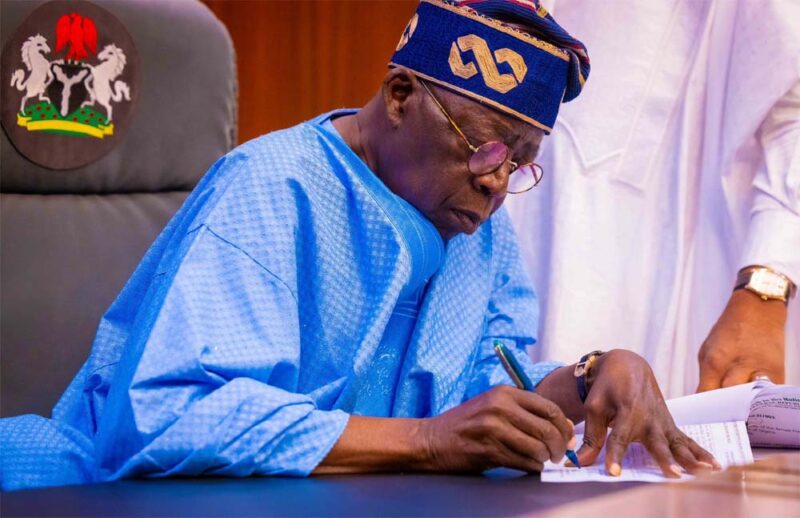
President Bola Ahmed Tinubu has exempted federal universities from the requirement to obtain recruitment waivers from the Office of the Head of the Civil Service of the Federation (OHCSF) before employing new staff, in a move aimed at strengthening institutional autonomy and easing recruitment bottlenecks in Nigeria’s tertiary education sector.
Tinubu announced the policy change on Saturday, October 17, 2026, at the maiden convocation ceremony of the Federal University of Health Sciences, Azare (FUHSA), in Bauchi State. He was represented at the event by the Executive Secretary of the Tertiary Education Trust Fund (TETFund), Sonny Echono.
The President, who serves as Visitor to all federal universities, said the reform was reflected in recent agreements signed between the Federal Government and university staff unions.
According to him, the decision would empower the Federal Ministry of Education and university governing councils to take responsibility for recruitment decisions and respond more effectively to their institutions’ staffing needs.
“This measure empowers the Federal Ministry of Education and university Governing Councils to discharge their respective responsibilities in staff recruitment, enabling institutions to respond more effectively to their legitimate manpower needs,” Tinubu said.
The removal of the waiver requirement is expected to reduce administrative delays that can hinder universities from filling vacant positions, replacing retiring employees and recruiting additional academic and non-academic personnel.
Under the previous arrangement, federal institutions could be required to obtain clearance from the OHCSF before recruiting new employees. Removing this requirement for federal universities is intended to give university authorities greater flexibility in addressing staffing shortages and managing their operations.
READ ALSO:
- FG Begins Rollout of 3,700 Telecom Towers to Connect 20m Nigerians
- 37 Miners’ Deaths in Custody: Suspended NSCDC Commandant Admits Tragedy Was Avoidable, Apologises to Families
- Singlet Dispute Turns Deadly as 23-Year-Old Kills Elder Brother in Kaduna
However, the reform does not mean that universities are exempt from all public-sector recruitment rules or that appointments can be made without appropriate institutional procedures.
Tinubu said the policy formed part of his administration’s broader efforts to strengthen university autonomy, improve personnel management and create a more conducive environment for teaching, research, innovation and service delivery.
The President also disclosed that the Federal Government was working to improve personnel and payroll administration across tertiary institutions by migrating their staff from the Integrated Personnel and Payroll Information System (IPPIS) to the Government Integrated Financial Management Information System (GIFMIS).
He said the transition was intended to improve payroll efficiency, strengthen transparency and accountability, ensure timely and accurate salary payments, and accommodate the operational peculiarities of universities and other tertiary institutions.
The proposed changes come amid longstanding discussions about the autonomy of Nigerian universities, including their ability to manage staffing, finances and other internal administrative responsibilities.
For universities struggling with shortages of lecturers, researchers, laboratory personnel and other essential workers, the removal of the recruitment waiver requirement could make it easier to respond to vacancies, subject to available funding and applicable recruitment procedures.
Beyond recruitment and payroll reforms, Tinubu reaffirmed the Federal Government’s commitment to investing in tertiary education infrastructure, research and staff welfare.
He disclosed that FUHSA had received an initial ₦8 billion intervention through TETFund to support its establishment. He said the investment followed lessons from the COVID-19 pandemic, which exposed weaknesses in Nigeria’s healthcare system and highlighted the need to strengthen medical education and research capacity.
According to the President, further support would be channelled to the university through TETFund’s regular and special interventions, alongside allocations in the 2026 national budget for roads, lecture halls, laboratories and utility vehicles.
Tinubu also announced that ₦10 billion had been provided for the National Research Fund in 2026, urging universities, particularly specialised institutions such as FUHSA, to pursue research that addresses Nigeria’s pressing healthcare challenges.
On staff welfare, he said the Federal Government had signed agreements with academic and non-academic unions covering the payment of the Consolidated Academic Tools Allowance (CATA) and the Consolidated Non-Teaching Tools Allowance (CONTTA), effective January 1, 2026.
He said the agreements recognised the distinct but complementary contributions of teaching and non-teaching personnel to the effective running of tertiary institutions.
Tinubu further disclosed that 1,798 FUHSA students, representing 43 per cent of the institution’s student population, had secured support from the Nigerian Education Loan Fund (NELFUND) for the 2025/2026 academic session.
The President congratulated the university’s 50 pioneer graduates and urged them to apply their knowledge and professional skills to improving healthcare delivery, particularly for vulnerable Nigerians.
He also encouraged FUHSA to strengthen partnerships with international institutions, including the University of Miami, Boston University and Universiti Sains Malaysia, while ensuring that such collaborations translate into measurable improvements in teaching, research and healthcare services.
The recruitment reform is expected to attract attention from university administrators, lecturers, non-academic staff and prospective employees as institutions assess how the new arrangement will affect recruitment timelines and staffing priorities.
Its impact will ultimately depend on how effectively university governing councils and the Federal Ministry of Education implement the policy, alongside adequate funding, transparent recruitment processes and effective oversight.
Tinubu Scraps Recruitment Waiver Requirement for Federal Universities
Education
JAMB Reopens NIN Alignment Window, Gives Candidates One More Chance to Correct Data

The Joint Admissions and Matriculation Board (JAMB) has reopened its National Identification Number (NIN) alignment service, giving eligible candidates another opportunity to correct discrepancies between their examination records and information held by the National Identity Management Commission (NIMC).
The examination body announced the development on Friday, October 16, 2026, through its official social media account, urging candidates with mismatched personal details to take advantage of the reopening and ensure their records are consistent.
However, JAMB warned that the opportunity is a one-time exercise and that submitting an application does not guarantee approval. All requests will be subjected to verification before a decision is made.
The board advised candidates to correct any errors in their NIN records through NIMC before applying to align their details with their JAMB profiles.
Applicants were also urged to review their information carefully and select every correction they require in a single submission to avoid mistakes that could affect the outcome of their applications.
READ ALSO:
- Terrorists Abduct Catholic Priest in Benue as Police Launch Rescue Operation
- 2027: Kwankwaso Signals Fuel Subsidy Comeback as NDC Vows to Crash Petrol Prices
- NAF Deploys Pumps in Desperate Push to Recover Submerged Aircraft After Crash Killed 25
The discrepancies may involve names, dates of birth and other personal information, depending on the fields approved for correction under the service.
JAMB explained that the application procedure, eligible fields, verification requirements and other important details had been outlined in an accompanying episode of its JAMB Explained video series.
Candidates were advised to watch the official guide and follow the prescribed steps before submitting their applications. The board also cautioned against rushing the process or providing incomplete information.
To avoid complications, candidates should first ensure that any approved changes to their NIN records have been fully reflected in the NIMC database before beginning the alignment process with JAMB.
Those who need to update their NIN information can use the NIMC self-service modification portal at https://selfservicemodification.nimc.gov.ng or visit an authorised NIMC centre, subject to the applicable requirements.
After correcting their NIN details, candidates should follow the application channel and instructions specified in JAMB’s official announcement and accompanying video. They should rely on the board’s official website, https://www.jamb.gov.ng, and its e-Facility portal, https://efacility.jamb.gov.ng, for verified guidance.
The reopening is intended to improve the accuracy and consistency of personal records used in Nigeria’s tertiary admission process, where discrepancies between examination and national identity records can create verification difficulties.
JAMB urged candidates to act carefully, ensure that their information is accurate and wait for official confirmation rather than assume that their applications have been approved.
JAMB Reopens NIN Alignment Window, Gives Candidates One More Chance to Correct Data
-

 metro3 days ago
Army Major, Soldiers Killed in ISWAP Ambush in Yobe State
-

 metro3 days ago
Breaking: Afenifere Leader Pa Fasoranti Dies at 100
-

 metro2 days ago
Atiku: US Lobbying Firm Raises Alarm Over Alleged Assassination Plot
-

 metro2 days ago
Five Arraigned Over Kidnapping of 20 Prospective NYSC Members in Imo
-

 metro2 days ago
‘We Don’t Know What Else to Do’ — Mother Begs for Release of Abducted Children
-

 metro3 days ago
‘I Never Asked Them to Abandon Loved Ones’ — Obi Clarifies Diaspora Remarks
-

 Auto3 days ago
Beyond the Showroom: Why After-Sales Service Will Define Auto Industry Winners
-

 Auto2 days ago
Happening now: Hyundai unveiling of Mufasa and Grand Creta
You must be logged in to post a comment Login