

metro
Naira Scarcity: President’s silence is inglorious – Right group
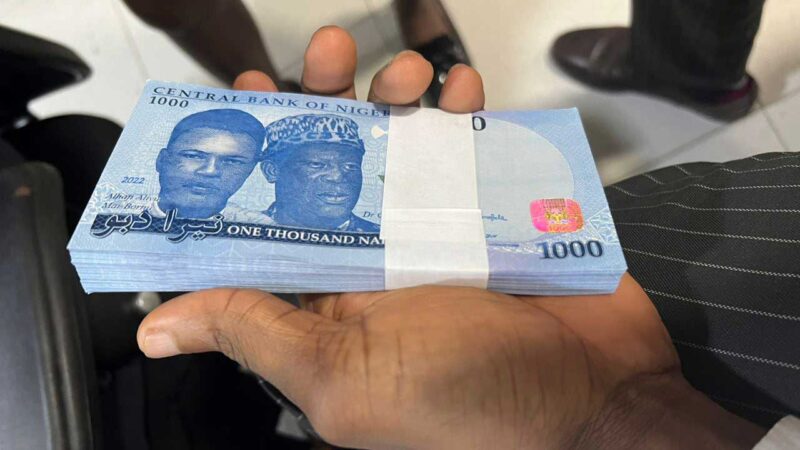
It is no longer news that Nigeria may soon swim in self-induced recession as a result of low trading activities caused by paucity of Naira notes which attracted wide outrage nationwide. Rights and Freedom Advocates (RIFA) noted, as a continuum of the earlier criticism of the policy, that the precarious situation led to protests and destructions of properties in some parts of the Country as a response to the anti-people Naira redesign policy of the Buhari-led government. It is also noteworthy that some Governors and patriotic citizens rose to the challenge culminating in the Supreme Court “relief judgment” that saved the Nation from executive recklessness. As if the Central Bank of Nigeria (CBN) Governor Emefiele has hypnotized everyone in the Buhari administration, none has raised a voice against the callous policy. In fact, the Attorney-General of the Federation that is supposed to defend the people is also defending the Emefiele toxicnomics (any policy that affects economic activities retrogressively)
In the meantime, on February 3, 2023, President Muhammadu Buhari was quoted to have requested seven days to do the needful. The President requested grace period expired on Friday February 10,2023. Unfortunately, till date the President is yet to address the Nation on what has been done to assure Nigerians of any meaningful action taken to ameliorate the economic situations in the Country. Or was the President oblivious of the need to give feedback to citizens after honouring him with cessation of protests? Is the President unmindful of the implications of his silence and or his associates do not know they need to ensure the President addresses the Nation in this critical situation assuming the President is unperturbed by the need to speak to the people?
READ ALSO:
- I’ll be hard on criminals, their networks, deviant policemen —New Lagos CP vows
- Old naira notes no longer legal tender, CBN warns Nigerians, banks despite S’ Court judgment
- Agba Jalingo to Ben Ayade, Police: Stop harassing, intimidating me with spurious criminal charges
The President at this crucial time must speak out as his silence is no longer golden. He should let the citizens know their fate as many banks and traders reject the old Naira notes against the pronouncement of the Supreme Court while many banks now hawk and trade new Naira notes even when Section 21(4) of the CBN Act abhor such practice when it provides that “it shall be an offence punishable under sub section 1 of the Section for any person to hawk, sell or otherwise trade in Naira notes, coins or any other note issued by the Bank”. Is this how the Nation will remain? Even though CBN has declared that old Naira notes are no longer legal tender, the law permits the citizens to take the one at their disposal to the banks and have it redeemed at any period. Nonetheless, the impunity which characterized Emefiele approach to change of the Naira notes deserves patriotic legal resistance as if this was the first time the Nation was changing its currencies. This is necessary so that Emefiele would not constitute another clog in the wheel of the development of Nigeria.
Furthermore, section 20 (3) of the CBN Act 2007 provides “ Notwithstanding sub-sections (1) and (2) of this section, the Bank shall have power, if directed to do so by the President to do so and after giving reasonable notice in that behalf, to call in any of its notes or coins on payment of the face value thereof and any note or coin with respect to which a notice has been given under this sub-section, shall, on the expiration of the notice, cease to be legal tender, but, subject to section 22 of this Act, shall be redeemed by the Bank upon demand”. This shows that it is incumbent on all authorized banks to collect the old Naira notes even after expiration of the deadline and when such notes are taken to CBN by the banks, the CBN must collect it for redemption. So, the CBN Governor’s insensitive release on the plight of the people where he was insisting on not allowing people to have sufficient cash for their daily activities is simply anachronistic and barbaric. So, is it because there is no sanction that the Banks are acting ultra vires by rejecting what the laws oblige them to collect indefinitely or because the CBN head is an accomplice in the whole saga? If the banks reject the notes from the individuals, are citizens expected to take the notes to CBN offices for replacement when CBN offices are mainly in State capitals and FCT? Is CBN legally authorized to attend to individuals? If yes, would that not expose CBN to insecurity and endanger its staff and their properties? These and more questions beg for answers
READ ALSO:
- Over three months to go, Buhari constitutes presidential transition council
- Emefiele misled, CBN not independent, must obey S’Court order – Falana
- Fuel/naira scarcity: Lagos govt distributes food, other items to residents
Similarly, section 20(5) of the Act provides that “ any person who refuses to accept the Naira as a means of payment is guilty of an offence and liable on conviction to a fine of N50,000 or 6months imprisonment”. Therefore, the President must speak out and announce to the Nation serious sanctions awaiting any saboteur bank which may be acting contrary to the laws. The Federal Government should fine, in hundreds of millions or billions of Naira, any bank that refuses to collect the currency from the public even after the stipulated deadline because the CBN Act gives no specific time limit for the Central Bank to redeem the outdated notes in as much as it is not lost, stolen, mutilated or imperfect note or coin (Section 22 of the CBN Act).
Now, the President or any authorized government official must tell Nigerians the situation report on Naira notes availability and the way forward. Or does the President want to leave everyone in the quagmire? The government cannot remain silent at this moment and expects people not to vent their anger. Whatever consequence government silence generates should not be blamed on the citizens but the lackadaisical government which tries to abdicate its responsibilities. It is either the Government speaks to the people now on the situation of Naira notes on whether more notes have been printed, circulated or not and state how it has been trying to improve the imbroglio. Nonetheless, RIFA urge the citizens not to dance to the tune of the miscreants who only participate in protests to steal, rob or cause havoc which would be detrimental to societal stability. It should be noted properties destroyed in any protest would only enrich the wealthy more as none of the protesters may be given the contract to rehabilitate destroyed properties. Besides, public members making use of such destroyed banks, properties or public places would face more hardship by having to spend more to access services that should have been accessed nearby had those banks, properties or public institutions not destroyed by the hoodlums during purported protests. Protest is a legitimate means of resistance but it yields result only when applied according to rules of the game. It is on this ground RIFA call on Nigerians to protest reasonably by calling on those at the helm of affairs to do the needful to save the Nation from the consequences of the excruciating Naira redesign policy of Mr Emefiele who would remain in the history of the Country as the worst CBN Governor with toxicnomic policies
Luqman Soliu,
President,
Rights and Freedom Advocates (RIFA)



metro
Lagos Mob Sets BRT Bus Ablaze After Fatal Crash, Driver Rescued
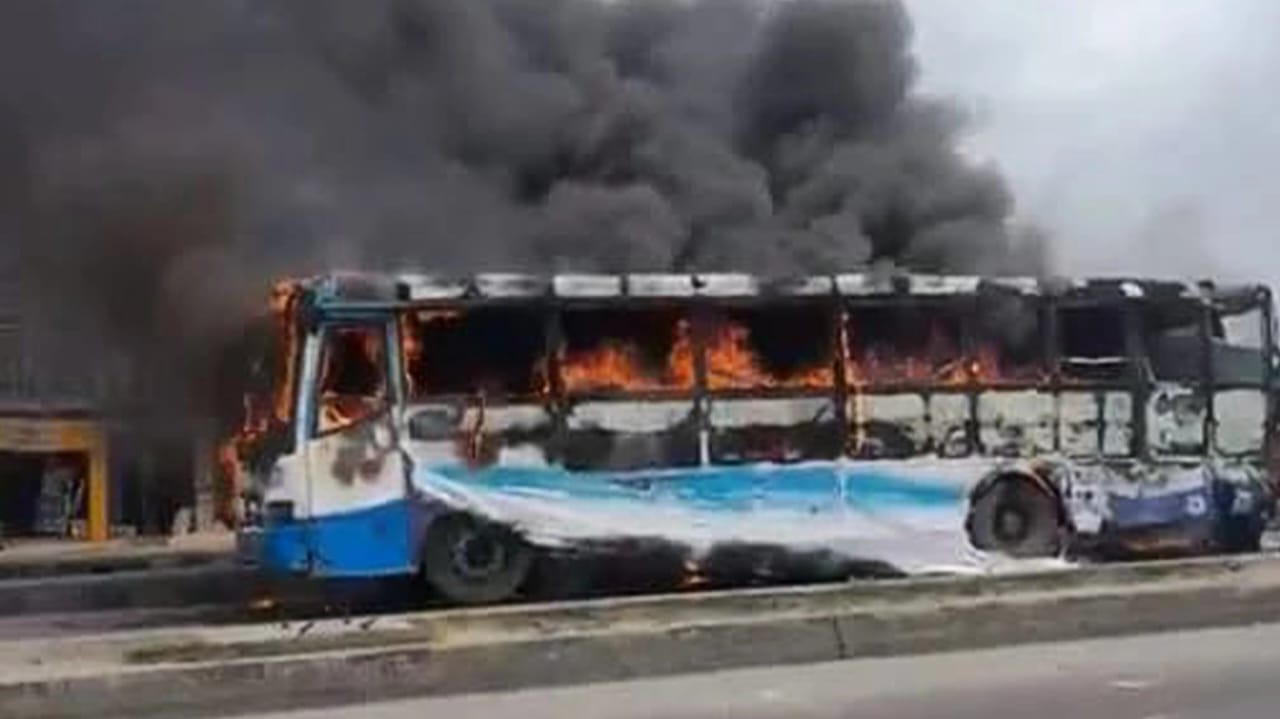
A Bus Rapid Transit (BRT) bus has been set ablaze by an angry mob in Ikorodu, Lagos State, following a road accident involving a commercial motorcyclist, popularly known as an Okada rider.
The incident occurred on Friday, October 16, around Ogolonto Bus Stop along Ikorodu Road, where the crowd reportedly attacked the bus driver before security operatives intervened to rescue him.
The circumstances surrounding the crash remained unclear, and the Lagos Metropolitan Area Transport Authority (LAMATA) said it could not confirm reports that the motorcyclist died in the incident.
Kolawole Ojelabi, LAMATA’s Head of Corporate Communication, confirmed that an accident had occurred between a BRT bus and a motorcycle on the BRT corridor. He said the motorcycle rider was reportedly using the dedicated bus lane, contrary to traffic regulations.
Ojelabi condemned the destruction of the bus, warning that the incident would affect public transportation in the area. According to him, the damaged vehicle would have served at least 400 Lagos residents daily.
READ ALSO:
- Trump’s White House Press Secretary Quits After Just Five Days as Credentials Storm Erupts
- Imodi-Ijebu Muslim Community Bets on 20 Chiefs to Drive Education, Economic Growth
- Suspended Archbishop Ibezim Drags Anglican Primate to Court, Challenges Six-Month Leave
The attack reportedly escalated after news of the collision spread, prompting a crowd to set the bus on fire. Police officers and personnel of the Lagos Neighbourhood Safety Corps (LNSC) intervened and rescued the driver from the angry crowd.
The Lagos State Fire and Rescue Service also responded to the emergency. Its spokesperson, Amodu Shakiru, said the service received a distress call at about 10:21 a.m. and that firefighters found the bus engulfed in flames on arrival. Firefighters subsequently worked to extinguish the blaze.
Shakiru confirmed that the driver had been beaten but was rescued by security operatives and received medical attention. He said he could not provide further details about the circumstances of the collision.
The identity of the motorcyclist and the precise cause of the crash had not been officially established in the reports available after the incident. It was also unclear whether anyone had been arrested over the burning of the bus.
The incident has renewed concerns about road safety, the use of dedicated BRT lanes and mob violence following road accidents. While fatal crashes can provoke anger and grief, attacking drivers and destroying public transport vehicles can endanger lives, disrupt services and impose additional costs on the public.
Authorities are expected to establish the circumstances of the accident and determine responsibility for the destruction of the bus.
Lagos Mob Sets BRT Bus Ablaze After Fatal Crash, Driver Rescued
metro
Imodi-Ijebu Muslim Community Bets on 20 Chiefs to Drive Education, Economic Growth
Imodi-Ijebu Muslim Community Bets on 20 Chiefs to Drive Education, Economic Growth
New chiefs urged to promote unity, shun partisan politics in mosques, invest in youth, Islamic education
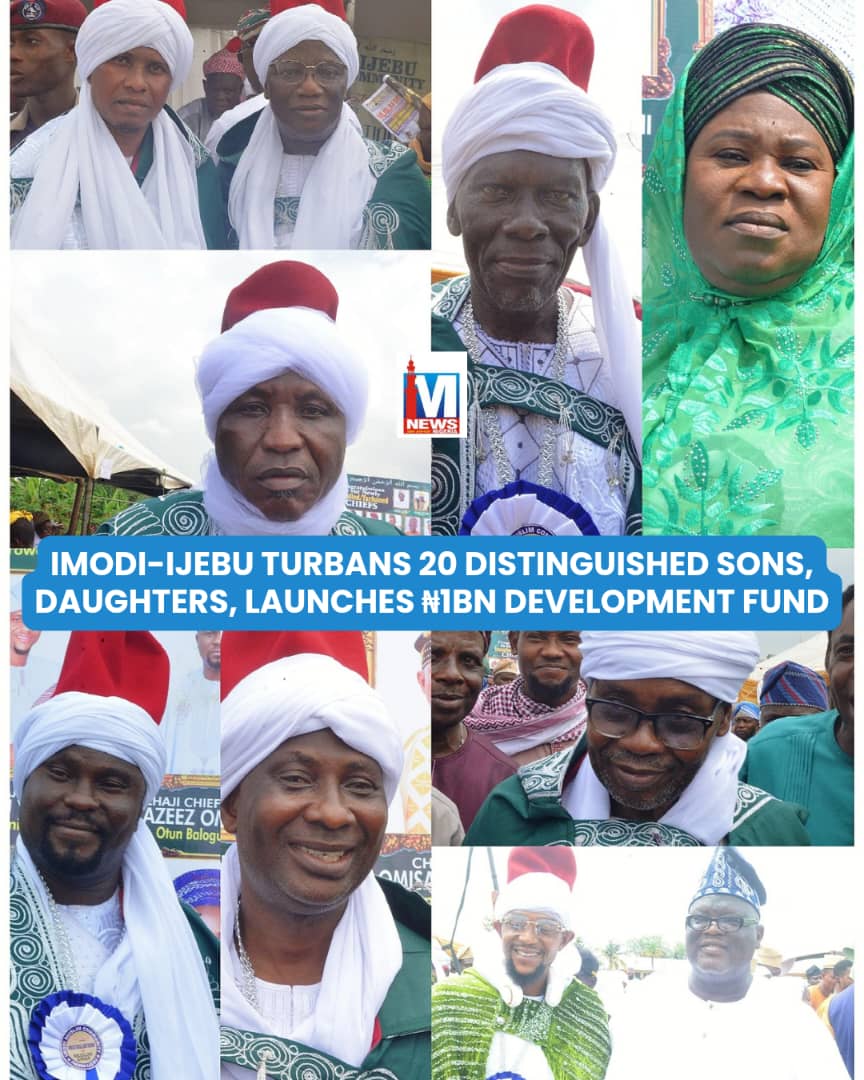
The ancient community of Imodi-Ijebu in Ogun State recently witnessed a blend of tradition, faith and renewed development aspirations as 20 distinguished sons and daughters were turbaned as chiefs of the Muslim community, with a ₦1bn fundraising drive launched to support education and empowerment initiatives.
Beyond the colourful ceremony and conferment of prestigious titles, the gathering presented an opportunity to redefine leadership within the community, with prominent Islamic scholars and community leaders challenging the new titleholders to translate their honours into tangible benefits for the people.
Held at the Tititlayo Agbaje Memorial Comprehensive High School, Imodi, the event brought together Islamic leaders, professionals, traditional titleholders and other stakeholders united by a common aspiration to strengthen the Muslim community and accelerate the development of the town.
At the heart of the ceremony was a strong message: the new titles must not become symbols of prestige alone but instruments for service, unity, religious advancement and social transformation.
The National Missioner of Ansar-Ud-Deen Society of Nigeria, Shaykh AbdurRahman Ahmad, set the tone with a warning against the intrusion of partisan politics into mosques, stressing that religious institutions must remain places of worship and unity rather than platforms for political mobilisation.
He reminded the newly turbaned chiefs that Muslims were entitled to support political parties of their choice, but cautioned that those occupying leadership positions must not exploit their influence to impose their political preferences on others.
“The chiefs should abstain from bringing politics into the mosque. Any Muslim is entitled to belong to whatever party he wants to belong to. A chief must not use his position to influence other members of the mosque to join his party,” he said.
Shaykh Ahmad also reminded the titleholders that their new positions came with significant responsibilities, urging them to exercise restraint, uphold exemplary conduct and deepen their knowledge of Islam.
He called on them to support the advancement of the religion by paying greater attention to the welfare of Islamic clerics, whose services remain central to the spiritual and social wellbeing of the Muslim community.
A call for accountable leadership
The Grand Mufti of the Conference of Islamic Organisations, Sheikh Dhikrullah Shafi’i, reinforced the message of responsibility, urging the new chiefs to protect the integrity of Islam, promote religious tolerance and discharge their duties with accountability.
READ ALSO:
- Suspended Archbishop Ibezim Drags Anglican Primate to Court, Challenges Six-Month Leave
- Toyin Abraham Breaks Silence as Leaked Audio Sparks Fresh Nollywood Feud
- DSS Arrests Maina’s Fugitive Son in Abuja After Six Years on the Run
Citing Qur’an 33:57, he emphasised the need for the titleholders to appreciate the consequences of their actions and ensure that their conduct advanced rather than undermined the interests of the religion.
For him, the responsibilities attached to the titles demanded more than public recognition. They required a conscious commitment to protecting Islamic values and creating an environment in which Muslims could deepen their understanding of the faith.
He proposed the establishment of an Islamic library to improve access to learning resources, encourage continuous religious education and provide members of the community with opportunities to expand their knowledge.
The proposal added an educational dimension to the broader development agenda emerging from the ceremony, underscoring the importance of knowledge in sustaining religious values and preparing future generations for leadership.
Former Chairman of the National Hajj Commission of Nigeria, Alhaji Zikrullah Hassan, also challenged the Muslim community to look beyond conventional religious activities and embrace a broader developmental role.
He said the mosque should serve as an institution for promoting education, economic development and youth empowerment, helping young people build confidence, acquire useful skills and prepare for the challenges of life.
His position aligned with the spirit of the ₦1bn fundraising initiative, which placed education and empowerment among the key priorities of the community.
New chiefs unveil their priorities
For some of the newly installed chiefs, the ceremony marked the beginning of a fresh commitment to community service, with promises ranging from strengthening Islamic institutions to improving social welfare and expanding economic opportunities.
Alhaji Ishaq Sanni, a retired director of NAHCON who was installed as Aare Adeen, said his immediate priority was to support the Central Mosque, promote unity among Muslim faithful and strengthen Islamic education.
He also pledged to work towards establishing a welfare system for the less privileged and widows, highlighting the need for religious leadership to respond to the everyday challenges confronting vulnerable members of society.
Sanni urged young people to take pride in their faith, pursue Western education, avoid social vices and contribute meaningfully to the development of Islam in Imodi.
His message reflected a wider concern expressed at the gathering: that religious identity, formal education and responsible citizenship should reinforce one another in preparing young people for the future.
Dr Abdulfattah Olufowobi, former Dean of the Faculty of Environmental Science at The Polytechnic, Ibadan, who was installed as Baba Adeen of Imodi, pledged to bring fresh ideas and positive change to the community.
READ ALSO:
- NAPTIP Raises Alarm as Parents Allegedly Trade Children for Sex, Arrests Woman in Abuja
- Tesla’s Flying Roadster Rekindles Race to Put Cars in the Sky
- Troops Crush Lakurawa Enclave in Sokoto, Kill Fighters, Destroy Terrorist Camps
He said he intended to promote unity within the Muslim Ummah and address the lingering hierarchical disagreements within the Council of Imodi Muslim Chiefs.
His remarks pointed to the importance of internal cohesion in enabling the community to pursue its development objectives effectively.
Alhaji Oduwole Azeez, installed as Otun Balogun Adeen, promised to advance Islam through personal example, support for Da’wah activities and investment in the next generation.
He stressed that honesty, integrity and the fear of Allah must define the conduct of Muslim leaders, adding that children should be grounded in the Qur’an and Sunnah to preserve the values of Islam.
From farming to digital skills
For Alhaji Tajudeen Adebanjo, Chief Correspondent with The Nation, who received the title of Giwa Adeeni, the development agenda must extend beyond religious affairs to the economic and social needs of residents.
He identified infrastructure, women and youth empowerment, information and communication technology education, agriculture and healthcare as priority areas requiring attention.
Adebanjo also advocated a renewed focus on farming, urging residents to explore agriculture as a viable source of income and employment.
He said efforts should be made to improve the movement of agricultural produce from Imodi to Lagos, where farmers could access larger markets and potentially earn better returns.
According to him, stronger connections to urban markets could help residents take advantage of the relatively lower cost of living in their community while building more sustainable livelihoods.
His proposals highlighted the importance of connecting local production with wider commercial opportunities, particularly for young people and households seeking alternative sources of income.
The 20 titleholders
The 20 distinguished sons and daughters honoured at the ceremony were Dr Abdulfattah Olufowobi, Baba Adeen of Imodi; Alhaji Ishaq Sanni, Aare Adeen; Alhaji Tajudeen Adebanjo, Giwa Adeeni; Chief Abdul Waheed Sanni, Otun Asinwaju Adeen; and Chief Azeezat Sanni, Ekerin Iya Sunnah.
Others were Alhaji Oduwole Azeez, Otun Balogun Adeen; Alhaja Khadijat Onabule, Eketa Iya Sunnah; Alhaji Ibraheem Mustapha, Otun Arowosadeen; Alhaji AbdulWakeel Baoku, Alatunse Adeen; and Alhaji AbdulMojeed Agbaje, Otun Mogaji Adeen.
The remaining honourees were Chief Alimot Oresajo, Otun Osupa Adeen; Alhaji Ismaheel Yekeen, Balogun Adinni; Alhaji Musiliyu Hussaini, Otun Giwa Adeen; Prince Abdul Rasheed Lawal, Sarumi Adeen; Chief Yunus Ahmed, Otun Aare Musulumi; and Chief Salamat Adesanya, Otun Agbesinga Adeen Obinrin.
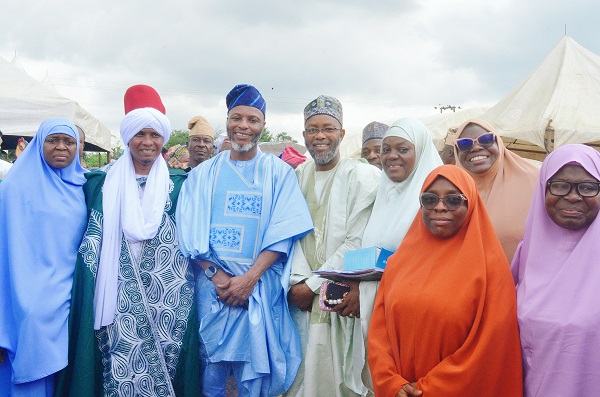
Also honoured were Chief Wosilat Oduba, Otun Iya Adeen; Chief Balikis Hassan, Otun Iyalode Adeen; Chief Jemilat Lawal, Otun Alatunse Adeen Obinrin; and Alhaja Risikat Arowolo, Otun Asiwaju Adeen Obinrin of the Imodi-Ijebu Muslim Community.
A legacy measured by service
As the celebrations gave way to the responsibilities ahead, the central challenge for the newly turbaned chiefs will be translating their promises into measurable progress.
The proposed ₦1bn fundraising initiative offers an opportunity to strengthen education, empower vulnerable groups and support community development, while calls for an Islamic library, youth engagement, agricultural investment and improved welfare point to a broad vision of progress.
The success of that vision will depend on the community’s ability to mobilise resources, sustain cooperation among its leaders and ensure that development priorities are matched by practical action.
For Imodi-Ijebu, therefore, the turbaning of 20 illustrious sons and daughters represents more than a celebration of achievement. It is a call for leadership that unites faith with service, tradition with innovation, and religious responsibility with the pursuit of a better future for the entire community.
Imodi-Ijebu Muslim Community Bets on 20 Chiefs to Drive Education, Economic Growth
metro
Suspended Archbishop Ibezim Drags Anglican Primate to Court, Challenges Six-Month Leave
Suspended Archbishop Ibezim Drags Anglican Primate to Court, Challenges Six-Month Leave
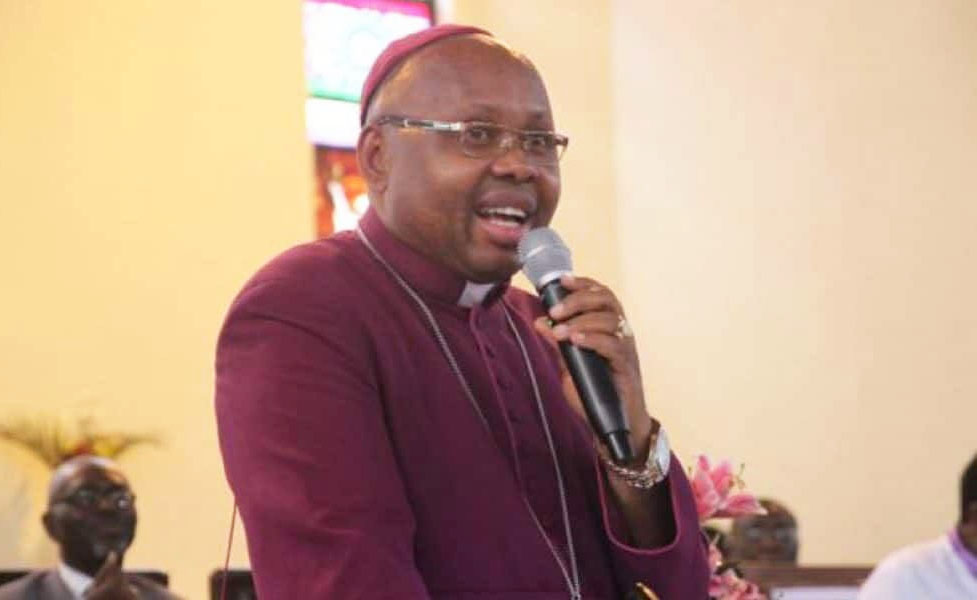
The suspended Archbishop of the Province of the Niger and Bishop of the Diocese of Awka, Most Reverend Alexander Chibuzo Ibezim, has sued the Primate of the Church of Nigeria (Anglican Communion), Most Reverend Henry C. Ndukuba, and the church’s Dean, Most Reverend Blessing Enyindah, seeking to stop further disciplinary action against him without compliance with the church’s constitution and canons.
Ibezim filed the suit at the Anambra State High Court in Awka, challenging the procedure adopted by the church leadership in investigating allegations involving his administration of the Diocese of Awka.
The case, marked A/371/2026, was instituted through an originating summons dated October 13, 2026, with a separate application seeking an interlocutory injunction against the defendants.
The Archbishop wants the court to determine the legal procedures governing disciplinary action against a serving bishop or archbishop under the Constitution and Canons of the Church of Nigeria (Anglican Communion).
He is specifically asking the court to restrain Ndukuba and Enyindah from issuing or implementing measures to suspend, remove, retire or dismiss him from his ecclesiastical offices while the substantive suit is pending.
READ ALSO:
- DSS Arrests Maina’s Fugitive Son in Abuja After Six Years on the Run
- NAPTIP Raises Alarm as Parents Allegedly Trade Children for Sex, Arrests Woman in Abuja
- Tesla’s Flying Roadster Rekindles Race to Put Cars in the Sky
Ibezim also wants the court to prevent the two church leaders from further threatening his removal or interfering in the affairs of the Diocese of Awka without his written consent.
The legal action follows the Primate’s directive that Ibezim proceed on six months’ compulsory leave with immediate effect while investigations into developments in the diocese continue.
In a letter dated October 13, Ndukuba said the decision was intended to allow a fair investigation and create an opportunity for peace and reconciliation within the diocese. He cited Section 29(1) of Chapter V of the church’s 2020 Constitution and Canons as the basis for the administrative measure.
The directive also barred Ibezim from officiating at activities of the Church of Nigeria, the Province of the Niger and the Diocese of Awka during the period.
Ndukuba appointed the Bishop of Aguata Diocese, The Right Reverend Samuel Ezeofor, as Supervising Bishop of the Diocese of Awka and Coordinating Bishop of the Province of the Niger during Ibezim’s absence. The Archbishop was instructed to hand over his responsibilities to Ezeofor.
The Primate maintained that the compulsory leave was an administrative step rather than a disciplinary sanction.
However, Ibezim’s court action challenges the authority and procedure for imposing disciplinary measures on a serving bishop, arguing that the church’s governing provisions must be followed.
In his originating summons, he cited Sections 55, 75 and 76 of the church’s constitution, alongside relevant provisions of Canon XVI, as the legal framework governing disciplinary proceedings against bishops and archbishops.
He is asking the court to determine whether the Primate can unilaterally impose disciplinary sanctions without following the procedures prescribed by those provisions.
The Archbishop has also challenged the composition of a visitation team established to investigate developments in the Diocese of Awka. The team, chaired by Enyindah, was constituted through a letter dated June 17, 2026.
Ibezim described the team’s constitution as unlawful, a claim that remains for the court to determine.
The dispute has also been linked to allegations that church land valued at more than ₦2 billion was sold without proper authorisation. Reports said the matter prompted a petition to the Economic and Financial Crimes Commission (EFCC).
However, the Primate’s letter directing Ibezim to proceed on leave did not specify the precise allegations against him or detail the findings of the visitation team.
The Archbishop’s lawsuit therefore raises questions about both the investigation process and the extent of the church leadership’s authority to impose administrative restrictions or disciplinary measures on a serving bishop.
The case comes amid growing tensions over the administration of the Awka Diocese, including the reported removal of the diocese’s former chancellor, retired Justice O.J. Okeke, by Ibezim.
The court’s eventual decision could clarify the interpretation of the church’s internal disciplinary rules and determine whether the challenged procedures complied with its governing constitution and canons.
As of the latest reports, the court had yet to determine the substantive questions raised in the suit or grant the final reliefs sought by the Archbishop. The allegations concerning the church land and the legality of the visitation team also remain unresolved.
The legal proceedings will determine the parties’ respective rights and obligations under the church’s governing provisions and applicable law.
Suspended Archbishop Ibezim Drags Anglican Primate to Court, Challenges Six-Month Leave
-

 metro1 day ago
₦130m Toyota Tundra Wrecked: Lagos Dealer Questions Police Over Suspect’s Release
-

 News1 day ago
₦200m Fake Alcohol Packaging Uncovered as NAFDAC Raids Aba Market
-
 metro2 days ago
Borno Woman Jailed Two Years for Sexual Exploitation of 16-Year-Old Girl
-

 metro2 days ago
Outrage as Residents Scoop Groundnut Oil From Lagos Tanker Crash Scene
-
 International3 days ago
Houthi Missile Targeting Riyadh Shot Down as Debris Injures Four, Damages 15 Homes
-
 International3 days ago
Nigeria Secures UN Human Rights Council Seat With 172 Votes
-
 Health3 days ago
Cosmetics Top Fake Products as NAFDAC Seals 179 Establishments, Arrests 52
-

 Sports23 hours ago
Real Madrid Demand Tebas’ Exit After Explosive Nazi Propaganda Row