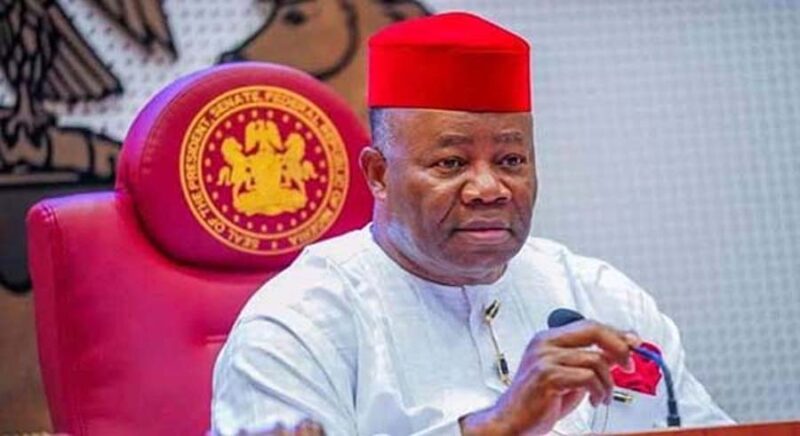
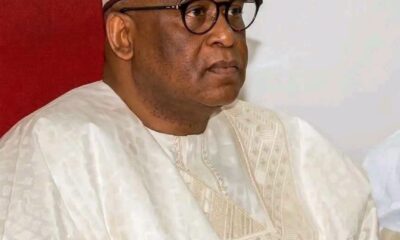
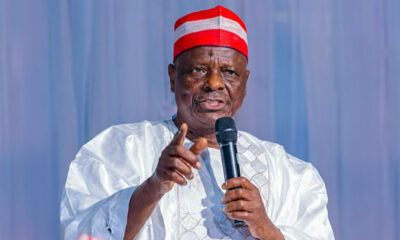
Senate President Godswill Akpabio is facing growing criticism over efforts to secure another term in office, following a controversial move by the current Senate to endorse the return of its leadership in the 11th National Assembly.
The controversy erupted after senators declared that there was “no vacancy” in the Senate presidency, a position critics have described as undemocratic and an attempt to influence the leadership of a future legislature before Nigerians elect a new National Assembly.
The development has intensified political discussions ahead of the 2027 general elections, with questions being raised about the independence of the legislature, the authority of incoming senators and the growing contest for control of the Senate.
At its sitting on Thursday, October 15, 2026, the Senate backed Akpabio’s return as Senate President in the next National Assembly, which is expected to be inaugurated in June 2027.
The motion was moved by Senate Chief Whip Tahir Monguno and seconded by Senator Cyril Fasuyi. It received majority support through a voice vote.
The resolution also endorsed Deputy Senate President Barau Jibrin and other principal officers for another term, subject to their re-election into the Senate.
However, the move has drawn objections from critics who argue that the leadership of the 11th Senate should be determined by the lawmakers elected into the chamber, rather than through a resolution adopted by the outgoing Senate.
READ ALSO:
One of the critics, identified as Epelle in reports, described the move as an affront to democratic principles, arguing that the Senate presidency was not a hereditary position that could be reserved for an incumbent.
Epelle maintained that the office must be contested and decided by senators in accordance with the rules and democratic procedures governing the National Assembly.
The Legislative Advocacy Network (LAN) has also opposed the move. Its coordinator, Benjamin Joseph, argued that the leadership of the next National Assembly should emerge from considerations such as legislative performance, institutional independence and public confidence, rather than political loyalty or the desire to retain existing officeholders.
The criticism centres on whether the current Senate can legitimately declare its leadership positions effectively reserved before the next general election and the inauguration of a new legislature.
Although the resolution signals support for Akpabio within the current Senate, it does not automatically guarantee his return. The next Senate will have its own membership, and its elected members will determine who occupies the offices of Senate President and Deputy Senate President.
Akpabio has meanwhile stepped up efforts to secure political backing for his second-term ambition. At the inauguration of the APC Presidential Campaign Council, he appealed to President Bola Ahmed Tinubu to support his bid to return as Senate President in 2027.
His appeal has added another dimension to the debate over the influence of the Presidency and the ruling All Progressives Congress (APC) in determining the leadership of the National Assembly.
Akpabio has also warned governors against seeking other political offices while still occupying their current positions. The remarks were widely interpreted as a warning directed at Imo State Governor Hope Uzodimma, who is seeking election to represent Imo West Senatorial District in 2027.
Uzodimma’s senatorial ambition has fuelled speculation about a possible contest for the Senate presidency if he wins a seat in the next National Assembly. Reports have also highlighted opposition from Federal Capital Territory Minister Nyesom Wike, who has said he would not support Uzodimma’s reported ambition to lead the Senate.
The emerging rivalry underscores the political calculations surrounding the next Senate leadership, particularly within the APC, where support from party leaders and influential political figures could shape negotiations but cannot replace the formal choice of senators.
For Akpabio, securing another term will depend not only on his political alliances but also on winning re-election to the Senate and obtaining the support of enough senators-elect when the 11th National Assembly convenes.
The backlash over the “no vacancy” resolution has therefore placed the question of Senate leadership in 2027 at the centre of a wider debate about legislative independence, internal democracy and the right of a new parliament to choose its own presiding officers.
As the election approaches, the contest is likely to intensify, with Akpabio’s supporters seeking to consolidate their position and critics insisting that the next Senate presidency must be decided by the lawmakers elected to serve in the 11th National Assembly.