

Business
12.5kg cooking gas price may hit N18,000 December

12.5kg cooking gas price may hit N18,000 December
Gas retailers have warned that the price of 12.5kg cooking gas may hit N18,000 by December if the Federal Government does not restrict the activities of the terminal owners.
The President, Nigerian Association of Liquefied Petroleum Gas Marketers, Olatunbosun Oladapo, told The Punch on Sunday, that the price of Liquefied Petroleum Gas also known as cooking gas has “gone astronomically high at terminals as a result of a sudden increment from between N9-N10m per 20 metric tons to N14m per 20 metric tons.
“There is a ridiculous hike in gas prices going on right now, and I am afraid that if the Federal Government does not step in to checkmate the activities of these terminal owners, price could reach as high as N18m per metric tons by December. This means that a 12.5kg could go as high as N18,000.”
According to him, terminal owners were “hiding under the guise of high foreign exchange to increase price to further increase the suffering of the masses.”
Olatunbosun said there was no justification for the increment, as the Nigerian Liquefied Natural Gas Limited still supplied the market.
READ ALSO:
-
My father was assassinated in my presence – singer Teni
-
Gov Adeleke declares curfew in Orolu, Irepodun LGs over impending communal clash
-
Communal crisis looms as gunmen shoots 28-year-old farmer dead over land dispute in Osun
He said, “NNPCL currently takes 59 per cent of the gas produced by NLNG, although NLNG has also increased its price from N6m to N8m. Now, because NLNG has increased price, NNPCL and terminal owners have increased price to N14m.
“The increase in price that would take effect is not the fault of retailers. It is the fault of NLNG and terminal owners. Even NNPCL is hiding under the guise that they are now privatised to increase prices. As of last week, 1kg was N800 at the terminal, now it is N1,200, and could reach N1,500 by December if care is not taken.”
He added, “Now, the ordinary man would not be able to buy gas. How many minimum wage earners can afford gas now? Everyone is turning to firewood and charcoal. The surprising thing was that they visited President Tinubu last week, and promised to work together with his administration to make life better. Now they have come back and started doing something else. Where are all the palliatives and busses they promised to donate? We have not seen anything.”
It has been reported that there is going to be an intended hike in cooking gas prices in August. Prices had since shot up, with 12.5kg cylinder of cooking gas going as high as high as N10,000.
Although gas terminal owners did not have a visible association, spokespersons for NavGas, Friday Agwu, and Nipco Plc’s Askay Kumar, blamed the hike on forex and the international market.
“No one is selling at N1,200/kg. I have not heard such high price yet,” Kumar told The Punch via a telephone conversation on Sunday. He however declined to respond when asked how much the landing cost was.
Friday blamed the price on forex and raise in price of crude oil at the international market.
“Flat price increase and forex challenges, and LPG responding to crude price increase at the international market,” he said via a whatssap message to The Punch






Business
NNPCL, MRS, Other Marketers Slash Petrol Prices Across Nigeria As Motorists Get Fresh Relief
NNPCL, MRS, Other Marketers Slash Petrol Prices Across Nigeria As Motorists Get Fresh Relief
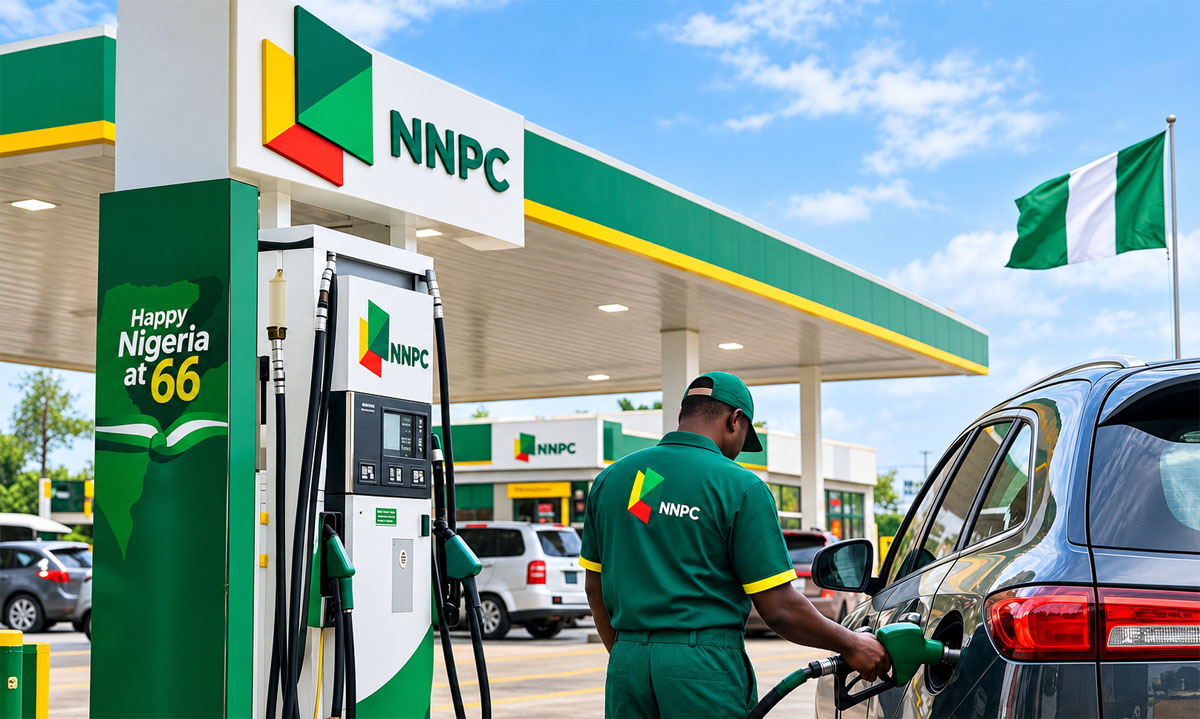
LAGOS, Nigeria — Motorists and transport operators across Nigeria are beginning to enjoy fresh relief as the Nigerian National Petroleum Company Limited (NNPCL), MRS Oil Nigeria and other major petroleum marketers reduce petrol pump prices in response to falling supply costs.
The latest adjustments have seen petrol prices drop at several filling stations, particularly in Lagos and Abuja, following reductions in depot and ex-gantry prices, alongside easing import landing costs.
Market reports indicate that the downward movement has intensified competition among fuel retailers, with some filling stations adjusting their pump prices to attract customers.
NNPCL retail outlets in Lagos are reportedly selling petrol at between ₦1,289 and ₦1,300 per litre, while prices at some of its stations in Abuja have dropped to approximately ₦1,325 per litre.
Other northern cities, including Kaduna and Sokoto, have also reportedly witnessed price adjustments.
Meanwhile, private petroleum marketers, including MRS, Ardova, NIPCO and Rainoil, have also reviewed their pump prices, although the rates differ across locations.
In Lagos, MRS outlets are reportedly selling petrol at approximately ₦1,330 per litre, while Ardova stations have been quoted around ₦1,350 per litre.
In Abuja, petrol prices at different filling stations reportedly range between ₦1,325 and ₦1,420 per litre, depending on the operator and prevailing supply costs.
The latest reductions have been linked to falling petroleum product prices at the supply level, particularly adjustments in refinery and depot benchmarks.
Industry reports indicate that recent movements in Dangote Petroleum Refinery’s gantry prices and reductions in depot prices have created room for marketers to review their retail rates.
Depot prices have reportedly hovered around ₦1,175 to ₦1,215 per litre in recent market checks, although actual costs vary among suppliers.
Another factor contributing to the reductions is the decline in the landing cost of imported petrol compared with the higher levels recorded towards the end of September.
The softer international crude oil market has also helped ease some of the cost pressures affecting petroleum product supply and distribution.
Despite the general downward movement, petrol prices remain different across filling stations and locations.
Market operators attribute the differences partly to existing stock purchased at higher prices, transportation expenses, distribution costs and individual marketers’ pricing policies.
Consequently, some filling stations may take longer to adjust their pump prices until their existing inventory is exhausted and replaced with newer supplies purchased at lower rates.
For motorists, commercial drivers and businesses that depend heavily on petrol, the latest reductions offer some relief amid persistent concerns over transportation and operating costs.
However, consumers will be watching closely to see whether further reductions in depot and refinery prices translate into additional savings at filling stations across the country.
NewsTrends.ng advises motorists to confirm prevailing pump prices at their preferred filling stations, as retail rates may change depending on location and supply conditions.
Have you noticed a reduction in petrol prices in your area? Share your location and the current price per litre in the comments section.
NNPCL, MRS, Other Marketers Slash Petrol Prices Across Nigeria As Motorists Get Fresh Relief
Auto
Dangote Sinotruk Unveils Nigeria’s First Locally Assembled Electric Truck, Targets West African Market

Dangote Sinotruk Unveils Nigeria’s First Locally Assembled Electric Truck, Targets West African Market
…Milestone positions Nigeria as emerging hub
Nigeria has taken a significant step towards clean-energy transportation and advanced automotive manufacturing with the rollout of its first locally assembled electric heavy-duty truck by Dangote Sinotruk West Africa Limited.
The historic development, which also marks the assembly of what Sinotruk described as the first new-energy truck on the African continent, signals the entry of Nigeria’s commercial vehicle industry into a new phase of electric mobility and reinforces the country’s ambition to become a major automotive manufacturing hub in West Africa.
The electric truck was unveiled at the company’s assembly facility in Ikeja, Lagos, at an event attended by senior officials of the Dangote Group, Sinotruk Group, Lagos State Government, industry stakeholders, customers and business partners.
The development represents a major expansion of the Dangote-Sinotruk joint venture beyond conventional commercial vehicle assembly into new-energy mobility, adding electric heavy-duty trucks to its existing range of trucks, tippers, pickups, light commercial vehicles and buses.
Speaking at the event, Group Vice-President of Dangote Industries Limited, Devakumar V.G. Edwin, described the rollout as another important milestone in the evolution of the partnership, reaffirming the group’s commitment to technological innovation, environmental sustainability and local industrial development.
He said the introduction of electric trucks followed the company’s earlier investment in compressed natural gas (CNG) technology and reflected its determination to keep pace with the changing dynamics of the global automotive industry.
“Today, we are taking an important further step as the global economy is looking for sustainable business, that is, vehicles which will also be protective of the environment. So, we went into CNG technology and now we are going into the electric technology. This is a technology which is revolutionising the whole world,” Edwin said.
According to him, electric commercial vehicles offer considerable opportunities for transport and logistics operators, particularly through reduced operating costs and lower tailpipe emissions, depending on electricity tariffs, vehicle applications and the availability of charging infrastructure.
“The electric commercial vehicle offers the potential for lowering the operating cost and reducing the tailpipe emissions. Depending on the application, the electricity cost and the charging infrastructure, it is going to be highly beneficial to the people,” he added.
Edwin acknowledged that the successful adoption of electric trucks would depend on the availability of reliable charging facilities, technical expertise, spare parts and efficient after-sales services.
He said the company was already putting the necessary structures in place, including developing its technical support team and preparing to assist customers with charging infrastructure and other requirements for operating electric commercial vehicles.
“We recognise that this successful adoption will also require reliable charging facilities, technical expertise and spare parts and a strong after-sales support. So, we are already getting ready with a strong after-sales support. We are setting up our team,” he said.
Beyond the introduction of electric trucks, Edwin said the Dangote Group’s broader ambition was to transform the joint venture into one of West Africa’s leading automotive assembly and manufacturing businesses.
He explained that the partnership was established to strengthen local production capacity, facilitate technology transfer, develop Nigerian technical expertise and create employment opportunities while reducing dependence on imported vehicles.
Edwin recalled that the Dangote Group undertook extensive assessments of Chinese truck manufacturers before selecting Sinotruk as its technology partner.
He said the company would continue to deepen local assembly, increase local content and equip Nigerian engineers and technicians with the skills required to participate in advanced vehicle manufacturing.
As part of the technology-transfer programme, Sinotruk is expected to provide specialised training for Nigerian personnel, including opportunities for selected engineers and technicians to receive practical exposure at its facilities in China.
“This is more than a launch of new vehicles. It’s a statement of our commitment to innovation, our commitment to green energy, and the future of mobility,” Edwin said.
Africa’s first new-energy truck
President of Sinotruk Group, Liu Wei, described the rollout as a historic achievement for Nigeria, the joint venture and the wider African automotive industry.
He said the electric heavy-duty truck represented a practical contribution to Nigeria’s energy-transition objectives and a major step towards localising the production of new-energy commercial vehicles on the continent.
“Today, we gather in the beautiful city of Lagos to witness the official roll-off of the first electric heavy-duty truck from the joint venture. More importantly, it represents a substantial step forward for Nigeria and West Africa in driving localised manufacturing and the green transition of new-energy commercial vehicles,” Liu said.
He noted that the initiative aligned with Nigeria’s long-term carbon-neutrality objectives and efforts to modernise its energy mix, reduce transportation emissions and strengthen domestic industrial capacity.
Tracing the evolution of the partnership, Liu said the relationship between Sinotruk and the Dangote Group began in 2010, while the joint venture was formally established in 2014.
The first heavy-duty truck rolled off the assembly line in 2017, while the commissioning of a commercial vehicle welding and e-coating paint line in 2024 marked another significant advancement in the company’s local manufacturing capabilities.
He disclosed that the joint venture had so far assembled more than 8,000 vehicles in Nigeria, adding that the company would continue investing in production technology, skills development and local manufacturing to serve the Nigerian and wider West African markets.
Liu also emphasised the importance of developing local technical capacity, particularly by providing Nigerian engineers and young people with opportunities to acquire the specialised skills required in electric vehicle manufacturing and maintenance.
Lagos Government hails milestone
The Lagos State Government welcomed the development, describing it as a defining moment for Nigeria’s industrial and transportation sectors.
A representative of the Commissioner for Transportation said the locally assembled electric truck demonstrated Nigeria’s growing capacity to participate in the global transition towards cleaner transportation rather than remain dependent on imported automotive technologies.
The government representative highlighted the potential of electric commercial vehicles to reduce transportation-related emissions, lower long-term operating costs for logistics operators and create new employment opportunities in engineering, vehicle assembly and technical services.
The government also commended Dangote Sinotruk for combining international automotive technology with local industrial capacity, urging the company to sustain its investment in local manufacturing and skills development.
The rollout marks another important phase in the growth of Dangote Sinotruk West Africa Limited, which has progressively expanded its product range and manufacturing operations to meet the demands of Nigeria’s transportation, construction and logistics sectors.
With electric heavy-duty trucks now added to its portfolio, the company is positioning itself at the intersection of commercial transportation, automotive industrialisation and the emerging green-energy economy.
For the Dangote Group, the development reinforces its broader industrialisation strategy of building local production capacity, transferring technology, creating jobs and developing Nigerian businesses capable of competing in regional markets.
As Nigeria’s first locally assembled electric heavy-duty truck prepares to enter the commercial transportation market, the milestone offers a glimpse into the future of the country’s automotive industry, where global technology, local manufacturing and cleaner energy could combine to reshape the movement of goods across Nigeria and West Africa.
Auto
Osanipin, FRSC Corps Marshal to Lead Dignitaries at 19th NAJA Auto Awards
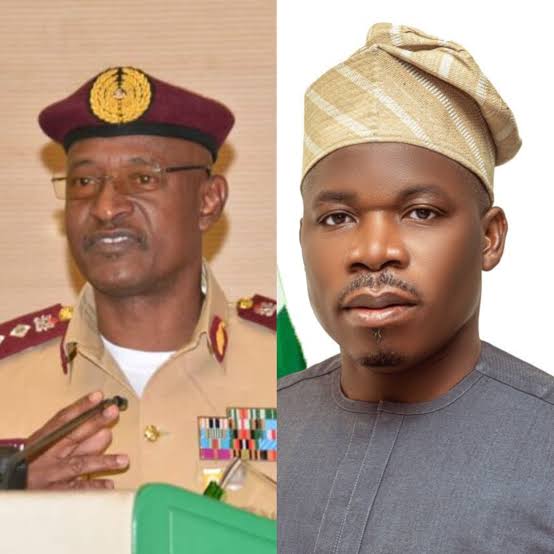
Osanipin, FRSC Corps Marshal to Lead Dignitaries at 19th NAJA Auto Awards
The Director-General of the National Automotive Design and Development Council (NADDC), Chief Joseph Oluwemimo Osanipin, and the Corps Marshal of the Federal Road Safety Corps (FRSC), Shehu Mohammed, are among the high-profile dignitaries expected at the 19th Nigeria Auto Journalists Association (NAJA) International Auto Awards scheduled for December 3, 2026, in Lagos.
The two senior government officials have confirmed their attendance at the prestigious annual event, which will bring together leading automobile manufacturers, vehicle assemblers, distributors, policymakers, industry executives and other stakeholders to celebrate excellence and innovation in Nigeria’s automotive sector.
The ceremony will take place at the Civic Centre, Victoria Island, Lagos.
Osanipin’s participation is expected to add significant weight to the occasion, considering NADDC’s pivotal role in implementing the Federal Government’s automotive industrialisation policy and driving the development of the local automotive industry.
The council is at the forefront of initiatives aimed at promoting local vehicle assembly, developing indigenous automotive technology, building technical capacity and attracting investments into the sector, particularly as Nigeria explores opportunities in electric mobility and other alternative-energy solutions.
Similarly, the confirmation of the FRSC Corps Marshal as a Special Guest highlights the critical relationship between road safety and the growth of the automotive and transportation industries.
The FRSC plays a central role in road safety enforcement, driver education, vehicle safety advocacy and the promotion of responsible motoring practices across the country.
Chairman of the 2026 NAJA Awards Planning Committee, Frank Kintum, expressed satisfaction with the confirmation of the two government officials, saying their participation would further elevate the profile of the ceremony.
He said preparations were progressing steadily to deliver a memorable event that would recognise outstanding contributions, innovation and professionalism across the automotive value chain.
NAJA Chairman, Theodore Opara, said the awards had remained a credible platform for identifying and celebrating individuals and organisations whose contributions were advancing Nigeria’s automotive industry.
Now in its 19th edition, the NAJA International Auto Awards has grown into one of the industry’s major annual gatherings, recognising excellence among automobile manufacturers, vehicle assemblers, distributors, after-sales service providers and other key players.
This year’s awards will cover several segments of the industry, including Car of the Year, SUV of the Year, Bus of the Year, Pickup of the Year, automotive distribution, alternative-energy mobility, after-sales services and outstanding individual contributions.
The Car of the Year category is expected to be one of the major highlights of the evening, with established automotive brands and emerging players likely to compete for the coveted industry recognition.
The event is expected to attract leading personalities and corporate organisations whose investments, innovations and professional contributions continue to shape the future of Nigeria’s automotive industry.
-

 metro2 days ago
Viral Video: Nigerian Army Explains Why Soldiers, DSS Operatives Met Bandits In Kwara Forest
-
 metro4 hours ago
FG’s ₦100,000 Family Grant: Eligibility, How to Apply and Payment Procedure Revealed
-

 International1 day ago
Islam Set to Overtake Christianity as World’s Largest Religion by 2035
-
 Business1 day ago
NNPCL, MRS, Other Marketers Slash Petrol Prices Across Nigeria As Motorists Get Fresh Relief
-

 News1 day ago
Agunbiade Proposes Council of Grand Chief Imams for Yorubaland, Edo, Delta
-

 News2 days ago
Adeleke Rejects Proposed Naming of Osogbo Stadium After Him, Orders Removal of Signpost
-

 Education2 days ago
Panic As Fire Engulfs Nigerian University Hostel, Destroys Students’ Valuables
-
 Auto2 days ago
Dangote Sinotruk Unveils Nigeria’s First Locally Assembled Electric Truck, Targets West African Market