

metro
Lagos arrests 30 for indiscriminate waste disposal

Lagos arrests 30 for indiscriminate waste disposal
The Lagos State government has arrested about 30 environmental offenders, for improper disposal of waste and flouting of the state’s environmental laws.
The offenders apprehended in different locations in the state will be arraigned before a magistrate court on Monday.
The enforcement action was carried out by a combined team of the Lagos Waste Management Authority (LAWMA) and Lagos State Environmental Sanitation Corps (LAGESC), also known as KAI.
The Commissioner for the Environment and Water Resources, Tokunbo Wahab, said the arrest and subsequent prosecution of defaulters would serve as a deterrent and warning to others.
READ ALSO:
-
BREAKING: WAR: South Africa declares support for Palestine, reveals plans (VIDEO)
-
BREAKING : Minister of Finance, Wale Edun, gets World Bank’s appointment
-
Tragedy as high tension cables kill 6 in Jos
“It is imperative for every resident in the state, from households to businesses, to be aware of their legal obligations regarding waste management. This includes the procurement and proper use of bins, engagement of Private Sector Participants (PSPs), refraining from indiscriminate waste disposal, and maintaining drains and the cleanliness of the frontage of their establishments,” Wahab said.
On his part, the Managing Director/CEO of LAWMA, Dr. Muyiwa Gbadegesin, urged households to imbibe the habit of sorting their wastes at source, segregating them into recyclables and non-recyclables, as well as utilising designated waste bins recommended by LAWMA.
According to him, this would help reduce the menace of indiscriminate waste dumping and defacing of the cityscape.
Gbadegesin said: “The responsibility for maintaining a clean environment is a collective one. It is not the sole duty of LAWMA or the state government but also the duty of every individual, household, and business owner in Lagos.
“We are appealing to residents to shun indiscriminate dumping of waste in public spaces, as it poses significant health and environmental hazards. Those found in violation of environmental laws of the state will face severe legal consequences.”
Lagos arrests 30 for indiscriminate waste disposal










metro
Edo Youths Chase Policemen, Vigilantes From Checkpoint Over Alleged Extortion

Edo Youths Chase Policemen, Vigilantes From Checkpoint Over Alleged Extortion
Tension erupted along the Auchi–Aviele Road in Edo State after a group of angry youths confronted policemen and members of the Vigilante Group of Nigeria (VGN) over allegations of extorting motorists and commercial motorcycle operators at a checkpoint.
A video of the confrontation, which circulated on social media on October 31, 2026, showed the youths challenging the security personnel, searching them and demanding an explanation for money allegedly collected from road users.
The youth leader claimed that the group recovered ₦4,200 from the checkpoint after discovering that the officers and vigilantes had allegedly collected money from commercial motorcyclists and other motorists within less than 30 minutes.
The confrontation, which was captured in the viral footage, involved armed police officers who were seen responding to the youths’ demands as they insisted on searching the personnel.
In one scene, the youth leader, dressed in shorts and a sleeveless shirt, directed members of his group to search one of the officers.
The policeman reportedly responded, “Nothing dey my body,” as he raised his hands to allow the search.
Another voice in the background was heard saying, “Hold on! Let them search youth.”
The officer was subsequently frisked, with the person conducting the search indicating that nothing had been found on him.
During the confrontation, a policeman believed to be leading the security team attempted to hand his mobile phone to the youth leader, apparently to enable him to speak with an unidentified person who could help resolve the situation.
READ ALSO:
- Lami Dawa: CAN Takes 14-Year Jail Sentence to Appeal Court, Borno Govt Reacts
- Hijab Controversy: MURIC Demands Suspension of Law School Exams, Threatens Peaceful Protests
- Breaking: Two Fresh Ebola Cases Emerge in North-East, says NCDC, begins test
However, the youth leader rejected the offer, shouting, “I no wan talk!” He subsequently struck the officer’s hand during another attempt to hand over the phone.
The youths later demanded that the policemen and vigilantes leave the checkpoint before moving to another location to explain their intervention.
Explaining the reason for their action, the youth leader said they had received information that security personnel stationed along the Auchi–Aviele Road were allegedly extorting motorists, passengers and commercial motorcycle operators.
He claimed that the group discovered that the officers and vigilantes had collected ₦4,200 from road users within less than 30 minutes of operating at the checkpoint.
“We found out that they had already collected ₦4,200 from bike men and others. I’m taking this money to the Area Commander,” he said.
The youth leader also called on the Edo State Commissioner of Police to investigate the alleged activities of the security personnel and establish whether their deployment to the checkpoint had been officially authorised.
He specifically mentioned the Divisional Police Officer (DPO) of Agbede Police Station, alleging that the policemen involved told the youths they were acting on the DPO’s instructions.
He further claimed that the vigilantes said they had been deployed by their superior in Aviele.
The youth leader questioned why security personnel assigned to protect road users would allegedly demand money from them while carrying out their official duties, particularly amid the economic difficulties facing many Nigerians.
He also argued that the amount allegedly collected within such a short period could have increased considerably if the checkpoint had remained operational for several hours.
According to him, the officers could have collected between ₦80,000 and ₦100,000 if they had continued operating at the location.
He maintained that the recovered ₦4,200 would be handed over to the Area Commander and urged the police authorities to investigate the allegations, including the claimed involvement of the Agbede DPO.
The incident has generated reactions on social media, with several Nigerians expressing concern over allegations of police extortion at checkpoints and demanding greater accountability from security personnel.
The circulating video has also renewed discussions about the conduct of officers at roadblocks and the need for effective supervision of personnel deployed to maintain security on major roads.
However, the allegations against the officers and their superiors have not been independently established, and the confrontation itself does not amount to proof of criminal wrongdoing.
As of November 1, 2026, there was no reported official response from the Edo State Police Command addressing the allegations or confirming whether an investigation had commenced.
The incident is likely to intensify calls for the police authorities to investigate the circumstances surrounding the checkpoint, establish whether any unauthorised collections occurred and take appropriate action if misconduct is established.
Edo Youths Chase Policemen, Vigilantes From Checkpoint Over Alleged Extortion
metro
Lami Dawa: CAN Takes 14-Year Jail Sentence to Appeal Court, Borno Govt Reacts

Lami Dawa: CAN Takes 14-Year Jail Sentence to Appeal Court, Borno Govt Reacts
The Christian Association of Nigeria (CAN) has confirmed that an appeal has been filed against the 14-year prison sentence imposed on Lami Samuel Dawa in Borno State, as fresh details of the court proceedings emerge and the state government says it is unaware of the circumstances surrounding the case.
The conviction has generated considerable controversy, particularly following reports that Dawa was sentenced to 14 years in prison for allegedly influencing a Muslim woman to convert to Christianity.
However, statements from her legal representatives and details reportedly contained in the court judgment suggest that the case involved more complicated allegations relating to the custody, movement and religious upbringing of a minor.
The development has prompted Christian organisations to call for caution, with CAN insisting that the legal process must respect the constitutional rights of everyone involved.
CAN President, Archbishop Daniel Okoh, said the association was concerned about the circumstances surrounding Dawa’s conviction and the reports linking the case to religious conversion.
He stressed that every Nigerian has the constitutional right to choose, practise or change their religion without coercion, intimidation or unlawful punishment.
Okoh said the association was monitoring developments and would pursue appropriate legal and institutional channels to ensure that the matter received proper attention.
The association also confirmed that an appeal had been initiated against the judgment, expressing the expectation that the appellate process would provide an opportunity for the issues surrounding the conviction to be properly examined.
READ ALSO:
- Breaking: Two Fresh Ebola Cases Emerge in North-East, says NCDC, begins test
- 2027 Presidency: Allah’s Will Must Prevail, Tinubu Declares in Makkah
- Rhodes-Vivour Tackles Lagos Government Over Threat to Seal Residents’ Boreholes
Dawa was sentenced to 14 years’ imprisonment by the Borno State High Court in Maiduguri on May 5, 2026. The judgment was delivered by Justice A.B. Kumdila in a case involving five defendants.
Although initial reports largely presented the matter as a religious conversion dispute, the account provided by the Christian Lawyers Fellowship of Nigeria (CLASFON), which represented Dawa and the other defendants, offered additional details about the prosecution’s allegations.
The chairman of CLASFON‘s Maiduguri branch, Ephraim Yidawi, cautioned against portraying the case as one in which a Christian woman was simply convicted for preaching Christianity to a Muslim who voluntarily changed her religion.
According to him, the charges included conspiracy to abduct a child, enticing a minor to leave parental custody, removing a child from her parents’ lawful custody, depriving the child of access to education and interfering with her religious practice.
Yidawi disclosed that the other four defendants were discharged and acquitted, while Dawa was convicted. He also confirmed that steps had been taken to challenge the judgment through an appeal.
Further details published by Muslim News Nigeria on November 1, 2026, indicated that the person at the centre of the case was a 16-year-old girl identified as Aisha Kabir Saleh.
The publication said it obtained a certified copy of the judgment, which reportedly showed that the case was heard under suit number BOHC/MG/CR/154/2025.
According to the account of the proceedings, the prosecution alleged that the defendants were involved in arrangements that resulted in the girl leaving her family home in Maiduguri and travelling to Christian institutions in Jos.
The girl reportedly told the court that she had converted to Christianity at the age of 13, while she was still a minor.
She further alleged that after returning to Maiduguri, Dawa encouraged her to leave her parents’ home again, provided her with a telephone and SIM card, and arranged for her journey to Jos.
The prosecution also alleged that she was instructed to change out of her school uniform before leaving and was given money for the trip.
These allegations formed part of the prosecution’s case and should be distinguished from the court’s specific findings against each defendant.
The charges reportedly covered conspiracy to abduct a child, enticing a minor away from parental custody, abduction and removal from lawful custody, deprivation of education, interference with the minor’s religious practice and conversion, as well as screening an offender and evidence.
Dawa’s conviction was reportedly linked to the offence of depriving a parent of the lawful custody of a child under Section 210 of the Borno State Penal Code.
The distinction is significant because the available accounts do not support reducing the entire case to a conviction for preaching Christianity or facilitating religious conversion.
The Pentecostal Fellowship of Nigeria (PFN) has also appealed for restraint in public discussions surrounding Dawa’s conviction.
The organisation’s National Secretary, Bishop David Bakare, said the fellowship had been informed about the development and was monitoring the situation.
Bakare cautioned that some accounts circulating on social media did not adequately reflect the circumstances of the case.
He urged Christians and other Nigerians to establish the facts and understand the court proceedings before reaching conclusions or making public statements capable of inflaming religious tensions.
He also welcomed the appeal process, expressing the fellowship’s intention to continue monitoring developments.
The PFN’s position underscores the need for religious organisations and the wider public to distinguish between the constitutional right to freedom of religion and separate allegations involving the custody and welfare of a minor.
Meanwhile, the Borno State Government has said it has no knowledge of the circumstances surrounding Dawa’s conviction.
The state’s Commissioner for Information and Internal Security, Usman Tar, reportedly made the clarification when contacted by journalists.
Tar described the matter as a technical and legal issue, indicating that he was not familiar with the case.
The government’s response comes amid growing public attention and calls for clarification over the circumstances that led to the 14-year prison sentence.
The controversy has renewed discussions about the relationship between religious freedom, parental custody and the protection of children under Nigerian law.
Section 38 of the 1999 Constitution guarantees freedom of thought, conscience and religion. The provision includes the right of individuals to change their religion or belief and to practise their faith.
Section 42 also prohibits discrimination against citizens on grounds including religion.
These constitutional protections have featured prominently in reactions to Dawa’s conviction, particularly among Christian organisations concerned about the implications of the case for religious freedom.
However, allegations involving the movement of a minor, parental custody, access to education and the circumstances surrounding a child’s religious upbringing raise separate legal questions.
The appellate court will have an opportunity to examine the conviction, the applicable provisions of the Borno State Penal Code and the arguments advanced by Dawa’s legal representatives.
For CAN and other Christian organisations, the immediate concern is that the appeal should receive proper legal consideration and that nobody should be punished unlawfully for exercising constitutionally guaranteed religious rights.
The case is therefore expected to remain in the public spotlight as Nigerians await further developments in the appeal and possible clarification of the legal issues surrounding the conviction.
Lami Dawa: CAN Takes 14-Year Jail Sentence to Appeal Court, Borno Govt Reacts
metro
Hijab Controversy: MURIC Demands Suspension of Law School Exams, Threatens Peaceful Protests
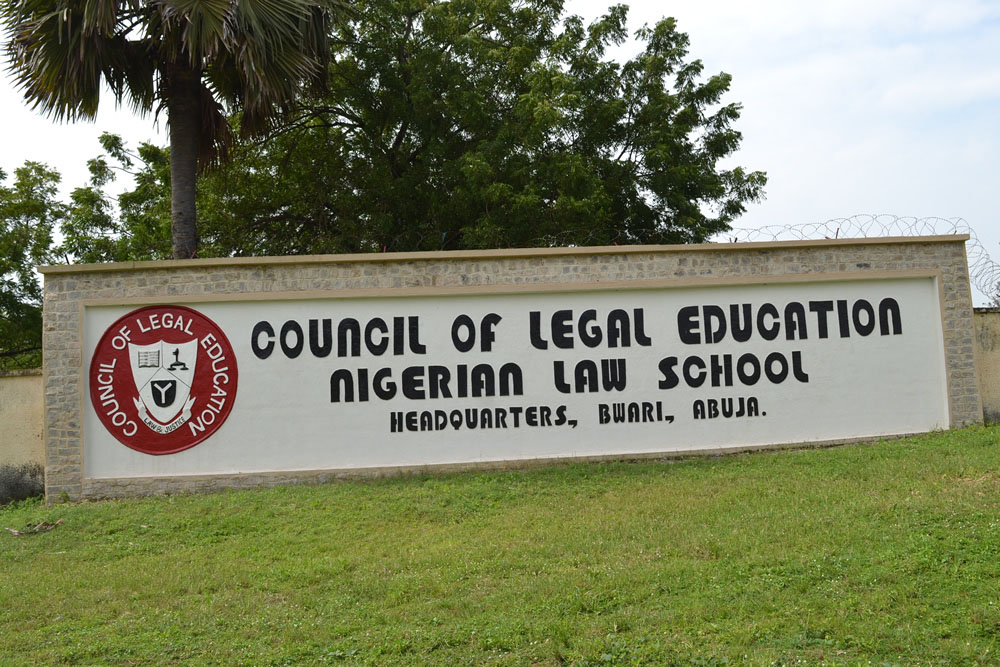
Hijab Controversy: MURIC Demands Suspension of Law School Exams, Threatens Peaceful Protests
The Muslim Rights Concern (MURIC) has called for the immediate suspension of examinations at the Nigerian Law School following allegations that female Muslim students wearing hijabs were harassed, intimidated and prevented from entering examination halls at some campuses across the country.
The Islamic human rights organisation also demanded an investigation into the alleged incidents, insisting that candidates who were delayed or prevented from taking their examinations because of their religious attire should be allowed to rewrite them.
MURIC made the demands in a statement issued on Sunday, November 1, 2026, by its Founder and Executive Director, Professor Ishaq Akintola.
According to the organisation, several female Muslim candidates wearing hijabs were allegedly denied entry into examination halls on Saturday, October 31, while preparing to sit for their final examinations ahead of the Call to the Bar.
Akintola alleged that some of the affected candidates were made to remain outside examination venues for about an hour and were only allowed to enter after removing their hijabs.
He said the organisation received numerous telephone calls, text messages and other complaints from distressed candidates, their parents and concerned Muslims across the country during the incident.
MURIC described the alleged treatment of the candidates as discriminatory and a violation of their fundamental rights, arguing that no student should be subjected to intimidation or humiliation because of her religious beliefs.
The organisation specifically questioned the involvement of the Nigerian Law School, an institution responsible for professional legal training, in what it described as the disregard for constitutional provisions and judicial pronouncements protecting religious freedom.
READ ALSO:
- Breaking: Two Fresh Ebola Cases Emerge in North-East, says NCDC, begins test
- 2027 Presidency: Allah’s Will Must Prevail, Tinubu Declares in Makkah
- Rhodes-Vivour Tackles Lagos Government Over Threat to Seal Residents’ Boreholes
It cited Sections 38(1) and 38(2) of the 1999 Constitution, as amended, which guarantee freedom of thought, conscience and religion, including the right to manifest and practise one’s religion.
The group also referenced the Supreme Court judgment in Lagos State Government & Others v. Asiyat AbdulKareem (2022), which affirmed the right of female Muslim students to wear hijab in public schools in Lagos State.
MURIC further argued that the alleged treatment of the candidates violated Section 42 of the Constitution, which prohibits discrimination, as well as Section 34(1)(a), which guarantees respect for the dignity of the human person and prohibits torture and inhuman or degrading treatment.
Consequently, the organisation demanded the suspension of all Law School examinations pending an investigation into the circumstances surrounding the reported incidents.
It also called for disciplinary or other appropriate action against anyone found responsible for the alleged harassment, intimidation, religious profiling and discrimination against the candidates.
The organisation particularly demanded that candidates who were affected by the controversy be given another opportunity to sit for their examinations.
Akintola said the demand should cover candidates who were delayed outside examination halls for as little as 15 minutes, noting that some allegedly spent up to one hour outside before eventually removing their hijabs to gain admission.
Beyond the demands for an investigation and rescheduling of examinations, MURIC announced plans for peaceful protests across Nigerian Law School campuses if its demands were not addressed.
The proposed demonstrations, according to the organisation, would involve parents of the affected students, Muslim youths and other stakeholders within the Muslim community.
However, MURIC stressed that the protests would be conducted peacefully, in line with its motto, ‘Dialogue, Not Violence’.
The organisation also urged Muslim parents and community leaders to take a more active role in defending the rights of their children and wards, arguing that parents should not only provide educational opportunities but also monitor their children’s welfare and protect their constitutional rights.
Akintola expressed disappointment with what he described as the silence of some Muslim elders and parents over issues affecting the religious rights of Muslim students.
He urged Muslim youths to become more involved in peaceful advocacy for civil liberties, saying that continued silence could encourage further incidents of discrimination.
Quoting the late American civil rights leader, Martin Luther King Jr., MURIC said freedom was rarely granted voluntarily by those in positions of power but had to be demanded by those whose rights were being denied.
The organisation, however, cautioned its supporters against violence, insisting that any campaign arising from the controversy must remain within the bounds of peaceful engagement and lawful protest.
The controversy has raised fresh questions about the accommodation of religious practices within professional educational institutions and the enforcement of constitutional protections for religious freedom in Nigeria.
MURIC’s demands now place pressure on the Nigerian Law School authorities to clarify the circumstances surrounding the reported incidents and explain the policies governing the wearing of religious attire during professional examinations.
As of the time of this report, the Nigerian Law School’s response to the allegations and demands was not contained in MURIC’s statement.
Hijab Controversy: MURIC Demands Suspension of Law School Exams, Threatens Peaceful Protests
-

 metro2 days ago
Captured Bandit Exposes Alleged Military Arms Supplier, Claims Gang Collected ₦1bn From Two Customs-Linked Kidnappings
-

 metro1 day ago
Ogun Murder: Suspect Reveals How He Strangled, Macheted Retired Civil Servant Over N3.45m
-

 Politics1 day ago
2027: G100 Coalition Moves to Unite Opposition as Leaders Meet Cardinal Onaiyekan
-

 metro2 days ago
‘You Must Treat Me With Respect’ – Oshiomhole Blasts Rufai Oseni During Heated Live TV Interview
-
 Africa2 days ago
Midnight Horror : Woman Slaughters Husband, Two Children, Escapes Murder Conviction
-

 metro1 day ago
N100,000 Deposit: FG Opens Homeownership Window for Teachers, Nurses, Police Officers
-

 metro1 day ago
₦50,000 Monthly Relief: FG Begins Cash Payments to Vulnerable Nigerians
-

 International1 day ago
Romance Scam: FBI Declares Nigerian Woman Wanted, Offers ₦6.7m Reward