

Auto
Updated: Honda, Suzuki, Changan (Mikano) battle for Nigeria’s car of the year
Updated: Honda, Suzuki, Changan (Mikano) battle for Nigeria’s car of the year
- Other categories nominees named
Two Japanese auto brands, Honda and Suzuki are to slug it out with a Chinese brand, Changan of Mikano for this year’s car of the year in Nigeria.
The Awards Committee of the Nigeria Auto Journalists Association (NAJA) released list of nominees for its 2023 Nigeria Auto Awards on Friday morning.
The grand award event is scheduled for December 14 at the Oriental Hotel, Victoria Island, Lagos.
The list features over 30 models of automobiles which cut across several segments of the auto industry, as well as auto showrooms and vehicle assembly plants in the country.
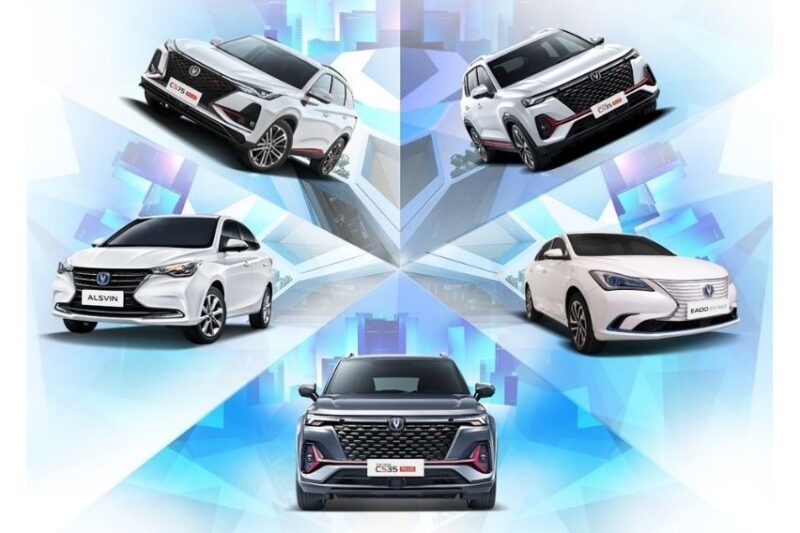
Suzuki Espresso, Honda HR-V and Changan Eado made it to the top of the list as the cars will battle for the coveted Car-of-the-Year, while Sino Truck Dangote, Shacman and JAC will go head-to-head in the Truck-of-the-Year category.
For the Assembly Plant-of-the-Year, Lanre-Shittu Motors, Innoson Vehicle Manufacturing and Mikano Motors are on the card, while Mercedes-Benz, BMW and Range Rover will slug it out in the Luxury-Brand-of-the –Year category.
Stallion (JAC), Mandilas Motors and CFAO have been nominated for the Auto Workshop of the Year.
In the Compact SUV-of-the-Year category, Changan CS35, GAC GS4 and new entrant, Honda HR-V led the category. And in the Large SUV category, Range Rover, Toyota Land Cruiser and Hyundai Palisade are the leading contenders.
Range Rover (Autobiography), BMW X7 and Mercedes G Wagon will battle for the Luxury SUV category. Maxus, Toyota Hilux, Mitsubishi L200 and JAC T6 will compete in the Pickup category, while GAC GS8, Changan Uni-K and JAC JS4 are the leading models in the outstanding auto design category.
In the minibus category, Toyota Hiace, Jet Mover, Foton View C2 and NORD Flit are the nominees, while Stallion Motors, ANAMMCO and Briscoe will vie for the Most Resilient Auto Company award.
Coscharis (Ford), Mikano and GAC are set to battle for the Auto Showroom of the Year award; Libra, Okeyson and GUO will compete in the Transport Company of the Year, while Bajaj and TVS are the two nominees in the Three-Wheeler of the Year category.
Chairman of the Awards committee, Rasheed Bisiriyu also revealed that Chairman of Innoson Vehicle Manufacturing, Chief Innocent Chukwuma, would be honoured with the Auto Personality of the Year for his immense contributions to the development of Nigeria’s auto industry.
He said nominees in the various categories were decided by an esteemed panel composed of experts in the industry, dealers and motoring editors.
“In producing these results, our panel demonstrated fierce dedication to their craft by selecting nominees worthy of their consideration in 2023,” he stated.
He said the anticipation for the annual auto awards is stronger than ever among consumers and the automotive sector.
He said, “The winners in the various categories will be revealed live at the grand event scheduled for December 15, 2023 at the Oriental Hotel, Victoria Island, Lagos in a grand ceremony.”
The Nigerian Auto Journalists Association (NAJA) is an association of professional journalists, writers, and corporate members whose focus is the automobile and the Nigerian automotive industry.
NAJA’s primary objective is to promote, encourage, support, and facilitate professionalism in Nigerian automotive journalism and to ensure factual and ethical reporting about the automobile and automotive issues to Nigerian consumers.








Auto
Policy Bottlenecks Threaten Nigeria’s Clean Mobility Drive, LCCI Warns
Policy Bottlenecks Threaten Nigeria’s Clean Mobility Drive, LCCI Warns
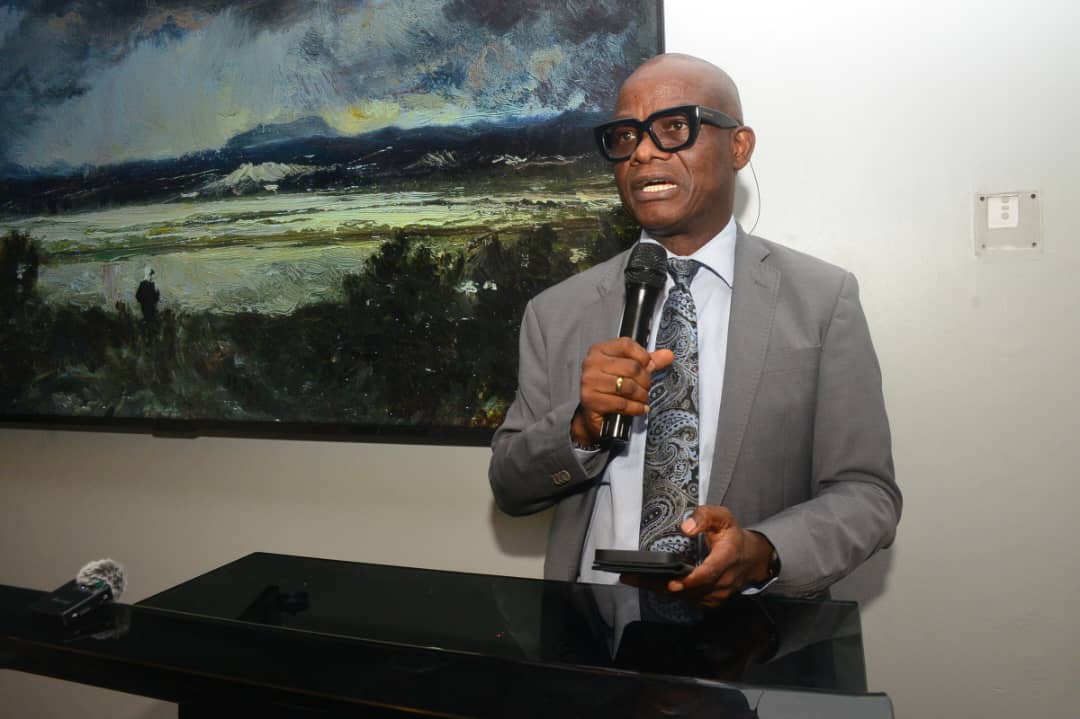
The Chairman of the Auto and Allied Sector Group of the Lagos Chamber of Commerce and Industry (LCCI), Dr. Femi Eguahide, has warned that policy inconsistencies, regulatory bottlenecks and weak coordination between the public and private sectors could derail Nigeria’s clean mobility ambitions, urging the Federal Government to deepen collaboration with industry stakeholders to accelerate the transition to Compressed Natural Gas (CNG) and Electric Vehicles (EVs).
Speaking at the 3rd Nigeria Auto Industry Summit in Lagos on Thursday, Eguahide said the success of the Federal Government’s clean mobility agenda would depend on sustained stakeholder collaboration, policy consistency and the removal of operational challenges slowing investment and implementation.
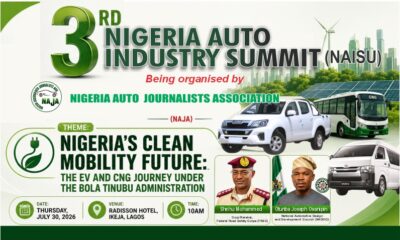
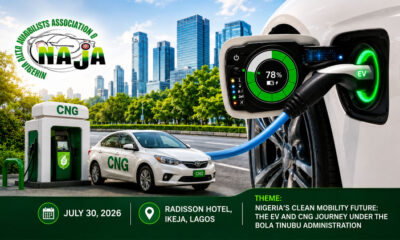
The summit, organised by the Nigeria Auto Journalists Association (NAJA) under the theme, “Nigeria’s Clean Mobility Future: The EV and CNG Journey Under the Bola Tinubu Administration,” brought together policymakers, regulators, automobile manufacturers, financiers, transport operators, researchers, safety agencies and development partners to chart a roadmap for accelerating Nigeria’s transition to cleaner transportation.
Eguahide acknowledged the Federal Government’s commitment to alternative energy solutions through the Presidential Initiative on Compressed Natural Gas and Electric Vehicles (Pi-CNG & EV), but stressed that translating policy into tangible results would require stronger coordination between government institutions and private investors.
According to him, the automotive industry remains a critical driver of industrialisation, job creation and economic growth, making it imperative for government agencies to work closely with manufacturers, assemblers, financiers and technology providers to create a more predictable and investment-friendly operating environment.
READ ALSO:
- Policy Bottlenecks Threaten Nigeria’s Clean Mobility Drive, LCCI Warns
- Troops arrest three suspects over killing of soldier in Imo ambush, recover stolen rifles
- Kidnapped Lt. Col. Ofor Amobi, civilian rescued after 10-day military operation in Enugu
He said effective policy implementation must be backed by continuous stakeholder engagement capable of resolving challenges surrounding vehicle conversion, local manufacturing, infrastructure development, financing and technology deployment.
Eguahide maintained that Nigeria possesses enormous potential to build a globally competitive clean mobility ecosystem, but cautioned that fragmented policies and institutional inefficiencies could slow the country’s progress if left unresolved.
He therefore urged government agencies to deepen engagement with the organised private sector to develop practical solutions that would accelerate the rollout of CNG refuelling infrastructure, EV charging networks and local automotive production.
Earlier, the Federal Government reaffirmed its commitment to expanding Nigeria’s clean mobility ecosystem through increased investment in infrastructure, local manufacturing and strategic partnerships.
Speaking on behalf of the Executive Chairman and Chief Executive Officer of the Presidential Initiative on Compressed Natural Gas and Electric Vehicles (Pi-CNG & EV), Barrister Ismaeel Ahmed, the Initiative’s Chief Compliance Officer, Engr. Zayyanu Tamberi Yabo, said the programme had evolved into a key pillar of President Bola Tinubu’s transport and energy reform agenda.
According to Ahmed, the Presidential Initiative was established not merely to promote alternative fuels but to build an integrated ecosystem covering infrastructure development, investment, vehicle conversion, local manufacturing, technical capacity building and consumer confidence.
“Our approach from the beginning has been to build the foundations of a sustainable industry rather than pursue isolated interventions,” he said.
He disclosed that certified CNG conversion centres had expanded significantly across the country over the past two years, while new refuelling stations were being developed through public and private sector investments.
Ahmed added that vehicle conversions continue to rise as commercial transport operators and private motorists increasingly embrace CNG because of its lower operating costs.
He also highlighted partnerships with financial institutions, energy companies and automobile manufacturers aimed at improving access to financing and accelerating the adoption of clean mobility technologies.
Despite the progress, he identified infrastructure expansion, consumer financing, local manufacturing capacity, technical training, research, innovation and standardisation as priority areas requiring sustained attention.
In his welcome address, NAJA Chairman Theodore Opara described the summit as a strategic platform for shaping the future of Nigeria’s automotive industry.
He said reforms introduced by the Tinubu administration had created fresh momentum for CNG, electric vehicles and local automotive manufacturing, adding that stronger collaboration among government, industry players and the media would be critical to sustaining the gains.
Also speaking, the Director-General of the Standards Organisation of Nigeria (SON), Dr. Ifeanyi Chukwunonso Okeke, represented by Engr. Olalekan Omoniyi, said strict compliance with internationally recognised standards would determine the success of Nigeria’s transition to EVs and CNG-powered transportation.
He disclosed that SON had developed more than 80 Nigerian Industrial Standards for CNG vehicles and equipment, as well as 87 additional standards and the National Nigeria Guideline (NNG 1214:2024) for CNG vehicle conversions.
The SON boss warned against the proliferation of uncertified conversion centres and substandard equipment, urging mandatory certification for imported and locally assembled EVs, CNG vehicles, conversion kits and charging infrastructure.
Policy Bottlenecks Threaten Nigeria’s Clean Mobility Drive, LCCI Warns
Auto
FRSC Pledges Robust Safety Measures as Nigeria Accelerates EV, CNG Mobility Drive
FRSC Pledges Robust Safety Measures as Nigeria Accelerates EV, CNG Mobility Drive
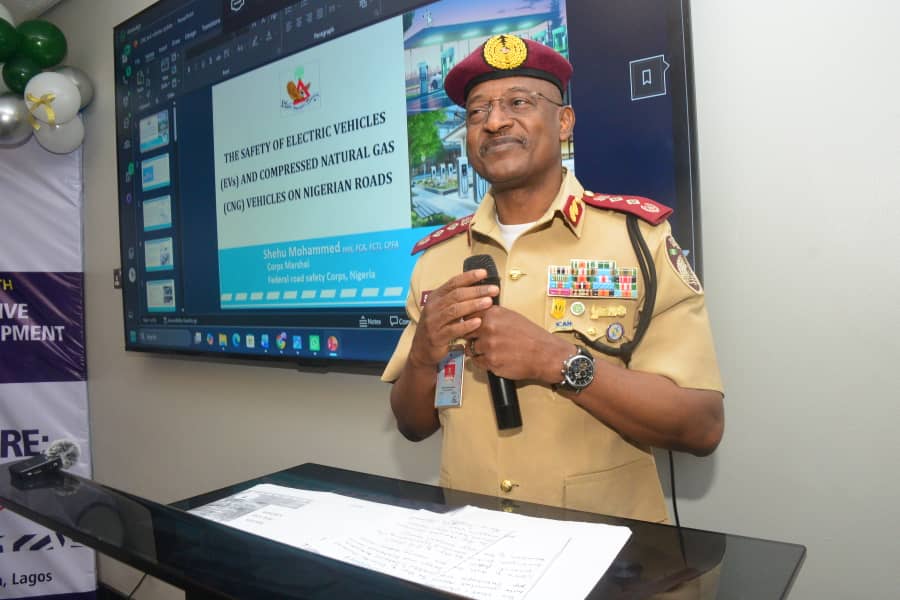
The Federal Road Safety Corps (FRSC) has declared that road safety will remain at the heart of Nigeria’s transition to Electric Vehicles (EVs) and Compressed Natural Gas (CNG)-powered transportation, pledging to strengthen regulations, enforcement and stakeholder collaboration to ensure the shift to cleaner mobility does not compromise public safety.
The Corps Marshal of ghe FRSC, Shehu Mohammed, made the declaration while delivering a keynote address at the 3rd Nigeria Auto Industry Summit organised by the Nigeria Auto Journalists Association (NAJA) in Lagos.
The summit, themed “Nigeria’s Clean Mobility Future: The EV and CNG Journey Under the Bola Tinubu Administration,” brought together government officials, regulators, manufacturers, energy companies and other industry stakeholders to chart the future of sustainable transportation in Nigeria.
Mohammed said the growing adoption of EVs and CNG-powered vehicles presents significant opportunities for cleaner transportation, lower operating costs and improved energy security, but warned that these benefits can only be fully realised through robust safety regulations, effective enforcement and continuous collaboration among stakeholders.
READ ALSO:
- Naming Atiku as My Running Mate in 1999 My Biggest Political Error – Obasanjo
- Woman Strangles Co-wife’s 3-Year-Old Daughter to Death in Kwara
- Court Awards N12m Damages Against Police for Abduction, Unlawful Detention of Journalist
He noted that as alternative-fuel vehicles become more prevalent on Nigerian roads, regulatory institutions must evolve to address emerging technologies through specialised training, updated operational guidelines and stronger enforcement frameworks.
According to him, the FRSC has already begun positioning itself for the transition by strengthening safety regulations, engaging key stakeholders and developing operational frameworks specifically designed for EVs and CNG-powered vehicles.
The Corps Marshal stressed that Nigeria’s clean mobility agenda should not only focus on reducing carbon emissions but also on improving road safety, raising vehicle standards and building public confidence in emerging transport technologies.
He added that achieving a safe and sustainable transition would require the active participation of road users, transport operators, vehicle manufacturers, conversion centres, regulators and other critical stakeholders.
Mohammed reaffirmed the FRSC‘s commitment to working closely with government agencies, industry players and development partners to ensure that Nigeria’s journey towards cleaner transportation delivers lasting safety, environmental and economic benefits for the country.
FRSC Pledges Robust Safety Measures as Nigeria Accelerates EV, CNG Mobility Drive
Auto
Pi-CNG boss: Clean mobility will cut transport cost, create jobs, power Nigeria’s economic growth
Pi-CNG boss: Clean mobility will cut transport cost, create jobs, power Nigeria’s economic growth
The Federal Government has declared that Nigeria’s transition to compressed natural gas (CNG) and electric vehicles (EVs) is no longer an environmental ambition but a critical economic strategy to slash transportation costs, strengthen energy security, create jobs and unlock new investments across the automotive value chain.
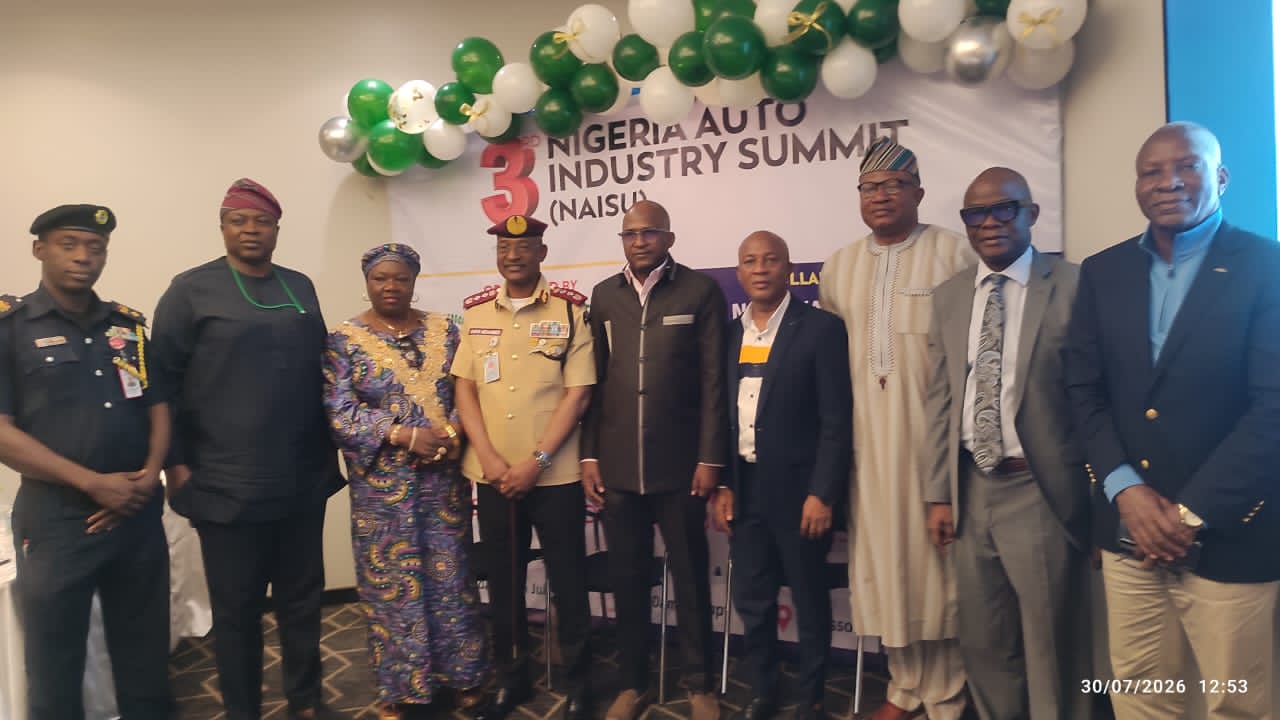
Making the declaration at the 3rd Nigeria Auto Industry Summit (NAISU) organised by the Nigeria Auto Journalists Association (NAJA) in Lagos, the Executive Chairman and Chief Executive Officer of the Presidential Initiative on Compressed Natural Gas and Electric Vehicles (Pi-CNG & EV), Barrister Ismaeel Ahmed, said clean mobility had become a central pillar of President Bola Ahmed Tinubu’s transport and energy reforms.
Delivering a keynote address titled, “Nigeria’s Clean Mobility Future: The EV and CNG Journey Under the Bola Tinubu Administration,” Ahmed said the Presidential Initiative was established to coordinate Nigeria’s transition to cleaner transportation by building a sustainable ecosystem for CNG and electric mobility.
He explained that the Initiative’s mandate extended beyond promoting alternative fuels to attracting investments, expanding refuelling and charging infrastructure, supporting vehicle conversion, strengthening local manufacturing, developing technical skills and boosting consumer confidence.
According to him, the programme was conceived following the removal of fuel subsidy to provide Nigerians with a practical and affordable transport alternative by leveraging the country’s abundant natural gas resources.
“Our focus from the beginning has been to build the foundation of a sustainable industry rather than pursue isolated interventions,” Ahmed said, noting that Pi-CNG & EV has worked closely with regulators, investors, vehicle manufacturers, conversion firms, financial institutions, development partners, transport unions and state governments.
Reviewing the Initiative’s achievements over the past two years, he said Nigeria’s CNG ecosystem has expanded rapidly, with more certified conversion centres established across the country and refuelling infrastructure growing through public and private sector investments.
He added that vehicle conversions have continued to rise as commercial transport operators and private motorists increasingly embrace the lower operating costs of CNG, while thousands of technicians have been trained to ensure safe and professional conversion services nationwide.
Ahmed also disclosed that strategic partnerships with financial institutions, energy companies, vehicle manufacturers and state governments are helping to improve access to financing, stimulate infrastructure development and accelerate the adoption of clean mobility solutions.
To strengthen safety and regulatory compliance, he announced the introduction of the Nigeria Gas Vehicle Monitoring System, which he said would enhance transparency, improve regulatory oversight and build public confidence in the conversion industry.
While acknowledging the remarkable progress recorded in CNG adoption, Ahmed stressed that the Initiative remains equally committed to advancing electric mobility, saying Nigeria’s long-term transport future would be powered by multiple clean-energy technologies.
He revealed that government is engaging manufacturers, investors and development partners on electric vehicle deployment, charging infrastructure, local assembly and policy reforms aimed at accelerating market growth.
Despite the progress, Ahmed identified infrastructure expansion, consumer financing, local manufacturing, technical capacity development, research, innovation and standardisation as key areas requiring sustained investment and collaboration.
He urged government agencies, investors, manufacturers, transport operators, financial institutions, development partners and the media to work together to overcome these challenges and build a sustainable clean mobility ecosystem.
Describing the media as a strategic partner, Ahmed called on members of the Nigeria Auto Journalists Association to intensify public education on the economic, environmental and technological benefits of clean mobility.
“The transition to clean mobility is as much an information challenge as it is an infrastructure challenge. Public understanding influences public acceptance, while market confidence is built on accurate, timely and responsible information,” he said.
He pledged deeper engagement with journalists through regular technical briefings, industry dialogues and improved access to credible data to combat misinformation and promote informed public discourse.
Ahmed said Pi-CNG & EV would continue expanding CNG infrastructure nationwide, strengthen the regulatory framework, support local manufacturing and vehicle conversion capacity, deepen financing partnerships and collaborate with stakeholders to build a commercially viable clean mobility industry.
According to him, the true measure of the Initiative’s success will not be the number of conversion centres or refuelling stations established, but its ability to reduce transport costs, improve energy security, generate employment, stimulate industrial growth and improve the quality of life of Nigerians.
He commended NAJA for providing a platform for robust industry dialogue, saying stronger collaboration among government, industry players and the media would be essential to accelerating Nigeria’s clean mobility transition.
-

 Aviation2 days ago
Obi Must Apologise, Pay ₦25,000 or Face FAAN Action — Keyamo Issues Ultimatum
-

 Politics2 days ago
Where Will Peter Obi’s Votes Come From? I Can’t See It – Keyamo Predicts Tinubu’s Landslide Victory
-
 metro2 days ago
Grand Chief Imam warns Bennylee against religious provocation, urges respect for judicial process
-

 metro2 days ago
‘We’ll Marry Beautiful Ones, Kill the Rest’ – Terrorists Reject N155m Ransom for 176 Kwara Captives
-

 metro3 days ago
Suspect admits hitting UNIJOS student with plank over missing phone
-

 metro2 days ago
IGP Redeploys Osun CP to Force Headquarters Ahead of August 15 Governorship Election
-

 metro2 days ago
42 Cows Die Mysteriously in FCT Community, Herder Collapses in Shock
-

 Auto2 days ago
Côte d’Ivoire woos Nigerian auto investors to regional mobility expo