

Auto
Auto Industry Heavyweights, Top Regulators Converge for Nigeria Summit on EV, CNG Future
Auto Industry Heavyweights, Top Regulators Converge for Nigeria Summit on EV, CNG Future
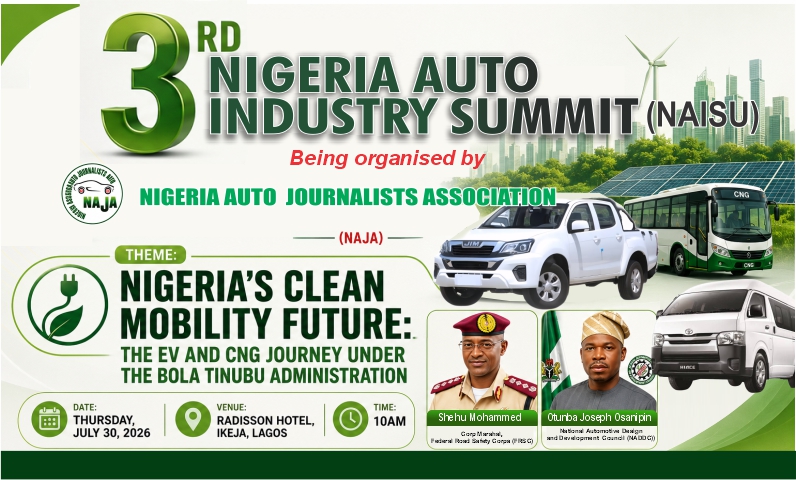
Leading automobile manufacturers, transport regulators and key government agencies have confirmed participation in the 2026 Nigeria Auto Industry Summit(NAISU), underscoring growing industry support for Nigeria’s transition to electric vehicles (EVs) and Compressed Natural Gas (CNG)-powered transportation.
Among the major industry players backing this year’s summit are Weststar Associates Limited, Toyota (Nigeria) Limited, Jetour Nigeria, Carloha Nigeria, Simba Group, Cedric Masters Group, Coscharis Motors, Lanre Shittu Motors etc.
Policymakers, investors, financial institutions, fleet operators and technology providers are also expected at the event being organised by Nigeria Auto Journalists Association (NAJA) in collaboration with the National Automotive Design and Development Council (NADDC).
The Corps Marshal of the Federal Road Safety Corps (FRSC), Shehu Mohammed, has confirmed his participation as a keynote speaker and is expected to address issues bordering on road safety, regulation and the deployment of EVs and CNG-powered vehicles in Nigeria.
Also confirmed as guest speakers are the Director-General of the National Automotive Design and Development Council (NADDC), Joseph Osanipin, and the Chairman/Chief Executive Officer of the Presidential Initiative on Compressed Natural Gas and Electric Vehicles (Pi-CNG and EV), Ismaeel Ahmed.
They are expected to provide insights into the Federal Government’s automotive industrialisation agenda, clean mobility policies and ongoing efforts to accelerate the adoption of EVs and CNG-powered vehicles across Nigeria.
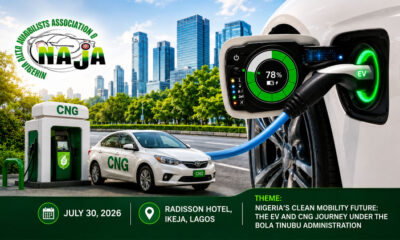
The third edition of the summit will hold on Thursday, July 30, 2026, at the Radisson Hotel, Ikeja, Lagos.
The theme of this year’s event is: “Nigeria’s Clean Mobility Future: The EV and CNG Journey Under the Bola Tinubu Administration.”
Chairman of the 2026 Auto Summit Planning Committee, Rasheed Bisiriyu, said the event comes at a critical period as Nigeria intensifies efforts to drive cleaner transportation through the adoption of electric vehicles and compressed natural gas.
According to him, the summit will bring together government officials, automotive manufacturers, regulators, energy experts and transport stakeholders to assess ongoing reforms and develop practical strategies for advancing the country’s clean mobility agenda.
“The summit comes at a critical period when Nigeria is implementing policies aimed at reducing transportation costs, lowering carbon emissions and encouraging greater investment in alternative energy mobility solutions,” Bisiriyu said.
He added that discussions would review the progress made under the Bola Tinubu administration in promoting EV and CNG adoption while identifying policy, infrastructure and financing gaps requiring urgent attention.
According to him, participants will also examine strategies for expanding EV charging infrastructure and CNG refuelling stations, promoting local vehicle assembly, improving consumer awareness, attracting private sector investment and strengthening the regulatory framework needed to support sustainable transportation.
Bisiriyu noted that the summit is designed to move beyond policy conversations by generating practical recommendations capable of accelerating Nigeria’s transition to cleaner mobility.
Also speaking, NAJA Chairman, Theodore Opara, said the annual Auto Summit has evolved into one of Nigeria’s foremost automotive policy dialogue platforms, bringing together government institutions and private sector operators to address critical issues affecting the industry’s growth.
According to Opara, achieving Nigeria’s clean mobility objectives requires broad collaboration among regulators, manufacturers, energy providers, transport operators, safety agencies and consumers.
He said, “We are bringing together regulators, manufacturers, energy providers, transport operators, safety agencies and consumers because the transition to clean mobility requires collective action.
“The objective is not only to discuss policy but also to identify practical solutions that will accelerate Nigeria’s journey towards affordable, cleaner and more sustainable transportation.”
Organisers said the summit is expected to generate actionable recommendations to support the Federal Government’s drive to deepen investment in alternative fuel technologies, strengthen local automotive manufacturing, improve transport sustainability and position Nigeria as a leading player in Africa’s emerging clean mobility ecosystem.
With participation already confirmed by leading automotive brands, regulators and other key stakeholders, the 2026 NAISU is shaping up to be one of Nigeria’s most influential gatherings on the future of the automotive industry and the country’s transition to cleaner, more sustainable mobility.







Auto
FG Moves to Expand CNG Vehicle Production, Targets Cheaper Transport Fares
FG Moves to Expand CNG Vehicle Production, Targets Cheaper Transport Fares
The Federal Government has stepped up efforts to strengthen Nigeria’s automotive industry and promote more affordable transportation through collaboration with local vehicle manufacturers, following visits to two manufacturing facilities in Anambra State.
Board members of the National Automotive Design and Development Council (NADDC) inspected the facilities of Innoson Vehicle Manufacturing (IVM) in Nnewi and Kojo Motors Auto Assembly in Umunya to assess their production capacity, identify operational challenges and explore ways to support indigenous manufacturers.
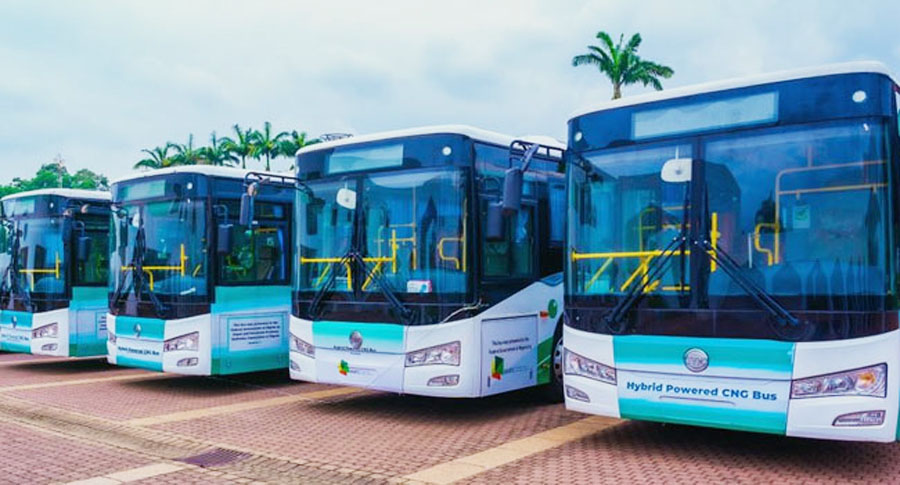
The visit comes amid the Federal Government’s drive to expand the use of compressed natural gas (CNG) and electric vehicles as alternatives to petrol-powered transportation, with the aim of reducing operating costs and making public transport more affordable.
The manufacturers welcomed the government’s new policy directing ministries, departments and agencies (MDAs) to patronise locally manufactured vehicles, saying it could increase demand for their products and strengthen domestic production.
Secretary to the Government of the Federation, George Akume, had issued a circular directing government establishments to purchase vehicles from local manufacturers.
Managing Director of Innoson Vehicle Manufacturing, Chief Innocent Chukwuma, said he was encouraged by the government’s emphasis on CNG, describing the fuel as an important option for sustaining Nigeria’s automotive industry amid rising petrol and diesel costs.
Chukwuma disclosed that the company had dedicated its newest large-scale facility to producing CNG-powered trucks and electric vehicles.
READ ALSO:
- 2027: Adeleke’s Camp Promises 1.5 Million Votes for Tinubu in Osun
- APC Expands Tinubu’s Campaign Council, Names Wike, Adeleke, Soludo
- 2027: Tompolo Unveils 57 Tinubu Campaign Vehicles, Warns Lagosians Against 2023 Repeat
He said wider adoption of CNG could help lower transportation and operating costs while supporting local industrial growth and creating employment opportunities.
The industrialist also called for stronger backward integration in the automotive sector, arguing that manufacturers should focus on producing components that Nigeria has the capacity to manufacture competitively.
At the Umunya facility, the executive director of Kojo Motors, Chinedu Oguegbo, said the company was concentrating on commercial vehicles designed for Nigeria’s transport needs.
He said the company had begun benefiting from the government’s local vehicle procurement policy but had faced challenges arising from the sharp depreciation of the naira and exchange-rate fluctuations.
Oguegbo added that the company was developing its natural gas facility, which he expected to become operational in the future. He also expressed optimism that the company’s Omma Bus brand could eventually be exported to international markets.
NADDC Director-General Oluwemimo Joseph said the inspection was intended to give the council first-hand knowledge of the challenges confronting local vehicle manufacturers.
He explained that the council was reviewing existing policies and working on proposed legislation to improve the operating environment for the industry.
According to him, information gathered during the visits would help the council develop measures to address manufacturers’ concerns and identify vehicle components that could be produced locally.
Joseph said Nigeria had numerous small and medium-sized enterprises capable of supplying components to the automotive industry, adding that stronger partnerships could create new business opportunities and reduce dependence on imported parts.
He also acknowledged concerns about the effect of imported used vehicles on local manufacturers, noting that the council was considering measures to address the competitive disadvantages faced by domestic producers.
NADDC Chairman, Chief Emma Eneukwu, said the council was advocating legislation to protect local vehicle manufacturers from the influx of imported used cars.
He argued that local producers needed a more supportive policy environment to compete effectively and expand production.
The Federal Government’s broader CNG and electric mobility programme is designed to reduce transport costs by encouraging the deployment of vehicles powered by alternative energy sources. However, the impact on passenger fares will depend on the availability of vehicles, refuelling infrastructure, operating costs and the extent to which transport operators pass savings on to commuters.
The Anambra visits form part of efforts to strengthen local manufacturing, encourage investment and improve the availability of vehicles for Nigeria’s public transportation system. While the collaboration could support cheaper transport over time, the visits did not announce a specific new fare reduction or implementation timetable.
FG Moves to Expand CNG Vehicle Production, Targets Cheaper Transport Fares
Auto
Electric Mobility: Spiro Unveils Expansion Plan, Names Nigeria New MD
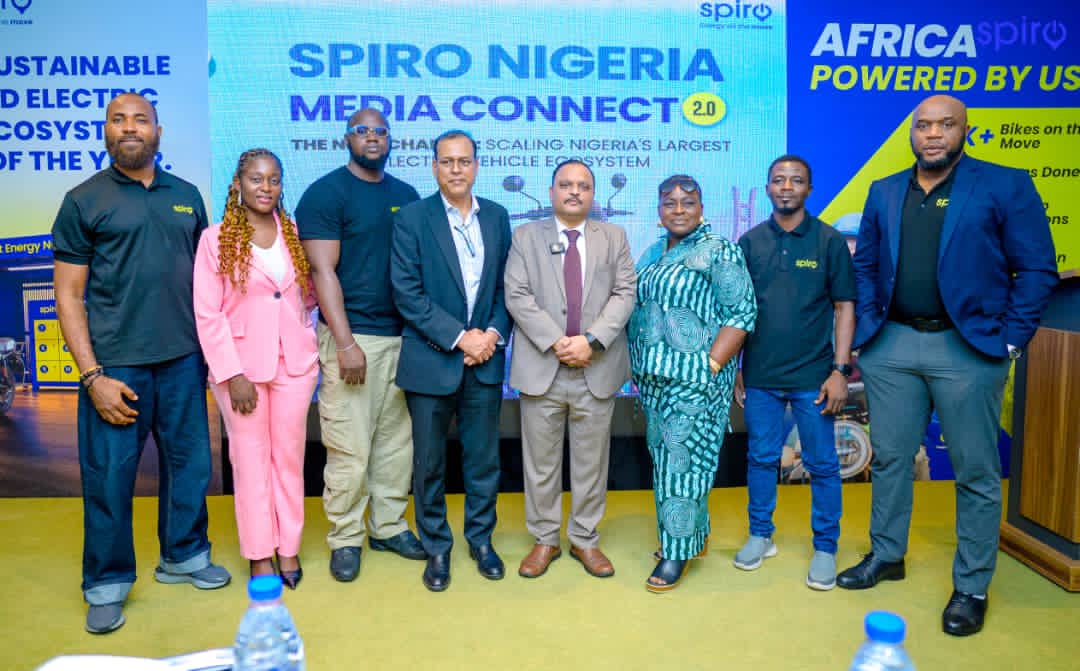
Electric Mobility: Spiro Unveils Expansion Plan, Names Nigeria New MD
Spiro, Africa’s leading electric mobility company, is stepping up plans to expand its footprint in Nigeria, strengthen its battery-swapping infrastructure and deepen partnerships to make electric motorcycles more accessible and affordable to riders.
The company unveiled the growth strategy at the second edition of its Media Connect event in Lagos, where it formally introduced its new Country Head and Managing Director, Mr Prasad Sane, who will lead its operations and expansion drive in the country.
Sane said Spiro would consolidate its presence in Lagos, Ogun and Oyo states while exploring opportunities to extend its operations to additional markets, as it seeks to accelerate Nigeria’s transition to cleaner and more sustainable transportation.
The event brought together journalists covering business, technology, mobility and sustainability to discuss the company’s progress, infrastructure development and long-term ambitions for Nigeria’s electric mobility market.
Addressing the gathering, Sane said the company was moving beyond the deployment of electric motorcycles to building an integrated mobility ecosystem designed to improve riders’ earnings, reduce operating costs and create economic opportunities.
“Today is about progress, partnership and purpose. A year ago, we shared our vision for electric mobility in Nigeria. Today, we are demonstrating tangible results and a clear path forward,” he said.
He added that his mandate was to make Spiro one of the most trusted, affordable and accessible electric mobility solutions for Nigerians, beginning with its existing focus markets.
“My mandate is simple: to make Spiro the most trusted, affordable and accessible electric mobility solution for Nigerians, beginning with Lagos, Ogun and Oyo states.
“We are moving beyond electric bikes to build a complete ecosystem centred on our promise of ‘Energy on the Move’,” Sane stated.
A major pillar of the company’s strategy is its battery-swapping technology, which allows riders to exchange depleted batteries for fully charged ones in under a minute, reducing downtime and eliminating the need to wait for conventional recharging.
According to Sane, the model offers riders an alternative to rising fuel and maintenance costs while supporting efforts to reduce carbon emissions and improve the economics of commercial motorcycle operations.
“Electric mobility is no longer the future. It is the present, and Nigeria is poised to lead the transition,” he said.
Under its expansion plan, Spiro intends to accelerate the deployment of battery-swapping stations and service centres across Lagos, Ogun and Oyo states to improve accessibility, operational efficiency and customer support.
The company also plans to extend its geographical reach beyond the three states, bringing its electric motorcycles and related services to more Nigerian markets.
Another priority is strengthening partnerships with financial institutions, logistics companies and rider communities to improve access to electric motorcycles and its Battery-as-a-Service solutions.
The approach is expected to support wider adoption by riders who may face financial barriers to acquiring electric motorcycles outright, while helping businesses explore cleaner and potentially more cost-effective transportation options.
Spiro also plans to scale up local assembly operations, technical training and after-sales support, with a focus on creating employment opportunities, particularly for young Nigerians and women.
The company said the measures would help strengthen its operational capacity while developing local skills and supporting the growth of Nigeria’s electric mobility ecosystem.
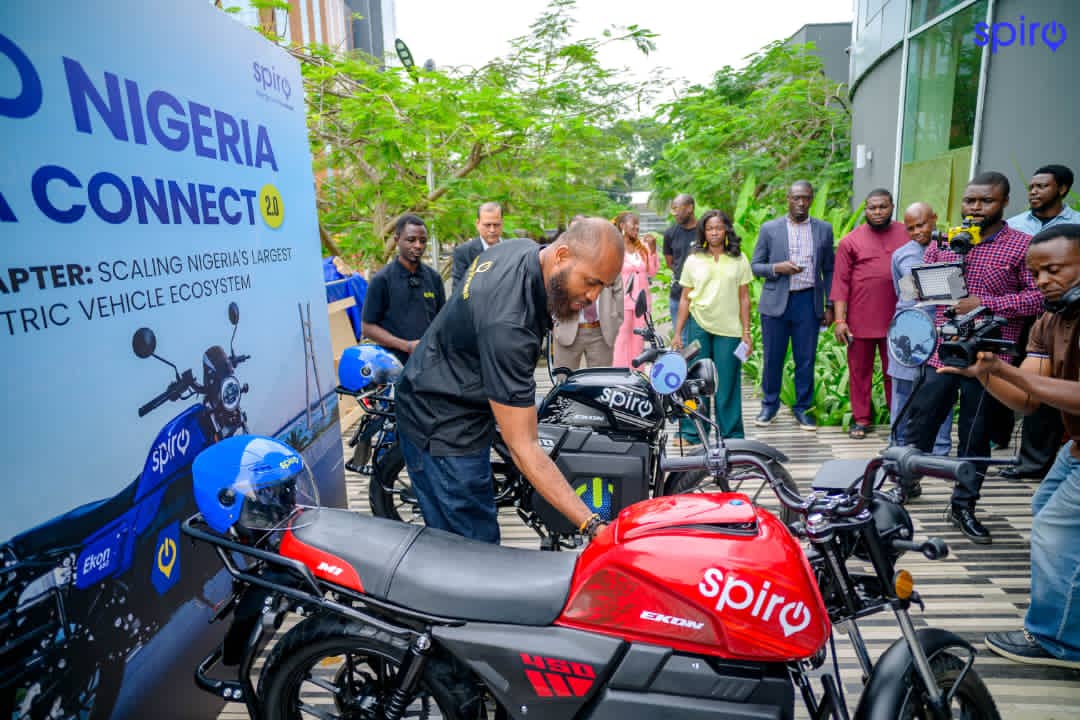
The Media Connect event featured live product demonstrations and operational showcases, alongside the unveiling of the Spiro Ekon M1 Version 3, highlighting the company’s efforts to develop its electric motorcycle offerings for the Nigerian market.
Spiro, which received the West Africa Sustainable Award (WASA), is positioning its expansion around electric motorcycles and battery-swapping infrastructure as it seeks to contribute to the growth of sustainable mobility across Nigeria.
Auto
Jetour W Motors Celebrates Customers, Unveils Nigeria Owners Club After Brazil Promo
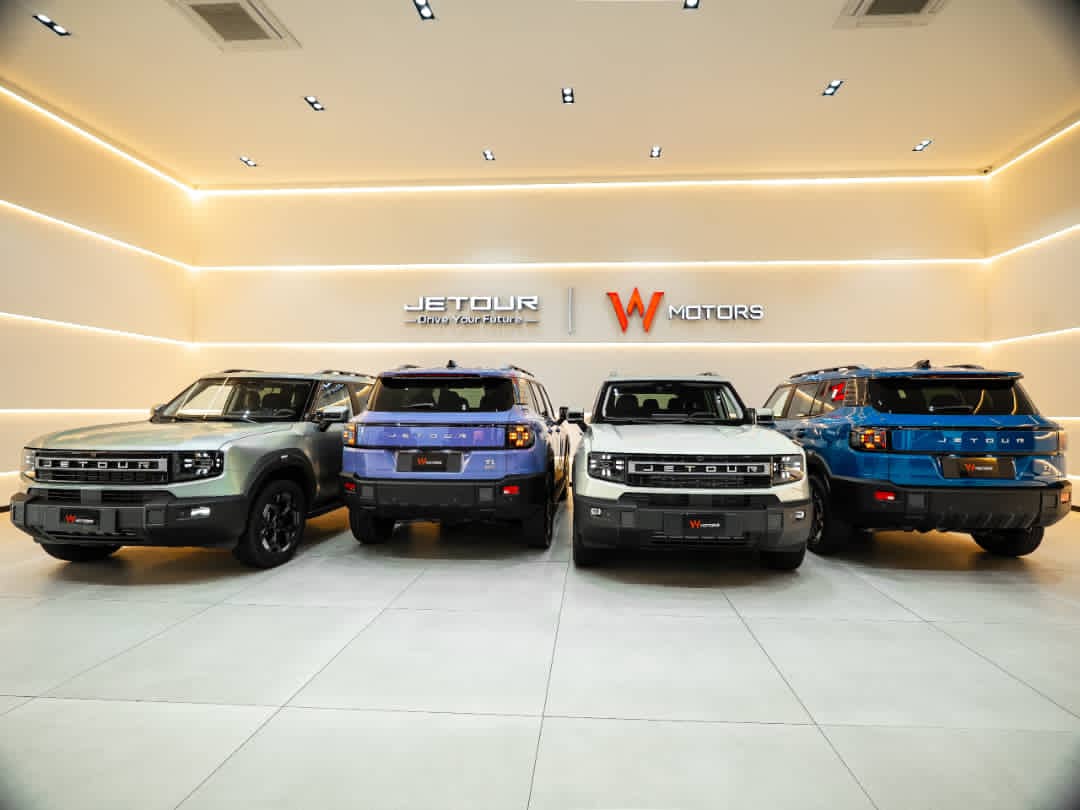
Jetour W Motors Celebrates Customers, Unveils Nigeria Owners Club After Brazil Promo
Jetour W Motors Nigeria is stepping up efforts to strengthen customer loyalty and build a vibrant community of vehicle owners with the successful conclusion of its #WinYourWayToBrazil campaign and the official establishment of the Jetour Nigeria Club.
The twin initiatives mark a new phase in the Chinese automotive brand’s engagement with Nigerian customers, extending its relationship with vehicle owners beyond sales and after-sales services to include shared experiences, lifestyle activities, adventures and community-building programmes.
The campaign climaxed with a live raffle draw on Friday, September 25, 2026, at the Jetour W Motors showroom on Adeyemo Alakija Street, Victoria Island, Lagos, where eligible customers gathered for an evening of entertainment, refreshments, networking and the eagerly anticipated announcement of the winner.
The promotion offered customers who ordered and purchased any Jetour vehicle between August 18 and September 20, 2026, the opportunity to win a trip to Brazil for the Jetour Brazil Fan Festival.
The event also featured the distribution of branded Jetour Owners Club gifts, adding to the celebratory atmosphere as customers interacted with one another and members of the Jetour team.
Beyond the excitement surrounding the raffle draw, the occasion provided a platform for Jetour W Motors to unveil the Jetour Nigeria Club, an initiative designed to bring owners of the brand’s vehicles together through a structured calendar of activities and shared experiences.
The club, officially established for the first time in Nigeria, is expected to create opportunities for members to participate in organised adventures, social gatherings and other community initiatives while strengthening their connection with the brand.
Registration for membership will open soon, with all Jetour owners invited to join the emerging community.
The development reinforces Jetour W Motors Nigeria’s strategy of building lasting relationships with customers in a competitive automotive market where ownership experience, customer engagement and brand loyalty are becoming increasingly important.
The #WinYourWayToBrazil campaign follows the successful Jetour Africa Expedition — Nigeria Edition, which brought together Jetour owners, influencers, media professionals and members of the company’s team for a distinctive experience combining driving, adventure and Nigerian culture.
The expedition was the brand’s first major activation specifically designed to bring Jetour owners together in Nigeria, providing an opportunity for participants to connect beyond their individual vehicle ownership experiences.
With the Brazil campaign and the launch of the national owners’ club, Jetour W Motors is building on that foundation by creating more opportunities for customers to interact, participate in brand-led activities and develop relationships with fellow owners.
The approach reflects a broader effort to position vehicle ownership as an experience that extends beyond the showroom, encompassing lifestyle, recreation and a sense of belonging to a growing community.
Jetour W Motors Nigeria is the authorised distributor of Jetour vehicles in the Nigerian market, where the brand continues to expand its presence through customer-focused initiatives and engagement programmes.
The planned opening of membership registration for the Jetour Nigeria Club is expected to provide the next opportunity for owners to become part of the community and participate in activities designed to deepen their connection with the brand.
-

 metro3 days ago
₦8.7bn Erosion-Control Budget Gap Raises Questions as Anambra Gullies Expand
-
 Politics2 days ago
Obi Positioning for SGF Role Under Atiku’s ADC Ticket – Sowore
-

 metro2 days ago
How Bandits Demand ₦300m Ransom for Abducted Kaduna Couple, Baby in Viral Video
-

 metro3 days ago
Child Soldiers, Baby Factories: US Raises Alarm Over Official Complicity in Nigeria
-
 News3 days ago
Fuel Subsidy May Ease Hardship Today, But Could Cripple Nigeria’s Economy Tomorrow — FG
-
 metro3 days ago
2027 Elections: Atiku Demands Names of INEC Ballot Printers, Questions Secret Contracts
-

 Politics2 days ago
Okonkwo Alleges Return of Subsidy, Accuses NNPC of Plotting Trillions in ‘Lost Profit’
-
 metro2 days ago
How Military Air Strike Crushed ISWAP Attack Plot, Killed Over 40 Fighters in Borno