
News
EFCC: 850 police officers may be affected in major shake-up

There are indications that 850 police officers currently working with the Economic and Financial Crimes Commission will be affected in a major reorganisation currently in the works at the anti-graft agency.
It was learnt on Sunday that the shake-up being planned by the EFCC under the leadership of Mr Abdulrasheed Bawa as chairman-designate was aimed at repositioning the agency.
Although the police officers likely to be affected are said to be feeling uncomfortable with the arrangement, it was learnt that the new leadership of the agency was planning to return them to the Nigeria Police Force where they could perform their core function of protecting the citizens from violent criminals.
Bawa nominated by President Muhammadu Buhari on February 16 is one of the pioneers of the EFCC Academy and the first non-police officer picked to head the commission since its inception in 2003.
According to sources, Bawa is under pressure by EFCC operatives who are agitating that the police personnel should leave the commission for its trained officers.
Beside, the return of the police personnel would help boost the staff strength of the police since the Inspector-General of Police had always complained about the shortage of personnel.
While the commission was under the leadership of the police, the non-police career officers were said to have had a running battle with the police personnel.
The staff strength of the EFCC is currently put at 2,220, spread across different departments out of which about 850 are police officers.
The former acting Chairman of EFCC, Mr Ibrahim Magu, had in one of his budget defences lamented poor funding that prevented the commission from recruiting 750 additional staff.
It was gathered that the recruitment was carried out but did not meet the target number envisaged.
Meanwhile, Assistant Inspector-General of Police in charge of Zone 10, Sokoto, Mr Ali Janga, has hailed the nomination of Bawa as the chairman-designate, saying that the nomination of a core staff of the commission is proof that the police have creditably discharged their duties of nurturing the commission to maturity.
The AIG spoke while receiving the Head, EFCC Sokoto Zonal Office, Mr Bawa Kaltungo, and his team that paid him a courtesy visit.
Janga said he was among the pioneer 23 officers that started the EFCC in 2003 and trained the pioneer Course 1 cadet officers.
An EFCC statement said the zonal police boss assured the EFCC delegation of enhanced cooperation.
Kaltungo had solicited more cooperation and support from the AIG, adding that the commission is desirous of leveraging on the strength of the police.

News
Obi Promises to Release Nnamdi Kanu if Elected, Says ‘He Has Done Nothing Wrong’

Obi Promises to Release Nnamdi Kanu if Elected, Says ‘He Has Done Nothing Wrong’
The 2027 presidential candidate of the Nigeria Democratic Congress (NDC), Peter Obi, has declared that he would release Nnamdi Kanu and engage separatist agitators in dialogue if elected president of Nigeria. Speaking during an interaction with Nigerians in Washington, the former Anambra State governor argued that Kanu should not be detained over comments he allegedly made on Radio Biafra, insisting that criticism of political leaders should not be criminalised.
“There’s no reason for keeping Nnamdi Kanu. I will free Nnamdi Kanu as President. He has done nothing wrong; the government has no reason to arrest him because he was speaking and calling people names on radio,” Obi said. The former Labour Party presidential candidate maintained that public officials are often subjected to criticism and insults, which, according to him, should not constitute an offence. “Anybody can tell you anything. I’m a politician and people call me all sorts of names and I don’t think calling me names is an offence,” he added. Obi also pledged to adopt dialogue as a strategy for addressing separatist agitations and other grievances across the country. “If I am in government today, I will discuss with all agitators because I believe that they have a reason for whatever they want to do and it’s only by engaging them that we would learn,” he said.
Obi reiterated his commitment to pursuing a political solution to the case involving the Indigenous People of Biafra (IPOB) leader, stating that dialogue remains the most effective path to resolving longstanding grievances and tensions. According to him, governments achieve more lasting results when they address the root causes of agitations through dialogue, justice, and inclusive governance rather than relying solely on coercive measures. The former governor maintained that national unity is better strengthened through reconciliation and mutual understanding, stressing that democratic societies should create avenues for citizens to express grievances while preserving law, order, and national stability.
READ ALSO:
- Pastor, Wife, Sister Survive Kidnappers’ Den After N50 Million Ransom Demand
- Uzodimma Approves N300m Support for Imo Law Students, South African Returnees
- How Kidnap of Adelabu’s Sister, Twins Was Planned – Suspects Confess Insider Role
This is not the first time Obi has spoken on the IPOB leader’s detention. In November 2025, following Kanu’s conviction and life imprisonment sentencing by a Federal High Court in Abuja, Obi described the development as a “failure of leadership” that risked aggravating national tension. At the time, Obi posted on his verified X handle: “I have always maintained that Mazi Kanu should never have been arrested. For years, I have consistently argued that dialogue, constructive engagement, and inclusive governance offer the path to lasting peace. Coercion becomes necessary only when reason has been exhausted.” He further argued that the government’s approach had only deepened mistrust, stating: “The handling of Kanu’s case mirrors the government as a man trapped in a hole but who, instead of looking for a way out, keeps digging deeper.” In July 2025, Obi had told Channels Television’s Sunday Politics that the continuous detention of Nnamdi Kanu “does not make sense” . Asked whether he would advocate for a political solution, Obi responded: “For every one of them, I mean, why is he still being held? It does not make sense to me.”
Nnamdi Kanu, the leader of IPOB, has remained in the custody of the Department of State Services since his controversial rendition from Kenya to Nigeria in June 2021. In November 2025, Justice James Omotosho of the Federal High Court in Abuja convicted him on seven terrorism-related charges and sentenced him to life imprisonment. Kanu has since filed an appeal at the Court of Appeal challenging both his conviction and sentence. According to his legal consultant, Alloy Ejimakor, the appeal process is already “live,” with multiple stages involved. Kanu has provided 22 grounds for his appeal, and the Court of Appeal has not yet fixed a date for hearing the matter. In a significant development, IPOB claimed in June 2026 that the Federal Government’s cross-appeal against Kanu’s sentencing amounts to an admission that the trial court lacked jurisdiction to impose life sentences. IPOB spokesperson Emma Powerful stated that the government’s filing declared that “the trial court acted without jurisdiction when it imposed life imprisonment on Counts 1, 2, 4, 5 and 6.” IPOB argued that if the court lacked jurisdiction at the sentencing phase, “the entire sentencing exercise is a nullity ab initio.”
READ ALSO:
- 300-Level FUBK Student Killed in Hostel Robbery Attack
- Veteran Nollywood Actor, Scholar Kola Oyewo Dies at 80
- No Election Is Perfect Anywhere – Fashola Tells Opposition to Accept Results
International pressure continues to mount on the Nigerian government over Kanu’s conviction. A group of international legal experts under the banner of Pan African Forum Ltd & Associates, based in London, has issued a legal notice warning Nigeria that it would commence legal action in a UK Court if the government does not immediately and unconditionally release Kanu. The group bases its demand on Opinion No. 25/2022 issued on July 20, 2022, by the United Nations Working Group on Arbitrary Detention, which found that Kanu’s arrest and extraordinary rendition were unlawful and ruled that his continued detention is arbitrary. The Nigerian government has consistently maintained that Kanu is facing serious terrorism and security-related charges and that due judicial process must be allowed to run its course.
Meanwhile, the apex Igbo socio-cultural organization, Ohanaeze Ndigbo, has called on President Bola Tinubu to grant amnesty to Nnamdi Kanu on or before June 12, 2026, as part of efforts to promote national reconciliation and strengthen unity across the country. The group emphasized that Kanu’s release, preferably timed to coincide with Nigeria’s Democracy Day, would signal a bold commitment to justice, inclusion, and healing decades-old grievances in the Southeast. Ohanaeze also dismissed fears that Kanu’s release could destabilize the country, arguing that such a move would demonstrate leadership anchored on reconciliation.
Obi’s latest comments come amid his political realignment ahead of the 2027 presidential election. After the collapse of an earlier opposition coalition, Obi secured the presidential ticket of the Nigeria Democratic Congress (NDC) at a special convention in Abuja in May 2026. He was unanimously endorsed by delegates following a motion moved by Senator Victor Umeh and seconded by former Deputy Senate President Ovie Omo-Agege. Shortly after accepting the nomination, Obi announced former Kano State Governor Rabiu Musa Kwankwaso as his running mate. In his acceptance speech, Obi pledged a technology-driven and intelligence-led security framework, promising to address both immediate threats and root causes such as poverty and unemployment. He recently dismissed claims that he was avoiding former Vice-President Atiku Abubakar, stating: “There are very few human beings who are as close as I am to Atiku. So I can’t be running from him.”
As the 2027 election approaches, Obi’s campaign continues to gain momentum, particularly among young Nigerians and diaspora communities. His message of inclusive governance, dialogue over coercion, and political solutions to national crises resonates with voters frustrated by the status quo. His pledge to release Nnamdi Kanu and engage all agitators in dialogue represents a sharp departure from the current administration’s security approach. Whether this stance will translate into electoral success remains to be seen, but it has undoubtedly positioned Obi as a candidate willing to take bold, unconventional positions on Nigeria’s most contentious issues. The Nigerian government has consistently maintained that Kanu is facing serious terrorism and security-related charges and that due judicial process must be allowed to run its course. However, with international pressure mounting, an active appeal process, and major political figures like Obi calling for Kanu’s release, the case continues to be a defining issue in Nigeria’s political landscape.
Obi Promises to Release Nnamdi Kanu if Elected, Says ‘He Has Done Nothing Wrong’
News
Uzodimma Approves N300m Support for Imo Law Students, South African Returnees
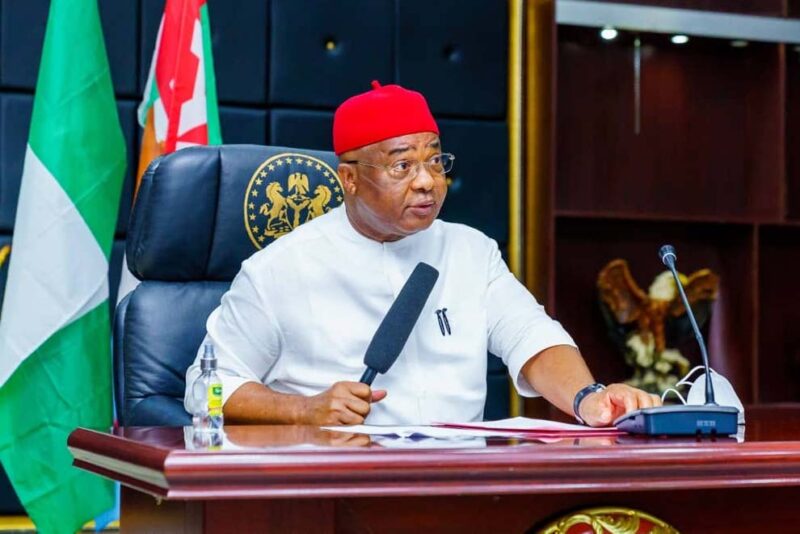
Uzodimma Approves N300m Support for Imo Law Students, South African Returnees
Imo State Governor, Senator Hope Uzodimma, has approved a N300 million financial intervention for Imo indigenes studying at the Nigerian Law School and citizens of the state recently returned from South Africa.
The intervention is designed to provide relief to beneficiaries facing economic hardship, rising living costs, and reintegration challenges.
According to the Imo State Commissioner for Information, Public Orientation and Strategy, Hon. Declan Emelumba, the package will benefit two categories of people: law students and South African returnees.
Under the arrangement, 250 Imo indigenes who returned from South Africa will receive N1 million each as a reintegration fund to help them resettle and rebuild their lives after being forced to return to Nigeria.
In addition, 100 Imo students at the Nigerian Law School will receive N500,000 each to help cushion the impact of inflation and rising cost of living while pursuing their legal education.
READ ALSO:
- How Kidnap of Adelabu’s Sister, Twins Was Planned – Suspects Confess Insider Role
- 300-Level FUBK Student Killed in Hostel Robbery Attack
- Veteran Nollywood Actor, Scholar Kola Oyewo Dies at 80
- No Election Is Perfect Anywhere – Fashola Tells Opposition to Accept Results
Emelumba explained that the governor was moved to approve the intervention following appeals from the law students and concerns over the difficult circumstances facing the returnees.
“The law students made a passionate appeal to His Excellency to support them to cushion the global inflation as regards cost of living. As a caring father, he responded promptly,” he said.
He added that the support for the returnees was driven by empathy, noting that many of them went through difficult experiences that forced them to return to Nigeria.
“The governor felt that the traumatised returnees needed a helping hand from government. Hence, he approved what can be described as a re-integration fund to enable them settle down with minimal discomfort,” Emelumba stated.
The commissioner further noted that the initiative aligns with the administration’s Shared Prosperity Agenda, which focuses not only on infrastructure development but also on human capital development and social welfare.
He also recalled that this is not the first time the state government has supported law students, stating that many of them are already beneficiaries of government scholarship programmes and periodic financial assistance.
The latest intervention has been described as part of ongoing efforts by the Uzodimma administration to ease economic pressure on students and vulnerable citizens, especially in the face of national inflation and unemployment challenges.
Stakeholders say the initiative could help provide temporary relief to beneficiaries as they continue their education or reintegrate into society after returning from abroad.
Uzodimma Approves N300m Support for Imo Law Students, South African Returnees
News
Publicity Helps Terrorists, Not Victims — Reno Omokri Warns
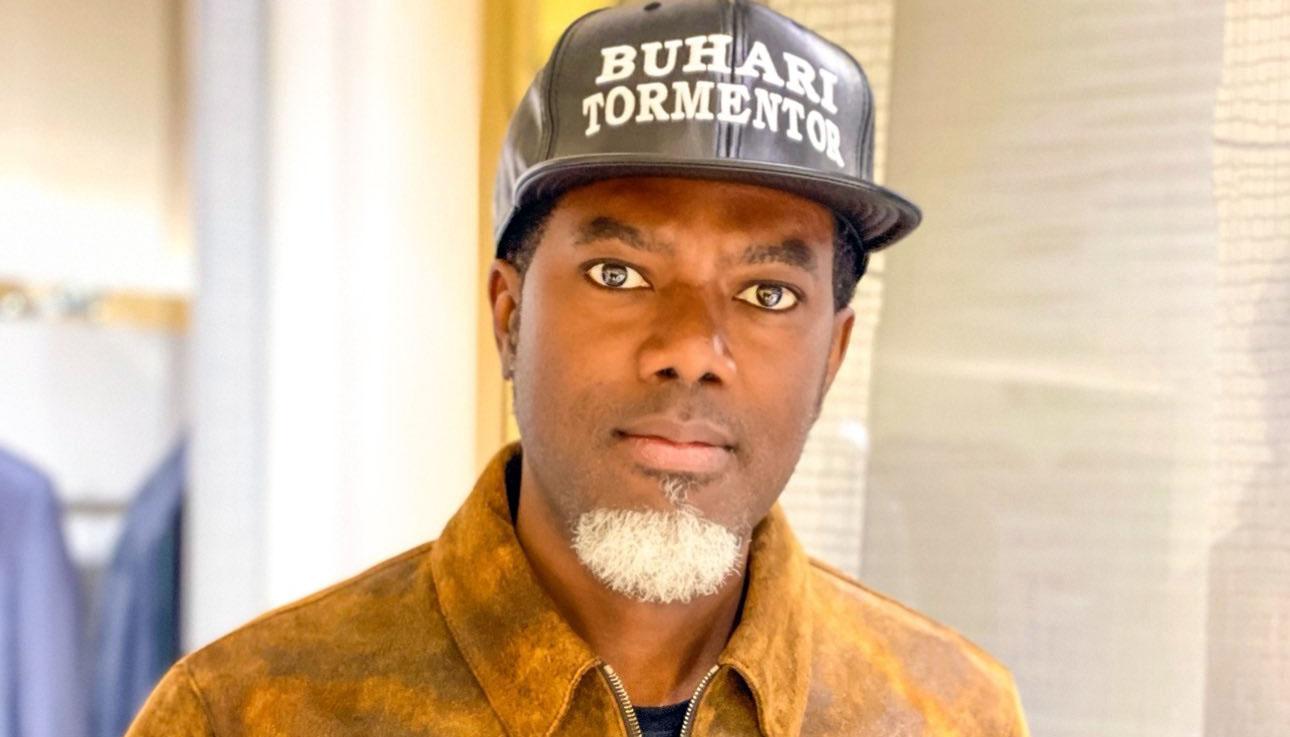
Publicity Helps Terrorists, Not Victims — Reno Omokri Warns
Former presidential aide and author, Reno Omokri, has argued that excessive publicity and global attention on terrorist activities often benefit perpetrators rather than pressure them into releasing victims.
In a detailed statement, Omokri maintained that terrorists thrive on attention and deliberately use media coverage to spread fear, attract influence, and strengthen their operations. He referenced former British Prime Minister Margaret Thatcher’s famous remark that “publicity is the oxygen of terrorism,” arguing that this principle remains relevant in modern counterterrorism strategy.
Omokri said public reactions to high-profile abductions, including global campaigns and celebrity involvement, can unintentionally increase the value of hostages in the eyes of kidnappers, making their release less likely.
He cited the case of the #BringBackOurGirls campaign following the 2014 Chibok schoolgirls’ abduction, claiming that international attention elevated the profile of Boko Haram and complicated rescue efforts. According to him, what began as a humanitarian movement eventually made the girls “high-value hostages” in the hands of their captors.
READ ALSO:
- Mexico Defeat South Africa 2–0 in Chaos-Filled World Cup Opener
- NSCIA Rejects Claims Linking Nigerian Muslims to Banditry, Kidnapping
- President Tinubu Deserves Credit – US Lawmaker Praises Nigeria’s State Police Breakthrough
The former presidential spokesman also said he personally engaged in international advocacy efforts to secure the release of abducted Leah Sharibu, including meetings with world leaders and funding personal initiatives. However, he claimed security experts later advised that excessive publicity around her case may have inadvertently increased her value to terrorists.
Omokri further referenced guidance allegedly contained in journalism and security manuals on terrorism coverage, arguing that responsible reporting should avoid amplifying fear or giving undue attention to terrorist acts.
He insisted that government security agencies continue to work behind the scenes to secure the release of abducted victims, while urging Nigerians to avoid emotionally driven reactions that may, in his view, complicate rescue operations.
According to him, terrorists are strategic actors who benefit from attention, and reducing publicity around their actions may weaken their psychological impact and operational incentives.
Omokri concluded that counterterrorism efforts require a more rational and less emotional public response, warning that sustained global amplification of kidnapping incidents may unintentionally serve the interests of criminal groups rather than victims.
Publicity Helps Terrorists, Not Victims — Reno Omokri Warns
-

 metro3 days ago
Emir of Ilorin Appoints Sheikh Muhammad Bashir Dasuki as New Chief Imam of Ilorin
-
 Entertainment2 days ago
Davido Turns World Cup Stage Into Protest – Wears Jacket Bearing Names of Kidnapped Oyo Schoolchildren at FIFA Concert
-
 News1 day ago
Full Text of President Bola Ahmed Tinubu’s Democracy Day Address
-

 Sports2 days ago
Chaos at World Cup 2026 Opener as Protesters Block Access to Estadio Azteca
-

 metro3 days ago
Bandits Attack Kogi School, Vice Principal, Two Others Killed
-

 metro2 days ago
Senate Orders Police, DSS to Track Bandits Flaunting Cash on TikTok
-
 Health2 days ago
VIDEO: Nigerian Doctors in Canada Have Become ‘Medical Agberos’ — Doctor Alleges
-
 metro2 days ago
Shocking Revelation: Ex-DSS Director Recounts How Sani Abacha Died
You must be logged in to post a comment Login